Suffering and Joy

Easter is not only one Sunday on the calendar, but is a season in the Christian Year spanning seven weeks, or fifty days, until Pentecost.  In the Easter season the church explores the theme of resurrection and new life in Jesus.  Our Lord Christ did not only die so that we might have forgiveness of sins; He also died so that we might live a new life with a clean slate to follow him daily.  God saves us and forgives us, regenerates us, in order that we will live a new life in Christ.  This regenerated life is not really a matter of making new resolutions or turning over a new leaf – it is a faith response to the grace of God displayed in Christ by dying on the cross and rising from the dead for us.
 
            One of my all-time favorite stories is Victor Hugo’s Les Miserables.  It is primarily a story of grace and new life.  The main character is Jean Valjean, who spends nineteen years in jail for stealing a loaf of bread for his starving family.  The experience in prison caused him to become a bitter man.  By the time he is released, he is hard and angry at life.  Since ex-convicts were not treated well in 19thcentury France, he had nowhere to go.  In desperation he seeks lodging one night at the home of a Catholic bishop, who treats him with genuine kindness, which Valjean sees only as an opportunity to exploit.  In the middle of the night he steals the bishop’s silver, but is caught by the police.  When they bring him back to the bishop’s house for identification, they are surprised when the bishop hands two silver candlesticks to Valjean, implying that he had given the stolen silver to him, and says, “You forgot these.”  After dismissing the police, the bishop turns to Jean Valjean and says, “I have bought your soul for God.”  In that moment, by the bishop’s act of mercy, Valjean’s bitterness is broken.


            But that is only a small part of the story; his forgiveness is the beginning of a new life.  The bulk of Victor Hugo’s novel demonstrates the utter power of a regenerated and redeemed life.  Jean Valjean chooses the way of mercy, as the bishop had done.  Valjean raises an orphan, spares the life of a parole officer who spent fifteen years hunting him, and saves his future son-in-law from death, even though it nearly cost him his own life.  There are trials and temptations for Valjean all along the way, but what keeps him pursuing his new life is mercy.  Whereas before being shown mercy Valjean responded with a brooding melancholy and inner anger.  Now, after being shown grace, Valjean responds to each case of unjust suffering with both mercy and joy, deeply thankful for the chance to live a new life full of grace.
 
            Suffering and joy.  They seem to be opposed to each other.  And, if we conform to this world’s thinking, they are taken as opposites.  Only Christianity has the worldview perspective that sees suffering as an occasion for joy, and not just senseless, random, and empty grief.  Followers of Jesus imitate their Savior in going in the way of suffering.  We are told in Scripture that these sufferings are trials to our faith, that is, they are the means by which our faith is developed, used, and strengthened.  Just as gold is refined by being put through fire, so our faith is refined and proven genuine through the purging fires of life’s trials and troubles.  Walking in the way of our Lord Jesus, adversity is our teacher, helping us to know Christ better and appreciate the great salvation we possess in Jesus (1 Peter 1:3-9).
 
            The most miserable people I know are those who do not know grace, have not been taught by mercy, and, therefore, do not know the joy of extending grace and mercy to others.  There is a tendency for many Christians today towards being stoic through the trials of life.  We try and keep a stiff upper lip and simply endure.  Taking the approach of “It is what it is” only works for so long.  Eventually “My God, my God, why have you forsaken me” is a more appropriate response to trouble. But it is precisely during those times when human hope fades that we rejoice, even though the rejoicing is through tears, in the living hope that is kept for us and not by us. This spiritual inheritance of hope is imperishable, undefiled, and unfading. That means we can live through a difficult day or week or month or even, dear God, a year or longer, and not add to the weight of our troubles by blaming the failure of faith.   
        
            Our goal in this life is not to escape the world because at the end of time when our salvation is completely consummated, heaven comes down to earth and both are joined together.  “Then I saw a new heaven and a new earth, for the first heaven and the first earth had passed away, and there was no longer any sea.  I saw the Holy City, the New Jerusalem, coming down out of heaven from God, prepared as a bride beautifully dressed for her husband.  And I heard a loud voice from the throne saying, ‘Now the dwelling of god is with men, and he will live with them.  They will be his people, and God himself will be with them and be their God.  He will wipe every tear from their eyes.  There will be no more death or mourning or crying or pain, for the old order of things has passed away” (Revelation 21:1-4).  This is our inheritance in Christ.  But we must come prepared for this encounter with God by presently undergoing grief in all kinds of sufferings; these trials to our faith are the pre-marital sessions that prepare us for our marriage with Jesus.


            Eventually, suffering will have done its work and we will be with Christ forever.  Until that day, however, let us not hunker down and stay in the garage of life.  Let us explore the open road that God has for us, embracing both the meaning and the mystery of faith.  Let us live with confidence and run the race marked out for us.  Let us not be complacent or slow in doing the will of God, but work for God’s kingdom purposes on this earth, in this age, while it is still called Today.  And let us allow the trials of this age to do their work in us, responding to them with joy knowing that our faith is being strengthened for the benefit of loving the world.  Even so, come Lord Jesus.

Surprised by Joy


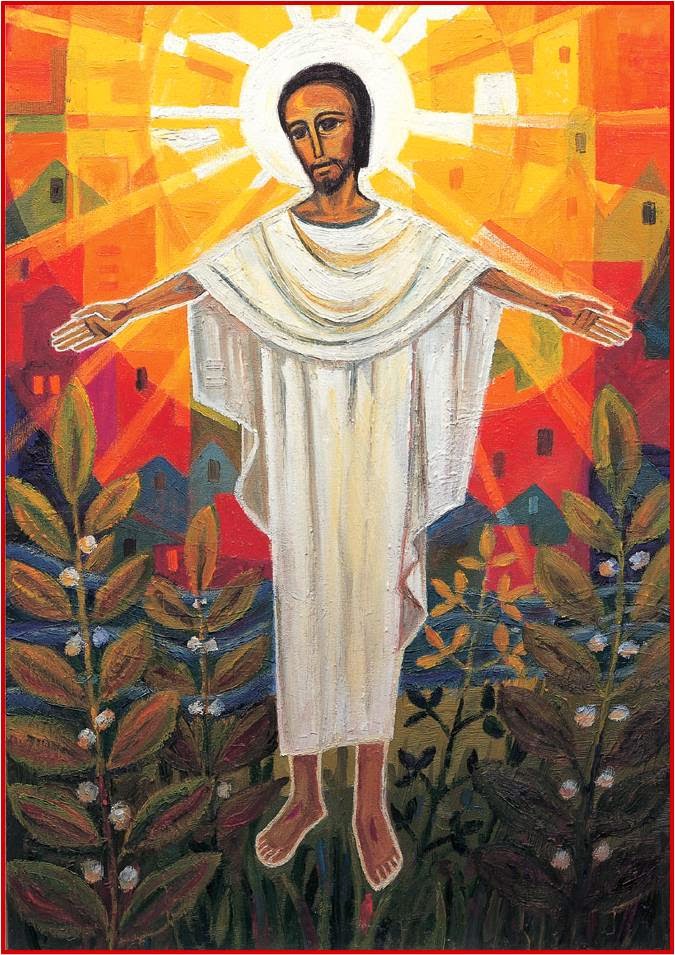
            From Good Friday to Easter we move from grief and confusion to joy and confidence.  In this post-Holy Week arousal from Winter to Spring, it is not simply a time to experience a Resurrection Sunday celebration and move on.  It is the season to rejoice in being surprised by joy in the risen Savior.
 
One day when I was a young seminarian, I was down sick with the flu and in bed.  I barely remember my wife coming into our bedroom after a doctor’s appointment upset and crying.  She was trying to rouse me with a mix of good and bad news.  Mary had gone to the doctor thinking that she probably had the flu, as well.  But the doctor gave her the news that she was pregnant with our first child.  However, after the examination he had reason to be concerned that our little baby was in the wrong place – she was not where she should be, but may very well be in the fallopian tube and not the womb.  So, here I am, barely able to move, getting out of bed and driving to the hospital to get my wife an ultrasound with such a range of emotions within me that all I can do is weep, feeling, like Mary Magdalene on resurrection morning, that my Lord has been taken away from me – it just felt like I didn’t know where Jesus was at that moment and why I was going through this craziness.  I will never forget the words and even the tone of voice of the ultrasound technician as we anxiously were in the dimly lit room looking at a screen we didn’t understand; the technician said, “She is right where she is supposed to be!”  The tears turned to complete joy.  And the words were prophetic; there was no way that the technician could know at six weeks in the womb that we were having a little girl, but she referred to the peanut within my wife as “she.”  And we immediately knew what her name was:  “Sarah,” which is the Hebrew name for “Princess.”  God had graced us with a precious gift of royalty, coming from the grace of King Jesus. 
 
            We are all right where we are supposed to be.  Whatever your life-circumstance is right now, God has you right where he wants you.  We are here on this spinning planet Earth because we have a divine appointment with Jesus.  Mary Magdalene embraced a mission from the Lord.  “I have seen the Lord” was her witness (John 20:18).  Easter opens up a new world for us, as it did for Mary – a future of spreading the good news and announcing resurrection.  A beloved disciple of my church has recently experienced hearing in an ear that did not hear anything for sixteen years.  Some wonderful technology has enabled her to hear in that ear again, and she has not been shy about spreading that good news!  I can now say her name and she can hear her name said in not just one ear, but in both ears.  Jesus is saying your name; he is calling you.  There is a simple reason why the grave-clothes of Jesus were left in the tomb just lying there – they were not needed anymore!  We no longer need the grave-clothes of discouragement and defeat; we no longer need to weep and wonder, because Christ is risen!  He has called our name and we can now hear in both ears!
 
            The 20th century Swiss theologian, Karl Barth, said that what brings people to worship – not just on Easter, but on any Sunday – is an unspoken question clinging to our minds and hearts:  Is it true?  Is it true that God lives?  Is it true that Jesus is alive?  Is it true that I can live a new life in Christ?  Is it true that I can rebuild my life?  Is it all true?
 
            All over the world followers of Jesus are testifying that it is true:  Christ is risen, and there is new life in Jesus our Lord.  Believers in Jesus gather together underground for worship with the threat of being caught.  Young college students gather for bible study with significant risk to their lives if they are found to be studying the Christian Scriptures.  Christians huddle together in secluded places celebrating the resurrection of Jesus because they believe it is true, and they believe it is true because they have seen Jesus and heard his voice.
 
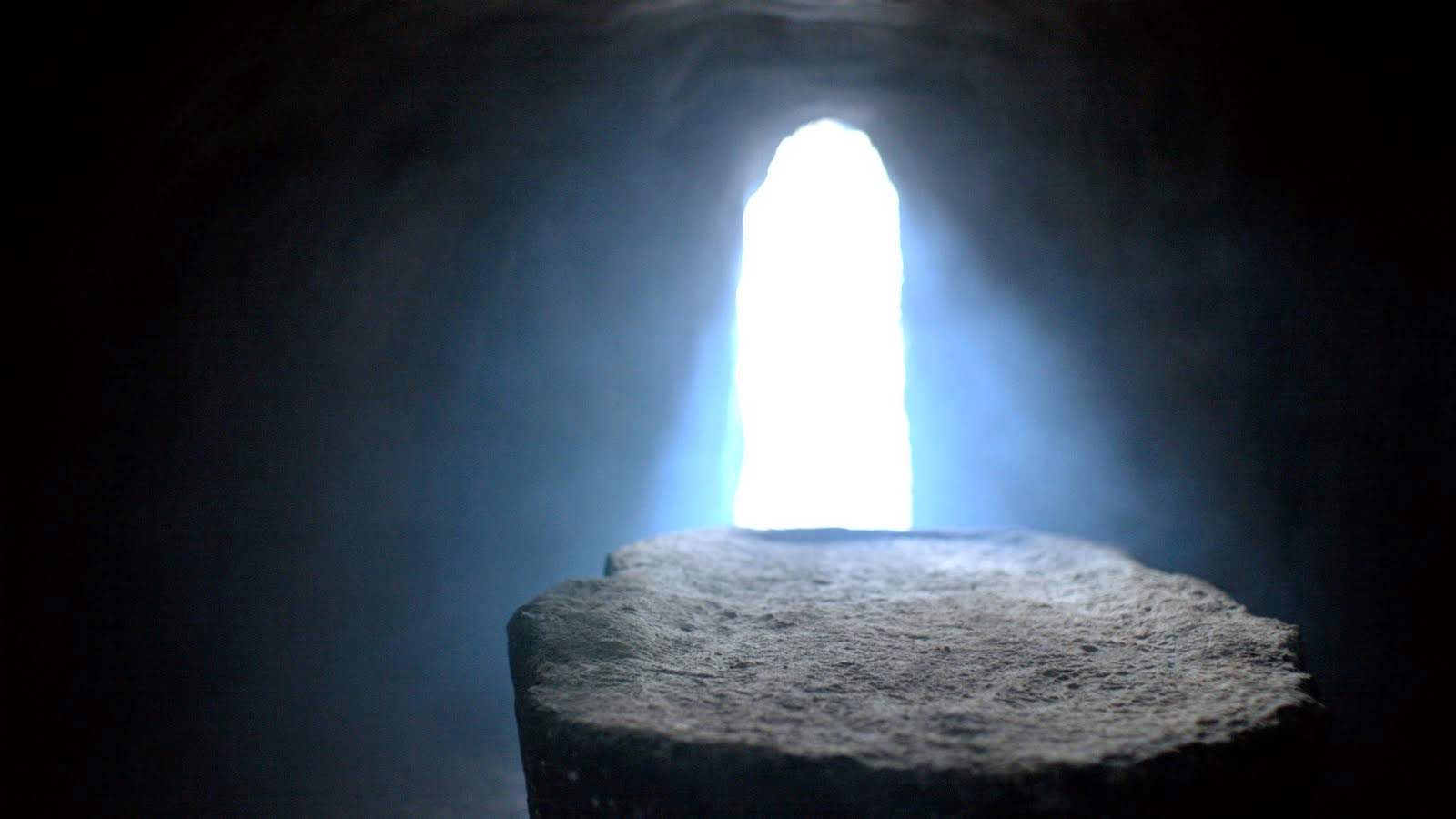
            Pastor Tim Keller once told of a minister who traveled to Italy and there saw the grave of a man who had died centuries before who was an unbeliever and completely against Christianity, but a little afraid of it, too. So the man had a huge stone slab put over his grave so he would not have to be raised from the dead in case there is a resurrection from the dead. He had insignias put all over the slab saying, “I do not want to be raised from the dead. I don’t believe in it.” Evidently, when he was buried, an acorn must have fallen into the grave. So a hundred years later the acorn had grown up through the grave and split that slab. It is now a tall towering oak tree. The minister looked at it and asked, “If an acorn, which has power of biological life in it, can split a slab of that magnitude, what can the acorn of God’s resurrection power do in a person’s life?”
 
When a person believes in Jesus as Savior and Lord, the power of the Holy Spirit is there. It’s the power of the resurrection—the same thing that raised Jesus from the dead.  Think of the things you see as immovable slabs in your life—your bitterness, your insecurity, your fears, your self-doubts and cynicism. Those things can be split and rolled off. The more you know Jesus, the more you grow into the power of the resurrection.  You do not need to just hear accounts of changed lives; you can experience new life yourself.


            Ministry in the church is to center in the redemptive events of Jesus; this is what makes the church a unique institution.  Use this Easter season to more fully circle everything in life and ministry around the person and work of Jesus Christ.  In doing so, the power of resurrection is with you.  Praise the Lord.