Where Is God in My Suffering? (Psalm 22:23-31)

“Praise him, you servants of the Lord!
    Honor him, you descendants of Jacob!
    Worship him, you people of Israel!
He does not neglect the poor or ignore their suffering;
    he does not turn away from them,
    but answers when they call for help.”

In the full assembly I will praise you for what you have done;
    in the presence of those who worship you
    I will offer the sacrifices I promised.
The poor will eat as much as they want;
    those who come to the Lord will praise him.
May they prosper forever!

All nations will remember the Lord.
    From every part of the world they will turn to him;
    all races will worship him.
The Lord is king,
    and he rules the nations.

All proud people will bow down to him;
    all mortals will bow down before him.
Future generations will serve him;
    they will speak of the Lord to the coming generation.
People not yet born will be told:
    “The Lord saved his people.” (Good News Translation)

I find that a great deal of truth and reality in this world is something of a mystery and a paradox. Christianity, especially, is a religion of paradox, in my opinion. For example, God is Three – Father, Son, and Spirit – but God is One. Jesus Christ is fully human and fully divine, at the same time, all the time. And when it comes to the spiritual life, suffering exists, and God is sovereign and in control of all things.

This then, is what prompts many people to question if there is really a God – since so much suffering exists throughout the world. Yet, it’s necessary to maintain the tension that hard circumstances, adversity, and difficulty in the form of awful suffering, and the preeminence of the Lord God almighty, both exist without taking anything away from either of them.

The severity of suffering, nor the supreme majesty of God, need to be watered down in any way in order to try and make sense of our existential situations.

“Suffering” is a word we would like to avoid. Even saying or reading the word might make some folks cringe. Suffering? No thanks. I think I’ll pass on that. Yet, something inside of us instinctively knows we cannot get around it. Everyone suffers in some way. It is endemic to the human condition that at times we will suffer physically, financially, mentally, emotionally, and spiritually. 

That’s why I believe there is so much talk within some Christian circles about miracles. It’s more than understandable:

  • a chronic pain sufferer wants relief, so she prays for a miracle of health
  • a small business owner is bleeding financially, and looks to God for an immediate miracle of wealthy clients
  • a beloved senior saint knows she is afflicted with Alzheimer’s, so she prays for the miracle of deliverance, even to be taken home to be with the Lord
  • a young adult finds himself in the throes of depression and has tried everything to cope and get out of it, so he petitions God for a miracle out of the deep black hole
  • a believer in Jesus keeps experiencing a besetting sin and cannot get over it, so she looks to God for the miracle of not struggling any more with it

These scenarios and a thousand other maladies afflict people everywhere. There are a multitude of stories out there. Folks who have experienced a miracle tell of their wonderful deliverance. But what about the rest? Those without the miracle? Do they have a lack of faith? Has God forgotten them?

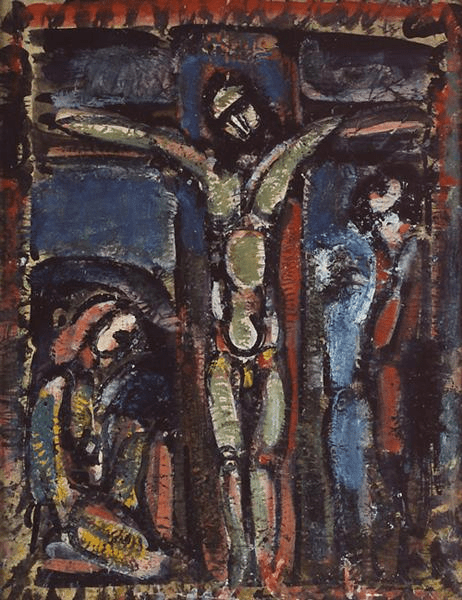
Oh, my, no! God sees, and God knows. God is acquainted with suffering. Jesus knows it first-hand. Remember that it was Jesus who said, “My God, my God, why have you forsaken me?” (Psalm 22:1; Mark 15:34; Matthew 27:46)

Even Jesus cried out in his suffering. But there was no deliverance coming for him.  There was, however, deliverance coming for us.

Sometimes the greatest miracle and deliverance of all is to be freed from the need for a miracle. The reason God doesn’t just offer immediate relief from everyone’s suffering and bring a divine miracle is that the Lord is doing something else: Walking with us through our suffering. God oftentimes has plans and purposes for us that are well beyond our understanding. 

We simply are not privy to everything in God’s mind.

We may not get the miracle we desire. Yet, what we will get without fail, is God’s provision and steadfast love all the way through the suffering.

Where is God in your suffering? Right beside you. Jesus is suffering with you. You are not crying alone; Christ weeps with you.

Let, then, those who suffer, eat and be full. Let them be satisfied with the portion God has given them. And, what’s more, let them offer praise to the God who is squarely beside them in every affliction and each trouble.

God Almighty, you are the One who knows suffering and affliction better than anyone. I admit I don’t often understand what in the world you are doing or not doing in my life and in the lives of those I love. Yet, I admit that I have found in you the comfort, encouragement, and strength to live another day in my trouble. For this, I praise you, in the Name of Jesus Christ, in the power of the Holy Spirit. Amen.

How Do You Interpret Suffering? (Job 5:8-27)

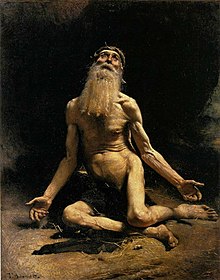
“Job,” by French painter Léon Bonnat, 1880

“But if I were you, I would appeal to God;
    I would lay my cause before him.
He performs wonders that cannot be fathomed,
    miracles that cannot be counted.
He provides rain for the earth;
    he sends water on the countryside.
The lowly he sets on high,
    and those who mourn are lifted to safety.
He thwarts the plans of the crafty,
    so that their hands achieve no success.
He catches the wise in their craftiness,
    and the schemes of the wily are swept away.
Darkness comes upon them in the daytime;
    at noon they grope as in the night.
He saves the needy from the sword in their mouth;
    he saves them from the clutches of the powerful.
So the poor have hope,
    and injustice shuts its mouth.

“Blessed is the one whom God corrects;
    so do not despise the discipline of the Almighty.
For he wounds, but he also binds up;
    he injures, but his hands also heal.
From six calamities he will rescue you;
    in seven no harm will touch you.
In famine he will deliver you from death,
    and in battle from the stroke of the sword.
You will be protected from the lash of the tongue,
    and need not fear when destruction comes.
You will laugh at destruction and famine,
    and need not fear the wild animals.
For you will have a covenant with the stones of the field,
    and the wild animals will be at peace with you.
You will know that your tent is secure;
    you will take stock of your property and find nothing missing.
You will know that your children will be many,
    and your descendants like the grass of the earth.
You will come to the grave in full vigor,
    like sheaves gathered in season.

“We have examined this, and it is true.
    So hear it and apply it to yourself.” (New International Version)

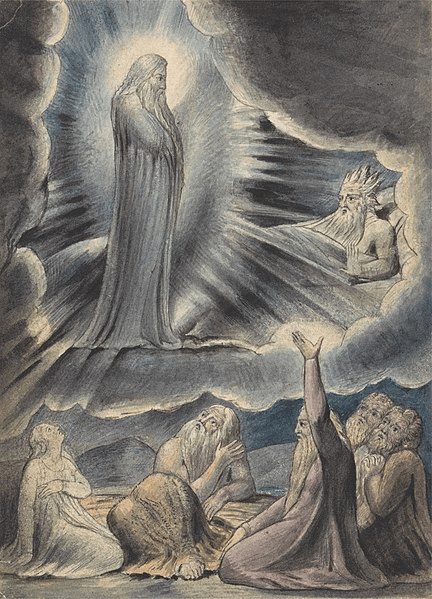
“The Vision of Eliphaz,” by John Linnell (1792-1882)

I personally find it rather annoying whenever someone gives me unsolicited advice. It is especially loathsome when it comes with a lot of useless verbiage which is offered as gospel truth.

Eliphaz was a “friend” of Job – which brings to mind the old adage, “With a friend like that, you don’t need any enemies!” Eliphaz was also full of himself, believing that he had all the answers to Job’s terrible suffering.

The unhelpful speech of Eliphaz became harmful words that cut into Job’s spirit. You see, Job knew with a settled confidence that his personal integrity was intact. Yet, his trouble abounded. We need not, like Eliphaz, rush to the conclusion that something is wrong with the suffering person. It may be the Spirit of God thrusting us into a desert experience to test and approve our faith.

Eliphaz offered one of those tired age-old arguments that bad things only happen to bad people. He came at Job with the inexperience and absurdity of making misguided assumptions. He rhetorically asked if there were ever innocent people who were trashed with trouble, or upright folks who ever got cut off from God? 

The concluding judgment of Eliphaz was bound to be off the mark – believing that some sort of secret sin must surely be the culprit behind Job’s awful misfortune. Certainly, Eliphaz thinks, Job cannot possibly go through such terrible suffering without having done something to anger God.

Times change, but the basic nature of people, not so much. In today’s church and world, the same notions still endure. If I had a quarter for every time I heard crazy comments, like the following, I would be a rich man: 

  • “He’s poor because he is lazy and doesn’t want to work.”
  • “She keeps having chronic health issues. God is punishing her.”
  • “The pandemic is God’s judgment on us for not having the Ten Commandments in our courthouses.”
  • “If you just confess your sin and have faith, you’ll be healed.”
  • “They’re in big trouble. They obviously did something evil.”

On and on the wrong-headed statements continue, ad nauseum.

The Apostle Peter understood how to view trouble in a healthy way. He said we all suffer – both the good person and the wicked. It’s just a matter of whether we will suffer for doing the good and right thing, or suffer because of saying shallow, illogical, and stupid comments that offend God and hurt others. (1 Peter 3:17-18)

Even Christ suffered. And it wasn’t because of his own sin. It was because of ours. Jesus suffered once for sins, the righteous for the unrighteous, that he might bring us to God. 

Since Jesus suffered, the follower of Jesus will suffer. There is a big picture only God sees. Whenever we suffer, there is something going on behind the spiritual scene. We must allow God to do divine work, and then, trust that the Lord bends all human suffering for good and redemptive purposes.

“Where there is no love, pour love in, and you will draw love out.”

St. John of the Cross

So, let’s change the rhetoric. Instead of jumping to judgment, reflexively hop to grace with comments like these:

  • “He has poverty of spirit. He’s blessed and will inherit the kingdom of God.”
  • “She’s in chronic pain. God has allowed her the privilege of suffering in solidarity with her Lord.”
  • “We’re in a pandemic. Here’s a chance for us to live out the Ten Commandments.”
  • “If we confess the world’s sins of pride, hate, and injustice, perhaps God’s mercy will deliver us.”
  • “We’re in a big pickle. No better time than now to grow in grace.”

Where is God? Beside you, quietly and confidently holding you up in your suffering. For me, that’s one of the best ways to interpret hard suffering.

Lord God, I entrust myself to you because you know what you are doing. Thank you for the trials of life which humbles my heart to pray. Do your work in me so that my faith is fortified for a lifetime of service in the church and the world, through Jesus Christ, my Lord. Amen.

God Is Bigger (Psalm 46)

God is our refuge and strength,
    a very present help in trouble.
Therefore we will not fear, though the earth should change,
    though the mountains shake in the heart of the sea,
though its waters roar and foam,
    though the mountains tremble with its tumult.

There is a river whose streams make glad the city of God,
    the holy habitation of the Most High.
God is in the midst of the city; it shall not be moved;
    God will help it when the morning dawns.
The nations are in an uproar; the kingdoms totter;
    he utters his voice; the earth melts.
The Lord of hosts is with us;
    the God of Jacob is our refuge.

Come, behold the works of the Lord;
    see what desolations he has brought on the earth.
He makes wars cease to the end of the earth;
    he breaks the bow and shatters the spear;
    he burns the shields with fire.
“Be still, and know that I am God!
    I am exalted among the nations;
    I am exalted in the earth.”
The Lord of hosts is with us;
    the God of Jacob is our refuge. (New Revised Standard Version)

Fear is one of those things that we don’t get over simply by telling ourselves to not be afraid. In fact, that approach typically makes us even more fearful – namely, because we focus on the fear itself. But to cope and deal with fear, it requires a focus on something bigger than the fear.

God is bigger than the boogie man.
He’s bigger than Godzilla,
or the monsters on TV.
Oh, God is bigger than the boogie man.
And He’s watching out for you and me.

So, when I’m lying in my bed,
and the furniture starts creeping,
I’ll just laugh and say,
“Hey, cut that out!”
And get back to my sleeping.
‘Cause I know that God’s the biggest,
and He’s watching all the while.
So, when I get scared I’ll think of Him,
and close my eyes and smile.

God is bigger than the boogie man.
He’s bigger than Godzilla,
or the monsters on TV.
Oh, God is bigger than the boogie man.
And He’s watching out for you and me. – VeggieTales

Psalms and songs of trust in God help us focus on divine hugeness instead of human puniness.

Changing Circumstances

Even though people may find themselves in the dire straits of natural disasters, they can have confidence smack in the middle of all the crazy chaos. Whereas those who focus on their fear become ever more anxious and feel as if the world is out of control, the believer isn’t threatened when overwhelming circumstances occur.

We will not fear, because God – who created the world and its vast natural systems – stands above it all and is therefore able to establish order out of chaos. Just as we are certain that the sun will again rise in the morning, so too, we have full confidence that God shall rise over the darkness and bring light and warmth to all that is shadowy and cold.

Shaky Politics

The nations and their governments who rule with injustice and care nothing for religion, breathe-out their threats and posture themselves as supreme leaders. They, too, are chaotic forces. But God is far above them, as well as above the flood and the famine. The leader’s bellicose blustering sounds merely like a chattering chipmunk to God.

And like natural disasters, the uproar of the nations does damage; but national leaders cannot topple God. Instead, God will shake up the unjust nations, like a protein shake in a blender. When delusional leaders encounter the voice of God, they cower in fear – but God’s people don’t. The spiritual person’s foundation will not be shaken, whereas the would-be dictator will find himself without anyone to lead.

A Working God

God is always working, albeit most of the time behind the scenes. God’s dominion extends over everything and everyone. God can obliterate any and all threats because God is everywhere present.

Based on this view of God, all we as people need do is be still and know that the Lord is God. Like Jesus rebuking the waves and the sea, resulting in immediate stillness, so God’s word brings us stillness, calmness, and freedom from fear and anxiety.

God is with us. God is in control. God cares for us. There are a lot of things we don’t know – such as why we have to personally endure the natural disasters and the unnatural dictators – but we can know without a shadow of a doubt that the presence of God surrounds us, and the love of God squeezes us.

With a transcendent Being who commands the angelic hosts of heaven, our source of security comes not from within but from without. The Lord is a trustworthy God who is vigilant in watching over us.

Trusting the Lord

Armies, security systems, and protective coverings all have their needed purpose in human life. Yet, when we look to our ultimate protection – the kind that provides security of both body and soul – it is God’s presence that sustains our highest and greatest needs.

Perhaps you understand the psalm’s message, yet still find it difficult or untenable to place faith in such an ancient writing and an even older God. Maybe you much prefer to trust in something that isn’t so ethereal, something you can engage with your five senses.

It could be that you prefer a strong political leader, more and bigger weapons, higher and thicker walls of protection. You work hard to have as much money as possible to keep you safe from harm. You seek to gain as much influence in the form of earthly power and authority as you can.

The problem is, however, that none of this earthly posturing is going to protect you from what you fear the most. All that work is going to prove unreliable in the end.

God is the only sure defense. Ultimate power belongs to the Lord God almighty, creator of heaven and earth. Deliverance of body and soul does not ultimately come through the strength of the military, the economy, or any human ingenuity or hard work; for the Christian, it comes through the suffering, death, and resurrection of Jesus Christ.

Any inclination to place saving trust in personal resources, human institutions, or world might, will result in sure failure. They cannot remedy our fear, for nothing is able to match the power of God. Indeed, God is bigger than anyone and anything. We need the mighty fortress which is our God.

A mighty Fortress is our God
A Bulwark never failing
Our Helper He amid the flood
Of mortal ills prevailing

For still our ancient foe
Doth seek to work us woe
His craft and power are great
And armed with cruel and hate
On earth is not his equal

Did we in our own strength confide
Our striving would be losing
We’re not the right Man on our side
The Man of God’s own choosing
Dost ask who that may be?
Christ Jesus, it is He
Lord Sabaoth His Name
From age to age, the same
And He must win the battle

That word above all earthly powers
No, thanks to them, abideth
The Spirit and the gifts are ours
Through Him who with us sideth
Let goods and kindred go
This mortal life also
The body they may kill
God’s truth abideth still
His Kingdom is forever

Amen

What Is Your View of God? (Psalm 86)

Incline your ear, O Lord, and answer me,
    for I am poor and needy.
Preserve my life, for I am devoted to you;
    save your servant who trusts in you.
You are my God; be gracious to me, O Lord,
    for to you do I cry all day long.
Gladden the soul of your servant,
    for to you, O Lord, I lift up my soul.
For you, O Lord, are good and forgiving,
    abounding in steadfast love to all who call on you.
Give ear, O Lord, to my prayer;
    listen to my cry of supplication.
In the day of my trouble I call on you,
    for you will answer me.

There is none like you among the gods, O Lord,
    nor are there any works like yours.
All the nations you have made shall come
    and bow down before you, O Lord,
    and shall glorify your name.
For you are great and do wondrous things;
    you alone are God.
Teach me your way, O Lord,
    that I may walk in your truth;
    give me an undivided heart to revere your name.
I give thanks to you, O Lord my God, with my whole heart,
    and I will glorify your name forever.
For great is your steadfast love toward me;
    you have delivered my soul from the depths of Sheol.

O God, the insolent rise up against me;
    a band of ruffians seeks my life,
    and they do not set you before them.
But you, O Lord, are a God merciful and gracious,
    slow to anger and abounding in steadfast love and faithfulness.
Turn to me and be gracious to me;
    give your strength to your servant;
    save the child of your maidservant.
Show me a sign of your favor,
    so that those who hate me may see it and be put to shame,
    because you, Lord, have helped me and comforted me. (New Revised Standard Version)

The biblical psalms are first and foremost a collection of prayers. Spanning the scope of the human condition, and plumbing the depths of human emotion, we find that there are psalms for every sort of situation we may find ourselves in – whether the circumstance is good or bad.

In David’s particular case, he knew what it was like to have evil men hate him and pursue taking his life through no fault of his own. Although I have never faced adversity to such a degree as David did, I do know something about people who, to put it bluntly, just flat-out hate my guts. It feels awful, and it can be terribly draining emotionally and spiritually. Having disrespectful and rude people talk behind your back (and sometimes even to your face) is in direct contrast to who God is.

God is described by David as merciful and gracious, slow to anger, abounding in steadfast love, and faithful. Whereas insolent people objectify others and seek their own selfish agendas, God always acts in accord with a basic character of love and grace. 

Based upon the nature of just and benevolent God, we can choose to cry out, just like David did, to show us a sign of God’s favor. We can pray for God to provide us with some tangible communication of divine love in ways we can understand so that we can be helped and receive the kind of comfort we need through our adversity.

Be assured that with such a God, our pleas, cries, and tears will be noticed, affirmed, and answered. We can trust the sovereign Lord of all creation to address the insolence and injustice that exists around us and toward us.

All of this talk about adverse circumstances and unjust people, gets down to our view of God and our theological understanding of the basic Divine nature and purpose. 

For some people, God is up there, somewhere, like some white-bearded old guy who is aloof to what is going on down here – there is neither anything personal nor personable about him, at all. 

For others, God is a force which binds all things together. In this theology, God exists, but you are never quite sure how to connect – it’s like a crapshoot trying to get in touch with him. 

For yet others, God is perpetually perturbed about something; God has a bee in his bonnet, and it is apparently our job to figure out what he is so sullen and upset about all the time so that we can appease him in some way.

However, the psalmist David, sees God in wholly other ways than this. For David, God is personal, knowable, and reachable. David thought about God in ways which transcend either gendered or personality-type categories. 

Note the descriptions David provided: a willingness to forgive; an abiding, consistent, and steadfast presence of divine love; always having the time and desire to listen; possessing the power and ability to provide help and protection; being kind and merciful; not being easily angered; and extending needed comfort and consolation.

Now this is a God you can sink your teeth into – attentive, engaged, and anything but upset all the time. This is the reason why David has confidence to ask for deliverance, direction, and delight. Such a God is like a caring grandmother who seeks to always love and serve, and not a crotchety old curmudgeon who always seems bothered by everyone and everything.

If your theology and your view of God cannot support and bear the weight of life’s hardest circumstances, then you need a different view of God!

I invite you to see the God of David. Theology proper discerns the being, attributes, and works of God as fundamentally faithful and loving. This God has both the ability and the will to meet and satisfy your life’s greatest needs.

Great God of David, you are above all things and beside all things and with all things. You are uniquely positioned and powerful to walk with me through all the situations of my life. Thank you for sending the Son of David to make real your promises to me. Amen.