Psalm 57 – Prayer and Praise in the Middle of Trouble

Above the Heavens by painter Melani Pyke

Be merciful to me, O God, be merciful to me,
    for in you my soul takes refuge;
in the shadow of your wings I will take refuge,
    until the destroying storms pass by.
I cry to God Most High,
    to God who fulfills his purpose for me.
He will send from heaven and save me,
    he will put to shame those who trample on me.
God will send forth his steadfast love and his faithfulness.

I lie down among lions
    that greedily devour human prey;
their teeth are spears and arrows,
    their tongues sharp swords.

Be exalted, O God, above the heavens.
    Let your glory be over all the earth.

They set a net for my steps;
    my soul was bowed down.
They dug a pit in my path,
    but they have fallen into it themselves.
My heart is steadfast, O God,
    my heart is steadfast.
I will sing and make melody.
    Awake, my soul!
Awake, O harp and lyre!
    I will awake the dawn.
I will give thanks to you, O Lord, among the peoples;
    I will sing praises to you among the nations.
For your steadfast love is as high as the heavens;
    your faithfulness extends to the clouds.

Be exalted, O God, above the heavens.
    Let your glory be over all the earth. (New Revised Standard Version)

One thing we all share about the human experience is that, sooner or later, someone or a group of people will let us down. 

On top of that, many have experienced, or will experience, some sort of abuse and victimization from another person or group – leaving one scarred by trauma. What’s more, there are those who have even had their very lives at risk because someone intentionally sought to actually kill them. That is the company David found himself in when King Saul, and when his son Absalom, sought to do away with his life.

To David’s credit, he never retaliated and did not try and turn the tables by putting a hit out on either Saul or Absalom. Instead, David cried out to God. And we get to listen in on the prayer. Today’s psalm is David’s prayerful reliance upon the God in whom he put all his trust and praise. 

The entire basis of prayer is to let God be God. So, how do we exactly do that?

When the storms of life assail us, calloused persons trample on us with impunity, devious individuals set traps for us, and greedy organizations prey upon us, we refuse to respond in kind. Instead, we deliberately praise God and rely on divine protection, praying to the Lord and steadfastly holding to our confidence that if God is for us, nothing can be against us.

That advice may seem like some sort of pie-in-the-sky rot of ginning up positive thoughts when there is nothing positive to be seen in the experience. Indeed, we must never, and I repeat, never invalidate another’s experience nor our own, when those experiences are hellish.

Yet, there is also always hope. There are two unshakable truths which are constant and never diminished by any adverse circumstance: God is present. And God loves.

If we know nothing else, and all else seems to be descending into the abyss of tragedy, the twin towers of divine presence and attention stand tall as the strongest sentinels over our dilapidated situation and struggling faith.

Letting God be God means not trying to exercise control over things we have no control over – but affirming that the Lord is willing and capable of handling our worst. It could be that we are stuck in the belly of whale because, without our knowing, there are sharks surrounding us who cannot get to us.

Our perspective of matters is, at best, severely limited. It is much better to place faith in the God who sees it all with an expansive eye which misses nothing.

One of the best things about the psalms is that they are a wonderful collection of prayers we can adopt for our own. Not only can we use them for ourselves, but we are also obliged to do so. If anyone has been in an adverse situation so deep that it feels like having ambled into a pride of lions, it is quite likely that the experience leaves one with no adequate words to say. It’s as if you are paralyzed with fear. 

So, let the psalm say for you what you cannot even begin to utter yourself. The Word of God is not meant to sit on a coffee table or rest on a shelf; it is meant to be opened and used for prayer. Allow it to do its intended purpose.

Who knows? Perhaps your faith in the mercy of God and your praises lifted to God will give rise to settled confidence and peace so that you can rest secure even when all around you is going to hell.

Be merciful to me, O God, for in you my soul takes refuge.  Even though I feel the slash of people with tongues as swords, my heart is steadfast and will exalt your name above the heavens.  Let your glory be over all the earth!  Amen.

2 Samuel 15:13-31 – Unflagging Trust

Stained glass of King David, Fringford, England church

A messenger came and told David, “The hearts of the people of Israel are with Absalom.”

Then David said to all his officials who were with him in Jerusalem, “Come! We must flee, or none of us will escape from Absalom. We must leave immediately, or he will move quickly to overtake us and bring ruin on us and put the city to the sword.”

The king’s officials answered him, “Your servants are ready to do whatever our lord the king chooses.”

The king set out, with his entire household following him; but he left ten concubines to take care of the palace. So, the king set out, with all the people following him, and they halted at the edge of the city. All his men marched past him, along with all the Kerethites and Pelethites; and all the six hundred Gittites who had accompanied him from Gath marched before the king.

The king said to Ittai the Gittite, “Why should you come along with us? Go back and stay with King Absalom. You are a foreigner, an exile from your homeland. You came only yesterday. And today shall I make you wander about with us when I do not know where I am going? Go back and take your people with you. May the Lord show you kindness and faithfulness.”

But Ittai replied to the king, “As surely as the Lord lives, and as my lord the king lives, wherever my lord the king may be, whether it means life or death, there will your servant be.”

David said to Ittai, “Go ahead, march on.” So Ittai the Gittite marched on with all his men and the families that were with him.

The whole countryside wept aloud as all the people passed by. The king also crossed the Kidron Valley, and all the people moved on toward the wilderness.

Zadok was there, too, and all the Levites who were with him were carrying the ark of the covenant of God. They set down the ark of God, and Abiathar offered sacrifices until all the people had finished leaving the city.

Then the king said to Zadok, “Take the ark of God back into the city. If I find favor in the Lord’s eyes, he will bring me back and let me see it and his dwelling place again. But if he says, ‘I am not pleased with you,’ then I am ready; let him do to me whatever seems good to him.”

The king also said to Zadok the priest, “Do you understand? Go back to the city with my blessing. Take your son Ahimaaz with you, and also Abiathar’s son Jonathan. You and Abiathar return with your two sons. I will wait at the fords in the wilderness until word comes from you to inform me.” So Zadok and Abiathar took the ark of God back to Jerusalem and stayed there.

But David continued up the Mount of Olives, weeping as he went; his head was covered, and he was barefoot. All the people with him covered their heads too and were weeping as they went up. Now David had been told, “Ahithophel is among the conspirators with Absalom.” So, David prayed, “Lord, turn Ahithophel’s counsel into foolishness.” (New International Version)

“Faith is taking the first step even when you don’t see the whole staircase.”

Martin Luther King, Jr.

It’s an understatement to say that King David had family drama.

Maybe that’s because he had a lot of wives and even more kids. Or it could be that being a king didn’t transfer well to being a father. And it just might be that his experience was mostly about simply living in a fallen world, full of icky relational dynamics and human conflict.

David seemed to be at his best when at his lowest. His son, Absalom, carefully designed a conspiracy to take over the kingdom. And it was looking as though he might just do it. David, and those loyal to him, fled Jerusalem to avoid being overthrown and killed. They were between a rock and a hard place, to put it mildly. David was literally running for his life.

If we put ourselves in David’s sandals, how would we respond? 

I suppose, at the least, we would likely complain. Who is Absalom that he should dishonor his father in such a way as this? Then, we may try and find ways to maintain power, and get back at Absalom for being a rebellious and destructive son. 

I am humbled by David’s unflagging trust in God. Like the suffering Job centuries before him, David was willing to receive anything from the hand of God, whether for good or evil. He wholesale accepted whatever seemed good to God, without attempting to force anything on the Lord. “Let God do to me what seems good to him,” was the faith affirmation of David.

Yet, at the same time, David was aware and in touch with his emotions as he left the city and ascended the Mount of Olives. He wept and lamented over the situation he and all those with him had to experience. 

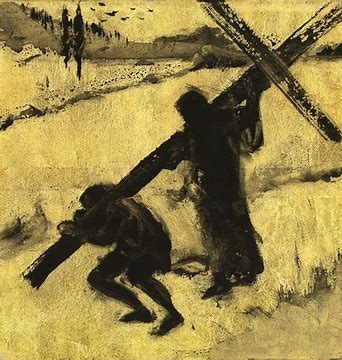
A thousand years later, Jesus took the same trek out of the city in great sorrow because of people who conspired against him. Christ faced the agony of the cross through the machinations of sinful humanity who did not want him as Lord over their lives.

Our confidence must rest in the God who is never caught unaware of our situations and always knows how to respond. We must rely on our prayers to the Lord as we navigate the difficulties of this life. 

Humility goes a long way toward letting the will of God rule the day.

O Lord, please turn the plans and the counsel of evil persons into foolishness. Do not let the sinfulness of people have its way and run roughshod over my life.  I trust in you to bend a bad situation toward your own good purpose through Jesus Christ my Lord.  Amen.

Galatians 6:1-10 – Fulfill the Law of Christ

Brothers and sisters, if someone is caught in a sin, you who live by the Spirit should restore that person gently. But watch yourselves, or you also may be tempted. Carry each other’s burdens, and in this way you will fulfill the law of Christ. If anyone thinks they are something when they are not, they deceive themselves. Each one should test their own actions. Then they can take pride in themselves alone, without comparing themselves to someone else, for each one should carry their own load. Nevertheless, the one who receives instruction in the word should share all good things with their instructor.

Do not be deceived: God cannot be mocked. A man reaps what he sows. Whoever sows to please their flesh, from the flesh will reap destruction; whoever sows to please the Spirit, from the Spirit will reap eternal life. Let us not become weary in doing good, for at the proper time we will reap a harvest if we do not give up. Therefore, as we have opportunity, let us do good to all people, especially to those who belong to the family of believers. (New International Version)

Its all about grace. God’s grace. In Christ, lived by means of the Holy Spirit. Its not about hard black-and-white lists of rules or principles to live by. The Law of Christ is to help each other in our troubles, no matter what.

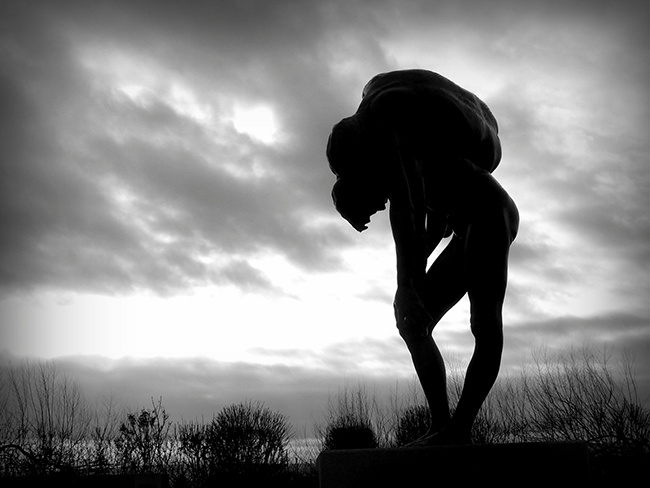
Overwhelming physical, mental, emotional, and/or spiritual burdens can become even more heavy through failing to live up to someone’s or some group’s or a church’s unwritten list of rules. “Keep a stiff upper lip.” “Everything is possible for those who love God.” “Stay positive.” “Just have faith and trust God.” Or worse, silence…. These and hundred other phrases communicate to people with crushing loads that they will have to carry them alone.

The letter to the Galatian believers spells out what is to truly characterize Christian interactions, and what it means to walk in the Spirit. Believers in Jesus are to emulate the behavior of Christ, the ultimate burden-bearer, who came to restore sinners, not condemn them.

We have a responsibility to rescue, renew, and revitalize persons who have lost their way. We are our brother’s and our sister’s keeper.

Someone caught in the crosshairs of a bad decision, or ensnared by making a wrong step, who is now in over their heads, needs help. In such a case, we are to restore, not punish. The person’s wound needs spiritual cauterizing. The broken spirit needs to be set back into place to heal properly.

The tone and the attitude which we do this important work of restoring people is through gentleness (meekness). We are to have a mindset and heart stance which understands there is no moral superiority with me. I could easily be the person in need of restoration.

When we have a gentle spirit, then we discern we are not above falling into the same trouble. We, too, are ethically and morally vulnerable. So, the church has a corporate responsibility to bear one another’s burdens.

There are other people who, through no fault of their own, find themselves in over their heads, too. Their health and mental health challenges, the emotional weight of hard circumstances, and their broken spirits require others to help shoulder the load so that the weighted-down person is not crushed.

Nobody in any faith community is above doing this work of burden-bearing. And it isn’t appropriate for an individual to boast about the burden-bearing work of others, as if it were theirs. You and I are to take responsibility for our own actions and attitudes without taking credit for someone else’s efforts.

A mature spiritual community of people are able to distinguish those loads which individuals must bear for themselves, and those burdens where help is sorely needed. We are accountable to carry our own backpack. And we are also accountable before Christ to share our load with others when it becomes too heavy for us.

If we choose not to allow others to assist us when we need it, then we will reap what we sow – we’ll feel the full weight and consequences of our silence. The planting and harvesting metaphor isn’t just for those who have engaged in wrongdoing. It is also for those who don’t put any seeds in the ground to begin with. They shouldn’t expect a harvest, at all.

Grace lived out in real experiences knows when to get under a load and help carry it. And grace also knows when to be kind to self and share the heavy burden with others who can help shoulder it for a bit. This is Christianity which relies on the enablement of the Spirit, made possible by Christ, who carried our crushing weight of guilt and shame for us.

Our Christian freedom in Jesus is to be stewarded wisely through carrying one another’s burdens, and so, fulfilling the Law of Christ.

God of all comfort, our help in time of need: We humbly pray to relieve and restore persons in need, people for whom are tired, sick, weary, or unable to continue as they are. Look upon them with the eyes of your mercy; comfort them with a sense of your goodness; preserve them from the temptations of the enemy; and give them patience under their affliction. In your good time, restore them to holistic health, and enable them to live their lives to your glory; and may they dwell with you in life everlasting; through Jesus Christ our Lord. Amen.

Matthew 8:18-22 – The Path of Christian Discipleship

When Jesus saw that a curious crowd was growing by the minute, he told his disciples to get him out of there to the other side of the lake. As they left, a religion scholar asked if he could go along. “I’ll go with you, wherever,” he said.

Jesus was curt: “Are you ready to rough it? We’re not staying in the best inns, you know.”

Another follower said, “Master, excuse me for a couple of days, please. I have my father’s funeral to take care of.”

Jesus refused. “First things first. Your business is life, not death. Follow me. Pursue life.” (The Message)

Count the cost. Realize what it will take. Have some understanding of the time, energy, and resources needed. Discern the kind of commitment which is before you. It’s a matter of life and death, of spiritual survival.

If you had to carry everything you needed in a backpack, what would you put into it?

First off, for me and most people, that means identifying the barest essentials. It would likely take a long time to think simplistically about what is most important for survival. A lot of things would get left behind. And many items would gain greater attention and appreciation.

We would need some small basic tools including: a multi-tool with a knife and pliers; a source of illumination, like a flashlight and extra batteries; duct tape; rope; fishing line; a way of starting fire; a pot, pan, and mug; first-aid kit; emergency poncho; and just a few extra items of clothing.

If we were to live out of a backpack, it would very much change our lifestyle. And that is the point Jesus was trying to get across to some individuals who seemed like they couldn’t do that.

Trying to fit an existing life into a brand new life won’t work. It will not fit into the backpack of Christian discipleship.

Instead, we must adjust to a new reality, a completely different way of being.

When my wife and I were raising our girls, those precocious little females brought lots of life to the dinner table each night. There was never a dull moment with them. Today, however, they are all grown with their own families – which means we are empty-nesters.

It would be weird if my wife and I continued to live as if they were home – making large meals, dirtying lots of dishes, and engaging in mock conversations. Rather, although it took a while to get used to, we eventually came to grips with the new reality that our precious girls were grown and no longer living under our roof. And that meant a complete change of lifestyle for us.

A full-orbed Christian spirituality includes both the comfort of Christ to others, and the rugged responsibility to obey the words and ways of Jesus. In other words, the love of Jesus Christ is both tender and tough, at the same time, all the time.

Hurting and healing are both necessary for the follower of Jesus. Hard teachings and uncompromising commands for discipleship from Christ become the pathways of healing.

So, then, to go all out for Christ will involve much difficulty.

Jesus said to his followers, “If any of you want to be my follower, you must stop thinking about yourself and what you want. You must be willing to carry the cross that is given to you for following me. Any of you who try to save the life you have will lose it. But you who give up your life for me will find true life.”

Matthew 16:24-25, ERV

In today’s New Testament lesson, Jesus rather rudely rejected two would-be followers. When it comes to God’s upside-down kingdom, the eager beavers are turned away, and the half-hearted are called.

Jesus wants us, all of us, and not just our dedication. That is the demand of Christian discipleship. Anyone who believes they can remain the same person and simply fit a bit of Jesus into their lives, does not understand the cost of following Christ. The person who thinks it is Christianity’s lucky day when they decide to follow Jesus has not yet grasped what it means to be a Christian.

Whereas the religious scholar’s head was too big to fit through the narrow hole of Christian discipleship, the man who wanted to bury his father was too fainthearted and timid. He wanted to dip his toe in the water, and really had no intention of taking the all out plunge into the pool.

Nobody needs to do something “first” before following Jesus. Essentially, Jesus was neither invited nor welcome to the funeral. And Christ will have nothing to do with people picking and choosing which areas of their lives he will be invited into. It’s either a wholesale welcome or no welcome, at all.

When Jesus knocks on the door, he wants to be invited into the entire house, not just the foyer.

For Jesus, following him isn’t easy. The world is full of spiritual zombies, the walking dead. This old fallen world needs Christian disciples who will follow Jesus anywhere – into the hard places and rough terrain of engaging the sinful world.

We are meant to wholeheartedly follow Jesus, neither flippantly without counting the cost, nor procrastinating the hard road of Christian discipleship. Christians are to accept and maintain orders of first importance – which means full submission and obedience to Jesus Christ. Anything less is merely a cheap form of following.

When I Survey the Wondrous Cross by Isaac Watts

When I survey the wondrous cross
On which the Prince of glory died
My richest gain I count but loss
And pour contempt on all my pride.

Where every realm of nature mine
My gift was still be far too small
Love so amazing, so divine
Demands my soul, my life, my all.

Lord, you are all-knowing and full of wisdom. Your plan is masterful. Help me as your disciple to follow you in every thought, word, and deed. Give me a heart of obedience and trust so that I do not get wrapped up in my doubt or what I think is the right choice.

Help me to recognize that your good will does not always look the way I think it should, but that doesn’t make it any less good. I desire to be your disciple and follow you all the days of my life. Please give me the strength to do that. Amen.