The Example To Follow (1 Peter 2:19-25)

The Crucifixion, by John Kohan

For it is commendable if someone bears up under the pain of unjust suffering because they are conscious of God. But how is it to your credit if you receive a beating for doing wrong and endure it? But if you suffer for doing good and you endure it, this is commendable before God. To this you were called, because Christ suffered for you, leaving you an example, that you should follow in his steps.

“He committed no sin,
    and no deceit was found in his mouth.”

When they hurled their insults at him, he did not retaliate; when he suffered, he made no threats. Instead, he entrusted himself to him who judges justly. “He himself bore our sins” in his body on the cross, so that we might die to sins and live for righteousness; “by his wounds you have been healed.” For “you were like sheep going astray,” but now you have returned to the Shepherd and Overseer of your souls. (New International Version)

The reality of this life, for every one of us, is that we will suffer in some way. It’s not a matter of if we will suffer, but when and why. What’s more, my suffering is really not about me; it’s about him.

Therefore, let’s ensure that when the suffering comes, we know why – that it isn’t because of our own stupidity and poor choices, but because we are in solidarity with the One who suffered on our behalf and are living for him.

And in the midst of such suffering, let’s make sure that we face it and deal with it according to the example of Christ. Let’s imitate him.

Let’s also be honest from the start: We don’t like pain and suffering, and we often spend an inordinate amount of time and energy trying to avoid pain. 

Yet, in reality, our own suffering weans us away from the temporal things we tend to find consolation in, and drives us to the permanent source of comfort, strength, help, and encouragement. Our consolation is ultimately found solely in him.

When the athlete goes into the weight-room, they purposely go there to suffer. There is grunting and straining and difficulty. There is a tearing-down of muscle fibers. There is pain. 

That’s because strength-training needs commitment which suffers, and the pain that comes with growth. One cannot simply go into a weight-room, sit and watch other people lift weights, and believe they will then get in shape by only observing. 

God will put us in unwanted circumstances we did not ask for, and would not choose for ourselves, in order to position us to know him, to know Jesus. 

Crucifixion, by John Kohan

There are things in our lives that need to experience the suffering of death, in order for new life and growth to occur. For example, fire is an important part of Yellowstone National Park, because it brings environmental growth. According to ecology experts:

“Fire promotes habitat diversity by removing the forest overstory, allowing different plant communities to become established, and preventing trees from becoming established in grassland. Fire increases the rate that nutrients become available to plants by rapidly releasing them from wood and forest litter and by hastening the weathering of soil minerals.”

Concerning Christianity: Suffering is a necessary part of the Christian life because it creates the conditions for new life and growth and releases fresh sources of God’s grace into the church and world. 

We are to put to death anger, rage, malice, slander, lying, and useless language. They are to be replaced with compassion, kindness, humility, gentleness and patience, forgiveness, and love. (Colossians 3:7-14) 

More pointedly: Quit fighting against your suffering. Stop kicking and screaming long enough to look your suffering square in the face and learn from it.

Your suffering is trying to tell you something. But if you keep taking the stance of a pugilist trying to punch the pain away, suffering will just keep moving forward at you and never topple. 

You and I cannot beat suffering. We can only learn from it. In order to learn from it, we must embrace it.

So, here’s the counter-intuitive, counter-cultural practice that you might not like, and might think I’m off my rocker for suggesting: Submit to suffering. Yes, because in doing so you are submitting to him.

Don’t hear what I’m not saying. I am, in no way, trying to sanitize troubles, adverse circumstances, or even terrible trauma. Evil is evil, bad is bad, and no amount of saying otherwise will change the leopard’s spots. 

However, only through submitting to the process of what suffering teaches us will we ever have power over it.

Fighting against suffering is about as useful as taking on a bear. Bears, like suffering, can be dangerous. We don’t blame bears if they act like bears. Likewise, we ought not to be surprised when suffering hurts.

I suggest we treat suffering like facing a bear in the wilderness of trouble: 

  1. Calmly talk in low tones to your suffering. Speak to it. Remember who you are. You belong to God. Treat suffering as if it is curious about you. Stay calm. Doing the big freak-out only encourages suffering to do damage.
  2. Walk with others through suffering. Both yours and theirs. Christian community is one of the best practices of the Christian life. Suffering becomes connection within a community of persons who discern its purpose. 
  3. Keep your eye on suffering.  Don’t ignore it, or pretend it isn’t there. Don’t run. Face suffering. Keep it in front of you. It will pass, but you must be patient and calm. Once it is gone, then you can reflect on what happened and debrief with others about the experience.

For anything to change, we must stop something, and start something else. When it comes to suffering:

  • Stop fighting. Start accepting. 
  • Stop going it alone. Start living in vital and vulnerable community. 
  • Stop being a martyr. Start letting the martyrdom of Christ be your center of life. 
  • Stop talking. Start listening. 
  • Stop treating your suffering as an adversary. Start relating to suffering as a companion to learn from.

Lord Jesus Christ, by your patience in suffering you hallowed earthly pain, and gave us the example of obedience to your Father’s will. Be near me in my time of weakness and pain. Sustain me by your grace, so that my strength and courage may not fail. Heal me according to you will. And help me always to believe that what happens to me here in this life is of little account, if you hold me in eternal life, my Lord and my God. Amen.

How To Live When Things Are Bad (Isaiah 33:10-16)

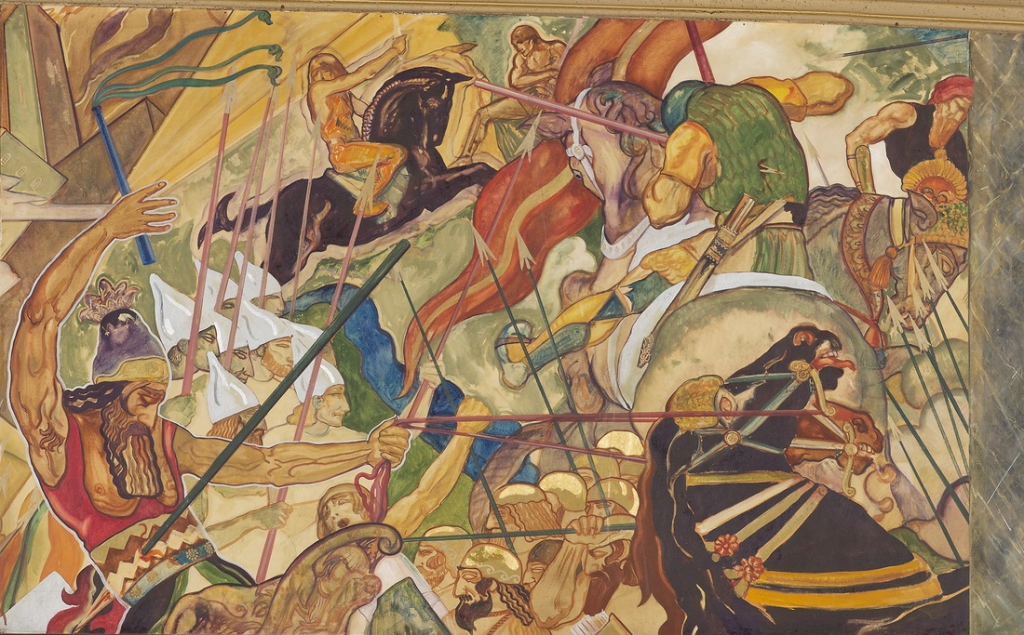
Mural depicting the wars of Israel and Judah with the surrounding nations, Wilshire Boulevard Temple, Los Angles

But the Lord says: “Now I will stand up.
    Now I will show my power and might.
You Assyrians produce nothing but dry grass and stubble.
    Your own breath will turn to fire and consume you.
Your people will be burned up completely,
    like thornbushes cut down and tossed in a fire.
Listen to what I have done, you nations far away!
    And you that are near, acknowledge my might!”

The sinners in Jerusalem shake with fear.
    Terror seizes the godless.
“Who can live with this devouring fire?” they cry.
    “Who can survive this all-consuming fire?”
Those who are honest and fair,
    who refuse to profit by fraud,
    who stay far away from bribes,
who refuse to listen to those who plot murder,
    who shut their eyes to all enticement to do wrong—
these are the ones who will dwell on high.
    The rocks of the mountains will be their fortress.
Food will be supplied to them,
    and they will have water in abundance. (New Living Translation)

The Assyrians were a nasty bunch. So were the people of Jerusalem, at the time of Isaiah’s prophecy. Maybe the folks in Judah played the comparison game and thought they were better than their foe. After all, the Assyrians were experts in war and torture.

Jerusalem was understandably terrified of the Assyrian army. And they trusted God, that is, to a degree. There’s a difference between looking to the Lord because you’re between a rock and a hard place, and placing faith in God because that is the default response of your life.

Easy for me to say. I’ve never stood on a city wall watching a powerful army surrounding me like a bunch of bullies on the playground.

Jerusalem was intimidated to the point of letting the Assyrian ruffians take their gold and silver. Well, actually, it wasn’t their gold; it was God’s. And when the army left, the city was still intact. But for how long?

It was humiliating. Being the victim of a bully always is. And because they’re bullies, it’s never enough. Like feeding the neighbor’s cat, the Assyrians end up going nowhere. They want more. In fact, they never really intended on leaving anyway. It was all a double-cross.

Judah, out of their fear and anxiety, made a bargain with the devil. A bully is a bully because they can be. Give in to them, and it only enables them to keep bullying. The Assyrians were ready for battle. It’s what they always did: fight and conquer.

It was at this point that Jerusalem finally got the clue that they’d been living with God in the background, not the foreground. They did their own thing, much like the hated and dreaded Assyrians.

So, the only recourse the people of Judah had was the mercy of their God. Yet, even though they ought to have petitioned the Lord from the get-go, at least they noticed the Lord is still there.

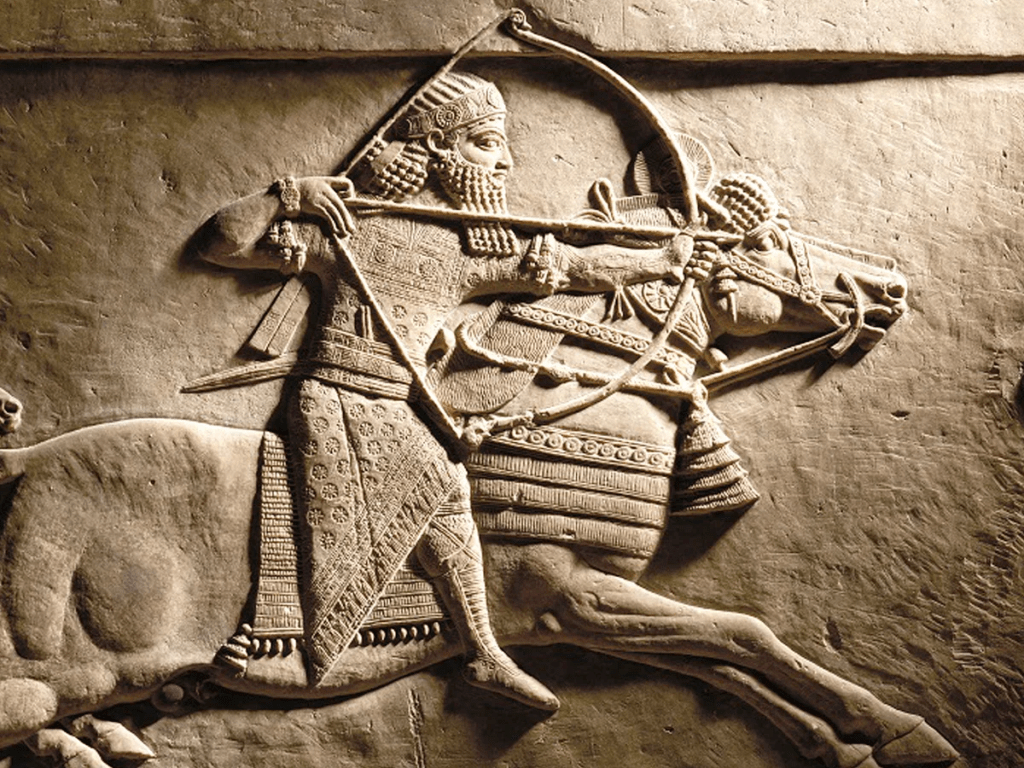
Assyrian king, British Museum

Unfortunately, most of our repentant overtures are way overdue. And yet, because of divine grace, the crazy mess we make of our lives is the very same place where a merciful God meets us.

Any sort of help is surely undeserved. It always is. The Lord, however, avoids making us grovel in our own vomit. God accepts us where we are, and not where we ought to be.

In truth, we all need to make a change, and not just the bullies. The sheer reality of God demands that we pay attention to what is right, just, and good. And the prophet Isaiah informed the people exactly how we must live in a world full of bullies and busted dreams.

We are to have an awareness of ethics and morality, a concern for humanity, and an orientation to help everyone thrive and flourish in this life.

The answer to life’s question of how to exist in this world and do more than just survive comes down to human morality:

  • Live right
  • Speak the truth
  • Despise exploitation
  • Refuse bribes
  • Reject violence
  • Avoid evil pleasures

The safe and stable way to live is to participate in the rhythms of mercy and justice that are woven into the fabric of the universe. The path to a contented and satisfying life is through goodness, not hatred.

Security and satisfaction don’t come through control of all circumstances; it comes by discerning that God has ultimate control, and that this God is good, not evil; just, not unjust; and righteous, not capricious.

According to the prophet, God will determine when the suitable time for assistance will come for us. And the Lord will deal with the ungodly according to the divine timetable, and not when we believe judgments should be rendered.

None of this is in our purview. Sometimes, talking about this sort of theology is a way of taking the focus off of our own need for an ethical and moral life. Sometimes, it is a helpful way of coming to grips with what is happening. Discernment is needed with oneself in these matters.

Trusting God means to exercise patience and perseverance, to focus on faith, to discipline ourselves in prayer, and to express confidence in hope.

We are not necessarily ruined whenever our circumstances are dire. The worse things become, the greater the display of divine power that can come.

By orienting ourselves around God and God’s strength and will, we grow in courage and develop in faith. We learn to trust in the worst of situations. We discover that the Lord knows the score of things, that God understands what’s going on.

And God laughs at the ungodly who believe they can bully the godly around. The most brilliant of military commanders is like a little toddler before the sovereign Lord of the universe. The fiery words they blow will blow back on them and consume their arrogance.

So, let us not harden our own hearts, but exercise a change of heart to let God be God, and to want for nothing but the courts of the Lord.

Let us not be like the bullies of Assyria who lived without a thought to the divine reality in front of them. Let us not become tormented, as if a fire were devouring us with inward anguish of soul, but instead:

  • Walk in right relations with others and with the Lord
  • Maintain truth and integrity in everything
  • Be free from corruption and offending others and God
  • Act with love toward your neighbor and your God
  • Refuse to accept a bribe
  • Restrain evil impulses
  • Open wide the spigot of goodness and justice

God is our refuge and strength, an ever-present help in trouble. Safety and abundance of good things is provided by the Lord. God protects. And God supplies. Rely upon God’s promises, and not the empty bellowing of others.

Be safe. Be strong. Be spiritual. We are all in this life together.

O God, my refuge and strength: In this place of unrelenting light and noise, enfold me in your holy darkness and silence, so that I may rest secure under the shadow of your wings. Amen.

It Is Not Yet My Time (John 7:1-9)

Later Jesus was going about his business in Galilee. He didn’t want to travel in Judea because the Jews there were looking for a chance to kill him. It was near the time of Tabernacles, a feast observed annually by the Jews.

His brothers said, “Why don’t you leave here and go up to the Feast so your disciples can get a good look at the works you do? No one who intends to be publicly known does everything behind the scenes. If you’re serious about what you are doing, come out in the open and show the world.” His brothers were pushing him like this because they didn’t believe in him either.

Jesus came back at them, “Don’t pressure me. This isn’t my time. It’s your time—it’s always your time; you have nothing to lose. The world has nothing against you, but it’s up in arms against me. It’s against me because I expose the evil behind its pretensions. You go ahead, go up to the Feast. Don’t wait for me. I’m not ready. It’s not the right time for me.”

He said this and stayed on in Galilee. (The Message)

For some Jews in the ancient world, if the Messiah were to come, it would certainly happen in the most celebrated month of the Jewish year (Tishri, in the Fall season).

The New Year celebration happens on the first and second of the month; the Day of Atonement on the tenth day (Yom Kippur); and leads to the joyous celebration of the fifteenth to twenty-second days in the Festival of Tabernacles (Booths or Shelters, also known as “Sukkot”).

That is the time of year in which faithful followers of God leave their homes and live in temporary shelters. It serves as a powerful reminder of their deliverance and divine preservation in the wilderness. It’s a celebration of the harvest, a time to remember the Israelites’ journey through the Sinai desert and God’s protection throughout that time. 

This festival also symbolizes unity and inclusivity, and looks forward to the Messianic age when all nations will come to Jerusalem to worship God.

The Feast of Tabernacles, by Bible Art

So, it only made sense to the people who knew Jesus, that he would want to make a big splash during the month of Tishri – a time of high celebration where everyone is together, recalling God’s gracious actions.

Christ’s own family were insistent that he take advantage of the festival’s timing and clearly show himself to the world. But Jesus wasn’t having it. Why not?

Jesus responded that it is not yet his time. By that he meant it wasn’t the right festival season. The timing of Christ would be for Passover, not Tabernacles. His role was not as the Divine Warrior who would beat up the Romans and establish an earthly rule in the vein of King David.

Instead, Christ’s purpose was to take on the role of the Suffering Servant, the dying Messiah. A joyous public spectacle during Tabernacles to announce deliverance from Roman oppression was not the reason he came to this earth.

Jesus had no intention of being pressed into something that wasn’t his understanding of God’s will.

Indeed, Christ’s time of glorification would come. But at the time of Tabernacles, when the feelings of the people were drawn to Jesus, and expectations were high for divine deliverance from Gentile rule, a capitulation to the crowd would be akin to the devil’s temptation of throwing himself from the Temple, so that everyone could see the Jewish Superman in action.

Jesus is not that sort of Messiah. Ostentatious displays of power and authority were not his path for the people’s salvation. That is the way of the world, not heaven; it’s the concrete road of the proud, not the dirt path of the humble.

Evil needed to be dealt with, once and for all – and not only for the sake of the Jews, but for all creation. And it had to have to divine effectiveness, not a worldly solution.

It still remains yet to this very day, that those with unbelief demand a strong leader and a powerful sign of authority. They want a take-charge sort of person who looks good and has style.

Such worldly-minded persons insist that the strong leader get out there and have lots of exposure. Pay attention to the optics, and engender supreme confidence in others. Engage and change the situation with all of the proven tactics of the world’s power base.

Yet those who truly believe, discern that life does not consist of grand imperial displays of opulent strength and worldly control. Rather, the heavenly virtues of wisdom, patience, and a settled hope surround them. They pay no attention to bombastic pronouncements and empty promises.

The believer is able to see Jesus for who he truly is, and not for what they want him to be.

In other words, up is down, first is last, suffering before celebration. These are not the ways of the unbelieving world; they are the practices of the faithfully devoted ones.

Even though Christ’s brothers strongly urged him to openly show himself in an ancient version of mass marketing, Jesus patently forsook it. He was not seeking to enhance his own reputation, to get his brand recognition out there and impress the crowd.

Jesus Christ will only act as his heavenly Father commands and wills him to – even if his own family want him to do different.

And that is why the world “hates” Jesus. Because he will neither operate according to, nor submit to, its prevailing cultural, political, and familial standards. Pride mocks humility. Arrogance disdains the meek and gentle. Worldly strength wants nothing to do with any sort of perceived weakness.

Metamorphosis of Narcissus, by Salvador Dali, 1937

Yet, the world does not realize that ultimate power, control, and authority comes not through public shows of toughness, but by private practices which embrace spiritual disciplines and knowing oneself.

I myself have no stomach for the supposed follower of Christ who merely seeks to honor Jesus in order to make the Name of Jesus serve their own name’s purpose.

And I gag every time I observe the self-centered leader try and act as if they care for important things, when in reality their only concern is self. Their worldly actions and attitudes betray their true feelings and purpose.

“It is better to incur the world’s hatred, by testifying against its wickedness, than gain its good will by going down the stream with them.”

Matthew Henry

We live in a world of indecision; there is no real decisive action which champions the common good of all citizens. We stick our finger in the air to see which way the wind is blowing. Our insecurity as a people is profound and palpable.

We seem incapable of sound and just public decision-making, let alone making personal choices which foster and engender spiritual and emotional growth.

This world is in desperate need of good, right, and just people who will faithfully occupy places and positions of trust. For me, that means following the narrow way of Jesus, and not the broad highway of destruction paved by narcissistic leaders.

Do you and I have the courage to take a hard look at ourselves, our relationships, and most of all, Jesus? Will we seek discernment as to what is really the world, and what is truly the words and ways of Jesus? Can we gain a sense of divine timing?

Almighty and ever-living God, ruler of all things in heaven and earth: Strengthen the faithful, arouse the careless, and restore the penitent. Grant us all things necessary for our common life, and bring us all to be of one heart and mind within your holy Church; through Jesus Christ our Lord. Amen.

A Ruler for the Good of the People (2 Samuel 5:11-16)

King David, by Sefira Lightstone

King Hiram of Tyre sent some officials to David. Carpenters and stone workers came with them, and they brought cedar logs so they could build David a palace.

David knew that the Lord had made him king of Israel and that he had made him a powerful ruler for the good of his people.

After David left Hebron and moved to Jerusalem, he married many women from Jerusalem, and he had a lot of children. His sons who were born there were Shammua, Shobab, Nathan, Solomon, Ibhar, Elishua, Nepheg, Japhia, Elishama, Eliada, and Eliphelet. (Contemporary English Version)

Once David became ruler of a united kingdom – Israel and Judah – he established the capital in a central place between the two (much like how Washington D.C. was built at a geographical juncture between North and South of the United States).

The Jebusites were firmly lodged within Jerusalem. Yet, with a good deal of ingenuity, David and his men found a way into the formidable stronghold of Jerusalem and took it. It then became the City of David. (2 Samuel 5:8-10)

King David has the spiritual sense to understand that the Lord was with him; and that his own greatness was directly tied to the greatness of God. The Lord is concerned for the divine/human covenant, and for the glory of Israel and Judah. David did not believe that his success was in any way tied to his own personal skills or abilities.

In light of David’s spiritual stance, it seems a bit strange that today’s text then turns to David’s response of taking more women as wives in Jerusalem. The text also lets us know that David established diplomatic ties with Tyre and worked toward building a royal palace in the new capital.

Typically, Old Testament stories don’t give us explicit moral commentary, telling us what is good and what is bad. Sometimes they inform us of people’s motives, but usually not. So, what was David up to, and why was he doing it? The story invites us to offer up an answer from our own consideration. So, here’s mine…

All of us do the best we can, with what we know at the time. That’s why it is so important to be continually cultivating and nurturing a life of wisdom.

Most things in life don’t have ready-made answers for us. David certainly didn’t Google how to capture Jerusalem, or how to establish a kingdom. He instead had a lifetime of walking with God, learning God’s law, and experiences which God brought him through. And that is exactly what all of us need to do for just about everything.

If you and I were in David’s shoes, within his culture of the ancient world, we might very well do what he did by marrying up and bringing political stability to a new united kingdom that was surrounded by non-Jewish nations.

King David, by Adamo Tadolini, on the Colonna dell’Immacolata, Rome, Italy

Trusting the Lord doesn’t mean that we become passive; it isn’t a let go and let God attitude. Faith requires actively pursuing justice and righteousness for the good of everyone. It takes creativity and a wise mind, a compassionate heart, and a well-attuned sense of one’s own gut.

This approach to life indeed requires a lifetime of learning, growing, and experiencing new things. The following are some ways of developing the experiential knowledge that we understand as wisdom:

Pursue and be open to new experiences

If you don’t like the experience you’re having, create a new one. David was open to following God and engaging in whatever new experiences required fulfilling the will of God. To keep growing as an individual, it’s important to explore unfamiliar and sometimes uncomfortable things; those experiences can teach us how to be more humble and honest, which is especially important for leaders.

Show empathy and be compassionate

This was at the heart of David’s rule as king. He showed steadfast love and commitment to Israel and Judah. Yes, he was a man of war, and did his share of soldiering. And, at the same time, David valued life and went out of his way to show mercy.

After becoming king, instead of wiping out all of King Saul’s family (as was custom for many kings in the Ancient Middle East) David looked for anyone in the family of Jonathan (Saul’s son) to which he could show kindness to (2 Samuel 9:1). There is no path to wisdom that doesn’t go through the land of compassion.

Don’t be afraid to fail

Growth in wisdom usually comes from messing up. How we respond to failure and/or imperfection influences our decision-making and problem-solving skills. A significant part of self-development is learning how not to repeat mistakes. But to do that, you have to make them first.

David made plenty of mistakes, and even outright sinned in ways that effected all Israel and Judah. Yet, he learned his lessons by turning away from the mistakes (repentance) and moving forward (faith).

Ask for help when you need it

A wise person doesn’t have all the answers. They are wise because they know when to consult others and ask for resources. David always had counselors in his court who he knew could give him sage advice whenever he needed it.

Mentor others

One of the best ways of learning and developing wisdom is by coming alongside others and helping them become successful in life. This is one of the main reasons I enjoy teaching and discipling others – so that I can learn from the process, and from the people I mentor. Since David was attuned to this, Israel and Judah had the wisest king in history, his son, King Solomon.

Wisdom is a virtue that goes beyond knowledge. Wisdom is really the study of life. And only by wisdom’s experiential understanding can we make effective changes, influence others, and please God. David was a king for the good of the people.

O God, by whom the meek are guided in judgment, and light rises up in darkness for the godly: Grant us, in all our doubts and uncertainties, the grace to ask what you would have us to do, so that the Spirit of wisdom may save us from all false choices, and that in your light we may see light, and in your straight path, we may not stumble. Amen.