There Is a Larger Perspective (Psalm 73:1-20)

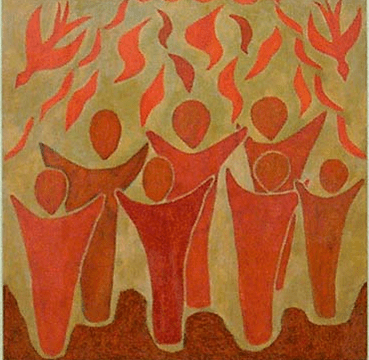
Psalm 73, by Keli Hogsett. The artist states, “This piece is made entirely of wood ‘ends.’ The wood colored ends represent nearness to God, where the darker pieces represent the opposite. The darker ends can attract and manipulate the wooden ends, but the darker they get, they turn downward and are swallowed by the wooden ends.

God is indeed good to Israel,
    to those who have pure hearts.
But I had nearly lost confidence;
    my faith was almost gone
because I was jealous of the proud
    when I saw that things go well for the wicked.

They do not suffer pain;
    they are strong and healthy.
They do not suffer as other people do;
    they do not have the troubles that others have.
And so they wear pride like a necklace
    and violence like a robe;
their hearts pour out evil,
    and their minds are busy with wicked schemes.
They laugh at other people and speak of evil things;
    they are proud and make plans to oppress others.
They speak evil of God in heaven
    and give arrogant orders to everyone on earth,
so that even God’s people turn to them
    and eagerly believe whatever they say.
They say, “God will not know;
    the Most High will not find out.”
That is what the wicked are like.
    They have plenty and are always getting more.

Is it for nothing, then, that I have kept myself pure
    and have not committed sin?
O God, you have made me suffer all day long;
    every morning you have punished me.

If I had said such things,
    I would not be acting as one of your people.
I tried to think this problem through,
    but it was too difficult for me
    until I went into your Temple.
Then I understood what will happen to the wicked.

You will put them in slippery places
    and make them fall to destruction!
They are instantly destroyed;
    they go down to a horrible end.
They are like a dream that goes away in the morning;
    when you rouse yourself, O Lord, they disappear. (Good News Translation)

The psalmist Asaph communicated his own experience, which is really the experience of all Israel, and of all who genuinely seek to follow God.

Everyone who is truly pure in heart will struggle, at times, to make sense of all the impurity and injustice in the world. Even a cursory observation of this old world clearly sees that it is a broken messed up place.

Those observations challenge the faithful with questions such as, “Is God really good?” and “Is maintaining my purity and faithfulness worth it?”

Most often, the response to those questions is “Yes, but…”

Arrogant people prosper. They get away with being jerks. And it isn’t fair. Good people continually face adversity and hardship. Nothing comes easy. And it doesn’t make sense.

Contemplating this reality for too long can lead to a spiritual crisis of faith. It can produce doubt. It is likely to either morph into anger and bitterness, or a passive “meh” to most things in life.

However, observational appearances can be deceiving. There is much more to seeing than with our two physical eyes. There is the kind of sight which God has:

“I do not judge as people judge. They look at the outward appearance, but I look at the heart.”

1 Samuel 16:7

In truth, the real and actual power of arrogantly wicked people is their ability to create envy and jealousy in the righteous persons.

We need a different way of seeing, a reorientation of our limited understanding of life. Look at the world, containing both the wicked and the righteous, from an angle you haven’t seen before.

For Asaph, this breakthrough perspective happened in the sanctuary of his God. The psalmist began to see that the seeming wealth, health, and invincibility of the arrogant is merely a façade. Their true future is anything but prosperous.

Asaph also had a reorientation of himself. He began to understand and accept that his own heart had the shadows of bitterness and ignorance. He himself had too much vice hiding in his heart.

With the spiritual eyes of the heart, we can focus in on the presence of God. The Lord’s guidance is constant, even when it doesn’t seem like it. God’s handle on the future is secure.

The arrogant and the wicked will not last. There is a day coming when they will not rule over anything. Their end is a sure thing.

The wise heart discerns that not everything I see today will be the same tomorrow. Therefore, I can plan wisely for the future, and be patient that the goodness of God will ultimately prevail over it all. This orientation to life brings confidence and hope.

Wisdom also directs us to discern that our hope and confidence can wax and wane. Just because we may be full of faith, hope, and love today, does not mean that from here-on-out we will never have to struggle with these feelings of jealousy, envy, disappointment, and anger.

Far too often we think emotions can be easily replaced, the negative ones for the positive, envy for happiness, or jealousy for satisfaction.

However, we are more complex creatures than that, having the capacity to hold multiple emotions at the same time. Sometimes, the best thing is to recognize that I can be happy, even though I am sad, without ignoring or stuffing the sadness.

Consider this: At the same time, all the time, God is both terribly sad, as well as quite exuberant. The Lord both grieves and celebrates continually. That’s because God sees it all.

And if I were to see the entire scope of your life, I am sure there are aspects of that life which are joyous, and elements which are despondent, with great longing for change.

Asaph got a much fuller picture of how things actually are in this world. And with that more expansive perspective he discovered a sense of settled hope, despite the fact that nothing in his world had changed at all.

Indeed, I myself am to be the change that I long for in this world. And it starts with gaining a perspective of wisdom, and seeing the angle of immateriality.

Arrogant pride, hoarding of wealth, and injustice will not last forever. They are temporary. But there are permanent things in this universe, and none of them have to do with money or stuff.

When all is said and done, Love survives and thrives. God hasn’t gone anywhere. Jesus Christ is the same yesterday, today, and forever. The Spirit is still alongside us.

And the wicked are no more.

So, may righteousness, justice, and peace surround you today and everyday like a warm security blanket of hope. And may you know that you are seen and loved by a God who cares. Amen.

Fear or Faith? (1 Samuel 13:23-14:23)

The pass at Micmash had meanwhile been secured by a contingent of the Philistine army.

One day Jonathan said to his armor bearer, “Come on, let’s go over to where the Philistines have their outpost.” But Jonathan did not tell his father what he was doing.

Meanwhile, Saul and his 600 men were camped on the outskirts of Gibeah, around the pomegranate tree at Migron. Among Saul’s men was Ahijah the priest, who was wearing the ephod, the priestly vest. Ahijah was the son of Ichabod’s brother Ahitub, son of Phinehas, son of Eli, the priest of the Lord who had served at Shiloh.

No one realized that Jonathan had left the Israelite camp. To reach the Philistine outpost, Jonathan had to go down between two rocky cliffs that were called Bozez and Seneh. The cliff on the north was in front of Micmash, and the one on the south was in front of Geba.“Let’s go across to the outpost of those pagans,” Jonathan said to his armor bearer. “Perhaps the Lord will help us, for nothing can hinder the Lord. He can win a battle whether he has many warriors or only a few!”

“Do what you think is best,” the armor bearer replied. “I’m with you completely, whatever you decide.”

“All right, then,” Jonathan told him. “We will cross over and let them see us. If they say to us, ‘Stay where you are or we’ll kill you,’ then we will stop and not go up to them. But if they say, ‘Come on up and fight,’ then we will go up. That will be the Lord’s sign that he will help us defeat them.”

When the Philistines saw them coming, they shouted, “Look! The Hebrews are crawling out of their holes!” Then the men from the outpost shouted to Jonathan, “Come on up here, and we’ll teach you a lesson!”

“Come on, climb right behind me,” Jonathan said to his armor bearer, “for the Lord will help us defeat them!”

So they climbed up using both hands and feet, and the Philistines fell before Jonathan, and his armor bearer killed those who came behind them. They killed some twenty men in all, and their bodies were scattered over about half an acre.

Suddenly, panic broke out in the Philistine army, both in the camp and in the field, including even the outposts and raiding parties. And just then an earthquake struck, and everyone was terrified.

Saul’s lookouts in Gibeah of Benjamin saw a strange sight—the vast army of Philistines began to melt away in every direction. “Call the roll and find out who’s missing,” Saul ordered. And when they checked, they found that Jonathan and his armor bearer were gone.

Then Saul shouted to Ahijah, “Bring the ephod here!” For at that time Ahijah was wearing the ephod in front of the Israelites. But while Saul was talking to the priest, the confusion in the Philistine camp grew louder and louder. So Saul said to the priest, “Never mind; let’s get going!”

Then Saul and all his men rushed out to the battle and found the Philistines killing each other. There was terrible confusion everywhere. Even the Hebrews who had previously gone over to the Philistine army revolted and joined in with Saul, Jonathan, and the rest of the Israelites. Likewise, the men of Israel who were hiding in the hill country of Ephraim joined the chase when they saw the Philistines running away. So the Lord saved Israel that day, and the battle continued to rage even beyond Beth-aven. (New Living Translation)

The vicinity of Micmash (modern Mukmas) in Israel

Israel had demanded a king. The people wanted to be like everyone else in the world. All the other nations had a king. The Israelites believed that they needed one, too. (1 Samuel 8)

Not unlike today, Israel got a king who looked the part. Saul was tall, dark, and handsome. The only problem was that he didn’t act much like a king at all.

On the day he was anointed king, Saul hid in the baggage, like some guy ducking into a dumpster to avoid people chasing him. If the kings of other nations acted boldly on behalf of their subjects, Saul was not that sort of king. He seemed bent toward cowardice, and more concerned about his reputation than actually accomplishing anything.

Saul could have distinguished his royal kingship through listening to God and obeying the Lord; instead, his rule and reign was often marked by a half obedience, if he obeyed at all.

Old Testament stories are filled with contrasting characters. And in the narrative for today, there is a clear difference between King Saul and his son Jonathan. Saul was supposed to be leading the charge against the Philistine threat to Israel, but he was hiding out.

But Jonathan was determined to deal with the arrogant Philistines, even though it meant going against an entire garrison of troops with only his armor-bearer alongside him.

In the story, we find Saul and the army cowering in secrecy. But we find Jonathan in the bright light of day for the entire Philistine army to see. The contrast couldn’t be any more obvious:

  • Saul is afraid, and Jonathan is brave
  • Saul is fearfully passive; Jonathan is faithfully aggressive
  • Saul could only see reasons not to face the Philistines; Jonathan saw no obstacles to facing them, even though he had to scale crags and thorns in order to get to the Philistines

The opposite of faith is not unbelief; it’s fear. All of the Israelite soldiers were afraid, except Jonathan and his armor-bearer. The two of them had remarkable faith.

Jonathan had full confidence in the power of God. It wasn’t stupidity that led him toward an entire army by himself; it was the firm conviction that nothing is too difficult for the Lord.

It was neither pride nor glory-seeking that caused Jonathan to go, against all odds, to fight the Philistine army. He simply reasoned by faith that perhaps God would work on their behalf and bring about a great deliverance for Israel.

What’s more, Jonathan trusted the Lord without making assumptions that God would act in a particular way. There wasn’t any ‘name-it-and-claim-it’ theology happening with him.

Indeed, God did intend to defeat the Philistines. Maybe the Philistines thought Jonathan was bluffing by coming up to them; and they were going to teach this guy a lesson! But false confidence is typically shown through talking smack, whereas real confidence is born of faith.

Trust fully expects God to show up and take on injustice, unrighteousness, and arrogant pride.

Jonathan did some damage; and God got into the thick of it by directly intervening. The Lord turned the tables by bringing great fear on the Philistines. This turning of the tables emboldened the Israelites. The result was a decisive victory for Israel, leaving Philistia slack-jawed and confused.

We may be uncertain about the future; but if we are pursuing a good thing, and are confident in God’s power, there’s no need to be afraid in pursuing it.

We are free to step out in faith and attempt great things for the sake of the Lord, knowing that God may indeed bless our trusting initiative.

Almighty and everlasting Father, you have given the Holy Spirit to abide with us forever: Bless us with divine grace and presence so that, being preserved in true faith and confident hope, we may fulfill all the good that is in our mind and heart to do; through Jesus Christ your Son, our Lord, who lives and reigns with you, in the unity of the Holy Spirit, one God, today and always. Amen.

Spiritual Confidence (2 Corinthians 3:4-11)

Such confidence we have through Christ before God. Not that we are competent in ourselves to claim anything for ourselves, but our competence comes from God. He has made us competent as ministers of a new covenant—not of the letter but of the Spirit; for the letter kills, but the Spirit gives life.

Now if the ministry that brought death, which was engraved in letters on stone, came with glory, so that the Israelites could not look steadily at the face of Moses because of its glory, transitory though it was, will not the ministry of the Spirit be even more glorious? If the ministry that brought condemnation was glorious, how much more glorious is the ministry that brings righteousness! For what was glorious has no glory now in comparison with the surpassing glory. And if what was transitory came with glory, how much greater is the glory of that which lasts! (New International Version)

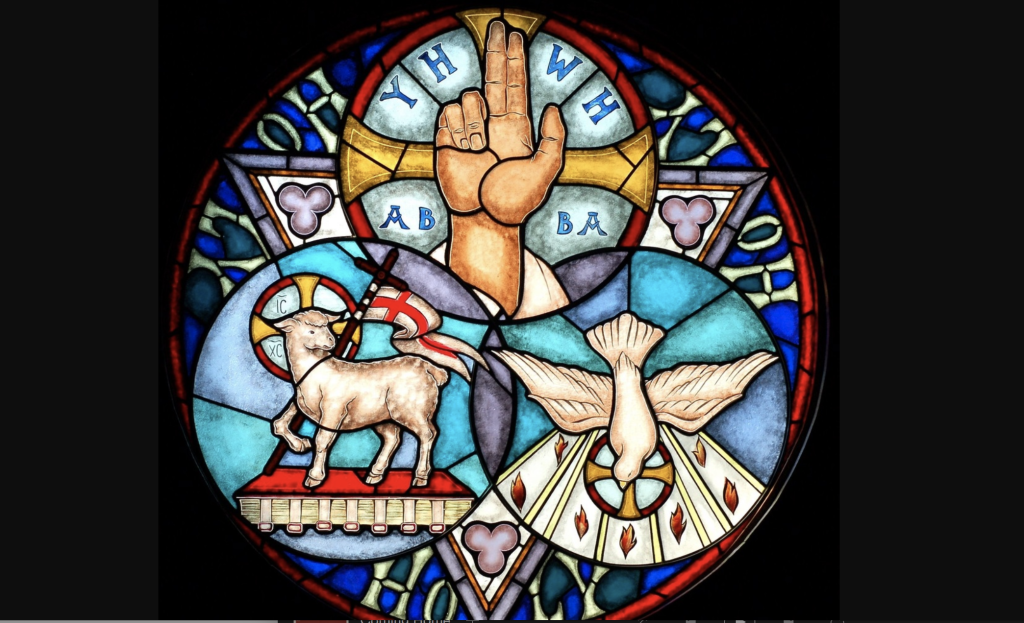
The Christian religious tradition holds to the great Three-in-One of God – God is indivisibly One, and at the same time, a Trinity of Father, Son, and Spirit. Christians typically have no problem expressing their prayers and devotion to the Persons of the Father and the Son, as well as connecting their ministry efforts to them. 

However, when it comes to the Spirit, this Person of the Holy Trinity is often referred to as an “it” or a “force.” Yet, the Holy Spirit is as much God and a Person as the heavenly Father and the Savior, Jesus Christ. The Spirit is the One who provides the guidance and energy for Christian ministry – and not the Law.

We very much need the Holy Spirit of God. Without the Spirit’s help, Jesus is merely looked at as one person out of thousands of individuals crucified in history; and only an example of one who was martyred for his faith. But Jesus is infinitely more than that. 

Christ is the Son of God, the Savior of the world. Through Jesus Christ’s life, death, resurrection and ascension, people can be redeemed from empty lives, saved from destructive life-patterns, and given the kind of security and purpose in life that God intended from the beginning for people to possess. 

And the Spirit of God is the One that takes these redemptive events of Jesus and applies them to our lives. Apart from the Holy Spirit, we are lost, because we are unable to see the genuine spiritual truth about the cross of Jesus Christ unless God the Holy Spirit breaks into our lives and does an intervention – showing us our denial about how we are really doing and our delusions about who we really are (1 Corinthians 2:1-16).

This, then, is the basis for spiritual confidence. And this sort of confidence does not and cannot come from obedience to the Law.

Admitting that we absolutely need the Holy Spirit of God means that the power of Christianity does not reside with me or you; power for the Christian life rests upon Jesus Christ and him crucified, with the Spirit witnessing to us of this truth. 

In other words, we are largely powerless. 

Now, I realize this is not a popular message, especially in Western society. That sounds ridiculous to a particularly can-do kind of people, like most Americans. We believe we’ve done fairly well on our own, thank you very much. A couple of cars, a house, a job, and a family. I work hard. I’ve earned my stuff and my accomplishments. 

But the thing is, any worldly success may lead us to the delusion that we have the power to do what we want – as if I am the sole captain of my soul. I did it. And I did it my way.

“Oh, sure,” many a person may reason, “we have problems just like everybody else. After all, I can’t control everything!” Yet, we are not powerless just because we have difficult circumstances and a few problem people in our lives. “God will step in a take-over where I leave off, right?” Wrong. 

It’s all wrong, because it’s based in one’s effort to obey a personal creed, the rules of the game, or even the Law and the Ten Commandments. But if we could really do it on our own, there’s no need for any of this spiritual stuff.

In truth, apart from the Holy Spirit of God, we are unable to be Christians and live the Christian life. If we think we manage our lives just fine, with a bit of help from God, then we are likely in denial. We are probably placing ourselves at the center of the world; and believe we should be able to deal with whatever comes in life. 

Whenever the consistent response to adverse situations, or the realization that we are not handling something well, is to try and fix ourselves, then we are surely living in the delusion that we hold the power to change – independently without anyone or anything helping us.

If our first reaction to adversity or problems is:

  • Searching Google for more knowledge
  • Dealing privately with personal issues
  • Expecting that willpower should be enough

Then, we are feeding the delusion that we do not really need the Holy Spirit of God; we are actually believing that we need more effort, or information, in order to find the power to overcome whatever is in my life that needs overcoming.   

Unfortunately, it typically takes a tragedy or crisis to break our delusions of power. Let me ask: How bad must we hurt before we admit that we are not managing our lives well at all, and that the real power to change resides with the Holy Spirit?

Our spiritual power and confidence resides in the cross of Jesus Christ, with the Holy Spirit testifying to us of God’s great grace. 

The Apostle Paul believed this with all his heart. Although he was a very intelligent and learned person, he did not rely on his abilities, but on God’s. 

The cross of Jesus is not just an historical event, but an ongoing reality for us to experience victory over all the brokenness of this world, and all the mess we have made of things by putting ourselves at the center of the universe. 

We need the Holy Spirit of God to intervene and apply Christ’s finished work to us. 

None of this means that the Law, or that you, are bad. Both you and the Law are good. It’s just that we, by ourselves, and the Law by itself, are inadequate to save, deliver, and overcome. For that, we need God’s Spirit, and to tap into the spiritual reality that exists.

If the Ten Commandments were introduced with glory, and we ourselves were created with glory, then how much more glory and life is there through an intimate relation with the Spirit?

O God of peace, who has taught us that in returning and rest we shall be saved, in quietness and confidence shall be our strength: By the might of your Spirit lift us, we pray, to your presence, where we may be still and know that you are God; through Jesus Christ our Lord. Amen.

What Do You Long For?

Indeed, what do you long for? Before anything ever came into being, it was dreamed for. Everything that exists, had a beginning in the possibility of longing for it. I think it is inappropriate for me to ask you such a question, without first telling you what it is I long for. And there are so many things that I long for! Yet, I offer just a few of them…

I am a hospital chaplain. I dream of a healthcare system that values its caregivers so much that it does away with hierarchical organization. I imagine and visualize such a system taking psychological safety as seriously as physical safety. I long for healthcare administrations to establish the individual employee’s care – not in cheap talk of self-care – but in actual establishing of policy and procedure to ensure that care is realized.

For only in the consummate care of the caregiver, can care seekers receive what they truly need.

Such caregiver care toward the care seeker will translate into taking all the time needed to listen to the patient, practicing patience themselves in seeking to truly understand. With the caring caregiver full of attentive love, they can and will step back in thoughtful reflection for a gracious and effective care plan for the patient.

And, what’s more, they will follow up with equal motivation and attention in order to provide skillful love, precisely where it is needed and wanted. For all caregivers shall know that a “bedside manner” is not optional, but is as important to healing as the actual care plan which is on paper.

I am a church pastor. I dream of good and effective change and reformation for the Body of Christ, as well as all faith communities everywhere. I imagine churches and church leaders who bathe all things in prayerful conversation with God and others. I long for a church that truly cares for those struggling to make sense of faith, and gives ample and adequate space for faith seekers to express their doubts, feelings, and questions in a safe and supportive environment.

Such pastors, elders, deacons, and denominational leaders will give scant attention to the more secular matters of building needs, budget finances, and butts in the pew (which, of course, often emit the most foul odor, because they originate in the person who is a tedious fart). They will have the sweet smelling incense of mentoring others in the faith, attending to the needs of the community at large, and lifting up emotional and mental needs with equal passion alongside the physical and spiritual needs of people.

For only in the consummate care of the pastors and leaders, attending to their foundational needs of bodily care and exercise, mental and emotional health, and spiritual disciplines, can parishioners receive the holistic care they truly need in order to grow and mature in faith.

Oh, how I dream, imagine, and long for a world that exalts the holistic person – body, mind, feelings, and soul – so that everyone in everyplace on the earth realizes their God-given potential as people gifted to serve the holistic well-being of others.

All of us are but temporary sojourners on this earth. And this world which we inhabit is fundamentally broken. Let us long for better days, imagine those days in our mind’s eye, and dream into existence that which originally had its origin in the heart of God.

Longing is only realized through belonging. If we remain emotionally lonely, bodily disconnected, mentally rootless, and spiritually adrift, we’ll never know the confident hope of belonging to God and community. Until we participate with ancient and universal rhythms of being in this world together, we will continue to experience the things which are nightmares to us.

So, what do you long for? It really is neither an esoteric nor impractical question. It is the vital question of our time.