No Class (1 Corinthians 11:17-22)

In the following directives I have no praise for you, for your meetings do more harm than good. 

In the first place, I hear that when you come together as a church, there are divisions among you, and to some extent I believe it. No doubt there have to be differences among you to show which of you have God’s approval. 

So then, when you come together, it is not the Lord’s Supper you eat, for when you are eating, some of you go ahead with your own private suppers. As a result, one person remains hungry and another gets drunk. 

Don’t you have homes to eat and drink in? Or do you despise the church of God by humiliating those who have nothing? What shall I say to you? Shall I praise you? Certainly not in this matter! (New International Version)

The memory of the Last Supper with Jesus and his disciples is one that has significantly shaped church history. In the earliest church, we see from the Apostle Paul how impactful table fellowship was for the believers.

Paul received the words of faith, and passed them on to the churches he established, including the church at Corinth. The Apostle faithfully engaged in handing down a tradition which Christians practice all over the world, even today.

The Corinthian Church had devolved into a bunch of divided special interest groups. They were in great need of unity in order to reflect being the one Body of Christ. The divisions fractured their worship, especially their communion with one another.

The Christians in Corinth were gathering for a shared meal, but not really for communion with each other and their Lord. There was no true interaction and fellowship that was happening.

The church’s divisions were such that the groups had no intention of meaningfully interacting with one another. In other words, the church culture was so fragmented and polarized that the Apostle Paul had enough of their disunity, and addressed it head on in his letter.

One of the significant situations was the class differences amongst the believers. The wealthy members of the congregation were given to a lot of leisure time with a good deal of discretionary money. They would often come together, well before the working class and the day laborers could show up to eat.

The richer parishioners feasted amongst themselves. By the time others arrived, many of them either had very little, or went without altogether. For Paul, this was a travesty of the communion meal, which was supposed to signify the unity of believers and the sacrifice of Christ for all.

The Apostle clearly understood that the poor were being humiliated and treated as second class citizens in the church. So, Paul condemned this situation of division, and the inequitable treatment of the less privileged.

The rich people were therefore instructed to eat and drink privately in their own homes, so that the wealthy would not come and scarf all the food, making a mockery of the sacrament.

The shared meal was to remind them of Christ, and was not a time for petty and ostentatious selfishness. Jesus gave his life for all. All believers – whether rich or poor – are to remember both the corporeal body of Jesus, and the corporate body of believers, so that every Christian may overcome ungodly divisions and live into the unity provided through the cross of Christ.

What the Corinthians were doing was not the Lord’s Supper. The believers’ conduct and character eviscerated it’s true purpose and meaning, and made it something else altogether.

Celebration, by John August Swanson (1938-2021)

If the church was to celebrate at the Table, then they needed to listen to what the Lord told Paul about it. Christians coming together for fellowship, eating, and remembering the Lord is not a collection of individual believers doing their own thing. It is a collective meal, meant to emphasize their unity with Christ and one another.

Unlike a contemporary church potluck, the Corinthians brought their own food to eat without sharing. Thus, the rich were eating caviar and crème brûlée, whereas the poor chewed on a peanut butter sandwich with no jelly, and stale potato chips.

On one side of the room there was a group of well-to-do people gorging themselves on a feast, while on the other side of the room the less fortunate folks just tried to eat their meager rations.

The have’s and the have-not’s were splitting the church in ways that made it no different from the wider pagan culture. And Paul would have none of it. The Apostle’s train of thought and Christian convictions on this were clearly spelled out just a few verses earlier in his letter:

So whether you eat or drink or whatever you do, do it all for the glory of God. Do not cause anyone to stumble, whether Jews, Greeks or the church of God—even as I try to please everyone in every way. For I am not seeking my own good but the good of many, so that they may be saved. (1 Corinthians 10:31-33, NIV)

We are all to ensure that our meetings together are helpful, life-giving, and promote the common good of everyone. Anything less than this is simply unchristian.

Almighty God our heavenly Father, you declare your glory and show forth your handiwork in the heavens and in the earth: Deliver us in our various occupations from the service of self alone, that we may do the work you give us to do in truth and beauty and for the common good; for the sake of him who came among us as one who serves, your Son Jesus Christ our Lord, who lives and reigns with you and the Holy Spirit, one God, for ever and ever. Amen.


Who Would You Follow? (2 Samuel 3:1-12)

There was a long war between the house of Saul and the house of David; David grew stronger and stronger, while the house of Saul became weaker and weaker.

Sons were born to David at Hebron: his firstborn was Amnon, of Ahinoam of Jezreel; his second was Chileab, of Abigail the widow of Nabal of Carmel; the third was Absalom son of Maacah, daughter of King Talmai of Geshur; the fourth was Adonijah son of Haggith; the fifth was Shephatiah son of Abital; and the sixth was Ithream, of David’s wife Eglah. These were born to David in Hebron.

While there was war between the house of Saul and the house of David, Abner was making himself strong in the house of Saul. Now Saul had a concubine whose name was Rizpah daughter of Aiah. And Ishbaal said to Abner, “Why have you gone in to my father’s concubine?” 

The words of Ishbaal made Abner very angry; he said, “Am I a dog’s head for Judah? Today I keep showing loyalty to the house of your father Saul, to his brothers, and to his friends and have not given you into the hand of David, yet you charge me now with a crime concerning this woman. So may God do to Abner and so may he add to it! For just what the Lord has sworn to David, that will I accomplish for him: to transfer the kingdom from the house of Saul and set up the throne of David over Israel and over Judah, from Dan to Beer-sheba.” And Ishbaal could not answer Abner another word because he feared him.

Abner sent messengers to David where he was, saying, “To whom does the land belong? Make your covenant with me, and I will give you my support to bring all Israel over to you.” (New Revised Standard Version)

Our basic inner character as people is a combination of:

  1. What we do (actions and inactions)
  2. Why we do it (attitudes and motives)
  3. How we go about doing it (means and methods)

We can observe one’s personal character by the reactions and responses to their life events and situations. In addition, Holy Scripture is also concerned and attentive to all of our actions, interactions, inactions, and reactions in the world.

Stories in the Old Testament are largely designed to help us, as readers and listeners, to compare and contrast the mindsets, motivations, and morals of the principal actors in those narratives. We are meant to understand the difference between godly and ungodly people through how the story shakes out.

Three leaders are paraded before us in today’s Old Testament lesson. The story is arranged so that we will take a look at their manner of life. The lesson invites us to implicitly ask ourselves, “Which of the three characters would I follow?”

David

King David was the sort of leader who inquired of God continually, listened to God’s voice, and used his authority to extend kindness and justice, like God does. Because of David’s character, his reign became stronger and stronger.

David was also the sort of leader who had no intentions nor plans to annihilate all of Saul’s heirs as rivals to this throne. Neither did David set out to make their lives miserable – despite the fact that most people of the time would actually expect him to do that.

Ish-Bosheth

Whereas David was initially ruling only over Judah, Ish-Bosheth was a son of Saul and king of Israel. But he was a mere figurehead. Abner, the army’s general, was the one really calling the political shots in Israel.

Ish-Bosheth was too fearful to challenge Abner, and so, never exerted a significant influence in Israel. Instructive for us as readers, is the absence of this king’s prayers or efforts to do anything helpful or constructive for the Israelite people.

The name “Ish-Bosheth” essentially means “Master,” a dignified word which is meant to communicate respect. The incongruence between Ish-Bosheth’s ascribed name, and his actual attitudes and lack of action, betrays a double-minded person, divided in decision-making, not knowing quite what to do. And so, he pretty much did nothing, at least nothing that truly helped anyone in the kingdom.

Contrasting Ish-Bosheth with David, we can clearly see that David was no figurehead, but was the leader of his people. Unlike Ish-Bosheth, David was also no washrag, and no one’s puppet. Instead, David took charge of situations by inquiring of God, then acting.

Confidence comes from knowing the Lord and stepping out in faith, which is precisely what David’s pattern of kingship was like – and exactly what the reign of Ish-Bosheth was not like.

Abner

Israel’s general, Abner, was neither like David nor Ish-Bosheth. Although Abner had qualities of confidence and initiative, unlike David, he was a self-serving leader.

Abner used his position to gain for himself power and prestige. He was willing to quickly switch his loyalties when it was no longer helpful for him, personally. Although Abner did right by working toward uniting the kingdoms of Israel and Judah (a good thing) he did it for all the wrong reasons (a bad thing).

Compared to David, Abner had only self-interest, and not the common interest of all citizens in mind. He acted for what he could personally get out of it – which is just the opposite of David, who had an eye which scanned the horizon to do what was best for the common good of all the kingdom’s subjects.

Conclusion

When we read today’s story, the guided narrative wants us to arrive at the conclusion of saying, “I don’t want to become, or follow, somebody like Ish-Bosheth or Abner. I want to become and to follow someone like King David.”

David listened to God, prayed to God, and acted with justice and kindness because of God. There’s likely no better approach to the spiritual life than that.

Grant us, Lord God, a vision of our world as your love would make it: a world where the weak are protected, and none go hungry or poor; a world where the benefits of abundant life are shared, and everyone can enjoy them; a world where different races and cultures live in tolerance and mutual respect; a world where peace is built with justice, and justice is guided by love. And give us the inspiration and courage to build it. Amen.

Addressing the Divisions Amongst Us (1 Corinthians 4:8-13)

Are you already satisfied? Are you now rich? Have you become kings while we are still nobodies? I wish you were kings. Then we could have a share in your kingdom.

It seems to me that God has put us apostles in the worst possible place. We are like prisoners on their way to death. Angels and the people of this world just laugh at us. Because of Christ we are thought of as fools, but Christ has made you wise. We are weak and hated, but you are powerful and respected. 

Even today we go hungry and thirsty and don’t have anything to wear except rags. We are mistreated and don’t have a place to live. We work hard with our own hands, and when people abuse us, we wish them well. When we suffer, we are patient. When someone curses us, we answer with kind words. Until now we are thought of as nothing more than the trash and garbage of this world. (Contemporary English Version)

On this particular July 4 in the USA, there is perhaps no more pertinent biblical passage than today’s in addressing the current American political and emotional climate. Yet, before this is specifically addressed, let’s understand what was going on with the Apostle Paul and the Corinthian Church…

The Corinthian Divisions

Special interest groups had formed within the church. Each was following a specific person – some Paul, some Apollos, and some other leaders and teachers. The groups began to harden into political church factions. And Paul wanted nothing to do with this way of being Christian, because it is antithetical to the gospel itself.

Christ died to bring unity, not division. Paul established egalitarian churches that showed no favoritism. The Corinthians were called to a way of being that breaks down barriers between rich and poor, Jew and Greek. This business of groups and factions only fostered the division which Christ died to do away with.

By the time the Apostle wrote his letter to the Corinthian Christians, they had devolved a way of being with each other that was judgmental. They were pointing out unhealthy and demeaning comparisons, and boasting about how their group was more spiritual and wise than the others.

The Apostle Tackles the Divisions

So Paul, never one to shy away from initiative and justice, went on the offensive. Admittedly, in today’s New Testament lesson, Paul is quite sarcastic. He was actually mocking the Corinthians for their sinful arrogance and pride; and he used their own ways of being together against them to demonstrate how utterly foolish and ridiculous they were being.

The Apostle Paul countered with some comparisons of his own, using the example of the apostles themselves. Through his sarcastic comparison, he essentially argued that God used the very real oppression and suffering of the apostles toward good and positive ends.

Paul contrasted the apostles and the Corinthians to show the injustice that was happening in their factional wars with each other. By drawing attention away from the Corinthians and putting it on the apostles, Paul upheld a Christian ministry of weakness, not strength.

The apostles endured much suffering and opposition in their ministry. Paul viewed himself as a sort of dishrag that was used to clean the dirty dishes of the world. And he was okay with that, because it had a redemptive purpose. But he was not at all okay with the dirty business of factions and divisions within the church.

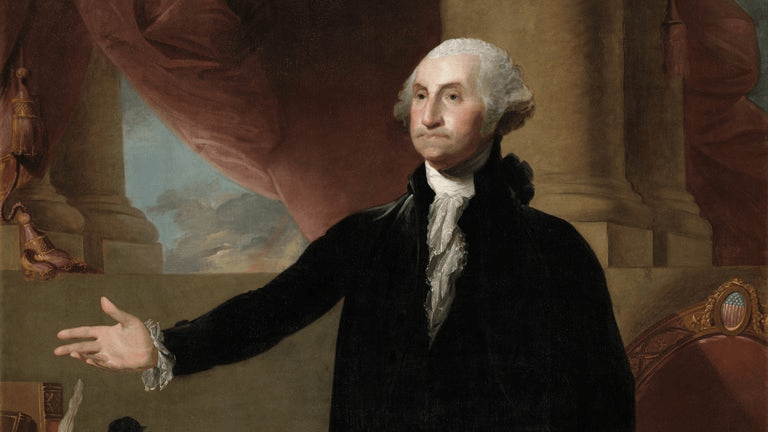
George Washington Addresses the Divisions

In our own day, it’s as if we have not learned the lessons of the past. And that is most likely because we have such little historical knowledge and awareness. I know of few people who realize George Washington was very much against a party system of government – and argued against it for similar reasons to the Apostle Paul.

Washington considered parties to be the bane of republican government. Parties were factions that threatened to divide the electorate into competing groups who might use violence to advance their interests.

He argued that political parties might also disrupt the separation of powers, especially in the case of unified government where loyalty to a party could interfere with the system of checks and balances.

What’s more, Washington said that parties threatened to stand in the way of effective representation, with elected officials tempted to represent only fellow party members and to leave opposition groups without a voice in government.

George Washington was mostly unique among the founders in never reconciling himself with political parties and never acknowledging the positive things that parties can bring to republican government.

Although it’s likely that Washington understood that parties were inevitable, he argued for keeping them under restraint and limiting their interference in the political process as much as possible.

Obviously, the party system won out, and rather quickly. In a healthy state of being, political parties can mobilize voters and encourage voter participation. They help build support for officeholders and serve as conduits of communication to the people. Political parties allow minorities to form coalitions to create majority rule.

Stick with the Evidence

Yet, what we seem to continually experience nowadays is the unhealthy aspect of the party system. People are hardened and reified into established positions and refuse to listen to the other. In such a position, evidence-based practices take a back seat.

For example, although there is not a shred of evidence that the former U.S. President experienced a hung jury and a corrupt judge in being convicted on 34 felony counts, a sizable chunk of Americans believe the corruption to be true – seemingly only because the former President said so, and without any objective, reasonable, and serviceable evidence to offer in backing up that claim.

And that prideful hardened spirit is the very thing that was happening in the ancient Corinthian Church. They wanted what they wanted, and they didn’t care what the other group thought. Each group believed (without evidence) they were wise and right. Yet, all of them were, in reality, foolish and unjust.

If we want a better public political climate; the freedom to be who we are; and confidence for the future; then, we had better begin with examining ourselves and listening well to the other first, before we assume that our own group is in the right and should be in control.

The privileges of freedom can only be enjoyed by embracing the responsibilities of freedom. And those responsibilities include a unified concern for the common good of all citizens, and not just the ones I like and who agree with me.

O God, the Father of our Lord Jesus Christ, our Savior, and the Prince of Peace; Give us grace to lay aside our unhappy divisions. Take away all hatred and prejudice, and whatsoever else may hinder us from godly union and concord. Help us to build bridges, not walls, and live into the unity you provided for us in Christ, through the Spirit. Amen.

Persecuted (Acts 8:1b-8)

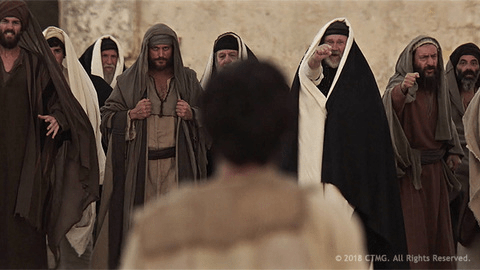
A scene from the movie, “Paul, Apostle of Christ,” in which Saul sought to wipe out Christians beginning with the stoning of Stephen

On that day a great persecution broke out against the church in Jerusalem, and all except the apostles were scattered throughout Judea and Samaria. Godly men buried Stephen and mourned deeply for him. But Saul began to destroy the church. Going from house to house, he dragged off both men and women and put them in prison.

Those who had been scattered preached the word wherever they went. Philip went down to a city in Samaria and proclaimed the Messiah there. When the crowds heard Philip and saw the signs he performed, they all paid close attention to what he said. For with shrieks, impure spirits came out of many, and many who were paralyzed or lame were healed. So there was great joy in that city. (New International Version)

Just because Christians experience the blessing of God through new life in Christ, does not mean that the rest of this earthly life will be bunnies and unicorns without any hardship.

Sometimes we forget that rabbits and horses produce manure, and we’ll have to muck out the barn. And even more than that, blessings from God are not limited to an abundance of earthly resources; blessing also comes through suffering. Jesus said:

“Great blessings belong to those who suffer persecution for doing what is right. God’s kingdom belongs to them.

“People will insult you and hurt you. They will lie and say all kinds of evil things about you because you follow me. But when they do that, know that great blessings belong to you. 

“Be happy about it. Be very glad because you have a great reward waiting for you in heaven. People did these same bad things to the prophets who lived before you.” (Matthew 5:10-12, ERV)

Saul was an up and coming Jewish Pharisee. He was intelligent, driven, and pious. Saul had the pedigree, passion, and position to go a long way and make a big splash in Judaism. And he was more than ready to do whatever it took to stamp out a heretical and dangerous sect of Jesus followers – even to the point of giving approval to the stoning of the Christian Stephen; and leading a persecution against believers like him.

Jesus not only promised abundant and eternal life to his followers, but he also promised that the cost of Christian discipleship would be persecution. Believers in Jesus Christ can expect to suffer in this life for their faithful commitment. Yet, because Christ overcame the world, we too, can accept, cope, and transcend any persecution and trouble we face in our embrace of faith. Jesus said:

“The world will make you suffer. But be brave! I have defeated the world!” (John 16:33b, GNT)

Even though the unity the believers enjoyed together in Jerusalem was disrupted and destroyed by the leadership of Saul, God bent the adverse situation toward blessing. Christians were flung all over the known world. In their going, they obeyed the words of their Lord Jesus to proclaim the message they so wholeheartedly embraced.

When Jesus came near, he spoke to them. He said, “All authority in heaven and on earth has been given to me. So wherever you go, make disciples of all nations: Baptize them in the name of the Father, and of the Son, and of the Holy Spirit. Teach them to do everything I have commanded you.

“And remember that I am always with you until the end of time.” (Matthew 28:18-20, GW)

The ancient prophesies were becoming realized. Grace, mercy, and peace were overcoming bitterness, judgment, and enmity toward one another. Even though persecution was happening, there was now a very different response to it, which will lead to a new outcome. In the last days…

The Lord will mediate between nations
    and will settle international disputes.
They will hammer their swords into plowshares
    and their spears into pruning hooks.
Nation will no longer fight against nation,
    nor train for war anymore. (Isaiah 2:4, NLT)

Suffering can be tolerated, even embraced, whenever we are aware that it can lead us to peace and joy – both personally and communally. Instead of evil taking root amongst a people, good seeds can be planted in the heart of humanity. And when those seeds are watered and nurtured, they grow to become a blessing for the world.

Finally, Jesus said, “What is God’s kingdom like? What story can I use to explain it? It is like what happens when a mustard seed is planted in the ground. It is the smallest seed in all the world. But once it is planted, it grows larger than any garden plant. It even puts out branches that are big enough for birds to nest in its shade.” (Mark 4:30-32, CEV)

Spiritual growth is built into Christianity. The faith formation and development of both individual believers and churches is important. Without it, Christians devolve into cliques of special interest groups.

But with it, Christianity becomes a blessing to the world, that is, if believers focus on producing and harvesting the spiritual fruit of love, joy, peace, patience, kindness, generosity, faithfulness, gentleness, and self-control. (Galatians 5:22-23)

Whenever and wherever believers and followers of Jesus are spiritually growing in their faith, they become like exorcists who organically purge unhealthy institutional systems of their moral corruption, selfishness, idolatry, hate, in-fighting, obsessions, bitterness, rage, competitive oppositions, conflict, and polarizing group rivalries. (Galatians 5:19-21)

Christianity is meant to bring joy and healing of both body and soul. If it doesn’t do this, then it has become just another unjust and unhealthy organization that is in need of purging its impurities; and embracing its mandate to uphold the common good of all persons through proclamation of good news and committed to a lifestyle of loving one another as Christ has loved us.

For people pay attention to that which is right, just, and good – because righteousness, justice, and goodness are in everyone’s spiritual DNA.

Almighty and gracious God of all:
Remember Christ, your Son, who is peace itself,
and who has washed away our hatred with his blood.
Because you love all men and women everywhere,
look with mercy on all who are engaged in battles of the flesh and the spirit.
Banish the violence and evil within all combatants of both body and soul
so that one day, we may all deserve to be called your sons and your daughters.
Grant this through Christ our Lord, in the enablement of the Spirit. Amen.