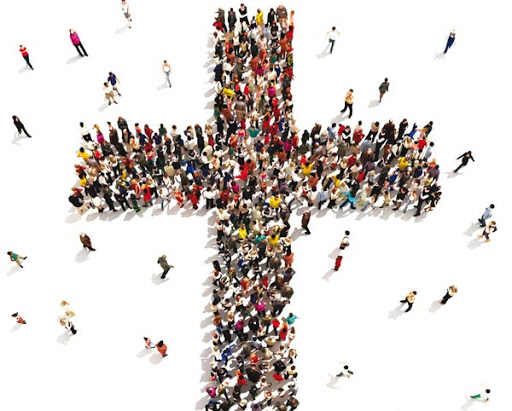
Hebrews 9:1-12 – Remembering Christ Together

Photo by Krivec Ales on Pexels.com

Now the first covenant had regulations for worship and also an earthly sanctuary. A tabernacle was set up. In its first room were the lampstand and the table with its consecrated bread; this was called the Holy Place. Behind the second curtain was a room called the Most Holy Place, which had the golden altar of incense and the gold-covered ark of the covenant. This ark contained the gold jar of manna, Aaron’s staff that had budded, and the stone tablets of the covenant. Above the ark were the cherubim of the Glory, overshadowing the atonement cover. But we cannot discuss these things in detail now.

When everything had been arranged like this, the priests entered regularly into the outer room to carry on their ministry. But only the high priest entered the inner room, and that only once a year, and never without blood, which he offered for himself and for the sins the people had committed in ignorance. The Holy Spirit was showing by this that the way into the Most Holy Place had not yet been disclosed as long as the first tabernacle was still functioning. This is an illustration for the present time, indicating that the gifts and sacrifices being offered were not able to clear the conscience of the worshiper. They are only a matter of food and drink and various ceremonial washings—external regulations applying until the time of the new order.

But when Christ came as high priest of the good things that are now already here, he went through the greater and more perfect tabernacle that is not made with human hands, that is to say, is not a part of this creation. He did not enter by means of the blood of goats and calves; but he entered the Most Holy Place once for all by his own blood, thus obtaining eternal redemption. (New International Version)

A healthy approach to looking at the whole of the Bible is to see it as an unfolding drama of redemption in six acts: 

  1. Creation of the world.
  2. Fall of humanity.
  3. Israel and the law.
  4. The earthly ministry of Jesus.
  5. The Church. 
  6. Return of Christ.

We are presently in act five, the church age. The previous four acts were all important in leading up to this act, just as the scenes in a play all build upon one another.

So, then, Israel and the law had their place in this drama of redemption. But we are no longer in that act. This is one reason why we do not hold to all the ceremonial and sacrificial stipulations of the old covenant because it has been superseded by the new covenant.

The previous act of the law had its limitations. It was never designed to completely clear the conscience of the worshiper. Its purpose was to be a reminder of sins that points forward to a better time when the sin issue would be settled once and for all. That time has come. 

The person and work of Jesus has completely cleared the conscience of the worshiper because his sacrifice is the sacrifice to end all sacrifices. Christ’s finished work is both thoroughly pervasive and completely permanent.

Therefore, there is no longer any need to languish in guilt as though we were stuck in act three of God’s redemption drama. 

We do not need to be reminded of our sins anymore. Instead, we are to be reminded of Christ’s finished work on the cross, and that his blood has washed away our sins. We are to remember rightly and have Jesus before us continually. Our redemption is not temporal, but permanent. 

Taking some time each day to remind ourselves of this new reality and enjoy act five of the drama is both sage and necessary in order to live a successful Christian life. Here are some wonderful privileges to remember together of being united with Christ contained within the book of Hebrews:

  • Church connects to other like-minded people who help us live for God.

Encourage each other every day while you have the opportunity. If you do this, none of you will be deceived by sin and become stubborn. (Hebrews 3:13, GW)

  • Church creates a sacred space for us to relate to the divine.

So, whenever we are in need, we should come bravely before the throne of our merciful God. There we will be treated with undeserved kindness, and we will find help. (Hebrews 4:16, CEV)

  • Church enables us to reflect on gratitude.

Since we are receiving a kingdom that cannot be shaken, let us be thankful, and so worship God acceptably with reverence and awe. (Hebrews 12:28, NIV)

  • Church provides opportunities to serve and give to others.

Keep on loving one another as brothers and sisters. Do not forget to show hospitality to strangers, for by so doing some people have shown hospitality to angels without knowing it. Continue to remember those in prison as if you were together with them in prison, and those who are mistreated as if you yourselves were suffering. (Hebrews 13:1-3, NIV)

  • Church teaches us forgiveness.

“I will forgive their sins and will no longer remember their wrongs.” (Hebrews 8:12, GNT)

  • Church gives us purpose and meaning.

Because Jesus lives forever, his priesthood lasts forever. Therefore, he is able, once and forever, to savethose who come to God through him. He lives forever to intercede with God on their behalf. (Hebrews 7:24, NLT)

Saving God, you sent your Son, the Lord Jesus, to take care of the sin issue once for all through his blood. I give you unending thanks for your grace. May your Holy Spirit press this reality of forgiveness and clarity of conscience firmly into my mind and heart so that I will always live for you in all things. Amen.

1 Corinthians 11:27-34 – The Body

But if you eat the bread and drink the wine in a way that isn’t worthy of the Lord, you sin against his body and blood. That’s why you must examine the way you eat and drink. If you fail to understand that you are the body of the Lord, you will condemn yourselves by the way you eat and drink. That’s why many of you are sick and weak and why a lot of others have died. If we carefully judge ourselves, we won’t be punished. But when the Lord judges and punishes us, he does it to keep us from being condemned with the rest of the world.

My dear friends, you should wait until everyone gets there before you start eating. If you really are hungry, you can eat at home. Then you won’t condemn yourselves when you meet together.

After I arrive, I will instruct you about the other matters. (Contemporary English Version)

The body. The body and blood of Christ. The Body of Christ. Throughout the Apostle Paul’s first letter to the Church at Corinth he employs the full literal and metaphorical understanding of the word “body.”

“Body” is an important word for Paul. He consistently and insistently uses it to convey a message of solidarity, unity, community, and responsibility.

Christ identifies with his people closely. This relationship is so intimate that it is like a head connected to a body. Jesus is committed to the Church.

God put everything under Christ’s feet and made him head of everything in the church, which is his body. His body, the church, is the fullness of Christ, who fills everything in every way. (Ephesians 1:22-23, CEB)

Believers in Jesus are connected to one another closely. They are vitally linked, like the parts of a body all unified together, acting in concert.

God handed out gifts of apostle, prophet, evangelist, and pastor-teacher to train Christ’s followers in skilled servant work, working within Christ’s body, the church, until we’re all moving rhythmically and easily with each other, efficient and graceful in response to God’s Son, fully mature adults, fully developed within and without, fully alive like Christ. (Ephesians 4:11-13, MSG)

The Church, believers in God and followers of Christ, are the community of the redeemed. They serve and share together as if they were one body, not many bodies.

Christ is like a single body, which has many parts; it is still one body, even though it is made up of different parts. In the same way, all of us, whether Jews or Gentiles, whether slaves or free, have been baptized into the one body by the same Spirit, and we have all been given the one Spirit to drink.For the body itself is not made up of only one part, but of many parts…. As it is, there are many parts but one body. (1 Corinthians 12:12-14, 20, GNT)

And so, Christians have a responsibility to one another, They must work together as one Body of Christ, paying attention to each other and caring for all the members. There are not to be divisions of special interest groups or a separation of class, ethnicity, race, or gender.

Unfortunately, when the Corinthian Church gathered around the Lord’s Table, their eating and drinking didn’t eliminate barriers but instead maintained and created obstacles between each other.

Paul would have none of that kind of thinking or behavior. He cited it as a reason why many of the individual physical bodies of persons were sick, weak, and even dead. We are holistic people, so whenever there is a spiritual illness in the Body of Christ, it effects the physical bodies of members with sickness.

So, what to do about this malady of both body and soul? Wait for each other. Be patient with one another. Show deep concern for the Body because we are all truly one in Jesus Christ.

Be devoted to one another in love. Honor one another above yourselves…. Live in harmony with one another. Do not be proud but be willing to associate with people of low position. Do not be conceited. (Romans 12:10, 16, NIV)

And all of this is rooted in grounded in the body and blood of Jesus. Whenever believers come to the Table, their eating and drinking is meant to be an outward display of the inward reality of our collective redemption.

Christ gave his literal body so that we might be redeemed from old empty ways of living selfishly and independently from other people. He gathered believers together as the Body. The Church is to reflect Christ’s concern for humanity. The Spirit is given, so that together as one people of God, we will be the continuing presence of Jesus to a fragmented world in need of kindness, justice, and deliverance.

As the Lord’s Body, we are to understand our special purpose on this earth – to bless the world by demonstrating a different and better way to live. Proclaiming this good news in both word and deed is what we are about.

If we look, speak, and act no different than everyone else, we will all be lumped together at the end of the age when Christ returns. And it won’t go so well for us.

Yet, I am confident of better things with you and me.

Our coming together at the Lord’s Table needs to be a genuine celebration of redemption. Examining ourselves does not mean unnecessary navel gazing. Because whenever we go trying to find sin inside us, we will never be disappointed. Instead, the examination is to be communal – ensuring there is room at the Table for everyone, and that each person is connected and participating.

In short, we are to love one another, just as Christ loved us and gave himself for us.

Help carry each other’s burdens. In this way you will follow Christ’s teachings. (Galatians 6:2, GW)

May it be so, to the glory of God.

Lord Jesus, who prayed that we might all be one, we pray to you for the unity of Christians, according to your will, according to your means. May your Spirit enable us to experience the suffering caused by division, to see our sin, and to hope beyond all hope. Amen.

1 Corinthians 12:12-27 – One People for the Common Good of All

The body of Christ has many different parts, just as any other body does. Some of us are Jews, and others are Gentiles. Some of us are slaves, and others are free. But God’s Spirit baptized each of us and made us part of the body of Christ. Now we each drink from that same Spirit.

Our bodies don’t have just one part. They have many parts. Suppose a foot says, “I’m not a hand, and so I’m not part of the body.” Wouldn’t the foot still belong to the body? Or suppose an ear says, “I’m not an eye, and so I’m not part of the body.” Wouldn’t the ear still belong to the body? If our bodies were only an eye, we couldn’t hear a thing. And if they were only an ear, we couldn’t smell a thing. But God has put all parts of our body together in the way that he decided is best.

A body isn’t really a body unless there is more than one part. It takes many parts to make a single body. That’s why the eyes cannot say they don’t need the hands. That’s also why the head cannot say it doesn’t need the feet. In fact, we cannot get along without the parts of the body that seem to be the weakest. We take special care to dress up some parts of our bodies. We are modest about our personal parts, but we don’t have to be modest about other parts.

God put our bodies together in such a way that even the parts that seem the least important are valuable. He did this to make all parts of the body work together smoothly, with each part caring about the others. If one part of our body hurts, we hurt all over. If one part of our body is honored, the whole body will be happy. Together you are the body of Christ. Each one of you is part of his body. (Contemporary English Version)

“If instead of a gem, or even a flower, we should cast the gift of a loving thought into the heart of a friend, that would be giving as the angels give.”

George MacDonald (1824-1905)

It’s easy to take things for granted.

For instance, we don’t typically think too much about our toes… until we stub them, drop something on them, break them, or need a podiatrist to operate on them. Then, we not only know they’re still there, but our entire body (along with the mind and emotions!) feels the need to give a lot of attention to the lowest end of our body that enables us to stand and walk without thinking much about it.

The body is an apt metaphor for how to think about humanity and its various systems and institutions. We might see the face of any church or organization, but there are scads of people behind the scenes doing all kinds of good work. For example, the golfing profession understands the importance of caddies; lawyers know the need of paralegal professionals; healthcare facilities and organizations rely not only on nurses and social workers, but also on cooks and housekeepers; schools need the coordination of teachers, parents, students, volunteers, and the entire community to effectively realize the education of children.

Also, as you well know, it’s easy to take for granted services we receive… until we don’t receive them, or in a way to our liking. Then, we pay attention. We want action and resolution. We want our food now and to our exact specifications. Sometimes we might even forget that we are dealing with people, not cogs in a machine or parts in a system. Millions of people labor every single day, sometimes even seven days a week, just to make ends meet and provide for their families. When we neglect to see or understand this, we have done our fellow human beings a gross disservice.

It’s also awfully easy to forget how radical the Apostle Paul’s words were for first-century folks, especially in religious circles. Throughout the Old Testament, the Hebrew community was God’s people. If you wanted to worship the one true God, you came to Jerusalem and learned from Jews.

But Pentecost and the giving of the Holy Spirit changed things in such a profound and organic way that the world would never be the same again.

Paul preached with fervor and flavor that there would not be a separate Jewish church and Gentile church. They have become one Body of Christ through the redemptive events of Jesus. Both Jews and Gentiles have the same Spirit – not different Spirits for each group. Jesus did not die so that people could be fragmented from each other; Christ was crucified to end, once and for all, the segregation, discrimination, and ostentation of one group of people above another. 

The cross was the ultimate radical act of justice against the powers of this dark world that seek to rank people according to their relative importance and worth.

The power of resurrection is the energy of God raising Christ from death to triumph over the realm and system of evil throughout the earth. All kinds of people everywhere are to rise with Christ in a great demonstration of God’s power to subvert the status quo of discriminatory racism, extreme individualism, gender inequality, social and economic classism, and any kind of “ism” which places one group of people in subjection to another in misguided notions of superiority.

The church is to be a community of redeemed people reflecting the diversity of God’s big world.

No two groups of people could have been more different than Middle-Eastern Jews and Greek Gentiles. Yet, Paul adamantly insisted that they together, not separate, make up the one Body of Christ.

It isn’t easy listening to another group of people who think and act differently than you and me. But listen we must. And respond we must. It is our biblical responsibility as believers in the way of Christ. Believers are only the Body of Christ when we are united and together as one people of God.

There is no ability to look down your nose on another person if you are already kneeling on the ground in humble prayer at the foot of the cross. There is only the chance to look up. There is even the opportunity to allow someone less privileged and fortunate to assist you.

Yes, we all need one another – even if it doesn’t seem that way at first.

It isn’t our job to colonize other people’s culture and society to make it more like our own. It is our duty to share good news, make room at the Table, extend love in the name of Jesus, and work together as the one people of God, formed by the Spirit.

Almighty God of all creation, I understand we don’t struggle merely against flesh and blood but against powers and principalities – those institutions and systems that keep separatisms alive by perpetuating the lie that some members of the family are inferior and others superior.  Create in us a new mind and heart that will enable us to see brothers and sisters in the faces of those divided by human constructed categories of power disparities. 

Give us the grace and strength to rid ourselves of stereotypes that oppress some of us while providing entitlements to others. Help us to create a Church and nation that embraces the hopes and fears of oppressed people everywhere, as well as those around the world. Heal your family, God, and make us one with you, in union with our Lord Jesus, and empowered by your Holy Spirit. Amen.

*Above photo credit: music4life on Pixabay

Acts 2:42-47 – A Changed Community

We Are All One in Jesus Christ by Soichi Watanabe, 2009

They devoted themselves to the apostles’ teaching and fellowship, to the breaking of bread and the prayers. Awe came upon everyone because many wonders and signs were being done by the apostles. All who believed were together and had all things in common; they would sell their possessions and goods and distribute the proceeds to all, as any had need. Day by day, as they spent much time together in the temple, they broke bread at home and ate their food with glad and generous hearts, praising God and having the goodwill of all the people. And day by day the Lord added to their number those who were being saved. (NRSV)

You’ve likely heard the old saying, “If it’s not broken, don’t fix it.” It is a wise saying. Yet, what if we don’t know something is broken? What if we keep living our lives with something out of whack and don’t even realize it? Or, worse yet, what if we don’t care?

The ancient church after Christ’s resurrection and ascension was on a mission to live communal life together different from how they lived before Jesus came into their lives. Today’s New Testament lesson gives us a glimpse of what that life together consisted of.

“Yesterday I was clever, so I wanted to change the world. Today I am wise, so I am changing myself.”

Rumi (13th century Persian poet and scholar)

We know something needs to change when it doesn’t quite match up to the life depicted by our ancestors in the faith – a life of fellowship, of glad and sincere hearts, and of concern for the common good of all. We never just change or alter something for change’s sake or because we like or dislike something. No, instead, we adjust our lives according to whether it lines up with the relational dynamics of Holy Scripture.

I had just one grandparent when I was growing up. My Grandma was seventy-nine years old when I was born, and she lived to be ninety-seven. I always knew her as an old lady. Although quite aged, she had a lot of spunk to her, all ninety-five pounds of her. 

I remember Grandma had an old wooden cutting board in her kitchen. I don’t how old it was, but it was probably purchased from Methuselah’s Kitchen Outlet. It was cracked and nearly falling apart. The board had deep furrows in it from the thousands of cuts made on it. Grandma liked her cutting board.

For Mother’s Day one year my Dad bought her a nice brand-new cutting board. After thanking my Dad for the gift, Grandma proceeded to put the new board in the back of her cupboard and continued to use her nasty old cutting board. Whenever my Mom or sisters helped her in the kitchen, they were not about to touch that old board because it was like a bacteria trap with its deep grooves. 

Grandma didn’t care about anyone’s concerns about her cutting board. When my Dad finally asked her why she did not use her new cutting board, she simply answered, “Oh, it is much too nice to use.” We all knew that was Grandma’s way of saying that she liked her nasty old cutting board and nobody was going to tell her she can’t use it.

Sometimes folks, including Christians, can be like my Grandma, bless her stubborn old heart. They just like the way they do things, and really don’t see what others see who aren’t Christ followers. They fail to consider or realize that non-Christians have no emotional attachment to the cutting board. All they see is an antiquated old board they would never use and find it weird anyone would ever want to use it.

Christians may forget or lose sight of how overwhelming and even intimidating they can be with those outside the faith. Because Christianity is familiar to Christians, we don’t see what others see when they view us from the outside. 

I remember once walking into a beautiful new church building and sitting down and seeing a huge old pulpit that was literally falling apart. Since I’ve been around a lot of churches, I quickly discerned it was likely the old pulpit from the old church building. I asked someone, and it was. But as an outsider to that fellowship, I had zero emotional attachment to the pulpit, and it was a distraction because it just looked like a big old ratty collar on a new little puppy.

“Be the change that you wish to see in the world.”

Mahatma Gandhi

The point I am making is this: The decision to change our lives, or not to change, must come from a motivation of biblical and human values. The Christian’s mission and purpose are the Great Commission (make disciples) and the Great Commandment (love God and love neighbor). We express those values through our daily devotion to teaching, fellowship, the breaking of bread, and prayer. Such life together is attractive and winsome to a watching world.

If people matter, including those who don’t think or believe like us as Christians, then we will make decisions based upon that value. Nothing need be fixed or changed if the mission is going forward with biblical values driving it. However, if people stay away, or know nothing about our shared life together, then we have a prime reason to change. If this has gone on for years, even decades, I suggest that the fellowship of people is eating meat prepared from a cutting board full of bacteria and it is making everyone sick.

Whenever a faith community is focused on trying to keep people from leaving, instead of reaching people with an outward focus, then that community has lost its sense of spiritual values.

“Never doubt that a small group of thoughtful, committed, citizens can change the world. Indeed, it is the only thing that ever has.”

Margaret Mead

The main verb contained within the Scripture verses for today is the word “added.” Those who accepted the message of repentance and faith in Jesus were baptized and about three thousand were “added” to their number that day. We then get a string of participles, that is, words connected to the main verb of “added.” The result is this: The Lord “added” to their number daily those who were being saved.  Please understand the text makes it quite clear that the driving force of Christ’s church is to reach people.

It could be we take the old cutting board for granted and simply expect other people to use it if they are in our kitchen. If that is the case, there is to be a driving motivation and desire for outreach. There are people aplenty who need the kind of deliverance Jesus provides.

“Everyone thinks of changing the world, but no one thinks of changing himself.”

Leo Tolstoy

If something is off in our faith community, then the biblical solution is to change our lives, change our practices, change our speech, and change our daily behavior by reaching people for Jesus and adding them to the fellowship.

Whenever Christians break bread together at the Lord’s Table, the communion reminds us of our highest purpose and values. Jesus came to this earth for those estranged and far from God and others. Through Christ’s life, death, resurrection, and ascension we are saved by grace through faith. This reality is made tangible to us in the elements of bread and cup. They are a visible sign and seal of an invisible grace. We are to come to the Table forsaking all personal agendas and embracing God’s agenda of redeeming humanity.

And, by the way, after about a year of sitting in my Grandma’s cupboard, my Dad took out the new cutting board, put it on the kitchen counter and threw away the old board. It was about time.