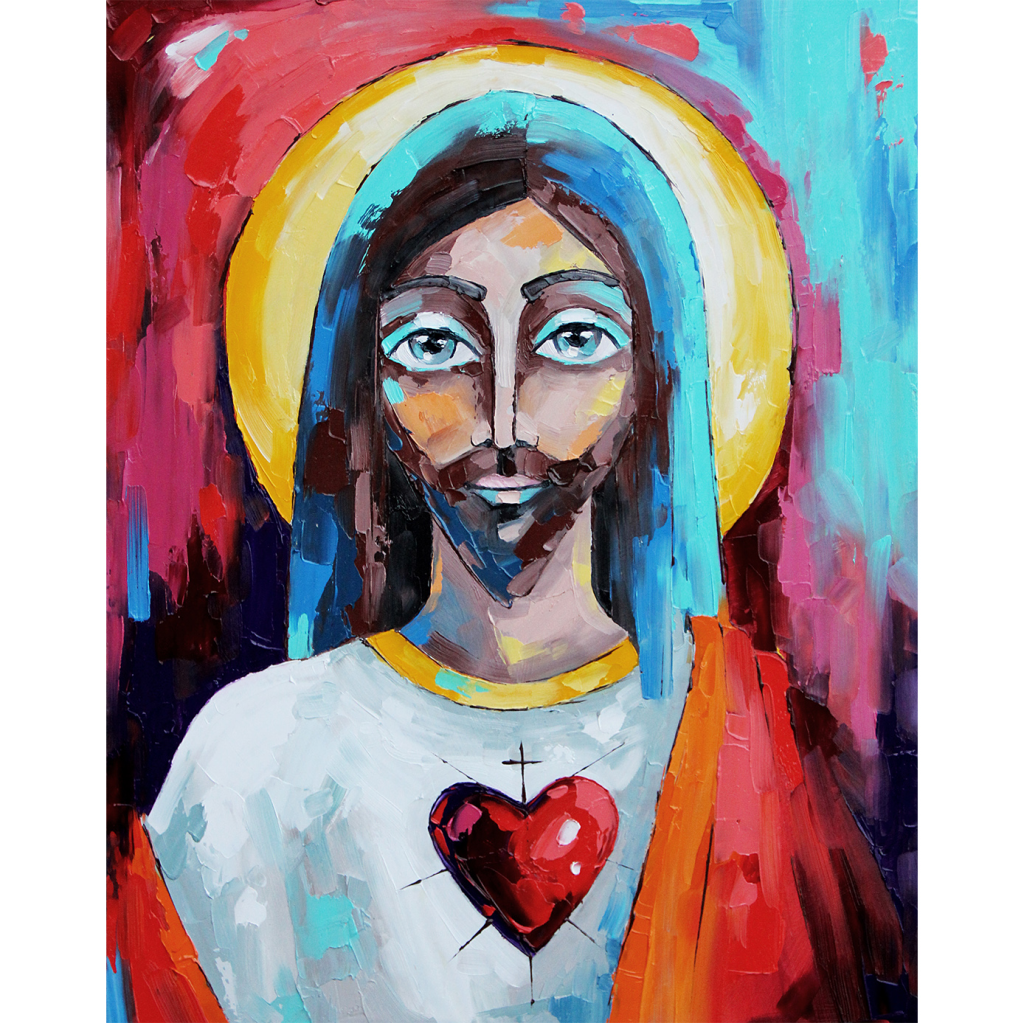
Get Low Enough To See (John 7:25-36)

At that point some of the people of Jerusalem began to ask, “Isn’t this the man they are trying to kill? Here he is, speaking publicly, and they are not saying a word to him. Have the authorities really concluded that he is the Messiah? But we know where this man is from; when the Messiah comes, no one will know where he is from.”

Then Jesus, still teaching in the temple courts, cried out, “Yes, you know me, and you know where I am from. I am not here on my own authority, but he who sent me is true. You do not know him, but I know him because I am from him and he sent me.”

At this they tried to seize him, but no one laid a hand on him, because his hour had not yet come. Still, many in the crowd believed in him. They said, “When the Messiah comes, will he perform more signs than this man?”

The Pharisees heard the crowd whispering such things about him. Then the chief priests and the Pharisees sent temple guards to arrest him.

Jesus said, “I am with you for only a short time, and then I am going to the one who sent me. You will look for me, but you will not find me; and where I am, you cannot come.”

The Jews said to one another, “Where does this man intend to go that we cannot find him? Will he go where our people live scattered among the Greeks, and teach the Greeks? What did he mean when he said, ‘You will look for me, but you will not find me,’ and ‘Where I am, you cannot come’?” (New International Version)

Once in a while, I pray something like this: “Lord, if I’m not seeing you when I ought to, or am not getting something you’re trying to show me, please use your divine baseball bat and whomp me upside the head!”

That’s because, far more often than I would like to admit, I miss seeing the Divine whenever God shows up. That’s true for all of us, as well. We tend to mistake experiencing God when the Lord comes and stands in front of us.

In the New Testament Gospels, some who followed Jesus ended up turning around and going back to their old life. Either the situations with Jesus got too dicey, or Christ’s teaching seemed too confusing. When that happens, it’s too easy to forget Jesus altogether, and never pay attention to him.

There are others who treated Jesus with contempt, simply because they didn’t recognize who he really is. One cannot have faith if they don’t know or acknowledge the object of faith. You cannot believe Jesus if you don’t believe he is from God.

And, of course, there are those who see Christ for who he is. Yet, some of them see Jesus as a threat and want to be rid of him. Others see him as a great healer and teacher, and follow Jesus in order to gain something from him.

However, there are others who see through spiritual eyes and gain the faith to believe and follow him.

All of us, in some way or another in our lives, have misread Jesus and mistaken him for the gardener or some other person.

Many of the Jews in Christ’s own lifetime rejected him because they believed him to be a common nondescript Jew. They knew his parents, and his family. Jesus was too familiar to be special, let alone the Son of God. Besides, everyone knows nothing good comes from the Hicksville that’s Nazareth, right?

The thing is: People miss seeing Jesus for who he is (sometimes including you and me) because we have particular expectations and requirements of our personal Jesus. In other words, it is awfully easy to make Jesus Christ into our own image of how he should be.

Having worked with college students for many years, I continually got a kick out of some of them who had precise requirements for a spouse, and certain expectations of how their potential kids were going to be someday.

It went well beyond having the same core cardinal values. Handsome and beautiful, smart but not too smart, assertive but not sassy, subservient but not a washrag, a 3-point Calvinist but not 5-point, willing to eat anything on the table except weird food that would embarrass, willing to live on a shoestring budget, funny but not quirky…. Actually, I could keep going; there’s a lot more. But you get the idea.

You may be curious as to my counsel to them. I typically said something along the lines of “I guess you’ll never get married, because marriage has nothing to do with any of that stuff. If you’re willing to have your eyes open and see a good person when they come along, and if you’re patient enough to develop a solid relationship built on grace, truth, and love, then you’ll likely find yourself a spouse you can be with for a lifetime.”

I remember one day on a college campus talking with a student after he asked me why he should ever be a Christian. I don’t think he expected my answer. I had already assessed that the guy was looking for a philosophical debate, so I went in a different direction. I said something like:

“I don’t think you should be a Christian. Jesus had people misunderstand him all the time. He was ridiculed and persecuted, tortured and killed. And he had the chutzpah to tell his followers that suffering would be a big part of being his disciple. Many of them followed him anyway. If you’re interested in why they did, we can talk. But if you just want to try and feel good by talking about Jesus, and avoid facing life’s pain and suffering, then I’m not wasting my time. So, what do you want to do?”

We will miss Jesus altogether if we are looking for a particular person. Whenever we get married to specific outcomes, then we’ll miss him for sure.

I wonder how many times Jesus showed up in your life this week, and you didn’t recognize him. In truth, Jesus is with us, by means of the Spirit, all the time. If you don’t see him, it’s not God’s fault, or anybody else’s.

Humility accesses spiritual sight. The religious leaders of Christ’s day were flummoxed and fuming all the time because of their arrogance, and their settled theological and biblical dogma. And so, they could not see who Jesus is, even though he was smack in front of them.

Yet, even though we may be spiritually blind and deaf, and finally see a glimpse and catch a sound of Jesus, that graciously means he is still there, beside you, never having given up on you.

Even a blurry and faint awareness realizes Jesus coming in the people we meet each day who encourage and bless us. Christ even comes and speaks through those we would not expect to hear a word from God.

Whenever we may wonder where Jesus is in our suffering and pain, he is there, sometimes even holding us and carrying us, despite our lack of awareness.

In reality, Jesus is in front of us, beside us, and holding us, all of the time. It’s just a matter of whether we know it, or not. Christ is in everything we experience. He is in both our sadness and joy, the noise and the silence, our work as well as worship, business and leisure, at night when we fall asleep and in the morning when we open our eyes.

So, if we are looking and longing for Christ, he has already come. Jesus came in the most humble forms possible. So, in order to see and experience him, we need to get low enough to see and hear him.

My Lord and my God, help me to see You in all of the ways You come to me today. Teach me not to despise any of the forms in which You come to me as being too common, humble, or ordinary. 

Wake me with Your presence in the morning and tuck me into bed when I sleep. Labor with me in my work today, and cause my leisure to lead to thanksgiving. 

Speak to me through the people You have ordained for me to meet today, and speak even through me, in spite of myself. 

For good and for ill, better and worse, in sickness and health, and in richness and poverty, reveal Yourself to me that I may receive whatever blessing You have chosen for me this day; through Jesus Christ Your Son, my Lord, who with You and the Holy Spirit are One God, now and forever. Amen.

Self-Denial (Mark 8:27-38)

“Let him take up his cross and follow me.”

Jesus went on with his disciples to the villages of Caesarea Philippi, and on the way he asked his disciples, “Who do people say that I am?” And they answered him, “John the Baptist; and others, Elijah; and still others, one of the prophets.” He asked them, “But who do you say that I am?” Peter answered him, “You are the Messiah.” And he sternly ordered them not to tell anyone about him.

Then he began to teach them that the Son of Man must undergo great suffering and be rejected by the elders, the chief priests, and the scribes and be killed and after three days rise again. He said all this quite openly. And Peter took him aside and began to rebuke him. But turning and looking at his disciples, he rebuked Peter and said, “Get behind me, Satan! For you are setting your mind not on divine things but on human things.”

He called the crowd with his disciples and said to them, “If any wish to come after me, let them deny themselves and take up their cross and follow me. For those who want to save their life will lose it, and those who lose their life for my sake, and for the sake of the gospel, will save it. For what will it profit them to gain the whole world and forfeit their life? Indeed, what can they give in return for their life? Those who are ashamed of me and of my words in this adulterous and sinful generation, of them the Son of Man will also be ashamed when he comes in the glory of his Father with the holy angels.” (New Revised Standard Version)

It is quite common for English translations of Holy Scripture to smooth over some of the rough edges of the biblical text. In today’s Gospel lesson, there are three instances of a Greek word (ἐπιτιμάω, pronounced ep-ee-ti-MA-o) getting a somewhat tepid translation into English:

  1. Jesus “sternly ordered” them not to tell anyone about him (8:30)
  2. Peter took Jesus aside and began to “rebuke” him (8:32)
  3. Jesus “rebuked” Peter (8:33)

These are accurate translations; it’s just that the Greek word’s punch isn’t quite there for us as English readers. “Sternly ordered” and “rebuke” are strong English words, yet they must go further. For a more vernacular reading, I would frame the verses this way:

  1. Jesus made it very clear to the disciples to “shut up” about him. In my family growing up, “shut up” was the one word we were never to say without severe consequences. Swear words typically were fine; “shut up” was not. 
  2. Peter took Jesus aside and told him to “shut up.” Now you can see how much more forceful the word is. Imagine saying that to Jesus! 
  3. Jesus told Peter to “shut up.” Christ took up his authority and let Peter know who was really in charge, and perhaps more importantly, let Satan know that he is to “shut up” and keep his sinister mouth quiet.

The strong language is necessary because Jesus was quite strongly upsetting the apple cart and being the sort of Messiah that nobody expected, and frankly, did not want to see.

Messianic hope in the first century did not include things like being crucified, and no less, by religious leaders. Folks believed the opposite would be true. Messiah would come, affirm the religious status quo, and crucify the wretched Romans, thereby setting up Jewish rule with no more Gentile interference and persecution.

But Jesus was insistent about the way of the cross, and was not about to sidestep his ultimate mission of suffering and death. This was not just being killed; it was terrible torture and human degradation.

What’s more, to follow Jesus is to follow the way of the cross. Self-denial, ironically and paradoxically, is the true way of finding oneself and becoming awake and aware of how the universe works.

Yet another less than stellar English translation is “life.” For those who want to save their life will lose it, and those who lose their life for my sake, and for the sake of the gospel, will save it (8:35).

The typical Greek word for life was not used by the Gospel writer Mark; instead he used a word which denoted the substance of a person’s life, the essence of one’s innermost personhood: “soul” (Greek ψυχή, transliterated psyche)

It was necessary for Jesus to give himself for us. His self-denial and horrible martyrdom was the way to save our souls. Humanity is in such a dark predicament that they cannot save themselves; we need someone to deliver us, to save our innermost selves.

But, of course, that doesn’t stop so many of us humans from trying to save ourselves anyway. Knowledge and education, perfectionism and achievement, hard work and effort, money and resources, political power and control, are all the typical ways of trying to psychologically (or psyche-logically) make our souls, our inner person, feel as if there is freedom and happiness.

Yet, it doesn’t take long for those on the committed path of self-improvement to realize that they have only imposed a greater burden on themselves which keeps them in their immaterial shackles.

Instead, we must accept Christ’s authority over our lives, and over our souls. The stark reality is that we need a Savior, and that savior is not you nor me. And neither health nor wealth will get us anywhere with our soul.

It is imperative that we walk in the way of Jesus. It is the way of suffering. Yet, the suffering leads to glory; the crucifixion results in resurrection.

In giving your soul, you find it. In giving yourself to Jesus, you will discover the key to the soul’s freedom and happiness. Furthermore, in losing yourself for the sake of others, you find the soul’s real mission on this earth.

The only path to overcoming shame is by reframing it and embracing it, just as the Lord Jesus did:

Fix your eyes on Jesus, the pioneer and perfecter of faith. For the joy set before him he endured the cross, scorning its shame, and sat down at the right hand of the throne of God. (Hebrews 12:2, NIV)

Perhaps many of us need to “shut up” long enough to listen well to Jesus, and discover in him what our inner self has been searching for so long to find.

Blessed Lord, give us grace to deny ourselves, to take up our cross daily, and to follow Christ; to discipline our bodies and keep them under control. Keep us from being lovers of ourselves, and from being wise in our own eyes and leaning to our own understanding. Help us to seek, not our own good only, but also the good of our neighbor. And grant that we may not live to ourselves or die to ourselves, but whether we live or die, we may be the Lord’s, and may live and die to him. Amen.

Words of Wisdom (Proverbs 14:1-9)

Words of Wisdom, by Aengus Boyle

A wise woman builds her house,
    while a foolish woman tears hers down with her own hands.
Those who walk with integrity fear the Lord,
    but those who take a crooked path despise him.
Pride sprouts in the mouth of a fool,
    but the lips of the wise protect them.
When there are no oxen, the stall is clean,
    but when there is a strong bull, there is abundant produce.
A truthful witness doesn’t lie,
    but a false witness spews lies.
A mocker searches for wisdom and gets none,
    but knowledge comes quickly to the intelligent.
Stay away from fools,
    for you won’t learn wise speech there.
By their wisdom the prudent understand their way,
    but the stupidity of fools deceives them.
Fools mock a compensation offering,
    but favor is with those who do right. (Common English Bible)

In My Own Colloquial Words

Here is today’s Proverbs lesson in my own words:

A woman who knows what she’s doing carefully crafts a well-ordered and hospitable household; but it only takes one or two foolish decisions to bring the whole enterprise down.

Those who value and practice honesty in everything, do so with the clear understanding that God is always watching, and they want to honor the Lord with every word and action. But those who will do anything to get ahead or get by, don’t care one wit about God.

Whenever a fool talks, it sounds like he has a mouthful of rocks. But a wise person knows better than to try and talk a lot.

If there’s no manure in the barn, there’s no money in the bank. But if you’ve got to keep mucking out the barn, you can be sure there will be plenty of money to live on.

Put an honest and truthful person on the stand, and its honesty and truth you will hear. But put a liar anywhere, and all you’re going to get is a bunch of words you can’t trust.

The guy with the critical and judgmental mouth wouldn’t see wisdom even if it slapped him in the face. But the person who observes and listens takes to wise understanding like a fish to water.

Make it a point to always steer clear of a jabbering fool, because you won’t be able to learn one darned thing from him.

If you take a look at a wise person, you’ll see that they have thought through a good plan and are sticking to it like glue. But if you take even a glance at a darned fool, you can immediately see that they’re only spit-balling through life and have no idea what they’re doing.

You can always tell a stupid person by the way they talk about forgiveness, reconciliation, and restitution as things they would never do. But the person who lives right always finds a way to make things right with others, including God.

In Your Own Practical Words

Use your own favorite version of the Bible and go ahead and write out today’s nine verses in your own words. Don’t think too hard on it, or try and make it just so. And, by the way, it’s not sacrilegious to do that.

A proverb is a short pithy statement of experiential truth. It isn’t an ironclad promise or a decree from God. The wise sayings in the Book of Proverbs are meant to communicate that, all things being equal, there are particular consequences which typically result from certain decisions and actions.

It’s a body of wisdom that is universal, and designed to be instructive in how to go about living your life with some success and happiness to it.

So, it only makes sense to me that we would want to think about each proverb and what it’s communicating by putting it into the sort of language which speaks to us.

In Christ’s Own Words

It can be argued that living wisely is the entire point of all Holy Scripture. After all, in the New Testament Gospels, Jesus appears to have continually talked about, and acted in, wisdom. Here is just one example of Christ talking to the religious leaders of his day:

If you grow a healthy tree, you’ll pick healthy fruit. If you grow a diseased tree, you’ll pick worm-eaten fruit. The fruit tells you about the tree.

You have minds like a snake pit! How do you suppose what you say is worth anything when you are so foul-minded? It’s your heart, not the dictionary, that gives meaning to your words.

A good person produces good deeds and words season after season. An evil person is a blight on the orchard.

Let me tell you something: Every one of these careless words is going to come back to haunt you. There will be a time of Reckoning.

Words are powerful; take them seriously. Words can be your salvation. Words can also be your damnation.” (Matthew 12:33-37, MSG)

In Prayer’s Own Words

Almighty God, I humbly ask that You grant me wisdom to make sound choices and decisions. Open my eyes to see Your truth clearly. Give me spiritual discernment to distinguish right from wrong.

Help me not rely solely on my own limited understanding, but trust in Your infinite wisdom to guide my steps. Grant me a heart eager to gain wisdom from Your Word and wise counselors.

Let Your wisdom shape my thoughts, words, and actions each day. Amen.

From the Heart (Mark 7:9-23)

Art by Anna Startseva

Then he said, “You skillfully sidestep God’s law in order to hold on to your own tradition. For instance, Moses gave you this law from God: ‘Honor your father and mother,’ and ‘Anyone who speaks disrespectfully of father or mother must be put to death.’ But you say it is all right for people to say to their parents, ‘Sorry, I can’t help you. For I have vowed to give to God what I would have given to you.’ In this way, you let them disregard their needy parents. And so you cancel the word of God in order to hand down your own tradition. And this is only one example among many others.”

Then Jesus called to the crowd to come and hear. “All of you listen,” he said, “and try to understand. It’s not what goes into your body that defiles you; you are defiled by what comes from your heart.”

Then Jesus went into a house to get away from the crowd, and his disciples asked him what he meant by the parable he had just used. “Don’t you understand either?” he asked. “Can’t you see that the food you put into your body cannot defile you? Food doesn’t go into your heart, but only passes through the stomach and then goes into the sewer.” (By saying this, he declared that every kind of food is acceptable in God’s eyes.)

And then he added, “It is what comes from inside that defiles you. For from within, out of a person’s heart, come evil thoughts, sexual immorality, theft, murder, adultery, greed, wickedness, deceit, lustful desires, envy, slander, pride, and foolishness. All these vile things come from within; they are what defile you.” (New Living Translation)

There is nothing inherently wrong with tradition. Ideally, traditions are helpful ways of remembering and maintaining the values that are important to us.

Yet, what can happen over time is that the tradition itself can become equal to the value we hold to; and eventually, the tradition can become more important than the value it is supposed to remind us of.

In the worst case scenario, the tradition is kept, and the value is forgotten and lost. Whenever that happens, traditions easily become weaponized to protect our interests while harming others. And that is a phenomenon Jesus wanted nothing to do with.

So, Christ affirmed and upheld the essential purpose of the Torah (scriptural law) as the foundation of morality to live justly and righteously in the world. Keeping Torah, therefore, is a matter of inner motives, and intents of the heart, rather than external compliance to ritualized traditions.

Unfortunately, the outward form had supplanted the inward disposition of the heart. Purity then became a matter of observable rituals, and defilement a matter of failing to do the ritual properly. And the original values behind the rituals were lost – which caused souls to become lost, and other people victimized by religious traditions.

Whether one is ritually clean or unclean is not ultimately determined by material objects; it is, instead, determined by the state of the heart.

Art by Andy Perez

In other words, no outward ritual can ever really make a person clean or unclean, pure or impure, spotless or polluted. Inner transformation is what scrubs a person clean and makes them pure.

Ritual traditions, and even scriptural law itself, is unable to effect a transformative change.

Torah can require purity, cleanness, and moral uprightness; but it cannot affect a metamorphosis. We need something other than traditions, rituals, and laws to bring true and sustainable transformation of life.

I say that it is time to hear and observe Jesus. Millions of people throughout history, and up to the present time, have found in Christ (and not in Christian rituals, traditions, church codes, nor in a political Christendom) the answer and the key to what life is really all about.

Again, there is not a problem with our human traditions per se, but with traditions replacing Torah and the word of God.

Jesus gave an example of just such a contradiction between religious tradition and divine law: According to tradition, if a person makes a vow concerning their property and/or possessions as a gift to God at the temple, then those assets cannot be used to support that person’s parents in their old age.

Christ pointed out that this clearly contradicts the command to honor your father and mother. Ironically, the very tradition that was supposed to purify became the means to contamination – because the tradition forbids the person from obeying the command of God.

In a word picture that everyone could understand, Jesus explained that impurity and defilement have to do with what passes through the heart, not the bowels.

People obey or disobey the Ten Commandments due to the state of their heart, and not whether they keep every detail of traditional washing of the hands and body.

People lack virtue not because they fail to do human traditions; but because of what is in their hearts.

This is why Jesus, in his Sermon on the Mount, gets to the heart of why people break commands. For example:

  • The outward act of murder is a result of the inward anger of nurturing bitterness in the heart. (Matthew 5:21-22)
  • The physical act of adultery is the culmination of dozens of mental adulteries which originated in the heart. (Matthew 5:27-28)

Everything that harms and hurts is sourced in the heart, and not in failing to keep a tradition.

Furthermore, the Gospel writer Mark, added the very interesting parenthetical comment that in speaking this way, Jesus meant to declare that all foods are clean; there is nothing eaten that can make us impure.

That may not seem remarkable to most people, but to Jews this statement is cataclysmic and revolutionary. Levitical law details the separating of clean and unclean food, for the purpose of distinguishing the Israelites from all the other surrounding nations. (Leviticus 11:43-44; 20:24-26)

Holding to food laws, and traditional hand washings when it comes to eating, are a way of preserving religious identity and national identity. Jesus had no intention of doing away with Jewish identity, but he very much intended to do away with maintaining practices that keep strict separation from other people.

In other words, Christ was opening the way for ministry to Gentiles. He wanted to bring connection where there was deep division. He wanted the world to know God.

This gets at the “heart” of true religion. Distinctiveness as God’s people does not necessarily nor ultimately come by observing particular traditions; it comes primarily through purity of heart.

And the means of bringing purity of any kind, comes through love. Love always makes a way and finds connections. Love is the sine qua non mark of God.

Traditions infused with love, point people to God, and let them know that they belong.

But traditions for tradition’s sake, repel people, and communicate to them that they don’t belong, and should go away and not pollute the pure ones.

This approach of Jesus toward the religious leaders raises for me several probing questions:

  1. What is the true state of your heart?
  2. Are you aware of your own heart’s dark shadows?
  3. In what sort of direction is your heart inclined to speak and act?
  4. Does encouragement or criticism typically arise from your heart?
  5. Is love the compass of your heart, or does bitterness give you direction?
  6. Will you acknowledge your need of a savior? Will you ask for help?

Blessed God and Father of our Lord Jesus Christ: Make us quick to listen, and slow to speak, so that the Word implanted in our hearts may take root to nourish all of our living. And may the the Word within us overflow into speech and action which blesses the world. Amen.