Jesus the Mentor (Mark 3:13-19)

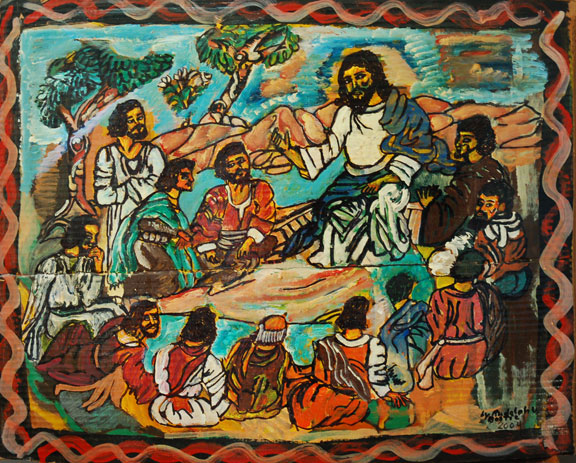
Jesus and the Disciples, by Rudolph Bostic

Jesus went up on a mountainside and called to him those he wanted, and they came to him. He appointed twelve that they might be with him and that he might send them out to preachand to have authority to drive out demons. These are the twelve he appointed: Simon (to whom he gave the name Peter), James son of Zebedee and his brother John (to them he gave the name Boanerges, which means “sons of thunder”), Andrew, Philip, Bartholomew, Matthew, Thomas, James son of Alphaeus, Thaddaeus, Simon the Zealotand Judas Iscariot, who betrayed him. (New International Version)

For me, every place in Holy Scripture is significant, even the seemingly mundane portions of it. Today’s verses might appear rather insignificant. However, there is some important meaning to recording who Christ called as his disciples and why he did it.

Jesus appointed twelve Jewish men to be his close disciples, his apostles. In choosing them, let’s not read into it something that isn’t there. This choosing, in no way, is meant to convey that church leadership boards are always supposed to have twelve men. It seems to me, that if such churches believe this, they ought to go all the way by insisting that they ought also to be Jewish Christians – no Gentiles on the election ballot at the annual meeting!

Excluding women, maintaining a particular number of people to a group, or considering only one ethnicity to leadership is nowhere to be interpreted in this text of Scripture. I can imagine Jesus sitting at the right hand of the Father raising a Spock-like eyebrow to such hermeneutical gymnastics and stating the lone word, “fascinating!”

A disciple is a follower. An apostle is one who is sent out with a specific purpose. Jesus called these particular people in order to send them out with a mission. In other words, Christ’s disciples are really missionaries. And these apostles, these missionaries, are appointed in order that they might be with Jesus, follow him everywhere, learn from him, and then have the received authority to go out and accomplish the mission given them to do.

An apostle can only properly carry out the instructions of the Teacher by first being a disciple who spends copious amounts of time in that Teacher’s presence. Indeed, if we are looking for some contemporary application in these more mundane texts of Scripture, let us find here an insight into our own Christian formation.
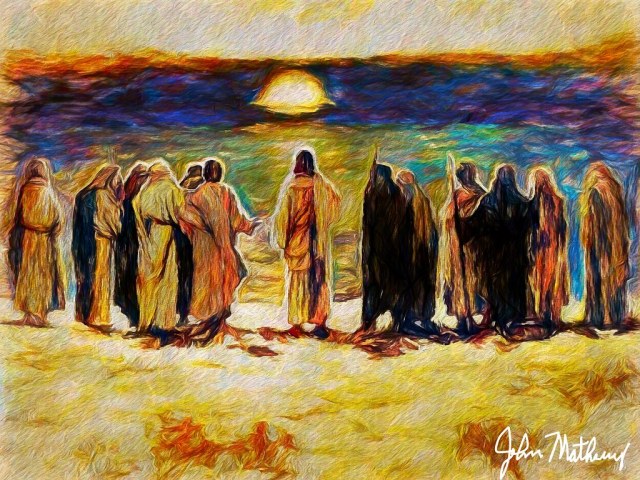
Jesus and the Disciples, by John Mathews

Christian ministry is rightly patterned after the Teacher we follow, Jesus our Lord. Christ himself demonstrated for us the way of mentoring or discipling, through his own words and actions. He called particular individuals, taught them, and equipped them for spiritual warfare in this world by granting them authority to do the work.

If we need a pattern, there it is. It’s a model of mentoring others in the ways of Christian mission and ministry. The idea is that we call, teach, equip, and authorize others in the words and ways of Jesus. I really don’t much care what you call it: Christian discipling, relational mentoring, small group teaching, spiritually forming, or any other word or phrase.

The important thing is to actually understand and do this very Christ-like work of developing mature followers of Jesus who can do the important work of spiritual warfare and ministry, then in turn, develop others. We are to pass on a body of faith and doctrine, of mission and ministry, to a group of people who will do the work. And they then do the same for others.

I rather like the word “mentoring” because for most people it evokes the idea of putting time and effort into some relationships for a specific purpose. And when we look at Christianity as a great mentoring project, perhaps we will see why church is becoming a byword in many parts of the Western world. This also ought to perhaps clue us into how we might move forward as Christians.

I am suggesting that, generally speaking, we have neglected this pattern of Jesus in calling, teaching, equipping, and authorizing. It is one large reason why there is such a decline in church attendance (and participation) in the West. And until we collectively take up this mantle of mentoring ministry, we shall continue to lessen, because we are irrelevant to people’s daily lives – both inside and outside the church.

As a first course of action, I invite you – no matter your age or stage in life – to make it a priority to simply “hang out” with individuals and groups of people. Maybe that sounds like an extrovertish sort of thing to do. However, this invitation is coming from me, an introvert. I didn’t say you have to be the life of the party, or engage in a lot of talking. But I am saying that mature followers of Jesus ought to strongly consider some intentional relationships with people other than family and a few friends.

Hang out around any given church, on any given Sunday, after any given worship service, and you are likely to see small groups of people talking with each other. Those groups typically center around friends according to age. What is often lacking are intentional interactions between the generations.  

Ethiopian Orthodox Church depiction of Christ and his disciples

The younger generations (particularly persons aged 18-29) often need and want to have relationships with more experienced (older!) believers in the faith. Younger adults, however, tend to lack the confidence to go after older adults in order to be mentored or influenced by them. I believe the onus is on the older generations to go after the younger.  

Maybe I’m just old, but it seems like younger generations have an incredible array of relationships, differing levels of friendship, and a complexity to their interactions that I didn’t have “back in my day.” What’s different, it seems, is that their relationships are more gray, and less black and white. And they appear to do a solid amount of hanging out.

Hanging out is typically sitting around with a group of people, eating and drinking, watching movies, studying (or doing bible study) or any other activity. Its doing just about anything, but doing it together with others. And this is the perfect environment for initially establishing how to begin living into the words and ways of Jesus to mentor others.

One of the things we older folks can do is to really understand the reality of younger generations’ relational interactions. For example, when I lived in a university town I used to often just “hang out” with college students, with no agenda other than just being with them. The local Perkins restaurant was at its busiest at midnight, filled with college students hanging out.

There are places in every town and city where young adults go, especially the bar scene. Bars aren’t just places to drink, but are locations of conviviality where persons have the chance to be around one another in a kind of secular church where fellowship happens, looking for a chance to relate meaningfully with others.

All people desire intimacy and want to know that someone else cares about them. This is a very real and felt need. How that need is going to be met can be either legitimate or illegitimate. And we can help with that.

One of the best things we can do for others is to communicate to them that we “have their back,” that we care, love, and genuinely like them.

No one can sniff out a disingenuous attitude quite like a young adult. So, our interactions have to be an authentic desire to be around them. Also, this does not mean we have to pretend to be younger than we are. Instead, one of the greatest needs a young person has is to be in a mentoring relationship with someone older and wiser who can help them navigate life and bring some sort of definition to relationships that they may lack.

The older generations could learn to “hang out” with younger generations and find individuals for whom they can build a solid one on one or group relationship with. If they can have such relationships now, it will serve them for a lifetime.

It seems to me that, as I look at the biblical text, being a mentor, and walking alongside another with love, grace, and wisdom, is built into Christianity by Jesus himself. So, let’s consider how we might best go about this important work.

May your love overflow more and more with knowledge and full insight to help you to determine what really matters, so that in the day of Christ you may be pure and blameless, having produced the harvest of righteousness that comes through Jesus Christ for the glory and praise of God. (Philippians 3:9-11, NRSV)

Parable of the Ten Bridesmaids (Matthew 25:1-13)

The Parable of the Ten Virgins, by Lilibeth Kindle

“When the end comes, the kingdom of heaven will be like ten bridesmaids. They took their oil lamps and went to meet the groom. Five of them were foolish, and five were wise. The foolish bridesmaids took their lamps, but they didn’t take any extra oil. The wise bridesmaids, however, took along extra oil for their lamps. Since the groom was late, all the bridesmaids became drowsy and fell asleep.

“At midnight someone shouted, ‘The groom is here! Come to meet him!’ Then all the bridesmaids woke up and got their lamps ready.

“The foolish ones said to the wise ones, ‘Give us some of your oil. Our lamps are going out.’

“But the wise bridesmaids replied, ‘We can’t do that. There won’t be enough for both of us. Go! Find someone to sell you some oil.’

“While they were buying oil, the groom arrived. The bridesmaids who were ready went with him into the wedding hall, and the door was shut.

“Later the other bridesmaids arrived and said, ‘Sir, sir, open the door for us!’

“But he answered them, ‘I don’t even know who you are!’

“So stay awake because you don’t know the day or the hour. (God’s Word Translation)

Here’s the point of Christ’s parable, up front, so that we know what we are dealing with:

We prepare for things we really care about; we anticipate things that are important to us.

For example, people who really care about hunting make careful preparations for the season and anticipate opening day. Those who care about professional football look forward to game-day, plan for special food to eat, and set aside normal activities to watch them play.

And, of course, weddings are events that take lots of preparation because families care about the upcoming marriage. Since I have raised three girls, I can testify first-hand that wedding plans begin in third grade for many females.

The Wise and the Foolish Virgins, by Charles Haslewood Shannon, 1920

Here’s the point of Christ’s parable, stated in the negative: People show up to things unprepared mostly because they don’t value the event enough to be ready for it.

Casual hunters and fair-weather football fans go home when it gets too cold. That’s because they are not adequately prepared for the conditions.

Quickie weddings happen in Las Vegas where two people are not prepared to have a marriage for a lifetime. 

People drop out of impromptu events when there is no fun or gets too hard. However, if they really care about it, they prepare for it, have patience through it, and persevere in it when things get tough.

The true test of authentic commitment comes when things are not easy and it takes blood, sweat, and tears to see something through.

A Christian is one who not only professes Christ as Lord and Savior, but also backs the words up with a resolve to:

  • live into their baptism
  • avail themselves of communion
  • plan and prepare for both personal and public worship
  • make it their aim to love God, one another, and neighbor

There are few human events more freighted with emotion and preparation than weddings. Parents invest a lot of time, energy, resources, and love to have a meaningful wedding for their kids. There’s also the potential for disaster at a wedding.

A Greek Orthodox fresco of Jesus and the Parable of the Ten Virgins

Since I have done many weddings, I can tell you that a lot of things go sideways in the preparation process and even at the wedding itself. I have seen bridesmaids pass out, grooms forget the ring, and families fight like cats and dogs in the narthex just as the bride is ready to come down the aisle. All kinds of crazy stuff can happen with a wedding. 

At my own wedding, the bridesmaids were literally sown into their dresses by the seamstress just hours before the wedding; one of my groomsman did not show up because, I later found out, he was in jail; and, we were married on the hottest and most humid day of the year – 100 degrees – which did not go so well for a bunch of women trying to have their best ever hair day.

But you know what? We got married anyway. The wedding happened because it was important to us. I think it’s interesting that Jesus chose a parable about a wedding to tell us what the kingdom of God is really like. Weddings in Christ’s day were just as prone to mishap, maybe even more, than weddings today.

In ancient Israel, a couple would become engaged but not set a wedding date. The groom would take the time to busily prepare a home for himself and his bride to live. It might take days, or weeks, or months, even years. It is this imagery that Jesus picked up to communicate his point of being prepared for things we care about. 

No one knew when the groom would be finished with preparations. (Note: We are told in the Gospel of John that Jesus the bridegroom is busy preparing for a great wedding feast at the end of the age when he will come back and take us to be with him forever).

When the groom was ready, he left the home he had prepared and went to the bride’s house. Then, the two of them, along with their wedding party, would have a grand procession through the streets of the town, almost always after dark, and then back to the home of the groom. So, oil lamps were important to have ready, and on standby.

Here is the parable’s setting: The groom has left his house and begun his trek through town. He might come straightaway, and he might not, depending on what route he takes. The bridesmaids (virgins) have their oil lamps ready. Five of them have plenty of oil, and five of them do not.

The groom takes the circuitous route, so the virgins fell asleep waiting. At midnight the groom finally shows up at the bride’s house. Five virgins spring into action and are ready. The other five aren’t ready, at all. 

The five virgins without enough oil go out to find or buy some more, while the five virgins with plenty of oil join the celebration. The procession goes back to the groom’s house, posthaste, before the five virgins who were not part of the procession finally catch up to them at the house.

The five foolish bridesmaids knock on the door and expect to get in. But the door is shut and it isn’t going to be opened. The marriage will happen without them. Therefore, the bottom line of the story: The five foolish virgins were not ready because they did not care enough to be prepared.

Orthodox icon of Jesus and the Parable of the Ten Virgins

This, at face value, might seem harsh. Yet, in Christ’s time, not having the oil needed for the lamps would be like, in our day, having half the bridesmaids show up at the wedding at the last minute in jeans and t-shirts without having done their hair and expecting to stand up with the bride. No bride or groom and their family in our culture is going to roll with that kind of behavior. Why? Because it is deeply offensive.

As in all of Christ’s parables, the characters represent the people listening. The five wise and five foolish bridesmaids point to the mixed characters who were following Jesus. They consisted of both faithful authentic disciples of Jesus, as well as wedding crashers who were not there because they valued and respected Jesus.

Jesus told us to keep watch, because we do not know the day or the hour when he will return. So, today’s parable raises the big question: Are you prepared? 

We are to maintain constant vigilance, being always alert for Jesus to show up. It’s one thing to make a profession of Christ; and it is quite another thing to live each day doing God’s will and being prepared for Jesus to return.

Jesus wants more than fair-weather Christians. 

We cannot assume someone else will give us oil. No one can simply rely on another person to have everything they need to live the Christian life. Each one of us must listen and learn from God’s Word for ourselves, cultivate a life of prayer, and serve the church and the world in ways God has called us to – without relying on someone else to do the work that I should be doing. 

Every day is a fresh opportunity and privilege to serve Jesus. My personal practice is to rise each morning by 4:30am. I light a candle and spend some quiet unhindered time reading the lectionary passages for the day. I spend time in prayer. Throughout the day I pause to intentionally connect with God in prayer and some Scripture reading. 

I get up early in the morning regardless of how I feel. I engage in spiritual disciplines even when it does not strike my fancy. I go to work and do what it takes to get myself in a position to be a blessing to others.

Now, let’s come back to the message of Christ’s parable: We prepare for things we really care about, and we anticipate things that are important to us. The return of Jesus is a future reality. It’s up to each of us, whether it will be on our spiritual radar, or not.

Yet, I can tell you this: Jesus wants us to watch and pray, and to be prepared, because today the bridegroom may show up.

The Parable of the Two Sons (Matthew 21:28-32)

Wheatfield with Crows, by Vincent van Gogh, 1890

“What do you think about this? A man had two sons. He went to the first and said, ‘Son, go to work in the vineyard today.’

“His son replied, ‘I don’t want to!’ But later he changed his mind and went.

“The father went to the other son and told him the same thing. He replied, ‘I will, sir,’ but he didn’t go.

“Which of the two sons did what the father wanted?”

“The first,” they answered.

Jesus said to them, “I can guarantee this truth: Tax collectors and prostitutes are going into God’s kingdom ahead of you. John came to you and showed you the way that God wants you to live, but you didn’t believe him. The tax collectors and prostitutes believed him. But even after you had seen that, you didn’t change your minds and believe him. (God’s Word Translation)

I once cheated on a college exam. It was a required class for which I was not much interested, so my grade was rather tenuous going into the final exam of the semester. When the professor stepped out of the classroom for a few minutes during the final, my fellow students began sharing answers. I gave in and went with the others.

I got an “A” on the exam and passed the class easily. However, I royally flunked God’s test. After a few days of misery, I went to the professor’s office and confessed what I had done. I was prepared to take a failing grade for both the exam and the class, yet I think the professor was so shocked that I would come and admit such a thing that he worked up my grade right there in front of me… I passed, but just barely.

I originally said “no” to what was right, but then said “yes” and made it right.  For those who practice repentance, there is a God of grace waiting for them. God has no tolerance for those who profess truth with a big “yes” on the outside but are passive-aggressive on the inside and say “no,” undermining the truth by how they live. 

The Sower, by Vincent Van Gogh, 1888

Today’s Gospel lesson highlights entrance into the kingdom of God – and the people entering might surprise us. Turns out, there are spiritual insiders on the outside of the kingdom, and spiritual outsiders as the ones who really inherit the kingdom.

Christ’s parable is a warning to all the spiritually serious: Beware, lest our insider energies be spent in correctness, conformity of belief, and cockiness rather than following Jesus. At the same time, the parable encourages outsiders with the wonderful possibilities of a changed life. 

Jesus was warning those who arrogantly assume they have the inside track by what they believe, and not by doing God’s will. It may be challenging for us to imagine how truly offensive Christ’s story was to the original hearers of the parable, so I restate it in a more contemporary form:

There was a man who was well respected in the community and had two sons. One son grew up and became a respectable member of the community, too. He was a successful businessman and gave lots of money to causes in his community, including new lights for the school football field – which was no small cost.  He only asked that appropriate and prominent recognition be given him with a plaque bearing his name on each of the light poles. 

The other son was not so successful.  He was the one in school who the teachers said, “Why can’t you be more like your brother?”  There was nothing spectacular about this son.  In fact, he lived an ‘alternate lifestyle’ and people murmured behind his back. 

One day the father said to this son: “Son, go and work at my place of business today; I am going away and need you to do some of the tedious paperwork I have gotten behind on.” “No way!” he answered, but later felt heartsick about the way he spoke to his father and decided to go and do all the grunt work his father needed done.

The father went to the well-respected son and said the same thing about needing him to do all the thankless paperwork that was piled up. That son answered, “Yes, sir, I will; anything you need I will do.” But that son did not go. Instead, he chose to go golfing with some people whom he was trying to coy favor with.

After telling the story, Jesus asked all the upstanding faith leaders and the people listening: “Which of the two did what his father wanted?” “The first,” they answered.

Jesus said, “I tell you the truth, folks with different sexual orientations, unemployed persons on the low rung of society, and the religiously different with esoteric beliefs are entering the kingdom of God ahead of you. For you have had heard thousands of sermons about grace and the way of righteousness, yet you did not believe by putting God’s Word into practice; but the others did. And even after you saw how God can change a person’s life from the inside-out, you yourselves did not repent and believe.

For Jesus to tell such a story was so scandalous that, frankly, it got him killed. Specifically, the scandal is this: Merely believing rightly and living as an upstanding citizen is not the way of salvation. Tax collectors and prostitutes were some of the most despised people in Christ’s time. It was assumed they were outside of God.

However, the proof of genuine belief is not lip service but actively obeying God when no one is looking:

My friends, what good is it to say you have faith, when you don’t do anything to show that you really do have faith? Can that kind of faith save you? If you know someone who doesn’t have any clothes or food, you shouldn’t just say, “I hope all goes well for you. I hope you will be warm and have plenty to eat.” What good is it to say this, unless you do something to help? 

Faith that doesn’t lead us to do good deeds is all alone and dead! Suppose someone disagrees and says, “It is possible to have faith without doing kind deeds.” I would answer, “Prove that you have faith without doing kind deeds, and I will prove that I have faith by doing them.” You surely believe there is only one God. That’s fine. Even demons believe this, and it makes them shake with fear. (James 2:14-19, CEV)

The Christian life comes down to obedience, not cheap talk. Jesus wants to bless a lost world in need of God’s love and grace.

If we have ears to listen, we can hear numerous lost souls crying in the dark. If we have eyes to see, there are people caught in addictions standing in front of us. If we have hands willing to labor, needy folks surround us who can neither help themselves nor ask for it.

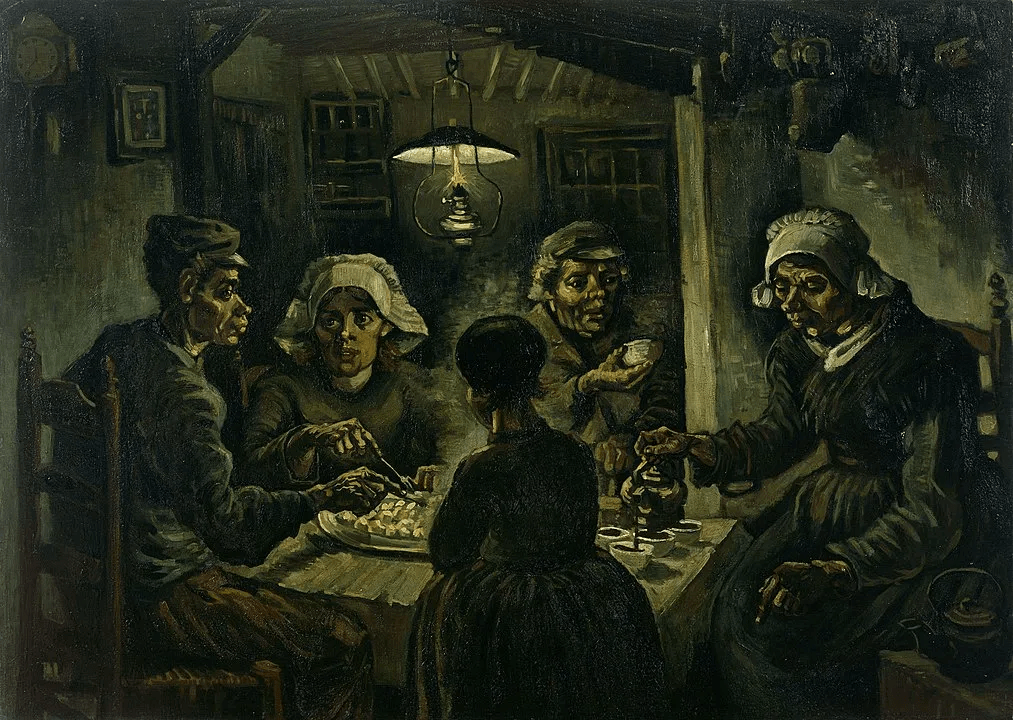
The Potato Eaters, by Vincent Van Gogh, 1885

Honestly, I am heartsick over the grinding loneliness of so many people; the boatloads of shame which thousands secretly carry; and the silent pain experienced by individuals everywhere. I feel this way because I genuinely believe my Lord feels the same. Jesus is looking to activate grace through his people to a world sinking in the depths of incredible human need.

Christ’s parable, however, is more than a warning; it is a story that opens the door of mercy for unlikely people seemingly far from God – people who ruined their lives by saying “no” to God. The parable is an invitation for all the screw-ups and those with little faith to come to Jesus.

There is a rather obscure Scripture reference, tucked away in the Old Testament. David was on the outside looking in. King Saul was on the inside trying to capture and kill him, even though David had done nothing wrong. Here is what happened:

David got away and escaped to the Cave of Adullam. When his brothers and others associated with his family heard where he was, they came down and joined him. Not only that, but all who were down on their luck came around—losers and vagrants and misfits of all sorts. David became their leader. There were about four hundred in all. (1 Samuel 22:1-2, MSG)

This rag-tag group of outsiders in Israel became Israel’s insiders as David eventually became king and these were the “mighty men,” the ones who helped bring Israel into prominence. 

Jesus Christ came into this world and identified himself as the Savior to the outsider when he quoted the prophet Isaiah:

Jesus went to the synagogue on the sabbath day, as was his custom. He stood up to read, and the scroll of the prophet Isaiah was given to him. He unrolled the scroll and found the place where it was written:

“The Spirit of the Lord is upon me,
    because he has anointed me
        to bring good news to the poor.
He has sent me to proclaim release to the captives
    and recovery of sight to the blind,
        to let the oppressed go free,
to proclaim the year of the Lord’s favor.”

And he rolled up the scroll, gave it back to the attendant, and sat down. The eyes of all in the synagogue were fixed on him. Then he began to say to them, “Today this scripture has been fulfilled in your hearing.” (Luke 4:16-21, NRSV)

In Christ, there are no lost causes and no persons too far on the outside to be redeemed. Therefore, now is the time to act on what we believe – to not only affirm right doctrine, but to live out that doctrine in obedience to God’s call.

May it be so, to the glory of God.

Be Careful (Luke 21:34-38)

“Be careful, or your hearts will be weighed down with carousing, drunkenness and the anxieties of life, and that day will close on you suddenly like a trap. For it will come on all those who live on the face of the whole earth. Be always on the watch, and pray that you may be able to escape all that is about to happen, and that you may be able to stand before the Son of Man.”

Each day Jesus was teaching at the temple, and each evening he went out to spend the night on the hill called the Mount of Olives, and all the people came early in the morning to hear him at the temple. (New International Version)

Nobody wakes up in the morning, sits up at the end of the bed, and says to themselves, “Well, today, I think I’ll be anxious, go to the bar, drink, and feel awful.” No, of course, we don’t do that. Instead, we are more likely to sit up and, at least, long for a good day and maybe even pledge to change some things; and at most, we make some good solid plans about how to have a fulfilling day.

Yet, for all of us, there are times when we find ourselves in a place in life we neither expected nor wanted. For sure, we cannot control the world and the circumstances and people within it. However, we can take charge of our own hearts and ensure that they do not become weighed down. In such a position, it becomes difficult to pray and have an accurate awareness of what’s happening around us.

This is precisely why even the Lord Jesus himself took the initiative to have regular times of withdrawal in order to connect with the Father in prayer. He could only give from the largess of his heart and soul. If Christ needed to pay attention to the Father, the world, and himself, then how much more must we regularly reorient ourselves so that grace and wisdom rule our lives, instead of anxious dissipation?

We are now in the first season of the Church Year on the Christian Calendar – the time of Advent. Advent literally means “anticipation” because Christians everywhere anticipate Christmas, the coming of Jesus the Messiah. 

While we wait, we pray. Jesus himself tells us to watch ourselves, stay awake at all times, and keep on praying. There is no patience apart from prayer. Show me an impatient person, and I will show you a person who has little discipline for prayer. But show me a patient person, and I will show you a person given to prayer in all circumstances for all kinds of matters.

This season of the year, despite all of its secular busyness and rush, is one of the most ideal times in the Christian Calendar to reconnect with a disciplined prayer life. Many Christians throughout the world desire more of God than a once-a-day “quiet time.” They want their entire lives to be a continual offering of prayer and connection with Jesus the Messiah. 

If one is not in the habit of punctuating each day with short, designated times of prayer, then perhaps begin taking the time in both the morning and evening to intentionally read Scripture, sing, and pray; this may be the best place to start. More outgoing persons may want to recruit others to participate with them. Yet, however its done, allow this Advent season to be an intentional time of reconnecting in prayer.

Let your longings translate into realizations. As we devote ourselves to basic spiritual disciplines, it helps us connect with others in basic human kindness – which is a basic foundational human need that keeps us away from a frivolous life of worrying, and leads us to a fruitful life of love and community.

People become trapped when they spend too much time alone with themselves, or in too much time with others who are only trying to deaden their physical and/or emotional pain. In both cases, they become trapped in their heads, thinking irrational thoughts and believing concocted conspiracy theories (or complicated end times scenarios). This is, at best, a dead end, and at worst, a one way road to destruction.

There is no substitute for prayer, spiritual reading, and wholesome community. Without these, we shall inevitably amble down a path of temptation and get lost in our heads. Christianity, for me, is unintelligible without the hope and the promise of a new and coming order of love, peace, and justice.

A great reversal of moving from anxious worry to ebullient hope is rooted in being able to understand that the words and ways of Jesus will not pass away. And that will only happen if we can locate ourselves as those who are spiritual beggars, in need of continually begging (praying) and searching (reading) for the words of God to become a reality in everyday life.

Our present contemporary life, daily experiences, and world situation is being called toward a future of God’s promises becoming fulfilled. And, at the same time, the future state of justice and peace is being called to our present circumstances, so that we can have a glimpse and glimmer of the hope which awaits us. In other words, the coming of Christ is the future which gives shape to our life today.

Today is the day of encountering the gracious God because tomorrow is the day of judgment, the time of the second Advent… sounds like it’s time to pray!

Eternal God, in whose perfect kingdom no sword is drawn but the sword of righteousness, no strength known but the strength of love: So mightily spread abroad your Spirit, that all sorts of people everywhere may be gathered under the banner of the Prince of Peace, as children of one Father; to whom be dominion and glory, now and forever. Amen.