Welcome, friends! Today we consider three important words to help us relieve our emotional and spiritual pain, as well as enabling us to experience joy and new life. Click the videos below and let us worship our risen Lord….
1 John 1:1-2:2, Pastor Tim Ehrhardt
O God, who in Jesus Christ called us out of darkness into your marvelous light; enable us always to declare your wonderful deeds, thank you for your steadfast love, and praise you with heart, soul, mind, and strength, now and forever. Amen, and amen.
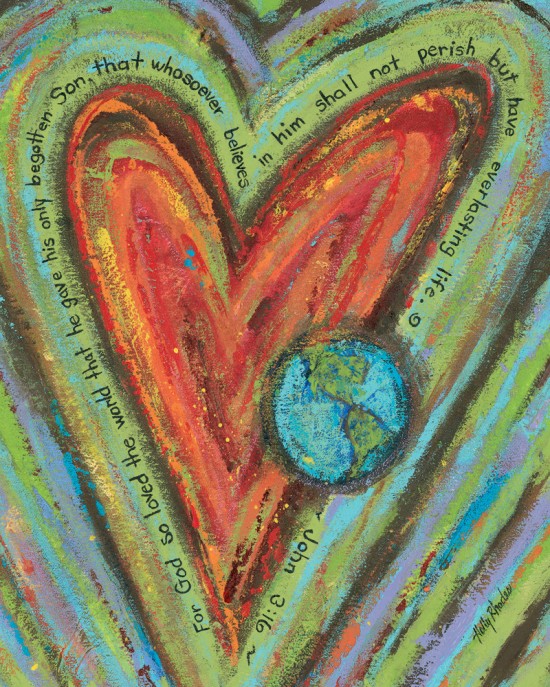
For God so loved the world that he gave his one and only Son, that whoever believes in him shall not perish but have eternal life. (John 3:16, NIV)
John 3:16 is a Bible verse so familiar as to be cliché. But when Jesus originally said these words, they were both tremendously freeing and incredibly scandalous. When something is familiar, we tend not to explore it any further. We need a closer look at the message of John 3:16 so we can not only see why some people embrace its light, but why others remain in darkness.
Perhaps another examination the gospel will dispel dullness and impel us toward praise, as well as to share its life-giving message not because we must, but because we want to. John 3:16 contains nine of the greatest spiritual realities we could ever experience.
1.“God” is the greatest subject ever.
The Bible contains lots of messages, promises, and commands. However, those are not the primary purpose for having the Holy Scriptures. The Bible has been given to us as a revelation of God to us so that we might know God. Every time the Scriptures are used, read, quoted, prayed, taught, learned, and heard – we know God a bit better. Anything short of knowing God falls short of the Bible’s intended purpose.
I constantly encourage a regular daily regimen of Bible-reading because it is the primary means of knowing God. Yes, we get to know God in creation and through experience, yet one of the best ways of experiencing God is through taking time for reading, meditating, memorizing, and praying of the Scriptures. Some of my most encouraging times are when I hear what people are learning about the Lord in God’s Word. With the Holy Spirit being our teacher, we discover more and more that God is the greatest subject we could ever learn about, talk about, and give our lives to.
2.“So” is the greatest extent ever.
There is a great wideness to God. God is a huge Being! Nothing is outside of God’s reach. So, when God decides to do something, nothing can stop it. We might be limited in our strength and abilities to accomplish things. But God’s extent is limitless. Knowing God means becoming familiar with an all-knowing and all-powerful Being. Prayer, then, becomes a response to God. God speaks to us through the Word, and we speak back with prayer so that the Word and prayer go like a hand in a glove. Our extent is temporary and small. Yet God takes our human prayers and uses them to accomplish divine purposes on this earth.
3. “Loved” is the greatest demonstration ever.
There is no greater demonstration of love than our triune God loving us with a sacrificial self-emptying love that saw our great need for deliverance and went to the greatest lengths possible to accomplish it. Our own love for God, each other, and the world is a direct result of God’s love for us.
This is how we know what love is: Jesus Christ laid down his life for us. And we ought to lay down our lives for our brothers and sisters…. This is how God showed his love among us: He sent his one and only Son into the world that we might live through him. This is love: not that we loved God, but that he loved us and sent his Son as an atoning sacrifice for our sins. Dear friends, since God so loved us, we also ought to love one another.(1 John 3:16; 4:9-11, NIV)
Where there is a lack of love there is an absence of God. Every human on planet earth needs the love of God in Christ. Without it we are lost. You are loved with sacrificial love. The greatest thing that can be said of you is that you are “loved.” Whatever has happened, is happening, and will happen that breaks you down, belittles you, hurts you, or causes you to feel like the north end of a southbound cow, is not what defines you. All may be going to hell around you, but nothing will change the unalterable reality that in Christ you are “loved!”
4.“The world” is the greatest object ever.
Up to this point you might not have sensed anything scandalous about this message of God’s grace and love. But this was the game-changing term for the original hearers of Christ’s words: God so loved the world. Many of Christ’s listeners could easily understand God loved the nation of Israel. But to say that God loved the world was going too far. It meant God loved Gentiles, specifically, Romans who occupied their land and oppressed them.
To capture the punch of this, it would be like Jesus showing up in our world today and saying that God so loved whomever we despise or hate. We often tend to assume that God hates who we hate. Right? Wrong. Yes, God hates evil and is opposed to all that destroys. Yet, God loves people for whom is placed the divine image within. For God to love the world is an incredible because there are so many unlovely people in the world.
Since God loves the world and demonstrated it in through Jesus, Christ’s Church is to reflect and embody this same love for the world. This has enormous implications for followers of Jesus. The Church is must embrace the same pejorative title as given its leader, Jesus: “Friend of Sinners.” People come to know Jesus through the love given us in Christ. Since this is our title, Christian ministry then becomes not about my personal preferences but about what will most effectively love the world to Jesus.
5.“That he gave his one and only Son” is the greatest gift ever.
John 3:16 by an 11 year old
For God did not send his Son into the world to condemn the world, but to save the world through him. (John 3:17, NIV)
We do not get God’s leftovers or second-hand items. God gave the dearest, best, and most beloved gift he could ever give: his Son. Therefore, the greatest and dearest gift we can give to another person is Jesus. Sharing such a gift Jesus must come freely from the depths of divine love. Apart from love we are only a resounding gong or a clanging cymbal. If it takes cajoling and exhortation for us to give the gift of the gospel, then the problem lies in our hearts. It takes coming back to God’s Word and knowing the love of God in Christ through the Scriptures.
6.“That whoever” is the greatest opportunity ever.
If the greatest gift a person can receive is Jesus, then the best opportunity one could take advantage of is Jesus. We are all at differing places in our relationship with Jesus. Yet no matter the person, the opportunity for grace and love is more than anything you could hope or ask for.
We are fortunate to have such a grace to know Jesus as Lord, Savior, teacher, healer, and friend. Those familiar with the name of Jesus all their lives but it has not gone much further than that, then the next point is vitally important….
7. “Believes in him” is the greatest commitment ever.
Jesus wants more than our acknowledgment of him; he wants us. Whenever I go home, my dog, Max Power, gets extremely excited. Honestly, I don’t really get excited about him. My typical response to him is, “Yes, Max, I acknowledge your existence.” I say it in hopes he will just kind of leave me alone and let me go about my business. But Max wants more. He wants my affection, my love, and my commitment. He wants a pet, a walk, food, and water.
God does not want to be treated like an annoying puppy. God wants our commitment. The Lord desires more than the tepid response, “I acknowledge your existence.” The most common response I get from people when sharing the gift of Jesus is “Yes, I believe in Jesus.” It is their way of saying they acknowledge his existence but are not much interested in giving their lives to him because they want to go about their business without God pestering them about anything. But God does demand something from us – our very souls. If we gain a view of God as gracious and loving, then we willingly desire an intimate commitment.
8. “Shall not perish” is the greatest rescue ever.
People perish not because God is unloving but because their theology is twisted – not to mention that we like our sin, and we don’t want to accommodate a holy God. The Titanic lost hundreds of people not for a lack of lifeboats. In fact, most of the lifeboats went into the water about three-fourths capacity. Many people simply did not believe they were perishing. They trusted in the ship’s reputation as being “unsinkable.” Jesus is our lifeboat.
9. “But have eternal life” is the greatest promise ever.
The promise begins now, not someday. Everlasting life means experiencing a life-saving and life-giving relationship with Jesus today.
Conclusion
If you ever had the feeling there is something more to life than what you are experiencing; if you ever wished you could start over; if you ever felt you cannot do this on your own; then, I have the greatest news ever. God has made a way to handle all your guilt, shame, and darkness. God loves you deeply in the person of Jesus Christ. There is new life in Jesus.
Ethiopian Orthodox Church icon of Christ’s crucifixion
It was necessary for the sketches of the heavenly things to be purified with these rites, but the heavenly things themselves need better sacrifices than these. For Christ did not enter a sanctuary made by human hands, a mere copy of the true one, but he entered heaven itself, now to appear in the presence of God on our behalf. Nor was it to offer himself again and again, as the high priest enters the Holy Place year after year with blood that is not his own; for then he would have had to suffer again and again since the foundation of the world.
But as it is, he has appeared once for all at the end of the age to remove sin by the sacrifice of himself. And just as it is appointed for mortals to die once, and after that the judgment, so Christ, having been offered once to bear the sins of many, will appear a second time, not to deal with sin, but to save those who are eagerly waiting for him. (NRSV)
Once for all. Those few words are some of the most gruesome and beautiful in the entirety of Holy Scripture. The sacrifices of bulls and goats in the Old Testament had its place. Yet, those were mere shadows pointing to the reality of the Messiah – the one whose sacrifice is so potent as to do away with sacrifice forever.
The cross of Christ was the once for all sacrifice that has settled the sin issue forever.
This is the heart of New Testament good news. Forgiveness of sins comes through the sheer grace of God in Christ. Through faith, we have the privilege of entering new life. Jesus has paved the way for eternal life, everlasting salvation, and complete remission of sins.
If it has not yet become self-apparent as to why Christ’s once for all sacrifice is such a game changer, then let’s perceive the cross from this angle: guilt is done away with, forever. Do you believe your life would change forever if you never had guilt hanging over your head? What if all your past indiscretions, unhealthy life decisions, failures to speak or act when needed, overt things done which you cannot take back, or even the little things said or done in anger or hate were all washed away, forever?
Just as Jesus was nailed to a cruel cross, so guilt and shame was nailed there – once for all. There are three options of dealing with a guilty conscience when it happens…
Rationalize
First, you can rationalize it away, as if you have no responsibility or no culpability. One simply ignores their conscience. This is a one-way path to hardness of heart. Whenever we sin in speech or in action, and do not acknowledge it as our fault, then there is a little piece of us which hardens. The next time it happens, it’s a bit easier to respond with callousness. If you’ve ever encountered someone who seems utterly unfeeling to your situation, then there has likely been a pattern in that person’s life of keeping distance from pain. It only leads to hardness of heart.
Punish
A second way of facing guilt is just the opposite of rationalization. It is to punish and beat yourself for your faults and sins. Heaping abuse on ourselves for our sins takes two different tracks with either: discouragement, defeat, and depression resulting in inaction; or, working like crazy to try and earn God’s favor with hyper-activity. Both ways are a kind of self-imposed penance to try and atone for one’s sins or failures.
Confess
Fortunately, there is a better way to face and deal with our guilt. When there is true guilt for things done or undone, said, or unsaid, we must confess it, repent of it, and believe God has taken care of it. Unlike dealing with guilt in unhealthy ways resulting in callousness, discouragement, and hyperactivity, the path of confession and repentance allows the person to have a clear conscience, resulting in freedom. Christ’s once for all sacrifice is completely able to clear the conscience of the worshiper so that they may live into the grace and freedom of an enjoyable daily life.
Nothing needs to hang over the believer’s head because Jesus Christ, the pioneer of our salvation, has accomplished deliverance from and forgiveness of sin, once and for all. Jesus didn’t just put a nice-looking veneer over sin; he took care of it, thoroughly and completely. Jesus didn’t whitewash things so that we looked okay; the salvation he offers is permanent.
The cross which held Christ’s naked and tortured body exposed the true violence and injustice of sin. The cross revealed what kind of world we have and what kind of God we have: a world of gross unfairness and sin, and, a God of extreme sacrificial love and grace.
What I believe this world, including you and me, need more than anything else is forgiveness – not a cheap sentimental forgiving, but a real forgiveness which lasts forever.
To justify or to judge is God’s business. Our business is to believe in the once-for-all sacrifice of Jesus that brings permanent and lasting forgiveness; and, to share that life-giving message with others so that they, too, might experience deliverance from sin and its horrible effects.
“For he delivered us from the domain of darkness and transferred us to the kingdom of his beloved Son, in whom we have redemption, the forgiveness of sins.” (Colossians 1:13-14, NIV)
May you know the freedom and joy today which comes from knowing Christ as Savior.
“Therefore, let all Israel be assured of this: God has made this Jesus, whom you crucified, both Lord and Messiah.”
When the people heard this, they were cut to the heart and said to Peter and the other apostles, “Brothers, what shall we do?”
Peter replied, “Repent and be baptized, every one of you, in the name of Jesus Christ for the forgiveness of your sins. And you will receive the gift of the Holy Spirit. The promise is for you and your children and for all who are far off—for all whom the Lord our God will call.”
With many other words he warned them; and he pleaded with them, “Save yourselves from this corrupt generation.” Those who accepted his message were baptized, and about three thousand were added to their number that day.
They devoted themselves to the apostles’ teaching and to fellowship, to the breaking of bread and to prayer. (NIV)
Imagine we are all standing around in a huge modern-day lobby, ready to listen to Peter. We understand big events like this must be well-organized, so everyone is getting a name tag. But the name tags are given to us with not only our first names; they also include our hidden guilt and shame. People walk up to the registration table. “Name?” “Bob.” “What are you ashamed of, Bob?” “I stole some money from my boss once, and he never found out.” The person takes a marker and writes, Bill: Embezzler.
Next person: “Name?” “Jill.” “Jill, what are you guilty of?” “I deliberately slandered a group of people. I said things that were not true about them because I did not like them.” So, the person writes on Jill’s nametag, Jill: Slanderer. “Name?” “George.” “What kind of guilt and shame are you carrying?” “I’ve been coveting my neighbor’s Corvette… and his wife.” George: Coveter. Person after person comes.
Then, up to the table comes Jesus. “What is your shame, Jesus?” Well, in truth, none. So, Jesus starts walking down the line. He comes to Bob and says, “Bob, give me your name tag,” and puts it on himself. “Jill, give me your name tag.” He puts it on himself. “George, give me your name tag.” It goes on himself.
Soon Jesus is covered with name tags and a bunch of icky shame and awful guilt. Apart from Jesus, we cannot take the name tags off because we cannot shed the labels of who we really are. Christ bore the cross covered with all our guilt and shame attached to him. It was all crucified with him.
When the people of the Apostle Peter’s day understood who Jesus was and what he had done for them, they were deeply troubled in their spirits and their souls were horribly upset. They were cut to the heart with the things they had done which sent Christ to the cross. The crowd’s remorse was so deep and profound that they were beside themselves with spiritual pain and asked Peter,
“What shall we do!?”
Peter called them to “repent and be baptized.” To repent is to have a complete change of mind and heart; it is to express a courageous naming of shame, guilt, and sin. Repentance, then, leads to a 180 degree turn of direction to our lives. Repentance is realizing what we have become, and seeing it is not a good place to be.
Sometimes we lack awareness of how serious our situation really is and how at risk we really are. It may be hard to imagine our offense is bad enough to crucify Jesus. Perhaps we have self-justified our morsels of gossip or our lack of attention to the poor, only choosing to see our hard work and sincere efforts to do good.
For others, the problem with repentance runs deeper, having been raised in a legalistic environment. These folks lug around a guilt-laden backpack that would bend the knees of a mule. And most of the guilt, they realize, is neurotic—not based on any real transgression. Every bad thought and each failure of faith is obsessed over to the point that they cannot shake the pangs of constant shame.
The good news is that the kingdom of God is near. In the name of Jesus Christ there is forgiveness, healing, and new life. If today there is a realization of being in a bad place in your life, whatever that place is, the cross of Christ addresses the deepest needs of your life. What shall we do? Repent and be baptized.
Repentance, baptism, forgiveness of sins, and receiving the Spirit are all linked together in today’s New Testament lesson. Baptism is the sign and seal of God’s promise of forgiveness in Jesus; it visually shows us that God washes away our guilt and shame in the name of Jesus.
Baptism is a different kind of nametag, identifying that we belong to God. One who repents and embraces new life in Jesus Christ de-thrones all other competing lords and identifies as a beloved child of God.
The result of that ancient mass repentance and baptism was that three-thousand people were added to a small church of one-hundred-twenty persons! Since repentance leads to action, the new believers went to work devoting themselves to the apostles’ teaching and orienting their lives completely around Jesus through their constant fellowship together.
Allow me to be a bit more specific about what repentance looks like and does not look like. The prayers of the mildly repentant sound something like this:
“Easy-going God: We have occasionally had some minor errors of judgment, but they’re not really our fault. Due to forces beyond our control, we have sometimes failed to act in accordance with our own best interests. Under the circumstances, we did the best we could. We are glad to say that we’re doing okay, perhaps even slightly above average. Be your own sweet Self with those who know they are not perfect. Grant us that we may continue to live a harmless and happy life and keep our self-respect. And we ask all these things according to the unlimited tolerances which we have a right to expect from you. Amen.”
I like eggs. I eat them nearly every day. Fresh eggs are the best. Sometimes I make an omelet, with, of course, bacon, green pepper, and cheese. When I am making my omelet, if I crack open a rotten egg, I do not go ahead and mix it in with the others in the hope that the other good eggs will overwhelm the rotten one.
Grace can only be grace when we have a true realization of our guilt and shame. Grace is radical. It throws out the rotten omelet altogether and makes a new one so incredibly delicious that we never want to go back to the old way of making them. And it is for everyone who calls on the name of the Lord.
Godly sorrow, like the kind in today’s story, leads to repentance. In the Apostle Paul’s first letter to the Corinthian church, he called them out and insisted they turn from their old way of life. In his second letter, he followed up with this:
I know I distressed you greatly with my letter. Although I felt awful at the time, I don’t feel at all bad now that I see how it turned out. The letter upset you, but only for a while. Now I’m glad—not that you were upset, but that you were jarred into turning things around. You let the distress bring you to God, not drive you from him. The result was all gain, no loss.
Distress that drives us to God does that. It turns us around. It gets us back in the way of salvation. We never regret that kind of pain. But those who let distress drive them away from God are full of regrets, end up on a deathbed of regrets.
And now, isn’t it wonderful all the ways in which this distress has goaded you closer to God? You’re more alive, more concerned, more sensitive, more reverent, more human, more passionate, more responsible. Looked at from any angle, you’ve come out of this with purity of heart. And that is what I was hoping for in the first place when I wrote the letter. (2 Corinthians 7:8-11, MSG)
There are (many) times we need to feel awful before we feel wonderful – awful concerning how much we have hidden our shame and never let it see the purifying light of the gospel – but wonderful of how over-the-top good grace really is, once we have exposed the guilt and let Jesus replace it with God’s mercy.
O merciful God, we bring long-held grudges and recent grievances, and we chew them over, even at the foot of your cross. We tiptoe around chasms of misunderstanding, we pick our way anxiously among stumbling-blocks of language and culture, and blame each other for every misstep, even while singing of your Spirit. We tremble to name the troubles we see in the Church and the world, for fear of our own sins finding us out, for fear that we will become easy targets for everyone’s hostility. Have pity on us, for our hands are not strong enough and our hearts are not big enough to hold all together in love. We beg you to come to us, foolish as we are, downcast and despairing. We beg you to send us a breath of your Spirit with the perfume of resurrection and hope, throughJesus Christ, the Light of the world. Amen.






 Rev. Tim Ehrhardt