Luke 4:16-30 – Good News for “Those” People

Jesus went back to Nazareth, where he had been brought up, and as usual he went to the meeting place on the Sabbath. When he stood up to read from the Scriptures, he was given the book of Isaiah the prophet. He opened it and read,

“The Lord’s Spirit
    has come to me,
because he has chosen me
to tell the good news
    to the poor.
The Lord has sent me
to announce freedom
    for prisoners,
to give sight to the blind,
to free everyone
    who suffers,
and to say, ‘This is the year
    the Lord has chosen.’”

Jesus closed the book, then handed it back to the man in charge and sat down. Everyone in the meeting place looked straight at Jesus.

Then Jesus said to them, “What you have just heard me read has come true today.”

All the people started talking about Jesus and were amazed at the wonderful things he said. They kept on asking, “Isn’t he Joseph’s son?”

Jesus answered:

You will certainly want to tell me this saying, “Doctor, first make yourself well.” You will tell me to do the same things here in my own hometown that you heard I did in Capernaum. But you can be sure that no prophets are liked by the people of their own hometown.

Once during the time of Elijah there was no rain for three and a half years, and people everywhere were starving. There were many widows in Israel, but Elijah was sent only to a widow in the town of Zarephath near the city of Sidon. During the time of the prophet Elisha, many men in Israel had leprosy. But no one was healed, except Naaman who lived in Syria.

When the people in the meeting place heard Jesus say this, they became so angry that they got up and threw him out of town. They dragged him to the edge of the cliff on which the town was built, because they wanted to throw him down from there. But Jesus slipped through the crowd and got away. (Contemporary English Version)

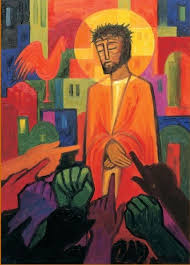
Jesus was the hometown boy of Nazareth, the rising star who was putting the small village on the map. He walked into the synagogue on the Sabbath with the people all watching with pride, their chests puffed with delight over one of their own making it to the big time. 

It just so happened that on that day the Old Testament reading was from the prophet Isaiah – a prophecy of grace and healing that fit the budding ministry of Jesus. Here was the hope of Israel. It was all bunnies and butterflies, until Jesus decided to say a few words to them all….

Jesus took the prophecy of Isaiah about proclaiming liberty to captives and the oppressed and then applied it, not to his fellow Jews who were present, but to, of all people, Gentiles! 

Jesus just had to open his mouth and point out that in the days of Elijah, the prophet was sent to a Gentile woman. In addition, Jesus let everyone know the prophet Elisha cleansed a Gentile. The gathered synagogue worshipers understood exactly what Jesus was doing – claiming to be the ultimate prophet, sent for “those” people. 

Are you ready to throw Jesus off a cliff?

It was too much for the people gathered for worship. All hell broke loose as the “worshipers” became so angry and insolent that they drove Jesus out of town and tried to kill him. Jesus had that kind of effect throughout his earthly ministry by saying and doing the unexpected. 

The people of Nazareth seemed to have always interpreted the message of Isaiah and the prophets as being for themselves, not others. This is a probing story for today’s Christian Church. Whenever we lose sight of a biblical message and re-interpret it as being for only us, then we end up like the Nazarenes of old who did not recognize Jesus for who he really is and what he really came to do. 

The burning question for individual Christians and all churches is this: Are you ready to throw Jesus off a cliff?

Take some time alone with God today and think about whether you have made Jesus into the image of what you want him to be, or whether you accept him as he is. 

One clue to this is if you believe some person or people group should not have Jesus – he belongs to people like us. Perhaps today some soul-searching repentance is in order so that Christians will be true worshipers of Jesus, and not just a fan of him.

O God, you made us in your own image and redeemed us through Jesus your Son: Look with compassion on the whole human family; take away the arrogance and hatred which infect our hearts; break down the walls that separate us; unite us in bonds of love; and work through our struggle and confusion to accomplish your purposes on earth; that, in your good time, all nations and races may serve you in harmony around your heavenly throne; through Jesus Christ our Lord. Amen.

Romans 5:6-11 – Christ Died For Us

“Golgotha” by Edvard Munch, 1900

You see, at just the right time, when we were still powerless, Christ died for the ungodly. Very rarely will anyone die for a righteous person, though for a good person someone might possibly dare to die. But God demonstrates his own love for us in this: While we were still sinners, Christ died for us.

Since we have now been justified by his blood, how much more shall we be saved from God’s wrath through him! For if, while we were God’s enemies, we were reconciled to him through the death of his Son, how much more, having been reconciled, shall we be saved through his life! Not only is this so, but we also boast in God through our Lord Jesus Christ, through whom we have now received reconciliation. (New International Version)

In Christianity, there is only one way of approaching God: Through the death of Jesus Christ. That means we cannot approach God by our good works, doing things right, or by our spiritual pedigree. We are justified and declared righteous by grace alone through faith in the cross of Christ.

Back when my youngest daughter was still living at home, sometimes I needed to go into her room to get something. More often than not, it ended up becoming an archaeological dig. I had to wade through layers of stuff. I didn’t always find what I was looking for, and other times I discovered things I didn’t know I had even lost. 

When the magisterial Reformer, Martin Luther (1483-1546) went digging into the Bible, he found he was wading through layers of church tradition and came upon something that was lost. Luther rediscovered that God justifies sinners by grace through faith apart from any good works done by us. Luther found in the Scriptures that we are completely and totally at the mercy of God in Christ.

The cross of Jesus Christ is the means of salvation from what ails us because the cross is an attack on human sin. Luther discovered we all have layers of stuff that has grown around our hearts to the degree that we no longer see the sheer grace of God in Christ alone to meet the most pressing needs of our lives. 

The Reformation has taught believers that apart from Christ, we are addicted to ourselves. The cross is the intervention we need to help us confront our constant me-ism.

We might justify ourselves with the fact we do good works. However, one of the legacies of the Reformation, coming from the book of Romans, is that good works do not earn us deliverance from sin. In fact, Luther said that our good deeds are the greatest hindrance to our salvation because we have the tendency to trust in those good deeds instead of the death of Christ. 

So, Luther actually called our good works a mortal sin that sets off God’s wrath and leads straight to hell. In other words, good deeds can be deadly, if they are done as a means of approaching and appeasing God. 

It is through the suffering of Jesus on the cross, his death for us while we were still sinners, not when we were lovely and looking fine with all our pious actions, that we are saved. 

“He who does not know Christ does not know God hidden in suffering. Therefore, he prefers works to suffering, glory to the cross, strength to weakness, wisdom to folly, and, in general, good to evil. These are the people who are under God’s wrath! God can only be found in suffering and the cross. It is impossible for a person not to be puffed by his good works unless he has first been deflated and destroyed by suffering and evil until he knows that he is worthless and that his works are not his but God’s.”

Martin Luther’s Heidelberg Disputation

God does not come to us in our beauty and goodness but in our ugliness and sin.

While we were still sinners, ungodly, enemies of God, powerless to save ourselves, Christ died on the cross for us. We spend too much time and effort concerned about looking good and doing good things in order to present ourselves acceptable to each other and even to God. 

But that is the very sin that sends people to a hellish existence. The hottest places of damnation are actually reserved for outwardly pious persons who trusted all their lives in themselves and how they looked to others without a thought, at all, about justification, reconciliation, and being restored to God through Christ.

Like a gold ring in a pig’s snout, is a person who has good deeds but knows nothing of God’s grace.

It is a totally human tendency to decide which sinful actions are trivial and which are the biggie sins. The Apostle Paul was really hard on his fellow Jews in the book of Romans because they tended to place their trust in who they were and what they did – being the covenant people and practicing all the good things a good person does. And Paul says the wrath of God is reserved for them. 

The way of approaching God is by seeing our true ugliness, our rebellious hearts, and that the hope of salvation is through the cross of Christ. We are justified by and reconciled to God because of Jesus, and not for any other reason. A new relationship is established based solely in God’s grace.

“Jesus Carrying The Cross” by Olga Bakhtina, 2017

When Christians grasp this truth, even a little bit, it should cause us to repent of our sinful good works (yes, sinful good works). Wherever there is humility that leads to a complete turning to Jesus, there is revival to new life in God, and a personal reformation around the doctrine of grace instead of the doctrine of my glorious works that I perform.

We, then, as Christians, saved and justified through the blood of Jesus, ought to be the most joyful and grateful people on the planet. We have deliverance from the deception of our hearts to life in Christ. Apathy and lethargy to the things of God are the twin evils that reign in the place of awe and appreciation for what God has done for us in Christ.

There is nothing more God can do to show us that he loves us than by actually dying for us, and by doing so, satisfying God’s own wrath against the sin which seeks to destroy us. The late Brennan Manning once told the story about how he got the name “Brennan.”

While growing up, his best friend was Ray. The two of them did everything together: bought a car together as teenagers, double-dated together, and went to school together. They even enlisted in the Army together, went to boot camp together and fought on the frontlines together.

One night while sitting in a foxhole, Brennan was reminiscing about the old days in Brooklyn while Ray listened and ate a chocolate bar. Suddenly, a live grenade came into the foxhole. Ray looked at Brennan, smiled, dropped his chocolate bar and threw himself on the live grenade. It exploded, killing Ray, but Brennan’s life was spared.

Later in life, when Brennan became a priest, he was instructed to take on the name of a saint. He thought of his friend, Ray Brennan. So, he took on the name “Brennan.”

Years later he went to visit Ray’s mother in Brooklyn. They sat up late one night having tea when Brennan asked her, “Do you think Ray loved me?” Mrs. Brennan got up off the couch, shook her finger in front of Brennan’s face and shouted, “What more could he have done for you?” Brennan said that at that moment he experienced an epiphany. He imagined himself standing before the cross of Jesus wondering, Does God really love me? And Jesus’ mother Mary pointing to her son, saying, “What more could he have done for you?”

The cross of Jesus is God’s way of doing all he could do for us. And yet we often wonder: Does God really love me? Am I important to God? Does God care about me? We tend to ask those questions when we are trusting in ourselves, because we never really know where we stand with God.

No matter how bad or how good you are, the path of suffering of our Lord Jesus has taken care of the sin issue once for all.

Week after week for the past two-thousand years, God’s people have gathered together to worship this same Lord Jesus who died on the cross. The only thing left for us to do, since Jesus has done it all for us, is to offer our lives to him.

While we were still sinners, enemies, estranged, hopeless, lost, despondent, proud, and stained by sin, Jesus died a cruel death on a cross to wash away your sins with his blood. It is my hope and prayer that today you are rediscovering the great Reformation truth that we are justified by grace alone through faith in Jesus alone, and the life of unbounded joy in knowing that we have now received reconciliation with God in Christ.

Lord God Almighty, the ground is level at the foot of the cross. We need you, Lord Jesus, and come to you on the basis of nothing else but your shed blood. I pray for all those who are wrestling with you right now. Oh, that you would revive those that need new life, that you would renew those who have become cold, and that you would reform all of our hearts so that our lives would completely be devoted around the person and work of Jesus Christ! 

Thank you, Lord Jesus, for dying for us while we were still powerless, sinful, and ungodly. Thank you for saving us from God’s wrath. Thank you, God Almighty, for reconciling us back to yourself through the cross. There are those needing you to break through their stubborn hearts; and those who need peace to their troubled hearts. O God, save us from ourselves, whether it is from our trust in our own perceived goodness, or our sense of shame and guilt. Thanks be to God, who gives us the victory through our Lord Jesus Christ. Amen.

All Saints Day

In all times and every place throughout history God has specialized in taking imperfect or broken people and transforming their lives. On the Christian Calendar, November 1 is the day each year to remember the saints who have gone before us. This day is meant to be a way of not forgetting the people, friends, and family, as well as long-dead historical saints, who have made a significant impact in our spiritual lives.

All Saints Day is much more than a focus on extraordinary persons; it highlights the work of ordinary Christians who faithfully lived their lives and persevered to the end. We give thanks for the gift of how they daily lived their faith. We also remember that all believers in Jesus are united and connected.

Remembering is a prominent theme in Holy Scripture. Over a hundred times we are told to remember God’s covenant with people and redemptive actions on their behalf; to remember the needy and those less fortunate; and, to remember the significant persons who influenced us in our journey of faith.

“Remember your leaders, who spoke the word of God to you.  Consider the outcome of their way of life and imitate their faith.” (Hebrews 13:7, NIV)

The saints of the past are an inspiration to us in the present. They serve us as a model of faithfulness in persevering in our Christian lives. Through biblical stories of very human persons being used of God, as well as reading biographies of godly people who were dedicated to God in service, we gain motivation and patience until Jesus returns.

“God creates out of nothing. Wonderful you say. Yes, to be sure, but he does what is still more wonderful: he makes saints out of sinners.”

Søren Kierkegaard

Who were the people in your life that went out of their way to communicate God’s love to you with both words and actions?  Who were those persons who labored behind the scenes in prayer so that you and others would know Jesus? 

If any of those persons are still around, and you know where they are, remember them. Drop them a note. Express to them a simple thank you for their influence in your life. You will not only encourage that person – it will help you remember and re-engage with something in your life you may have forgotten or have just taken for granted for too long.

Gordon McDonald, a Christian pastor and writer, at the passing of a lifelong mentor, recalled the loyalty and crucial counsel given in a time of crisis:

“He was there when, many years later, my life fell apart because of a failure for which I was totally responsible. In our worst moments of shame and humiliation, he came and lived in my home for a week and helped me do a searing examination of my wife. I will always remember his words: ‘You are momentarily in a great darkness. You have a choice to make. You can—as do so many—deny this terrible pain, or blame it on others, or run away from it. Or you can embrace this pain and let it do its purifying work as you hear the things God means to whisper into your heart during the process. If you choose the latter, I expect you will have an adventurous future modeling what true repentance and grace is all about.’”

We truly stand on the shoulders of those who have gone before us in faith and patience. We will continue to persevere and thrive in faith when we remember them and allow those here in the present to journey with us along this road of faith.

Today is an intentional day of remembrance. We remember answered prayer and salvation. We recollect the people who gave us the life-giving gospel message in both word and deed. We remember the death of Christ and recall that he said he is coming back.

It is sage to recall events of rescue and pull them forward into the present so that all God’s worshipers can taste and see that the Lord is good. This is exactly what the Apostle Peter did for a church which needed to recall and remember the mighty acts of God:

Like newborn babies, crave pure spiritual milk, so that by it you may grow up in your salvation, now that you have tasted that the Lord is good. As you come to him, the living Stone—rejected by humans but chosen by God and precious to him—you also, like living stones, are being built into a spiritual house to be a holy priesthood, offering spiritual sacrifices acceptable to God through Jesus Christ. (1 Peter 2:2-5, NIV)

Our memories are accessed through symbols and with taste and sight. God uses symbols as a means of revelation. For example, when the Lord wanted to demonstrate the ugliness of sin and the cost of forgiveness, he told the Israelites to kill an animal and sprinkle its blood on their clothing and on the altar. It sounds awful. Yet, the worshiper never walked away from the experience scratching his head and wondering what it was all about because he encountered and tasted the drama of sin and redemption. His senses saw it, felt it, smelled it, and tasted the meat from it. 

Symbols have the power to access other parts of our being in knowing God. We are more than thinking beings; we are also emotional and sensory creatures. We need ordinary events, like shared meals, that include symbols and rituals. Every year faithful Jews gather to remember and re-enact the Passover – the story of how they were enslaved in Egypt, oppressed by Pharaoh, and set free by God. To this day pious Jews still remember the Passover by eating and drinking together and telling stories.

We need both words and sacraments. Therefore, holidays like Thanksgiving and Christmas involve both verbal expressions of gratitude and love, and particular actions of kindness and gratitude in giving gifts and sharing food. Together, it all connects us to God, to one another, and to a history of God’s people. Jesus met his disciples in the Upper Room to celebrate Passover together. Jesus energized their time together by filling it with words and symbols of care and redemption. Jesus told the disciples about his upcoming death and provided symbols which reinforced the words. 

“Take and eat – this is my body…. Take this cup – drink from it, all of you.” (Luke 22:7-20)

Rather than analyzing the bread and discussing the wine’s vintage, the disciples simply ate and drank. They tasted real food and drink. They also tasted real spiritual food. It is one thing to speak of God’s presence, and it is another to experience that presence through an ordinary shared ritual of bread and cup.

God is good, all the time; and, all the time, God is good. Jesus is our Emmanuel, God with us. Christ is present with us through our ritual of fellowship and food. When the sixteenth-century Reformer John Calvin was asked how Jesus is present to us at the Lord’s Supper he explained:

“Now if anyone asks me how this takes place, I shall not be ashamed to confess that it is a secret too lofty for either the mind to comprehend or my words to declare….  I rather experience it than understand it.”

John Calvin

The taste of real bread reminds us of the physical incarnation of Christ, and Christ’s humiliation and death. Drinking from the tangible cup reminds us of the bodily sacrifice of Christ, the drops of blood which Jesus sweat in Gethsemane, and the beatings, floggings, nails, and crown of thorns that caused the bleeding. Tasting the bread and cup when celebrating communion reminds us that our sins are forgiven, we are united to Christ, and we are united together. 

There are historical events which happened and are forgotten. Then, there are past actions which linger with continual results into the present. The incarnation, life, death, resurrection, ascension, and glorification of the Lord Jesus are past redemptive events which continue to exert powerful force into the here and now.

Saints throughout church history moved the message of Christ along and demonstrated for us that the past is alive in the person of Jesus Christ. Along with them we proclaim that Christ has died, Christ has risen, Christ is coming again. And God has something planned for those who have gone before us, along with us, so that together we will experience the perfect righteousness of Christ forever. (Hebrews 11:39-40)

Believers are encouraged through word and sacrament to proclaim the good news of Jesus Christ until he comes again. So, let us respond to God’s wooing invitation to eat and drink, to taste and see that the Lord is good through faith, hope, and love. For God is our refuge and strength, our ever-present help.

Hebrews 9:11-14 – A Clear Conscience

Stations of the Cross at Holy Hill, Hubertus, Wisconsin

When the Messiah arrived, high priest of the superior things of this new covenant, he bypassed the old tent and its trappings in this created world and went straight into heaven’s “tent”—the true Holy Place—once and for all. He also bypassed the sacrifices consisting of goat and calf blood, instead using his own blood as the price to set us free once and for all. If that animal blood and the other rituals of purification were effective in cleaning up certain matters of our religion and behavior, think how much more the blood of Christ cleans up our whole lives, inside and out. Through the Spirit, Christ offered himself as an unblemished sacrifice, freeing us from all those dead-end efforts to make ourselves respectable, so that we can live all out for God. (The Message)

We all have times when we feel guilty. Guilt, in and of itself, is a good thing. Guilt is the response of our conscience telling us we have done something wrong or have not done the good we know we ought to have done. It’s what we do with the guilt that determines the trajectory of our Christian lives. There are several ways we can respond to guilt.

  1. Denial. We can deny and rationalize our guilt by not accepting the truth about what we have done. Using phrases such as, “It’s not my fault,” “It’s only wrong if I get caught,” “I didn’t hurt anybody,” “They deserved it,” and “It’s not that bad,” has the effect of searing our conscience like a hot iron so that we eventually do not feel guilty. The inevitable result of this is hardness of heart.
  2. Shame. Another inappropriate way of dealing with guilt is the opposite of denying guilt; it is to hyper-focus on the guilt by feeling ashamed. Guilt feels bad for actions done or not done. Shame, however, feels bad for who I am, as if I am incapable of being good. Shame believes I do bad things because I am bad and deserve the consequences. In other words, shame is really false guilt.
  3. Inaction. Shame and false guilt may result in despair. We become inactive because of feeling discouraged or defeated. We might reason to ourselves, “What’s the point? I screw up everything I do.” So, we do nothing.
  4. Hyperactive. Some folks become a flurry of activity, working like crazy to feel better in the hope that guilt and shame disappear. It is to impose a penance upon yourself to try and cope with the icky feeling of guilt.

            The good news is that we can experience freedom from guilt and a clear conscience because of Jesus Christ.

  • If we have been victimized in the past, we no longer have to feel ashamed as though we caused or deserved the violence done to us.
  • If we have said or done some truly egregious things that displease God and damage others, we no longer have to live with the regret and the guilt on our consciences. 
  • If we have failed others and God by not living up to who we ought to be, we no longer have to live day after day with our consciences bound with guilt and shame.

            There are three reasons from Hebrews which tell us why we can have freedom from guilt and live with a clear conscience. They all focus on the person and work of Jesus Christ.

Christ has obtained eternal redemption for us by his blood.

Under the old sacrificial system, year after year, the priest offered the same sacrifices which never took away sin. The animal sacrifice was an act of worship in which the worshiper acknowledged guilt before God. The continuous ritual was designed to point forward to a better sacrifice.

The worshiper was purposely led to think, “Wouldn’t it be great if we didn’t have to do this all the time?” The blood of bulls and goats were an annual reminder of sins – such sacrifices never cleansed the conscience of the worshiper. Jesus Christ, however, is the sacrifice to end all sacrifices. Jesus has secured, once and for all, our eternal redemption through his own blood.

The death of Christ, Holy Hill, Hubertus, Wisconsin

Dr. Samuel Weinstein is the chief pediatric cardiac surgeon for a children’s hospital in the New York City. He once traveled to El Salvador to provide life-saving operations for less-fortunate children. Dr. Weinstein and his team operated on an eight year old boy. Twelve hours into the surgery, the procedure took a deadly turn.  

Dr. Weinstein said, “The surgery had been going well, but he was bleeding a lot and there were not many medicines we would use to stop the bleeding. After a while, they said they couldn’t give him blood because they were running out and he had a rare type.” The boy’s blood type was B-negative, which is present in only two percent of the population.

The only other person in the room with a blood type of B-negative was Dr. Weinstein. Immediately knowing what he had to do, he stepped down from the operating table. As his colleagues continued their work, Dr. Weinstein set aside his scalpel, took off his gloves, and began washing his hands and forearm. Then, in the corner of an unfamiliar operating room, the prestigious doctor from one of the most advanced hospitals in the world sat down to give away his own blood. 

When he had given his pint, Dr. Weinstein drank some bottled water and ate a Pop-Tart. Then—twenty minutes after stepping away from the table—he rejoined his colleagues. After watching his own blood circulating into the boy’s small veins, Dr. Weinstein completed the operation that saved the boy’s heart—and his life.

It is the blood of Jesus Christ which saves us from sin, death, and hell. Our condition is so dire that we can do nothing other than let Jesus deliver us. By faith, we trust Jesus to secure a new life for us free from guilt and shame.

Christ cleanses our consciences.

For some, the greatest prison is not tangible or physical – it is the prison of conscience bound and wracked by guilt and shame. Yet, Jesus has taken care of the problem of a guilty conscience once for all through his blood. Forgiveness comes through Jesus. Christ cleanses us from the inside-out and frees us from being slaves to our guilt.

In 1811, the U.S. government began collecting and storing letters like the following note dated from February 6, 1974: “I am sending ten dollars for blankets I stole while in World War II. My mind could not rest. Sorry I’m late.” It was signed by an ex-GI. And there was this postscript: “I want to be ready to meet with God.”  The U.S. government not only collects and stores these letters, but the Treasury Department established a fund and labeled it the “Conscience Fund.” Since its inception, the fund has grown to almost seven million dollars.

A clear conscience is worth a lot. If we try and impose penance upon ourselves, how do we know when it’s enough? In Christ, we are not just outwardly clean, but inwardly clean because of his finished work on the cross. 

Accepting this reality, through God’s eternal Spirit, helps us experience forgiveness and cleansing. The Holy Spirit takes the redemptive events of Jesus and applies them to our consciences so that we are assured of forgiveness.

Christ sanctifies our service.

In the Old Testament sacrificial system, the high priest entered the temple/tabernacle to offer animal sacrifices. Once a year, on the Day of Atonement (Yom Kippur) the priest entered the Most Holy Place. He slaughtered a heifer, took some blood, and sprinkled it on the altar. 

The priest had bells on his ankles when performing this ritual, along with a rope tied to one ankle. In case the judgment of God broke out on the priest and he was killed, then the other priests could reel him out of the Most Holy Place without entering themselves and being killed, as well.

There were several rituals to perform to access God. And, even then, the sprinkling of blood only outwardly took care of cleansing the people. But when Jesus offered himself once for all, the curtain separating the Most Holy Place from the people was torn from top to bottom. The way has been opened for complete purification, inside and out, a cleansing of the guilty conscience so that we might now serve the living God with freedom and confidence.

Since Christ has obtained redemption for us by his blood, cleansed our consciences, and sanctified our service, here’s how we can live into his finished work:

  • Confess and forsake known sin.

Those who hide their sins won’t succeed [shame] but those who confess and give them up will receive mercy. (Proverbs 28:13, CEB)

If we confess our sins, God will forgive us. We can trust God to do this. He always does what is right. He will make us clean from all the wrong things we have done. (1 John 1:9, ERV)

  • Ask forgiveness and be reconciled to anyone you have wronged. 

Jesus said, “So if you are offering your gift at the altar and remember there that another believer has something against you, leave your gift at the altar. First go away and make peace with that person. Then come back and offer your gift. (Matthew 5:23-24, GW)

  • Make restitution to those you have wronged. 

If any of you commit a crime against someone, you have sinned against me [God]. You must confess your guilt and pay the victim in full for whatever damage has been done, plus a fine of twenty percent. (Numbers 5:6-7, CEV)

  • Don’t procrastinate in clearing your wounded conscience.

Paul said he did his best to keep his conscience clear before God and others (Acts 24:16). Some people put off dealing with their guilt, believing their conscience will clear itself in time – but it will not. Procrastination only allows the guilt feelings to fester. Unchecked guilt eventually turns to shame. Today is the day to deal with guilt.

God forgives, not because of the quality of our prayers, but on the basis of Christ’s blood. We can now take advantage of our wonderful situation of freedom to serve the church and the world because God is bigger than a guilty conscience.