Matthew 5:8 – Blessed Are the Pure in Heart

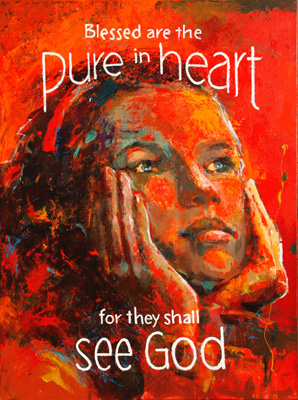
“Blessed are the pure in heart,
    for they will see God.” (NIV)

“You’re blessed when you get your inside world—your mind and heart—put right. Then you can see God in the outside world.” (MSG)

“What bliss you experience when your heart is pure. For then your eyes will open to see more and more of God.(TPT)

“A pure heart means a single heart, a heart in which only one desire lives: love.”

Peter Kreeft

An Impure Scenario

Suppose a young man courts a young woman. They get to know one another, fall in love, and get married. On their wedding day, as they leave the church building and speed away, the young couple reminisce about love and life.

But when the groom begins to speak about a future together, the bride, with a smile on her face says, “Okay, you can pull over now.” The groom, completely smitten with his new bride, does exactly what she asks. The young woman gets out of the car and, blowing a kiss, says, “This was fun. Maybe I’ll see you around sometime.”

“I don’t think this is funny,” says the groom. “Hey, we had a great time, right!?” the perky bride says. “Yes, responds the groom, “and it will last forever.” “Oh, you are such a darling,” the bride says, and with a wry smile, “but I’ll be in touch.”

“Huh, what!?” the confused groom says. “Yeah, I’ll call. We’ll get together,” says the bride without flinching. The groom, now also feeling heartsick says, “I don’t understand. What’s going on?”

“Dear, I just need my space. It’s not like I don’t care! I have other things to do. Other men to see….”

Yes, a ridiculous and improbable scenario. Yet one which is repeated every day, multiple times a day. For the groom is the Lord God almighty; and the bride is the church….

Purity and God

Purity is a big deal to God. The phrase, “pure in heart,” is Christ’s way of upholding the biblical call to holiness. To be pure is to have no mixed motives, no hidden agendas, and no side job of moonlighting with the world while being an upstanding kingdom citizen during the day. It isn’t letting Jesus court us and marry us, only to have us walk away and do whatever the heck we want. It’s not only impure and unholy. It’s plain wrong and messed up.

Through blessing the pure in heart, Jesus was connecting us to the Old Testament ethic of being holy. The book of Leviticus, rarely the focus of any preacher or parishioner alike, is completely given to the topic of holiness. The detailed laws about daily life, including what to wear and not wear, what to eat and not eat, even who to marry and not marry, were given for a reason.

God wanted the ancient Israelites to have daily reminders that they are a holy people. So, there was to be no mixing of fabrics, no meat and cheese together, no impurities introduced into any part of life. Everything about the Jewish lifestyle was to be holy, set apart to God, reminding the people that God is their husband, committed to them with responsibilities on the part of both. It was called a “covenant.”

Leviticus 19 leaves no stone unturned on the activities of life:

The Lord said to Moses, “Speak to the entire assembly of Israel and say to them: ‘Be holy because I, the Lord your God, am holy’….

Do not steal. Do not lie. Do not deceive one another. Do not swear falsely by my name and so profane the name of your God. I am the Lord. Do not defraud or rob your neighbor….

Do not pervert justice; do not show partiality to the poor or favoritism to the great but judge your neighbor fairly….

Do not go about spreading slander among your people. Do not do anything that endangers your neighbor’s life. I am the Lord. Do not hate a fellow Israelite in your heart. Rebuke your neighbor frankly so you will not share in their guilt. Do not seek revenge or bear a grudge against anyone among your people but love your neighbor as yourself. I am the Lord.

Do not mate different kinds of animals. Do not plant your field with two kinds of seed. Do not wear clothing woven of two kinds of material.” (Leviticus 19:1-2, 11-13, 15-19, NIV)

Yes, indeed, purity is a big deal to God. The “Holy” Spirit is the Divine Person completely devoted to doing only the will of the Father and Son – never going rogue. The Spirit is the One who effects sanctification, becoming holy, within the life of the believer. Each year we celebrate “Holy” Week, a stretch of days designed to be different than the rest – devoted to journeying with Jesus and not mixing with the fickle crowd who would scream at the end of the week, “Crucify him! Crucify him!”

Purity and Us

To follow Jesus in true righteousness is to be pure in heart, that is, set apart wholly and completely for him. Purity of heart is a fruit from the trunk of righteousness, which grew up in the soil of God’s grace, with roots of humility and meekness – all watered by the tears of godly mourning.

The pure in heart are those who acknowledge their sin, deal with it, and live with a clear and clean conscience before God and the world. They have an awareness of their wrongs and shortcomings without succumbing to self-criticism because of an equal awareness of God’s grace. They keep short accounts with others concerning what they have done or what they should have done. They are holy. They are sanctified. They are pure in heart.

The pure in heart will see God. They know they cannot make themselves pure, so they keep looking to Jesus for their forgiveness because they hunger for righteousness.

One cannot whitewash a wishy-washy commitment with Jesus and be pure. This blessed Beatitude has to do with our motives and what takes place in our thinking and in our hearts.  What do you think about when your mind slips into neutral?  Is it coveting after things or people, or does thinking go toward what is true, noble, right, pure, lovely, and admirable?  Sometimes we struggle with purity of heart because we are focused not on Jesus, but on our own performance and perfection instead of letting God fill our hungry hearts.

Purity results from true righteousness.  A stalk of corn might look good, but if you shuck it and it’s filled with worms, it isn’t going to be worth much. Legalistic righteousness and empty promises of doing better are concerned to look good, not to mention they are obsessed with performance, perfection, and possessions. 

But the righteousness of God fills our hungry hearts and makes us pure and holy, set apart for divine use and divine purposes. How, then, shall we live? What will we do?

The earth is the Lord’s, and everything in it,
    the world, and all who live in it;
for he founded it on the seas
    and established it on the waters.

Who may ascend the mountain of the Lord?
    Who may stand in his holy place?
The one who has clean hands and a pure heart,
    who does not trust in an idol
    or swear by a false god.

They will receive blessing from the Lord
    and vindication from God their Savior.
Such is the generation of those who seek him,
    who seek your face, God of Jacob. (Psalm 24:1-6, NIV)

The person with integrity shall see God. Those made pure with the cleansing blood of Jesus Christ will someday stand before God at the Last Judgment and there find mercy and acceptance.

So, for now, until that time, we daily have the opportunity to focus on our one true love with loyalty and commitment, enjoying God’s presence continually. Because the Lord will never leave us, nor forsake us, even when we sometimes forsake him.

Almighty God, to you all hearts are open, all desires known, and from you no secrets are hidden. Cleanse the thoughts of our hearts by the inspiration of your Holy Spirit, that we may perfectly love you, and worthily magnify your holy name, through Christ our Lord. Amen.


Acts 20:17-38 – A Ministry of Tears

Paul sent a message for the church leaders at Ephesus to come and meet with him. When they got there, he said:

You know everything I did during the time I was with you when I first came to Asia. Some of the Jews plotted against me and caused me a lot of sorrow and trouble. But I served the Lord and was humble. When I preached in public or taught in your homes, I didn’t hold back from telling anything that would help you. I told Jews and Gentiles to turn to God and have faith in our Lord Jesus.

I don’t know what will happen to me in Jerusalem, but I must obey God’s Spirit and go there.In every city I visit, I am told by the Holy Spirit that I will be put in jail and will be in trouble in Jerusalem. But I don’t care what happens to me, as long as I finish the work that the Lord Jesus gave me to do. And that work is to tell the good news about God’s great kindness.

I have gone from place to place, preaching to you about God’s kingdom, but now I know that none of you will ever see me again. I tell you today that I am no longer responsible for any of you! I have told you everything God wants you to know. Look after yourselves and everyone the Holy Spirit has placed in your care. Be like shepherds to God’s church. It is the flock that he bought with the blood of his own Son.

I know that after I am gone, others will come like fierce wolves to attack you. Some of your own people will tell lies to win over the Lord’s followers. Be on your guard! Remember how day and night for three years I kept warning you with tears in my eyes.

I now place you in God’s care. Remember the message about his great kindness! This message can help you and give you what belongs to you as God’s people. I have never wanted anyone’s money or clothes. You know how I have worked with my own hands to make a living for myself and my friends. By everything I did, I showed how you should work to help everyone who is weak. Remember that our Lord Jesus said, “More blessings come from giving than from receiving.”

After Paul had finished speaking, he knelt down with all of them and prayed. Everyone cried and hugged and kissed him. They were especially sad because Paul had told them, “You will never see me again.” (Contemporary English Version)

“There is a sacredness in tears. They are not the mark of weakness, but of power. They speak more eloquently than ten thousand tongues. They are the messengers of overwhelming grief, of deep contrition, and of unspeakable love.”

Washington Irving

Apparently, real men do cry. 

When the manly Apostle Paul was headed for Jerusalem, he stopped in Ephesus on his way. Paul preached for hours to the church he had established there, and everyone understood this just might the last time they all saw each other. Paul remembered he had served the Lord among them and admonished each person with tears in his eyes. 

And when Paul departed from Ephesus for the last time, there were a great many tears both with him and the congregation.

Paul was faithful to declare all the will of God to the church. Whatever the people needed, he worked diligently to spiritually support them. The Ephesian church needed a good cry, a sort of emotional baptism to help cleanse and prepare them for life apart from their beloved founder.

So, Paul, never one to be afraid of his emotions, allowed his own tears to flow freely. Those tears were not ancillary to his ministry; they were an integral part of it.

One of the unfortunate philosophical hangovers of the Enlightenment project, with its sheer intellectual rationalism, is that over the past several centuries, we in the West have tended to view ourselves as brains on a stick. 

The thinking goes that if we clearly and objectively educate people, provide them the correct information, teach them sound doctrine and right behavior, that they will have everything they need and do the right thing. 

When you get to heaven, try telling that to Paul, and see where it gets you.

Any Christian tradition which excludes the vital element of emotions is a truncated spirituality. Even more, I would argue it is downright heretical. If we are devoted to emulating and following our Lord, then just as he wept, we will weep, too.

People everywhere desperately need some tears in order to connect with Jesus Christ. 

Perhaps we all need a good old fashioned cry today.

Weep over lost persons locked in a prison of guilt and shame who need deliverance and new life.  

Shed some tears over believers floundering in their faith, mistakenly believing they must keep a stiff upper lip and eschew their grief and sadness.

Bawl and let your eyes be red in missing those friends and mentors who have died in faith, leaving a massive spiritual hole in our hearts.

And cry over a broken world that has not experienced the grace of God. Indeed, slow down enough to feel the pain, sit with your emotions, and find the mercy of God.

Gracious God, you have created us all in your image and likeness. Help us so to connect with your own emotional constellation that none of us will be stifled in faith but will go on to maturity in Christ with your whole church. Amen.

Matthew 5:7 – Blessed are the Merciful

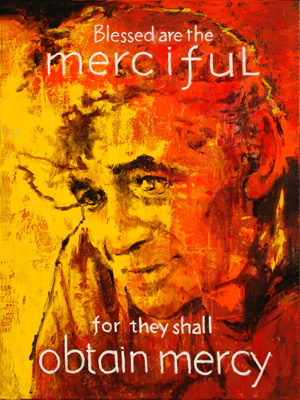
“Blessed are the merciful,
    for they will be shown mercy.” (NIV)

“Mercy” is one of the most rich and important words in all of the Holy Bible. Randomly turn to any page of Scripture and you will most likely find the word “mercy.” Mercy is highly significant because God is merciful.

King David was known as a man after God’s own heart (1 Samuel 13:14). This is first and foremost about mercy. In the ancient world, when a new king came to power who was from a different lineage than the previous ruler, it was a common practice to kill all the male heirs from the former king because they posed a grave threat to the throne. David, however, did not do that; he did just the opposite. David ascended the throne and said:

“Is there anyone still left of the house of Saul to whom I can show kindness?” (2 Samuel 9:1, NIV)

Indeed, there was. His name was Mephibosheth. He happened to be lame in both feet. That meant, literally, he was not able to run away when David became king. I am sure Mephibosheth believed he was being summoned by King David to his death. But when he arrived, David said to him:

“Don’t be afraid, for I will surely show you kindness…. I will restore to you all the land that belonged to your grandfather Saul, and you will always eat at my table.” (2 Samuel 9:7, NIV)

That, my friend, is the very definition of mercy. And that is precisely the character quality Jesus was talking about in his Beatitudes.

Just as David used his power to extend mercy and kindness to potential rivals instead of exterminating them to consolidate his power, so the true follower of Jesus will identify with the powerless and give them a seat at the table.

If we are wondering, at all, whether this is really what Jesus is talking about with mercy, his words in the Gospel of Luke make it crystal clear:

“If you love those who love you, what credit is that to you? Even sinners love those who love them. And if you do good to those who are good to you, what credit is that to you? Even sinners do that. And if you lend to those from whom you expect repayment, what credit is that to you? Even sinners lend to sinners, expecting to be repaid in full. But love your enemies, do good to them, and lend to them without expecting to get anything back. Then your reward will be great, and you will be children of the Most High, because he is kind to the ungrateful and wicked. Be merciful, just as your Father is merciful.” (Luke 6:32-36, NIV)

Merciful folks are gracious, kind, and accept others, especially an unworthy person, because they know that they themselves are unworthy of God’s great mercy and grace. The merciful person’s mantra is: “God has shown me mercy; therefore, I will show mercy to others.”

Those who are merciful will be shown mercy. If anyone treats another harshly and without mercy, they should not expect to receive blessing from God. This raises an important question which needs to be asked: Are we kind and merciful, or do we have a bent toward wanting to see others judged and punished? I share a hypothetical story….

My dear middle daughter was a remarkably busy girl. Whenever we were in public, it was my standing rule that she always holds my hand. The reason for this was that she always ran instead of walked. Holding her hand was the only way I could keep her safe and not literally run into harm’s way.

Here comes the hypothetical part: One day we are walking down the street holding hands. She gets away from my grip and runs… right into oncoming traffic… and is struck by a car. I run up to her, bend over her bleeding and broken body and say, “Well, that’s what you get for disobeying me. After all, you reap what you sow!”

Oh, my, no!… My daughter is now a Mom. And, lo and behold, she has a son just like her. I need to hold his hand, too! If an accident were ever to happen in reality, I can guarantee my response would be to run to him, bend over his bleeding and broken body, cry uncontrollably, and determine to do everything in my grandfatherly power to save his life and see him healed from his injuries.

So, then, my sisters and brothers, why in the world would we ever tell a broken hearted person – perhaps in the throes of depression or riddled with anxiety from hardship – emotionally and spiritually bleeding on the inside: “Get over it!” “Just stop worrying!” or “You need to be strong!”

God, forbid! No! Mercy! I insist, mercy! The world does not revolve on the axis of judgment, criticism, or giving someone what they deserve. God’s great big world spins because of mercy, grace, and basic human kindness that comes from the hand of a good benevolent Lord who cares about all humanity. Perhaps I must be even more specific…

  • The one filled with God’s righteousness will go out of their way to show kindness, love, and compassion to the LGBTQ+ community, becoming familiar with their needs, struggles, and heartaches as they listen without judgment and full of mercy.
  • The person touched by the mercy of God will intentionally seek to give people of color a seat at the table and the freedom to speak freely while listening with ears of mercy.
  • The human being who follows Jesus will see the image of God in our Native American sisters and brothers and will mercifully do everything within their power to advocate for them when it comes to things like inequities of poverty, disease, addiction, and death.
  • The person filled with the righteousness of God will respect all other religious people, regardless of their spirituality. They will be merciful to Buddhists, Muslims, Hindus, and even Wiccans, not because they see them as potential converts, but just because they need mercy, like the rest of us.

Consider what others have to say about mercy….

“God tolerates even our stammering and pardons our ignorance whenever something inadvertently escapes us – as, indeed, without this mercy there would be no freedom to pray.”

John Calvin

“Darkness cannot drive out darkness; only light can do that. Hate cannot drive out hate; only love can do that.”

Martin Luther King, Jr.

“It is mercy, not justice or courage or even heroism, that alone can defeat evil.”

Peter Kreeft

Consider what Holy Scripture has to say about mercy…

Some Pharisees asked Jesus’ disciples, “Why does your teacher eat with tax collectors and other sinners?” Jesus heard them and answered, “Healthy people don’t need a doctor, but sick people do. Go and learn what the Scriptures mean when they say, ‘Instead of offering sacrifices to me, I want you to be merciful to others.’ I didn’t come to invite good people to be my followers. I came to invite sinners.” (Matthew 9:11-13, CEV)

The Lord’s kindness never fails!
If he had not been merciful,
    we would have been destroyed.
The Lord can always be trusted
    to show mercy each morning.
Deep in my heart I say,
“The Lord is all I need;
    I can depend on him!” (Lamentations 3:22-24, CEV)

May we not succumb to thoughts of violence and revenge today, but rather to thoughts of mercy and compassion. We are to love our enemies and be merciful to all so that we might reverse the curse on humanity and restore them, by God’s grace, to their right mind, heart, and spirit.

*Above painting by Hyatt Moore

Colossians 1:15-23 – Worship That Is Fit for a King

The Son is the image of the invisible God, the firstborn over all creation. For in him all things were created: things in heaven and on earth, visible and invisible, whether thrones or powers or rulers or authorities; all things have been created through him and for him. He is before all things, and in him all things hold together. And he is the head of the body, the church; he is the beginning and the firstborn from among the dead, so that in everything he might have the supremacy. For God was pleased to have all his fullness dwell in him, and through him to reconcile to himself all things, whether things on earth or things in heaven, by making peace through his blood, shed on the cross.

Once you were alienated from God and were enemies in your minds because of your evil behavior. But now he has reconciled you by Christ’s physical body through death to present you holy in his sight, without blemish and free from accusation— if you continue in your faith, established and firm, and do not move from the hope held out in the gospel. This is the gospel that you heard and that has been proclaimed to every creature under heaven, and of which I, Paul, have become a servant. (New International Version)

Jesus is King. Neither you, nor I, are. 

A simple statement; yet, not easily engrafted into daily life. 

The original sin of Adam and Even was rebellion – to break the bonds of loving authority God provided for them. We (especially us Americans) have this nasty anti-authoritarian strain which runs rather deep in us. 

As a child, when my middle daughter was grappling with the implications of faith in Christ, she once blurted out an honest cry that we can likely resonate with: “I just don’t want another person in my life telling me what to do!” 

Indeed, Jesus is King; we are not.

The New Testament lesson for today is rich with the pre-eminence and lordship of Jesus Christ: 

  • All things were created through Jesus and for him. 
  • Everything in all creation is held together by Jesus. 
  • Christ is the head of the church. 
  • In Jesus Christ, complete divinity exists and reigns. 
  • Jesus made peace through the cross because he had the authority and the qualifications to do so. 
  • Broken relationships and proper lines of authority are now restored and redeemed in Christ.

We can also likely relate to, at times, indulging an illusion of being in control and independently dictating the course of our lives. Yet, mercifully, Jesus is the great Sovereign, and this is a good thing – because in Christ we find reconciliation and purity of life. 

“The supreme thing is worship. The attitude of worship is the attitude of a subject bent before the King… The fundamental thought is that of prostration, of bowing down.”

G. Campbell Morgan

Because Christ is King, we really ought to submit to him. In fact, we need to pay some attention to how our bodies are to submit to his lordship.

When the body moves to animating physical actions of submission, this helps the heart to follow. Whole person worship involves engaging the mind, spirit, emotions, and, yes, the body. To neglect the body in worship is to truncate the ability to connect with God in Christ.

A typical metaphor for the Church is the “Body of Christ.” We can live into that phrase through an embodied spirituality of submission. Our individual bodies are temples of the Holy Spirit, important for expressing worship. (1 Corinthians 3:16)

God created us with literal physical bodies. And Jesus has a literal physical body. Bodies are important for whole person worship. This means the physical postures we take in worshiping King Jesus are significant. We need to pay attention to them.  

A healthy practice for Christians is to kneel in the presence of the Lord. I realize some Christian traditions do it as a part of their worship, and some do not. Some like it, some don’t. Yet, bowing, even prostrating oneself (if you are physically able!) can be a powerful symbol of the heart’s desire and disposition to submit to the lordship and authority of Jesus Christ. 

Crawling out of bed in the morning onto one’s knees and beginning the day aiming to live into the will of God, and ending the day in the same manner, are a practical means of remembering who Jesus is and who we are.

I believe all believers need to feel free in adopting a physical posture of worship which helps them connect with God in Christ. For some, that will be sitting in a comfortable position in contemplation. Others will want to stand, raise their hands, even dance in praise.

It also behooves us to let our bodies respond to whatever is happening with us spiritually. Exuberant praise needs the expression of hand clapping and toe tapping. Confession of sin needs a bit of bowing, kneeling, even prostrating. For prayer, hands open and palms facing up to receive blessing from God is a good bodily position of worship.

You get the idea. Just remember we need to strive for congruence in our worship, that is, what is happening with our outward bodily movements needs to match what is occurring inward with our spirits. And when the two are in sync, meaningful worship can happen – worship of submission fit for a king.

Sovereign God, in your mercy you have sent your Son, the Lord Jesus, who has brought reconciliation to a once broken relationship.  I bow before you in obedience, submission, and worship.  Let me live a cross-shaped life through enjoying the peace you have given me in Christ in both body and soul. Amen.