The Example To Follow (1 Peter 2:19-25)

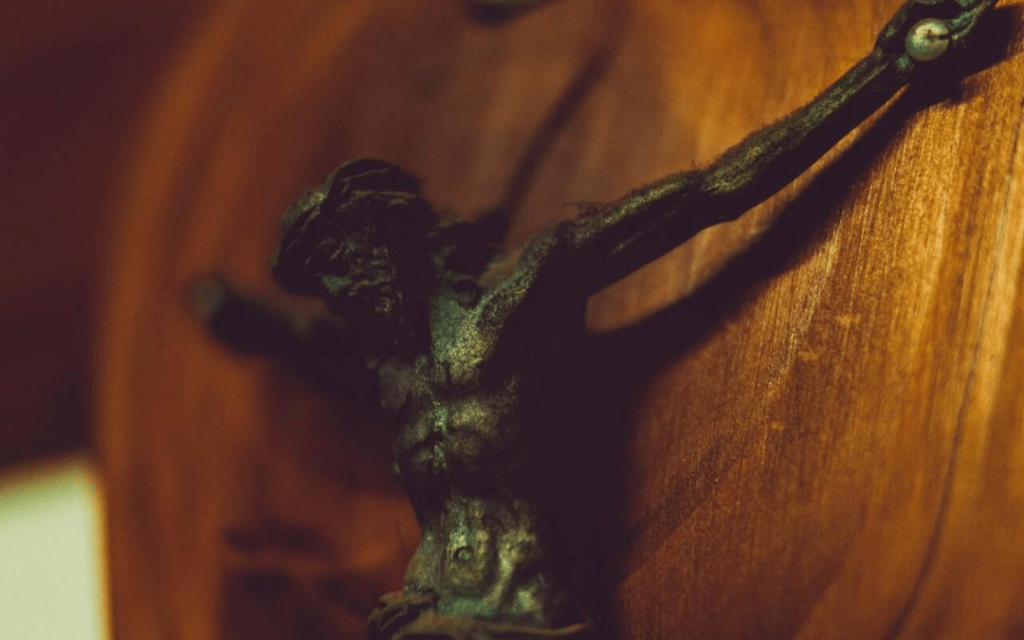
The Crucifixion, by John Kohan

For it is commendable if someone bears up under the pain of unjust suffering because they are conscious of God. But how is it to your credit if you receive a beating for doing wrong and endure it? But if you suffer for doing good and you endure it, this is commendable before God. To this you were called, because Christ suffered for you, leaving you an example, that you should follow in his steps.

“He committed no sin,
    and no deceit was found in his mouth.”

When they hurled their insults at him, he did not retaliate; when he suffered, he made no threats. Instead, he entrusted himself to him who judges justly. “He himself bore our sins” in his body on the cross, so that we might die to sins and live for righteousness; “by his wounds you have been healed.” For “you were like sheep going astray,” but now you have returned to the Shepherd and Overseer of your souls. (New International Version)

The reality of this life, for every one of us, is that we will suffer in some way. It’s not a matter of if we will suffer, but when and why. What’s more, my suffering is really not about me; it’s about him.

Therefore, let’s ensure that when the suffering comes, we know why – that it isn’t because of our own stupidity and poor choices, but because we are in solidarity with the One who suffered on our behalf and are living for him.

And in the midst of such suffering, let’s make sure that we face it and deal with it according to the example of Christ. Let’s imitate him.

Let’s also be honest from the start: We don’t like pain and suffering, and we often spend an inordinate amount of time and energy trying to avoid pain. 

Yet, in reality, our own suffering weans us away from the temporal things we tend to find consolation in, and drives us to the permanent source of comfort, strength, help, and encouragement. Our consolation is ultimately found solely in him.

When the athlete goes into the weight-room, they purposely go there to suffer. There is grunting and straining and difficulty. There is a tearing-down of muscle fibers. There is pain. 

That’s because strength-training needs commitment which suffers, and the pain that comes with growth. One cannot simply go into a weight-room, sit and watch other people lift weights, and believe they will then get in shape by only observing. 

God will put us in unwanted circumstances we did not ask for, and would not choose for ourselves, in order to position us to know him, to know Jesus. 

Crucifixion, by John Kohan

There are things in our lives that need to experience the suffering of death, in order for new life and growth to occur. For example, fire is an important part of Yellowstone National Park, because it brings environmental growth. According to ecology experts:

“Fire promotes habitat diversity by removing the forest overstory, allowing different plant communities to become established, and preventing trees from becoming established in grassland. Fire increases the rate that nutrients become available to plants by rapidly releasing them from wood and forest litter and by hastening the weathering of soil minerals.”

Concerning Christianity: Suffering is a necessary part of the Christian life because it creates the conditions for new life and growth and releases fresh sources of God’s grace into the church and world. 

We are to put to death anger, rage, malice, slander, lying, and useless language. They are to be replaced with compassion, kindness, humility, gentleness and patience, forgiveness, and love. (Colossians 3:7-14) 

More pointedly: Quit fighting against your suffering. Stop kicking and screaming long enough to look your suffering square in the face and learn from it.

Your suffering is trying to tell you something. But if you keep taking the stance of a pugilist trying to punch the pain away, suffering will just keep moving forward at you and never topple. 

You and I cannot beat suffering. We can only learn from it. In order to learn from it, we must embrace it.

So, here’s the counter-intuitive, counter-cultural practice that you might not like, and might think I’m off my rocker for suggesting: Submit to suffering. Yes, because in doing so you are submitting to him.

Don’t hear what I’m not saying. I am, in no way, trying to sanitize troubles, adverse circumstances, or even terrible trauma. Evil is evil, bad is bad, and no amount of saying otherwise will change the leopard’s spots. 

However, only through submitting to the process of what suffering teaches us will we ever have power over it.

Fighting against suffering is about as useful as taking on a bear. Bears, like suffering, can be dangerous. We don’t blame bears if they act like bears. Likewise, we ought not to be surprised when suffering hurts.

I suggest we treat suffering like facing a bear in the wilderness of trouble: 

  1. Calmly talk in low tones to your suffering. Speak to it. Remember who you are. You belong to God. Treat suffering as if it is curious about you. Stay calm. Doing the big freak-out only encourages suffering to do damage.
  2. Walk with others through suffering. Both yours and theirs. Christian community is one of the best practices of the Christian life. Suffering becomes connection within a community of persons who discern its purpose. 
  3. Keep your eye on suffering.  Don’t ignore it, or pretend it isn’t there. Don’t run. Face suffering. Keep it in front of you. It will pass, but you must be patient and calm. Once it is gone, then you can reflect on what happened and debrief with others about the experience.

For anything to change, we must stop something, and start something else. When it comes to suffering:

  • Stop fighting. Start accepting. 
  • Stop going it alone. Start living in vital and vulnerable community. 
  • Stop being a martyr. Start letting the martyrdom of Christ be your center of life. 
  • Stop talking. Start listening. 
  • Stop treating your suffering as an adversary. Start relating to suffering as a companion to learn from.

Lord Jesus Christ, by your patience in suffering you hallowed earthly pain, and gave us the example of obedience to your Father’s will. Be near me in my time of weakness and pain. Sustain me by your grace, so that my strength and courage may not fail. Heal me according to you will. And help me always to believe that what happens to me here in this life is of little account, if you hold me in eternal life, my Lord and my God. Amen.

The Evil Within (Mark 7:1-8, 14-15, 21-23)

Now when the Pharisees and some of the scribes who had come from Jerusalem gathered around him, they noticed that some of his disciples were eating with defiled hands, that is, without washing them. (For the Pharisees, and all the Jews, do not eat unless they wash their hands, thus observing the tradition of the elders, and they do not eat anything from the market unless they wash, and there are also many other traditions that they observe: the washing of cups and pots and bronze kettles and beds.)So the Pharisees and the scribes asked him, “Why do your disciples not walk according to the tradition of the elders but eat with defiled hands?” He said to them, “Isaiah prophesied rightly about you hypocrites, as it is written,

‘This people honors me with their lips,
    but their hearts are far from me;
in vain do they worship me,
    teaching human precepts as doctrines.’

“You abandon the commandment of God and hold to human tradition…”

Then he called the crowd again and said to them, “Listen to me, all of you, and understand: there is nothing outside a person that by going in can defile, but the things that come out are what defile…”

For it is from within, from the human heart, that evil intentions come: sexual immorality, theft, murder, adultery, avarice, wickedness, deceit, debauchery, envy, slander, pride, folly. All these evil things come from within, and they defile a person.” (New Revised Standard Version)

There are many people who believe that evil resides out there, but not in here.

“Out there” is usually in places where people don’t live like me, think like me, and act like me. Rarely does anyone, when asked where evil is, points to their own heart.

The religious establishment of Christ’s day saw evil as something which existed “out there” where the sinners are; but not “in here” where I am.

Jesus had something to say on that subject. The exchange between the religious leaders and Christ began with a query toward Jesus about Jewish traditions and interpretations of the Mosaic law.

The leaders observed that Christ’s disciples were not holding to traditional purity practices. They were not washing their hands in a certain way prior to eating. This was less of a criticism on the followers of Jesus, and much more an indictment on Jesus as their rabbi.

It was believed that there are customs which properly trained disciples ought to know and follow. And Christ’s followers were not, it was assumed, trained well.

The religious establishment understood the words and ways of Jesus as an affront to the teaching of the elders, and of proper scriptural and legal interpretation.

Jesus, however, made a distinction between traditions of the elders and God’s commands. The former are human precepts, whereas the latter are to be obeyed. In no way did Christ demean Mosaic law, or any commandments of God.

Instead, Jesus rejected how particular interpretations – along with practices which arose from those interpretations – end up obscuring the spirit and intent of the law. In other words, purity does not come from hand washing, because neither purity nor impurity originates from the hands.

Christ reached back into the prophecy of Isaiah to show that there is a contrast between what the mouth utters and what is within the heart. The incongruence between the words spoken and the heart’s true state puts the issue of where impurity and evil really come from: The heart, not the mouth.

Jesus and the Pharisees, by French painter James Tissot (1836-1902)

Evil intentions originate within. Evil actions are animated by the heart. Evil attitudes are born in the heart. The human heart is the place which needs attention because, for ancient people, this is where a person’s rational will is located. It is where moral pollution dwells, deep within.

Let’s keep in mind that, in the verbal kerfuffle between Christ and the religious leaders, there is no evidence that Jesus disregarded Jewish dietary laws. He instead took the religious establishment to task on elevating outward human traditions, while simultaneously ignoring the inward human heart.

Food and hand-washing are not the chief concern, when it comes to purity and impurity. At issue is the source of defilement, that is, where the pollution is sourced. Jesus insisted that it’s more about who you are, and what is in your heart, than it is about the food you eat or avoid.

In truth, the problem of defilement is important. And keeping the Mosaic law is significant. Yet, Jesus was looking at these issues from a different angle. He affirmed the law’s purpose in restraining evil and avoiding impurity, along with the religious leaders. However, Christ disagreed with them on how the law is practically observed and obeyed.

Jesus did not come up with something new or strange in talking about evil emanating from the heart. Judaism is a religion of the heart, just as much as Christianity or any other religion.

The heart is devious above all else;
    it is perverse—
    who can understand it?
I the Lord test the mind
    and search the heart,
to give to all according to their ways,
    according to the fruit of their doings. (Jeremiah 17:9-10, NRSV)

So, what’s up with the conflict between Jesus and the religious leaders? Over time, many located evil outside, out there, with evildoers and law-breakers, with those disobedient to the law. Christ came along and reaffirmed where the problem originates, scripturally.

One isn’t defiled by improper handling of ritual; one is defiled because being unaware of, or not acknowledging, the dark shadows which reside within every human heart.

Therefore, the discussion of evil and impurity is useless, if we only talk about influences from outside. Deal, instead, with the influences from within.

The heart is not all bad; there’s a lot of good there. But there are spaces within the heart which are camouflaged in darkness. Those places need attention, before we launch into evil which exists elsewhere.

Everyone must come to the point of understanding that they are capable of both great good and great evil. A Pharisee is not all good. And a lawbreaker is not all bad. Until we can see the commonality between ourselves and those we separate ourselves from, we will continually miss the heart of true religion.

Whether a Jew, Christian, Muslim, or any other religious tradition, we must deal with our own collective house, and our own personal heart. Hate speech toward another group has no warrant from Jesus. Injustice has no place in Christianity or anywhere else.

Furthermore, not a one of us can rationalize any unjust words and/or inactions. If that happens, a terrible blindness has occurred in which someone or some group of people refuse to see their own culpability in evil, and project it outward onto another person or group.

If we keep the light of the gospel in our own hearts, then it is much less likely that we will demean or attack others, either verbally, physically, or both.

Using a self-constructed and janky flashlight to shine on another’s heart does nothing but keep the attention off of our own heart. That sort of dubious searching of splinters helps no one, especially ourselves, who already have nasty logs in our own eyes.

Evil is deeper than mere selfishness, bigger than a personal error in judgment, and greater than some individual bad decisions. That’s because there is also a collective heart in every organization, institution, corporation, and faith community. Injustice and unrighteousness resides in those hearts, as well. This makes all of us – personally and communally – both victims of evil, as well as perpetrators of wickedness.

This is why grace and mercy are the real answers to the evil in this world’s systems, and in the human heart. Jesus is trying to pave the way toward a solution of the problem of evil.

Let’s give him an honest look and hearing.

Most merciful God, we confess that we have sinned against you in thought, word, and deed, by what we have done, and by what we have left undone. We have not loved you with our whole heart; we have not loved our neighbors as ourselves. We are truly sorry and we humbly repent. For the sake of your Son Jesus Christ, have mercy on us and forgive us; that we may delight in your will, and walk in your ways, to the glory of your Name. Amen.

The Lord of Life (John 6:56-69)

Bread of Life, by Kennedy Paizs

“Those who eat my flesh and drink my blood abide in me and I in them. Just as the living Father sent me and I live because of the Father, so whoever eats me will live because of me. This is the bread that came down from heaven, not like that which the ancestors ate, and they died. But the one who eats this bread will live forever.” Jesus said these things while he was teaching in a synagogue at Capernaum.

When many of his disciples heard it, they said, “This teaching is difficult; who can accept it?” But Jesus, being aware that his disciples were complaining about it, said to them, “Does this offend you? Then what if you were to see the Son of Man ascending to where he was before? It is the spirit that gives life; the flesh is useless. The words that I have spoken to you are spirit and life. But among you there are some who do not believe.”

For Jesus knew from the beginning who were the ones who did not believe and who was the one who would betray him. And he said, “For this reason I have told you that no one can come to me unless it is granted by the Father.”

Because of this many of his disciples turned back and no longer went about with him. So Jesus asked the twelve, “Do you also wish to go away?” Simon Peter answered him, “Lord, to whom can we go? You have the words of eternal life. We have come to believe and know that you are the Holy One of God.” (New Revised Standard Version)

This is a hard teaching – which is why a fair number of Christ’s disciples unfollowed him, literally, and not just socially and virtually.

Perhaps they believed they were following a great moral teacher, only to find Jesus prattling-on about being bread from heaven and divinely related to God.

The late great C.S. Lewis commented on Jesus, saying this:

“I am trying here to prevent anyone saying the really foolish thing that people often say about Him: I’m ready to accept Jesus as a great moral teacher, but I don’t accept his claim to be God. That is the one thing we must not say. A man who was merely a man and said the sort of things Jesus said would not be a great moral teacher. He would either be a lunatic — on the level with the man who says he is a poached egg — or else he would be the Devil of Hell. You must make your choice. Either this man was, and is, the Son of God, or else a madman or something worse. You can shut him up for a fool, you can spit at him and kill him as a demon or you can fall at his feet and call him Lord and God, but let us not come with any patronizing nonsense about his being a great human teacher. He has not left that open to us. He did not intend to.” C.S. Lewis, Mere Christianity

It seems Jesus cares little about whether we think of him as a moral teacher or some monstrosity. But he does care about moving people to a spirit-filled confession, a settled claim of faith, and a bold proclamation of his person and work.

Indeed, Jesus Christ, Son of Humanity, Son of God, leads us to hear his own confession, claim, and proclamation: “I Am.”

The crowd of people listening to Jesus were having a hard time wrapping their heads around his message. There were simply no existing categories of thought to which they could put Jesus neatly into. Everyone was rather puzzled with Christ’s words.

Jesus was in the Capernaum synagogue, a village on the Sea of Galilee, 30 miles from where he grew up in Nazareth. Any talk of eating and drinking and religion within any faith community is likely to be a charged discussion. Typically the politics of faith is not for the faint of heart.

We are to abide in Christ, to be in vital union with him. To have Jesus close, to have his words and ways within us, is akin to eating a satisfying meal that goes throughout our entire body and effects our being. Connecting and remaining with Jesus is true living and abundant life.

But the synagogue crowd wasn’t having any of this crazy talk of eating flesh and drinking blood. The lines between meat and metaphor were severely blurred for them. They did not accept the wedding of the spiritual and the material, of word and flesh, of God and Jesus together as Father and Son.

Jesus was causing the men to fold their arms in disgust, and the ladies to squirm in their pews with agitation. They looked upon this Jesus in front of them as causing a religious scandal of the first degree.

Rather than back off the scandalous words, Jesus stuck with them. Furthermore, he intensified what he was saying. At the heart of it was a claim to be the ladder between heaven and earth, the one who is manna from above, given for the life of the people.

His flesh is bread, and his blood is drink. He is life itself. He is even spirit, the one who breathes new life into people. At this point, Jesus was being as scandalous as it gets for his audience in the synagogue.

All of Christ’s talk is meant to bring people to consider him, to contemplate God, and to come to a point of response. Because nobody encountered Jesus without deciding if he is a liar, a lunatic, or the Lord who is life itself.

Many of Christ’s own disciples bailed on him. The scandal was too much. They didn’t sign up for this. To stay with Jesus means to really stay, to abide, to believe and know who he is.

Throughout the New Testament Gospels, Jesus honors people with questions and choices – and does not simply bypass human dignity and worth. He asked his closest twelve disciples if they also wanted to retreat from the scandalous message and messenger they’d been following.

Peter, of course, still had to learn this lesson of respect; he answered for the entire group. Jesus is where, and in whom, he found life, along with the rest of them. They didn’t know how all of the scandalous talk was going to shake-out specifically, although I think each of them had a pretty good idea.

But it didn’t matter. The twelve disciples were stuck on Jesus. Or, to be more accurate, the eleven disciples. Perhaps it was at this point that Judas Iscariot no longer had to wonder what was going to happen, and what exactly Jesus was up to.

Abiding in a movement that did not include a Roman takeover and a glorious wealthy kingdom was something Judas was unwilling to invest in. Maybe it was here that he began considering his exit plan.

Recognizing Jesus as Son of Humanity, Son of God, and the Word made flesh for us, requires both belief and knowledge – because you must have the one to have the other. C.S. Lewis discovered this. So did I. And may you, as well, my friend. For Jesus is the Lord of life.

Gracious God, although we once were strangers, you receive us as friends and draw us home to you. Set your living bread before us so that, feasting around your table, we may be strengthened to continue the work to which your Son commissioned us. Amen.

Living Bread from Heaven (John 6:51-58)

Art by Nigel Wynter (1957-2024)

I am the living bread that came down from heaven. Whoever eats of this bread will live forever, and the bread that I will give for the life of the world is my flesh.”

The Jews then disputed among themselves, saying, “How can this man give us his flesh to eat?” 

So Jesus said to them, “Very truly, I tell you, unless you eat the flesh of the Son of Man and drink his blood, you have no life in you. Those who eat my flesh and drink my blood have eternal life, and I will raise them up on the last day, for my flesh is true food, and my blood is true drink. Those who eat my flesh and drink my blood abide in me and I in them. Just as the living Father sent me and I live because of the Father, so whoever eats me will live because of me. This is the bread that came down from heaven, not like that which the ancestors ate, and they died. But the one who eats this bread will live forever.” (New Revised Standard Version)

To the religious leaders of Christ’s day, Jesus was making more noise than a couple of skeletons dancing on a tin roof. And they neither liked it, nor appreciated him drawing so much attention to himself.

Tensions had been escalating between Jesus and the religious establishment. The atmosphere was thick with grumbling leaders, as they tried to make some sense of Christ’s words to them.

Jesus offering his body for people to eat was causing far too much noise for the Jewish leaders. What in the world is this guy talking about?

Rather than making the meaning clear for them, Jesus added drinking his blood to the discussion. What’s more, Christ got up in their grill and confronted them with a choice, instead of a straightforward explanation.

Using some good old double negative language, Jesus flatly stated that there’s no life without any eating of his flesh and drinking of his blood. Then conversely, stated positively, Jesus affirmed that eternal life is found in those who eat his flesh and drink his blood.

This was next level communication of Jesus to the religious leaders. Earlier, Christ let them know that they needed to make the choice of coming to himself, of engaging in a life-giving relationship with him.

Yet now, it’s a matter of outright participation in Jesus, of eating and drinking the body and blood of Christ. Both the choice of relationship and of participation are radical decisions, which requires ditching some old traditions, and beginning some new ones.

Christ’s words are difficult, because they demand a change in thinking and behavior. Indeed, his words demand a change in our very way of being.

Christian discipleship requires that we stop the false ways of being in this world, and start a different way of being, according to the true self. In other words, Jesus was insisting on repentance and faith.

We are all on the hook to not just talk some theology and take some communion elements. It’s a lot more involved than that. Jesus demands our very lives, and not simply to sign off on some doctrinal statement about him. It’s about life itself, the power of life and death.

By eating and drinking Christ, there is meaningful relational connection, and ongoing participation in his life and ministry.

None of this is about literal cannibalism, and not even about actual bread and wine. This is deep metaphorical stuff which is meant to convey to us who Jesus is and how we can be related to him.

When we ingest food and drink, it goes into us and throughout our entire body. You cannot get much closer to something than by eating it and having it inside you. Just as eating bread goes to our very core and helps sustain life, so ingestingJesus is about allowing him to be as close to us as possible, into the very depths of our soul.

And by taking Christ into us, we will truly live and connect; and not be separated and die.

Art by Soiche Watanabe

We can no more spiritually live without taking Jesus into us, as we could live without eating on a regular basis. Christ is our breakfast, lunch, and dinner; our midnight snack and our birthday cake. Jesus is all that, and more.

Perhaps you are wondering why Jesus didn’t just state plainly who he is, why he came, and what will happen. Because it’s too much to handle.

We don’t simply accept Jesus into our heart, and then go on our merry way. Jesus Christ is someone to search for and discover, as if we were looking for fresh water or for the best baguette in the world.

Anyone can affirm a few belief statements, or do some good deeds. But it takes real courage to go hard after the spiritual life and find out what it’s all about:

It requires some solid bravery to explore the depths of your own true self and face the internal crud that’s been hiding in the shadows of your soul.

It demands identifying the bogus ways we prop up a false self for others to see – wanting to control how people view us and treat us.

It takes some real chutzpah to pursue the God life without worrying about where it will take you or who it will upset.

Jesus is a force to contend with. He is the Son of God, sent from above, to provide the world with real spiritual food and drink. Christ is the one who sustains life, and makes abundance possible. He is the Lord who speaks, calls out, and draws us to himself.

Jesus Christ helps us fit, even though we come from the island of misfit toys.

Even more pertinent than the question of “Who is Jesus?” is the probing question, “And what will you do with him?”

Christ cannot fit into your neat theological system, your tidy doctrinal statements, and on your nicely cleaned coffee table within the attractive Bible. Sooner or later, we all must contend with the divine force which gives life to everything. We cannot get away from him.

So, go after Jesus. Find out who he is. Determine how to deal with a mercy so powerful that it melts away guilt and shame as if it were in a 500 degree oven. After all, it’s better to have a tasty loaf of bread than to become a hard slice of burnt toast.

But let’s not worry about how hot it is in here, but how noisy it’s getting.

Gracious Lord, move us, your people, to experience your love more deeply. Fill us with the energy that comes from a desire for service. Connect us with creation to care for your world. Engage us in the scriptures and increase our knowledge of you. Raise up your power and come among us. May your bountiful grace and mercy equip us. Amen.