Rejected (Luke 4:16-30)

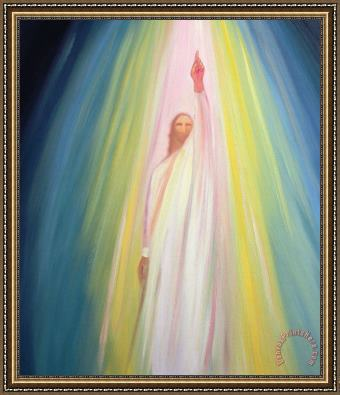
Orthodox depiction of Christ in the synagogue at Nazareth

When he came to Nazareth, where he had been brought up, he went to the synagogue on the Sabbath day, as was his custom. He stood up to read, and the scroll of the prophet Isaiah was given to him. He unrolled the scroll and found the place where it was written:

“The Spirit of the Lord is upon me,
    because he has anointed me
        to bring good news to the poor.
He has sent me to proclaim release to the captives
    and recovery of sight to the blind,
        to set free those who are oppressed,
to proclaim the year of the Lord’s favor.”

And he rolled up the scroll, gave it back to the attendant, and sat down. The eyes of all in the synagogue were fixed on him. Then he began to say to them, “Today this scripture has been fulfilled in your hearing.” 

All spoke well of him and were amazed at the gracious words that came from his mouth. They said, “Is this not Joseph’s son?” 

He said to them, “Doubtless you will quote to me this proverb, ‘Doctor, cure yourself!’ And you will say, ‘Do here also in your hometown the things that we have heard you did at Capernaum.’ ” 

And he said, “Truly I tell you; no prophet is accepted in his hometown. But the truth is, there were many widows in Israel in the time of Elijah, when the heaven was shut up three years and six months and there was a severe famine over all the land, yet Elijah was sent to none of them except to a widow at Zarephath in Sidon. There were also many with a skin disease in Israel in the time of the prophet Elisha, and none of them was cleansed except Naaman the Syrian.” 

When they heard this, all in the synagogue were filled with rage. They got up, drove him out of the town, and led him to the brow of the hill on which their town was built, so that they might hurl him off the cliff. But he passed through the middle of them and went on his way. (New Revised Standard Version)

Reject:

  1. to refuse to have, take, recognize, etc.; to deny
  2. to refuse to grant (a request, a demand, etc.)
  3. to refuse to accept (someone or something); to rebuff, renounce, or repel
  4. to discard as useless or unsatisfactory; to jettison or eliminate
  5. to cast out or eject; vomit
  6. to cast out or off

Rejection can be mutual, and cut both ways. This appears to have been the case with Jesus and the synagogue goers in his hometown of Nazareth.

The townsfolk rejection of Jesus went far enough to want to throw him off a cliff. They were enraged with anger. Christ recognized the people’s rejection of him, long before they realized it themselves. Christ’s rejection of unjust and unbiblical ideas and practices went far enough to rebuke the congregation from the scriptures.

The difference in the two rejections was that the synagogue attenders were denying Jesus himself; whereas Jesus was refusing to accept a longstanding tradition of hate toward a certain group of people.

The nub of the rejection, which went both ways, had to do with non-Jewish persons, that is, Gentiles.

If you think this to be a silly sort of thing, especially of getting so worked up as to try and kill someone, then consider how frothed-up people get concerning contemporary political elections.

Jesus being pro-Gentile was not only unpopular; it was unheard of. So, the people rejected him.

The synagogue being anti-Christ meant that they were anti-Gentile and anti-God, as far as Jesus was concerned. And he wasn’t about to put up with it. So, he rejected not the people, but their entrenched hatred and unscriptural stance.

Jesus took the prophecy of Isaiah about proclaiming liberty to captives, and freedom for the oppressed, and then applied it, not to his fellow Jews who were present, but to, of all people, Gentiles.

Christ pointed out that in the days of Elijah, the prophet was sent to a Gentile woman. In addition, he let everyone know that the prophet Elisha cleansed a Gentile. 

The gathered synagogue worshipers understood exactly what Jesus was saying and doing – he was claiming to be the ultimate prophet, sent for those despised people. 

It was too much for the gathered folk to take. So all hell broke loose as the “worshipers” became so angry and insolent that they drove Jesus out of town and tried to chuck him off a cliff to his death.

Jesus had that kind of effect throughout his earthly ministry by saying and doing the unexpected, and the unwanted.

The people of Nazareth seemed to have always interpreted the message of Isaiah and the prophets as being for themselves, not others. 

This is a probing story for today’s Christian Church. Whenever we lose sight of a biblical message and re-interpret it as being for only us, then we end up like the Nazarenes of old who did not recognize Jesus for who he really is and what he really came to do. 

Perhaps the burning question from today’s Gospel lesson for individual Christians and all churches is this: Are you ready to throw Jesus off a cliff?

Spend some time alone with God today. Consider whether you have made Jesus into the image of what you want him to be, or whether you accept him as he is. 

One clue to this is if you believe some person or people group should not have Jesus – he belongs to people like us. This, by the way, is the very definition of “rejection.”

It could be that some soul-searching repentance is in order, so that Christians will be true worshipers of Jesus, and not just spectator fans of him.

O God, you made us in your own image and redeemed us through Jesus your Son: Look with compassion on the whole human family; take away the arrogance and hatred which infect our hearts; break down the walls that separate us; unite us in bonds of love; and work through our struggle and confusion to accomplish your purposes on earth; that, in your good time, all nations and races may serve you in harmony around your heavenly throne; through Jesus Christ our Lord. Amen.

The Real Thing (Hebrews 9:24-28)

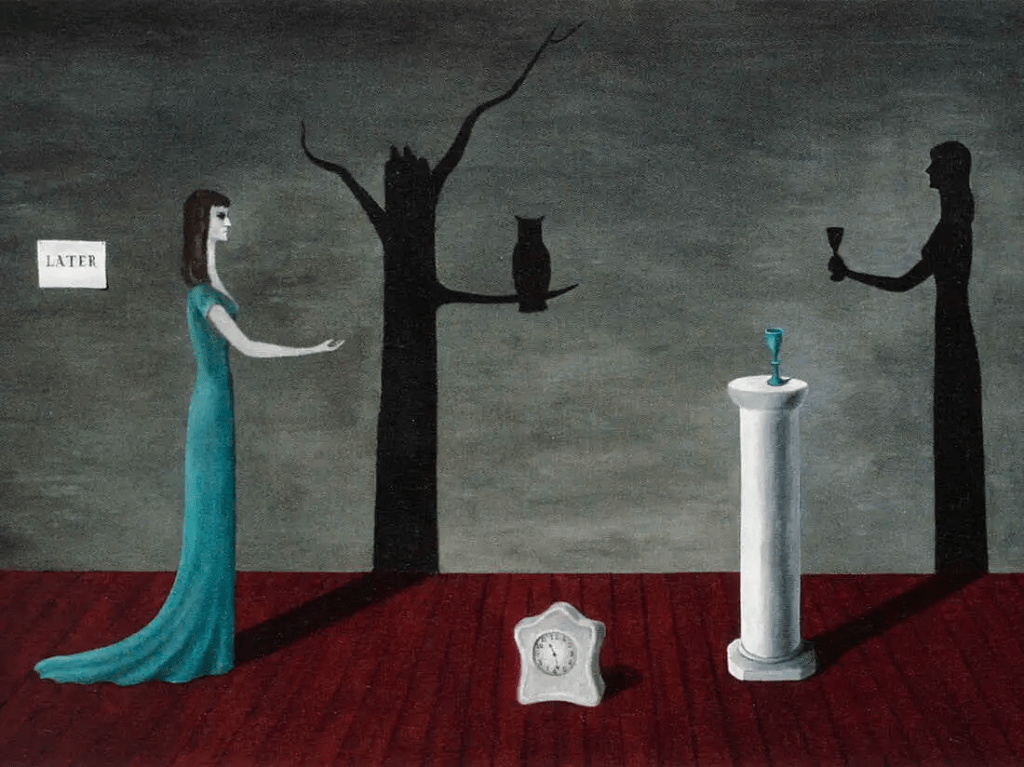
Strange Shadows (Shadows and Substance), by Gertrude Abercrombie, 1950

For Christ did not enter a sanctuary made by human hands, a mere copy of the true one, but he entered into heaven itself, now to appear in the presence of God on our behalf. 

Nor was it to offer himself again and again, as the high priest enters the holy place year after year with blood that is not his own, for then he would have had to suffer again and again since the foundation of the world.

But as it is, he has appeared once for all at the end of the ages to remove sin by the sacrifice of himself. And just as it is appointed for mortals to die once and after that the judgment, so Christ, having been offered once to bear the sins of many, will appear a second time, not to deal with sin but to save those who are eagerly waiting for him. (New Revised Standard Version)

I admit that the Book of Hebrews in the New Testament is one of my favorite books of the Bible. I also recognize that Hebrews is one of the most difficult books to deal with. And specifically, chapter 9 can be quite mind-boggling.

The author of Hebrews, whoever he was actually was, did the intellectually and theologically staggering job of establishing continuity between the two testaments of the Bible.

He compared and contrasted the old (or first) covenant with the new (or second) covenant, examining the Levitical priesthood and its sacrificial system, with Christ as the high priest whose singular sacrifice ended all sacrifices.

The old sacrificial system began on Mount Sinai. Moses sprinkled the sacrificial blood of bulls and goats on both the people and the tabernacle. He was consecrating them, and the sacrificial implements, so that everyone could participate in the worship of Yahweh.

In the new covenantal system, blood is also used to purify. Yet, the heavenly tabernacle could not be cleansed with the blood of animals. It required a better and superior sacrifice. (Hebrews 9:23)

The Sacrifice of Christ, by Elizabeth Wang, 2002

That sacrifice is Jesus. He was both the high priest officiating the ritual, and the actual sacrificial offering. It is the life of Jesus, given in self-sacrificial death, which enables worshipers to come to God without any obstruction whatsoever.

Jesus does not have to keep offering himself. It was a one and done affair. One sacrifice on behalf of everyone. Once for all.

This is, of course, a distinctively Christian view and approach to the problem of guilt, shame, disobedience, and death. It has been a very compelling view for millions of people over the past two millennia.

In whatever way one seeks to understand and make sense of the author’s line of reasoning concerning a Christian approach to sacrifice and dealing with sin, what is apparent to me is that the author talked of a reality that we do not presently see.

The author of Hebrews was lifting up something important that he wanted us to notice. He was pointing out the reality of spiritual forces that have the power to both destroy and give life.

The earthly objects that we can see, touch, feel, hear, and smell are mere representations or shadows of heavenly things.

Many people, if not most people, today would say that invisible things such as our ideas and philosophies of religion are mere mental ways of understanding the objective reality in front of us that we can use our five senses to detect.

But the author of Hebrews insists – and I believe rightly so – that it’s the other way around. Everything we are presently experiencing with our objective senses is a projection of the ultimate invisible reality.

In other words, this entire world will pass away, because it is but a shadow in the history of eternity. The invisible God is the real deal. The heavenly sanctuary is reality. Love is the permanent operating system of eternity, and not your 401(k) or the next political election.

Jesus the Christ has offered himself once for all time, and for all sins. And he did it because the triune God – Father, Son, and Spirit – is a community of unitive love. That is, God is Love. So therefore, God can only do that which is love.

The end of time is not yet here. This present world with all of its inconsistent ways of doing both good and bad is still with us. But Jesus will come again.

The sin issue has been dealt with, once and for all. Christ did that. Jesus will return in order to bring salvation to those who are waiting for him.

If we must wait, let us do it patiently, with all of the faith and endurance it requires. Yet, this is not a passive waiting. We are to be busy proclaiming the good news of God’s invisible realm with both words and sacraments – with the signs and shadows and representations we have that point to the reality of God.

Everything visible and tangible on this earth is mirroring a greater, better, and superior reality which we cannot see with our eyes or touch with our hands.

Christianity is unabashed that all things point to Christ, who is the first and the last, the alpha and omega, the be all and end all of everything.

Come, Lord Jesus, Son of God, Son of Humanity. We long for you to return in glory and set us and this entire sinful world aright with your divine justice.

Be our guest, Lord Jesus, our Savior and Friend. We receive in faith your salvation. We trust that both the physical food and spiritual food you give will sustain us for our work and worship in this world.

May it be so, to the glory of God, and through the enablement of the Holy Spirit. You are one God – Father, Son, and Spirit – in one holy community of Love, now and forevermore. Amen.

Visible Signs of Invisible Realities (Hebrews 9:15-24)

For this reason Christ is the mediator of a new covenant, that those who are called may receive the promised eternal inheritance—now that he has died as a ransom to set them free from the sins committed under the first covenant.

In the case of a will, it is necessary to prove the death of the one who made it, because a will is in force only when somebody has died; it never takes effect while the one who made it is living. This is why even the first covenant was not put into effect without blood. When Moses had proclaimed every command of the law to all the people, he took the blood of calves, together with water, scarlet wool and branches of hyssop, and sprinkled the scroll and all the people. He said, “This is the blood of the covenant, which God has commanded you to keep.” In the same way, he sprinkled with the blood both the tabernacle and everything used in its ceremonies. In fact, the law requires that nearly everything be cleansed with blood, and without the shedding of blood there is no forgiveness.

It was necessary, then, for the copies of the heavenly things to be purified with these sacrifices, but the heavenly things themselves with better sacrifices than these. For Christ did not enter a sanctuary made with human hands that was only a copy of the true one; he entered heaven itself, now to appear for us in God’s presence. (Hebrews 9:15-24)

The Hebrew Christians were tired. They had faced adverse circumstances, unjust imprisonments, persecution, prejudice, confiscation of their property, and public ridicule.

Most of all, they encountered rejection from their Jewish families of origin. There was precious little support for them, outside of their group.

The suffering went on long enough that the Christians began to experience a weakening of faith. In their distress, they started considering whether to return to Judaism, and renege on their commitment to Christ.

The author of Hebrews saw the struggle and spoke up, encouraging and exhorting the believers to keep going, to exercise faith and perseverance in the face of their ongoing troubles.

The author’s overall message to the discouraged believers was that Jesus Christ is superior over everything and everyone. Christ is better than the angels, Moses, and Aaron. Jesus is the ultimate high priest who offered himself as a sacrifice, once for all.

By means of the cross, Jesus became the mediator of a new and better covenant. There is, therefore, no more need of another high priest. Christ now occupies that office permanently.

Jesus Christ Points us to God, by Elizabeth Wang

Christ’s death was efficacious for all. The sacrificial system with all of the officiating Levitical priests was the old order of things, meant to point us to Christ.

Offering sacrifices day after day, and engaging in prescribed liturgical rituals in order to access God, are no longer necessary. Perpetual anxiety exists wherever people keep wondering if they have done enough to satisfy their guilt and/or responsibility.

The answer of Christianity is yes, the work is finished; Jesus completed it, once and for all.

There is no longer anything that can distress us. Sin, death, and hell have been conquered through the death of Christ. His singular sacrifice has achieved victory over the sinful powers, and reconciliation and peace with God.

Blessed is the one
    whose sin the Lord does not count against them
    and in whose spirit is no deceit. (Psalm 32:2, NIV)

The covenant code’s sacrificial system was never designed to be a permanent way of doing things. All of the implements used in that system were symbols pointing to the real deal. They were a temporary means of leading people to Christ, who is the once for all sacrifice to end all sacrifices, the one who truly takes away our guilt and shame forever.

The picture is of Christ, as our high priest, who sprinkled us with his own blood and made us clean – not only today or for some temporary period of time – but for all time. We are not only made clean; we are made clean forever by the blood of Christ.

Cleanse me with hyssop, and I will be clean;
    wash me, and I will be whiter than snow. (Psalm 51:7, NIV)

The historical person of Jesus – his life, ministry, crucifixion, death, resurrection, ascension and glorification – was a visible image showing us the great importance of invisible realities.

The Ark of the Covenant was a visible sign of God’s invisible presence, and the need for a restoration of the divine/human connection.

The temple, the worship implements, and the whole sacrificial system was a visible sign of God’s invisible holiness, and the need for purity of heart amongst the people.

Jesus was a real person with a real body and real human needs, a visible reality which showed us the invisible God, and what God truly deems as right and good.

It is Jesus Christ, the Son of God and Son of Humanity, in whom we have redemption the forgiveness of sins. He is the image of the invisible God. (Colossians 1:14-15)

Christ is our Mediator, bridging the gap between heaven and earth.

Christ is our Savior, delivering us from our guilt and shame, our worry and anxiety, and our old enemy, death itself.

Christ is our Advocate, stepping in and acting on our behalf, and sending the Holy Spirit to be his continuing presence on this earth.

Christ is our champion, the pioneer of our salvation, securing redemption for us through his singular death.

Christ is our Intercessor, who even now lives to intercede for us, as we strive and struggle to live in humility, justice, and righteousness, as peacemakers in this world.

What this all means, from the vantage of Christianity, is that we need Jesus.

Without Christ, there is no hope. With Christ, all things are possible.

Jesus is the answer to every question, because Jesus is the center of all things. He is the fertile soil from which all of life sprouts; the first-fruit which provides life; and the continuing sustenance which saves us from a disconnected, fragmented, discouraging existence.

Along with the ancient Hebrew Christians, let us be encouraged with Christ, who is truly our everything.

Accept, O Lord, our thanks and praise for all that you have done for us. We thank you for the disappointments and failures that lead us to acknowledge our dependence on you alone.

Above all, we thank you for your Son Jesus Christ; for the truth of his Word, and the example of his life; for his steadfast obedience, by which he overcame temptation; for his dying, through which he overcame death; and for his rising to life again, in which we are raised to the life of your kingdom.

Grant us the gift of your Spirit; that we may know you and make you known; and through your Spirit, at all times and in all places, may give thanks to you in all things. Amen.

You Are Not Far From the Kingdom of God (Mark 12:28-34)

One of the scribes came near and heard them disputing with one another, and seeing that he answered them well he asked him, “Which commandment is the first of all?” 

Jesus answered, “The first is, ‘Hear, O Israel: the Lord our God, the Lord is one; you shall love the Lord your God with all your heart and with all your soul and with all your mind and with all your strength.’ The second is this, ‘You shall love your neighbor as yourself.’ There is no other commandment greater than these.” 

Then the scribe said to him, “You are right, Teacher; you have truly said that ‘he is one, and besides him there is no other’; and ‘to love him with all the heart and with all the understanding and with all the strength’ and ‘to love one’s neighbor as oneself’—this is much more important than all whole burnt offerings and sacrifices.” 

When Jesus saw that he answered wisely, he said to him, “You are not far from the kingdom of God.” After that no one dared to ask him any question. (New Revised Standard Version)

Jewish religious leaders in the New Testament Gospels – high priests, scribes, Pharisees, Sadducees, the Sanhedrin – are typically portrayed in a negative light as opponents of Jesus. However, there are religious leaders in the Gospel accounts who genuinely engage Jesus, and are favorable to him.

Today’s Gospel lesson provides us with a wonderful conversation between Jesus and a scribe (that is, a professional handwriting copier of the Scriptures). This particular scribe is not mentioned by name.

The scribe was impressed by what he heard from Jesus. So, the man presented a question to him. The difference between this scribe and the other religious leaders is that the scribe asked a totally sincere question, with no alternative agenda to entrap Jesus. The guy just wanted to learn from him.

The Old Testament law contains 613 commands. Given the reality of so many instructions, which ones are priority? Are there commands which control other commands? What is the best way to look at the hundreds of divine instructions? The scribe’s question was really designed to discover how to best obey the law and be faithful to God.

There was no pondering or hesitation on Christ’s response. He went right to a foundational text for Jews. The passage serves as both a prayer and a succinct affirmation of faith:

“Hear, O Israel: The Lord is our God, the Lord alone. You shall love the Lord your God with all your heart and with all your soul and with all your might.”

Deuteronomy 6:4-5, NRSV

Yahweh is honored in this Scripture as the one true God. As such, Israel has an obligation to love and obey God. For Jesus, this is the cornerstone of faith and worship.

But that’s not all. Jesus provided a second commandment, on the same level of importance as the first:

“You shall love your neighbor as yourself: I am the Lord.”

Leviticus 19:18b, NRSV

I find it interesting that Jesus did not simply assume that everyone would understand that to love God is to love your neighbor. Christ intentionally gave the second command equal billing with the first.

To make it especially clear, Jesus emphasized that these two commands to love God and neighbor are the greatest commandments of all. In other words, every single command of Holy Scripture is tied to these two basic commands.

Indeed, the Ten Commandments are connected to them. The first four commands (you shall have no other gods; you shall not make yourself an idol and bow down to it; you shall not make wrongful use of God’s name; and remember the Sabbath) all have to do with loving God.

The next six commands (honor your father and mother; you shall not murder; you shall not commit adultery; you shall not steal; you shall not bear false witness; you shall not covet) all concern how to be loving to your neighbor.

Jesus intends for pious people to be concerned not only with their relation to God, but also with other people. Religious practices, for Jesus, must not only include devotion directed to God, but also commitments to the common good of all persons.

In order to truly love God, one must also love neighbor. The two are inextricably bound together.

Those who say, “I love God,” and hate a brother or sister are liars, for those who do not love a brother or sister, whom they have seen, cannot love God, whom they have not seen. (1 John 4:20, NRSV)

To the scribe’s credit, he affirmed the answer from Jesus concerning the commandments. And on top of this, the scribe added a beautiful paraphrasing of God’s law: The command to love God and neighbor “is much more important than all whole burnt offerings and sacrifices.”

This scribe was talking Christ’s language. Jesus delighted in his words. He commended and encouraged the man by saying, “You are not far from the kingdom of God.”

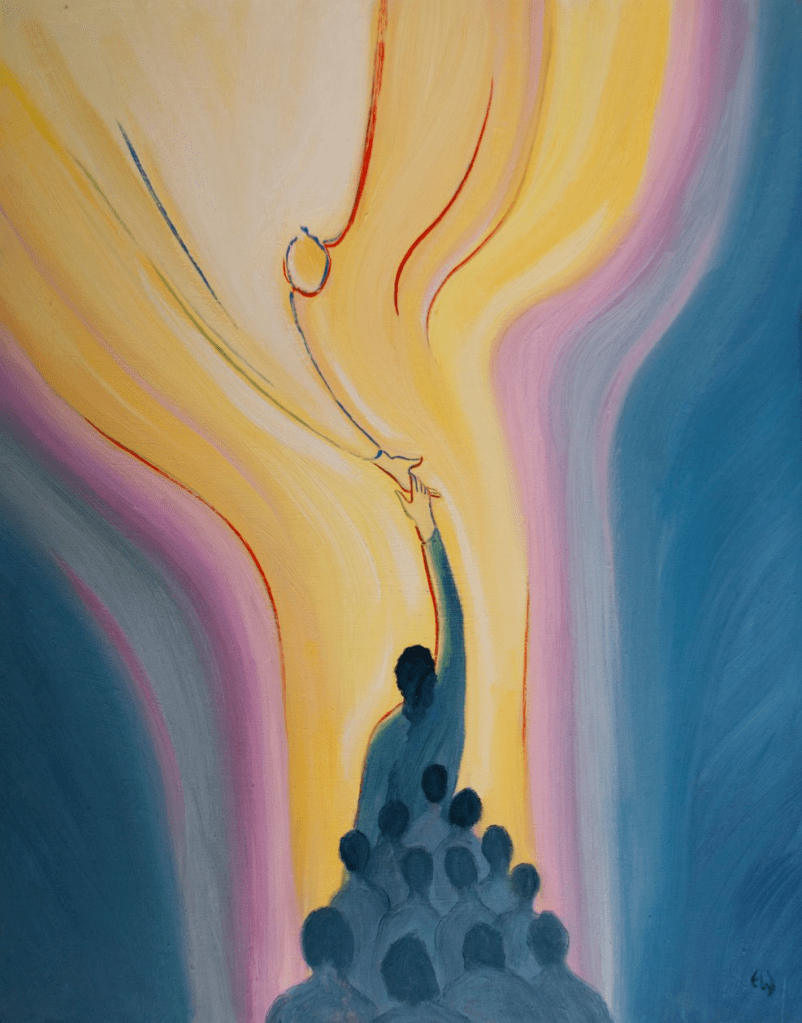
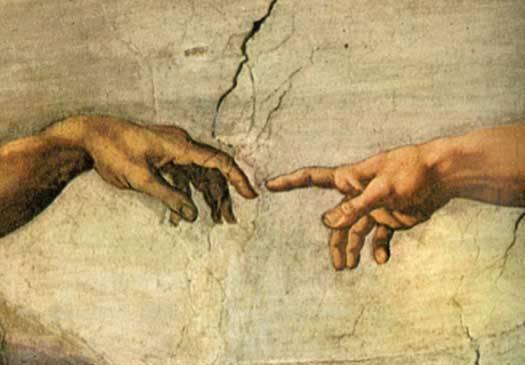
Christ’s statement is a positive one, not negative. Jesus was not trying to say that the scribe wasn’t yet in the kingdom, or that he needed to do more. He was affirming the scribe, and encouraging him with the reality that God’s kingdom is so close to us, that we can reach out and put our hand into it.

The kingdom of God is like a whole other world which can be found by some children in the back of a wardrobe; or like a different dimension beyond our three dimensional world. In other words, God’s kingdom is right here, right in front of our faces. The kingdom is here. It’s just a matter of whether we discern it’s presence, or not.

Jesus was right smack in front of the scribe. He could have literally reached out and touched Jesus. The man asked a good sincere question of Jesus, and got a good sincere answer. In addition, the man evidenced a good understanding of the spirit of God’s law.

I believe that Christ’s response concerning the kingdom to the scribe, opened his eyes to that otherworldly dimension:

Jesus is the logical and expected end of every search, and the answer to every question. The kingdom of God is among you.

Our Father in heaven,
    may your name be revered as holy.
    May your kingdom come.
    May your will be done
        on earth as it is in heaven. Amen.