Hebrews 7:23-28 – Jesus Is Better

“Exodus” by Marc Chagall, 1952

Now there have been many of those priests, since death prevented them from continuing in office; but because Jesus lives forever, he has a permanent priesthood. Therefore, he is able to save completely those who come to God through him, because he always lives to intercede for them.

Such a high priest truly meets our need—one who is holy, blameless, pure, set apart from sinners, exalted above the heavens. Unlike the other high priests, he does not need to offer sacrifices day after day, first for his own sins, and then for the sins of the people. He sacrificed for their sins once for all when he offered himself. For the law appoints as high priests men in all their weakness; but the oath, which came after the law, appointed the Son, who has been made perfect forever. (New International Version)

Several years ago, I enjoyed serving communion with a retired minister in the church for which I was serving at the time. When we were in the middle of it, I leaned over to him and gave him a bit of instruction on what we were about to do. After I finished, he leaned over to me with a smile and said, “I didn’t hear a thing you just said, but I’ll figure it out!”

When it comes to the Christian life, I think we can learn something from the old Pastor. We are neither always going to hear well everything which is in the Bible, nor are we going to understand everything which is happening around us as Christians. 

The Jewish Christians, for which the book of Hebrews was originally preached, had a difficult transition from Judaism to Christianity. In Judaism, they knew what was happening. The sacrificial system was detailed and meticulously planned. The priesthood was clearly observed with men from the tribe of Levi. Worship was predictable.

However, becoming a Christian changed a lot of things. Being a Christian meant relying on the wild and unpredictable Spirit of God. There was no longer a tangible sacrificial system. Jesus is the high priest, but the believers never see him. 

There was so much living by faith, and so little understanding of what was going to happen, that the Hebrew Christians’ resolve began to break down. They became discouraged and started to lose patience with Christianity.
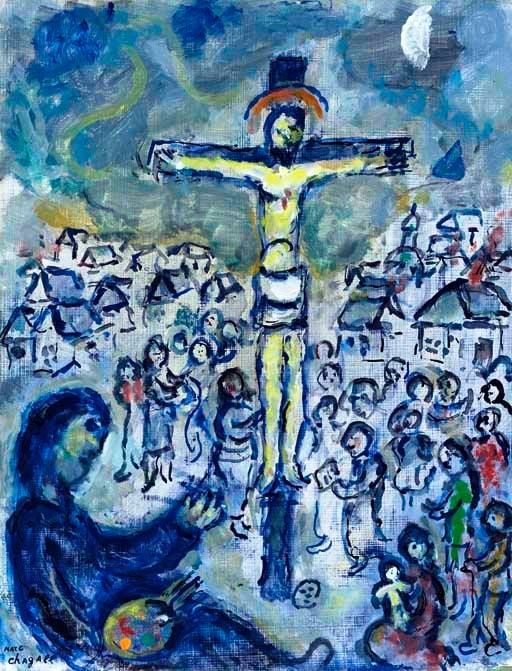
“The Painter and the Christ” by Marc Chagall, 1975

Today’s New Testament lesson is in the middle of an extended discussion by the author of Hebrews about the priesthood and sacrificial system. The Christian Jews were thinking about reneging on their commitment to Jesus and returning to their previous way of life in Judaism. 

So, central to the author’s exhortation is to demonstrate that Jesus is superior to everything in Judaism. Jesus is better than any Old Testament priest. Jesus is the once-for-all sacrifice for sins. Jesus is better because his priesthood is permanent, and his sacrifice is perfect.

In the ancient world, sacrifice was at the center of everyone’s belief system. Every pagan religion had some sort of sacrificial practice to satisfy the god(s) and ensure deliverance and/or prosperity. Jews, of course, had an elaborate sacrificial system of their own with detailed prescriptions of how to go about it.

We need to feel something of the original force of Christianity. It was a radical idea to have one sacrifice to end all sacrifices.

Everyone understood that sacrifices were temporary; you had to keep offering them over and over again. Christianity, however, asked the world to have a new understanding of sacrifice. No longer would there be any sacrifice – no grain sacrifice; no offerings of first-fruits; no animal sacrifices; no physical sacrifices whatsoever. 

In Christianity, Jesus as the once-for-all sacrifice to end all sacrifices was such a crazy notion for so many people that they mocked Christians for it. Both Jews and pagans could barely wrap their minds around such a progressive idea. It would be like saying to us today that there is no longer any need for money because some individual became the underwriter for everything everybody does.
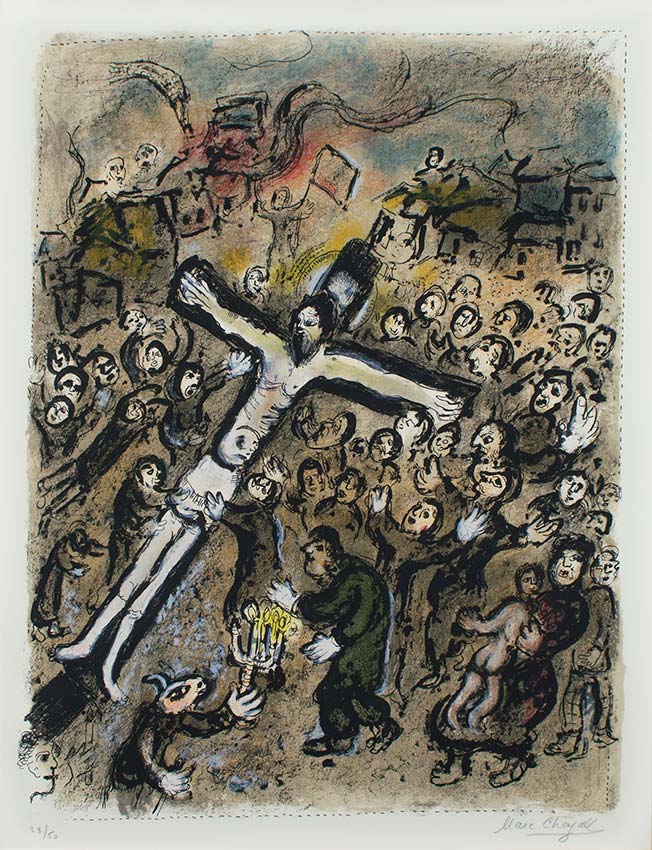
“The Martyr” by Marc Chagall, 1970

All the things the old sacrificial system did for worshipers are now completely fulfilled in the person of Jesus.  Condensed in just a few verses of Scripture, we have a very rich picture of Jesus:

  • Jesus is not a temporary priest, but a permanent priest, the one who is able to intercede continually on our behalf without us having to perform a ritual sacrifice.
  • Jesus lives forever, which enables him to never cease his intercessory work.
  • Jesus saves completely.
  • Jesus meets our need.
  • Jesus has been made perfect forever.

Yet, sometimes Christians go back to the old sacrificial system, not by physically offering animal sacrifices, but treating Christ’s once-for-all finished work as if it were just too good to be true. We reason that we need to do something to help save ourselves. Although Jesus has saved us fully, and therefore, there is no longer any need for sacrifice, yet we still try:

  • To appease God through church attendance or other works, as if the Lord needs to be soothed into not becoming angry at us.
  • To satisfy God through our giving so that the Lord will not have a furrowed brow against us.
  • To assuage our guilty conscience through Christian service, believing this will give us some leverage with God.

In all these kinds of instances, it is going back to an old sacrificial system that is obsolete.

The biblical and theological truth is that Jesus has thoroughly saved us from our sin, and, so, has cleansed us from all guilt, including a guilty conscience.

Jesus meets our need and has completely satisfied God’s wrath against sin. Jesus is our mediator and intercedes for us as we come to God’s throne of grace. That means we do not need to try and get God’s attention with some incredible sacrifice that will somehow obligate him to take notice. 

There is no longer ever a situation where we must run to some spiritual liquor store to pick up a Captain Morgan because the Captain of our souls, Jesus Christ, has already given us everything we need.

Since Jesus has been made perfect forever; is our great high priest; and is the once-for-all sacrifice to end all sacrifices, we have all the grace we need. 

We need not worry anymore about being good enough because Jesus is perfect. Christ’s work is made complete in us. The constant anxiety of feeling we don’t measure-up is not from God. The person and work of Jesus is sufficient to deliver us from guilt and shame.

“Well,” you might say, “if everybody believed that, then nobody would ever do anything.” No, it’s just the opposite. When we feel like we don’t measure up, we do less, not more. A low level discouragement sets in, and we do nothing because we intuitively know it will never be enough. We do just enough to squeak by, never quite knowing if it is doing anything. 
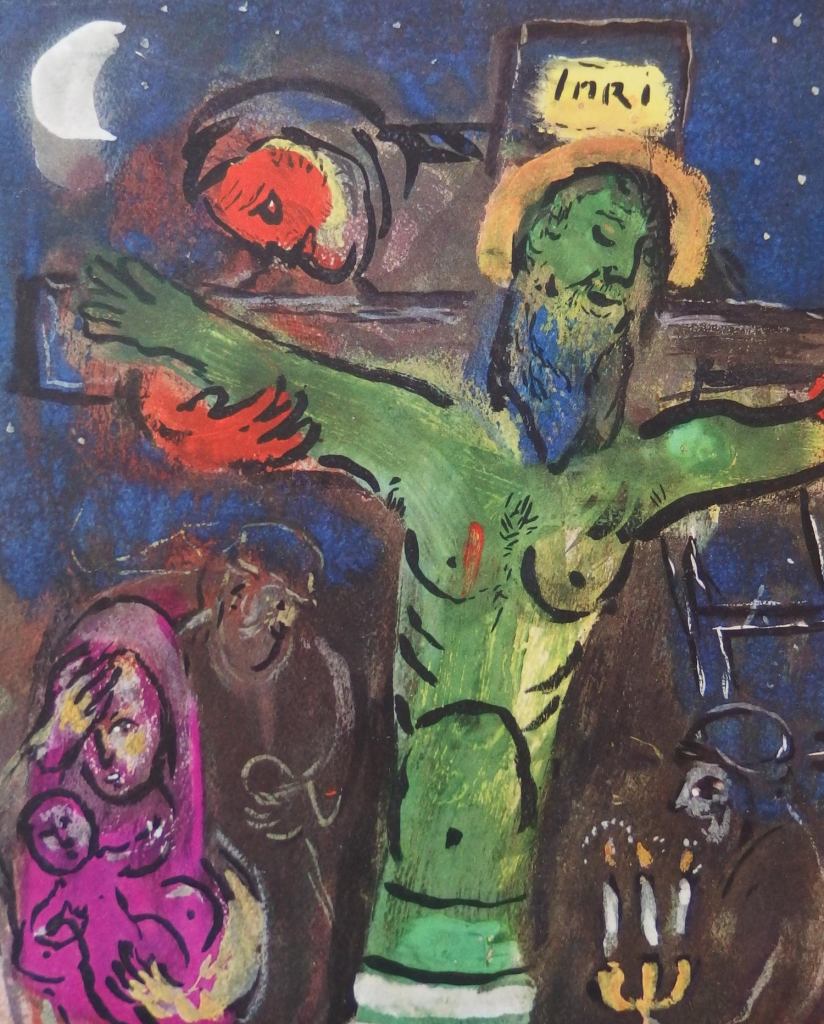
“Crucifixion” by Marc Chagall, 1961

Just like the Hebrew Christians of the first century, we consider giving up because Christianity doesn’t work for us. Yet, when we grasp Christ’s sacrifice to end all sacrifices, and are overwhelmed by grace, then everything we do in the Christian life is a simple desire to say “thank you” with our life and our lips. 

It is the grace, and not the wrath, of God that teaches us to say “no” to ungodliness and worldly passions and to live upright and godly lives (Titus 2:11-12).

The old system wasn’t bad. It served a purpose. Now, however, the old has given way to the new, and there is a better hope by which we draw near to God. The sacrificial system pointed forward to a perfect sacrifice by a permanent priest that would bring us to God forever.

Going back to the old system is like living permanently in a tent, and believing you are home.

Therefore, we must choose what is better. The options are not so much between what is bad and what is good, but between what is good and what is better than good. It is possible to do all kinds of good things and miss the better thing God is doing. 

So, how do we choose the better thing? How do we embrace the new, which is Christ, and not the old, which is the sacrificial system?

  1. Learn to say “no” to the treadmill going nowhere. Since we do not need to impress God, we have the freedom to say “no” to keeping up with the spiritual Jones’s; “no” to cajoling God’s favor, approval, or attention.
  2. Learn to say “yes” to engaging in spiritual practices which remind us of Christ. Say “yes” to the new way of the Spirit, which is by faith and not by sight. This present spiritual age is often intangible, ethereal, and unseen. It requires a new set of spiritual eyes to see.
  3. Let Christianity be about Jesus, and not about us. Resist the allure to rescue others, or have others rescue you. The work of rescue has already been done. Christ saves, we don’t.
  4. Know the better thing over the good thing. Pause before acting or re-acting. Are we expecting someone else to do what Christ has already done? Are we looking to do something we think will make God like us better? Remind yourself of Jesus and his redemption every day in small ways through Scripture reading and prayer, fellowship, and loving service.

Good people can love God, and yet, miss the opportunity to see they are already justified through Christ’s blood. We do not need to justify ourselves. We need to live into the justification we possess by grace through faith.

May it be so to the glory of God.

Hebrews 6:13-20 – Holding onto Hope

When God made his promise to Abraham, since there was no one greater for him to swear by, he swore by himself, saying, “I will surely bless you and give you many descendants.” And so, after waiting patiently, Abraham received what was promised.

People swear by someone greater than themselves, and the oath confirms what is said and puts an end to all argument.Because God wanted to make the unchanging nature of his purpose very clear to the heirs of what was promised, he confirmed it with an oath. God did this so that, by two unchangeable things in which it is impossible for God to lie, we who have fled to take hold of the hope set before us may be greatly encouraged. We have this hope as an anchor for the soul, firm and secure. It enters the inner sanctuary behind the curtain, where our forerunner, Jesus, has entered on our behalf. He has become a high priest forever, in the order of Melchizedek. (New International Version)

“We must accept finite disappointment, but never lose infinite hope.”

Martin Luther King, Jr.

Humanity needs hope. We all require a confident expectation that things will be different or better. Hope is what our ancestors in faith had in abundance.

How did Abraham receive what was promised by God?

Abraham received what was promised because of hope. He believed God’s promise of having a place to belong. His faith caused him to make a major move from the city where he had always lived. What’s more, Abraham understood that the promises of God don’t end in this life. He looked forward to being a permanent resident in the eternal city.

By faith Abraham obeyed when he was called to go out to a place that he was going to receive as an inheritance. He went out without knowing where he was going. By faith he lived in the land he had been promised as a stranger. He lived in tents along with Isaac and Jacob, who were coheirs of the same promise. He was looking forward to a city that has foundations, whose architect and builder is God. (Hebrews 11:8-10, CEB)

Why did God swear an oath to Abraham?

The Lord wanted to reinforce Abraham’s faith and encourage him. God desired to convincingly show that divine promises are sure.

The Lord spoke to Abram in a vision and said to him, “Do not be afraid, Abram, for I will protect you, and your reward will be great.” But Abram replied, “O Sovereign Lord, what good are all your blessings when I don’t even have a son?…. You have given me no descendants of my own, so one of my servants will be my heir.”

Then the Lord said to him, “No, your servant will not be your heir, for you will have a son of your own who will be your heir.” Then the Lord took Abram outside and said to him, “Look up into the sky and count the stars if you can. That’s how many descendants you will have!” And Abram believed the Lord, and the Lord counted him as righteous because of his faith. (Genesis 15:1-6, NLT)

What are the “two unchangeable things?”

The promise and the oath. God promised to Abraham:

“I will make you into a great nation,
    and I will bless you;
I will make your name great,
    and you will be a blessing.
I will bless those who bless you,
    and whoever curses you I will curse;
and all peoples on earth
    will be blessed through you.”(Genesis 12:2-3, NIV)

God confirmed the promise with an oath:

“I swear by myself, declares the Lord, that because you have done this and have not withheld your son, your only son, I will surely bless you and make your descendants as numerous as the stars in the sky and as the sand on the seashore. Your descendants will take possession of the cities of their enemies, and through your offspring all nations on earth will be blessed, because you have obeyed me.” (Genesis 22:16-18, NIV)

Is there a way to be motivated and encouraged in the Christian life?

Yes. Hope in God’s promises and the confidence that our efforts to live for Christ are being seen and they are not in vain. We need one another. So, it is important to maintain significant relationships with other believers so that we will not lose our spiritual vitality and become discouraged. The author of Hebrews also stated:

We should keep on encouraging each other to be thoughtful and to do helpful things. Some people have gotten out of the habit of meeting for worship, but we must not do that. We should keep on encouraging each other, especially since you know that the day of the Lord’s coming is getting closer. (Hebrews 10:24-25, CEV)

Faith and patience, fueled by an unshakable hope, has always been the way believers have lived their lives. For the Christian, we have a promised inheritance, focused on the person and work of Christ. All of God’s good promises are fulfilled in Jesus.

God of hope, in these times of change, unite us and encourage us with your promise and oath. Help us overcome our fears and enable us to build a future in which all may prosper and share, through Jesus Christ our Lord. Amen.

Revelation 7:9-17 – Persevering to the End

After this I looked, and there was a great crowd that no one could number. They were from every nation, tribe, people, and language. They were standing before the throne and before the Lamb. They wore white robes and held palm branches in their hands. They cried out with a loud voice:

“Victory belongs to our God
        who sits on the throne,
            and to the Lamb.”

All the angels stood in a circle around the throne, and around the elders and the four living creatures. They fell facedown before the throne and worshipped God, saying,

“Amen! Blessing and glory
        and wisdom and thanksgiving
        and honor and power and might
            be to our God forever and always. Amen.”

Then one of the elders said to me, “Who are these people wearing white robes, and where did they come from?”

I said to him, “Sir, you know.”

Then he said to me, “These people have come out of great hardship. They have washed their robes and made them white in the Lamb’s blood. This is the reason they are before God’s throne. They worship him day and night in his temple, and the one seated on the throne will shelter them. They won’t hunger or thirst anymore. No sun or scorching heat will beat down on them because the Lamb who is in the midst of the throne will shepherd them. He will lead them to the springs of life-giving water, and God will wipe away every tear from their eyes.” (Common English Bible)

There is a day coming when followers of Jesus will see him face to face. Believers will serve the Lord continually. God’s very presence will be their permanent shelter. It will be a glorious time of unending peace, harmony, and rest.

There shall be no more worrying about how to make ends meet, where we are going to get our needs met, and anxiety about the future. Injustice will be a thing of the past. Unending love and light will replace it.

First, however, before this permanent Sabbath, there will be trouble, hardship, trial, and even martyrdom. There is presently pain and suffering. Like a woman in labor, this must take place before there is the glory of new life. 

“A hero is an ordinary individual who finds the strength to persevere and endure in spite of overwhelming obstacles.”

Christopher Reeve

Sometimes the difficult circumstances of life seem to have no end. Yet, they will eventually pass, and we must continually keep this in mind. Christians have the hope of God’s pastoral presence forever guarding and keeping our lives if we endure to the end.

Perseverance, endurance, and pushing through hard situations are necessary to realize the finish line. We cannot just sit here on earth in some sort of holding pattern waiting for the end to occur. Just as an athlete must go into strict training in order to run the race well, finish strong, and cross the line, so we as Christians are to be in training – utilizing an array of spiritual practices that will fortify our souls to keep going and finish the race. 

The book of Revelation was a vision of the Apostle John given to believers in hardship who needed to persevere. Giving them a glimpse of the glorious ending was one way of helping them in the present to live for Jesus Christ, despite the pain.

Since the Christian life is not a sprint but a marathon, here are some ways we can build a enduring and persevering spirit until Christ returns:

Don’t be afraid to fail.

That’s because, for the believer, we know the ending. We may feel like colossal failures, at times, yet, because the Lord is with us, we have nothing to fear. Being secure in our identity as God’s people enables us to step out and engage the world.

When I am afraid,
    I put my trust in you.
I trust God, so I am not afraid of what people can do to me!
    I praise God for his promise to me. (Psalm 56:3-4, ERV)

Take small steps of faith.

We can incrementally improve ourselves daily through our growth in grace. We don’t need to always do big things for God. We can do small acts of kindness with big love.

Continue to grow in the grace and knowledge of our Lord and Savior Jesus Christ. To him be the glory, now and forever! Amen. (2 Peter 3:18, GNT)

Love the Lord your God with all your heart, all your soul, all your mind, and all your strength.’The second most important command is this: ‘Love your neighbor the same as you love yourself.’ These two commands are the most important. (Mark 12:30-31, ERV)

Identify the resistance.

Name the obstacles, impediments, and challenges to perseverance. Our awareness of what hinders us gives us the power to choose how to handle it.

We should remove from our lives anything that would slow us down and the sin that so often makes us fall. We must never stop looking to Jesus. He is the leader of our faith, and he is the one who makes our faith complete. (Hebrews 12:1-2, ERV)

Practice good self-care.

The body, mind, emotions, and spirit are our vehicles to doing the will of God. So, it is imperative we steward these precious gifts of humanity with care. The only way we will make it over the long haul of our lives is through paying attention to this.

God has made us what we are. In Christ Jesus, God made us new people so that we would spend our lives doing the good things he had already planned for us to do. (Ephesians 2:10, ERV)

Surely you know that you are God’s temple and that God’s Spirit lives in you! (1 Corinthians 3:16, GNT)

Know why you are persevering.

Losing connection with why we do what we do leads to dropping out and giving up. Yet, when we can maintain what is most important to us, it helps us push through all the sticky points of our lives.

So, if you eat, or if you drink, or if you do anything, do it for the glory of God. (1 Corinthians 10:31, ERV)

Whatever you do, whether in speech or action, do it all in the name of the Lord Jesus and give thanks to God the Father through him. (Colossians 3:17, CEB)

Patient God, you tediously work until your plans and purposes are accomplished.  As you are slowly bringing your kingdom to the world, strengthen me so that I do not give up.  Help me to persevere, living and loving like Jesus, to his glory.  Amen.

Hebrews 4:12-16 – Jesus Is Our Great High Priest

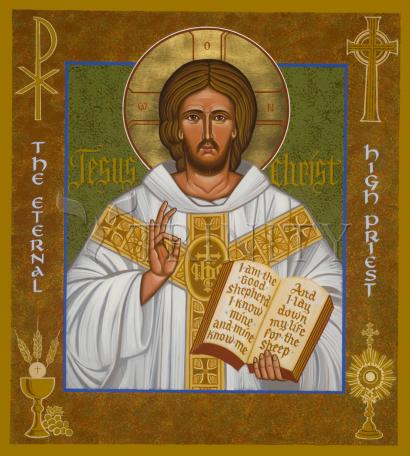
Jesus, the Eternal High Priest, by Joan Cole

For the word of God is alive and active. Sharper than any double-edged sword, it penetrates even to dividing soul and spirit, joints and marrow; it judges the thoughts and attitudes of the heart. Nothing in all creation is hidden from God’s sight. Everything is uncovered and laid bare before the eyes of him to whom we must give account.

Therefore, since we have a great high priest who has ascended into heaven, Jesus the Son of God, let us hold firmly to the faith we profess. For we do not have a high priest who is unable to empathize with our weaknesses, but we have one who has been tempted in every way, just as we are—yet he did not sin. Let us then approach God’s throne of grace with confidence, so that we may receive mercy and find grace to help us in our time of need. (New International Version)

Church Persecution and Christian Suffering

The book of Hebrews was originally a sermon preached to a group of believers who had come to Christ out of Judaism. From the book of Acts, we know there were thousands of Jewish Christians who were dispersed from Jerusalem when Stephen was martyred.  A great persecution broke out, and many believers fled west to places like Galatia, Ephesus, Greece and Rome. 

The Jewish believers were immigrants in a foreign land, looking to practice their faith without harm. Yet, their experience was anything but ideal. These followers of Christ found fellow ethnic Jews in the places where they went, yet those Jews had no use for these people that they believed were in some sort of aberrant cult.

What is more, the surrounding Gentile culture did not understand Christianity, at all, and many of those who held to pagan religions bought into rumors, such as, that Christians were cannibals who ate at what’s called the Lord’s Table.

So, here we have a situation where these displaced Christians had no respect from both Jews and Gentiles. As a result, they had a difficult time carrying out business because no one trusted them. They were essentially alone in the world. 

Losing Their Grip

Initially, they embraced their identity as Christians and held up quite well under the stress. However, over time, their resolve began to slowly erode. The followers of Jesus began to question their adverse situation. 

They began listening to their fellow Jews throw doubts on their faith. The hard life was not improving, maybe even becoming worse.  Eventually, the church came to a point where they began re-considering their whole way of life as Christians, and their faith commitment started slipping. The Christians actually considered leaving the Church and Christianity and going back to their old life in Judaism.

The Message of Hebrews

It was at this point that a vigorous believer in Jesus came to town, saw the situation of the church, and preached a spirited message to them. The preacher called them to hold tight to their commitment – to see Jesus afresh and anew as superior over all the Old Testament, as the fulfillment of all the promises of God. 

So, then, throughout the book of Hebrews we have this wonderful explanation and exposition of how to make sense of Jesus and the Old Testament, and of what Jesus really means to the church. Throughout his sermon, the preacher occasionally paused his teaching and gave the people a stiff warning about falling away from Christ. He called the church to be bold and confident in Christ, to stand up to the suffering, and to confront their temptations so that they would persevere in their commitment to Jesus Christ for the rest of their lives.

God’s Word and Work

We pick up the teaching and the exhortation in chapter four. Hebrews 4:12-16 is composed of two distinct sections that are paired together for a reason.  Verses 12-13 give us a graphic visual of the penetrating work of God’s Word, of the reality that God can get deep inside us. The next section, verses 14-16, lays out God’s response to our being under divine scrutiny – that there is grace and mercy available because of Jesus, our great high priest who is superior to every priest of the Old Testament to the point of being the last and permanent priest forever! 

These verses are bound together because we all need to struggle with the tension between God’s Word to us, and our words to God; between God’s judgment that opens our souls on a spiritual operating table, and God’s grace which jumpstarts our broken hearts. Our most fundamental need is for God’s mercy in Jesus Christ.

The Christian Life

It is important that our outer lives and our inner lives match each other. Whenever the two are out of sync, we come under the judgment of God’s Word. These early Hebrew Christians had slowly drifted from the truth so that their inner and outer lives did not line up well.

Some of them still performed the outward duties of being a Christian yet were inwardly despising their hard situation. A growing vacuum developed on their insides as they slowly started letting go of Jesus as their object of devotion. Their hearts began to harden because of their hard lives. 

On the other hand, there were other Hebrew Christians who began drifting in a different way. Inwardly, they tried to maintain their devotion and commitment to Christ. Yet these believers began compromising their outward life to match the culture around them. In both cases of hardening inwardly, and of compromising outwardly, they each shared the situation of drifting away from their original commitment to Christ.

Even today, it is a real temptation to try and avoid suffering, to grow weary of our present circumstances and look for a way to get out from under the pain and find a quick fix.  Whenever we find ourselves in such a situation, the remedy is to be reminded that we must continue to hold firmly to the faith we profess because of who Jesus is.

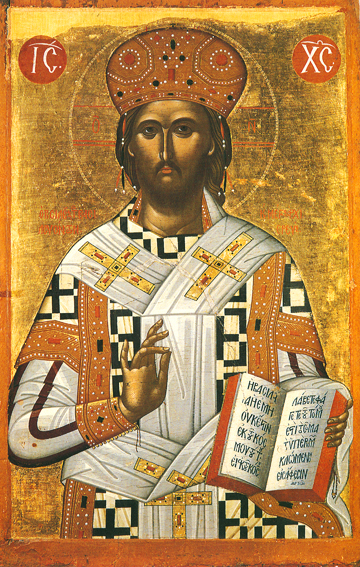
15th Century Orthodox icon of Christ the Great High Priest

Jesus As Permanent High Priest

Jesus is our great high priest. In the Old Testament, among the twelve tribes of the ancient Israelites, the tribe of Levi made up the class of priests. One of those Levites, always a descendent of the original Levite priest, Aaron, had the task of once a year entering a place called the Holy of Holies, which was at the center of the Temple, to offer a bloody sacrifice on behalf of the people, to atone for their sins from the previous year.

Jesus is our great and ultimate high priest. He did not enter the temporary sacrificial system to deal with sins for only a year. Jesus not only took on the role of high priest, but became the sacrifice, as well. As a result, we now have a thorough and permanent forgiveness of sins through Christ. So, the Hebrew Christian who considered going back to an old outdated system needed to be brought back to his senses and embrace again the once-for-all sacrifice of Jesus. 

As they considered Jesus, the believers needed to remember that Christ was not so far removed from them that the church could not relate to Jesus. Rather, Jesus is able to sympathize with each and every trouble, trial, and temptation we face because he faced the very same kind of sufferings. 

The only difference between Christ and his followers is that Jesus did not succumb to the trouble, but persevered and secured for us deliverance from sin, death, and hell. Jesus is the One who deserves every bit of our commitment, allegiance, and devotion. Christ is the One whom we are to worship inside and out.

Approaching God with Boldness

Let us then approach Jesus with confidence, with boldness, knowing that with him there is mercy and grace. Jesus not only suffered for us in the past; he also suffers with us now, in the present. We, as believers, are in union with Jesus. Christ is our great high priest, the One intimately involved in every nook and cranny of our lives. He knows what you and I are going through and is ready to give grace to help right now. 

Approaching Jesus has nothing to do with being good enough to do so. Coming to Jesus is about grace. Whenever we drift from Jesus and are confronted with God’s Word cutting us to the heart, the end result is not wrath or judgment; the result is mercy and grace.

Like the early Hebrew Christians, we all face situations out of our control that wear us down and cause us to become weary. In our tired state, we can be tempted to let our commitment to Christ slide in some small way. Over time, the small compromises of faith can snowball into a big slide away from God. 

Yet, Jesus is not sitting in heaven frustrated or confounded. God is not looking for a reason to punish people. It is just the opposite. Jesus, the Son of God, our great high priest, is looking for a reason to give grace and help us in our time of need. Christ is waiting for us to approach the throne of grace with confidence. Right now, Jesus is alive. He is scanning the world and the church, looking to extend mercy to those who need it. 

Asking for Help

We must avoid a spiritual hardening of heart which estranges us from approaching Jesus. Every one of us needs help. We are not God. We have weaknesses. We have confusion. We have limitations of all kinds. We need help.  And every one of us has something else: guilt and shame. At the bottom of our hearts, we feel undeserving, and so, avoid coming to Jesus. Yet, we need with family, loneliness, work, health, finances.

So, what to do? I can try to deny it all and be a superman who doesn’t need any help. I can try to drown it all with alcohol. I can be obsessive and compulsive about controlling events and/or people. I can simply succumb to discouragement. Here is what God declares: Jesus Christ became a High Priest to shatter despair with hope, to rescue that drowning person and that anxious individual.

God planned for a High Priest, a Savior, a Redeemer, and a gracious Helper. You and I are not trapped. We have Jesus. 

The book of Hebrews is all about a call to commitment – an invitation to come to Jesus.  And it is the most important invitation you will ever receive. Let us approach the throne of grace with confidence….

This is the confidence we have in approaching God: That if we ask anything according to his will, he hears us.  And if we know that he hears us – whatever we ask – we know that we have what we asked of him. Spirit of God, lead us into your will. Help us in all things. Fill our hearts and lives to overflowing with divine mercy and grace so that what comes out of our mouths and the actions we do are compassionate, kind, and good, through our great High Priest, Jesus Christ. Amen.