A Controversial Christ (Mark 2:23-3:6)

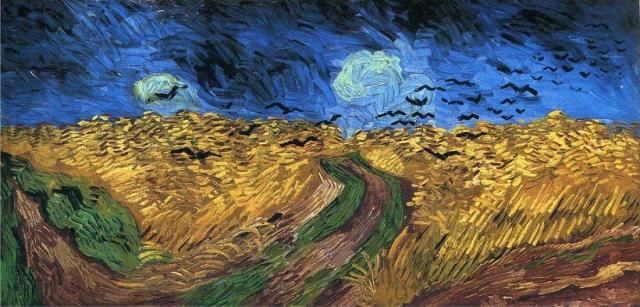
Wheatfield with Crows, by Vincent Van Gogh, 1890

One Sabbath day as Jesus was walking through some grainfields, his disciples began breaking off heads of grain to eat. But the Pharisees said to Jesus, “Look, why are they breaking the law by harvesting grain on the Sabbath?”

Jesus said to them, “Haven’t you ever read in the Scriptures what David did when he and his companions were hungry? He went into the house of God (during the days when Abiathar was high priest) and broke the law by eating the sacred loaves of bread that only the priests are allowed to eat. He also gave some to his companions.”

Then Jesus said to them, “The Sabbath was made to meet the needs of people, and not people to meet the requirements of the Sabbath. So the Son of Man is Lord, even over the Sabbath!”

Jesus went into the synagogue again and noticed a man with a deformed hand. Since it was the Sabbath, Jesus’ enemies watched him closely. If he healed the man’s hand, they planned to accuse him of working on the Sabbath.

Jesus said to the man with the deformed hand, “Come and stand in front of everyone.” Then he turned to his critics and asked, “Does the law permit good deeds on the Sabbath, or is it a day for doing evil? Is this a day to save life or to destroy it?” But they wouldn’t answer him.

He looked around at them angrily and was deeply saddened by their hard hearts. Then he said to the man, “Hold out your hand.” So the man held out his hand, and it was restored! At once the Pharisees went away and met with the supporters of Herod to plot how to kill Jesus. (New Living Translation)
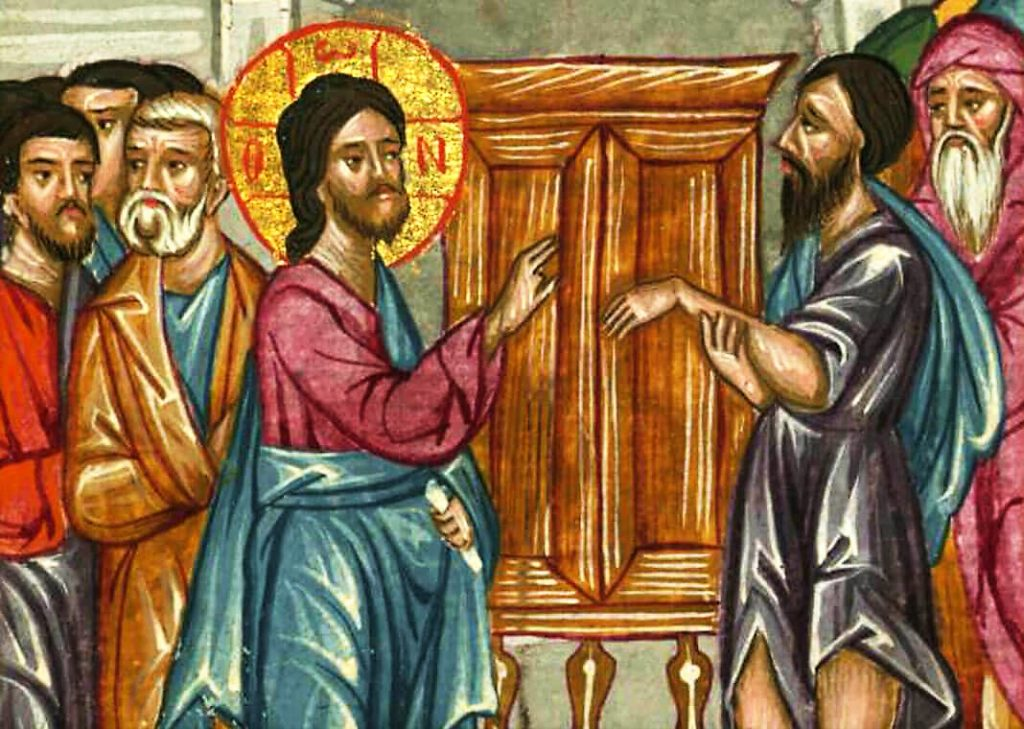
Jesus Heals the Man with the Withered Hand, by Ilyas Basim Khuri Bazzi Rahib, 1684

I am continually amazed whenever good people are surprised by being embroiled in the muck of human controversy. Since we live in a profoundly fallen world, good is often going to buck up against the bad. Besides, Jesus often found himself in a controversy of some kind; and we are not above our Lord.

There are two distinct yet similar controversies in today’s lesson; and they highlight why there were some folk who were all upset about the way Jesus went about things. Such people eventually came to the dark decision that Jesus needed to go away, permanently.

Much of the controversy between Jesus and the religious leaders came down to particular views of God’s law; and, of course, whose view was going to win out over the other. It ended up becoming what almost all controversies are about: Deciding who is really in power and calls the shots.

The Politics of Hunger

It was a Sabbath day. Jesus and his disciples were walking through the fields. And they were hungry. So the disciples took some grain, broke off the heads, and ate them. To any non-Jewish person, there’s no problem here. But the Pharisees were concerned.

First, they observed the disciples walking through grain fields. The Pharisees thought they should be staying put on the Sabbath. Second, and perhaps more significantly, the religious leaders saw Christ’s disciples gleaning – which was working on the Sabbath. To them, any respectable Jew prepared their food the day before. This is a lack of holiness, of not taking the Sabbath seriously. And this was completely unacceptable to the Pharisees.
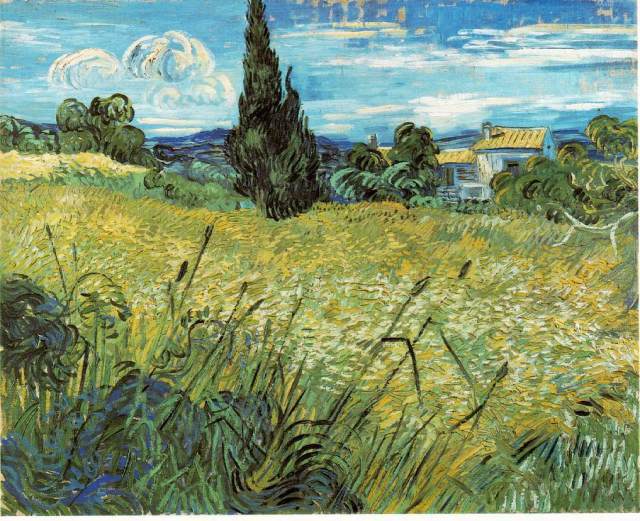
Wheat Field and Cypress by Vincent Van Gogh, 1890

Jesus, however, viewed walking through the fields differently. He did not consider the Sabbath as trivial; Jesus instead stood back and took a big picture perspective of it all. And that view included the ancient story of David, who took the consecrated bread in the tabernacle which was reserved only for Levite priests. (1 Samuel 21:1-6; Leviticus 24:8-9)

The reason David wanted the bread was because he was a fugitive, on the run from King Saul who was trying to take his life. Jesus insisted, on that day, the priest on duty did nothing wrong in giving the special bread to David. Yes, the strict letter of the law was broken; and, no, this was not wrong – because the priest was helping to save a life, and a very important one at that.

Jesus discerned there are times when particular laws come into conflict; so it’s necessary to maintain the spirit of a law in order to maintain a high value and meet a pressing human need. In a sense, Jesus gave a covenant code legal opinion on the subject.

It’s no surprise, to any reader of the New Testament Gospels, that Christ would behave this way; and that it would drive the religious leaders bananas. After all, they, the Pharisees, upheld law and rendered legal decisions – not this upstart wannabe. Jesus took an authoritative stance on what was happening, and the leaders did not at all like their own authority questioned.

This wasn’t some maverick interpretation by Jesus. He simply pointed out that the Sabbath is a gift, given to people to promote life and health – and not a burden that folks are to carry. Any decent Sabbath-keeper knew this.

It appears the leaders didn’t like being reminded of it from Jesus. What’s more, Jesus was much too close to likening himself to David. Yet another reason to despise this uppity teacher.

The Legality of Suffering

A second controversy brought the issue of who is in charge and who gets to arbitrate community values into a greater light. There is perhaps no other place for that conflict to happen than in the synagogue, the meeting place of worshipers. The juiciest things always seem to happen in a place of worship.

In the first story, the religious leaders were caught surprised over the behavior of Jesus and his disciples. They’re determined not to make that mistake again. From this point forward, it seems the Pharisees are continually waiting for a chance to put down Jesus as a lawbreaker and rabblerouser.
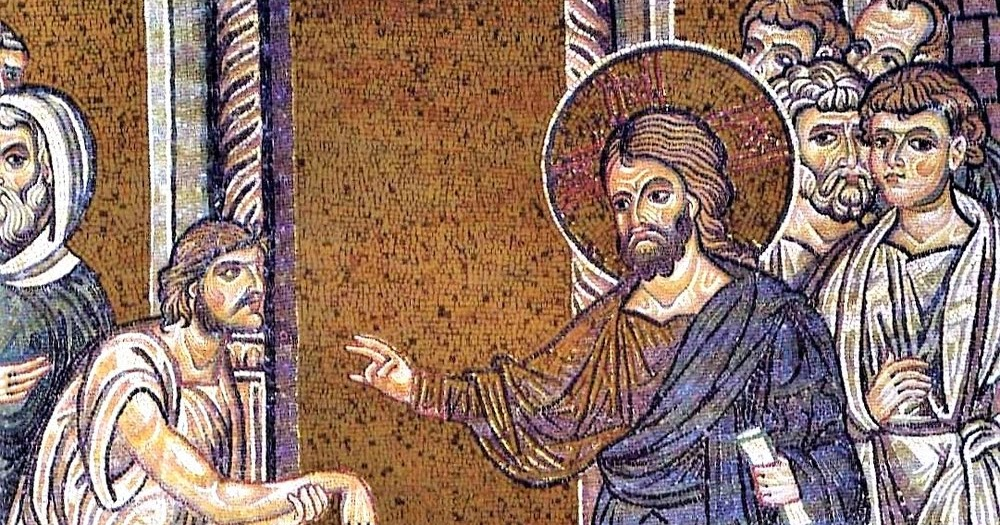
Byzantine mosaic of Christ healing the man with a withered hand, Cathedral of Monreale, Palermo, Sicily

For them, the issue wasn’t about the ability to heal, but whether it’s being done on the Sabbath. Much like the grainfield incident, healing is work, and working on the Sabbath is a direct violation of God’s immutable law. The religious leaders wanted to prove that Jesus has no regard for God’s will.

Law, for many Pharisees in Christ’s day, was meant to bring order so that chaos does not rule. Obedience to the law is a pre-condition for blessing. Without a clear demonstration of holy living, the community could be under a curse, much like their ancestors before them who were exiled for disregarding God’s law.

Yet again, Jesus cut through the anxious fear and authoritative posturing and went directly to the intended spirit of the law. The Sabbath, of all days in the week, ought to be a time for doing good, not harm; and to save life, not kill it. Jesus was not doing anything that could be considered work, anymore than his disciples were actually gleaning or harvesting grain.

There is no better day than the Sabbath for restoring a man’s withered and malformed hand, for giving him back his ability to make a living and contribute to the community. Much more was restored to the man than a physical ability; he now had the ability to better his life and his family, not to mention the local economy. It ought to be all good…

Unfortunately, the Pharisees didn’t see it that way, that the man gained his dignity back, his wholeness and his joy. They could only see a threat to their own hegemony.

The Beginning of the End

So, this marks the beginning of the end. The leaders are so upset and angry, they began plotting for Christ’s destruction. Unlikely political allies came together because of a common enemy. To view Jesus as a threat to society is, at the least, messed up. But that’s what happens when people cannot see beyond the end of their nose. They make bad choices.

Even though Jesus came to give life, others want to take his. Despite the fact that Jesus did not reject the law or demean the Sabbath, people with a short-sighted agenda and hard hearts could only see someone upsetting the status quo.

Today, these same things can quickly turn to hostility. The legal implications of one’s values and commitments can get nasty fast. Opinions can harden, resulting in oppression, persecution, and even death.

The most noble of motives can go sour; and the best of intentions, the highly educated, and the most gifted persons among us can become despotic in their leadership. Indeed, absolute power corrupts absolutely.

This is why the gracious and benevolent kingdom of God will win the day. Hard-hearted people become desperately out of touch with what is most important; they are calloused to the human need in front of their faces. I believe that the words and ways of Jesus can dispel those dark forces and impulses.

I’ll take a controversial Christ any day because that is the path to life abundant and everlasting.

Whenever unjust, oppressive, harmful, and fearful systems hold on, the ministry of Jesus exposes them for what they are, and will deliver us from evil.

Thanks be to God!

In Need of Integrity (John 7:19-24)

Pharisees, by German painter Karl Schmidt-Rottluff, 1912

It was Moses, wasn’t it, who gave you God’s Law? But none of you are living it. So why are you trying to kill me?”

The crowd said, “You’re crazy! Who’s trying to kill you? You’re demon-possessed.”

Jesus said, “I did one miraculous thing a few months ago, and you’re still standing around getting all upset, wondering what I’m up to. Moses prescribed circumcision—originally it came not from Moses but from his ancestors—and so you circumcise a man, dealing with one part of his body, even if it’s the Sabbath. You do this in order to preserve one item in the Law of Moses. So why are you upset with me because I made a man’s whole body well on the Sabbath? Don’t be hypercritical; use your head—and heart!—to discern what is right, to test what is authentically right.” (The Message)

One of my ardent desires for every person on planet earth, is that they will experience an integration of themselves – that they will know their true selves. And with this awareness, their head, heart, and gut will all be in alignment with each other. Every part of oneself will be acknowledged and work in harmony with the other parts.

I’m talking about wholeness. This is what produces peace, unity, harmony, joy, and strength of spirit. For me, this is the consummate Christian path of discipleship to walk. Jesus has gone before us to clear the way as the pioneer of our salvation. He makes it possible to realize wholeness. Christ has the ability to make us well and to live well. To know Jesus is to be whole.

People who are a bundle of disparate parts – with some of those parts suppressed and unacknowledged – are disturbed. They always seem to be upset with something because the parts of themselves are unable to communicate with each other. With them, there is no peace or wholeness. There is only a myopic view, usually coming from only using the head, only thinking.

But to have thoughts of God, to think about God’s law, and to police how God is thought of and how God’s law is implemented – without the heart or the gut involved – leads to fragmentation and disruption.

To only think, and withhold feelings and intuition, is to sin.

It’s impossible to know God and live God’s commands without involving your entire self. A head without a heart cannot affect humanity with the good that it so desperately needs.

A heart without a head cannot effectively steer the rudder into accomplishing sustained goodness.

And a head and a heart without a gut cannot sense the danger around the corner and loses its good plans and intentions.

Jesus was addressing religious leaders and a large chunk of fragmented people. Many of those persons were unable to discern who Christ actually is, because only the person of integrity and wholeness can do that. So, each one came at Jesus from their own limited place of disintegration. And none of them were able to truly see themselves as they actually are – blind to the reality that they were not keeping God’s law.

Christ and Pharisee, by Russian artist Ivan Filichev, 1993

A fragmented person’s perspective comes at things like this: “I’m obeying the law, although there are some laws I’m not really holding to.” Yet, Jesus understood that to break just one law makes us lawbreakers and in need of healing and wholeness.

Jesus healed a man on the Sabbath. The disintegrated person only saw Jesus working on the Sabbath, which in his head is a no-no. It requires work to heal someone. Therefore, it can wait until tomorrow. Thus, this Jesus fellow sinned against God and disobeyed God’s law. In fact, it only stands to reason that he is in league with a demon, the fragmented person reasons.

But that is to make a poor discernment of the situation. It is, however, only what the fragmented person can do. However, a wise understanding of the man’s healing by Jesus is to observe that Love has come among you – that Sabbath was made for humanity, not humanity for the Sabbath – and that this bringing of wholeness to a person, in restoring not only his health but his ability to connect with society, family, and community, is a knowable good thing. This is most certainly not what any sort of demon would do.

Perhaps one ought to test the spirits and make a good, right, and just discernment. Just maybe, Jesus is the one who can guide us to wholeness, goodness, and integrity. It could be that God is among us, and we didn’t even know it.

Constant criticism of others only deflects from paying attention to our own spirit; and always living in your head keeps you from experiencing the heartache of love.

Merely giving-in to the heart without engaging the head creates a caregiver who has no idea how to care for themselves; eventually they become bitter and gain a critical spirit that no one is caring for them as they care for others.

Blurting-out gut-reaction judgment at another may be truthful, but it will be taken as a severe and discouraging criticism because there was no thought or heart behind it.

There are a lot of upset people in this world. Yet, there are precious few persons with the wholeness to speak from the head, heart, and gut as a unified whole, bringing words and actions of life to others.

The persecuted person is one who has become wonderfully whole, namely because there are far too many fragmented people who view them as a threat, and see them as demonic. Fragmented folk believe they need to put the integrated person in their place, if not done away with altogether.

And that is exactly why Jesus was arrested, tortured, and killed. But fragmentation, disintegration, oppression, and sin do not have the last word. They are not the judge. There is resurrection, new life, and abundant joy because the grace of God in Christ always has the last word.

Christ’s Sermon on the Mount, by Argentine artist Jorge Cocco Santángelo

There’s trouble ahead when you live only for the approval of others, saying what flatters them, doing what indulges them. That’s the way of the fragmented ones; they will find themselves cursed. However, the blessings of God’s rule and reign recognize and affirm the whole person. Jesus said:

You’re blessed when you’re at the end of your rope. With less of you there is more of God and his rule.

You’re blessed when you feel you’ve lost what is most dear to you. Only then can you be embraced by the One most dear to you.

You’re blessed when you’re content with just who you are—no more, no less. That’s the moment you find yourselves proud owners of everything that can’t be bought.

You’re blessed when you’ve worked up a good appetite for God. He’s food and drink in the best meal you’ll ever eat.

You’re blessed when you care. At the moment of being ‘care-full,’ you find yourselves cared for.

You’re blessed when you get your inside world—your mind and heart—put right. Then you can see God in the outside world.

You’re blessed when you can show people how to cooperate instead of competing or fighting. That’s when you discover who you really are, and your place in God’s family.

You’re blessed when your commitment to God provokes persecution. The persecution drives you even deeper into God’s kingdom. (Matthew 5:3-10, MSG)

May you live into who you are, and avoid who you are not, to the glory of God. Amen.

Born from Above (John 3:1-17)

Visit of Nicodemus to Christ, by John LaFarge, 1880

Now there was a Pharisee named Nicodemus, a leader of the Jews. He came to Jesus by night and said to him, “Rabbi, we know that you are a teacher who has come from God, for no one can do these signs that you do unless God is with that person.” 

Jesus answered him, “Very truly, I tell you, no one can see the kingdom of God without being born from above.”

Nicodemus said to him, “How can anyone be born after having grown old? Can one enter a second time into the mother’s womb and be born?” 

Jesus answered, “Very truly, I tell you, no one can enter the kingdom of God without being born of water and Spirit. What is born of the flesh is flesh, and what is born of the Spirit is spirit. Do not be astonished that I said to you, ‘You must be born from above.’The wind blows where it chooses, and you hear the sound of it, but you do not know where it comes from or where it goes. So it is with everyone who is born of the Spirit.” 

Nicodemus said to him, “How can these things be?” 

Jesus answered him, “Are you the teacher of Israel, and yet you do not understand these things?

“Very truly, I tell you, we speak of what we know and testify to what we have seen, yet you do not receive our testimony. If I have told you about earthly things and you do not believe, how can you believe if I tell you about heavenly things? No one has ascended into heaven except the one who descended from heaven, the Son of Man. And just as Moses lifted up the serpent in the wilderness, so must the Son of Man be lifted up, that whoever believes in him may have eternal life.

“For God so loved the world that he gave his only Son, so that everyone who believes in him may not perish but may have eternal life.

“Indeed, God did not send the Son into the world to condemn the world but in order that the world might be saved through him. (New Revised Standard Version)

Christians serve a triune God – Father, Son, and Spirit. This Holy Trinity of three persons, yet one God, conspires to plan and orchestrate the deliverance of people from sin, death, and hell. The Lord makes it possible for people to be born again.

Maybe you’re ready to tune out with the phrase “born again” or “born from above” because either this is old hat to you; or you want to distance yourself from the obnoxious evangelist who is the pester pup toward others’ salvation.

However, today’s Gospel lesson is for me and you. So instead of tuning out, consider the person of Nicodemus in the story:

  • Served God
  • Good guy
  • Upstanding Jewish citizen
  • Devout and pious man
  • Faithful temple worship attendance
  • Member of a prestigious religious group 

And yet, it was to Nicodemus that Jesus said, “You must be born again.” But why? Because although Nicodemus was a really good egg, he was an adoring fan of Jesus, but not a committed follower of Jesus.

Nicodemus Visiting Christ, by Henry Ossawa Tanner, 1899

Admiration and kudos isn’t the same as taking up your cross and following Christ. Nicodemus didn’t need to adjust his life and make some tweaks here and there; it was time for a new life in walking the path of discipleship with Jesus.

The further away we are from birth, the easier it is to take God for granted; and to have a spiritually settled way of life in which the mystery, wonder, and awe of life is slowly drained from us. That’s why I think two year olds probably know more about God than anyone around – since they can articulate the wonder of life being only a few short years from their birth. 

One night I came home and walked into the kitchen to find my then four-year old grandson unashamedly crawling on all fours with his face barely off the floor. I said, “What in the world are you doing?” He looked up at me with a twinkle in his eye and a serious tone in his voice and said, “I’m sniffing for clues.” 

I honestly do not expect you to sniff for clues on your kitchen floor. But would any of us be found sniffing for clues of God? Would we seek hard and doggedly pursue the Lord? 

Because Nicodemus was such a good guy, he did not see himself in need of new life. Meeting Jesus at night is deeply symbolic of the fact that Nicodemus was literally in the dark about his spiritual condition. He was actually clueless to many of God’s ways, and how the world works in God’s kingdom. Nicodemus maintained a respectable distance as a fan of Jesus.

How do we move from being a fan to a follower of Jesus? 

Believe. To believe in Jesus means to move from only an intellectual faith of acknowledging doctrinal beliefs about Christ and God. There is to be movement from observing the works of God to a life of complete trust as a dedicated follower of Jesus.

Christian discipleship is more than asking Christ to help out in a jam or bad situation. And it is certainly more than praying a particular prayer. Rather, it’s letting Jesus decide what to do with us and remove any shortcomings, character defects, guilt, shame, and general crud from us.

We are to be made pure, to be cleansed – as if we were a new person or born again, from above. There is the willingness to depend on something other than myself, my resources, and my connections.

In Christianity, Jesus is much more than a wise teacher and a miracle worker; Christ is Savior for whom the follower gives complete allegiance to. In other words, we let Jesus use us for divine purposes, instead of us using Jesus for our own puny human purposes.

Let us intentionally and deliberately relinquish control of our lives, and of everything, to Jesus and become his faithful followers. Information is not transformation; and, seeing transformation in another person’s life is not a substitute for transformation in my own life.

Interview Between Jesus and Nicodemus, by James Tissot (1839-1902)

Nicodemus had to grab ahold of the reality that Jesus did not only come to save others, but to save him, as well.  We must be born from above, to have a new life, to be “born of water and spirit.” Nicodemus would have immediately been reminded of John the Baptist’s ministry of a baptizing for the repentance and forgiveness of sins. 

Jesus was letting Nicodemus know that he, too, needed repentance from trusting in those good deeds, and of simply acknowledging Christ. The practices of fasting, praying, and giving; and the dedication to thrift and morality is quite admirable. Yet, these are not the things which move a person from darkness to light. And they don’t give us a leg up to heaven.

Jesus is the One who has worked hard for us. God conceives us as Christians, and then nurtures us in the womb of faith. At some point, we come to full term, and God births us spiritually into new life. 

Maybe it’s time to move from darkness to light; from staying warm and cozy inside the womb to the bright outside world; from being a fan of Jesus to a follower of Jesus; from being in the dark audience to the bright lights of the stage for all to see. 

The issue is not in saving yourself, but to let God be God; and let God do the work in you that God wants to do. 

If there is no gestation from Jesus as Teacher to Jesus as Savior, there is no birth. If there is no gestation from Jesus as Miracle-Worker to Jesus as Savior, there is no birth. 

The Apostle John was making the point here in describing the conversation that if Nicodemus, who is the upstanding religious citizen, needed to be born again by Jesus, then how much more do we need to have a new life, to move from the comfortable confines of being a fan to the playing field of being a follower of Jesus?

Jesus does not need a bunch of groupies admiring him at night. But conversely, we need Jesus.

Fans sometimes confuse their admiration for devotion; people mistake their knowledge of Jesus for an actual relationship with Jesus. Fans assume that their good works and good intentions are sufficient. Yet, new life requires giving up an old life. And that, my friends, is what’s at stake in Christian discipleship.

May God the Holy Trinity make us strong in faith and love, and birth us into new life through Christ our Lord. Guide us in truth and peace; and may the blessing of God Almighty – Father, Son, and Holy Spirit – be among us, and remain with us always. Amen.

Pentecost (John 15:26-27, 16:4b-15)

The Holy Spirit, by He Qi

“When the Advocate comes, whom I will send to you from the Father, the Spirit of truth who comes from the Father, he will testify on my behalf. You also are to testify because you have been with me from the beginning…

“I did not say these things to you from the beginning, because I was with you. But now I am going to him who sent me, yet none of you asks me, ‘Where are you going?’ But because I have said these things to you, sorrow has filled your hearts. Nevertheless, I tell you the truth: it is to your advantage that I go away, for if I do not go away, the Advocate will not come to you, but if I go, I will send him to you. 

“And when he comes, he will prove the world wrong about sin and righteousness and judgment: about sin, because they do not believe in me; about righteousness, because I am going to the Father, and you will see me no longer; about judgment, because the ruler of this world has been condemned.

“I still have many things to say to you, but you cannot bear them now. When the Spirit of truth comes, he will guide you into all the truth, for he will not speak on his own but will speak whatever he hears, and he will declare to you the things that are to come. He will glorify me because he will take what is mine and declare it to you. All that the Father has is mine. For this reason I said that he will take what is mine and declare it to you. (New Revised Standard Version)

Pentecost, by John August Swanson (1938-2021)

This is the Christian Day of Pentecost. It is often referred to as the birthday of the Church. Pentecost marks the time when the Holy Spirit came upon the fledgling believers in power. 

Pentecost is significant for Christians because it marks the age of the Spirit, the era of new spiritual life and power. Ten days after recognizing Christ’s Ascension, and fifty days after Christ’s resurrection from death, the Christian Year observes the Day of Pentecost (which literally means “fifty” in Greek). 

An implication of Pentecost is that it brings both change and stability, of being uprooted as well as deeply grounded. To experience Pentecost, it is necessary to invite change and to allow ourselves to be changed.

To live a truly spiritual life, full of the Holy Spirit, means that things will never be the same again. With the Spirit, there is a new form of consciousness, an emerging awareness of both self and the world, and new interests and commitments which are followed.

Change involves unlearning old thinking and ways of doing things, becoming uprooted and planted in fresh spiritual soil. The spiritual person will discover new, necessary, and expansive ways of living the faith of Jesus Christ in today’s topsy-turvy world.

Today’s Gospel lesson has Jesus talking to his disciples for the last time before his crucifixion and resurrection. He communicated to them that he was going away, and they were sad and confused about it all. So, Jesus assured them that they would not be alone – his presence would be with them in the person of the Holy Spirit.

Jesus made it plain that the One who is coming, the Paraclete, is the One who comes alongside and offers to the disciples a ministry of advocating, testifying, speaking truth, glorifying, and proving the world wrong about sin and righteousness and judgment.

The Spirit advocates for us and all creation. The Spirit hears our pain, moaning, and desperation, bringing it all to God in helpful language (Romans 8:26). The Spirit testifies about Jesus to us and about his ministry. The Spirit speaks truth to us whenever we go astray from the words and ways of Jesus; and so, will challenge us and provoke us to live into our majesty as people created in God’s image and redeemed by Christ’s death and resurrection.

If and when our Christian life and worship becomes a ho-hum hodge-podge of ritualistic or legalistic goo, where no spiritual growth or life transformation is happening – and worse, if it becomes characterized by injustice – then the Spirit will have something to say in regard to sin, righteousness, and judgment.

A lack of faith can take many forms. For many Christians, the separation between belief and practice is a form of apostasy. Signing off on a set of doctrinal beliefs means nothing unless it has feet and hands to it by going after those who are suffering, giving restitution for what we’ve taken, and putting the love of Christ where love is not found.

A confession of faith is hollow and useless without first having a confession of sin. Jesus did not say that people will know Christians by their doctrinal confessions and ancient creeds, but that others will know the Christian by the fruit of a life given to righteousness and justice. (Matthew 7:16)

The worldly ruler is the one who perpetuates systems of evil and oppression; and ignores poverty, hunger, and need. The ruler of this world is condemned by the Spirit because of meanness, brutality, violence, and abject greed and selfishness.

Anyone who turns the life-giving good world which God has made into a death-dealing world of ignorance, sloth, and power politics is under the judgment of the Spirit, on orders by Judge Jesus. Whenever the bent of the will is developed into only being concerned with personal happiness, while ignoring communal needs, the person is existing far from the teachings of Jesus to his disciples.

On this Day of Pentecost, and into this proper Pentecostal season, our call is to have a genuine spiritual life that allows the true self to make a difference in this old fallen world. The spiritual person seeks to tap into the Spirit and insist on caring for others without prejudice or favoritism; and will ground themselves in healthy spiritual dynamics of positive change and transformation as living sacrifices to God. (Romans 12:1-3)

With the reality of Pentecost, believers in Jesus, and the whole Church everywhere, has the full power of the Holy Spirit with them at all times. This means our ultimate trust is not in the power of authoritative positions, economic budgets, polished programs, personal ingenuity, or a consumer self-realization.

Our trust is in the name of the Lord who made heaven and earth, in Jesus Christ, God’s only Son, and in the strength of the Holy Spirit who is the continuing presence of Jesus. Such power is given for a purpose. So let us be responsible and conscientious in living the Christian life.

And may the blessing of the Spirit move you to know Jesus better, love the world more, and be the person you were created to be – to the glory of God. Amen.