

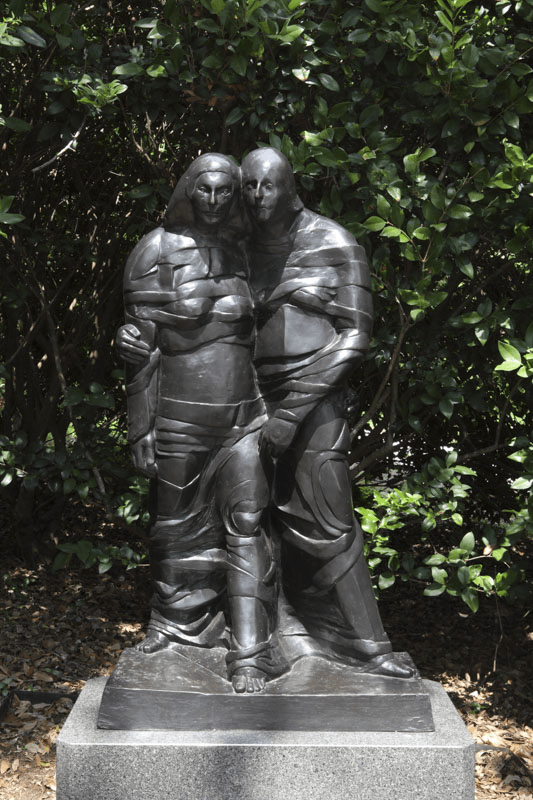
When Naomi saw that she was determined to go with her, she said no more to her.
So the two of them went on until they came to Bethlehem. When they came to Bethlehem, the whole town was stirred because of them, and the women said, “Is this Naomi?” She said to them,
“Call me no longer Naomi;
call me Mara,
for the Almighty has dealt bitterly with me.
I went away full,
but the Lord has brought me back empty;
why call me Naomi
when the Lord has dealt harshly with me
and the Almighty has brought calamity upon me?”
So Naomi returned together with Ruth the Moabite, her daughter-in-law, who came back with her from the country of Moab. They came to Bethlehem at the beginning of the barley harvest. (New Revised Standard Version)
A famine in Judah had brought Naomi and her husband Elimelech to the country of Moab. While there, they had two sons who eventually married two Moabite women: Orpah and Ruth. Over time, each of the husbands died, leaving Naomi and her two daughters-in-law as widows.
Naomi heard that things were finally better in her native Judah. So, she decided to go there, alone. Naomi encouraged her daughters-in-law to remain with their own people and remarry. Orpah did so. Ruth, however, wasn’t having it.
Ruth was determined to stay with her mother-in-law – which meant that she would enter Judah as a foreigner. Despite Naomi’s insistence that Ruth do what is best for herself, Ruth stuck with Naomi.
Once they arrived, the people of Naomi’s hometown were surprised to see the two of them. Naomi was not shy about communicating her bitterness in losing a husband and two sons. She commented that God had turned against her and made her life hard and bitter.
In saying that the Lord had emptied her and brought calamity, Naomi was not speaking against God. Rather, Naomi was expressing some significant theology that has become lost to many modern day Christians around the globe.
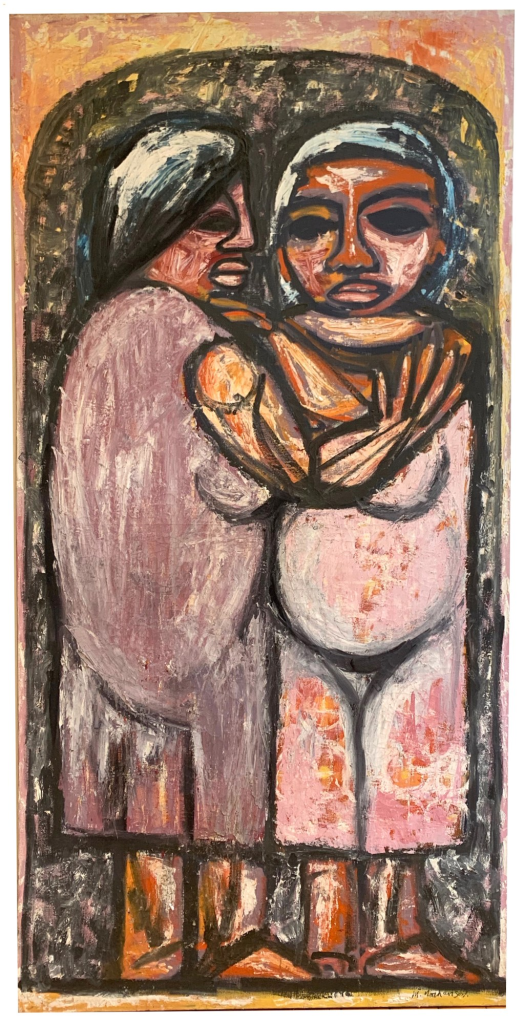
I believe that Ruth was not expressing something malevolent about God, but rather made a statement of faithful recognition, not unlike what Job had to say when he lost his family and his health:
“Naked I came from my mother’s womb, and naked shall I return there; the Lord gave, and the Lord has taken away; blessed be the name of the Lord.” (Job 1:21, NRSV)
No one can escape the dark side of life. Yet, we can deal with that darkness intelligently. It is most necessary to be aware that light creates a shadow that was not there before. The bigger and brighter the light, the bigger and darker the shadow.
There is a centuries old idiom which says, “You can’t have your cake, and eat it, too!” This is a proverbial way of saying that we cannot expect everything to always be good in this life; we must also accept that we cannot always have our way, and that we will go without, experiencing loss.
Whether we want to acknowledge it, or not, an integral part of life is receiving some bad things from God. The Lord does not just go around dispensing everyone’s wishes and making everything a utopia of unicorns and butterflies.
God is most certainly benevolent; yet God also brings darkness to people. We cannot have the Light of the world without experiencing the world’s darkness. Another way of stating this is that a very big God creates quite a large shadow.
In Christianity, the predominant symbol is the cross. The Cross of Christ is both light and dark. Christians may reflexively associate the cross with salvation from sin, while forgetting that the cross is an instrument of torture and death, a tool of execution, like an electric chair.
We must honor the axis crossing at the center of the cross. It is the place of equilibrium, the place of wholeness, where we have the opportunity of integrating all of that unwanted grief and loss into our lives. Failing to do this, let alone neglecting to acknowledge the shadowy places of our hearts, brings harm and hurt to ourselves and to the world.
Naomi acknowledged the shadow. She accepted the darkness, which enabled her to return to her homeland of Judah, the very place where the God of light and dark is worshiped.
I’m not talking about the sort of darkness that is malevolent and mean-spirited, the darkness which comes from Satan. I’m talking about the darkness which weans us away from all things and the ways that hinder us from knowing God.
This is what St. John of the Cross was referring to in naming the dark night of the soul. In our quest to experience union with God, we journey through the darkness, and learn that purification isn’t simply putting something impure away. Purity of heart comes through joining with the God who is pure love itself.
“In the dark night of the soul, bright flows the river of God.”
St. John of the Cross
God loves us so much as to be nailed to a cross and suffer darkness. The Christian is to take up their cross and follow Jesus. That is, we embrace the darkness with an honest engagement of God and God’s world, and through a vulnerable assessment of our own shadow.
For if we fail to acknowledge our shadow, we shall fail to be in union with God.
Not only do many people disown the parts of themselves they don’t like, but they do the same with God – thus making God into their own image of how God should be, instead of taking God as God is.
If you have ears to hear, take this to heart: To accept and honor your own shadow is a profound and necessary spiritual discipline. By “shadow” I mean all of the characteristics of myself that I withhold from others, so that they will only see what I want them to see.
We often put a false self out into the world, for others to see. It is a sort of psychological clothing we wear, much as we have actual clothing. Whether the clothes are real or metaphorical, we dress ourselves in the particular way we want to be seen.
Naomi was a true Israelite, showing her honest true self. There was no separation or division between the inner self and the self she presented to others.
I tend to think that Naomi knew something about God that many don’t know today – and was therefore able to be faithful to both her people and her God.
It is no wonder, then, that Ruth wanted to remain with her mother-in-law Naomi, who was a real person acknowledging the real God.
Almighty God and Father, maker of heaven and earth, of all that is seen and unseen: You are the God of light who illumines our way. And You are the God of darkness who is shadowed in mystery. In knowing You, may I know myself; and in knowing myself, may I more fully know You. Amen.



 Rev. Tim Ehrhardt