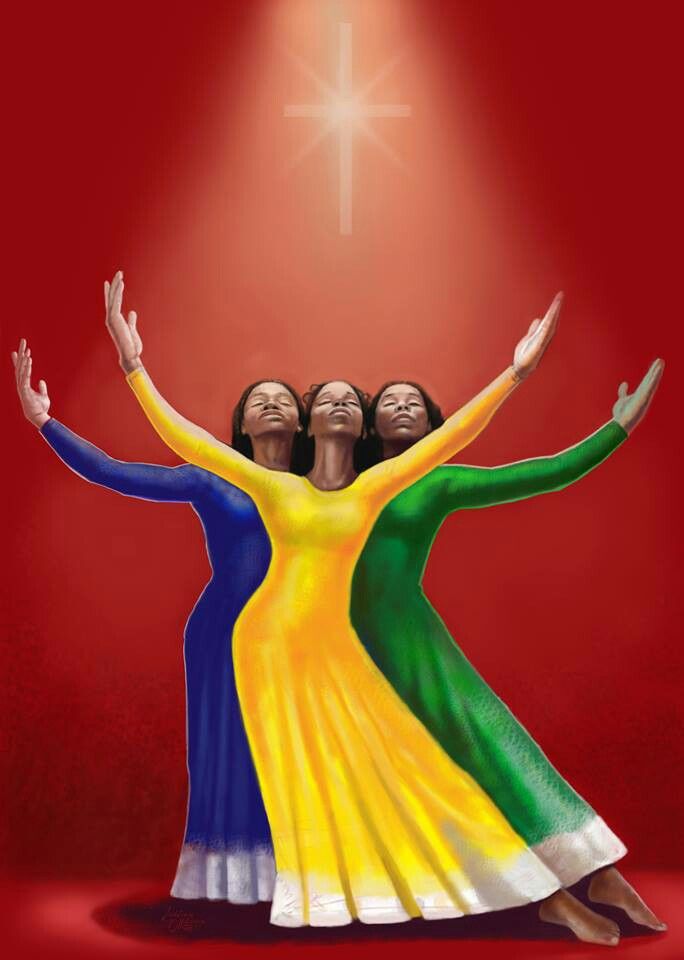
Welcome, friends! The body is important. Our physical bodies are the vehicle to accomplishing the will of God in the church and the world. Click the videos below and let us discover the connection between the spirit and the body…
1 Corinthians 6:12-20
This Body Is Your Temple by Matt and Joanna Black
Go forth into the world in peace; be of good courage; hold fast that which is good; render to no one evil for evil; strengthen the fainthearted; support the weak; help the afflicted; honor everyone; love and serve the Lord in body, mind, and spirit, rejoicing in the power of the Holy Spirit; and the blessing of God almighty, the Father, the Son, and the Holy Spirit, be among you and remain with you always. Amen.
It is normal to feel guilty at this time of year about our bodies. Some of the more common goals for a new year are to lose weight, stop smoking, get in shape, have better sleep hygiene, and generally learn better self-care. I am not going to add to the burden of guilt but emphasize something important: Our bodies are the vehicle given to us to glorify God. Our spirituality is quite embodied. (1 Corinthians 6:19-20)
One of the reasons we fail our bodies is that we do not always make the biblical connection of seeing our material selves with the same importance as the immaterial. The Apostle Paul brought up a discussion about the body to the Corinthian Church because Corinth was a Greek city thoroughly imbibed with a Platonic philosophy of life. At the core of Plato’s view of humanity was that the immaterial and the spiritual were of higher value than the body. For Plato, the body is a necessary evil. He referred to our souls as being imprisoned within the flesh. When we die the soul is released and is freed from its bodily prison.
Western civilization has been significantly influenced, even today, by Plato’s view of humanity. Yet, that is not a biblical view of the body. Instead of being a prison, the body is a temple, a sacred place which is no better and no worse than the soul. When we die, we will not be disembodied souls, but will experience a bodily resurrection at the end of the age. Eternity will be spent existing in a real glorified body free from sin. (1 Corinthians 15)
Since the body is sacred, and we glorify God with our bodies, then we must steward them just like we would steward any other physical material possession we own. We have bought into Platonic philosophy when we treat our cars better than we treat our bodies. If a warning light comes on in our cars, we get it checked by the mechanic. He fixes the issue and tells us what we need to do to prevent it from happening again, and we listen to him.
Far too often, when warning lights go off in our bodies, we ignore them until our bodies literally break down and we must go to the doctor. And even then, the doctor tells us to do something, and we do not do it. We never avoid the advice of our mechanic, and yet we do it with our doctor. We need to adopt the biblical wisdom of glorifying God on this earth through our bodies.
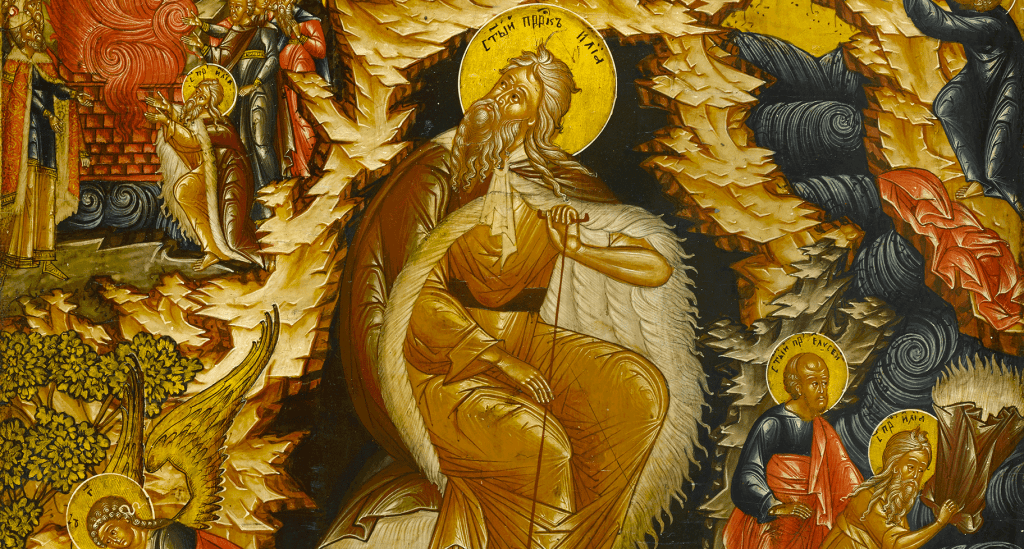
God’s care for our bodies can be found, for example, in the Old Testament prophet, Elijah. After Elijah experienced a great spiritual victory, he became the target of evil Queen Jezebel. Elijah ran for his life and was severely burned-out from intense spiritual struggles with the queen’s prophets of Baal (1 Kings 19:1-3). At that point, God did not come to Elijah and give him a sermon or exhortations about getting over it. No, God restored Elijah’s body. And the Lord wants to restore our bodies, as well.
19th century Russian Orthodox icon of the prophet Elijah in the wilderness
First, Elijah needed sleep (1 Kings 19:5-6). Millions of Americans are sleep deprived and live with a significant sleep debt (thus being continually cranky and out of sorts). Insurance companies know this is a major issue because improper sleep habits have caused various auto accidents and fatalities. I once kept a crazy schedule with not many hours for sleep. One day, during rush hour, I drove through a downtown expressway in bumper-to-bumper traffic and fell asleep. I woke up about two minutes later and was still alive driving down the highway. I sincerely believe God graciously drove the car for me. That was my “wake up” call to change the way I was treating my body.
Second, Elijah needed to eat well (1 Kings 19:6-8). For us, that means eating healthy. One source of being overweight is failing to make the connection that eating is a spiritual activity. Food is important to the kingdom of God. It was eating that got us into trouble to start with and resulted in the fall of humanity. Eventually, we will come full circle with eating being the activity we engage in at the end of the age – a redeemed view of food and eating together with Jesus at the marriage supper of the Lamb (Revelation 19:1-10). God cares about food – what we eat and how much of it we consume. He cares because we do not own our bodies – we steward them for God.
Third, Elijah needed some vigorous exercise (1 Kings 19:8-9). He walked all the way to Mount Horeb, which was over a month’s travel. But that exercise was essential to his well-being, both physically and spiritually. It was only after he slept, ate well, and walked that Elijah was ready to meet with God in a powerful experience.
Our physical fitness is a spiritual issue, and so, needs prioritization. I am under no illusions or delusions about the difficulty of this. I prefer brownies to broccoli and rather like sleeping instead of exercise. Yet, I work at being physically fit and caring for my body. I am personally motivated toward health because I love God and want to please the Lord with my body. After all, my body was important enough to be redeemed through the Cross of Christ.
This is not about willpower – it is about Christian stewardship. I look at my body the same way I look at borrowing something from another person: I return it in the best condition I can. When the Lord takes me someday, I do not want it to be because I hastened my own death through disregard of my God-given body.
If I were God, donuts would be health food, sitting back in the recliner would build muscle, and two hours of sleep at night would be sufficient. But I am not God, so I submit to doing what it takes to have an embodied spirituality. We are to enjoy life through making the connection between the spiritual and the physical because that is the way God created us.
It is never too late to be a proper steward of the body. Our physical anatomy is an amazing work of God and incredibly receptive to healthy choices. Here are a few of the choices we can make…
Remember the positives
Remember that care of the body is worth it. Being fit feels great and equips us for the will of God. Keep the long view in mind. Sacrificing a temporary pleasure is worth the eventual gain.
Start small
I will not be doing any triathlons anytime soon, or ever. We need to be realistic and set appropriate goals without comparison to others. Start small and build up over time with slow incremental change. The place to begin is by rearranging our schedules so that our bodies become a priority. Maybe it is time to make that doctor’s appointment you have been putting off.
Join others
Accountability and fun can and ought to go together. For example, preparing meals together is a chance to connect with a friend or family member. Discover and maintain a consistent rhythm of health that works for you and is enjoyable.
Reframe it
People often give up their best laid plans because they are disconnected from the rest of their lives. Reframing our view of the body as a spiritual activity helps connect and align our mind, body, and spirit in the wholeness God designed for us.
Start today
It takes time for something to become a habit. All good things are a process of realization. Consider and plan today, asking for God’s direction. Get the Lord in on it from the beginning and let it be an offering to him.
May you find the joy, contentment, and satisfaction of living with a body properly cared for and ready for use to the glory of God.
Paul speaking in the synagogue, a 12th century Byzantine mosaic
Paul got up. He motioned with his hand and said:
People of Israel, and everyone else who worships God, listen! The God of Israel chose our ancestors, and he let our people prosper while they were living in Egypt. Then with his mighty power he led them out, and for about forty years he took care of them in the desert. He destroyed seven nations in the land of Canaan and gave their land to our people. All this happened in about 450 years.
Then God gave our people judges until the time of the prophet Samuel, but the people demanded a king. So, for forty years God gave them King Saul, the son of Kish from the tribe of Benjamin. Later, God removed Saul and let David rule in his place. God said about him, “David the son of Jesse is the kind of person who pleases me most! He does everything I want him to do.”
God promised that someone from David’s family would come to save the people of Israel, and that one is Jesus. But before Jesus came, John was telling everyone in Israel to turn back to God and be baptized. Then, when John’s work was almost done, he said, “Who do you people think I am? Do you think I am the Promised One? He will come later, and I am not good enough to untie his sandals.” (CEV)
In the Apostle Paul’s first missionary journey, he and Barnabas had the practice of traveling from city to city and attending the local synagogue services. It was customary to have a time in the worship when a word of encouragement could be offered from folks in the congregation. Paul consistently took those opportunities to talk of Jesus as the fulfillment of God’s promises to Israel.
“Life can only be understood backwards; but it must be lived forwards… Life is not a problem to be solved, but a reality to be experienced.”
Søren Kierkegaard
Paul’s conversion to Christianity totally altered his motivation. Jesus was everything to him. Jesus is what got him up in the morning. Jesus is who sustained him through his days. Jesus was who Paul thought about when he went to sleep at night. Paul was unabashedly Christo-centric in all he said and did.
As for me, the spiritual care of others out of the overflow of my heart, full of Christ in the power of the Holy Spirit is the driving force of my life. As a Christian, I believe all spiritual care begins and ends with Jesus. The Christian tradition emphasizes that in the beginning, God created the heavens and the earth. The apex of creation, the height of all God’s creative activity, is the formation of humanity upon the earth. Human beings alone have been created in the image and likeness of God – reflecting the divine in their care for all creation (Genesis 1:26-27).
Therefore, all persons on the good earth which God created are inherently good creatures and deserve utmost respect and common decency. So, my identity as a person is firmly rooted and grounded in the soil of God’s grace in Jesus Christ. My Christianity has the practical effect of acknowledging that each person on planet earth is inherently worthy of love, support, concern, and care.
What is more, everything in my life centers (ideally) around Jesus. As such, I take my cues for how to extend care to others from him. For me, Jesus is the consummate caregiver. Christ entered people’s lives and their great sea of need with the gift of listening; a focus on feelings; and the power of touch. Christ was able to listen to others because he first listened to the Father. Jesus was present to others because he was present with the Father. Jesus Christ gave love to others with the love he enjoyed with the Father and the Spirit.
By the wounds of Christ, we are healed. Paul knew this firsthand. He needed a boatload of emotional and spiritual healing from his guilt and shame as a persecutor of faith before his conversion. Paul discovered in Christ the grace of healing, both body and soul.
People’s stories of joy and pain, laughter and sorrow, certainty and wondering, are sacred narratives – continuously being written and revised in the heart, trying to make sense of life and faith. The Apostle Paul had a doozy of a life story to tell. Coupled with his keen intellect and training, Paul could be very persuasive. Paul’s ministry, emulating the life of Christ, was not to force the gospel obnoxiously and belligerently onto others but to pastorally respond to everyone he encountered. Both Paul and Jesus confronted and confounded folks with incredible love.
The theologian who labors without joy is not a theologian at all. Sulky faces, morose thoughts and boring ways of speaking are intolerable in this field.
karl barth
Every person, without exception, is precious and carries within them the image of God. The personal journey and discovery of Godlikeness within each person is an emotional adventure worth taking. One of the great Christian theologians of the 20th century, the Protestant Swiss Karl Barth, believed that we are not fully human apart from mutual seeing and being seen, reciprocal speaking and listening, granting one another mutual assistance, and doing all of this with gratitude and gratefulness.
Only in relation to each other, including those in need, do we thrive as people – which is why Paul was intensely personal and relational in his missionary ministry. Christianity is a fellowship with God and one another, and not an isolated odyssey. Paul always traveled with others.
Christian ministry is a symbiotic relationship between the servant and the served, expressed with grace and hope given by Jesus in the power of the Holy Spirit. The person in need not be Christian for this to occur, since all share the common human experience of birth, life, and death as people distinct from all other creatures, worthy of compassionate support and spiritual uplift. This is the reason why I do what I do, as a believer in and minister for Jesus Christ, and I have a hunch it was the same for Paul.
Loving God, the One who cares and saves, enable me, like your servant Paul, to speak peace, be hospitable, heal the sick, proclaim that the kingdom of God has come near, not take rejection personally, and let you do your work of changing lives and bringing them into the dance of the Trinity with Christ and your Spirit. Amen.
The Journey of the Apostle Paul by Russian artist Romanov Vladimir, 2014
When the crowd heard Paul speak to them in Aramaic, they became even quieter. Then Paul said:
I am a Jew, born and raised in the city of Tarsus in Cilicia. I was a student of Gamaliel and was taught to follow every single law of our ancestors. In fact, I was just as eager to obey God as any of you are today.
I made trouble for everyone who followed the Lord’s Way, and I even had some of them killed. I had others arrested and put in jail. I did not care if they were men or women. The high priest and all the council members can tell you that this is true. They even gave me letters to the Jewish leaders in Damascus, so that I could arrest people there and bring them to Jerusalem to be punished.
One day about noon I was getting close to Damascus, when a bright light from heaven suddenly flashed around me. I fell to the ground and heard a voice asking, “Saul, Saul, why are you so cruel to me?”
“Who are you?” I answered.
The Lord replied, “I am Jesus from Nazareth! I am the one you are so cruel to.” The men who were traveling with me saw the light but did not hear the voice.
I asked, “Lord, what do you want me to do?”
Then he told me, “Get up and go to Damascus. When you get there, you will be told what to do.” The light had been so bright that I could not see. And the other men had to lead me by the hand to Damascus.
In that city there was a man named Ananias, who faithfully obeyed the Law of Moses and was well liked by all the Jewish people living there. He came to me and said, “Saul, my friend, you can now see again!”
At once I could see. Then Ananias told me, “The God that our ancestors worshiped has chosen you to know what he wants done. He has chosen you to see the One Who Obeys God and to hear his voice. You must tell everyone what you have seen and heard. What are you waiting for? Get up! Be baptized and wash away your sins by praying to the Lord.” (CEV)
You have a story to tell. We all do. Your story is as special, powerful, and unique as anybody’s. Every person’s story is interesting, compelling, and needs to be told.
In today’s New Testament lesson, the Apostle Paul, considered the greatest follower of Christ of all time, tells his story. Paul was a Jew, an upwardly mobile mover-and-shaker within his world. He despised Christians and saw them as an aberration to the true worship of God.
But Paul had an unexpected life-changing encounter with Jesus. It slammed him upside the head like a divine baseball bat. Whereas Paul really believed he was serving God by persecuting Christians, now he came face-to-face with the true reality that he was doing just the opposite – persecuting God!
As a result, Paul did a complete turn-around and experienced a powerful new life. He became a faithful Christian and took the good news of Jesus Christ to the known world. Paul knew something of forgiveness and never got over the grace shown to him.
This chapter of Holy Scripture is a good template for you to tell your own story. As you read Paul’s story, notice that he talked of life before being a Christian; the circumstances that happened for him to believe in Jesus Christ; and, explained what his life after becoming a Christian was all about.
A good, profitable, and healthy practice is to sit down and jot some thoughts down about your life before Christ, how you came to Christ, and what your life after becoming a Christian is like. Let your life-changing Christian event shape the story – whether it was like Paul’s, or a baptism, a church service experience, a family crisis, or whatever it was – the act of writing will help you make sense of your unique and special narrative.
Just as important, tell your story to others. There are people in your sphere of influence that need to hear what God has done in your life. They are in your life by God’s gracious design. You have a story to tell. Let it out, my friend.
God of new life and new beginnings, I give you thanks for the person you have made me, where you have placed me, and the people you have surrounded me with. Help me learn to soak in your steadfast love and mercies each day. Let me imitate Christ’s humility and practice sacrificial love today, considering others before myself so as to bring you glory. Let me be someone who brings the fragrant aroma of Christ to those who do not yet know you. Let me not limit what you may do through me because of unbelief or fear. Thank you, Jesus, that you even promised that I may do greater works than you because your Holy Spirit lives in me. Trusting in your grace and not my abilities, I will tell my God story to all you send my way to listen. Amen.