Matthew 4:1-11 – Facing Temptation

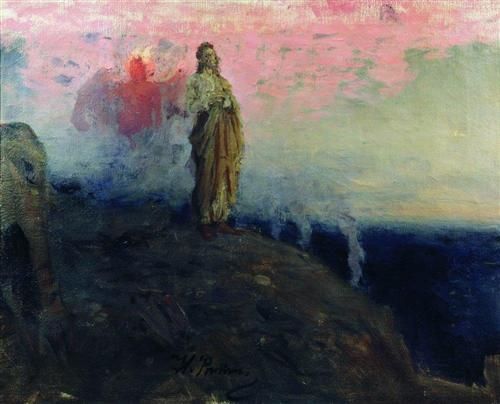
Jesus Tempted by Russian painter Ilya Repin (1844-1930)

Jesus was led by the Spirit into the wilderness to be tempted by the devil. After fasting forty days and forty nights, he was hungry. The tempter came to him and said, “If you are the Son of God, tell these stones to become bread.”

Jesus answered, “It is written: ‘Man shall not live on bread alone, but on every word that comes from the mouth of God.’”

Then the devil took him to the holy city and had him stand on the highest point of the temple. “If you are the Son of God,” he said, “throw yourself down. For it is written:

“‘He will command his angels concerning you,
    and they will lift you up in their hands,
    so that you will not strike your foot against a stone.’”

Jesus answered him, “It is also written: ‘Do not put the Lord your God to the test.’”

Again, the devil took him to a remarkably high mountain and showed him all the kingdoms of the world and their splendor. “All this I will give you,” he said, “if you will bow down and worship me.”

Jesus said to him, “Away from me, Satan! For it is written: ‘Worship the Lord your God and serve him only.’”

Then the devil left him, and angels came and attended him. (NIV)

In our most vulnerable moments, the devil attempts to swoop in and offer his demonic delights for us to consider. We call it “temptation.” Indeed, it can be quite alluring to entertain ways of getting what we need and want through avenues other than God.

In the desert, the place of preparation for ministry, Jesus fasted and prayed forty days. If ever there was a time when Jesus would be vulnerable to alternative religion, the devil mused, wringing his demonic hands together with wicked delight, it would be out in the desert by himself. So, Satan tempted Jesus with three whoppers he thought would get to Jesus, for sure. Having tempted Jesus with food and a way to fame, and having failed both times, Satan gave his final temptation.

To us this temptation to bow down and worship Satan seems like a no-brainer. Well, of course, no one would do such a thing as this, especially Jesus. And he did not. But it was still tempting. It really was. Jesus knew very well what was ahead of him. He had just spent forty days in an intense orientation for an upcoming three years of hard ministry with an end of tortuous death to look forward to. 

Satan presented to Jesus an alternative way, a different path to achieve his purpose for being on this earth. Jesus could have it all without the three years, without the hard slugging to communicate the kingdom of God has come. Most of all, Jesus could circumvent the cross and establish his rule over all the earth – all pain free! The temptation, yes, was very tempting. Become King Jesus now with no suffering.

This has always been one of our great temptations, as well: Take the easy path. Get what you want, what you deserve, now, with no hardship. 

The values of God’s kingdom include trust, patience, and perseverance. Temptation insists we need none of those hard things to be successful. Satan is the original slickster, marketing his quick and easy wares for people to buy into the notion that life can lived without pain and hardship, and with wild success, right now. The scary thing about it is that Satan can deliver… but it will cost us our very lives. Slavery to sin is the price we pay for hitching our hopes to the quick and easy.

The Christian season of Lent is a time for the slow, patient, deliberate development of the soul in attachment with the Lord Jesus. Engaging in spiritual disciplines is hard. It is difficult to fast and pray. Growing in Christ is slow and takes a great deal of learned perseverance. Far too many of us are tempted to circumvent the hard work of discipleship and simply have a spiritual professional distill everything we need into one hour on Sunday morning. Or we fabricate our own religious practice and beliefs, picking and choosing what fits our lifestyle, as if convenience and comfort are the summum bonum of life, instead of worship.

Christ was able to face down temptation because the desert strengthened him. Yes, he was vulnerable. But he was not weak. If we want to handle temptation, it will take Lent to help us. It will take the desert to spiritually form us and prepare us for godly ministry that puts the devil in his place.

Lord Jesus, you are the king of all creation. Just as you chose the hard path of God’s kingdom, so help me to persevere with faith and patience. May my life reflect your words and ways, in the power of the Holy Spirit.  Amen.

Job 6:1-13 – A Response to Suffering

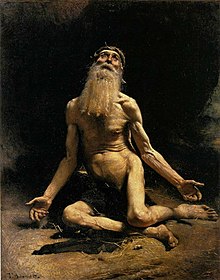
Job by French painter Léon Bonnat, 1880

Oh, that my grief was weighed,
    all of it were lifted in scales;
    for now it is heavier than the sands of the sea;
        therefore, my words are rash.
The Almighty’s arrows are in me;
    my spirit drinks their poison,
    and God’s terrors are arrayed against me.
Does a donkey bray over grass
    or an ox bellow over its fodder?
Is tasteless food eaten without salt,
    or does egg white have taste?
I refuse to touch them;
    they resemble food for the sick.

Oh, that what I’ve requested would come
        and God grant my hope;
    that God be willing to crush me,
    release his hand and cut me off.
I’d still take comfort,
    relieved even though in persistent pain;
        for I’ve not denied the words of the holy one.
What is my strength, that I should hope;
    my end, that my life should drag on?
Is my strength that of rocks,
    my flesh bronze?
I don’t have a helper for myself;
    success has been taken from me. (CEB)

The Old Testament character of Job is famous as the poster boy for suffering, grief, and sorrow. A divine and devilish drama was taking place behind the curtain of this world, of which Job had absolutely no clue about.  All he knew was that he lost everything – his family, his wealth, and his standing before others.  The only thing left was his own life – and he was in such physical pain and emotional agony that he was ready to die.

Yet, the greatest pain of all seems to be the silence of God. Job has no idea, nothing to grab ahold of no earthly sense of why he was going through such intense and terrible suffering. His cries, tears, pleas, and expressions of deep hurt seemingly go un-noticed. Job felt truly alone in his horrible pain of body and spirit.

“We must learn to regard people less in the light of what they do or omit to do, and more in the light of what they suffer.”

Dietrich Bonhoeffer

Job’s story is as old as time – probably having taken place 4,000 years ago. And here we are, all these millennia later, knowing the story of why Job suffered, as well as the end of the story. But Job himself never knew why he suffered, even when God spoke and restored his health and wealth.

It is so extremely easy and normal to ask the question, “Why!?”  When we are in the throes of emotional pain and our prayers seem to bounce off the ceiling, there is only trust left for us. We do what is unthinkable to others who have never known God – place our complete reliance and hope on the God for whom we know is not really sleeping or off on a vacation. We believe, even know, God is there. For whatever reasons which we might never know this side of heaven, God chooses to remain silent.

The genuineness of faith is not determined by giving the right answers to a theology questionnaire. Genuine faith is made strong through the trials, sufferings, pain, and lack of understanding in this life. We all suffer in some way. How we choose to respond to that suffering, either by cursing God and becoming bitter, or holding to God even tighter and becoming better, is totally up to you and me.

God of all creation, you see and survey all your creatures here on this earth. Sometimes I just do not understand what in the world you are doing or not doing. Yet today I choose to put my faith, hope, and love in you.  I may not know what the heck I am doing, but you always work to accomplish your good purposes, through Jesus Christ, my Savior, along with the Holy Spirit.  Amen.

Jeremiah 29:1-14 – Bloom Where You Are Planted

This is the text of the letter that the prophet Jeremiah sent from Jerusalem to the surviving elders among the exiles and to the priests, the prophets and all the other people Nebuchadnezzar had carried into exile from Jerusalem to Babylon. (This was after King Jehoiachin and the queen mother, the court officials and the leaders of Judah and Jerusalem, the skilled workers and the artisans had gone into exile from Jerusalem.) He entrusted the letter to Elasah son of Shaphan and to Gemariah son of Hilkiah, whom Zedekiah king of Judah sent to King Nebuchadnezzar in Babylon. It said:

This is what the Lord Almighty, the God of Israel, says to all those I carried into exile from Jerusalem to Babylon: “Build houses and settle down; plant gardens and eat what they produce. Marry and have sons and daughters; find wives for your sons and give your daughters in marriage, so that they too may have sons and daughters. Increase in number there; do not decrease. Also, seek the peace and prosperity of the city to which I have carried you into exile. Pray to the Lord for it, because if it prospers, you too will prosper.” Yes, this is what the Lord Almighty, the God of Israel, says: “Do not let the prophets and diviners among you deceive you. Do not listen to the dreams you encourage them to have. They are prophesying lies to you in my name. I have not sent them,” declares the Lord.

This is what the Lord says: “When seventy years are completed for Babylon, I will come to you and fulfill my good promise to bring you back to this place. For I know the plans I have for you,” declares the Lord, “plans to prosper you and not to harm you, plans to give you hope and a future. Then you will call on me and come and pray to me, and I will listen to you. You will seek me and find me when you seek me with all your heart. I will be found by you,” declares the Lord, “and will bring you back from captivity. I will gather you from all the nations and places where I have banished you,” declares the Lord, “and will bring you back to the place from which I carried you into exile.” (NIV)

Whenever I am in a conversation with a Christian, I often ask them what their favorite Bible verse or passage of Scripture is. Hands down, the most often cited verse is Jeremiah 29:11 –

“For I know the plans I have for you,” declares the Lord, “plans to prosper you and not to harm you, plans to give you hope and a future.” (NIV)

It certainly is a wonderful verse. Yet, there is a distinct situation and context surrounding that verse about the future, which is very much rooted in the present. The nation of Judah had been invaded and taken into captivity to Babylon. Understandably, the people were longing to go back home. They did not want to be in Babylon. So, Jeremiah (who remained in Judah) sent them a letter, warning them not to listen to false prophets who would give them an easy answer about getting out of Babylon quickly. Instead, he instructed them to make a good life for themselves in their captive land.  He essentially told them to “bloom where you are planted.”

If you don’t like something, change it.

If you can’t change it, change your attitude about it.

maya angelou

The people, although in a place and in a situation which they neither wanted nor expected, needed to be present to their surroundings and settle down. They were to pray for peace, both for themselves and for their captors, because their own success in life was inextricably tied to their geographical place in Babylonia. The sooner the people listened to Jeremiah on this, the better off they would be.           

Plans to give us a hope and future only have meaning for us today when we:

  • Understand that we are to work hard, right where we are, in a place we do not want to be.
  • Pray for that place, its people, and their welfare.
  • Thrive in our present hard circumstance. 
  • Only then, can we look to the bright future of hope.

Our present sufferings are incomparable to the coming glory yet to be revealed. That future hope only occurs if we persevere and find ways of flourishing in the place and situation where we are today. 

So, how will you thrive in the place God has you right now? We always have the choice to practice resilience and make the absolute best of unwanted circumstances – or sit and stew over our misfortune to the point of becoming bitter and hard. It is important to choose wisely.

Lord God, almighty and everlasting Father, you have brought me in safety to this new day.  Preserve with your mighty power so that I might not just wish for a different today and are not able to see what you have for me in this place.  May I not be overcome by adversity, but in all things direct me to the fulfilling of your purposes, through Jesus Christ, my Lord in the strength of the Holy Spirit.  Amen.

Psalm 86 – Theology Proper

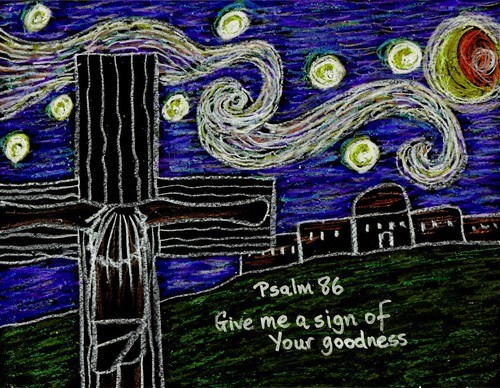
Psalm 86 by Ann Williams

Incline your ear, O Lord, and answer me,
    for I am poor and needy.
Preserve my life, for I am devoted to you;
    save your servant who trusts in you.
You are my God; be gracious to me, O Lord,
    for to you do I cry all day long.
Gladden the soul of your servant,
    for to you, O Lord, I lift up my soul.
For you, O Lord, are good and forgiving,
    abounding in steadfast love to all who call on you.
Give ear, O Lord, to my prayer;
    listen to my cry of supplication.
In the day of my trouble I call on you,
    for you will answer me.

There is none like you among the gods, O Lord,
    nor are there any works like yours.
All the nations you have made shall come
    and bow down before you, O Lord,
    and shall glorify your name.
For you are great and do wondrous things;
    you alone are God.
Teach me your way, O Lord,
    that I may walk in your truth;
    give me an undivided heart to revere your name.
I give thanks to you, O Lord my God, with my whole heart,
    and I will glorify your name forever.
For great is your steadfast love toward me;
    you have delivered my soul from the depths of Sheol.

O God, the insolent rise up against me;
    a band of ruffians seeks my life,
    and they do not set you before them.
But you, O Lord, are a God merciful and gracious,
    slow to anger and abounding in steadfast love and faithfulness.
Turn to me and be gracious to me;
    give your strength to your servant;
    save the child of your serving girl.
Show me a sign of your favor,
    so that those who hate me may see it and be put to shame,
    because you, Lord, have helped me and comforted me. (NRSV)

Today’s psalm is a prayer of David, asking God for help against enemies. David was a guy who knew what it was like to have evil men hate him and pursue taking his life through no fault of his own. I am not sure about your experiences with such people. Although I have never faced adversity to such a degree as David, I do know something about people who, to put it bluntly, just flat-out hate my guts. It feels awful, and it can be terribly draining emotionally and spiritually. Having disrespectful and rude people talk behind your back (and sometimes even to your face) is in direct contrast to who God is.

God is described by David as merciful and gracious, slow to anger, abounding in steadfast love, and faithful. Whereas insolent people objectify others and seek their own selfish agendas, God always acts in accord with a basic character of love and grace. Based upon the nature of God, we can choose to cry out, just like David did, to show us a sign of God’s favor. We can pray for God to provide us with some tangible communication of divine love in ways we can understand so that we can be helped and receive the kind of comfort we need through our adversity.

Psalm 86, chalk art by Scottish pastor and artist John Stuart, 2009

Be assured that with such a God, our pleas, cries, and tears will be noticed, affirmed, and answered. We can trust the sovereign Lord of all creation to address the insolence and injustice that exists around us and toward us.

All of this gets down to our view of God, our theological understanding of the basic Divine nature and purpose.  For some people, God is up there, somewhere, like some white-bearded old guy who is aloof to what is going on down here – there is neither anything personal nor personable about him, at all. For others, God is a force which binds all things together. In this theology, God exists, but you are never quite sure how to connect – it is like a crapshoot trying to get in touch with him.  For yet others, God is perpetually perturbed about something; he has a bee in his bonnet, and it is apparently our job to figure out what he is so sullen and upset about all the time so that we can appease him in some way.

However, the psalmist, David, sees God in wholly other ways than this. For David, God is personal, knowable, and reachable. David thought about God in ways which transcend either gendered or personality-type categories. Note the descriptions David provided: a willingness to forgive; an abiding, consistent, and steadfast presence of divine love; always having the time and desire to listen; possessing the power and ability to provide help and protection; being kind and merciful; not being easily angered; and extending needed comfort and consolation.

Now this is a God you can sink your teeth into – attentive, engaged, and anything but upset all the time. This is the reason why David has confidence to ask for deliverance, direction, and delight. Such a God is like a caring grandmother who seeks to always love and serve, and not a crotchety old curmudgeon who always seems bothered by everyone and everything.

If your theology, your view of God, cannot support and bear the weight of life’s hardest circumstances, then you need a different view of God! I invite you to see the God of David. Theology proper discerns the being, attributes, and works of God as fundamentally faithful and loving. This God has both the ability and the will to meet and satisfy your life’s greatest needs.

Great God of David, you are above all things and beside all things and with all things. You are uniquely positioned and powerful to walk with me through all the situations of my life. Thank you for sending the Son of David to make real your promises to me.  Amen.