Prepare the Way (Mark 1:1-8)

The beginning of the good news about Jesus the Messiah, the Son of God,as it is written in Isaiah the prophet:

“I will send my messenger ahead of you,
    who will prepare your way”—
“a voice of one calling in the wilderness,
‘Prepare the way for the Lord,
    make straight paths for him.’”

And so John the Baptist appeared in the wilderness, preaching a baptism of repentance for the forgiveness of sins. The whole Judean countryside and all the people of Jerusalem went out to him. Confessing their sins, they were baptized by him in the Jordan River. John wore clothing made of camel’s hair, with a leather belt around his waist, and he ate locusts and wild honey. And this was his message:

“After me comes the one more powerful than I, the straps of whose sandals I am not worthy to stoop down and untie. I baptize you with water, but he will baptize you with the Holy Spirit.” (New International Version)

The beginning of Mark’s Gospel lets us know what the entire account is all about: The good news of Jesus Christ, the Son of God. And, from the get-go, Mark embeds this beginning in a much older beginning, from the prophet Isaiah. None of this stuff was made up; it’s been there all along, for those with the spiritual eyes to see it.

It could be that it seems you aren’t seeing anything happen in your life that’s good right now. You know you’re now into this Christian Advent season, but not feeling at all as if it’s a time of good news – because all you have been hearing is bad news stacked on top of bad news. Devastation and despair, destruction and depression, are not only with those experiencing the harrowing circumstances of war or disease, but perhaps with you, as well.

Just because you can always point to someone else, or some other people group around the world, that has it worse than you, doesn’t mean that your own situation is necessarily good. The worst sort of grief is the grief that you yourself are experiencing. It’s likely that you may have your own unique brand of hopelessness, and might feel guilty for not being more happy or grateful in this time of year.

We all need good news – not just the ones with daily terrible and traumatic encounters. Maybe we could all tap into our collective humanity and realize our spiritual connection with everyone else in this topsy-turvy world. If we share bad news together, then it seems to me that we can also share the good news with one another, as well.

And there is always good news, if we have the spiritual ears to hear it: God is here. God knows. God cares. God loves. God is the Victor. Specifically, for Mark and for Christians everywhere, the incarnation, life, death, resurrection, and ascension of Jesus the Messiah is the dynamic proclamation of deliverance from all the guilt, shame, anxiety, and devastation that happens around us and even to us.

The consistent witness of the New Testament Gospels is nothing less than the Evangelists saying to us, “Look! God is here in the person of Jesus.”

Christ did not come to this earth in order to bring us some nice distractions from the crap we are enduring; but instead turns toward the crud and faces it down with divine power.

John the Baptist, by Anikitos Giannoudes

We possess good news of great joy for all the nations. And there is, I believe, no better messenger to let us know this than John the Baptist – a quirky man whose clothes look like they don’t fit right (or are even fit for a person to wear) and whose daily lunch makes all the girls squeal.

If a guy like John – on the margins of society – can help point us to good news, then we, too, have an important place in this world of making a difference with our own social eccentricities, spiritual foibles, mental disorders, and funny looks.

It appears obvious that John only cared about one thing: making sure everyone knew who the true and ultimate Messenger was, because this Messenger Messiah had the true message of good news that the whole world desperately needs.

The good news of God brings hope to those who find themselves in dire straits, on the peripheries of our world, and of wondering if things will ever get better, or not. God’s good news of grace announces God’s presence in all of our wonderings, in every place, and with each situation we find ourselves in.

God’s love goes wherever we are. Jesus is our Immanuel, God with us. In the person of Christ, we discover that God is for us; and if everyone else is against us, the Lord’s divine presence is enough for us. Thanks be to God!

Be Careful (Luke 21:34-38)

“Be careful, or your hearts will be weighed down with carousing, drunkenness and the anxieties of life, and that day will close on you suddenly like a trap. For it will come on all those who live on the face of the whole earth. Be always on the watch, and pray that you may be able to escape all that is about to happen, and that you may be able to stand before the Son of Man.”

Each day Jesus was teaching at the temple, and each evening he went out to spend the night on the hill called the Mount of Olives, and all the people came early in the morning to hear him at the temple. (New International Version)

Nobody wakes up in the morning, sits up at the end of the bed, and says to themselves, “Well, today, I think I’ll be anxious, go to the bar, drink, and feel awful.” No, of course, we don’t do that. Instead, we are more likely to sit up and, at least, long for a good day and maybe even pledge to change some things; and at most, we make some good solid plans about how to have a fulfilling day.

Yet, for all of us, there are times when we find ourselves in a place in life we neither expected nor wanted. For sure, we cannot control the world and the circumstances and people within it. However, we can take charge of our own hearts and ensure that they do not become weighed down. In such a position, it becomes difficult to pray and have an accurate awareness of what’s happening around us.

This is precisely why even the Lord Jesus himself took the initiative to have regular times of withdrawal in order to connect with the Father in prayer. He could only give from the largess of his heart and soul. If Christ needed to pay attention to the Father, the world, and himself, then how much more must we regularly reorient ourselves so that grace and wisdom rule our lives, instead of anxious dissipation?

We are now in the first season of the Church Year on the Christian Calendar – the time of Advent. Advent literally means “anticipation” because Christians everywhere anticipate Christmas, the coming of Jesus the Messiah. 

While we wait, we pray. Jesus himself tells us to watch ourselves, stay awake at all times, and keep on praying. There is no patience apart from prayer. Show me an impatient person, and I will show you a person who has little discipline for prayer. But show me a patient person, and I will show you a person given to prayer in all circumstances for all kinds of matters.

This season of the year, despite all of its secular busyness and rush, is one of the most ideal times in the Christian Calendar to reconnect with a disciplined prayer life. Many Christians throughout the world desire more of God than a once-a-day “quiet time.” They want their entire lives to be a continual offering of prayer and connection with Jesus the Messiah. 

If one is not in the habit of punctuating each day with short, designated times of prayer, then perhaps begin taking the time in both the morning and evening to intentionally read Scripture, sing, and pray; this may be the best place to start. More outgoing persons may want to recruit others to participate with them. Yet, however its done, allow this Advent season to be an intentional time of reconnecting in prayer.

Let your longings translate into realizations. As we devote ourselves to basic spiritual disciplines, it helps us connect with others in basic human kindness – which is a basic foundational human need that keeps us away from a frivolous life of worrying, and leads us to a fruitful life of love and community.

People become trapped when they spend too much time alone with themselves, or in too much time with others who are only trying to deaden their physical and/or emotional pain. In both cases, they become trapped in their heads, thinking irrational thoughts and believing concocted conspiracy theories (or complicated end times scenarios). This is, at best, a dead end, and at worst, a one way road to destruction.

There is no substitute for prayer, spiritual reading, and wholesome community. Without these, we shall inevitably amble down a path of temptation and get lost in our heads. Christianity, for me, is unintelligible without the hope and the promise of a new and coming order of love, peace, and justice.

A great reversal of moving from anxious worry to ebullient hope is rooted in being able to understand that the words and ways of Jesus will not pass away. And that will only happen if we can locate ourselves as those who are spiritual beggars, in need of continually begging (praying) and searching (reading) for the words of God to become a reality in everyday life.

Our present contemporary life, daily experiences, and world situation is being called toward a future of God’s promises becoming fulfilled. And, at the same time, the future state of justice and peace is being called to our present circumstances, so that we can have a glimpse and glimmer of the hope which awaits us. In other words, the coming of Christ is the future which gives shape to our life today.

Today is the day of encountering the gracious God because tomorrow is the day of judgment, the time of the second Advent… sounds like it’s time to pray!

Eternal God, in whose perfect kingdom no sword is drawn but the sword of righteousness, no strength known but the strength of love: So mightily spread abroad your Spirit, that all sorts of people everywhere may be gathered under the banner of the Prince of Peace, as children of one Father; to whom be dominion and glory, now and forever. Amen.

Advent Is Coming (Zechariah 13:1-9)

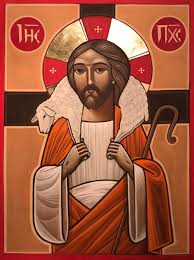
Coptic Church icon of Jesus the Good Shepherd

“On that day a fountain will be opened to the house of David and the inhabitants of Jerusalem, to cleanse them from sin and impurity.

“On that day, I will banish the names of the idols from the land, and they will be remembered no more,” declares the Lord Almighty. “I will remove both the prophets and the spirit of impurity from the land. And if anyone still prophesies, their father and mother, to whom they were born, will say to them, ‘You must die, because you have told lies in the Lord’s name.’ Then their own parents will stab the one who prophesies.

“On that day every prophet will be ashamed of their prophetic vision. They will not put on a prophet’s garment of hair in order to deceive. Each will say, ‘I am not a prophet. I am a farmer; the land has been my livelihood since my youth.’ If someone asks, ‘What are these wounds on your body?’ they will answer, ‘The wounds I was given at the house of my friends.’

“Awake, sword, against my shepherd,
    against the man who is close to me!”
    declares the Lord Almighty.
“Strike the shepherd,
    and the sheep will be scattered,
    and I will turn my hand against the little ones.
In the whole land,” declares the Lord,
    “two-thirds will be struck down and perish;
    yet one-third will be left in it.
This third I will put into the fire;
    I will refine them like silver
    and test them like gold.
They will call on my name
    and I will answer them;
I will say, ‘They are my people,’
    and they will say, ‘The Lord is our God.’” (New International Version)

There’s likely a reason why so many Bible-readers have barely considered, or just never read, the minor prophets of the Old Testament: It’s difficult reading, on several levels.

Yet, the twelve books of the minor prophets, along with the four books of the major prophets, account for a lot of material within Holy Scripture. If we are to understand the whole of the Bible, as well as know God better, we need to contend with what the prophets have to say.

Impurity and cleansing, grace and judgment, idolatry and stabbing, prophets and visions, sheep and shepherds, faith and apostasy, are all part of what seems, on the surface, to be a confusing hodge-podge of verbiage from the prophet Zechariah. Yet, we can still observe the things God cares about.

The Lord promised to rid the land of idols (false gods), (false) prophets, and the spirit of impurity (false righteousness). If God takes out the false prophets, then the people can say good riddance to a false message of leading others toward idolatry and impurity.

The spirit and the message behind false prophets, unholy leaders, and unrighteous teachers, has to do with propagating lies and suppressing truth, so that they can deceive people and manipulate others for their own benefit – leading groups of people away from reality, and into commitments that go nowhere.

This insidious stuff is meant to be taken quite seriously – because it leads to a breakdown in community, a proliferation of injustice, and oppressive spiritual bondage. That’s why we have a rather dramatic picture of parents stabbing a child – not because God likes violence – but to demonstrate that false prophets and their message will damage and destroy a nation, if indulged.

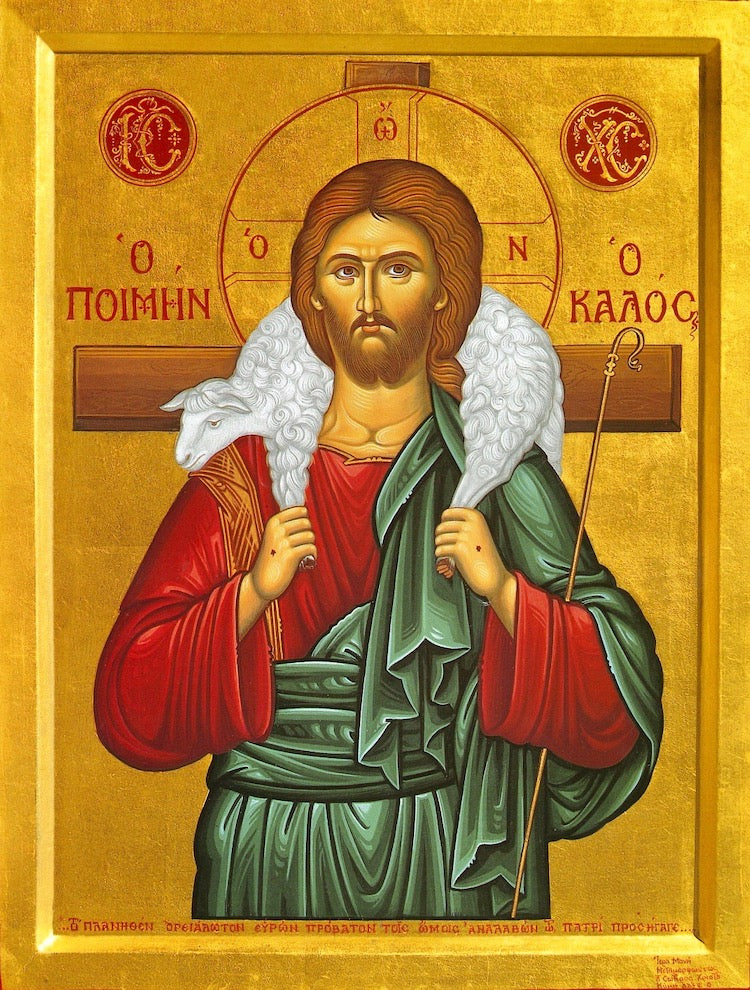
Orthodox icon of Jesus the Good Shepherd

We must always keep in mind and remember that injustice and unrighteousness must always be nipped in the bud (Deuteronomy 13:6-11). Sin, that is, those things which deceive and make false promises that result in a downward spiral toward death, is to be confronted. In the New Testament, Jesus put the matter this way:

If your right eye causes you to stumble, gouge it out and throw it away. It is better for you to lose one part of your body than for your whole body to be thrown into hell. And if your right hand causes you to stumble, cut it off and throw it away. It is better for you to lose one part of your body than for your whole body to go into hell. (Matthew 5:29-30, NIV)

Christ was not advocating a physical maiming of oneself, but rather for us to separate ourself from sin by whatever means necessary. In other words, Jesus was saying that sin isn’t something to be managed, but instead something to eradicate altogether.

Truth matters. Truth brings reality and beauty to light. Falsehood is terrible. To promote that which is false, and perhaps even worse, tolerate it, gives hate and injustice a platform from which to crawl out of the darkness and make the world blind. It would take an awful lot to undo error’s presence.

This is why the shepherd, or maybe, from the Christian perspective, the Christ, is stricken. The Good Shepherd, the one who is truth incarnate, would have to suffer. The injustice and unrighteousness is so foul and degrading that only the pure can undo the impure. And it is all set in motion, not by the forces of darkness, but by God.

God strikes the shepherd, and the sheep scatter. He is not struck because he deserves it – far from it – but because he assumes responsibility for the wrongdoing of others. Father God is the parent who stabs a spear in the side of God the Son.

The ultimate good shepherd of the sheep will die as a heinous offender; and God is the executioner.

In Christ, God put the wrong on him who never did anything wrong, so we could be put right with God.

2 Corinthians 5:21, MSG

This same great shepherd of the sheep, who became the Lamb of God that takes away the sin of the world, is coming again. And he will bring the refining and purifying fire of divine judgment upon the earth.

In this upcoming Advent season, we remember not only that Jesus has come to save the world. We also are reminded that there is yet a second Advent, in which Jesus will come to judge the living and the dead.

Behold, He is coming with clouds, and every eye will see Him, even they who pierced Him. And all the tribes of the earth will mourn because of Him. Even so, Amen.

“I am the Alpha and the Omega, the Beginning and the End,” says the Lord, “who is and who was and who is to come, the Almighty.” (Revelation 1:7-8, NKJV)

Blessed God and Father of our Lord Jesus Christ, preserve us from our own madness. Direct us away from dealing destruction to others; help us to steer clear of paths which lead to the ruin of ourselves and our world.

Protect us. Enable us to hear you. Beloved Jesus, show us your precious face in all others – you in us, and we in each other, from all places. Amen.

Law and Gospel (Galatians 3:6-14)

Nativity by He Qi

The Scriptures say that God accepted Abraham because Abraham had faith. And so, you should understand that everyone who has faith is a child of Abraham. Long ago the Scriptures said God would accept the Gentiles because of their faith. This is why God told Abraham the good news that all nations would be blessed because of him. This means everyone who has faith will share in the blessings given to Abraham because of his faith.

Anyone who tries to please God by obeying the Law is under a curse. The Scriptures say, “Everyone who doesn’t obey everything in the Law is under a curse.” No one can please God by obeying the Law. The Scriptures also say, “The people God accepts because of their faith will live.”

The Law isn’t based on faith. It promises life only to people who obey its commands. But Christ rescued us from the Law’s curse, when he became a curse in our place. This is because the Scriptures say that anyone who is nailed to a tree is under a curse. And because of what Jesus Christ has done, the blessing promised to Abraham was taken to the Gentiles. This happened so that by faith we would be given the promised Holy Spirit. (Contemporary English Version)

We are just a day away from the Nativity of the Lord, Christmas Eve, the night Christians everywhere observe the birth of Christ.

And just two days from now Christians throughout the world will have a grand celebration of Christ’s incarnation – God breaking into this old fallen world to be with us and redeem us.

Many will be show up at a church worship service on that day, perhaps especially because Christmas Day falls on a Sunday, in the year of 2022. All might be in the same place; yet they’re there for different reasons.

Some come to the worship service because that’s what they have done every Sunday throughout the year – and they wouldn’t think of being anywhere else.

Others choose to be a part of the gathering because they enjoy the specialness of the day, the beauty of the celebration, and the traditions which surround it all.

There are also those who show up because the season has been hard; while others may bask in the joy of Christmas, they’re just looking for something positive to get them through for a while.

Ethiopian Orthodox icon of the Nativity of the Lord

And then there are those who enter the day for none of the previous mentioned reasons. No, they simply show up because they feel it is their duty to do so, or at the least, because they might receive some special spiritual Brownie points from God. In other words, they gather with the rest with the sheer motivation of Law.

Such an approach illustrates the “curse” of the Law. The Law itself is not bad. But if the rest of the equation isn’t factored into life, Law becomes a hard taskmaster and keeps the law-keeper in a terrible bondage without any delight to go with the duty.

People also need Gospel, the good news which fulfills all the requirements and demands of Law. Law is good, but by itself, apart from Gospel, it becomes an insidious tool of evil.

Whereas Law focuses solely on what we do, Gospel homes in on why we do it.

Law bosses us around and tells us what to do. Gospel frees us to embrace the spirit of Law to love God and neighbor.

It doesn’t take faith to obey the rules and regulations of Law. Gospel, however, can only be realized, internalized, and lived by faith.

It takes faith to receive grace and forgiveness – and to give it. Faith requires an acceptance of spiritual realities. It is the key to tapping into the power of love in the universe.

By faith, people throughout history, like Abraham, have listened with spiritual ears to the God of all. They step out, not merely because of Law, but because they rely on divine promises. Such faith enables them to wait patiently for the coming of eternal forces to take permanent residence on earth. Law can’t do that; only Gospel can.

Faith in the Bible is a complete trust in God, in who God is and what God has done. Because God has demonstrated faithfulness through steadfast love, people are gifted with faith to know the Lord and exhibit love through good works. 

God Is with Us by Hanna Varghese

In Christianity, the height of faith is to place one’s life completely in God’s hands, believing in the person and work of Jesus Christ.

Jesus said, “I assure you that if you have faith the size of a mustard seed, you could say to this mountain, ‘Go from here to there,’ and it will go. There will be nothing that you can’t do.” (Matthew 17:20, CEV)

The size of faith isn’t the issue – it’s in whom that faith is placed. The littlest of faith in Jesus can have massive results, whereas the biggest of faith in someone who cannot get you to where you need to go, is useless.

Outward rituals and observance of Law have their place; but they don’t deliver anyone from sin, death, or hell. Only faith can do that.

If you are a follower of Christ Jesus, it makes no difference whether you are circumcised or not. All that matters is your faith that makes you love others. (Galatians 5:6, CEV)

It’s one thing to be kind and love others during a holiday season; it’s quite another thing to have that be your default character throughout the entire year. Love for a season comes merely from Law. But Love for a lifetime grows from the rich soil of the Gospel.

And it’s the Gospel of Jesus Christ which we celebrate and give thanks.

Gracious God, we thank you for sending your Son. Even before we loved you, you loved us and gave us the gift of faith. Help us to love one another and to see all people in the same way you do – to love them even when they don’t love us back. Enable us by your Spirit to show continual love throughout the entire year, for the sake of Jesus Christ our Savior. Amen.