


When the uproar had ended, Paul sent for the disciples and, after encouraging them, said goodbye and set out for Macedonia. He traveled through that area, speaking many words of encouragement to the people, and finally arrived in Greece, where he stayed three months.
Because some Jews had plotted against him just as he was about to sail for Syria, he decided to go back through Macedonia. He was accompanied by Sopater son of Pyrrhus from Berea, Aristarchus and Secundus from Thessalonica, Gaius from Derbe, Timothy also, and Tychicus and Trophimus from the province of Asia. These men went on ahead and waited for us at Troas. But we sailed from Philippi after the Festival of Unleavened Bread, and five days later joined the others at Troas, where we stayed seven days.
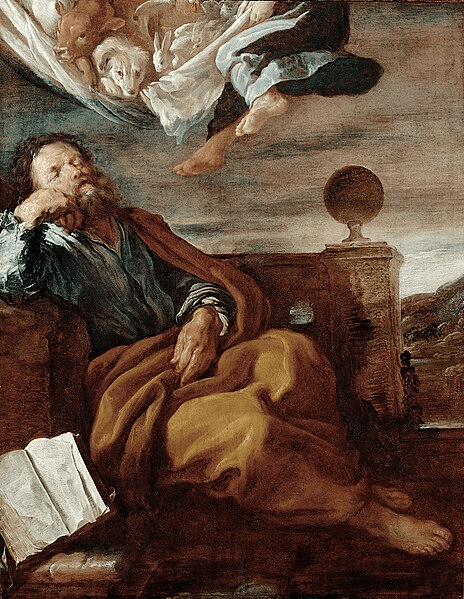
On the first day of the week we came together to break bread. Paul spoke to the people and, because he intended to leave the next day, kept on talking until midnight. There were many lamps in the upstairs room where we were meeting. Seated in a window was a young man named Eutychus, who was sinking into a deep sleep as Paul talked on and on. When he was sound asleep, he fell to the ground from the third story and was picked up dead.
Paul went down, threw himself on the young man and put his arms around him. “Don’t be alarmed,” he said. “He’s alive!” Then he went upstairs again and broke bread and ate. After talking until daylight, he left. The people took the young man home alive and were greatly comforted.
We went on ahead to the ship and sailed for Assos, where we were going to take Paul aboard. He had made this arrangement because he was going there on foot. When he met us at Assos, we took him aboard and went on to Mitylene. The next day we set sail from there and arrived off Chios. The day after that we crossed over to Samos, and on the following day arrived at Miletus. Paul had decided to sail past Ephesus to avoid spending time in the province of Asia, for he was in a hurry to reach Jerusalem, if possible, by the day of Pentecost. (New International Version)

The Apostle Paul was fresh off a riot in the city of Ephesus. Reading through the book of Acts in the New Testament, this almost seems like another day in the office for Paul. Everywhere he went, Paul created a stir – not on purpose – but just for being himself. Much like the Lord Jesus he served, Paul was a guy people either loved or hated.
We pick up Paul’s journey as he was heading to Macedonia. There were several companions who accompanied him, as was usual. The Apostle rarely, if ever, traveled alone; he was always in an entourage and mentoring others in the ways of Christian ministry.
This journey was different than the others. Paul knew what was coming for him. He was beginning a farewell tour, knowing that he would end up back in Judea – which may mean death for him.
One of the reasons there was such a commotion everywhere Paul went was because the Jews continually opposed him. But Paul was not deterred; he was determined to persevere, and especially to encourage the churches he had formed.
While in Troas, Paul met with the believers on a Sunday. Since this was a final message to those gathered, Paul did the longwinded preacher thing by talking until midnight. Apparently, all the young people were sitting in the back (some things never change) and one of them, Eutychus, fell asleep in the window where he was seated, and fell out of the window to the ground.
By the time Paul got to Eutychus, he was pronounced dead. But the Apostle wasn’t having it. He scooped up the young man into his arms and declared that life is still in him. Like the Lord Jesus before him, Paul restored the presumably dead person back to life.
This is the power of resurrection, specifically the spiritual power of Christ’s resurrection: Death doesn’t have the last word.
Paul was speaking at night, which is why there were many lamps lit in the place. Despite the light, Eutychus closed his eyes and succumbed to shutting out the light. He quite literally fell into darkness, and into the place of death.
Yet, it doesn’t take much light to dispel the darkness. A small candle is enough to luminate a way forward. Paul had more than a candle available to him; he had enough to literally light up Eutychus.
And then everybody went back upstairs and Paul did what any preacher worth their salt would do next: He kept preaching.
I’m sure Paul’s everlasting long sermon after that dramatic event with Eutychus centered on the message to “stay awake!” And indeed, that’s exactly what believers in Jesus are to do.
Then Jesus returned to his disciples and found them sleeping. “Simon,” he said to Peter, “are you asleep? Couldn’t you keep watch for one hour? Watch and pray so that you will not fall into temptation. The spirit is willing, but the flesh is weak.” (Mark 14:37-38, NIV)
Paul wanted to sail past the port of Ephesus in order to get to Jerusalem quicker. When he was previously in the city, and established a church of new believers out of their old paganism, he said to them:
For you were once darkness, but now you are light in the Lord. Live as children of light (for the fruit of the light consists in all goodness, righteousness and truth) and find out what pleases the Lord. (Ephesians 5:8-10, NIV)
The Apostle Paul was an intense guy. And that’s a good thing, when it’s channeled in ways of encouraging others, supporting them spiritually, and even raising someone from death.
Fortunately, the intensity of his light can still be seen these two millennia later.
O God, who for our redemption gave your only-begotten Son to the death of the cross, and by his glorious resurrection delivered us from the power of our enemy: Grant us so to die daily to sin, that we may evermore live with him in the joy of his resurrection; through Jesus Christ your Son our Lord, who lives and reigns with you and the Holy Spirit, one God, now and forever. Amen.







 Rev. Tim Ehrhardt