

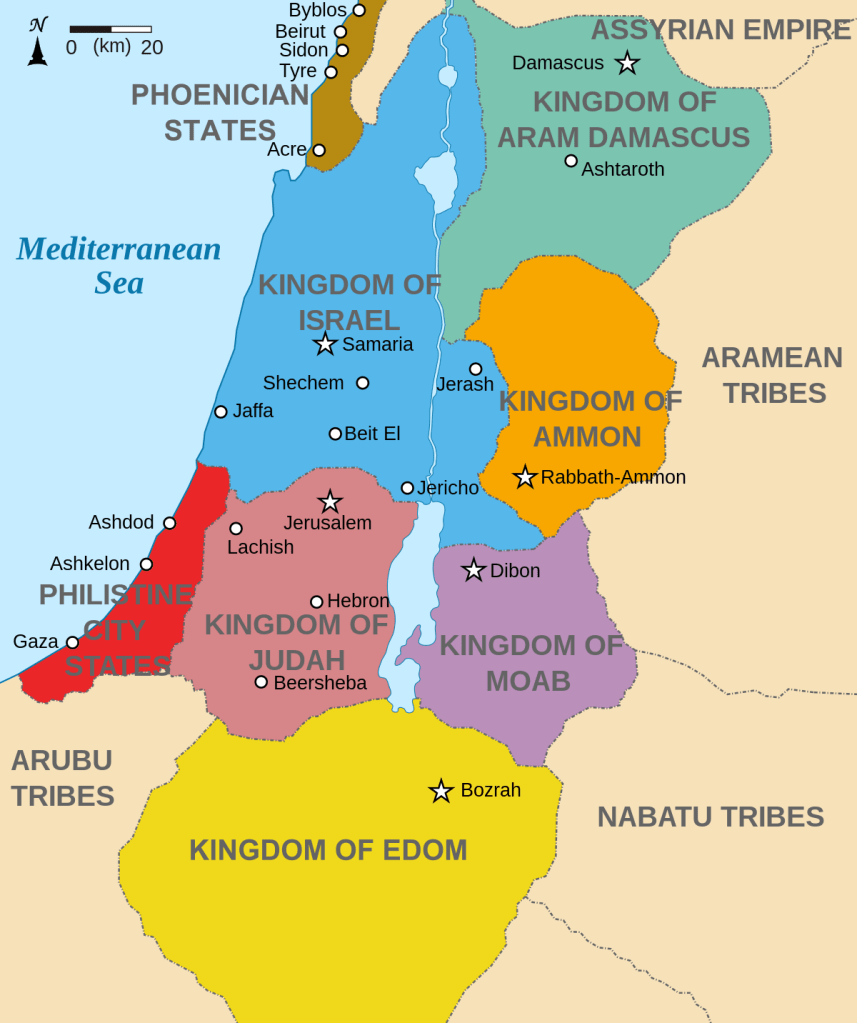
When the Ammonites realized that they had become obnoxious to David, they hired twenty thousand Aramean foot soldiers from Beth Rehob and Zobah, as well as the king of Maakah with a thousand men, and also twelve thousand men from Tob.
On hearing this, David sent Joab out with the entire army of fighting men. The Ammonites came out and drew up in battle formation at the entrance of their city gate, while the Arameans of Zobah and Rehob and the men of Tob and Maakah were by themselves in the open country.
Joab saw that there were battle lines in front of him and behind him; so he selected some of the best troops in Israel and deployed them against the Arameans. He put the rest of the men under the command of Abishai his brother and deployed them against the Ammonites.
Joab said, “If the Arameans are too strong for me, then you are to come to my rescue; but if the Ammonites are too strong for you, then I will come to rescue you. Be strong, and let us fight bravely for our people and the cities of our God. The Lord will do what is good in his sight.” (New International Version)
Cockiness can get you into a lot of trouble. It’s one thing to exude confidence; and it’s another thing to act like a puffed up peacock and do stupid stuff because of arrogance. The Israelite general Joab had the former; the Ammonites the latter.
King David had sent envoys to Ammon in the event of a new Ammonite king taking the throne after his father’s death. David was in the groove of extending kindness and establishing himself as the sort of ruler who has a heart, as well as a head.
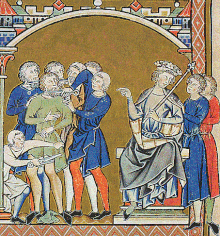
However, Hanun the Ammonite king, viewed the Israelite delegation of people in a negative light, believing they had malevolent motives for coming. So, the king’s officials “seized David’s envoys, shaved off half of each man’s beard, cut off their garments at the buttocks, and sent them away.” (2 Samuel 10:4)
Not the smartest move on the planet. Humiliating a group of Israelites sent by David was a bad idea. The Ammonites, understandably, were put immediately on King David’s naughty list. And they then responded by recruiting mercenaries to their side, getting the clue that David wasn’t about to stand for the offense against Israel.
So, the Ammonites hired the Arameans to help fight Israel. But they were no match for the shrewd and seasoned Jewish general Joab. The mercenaries were soundly defeated, really because of God’s sovereign intervention over the much larger force put together by the Ammonites.
This ancient animosity and relational haggling tends to reflect the human condition, even to this day. It’s easy to fall into misinterpretations and misunderstandings that lead to conflict.
A lot of biblical interpreters read between the lines of the story, and see less than altruistic motives on David’s part. That may or may not be true. The story simply has David sending a delegation to Ammon in the event of the Ammonite king’s death – with the reason stated that David wanted to show kindness, just as the previous king had done with him.
It’s characteristic of judgmental spirits to look for people who agree with them – whether those people are Ammonite royalty or Bible interpreters. We tend to see what we are familiar with and know – which is why the interpretive process can and does vary widely amongst scholars and readers alike.
The Ammonite court bought into a perception of King David. And based upon that view, they believed a course of action which included humiliating others and finding mercenaries was the proper way to proceed.
But those sorts of methods themselves ought to raise a red flag with us, and cause us to question the perceptions and judgments behind them.
The king of Ammon believed he was acting in the right, and the Ammonites sought to justify themselves as legitimately acting with violence because of an Israelite threat.
By taking a Christian perspective, I believe we can be encouraged, rather than react with questionable tactics toward others who humiliate us and spout verbal violence upon us. A theological worldview discerns that righteousness will prevail. Justice and righteousness may not happen soon, and maybe not even in our lifetime; yet, it will eventually overcome any and all evil.
Jesus was unjustly judged by others who believed he was in league with the devil and was opposed to the law of Moses. Righteousness did prevail, but not after a great deal of suffering, which included a cross and a death.
King David himself did not withdraw from the situation, nor did he ignore it. David faced his accusers and entrusted himself and his nation to the God who is right and just.
We need not withdraw or ignore others in the face of judgmentalism. And we also need not resort to the same methods and tactics of judgmental people.
Showing kindness is important, and it must not be dependent upon whether one will respond favorably to us, or not. Sometimes you will experience judgmental spirits, no matter what.
Furthermore, be careful of the way you interpret another’s words and actions, and also how you respond to others. Jesus said:
“Do not judge, or you too will be judged. For in the same way you judge others, you will be judged, and with the measure you use, it will be measured to you.” (Matthew 7:1-2, NIV)
Those who love truth will tend to avoid snap judgments. God always makes a right judgment, and is the ultimate Judge of the universe. It is the Lord we need to please, and not any group of people.
A prayer of Thomas à Kempis (1380-1471):
Grant me, O Lord, to know what I ought to know,
To love what I ought to love,
To praise what delights You most,
To value what is precious in Your sight,
To hate what is offensive to You.
Do not suffer me to judge according to the sight of my eyes,
Nor to pass sentence according to the hearing of the ears of ignorant persons;
But to discern with a true judgment between things visible and spiritual,
And above all, always to inquire what is the good pleasure of Your will. Amen.




 Rev. Tim Ehrhardt