Temporary vs. Permanent (2 Corinthians 5:1-5)

For we know that if the earthly tent we live in is destroyed, we have a building from God, an eternal house in heaven, not built by human hands. Meanwhile we groan, longing to be clothed instead with our heavenly dwelling, because when we are clothed, we will not be found naked. For while we are in this tent, we groan and are burdened, because we do not wish to be unclothed but to be clothed instead with our heavenly dwelling, so that what is mortal may be swallowed up by life. Now the one who has fashioned us for this very purpose is God, who has given us the Spirit as a deposit, guaranteeing what is to come. (New International Version)

Back in the day, when my kids were small, we did our fair share of camping. We had a large two room tent that we called “The Tabernacle.” But even that large tent could not compare to finally getting back home to our house.

We are all on something of a perpetual spiritual camping trip. It may or may not feel like one, but every person is living in a tent. 

One of the challenges of the biblical writers is that they worked to communicate hope and spiritual realities in concrete language. They often made use of metaphors to help us understand. So, when the Apostle Paul likens our current lives to being in a tent, he means that what we are experiencing now with our bodies is temporary. 

Compared to the permanent resurrected body that will be coming in the future, our existence now in this present life, in this body, is not very glorious.

We consider someone homeless if they live in a tent on a permanent basis. In many ways, the Christian is homeless; we are not completely at home in this present body, nor in this present world. So, it seems rather curious to me that many believers in Jesus can be ruthlessly attached to the trappings and stuff of this contemporary campground.

If we were to make a list of all the things we do and all the things we have that are extra-biblical, that is, not specifically mentioned in the Bible, it would not take long to discover that much of what we do on a day to day basis – not to mention religiously and through church ministry – is rather quite temporary. Yet, too many persons cling to their stuff and their ways as if all of it will endure forever.

In those times when we experience bereavement; in the situations that demonstrate that we are mortal; and, in the circumstances that occur in which we glimpse how fleeting this present life can be, we begin to understand that what we need to be living for is the permanence of relationships expressed through the ever-present Spirit of God. 

It is good for us to long for a better day when we will no longer groan in the tent of this body so that we will connect with the unseen God who goes before us, with us, after us.

Camping can be both fun and challenging. But if we had to make an actual tent our real home, I can easily imagine how much groaning would happen every day. We would certainly long for a more established residence. Paul gets at this exasperation, which a temporal finite existence can be, when writing to the Roman Christians:

We know that the whole creation has been groaning as in the pains of childbirth right up to the present time. Not only so, but we ourselves, who have the first-fruits of the Spirit, groan inwardly as we wait eagerly for our adoption to sonship, the redemption of our bodies. (Romans 8:22-23, NIV)

Because we have the Spirit, we have help. The Spirit is our advocate. Sometimes, because of our situation, our prayers to God only come out as groans; words can seem far away from us. Yet, that is enough. The Spirit speaks groaning, and knows how to interpret it.

The Spirit helps us in our weakness. We do not know what we ought to pray for, but the Spirit himself intercedes for us through wordless groans. And he who searches our hearts knows the mind of the Spirit, because the Spirit intercedes for God’s people in accordance with the will of God. (Romans 8:26-27, NIV)

God has our back. We may not know what exactly we are going through, and why we are going through it, much less how to even pray about it. But the one thing we do know is that God works for the good of those who love him, who have been called according to his purpose. (Romans 8:28)

With the Spirit alongside us, there is the continual assurance and reassurance that we belong to God. Our present existence may be temporary, but the presence and love of God are permanent and will never change.

For I am convinced that neither death nor life, neither angels nor demons, neither the present nor the future, nor any powers, neither height nor depth, nor anything else in all creation, will be able to separate us from the love of God that is in Christ Jesus our Lord. (Romans 8:38-39, NIV)

Our present circumstances will eventually pass; they are temporary. But the love of God has staying power; it is permanent and forever. Our bodies are always changing; someday we will die. Yet, because of Christ’s resurrection, believers shall be raised with a body fit for eternity. Our tent will be fashioned into a house.

Eternal God, who always has been and always will be, help me to so connect with your Holy Spirit that I can discern the difference between what is temporary and what is permanent. Guide me with your holy hand so that I can place my present efforts into the things that will make a difference for eternity, through Jesus Christ my Lord. Amen.

Spiritual Confidence (2 Corinthians 3:4-11)

Such confidence we have through Christ before God. Not that we are competent in ourselves to claim anything for ourselves, but our competence comes from God. He has made us competent as ministers of a new covenant—not of the letter but of the Spirit; for the letter kills, but the Spirit gives life.

Now if the ministry that brought death, which was engraved in letters on stone, came with glory, so that the Israelites could not look steadily at the face of Moses because of its glory, transitory though it was, will not the ministry of the Spirit be even more glorious? If the ministry that brought condemnation was glorious, how much more glorious is the ministry that brings righteousness! For what was glorious has no glory now in comparison with the surpassing glory. And if what was transitory came with glory, how much greater is the glory of that which lasts! (New International Version)

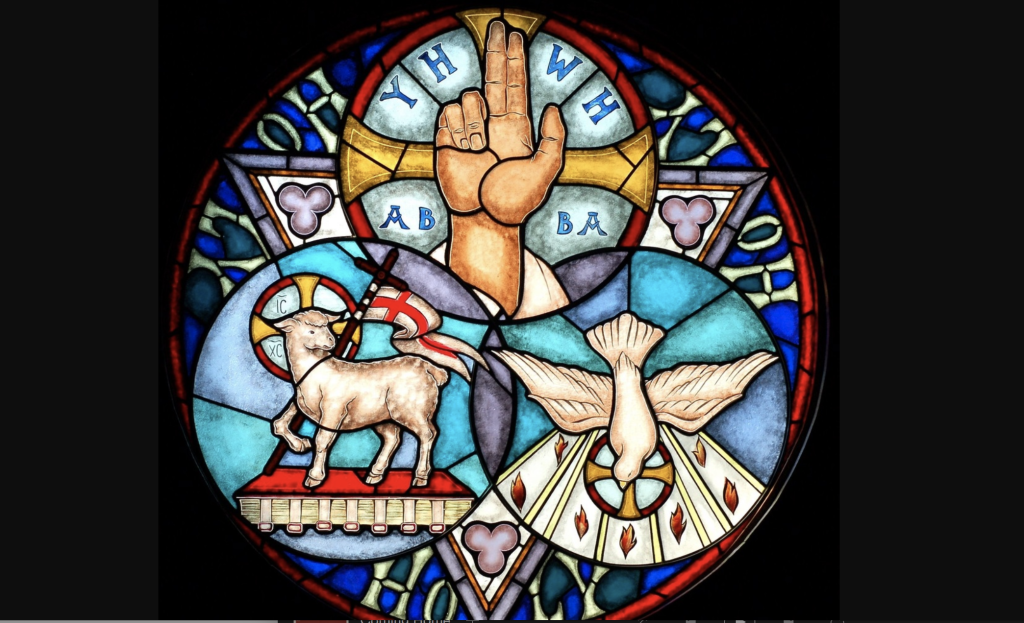
The Christian religious tradition holds to the great Three-in-One of God – God is indivisibly One, and at the same time, a Trinity of Father, Son, and Spirit. Christians typically have no problem expressing their prayers and devotion to the Persons of the Father and the Son, as well as connecting their ministry efforts to them. 

However, when it comes to the Spirit, this Person of the Holy Trinity is often referred to as an “it” or a “force.” Yet, the Holy Spirit is as much God and a Person as the heavenly Father and the Savior, Jesus Christ. The Spirit is the One who provides the guidance and energy for Christian ministry – and not the Law.

We very much need the Holy Spirit of God. Without the Spirit’s help, Jesus is merely looked at as one person out of thousands of individuals crucified in history; and only an example of one who was martyred for his faith. But Jesus is infinitely more than that. 

Christ is the Son of God, the Savior of the world. Through Jesus Christ’s life, death, resurrection and ascension, people can be redeemed from empty lives, saved from destructive life-patterns, and given the kind of security and purpose in life that God intended from the beginning for people to possess. 

And the Spirit of God is the One that takes these redemptive events of Jesus and applies them to our lives. Apart from the Holy Spirit, we are lost, because we are unable to see the genuine spiritual truth about the cross of Jesus Christ unless God the Holy Spirit breaks into our lives and does an intervention – showing us our denial about how we are really doing and our delusions about who we really are (1 Corinthians 2:1-16).

This, then, is the basis for spiritual confidence. And this sort of confidence does not and cannot come from obedience to the Law.

Admitting that we absolutely need the Holy Spirit of God means that the power of Christianity does not reside with me or you; power for the Christian life rests upon Jesus Christ and him crucified, with the Spirit witnessing to us of this truth. 

In other words, we are largely powerless. 

Now, I realize this is not a popular message, especially in Western society. That sounds ridiculous to a particularly can-do kind of people, like most Americans. We believe we’ve done fairly well on our own, thank you very much. A couple of cars, a house, a job, and a family. I work hard. I’ve earned my stuff and my accomplishments. 

But the thing is, any worldly success may lead us to the delusion that we have the power to do what we want – as if I am the sole captain of my soul. I did it. And I did it my way.

“Oh, sure,” many a person may reason, “we have problems just like everybody else. After all, I can’t control everything!” Yet, we are not powerless just because we have difficult circumstances and a few problem people in our lives. “God will step in a take-over where I leave off, right?” Wrong. 

It’s all wrong, because it’s based in one’s effort to obey a personal creed, the rules of the game, or even the Law and the Ten Commandments. But if we could really do it on our own, there’s no need for any of this spiritual stuff.

In truth, apart from the Holy Spirit of God, we are unable to be Christians and live the Christian life. If we think we manage our lives just fine, with a bit of help from God, then we are likely in denial. We are probably placing ourselves at the center of the world; and believe we should be able to deal with whatever comes in life. 

Whenever the consistent response to adverse situations, or the realization that we are not handling something well, is to try and fix ourselves, then we are surely living in the delusion that we hold the power to change – independently without anyone or anything helping us.

If our first reaction to adversity or problems is:

  • Searching Google for more knowledge
  • Dealing privately with personal issues
  • Expecting that willpower should be enough

Then, we are feeding the delusion that we do not really need the Holy Spirit of God; we are actually believing that we need more effort, or information, in order to find the power to overcome whatever is in my life that needs overcoming.   

Unfortunately, it typically takes a tragedy or crisis to break our delusions of power. Let me ask: How bad must we hurt before we admit that we are not managing our lives well at all, and that the real power to change resides with the Holy Spirit?

Our spiritual power and confidence resides in the cross of Jesus Christ, with the Holy Spirit testifying to us of God’s great grace. 

The Apostle Paul believed this with all his heart. Although he was a very intelligent and learned person, he did not rely on his abilities, but on God’s. 

The cross of Jesus is not just an historical event, but an ongoing reality for us to experience victory over all the brokenness of this world, and all the mess we have made of things by putting ourselves at the center of the universe. 

We need the Holy Spirit of God to intervene and apply Christ’s finished work to us. 

None of this means that the Law, or that you, are bad. Both you and the Law are good. It’s just that we, by ourselves, and the Law by itself, are inadequate to save, deliver, and overcome. For that, we need God’s Spirit, and to tap into the spiritual reality that exists.

If the Ten Commandments were introduced with glory, and we ourselves were created with glory, then how much more glory and life is there through an intimate relation with the Spirit?

O God of peace, who has taught us that in returning and rest we shall be saved, in quietness and confidence shall be our strength: By the might of your Spirit lift us, we pray, to your presence, where we may be still and know that you are God; through Jesus Christ our Lord. Amen.

The Idea of Spiritual Separation (2 Corinthians 6:14-7:1)

Do not be yoked together with unbelievers. For what do righteousness and wickedness have in common? Or what fellowship can light have with darkness? What harmony is there between Christ and Belial? Or what does a believer have in common with an unbeliever? What agreement is there between the temple of God and idols? For we are the temple of the living God. As God has said:

“I will live with them
    and walk among them,
and I will be their God,
    and they will be my people.”

Therefore,

“Come out from them
    and be separate,
says the Lord.
Touch no unclean thing,
    and I will receive you.”

And,

“I will be a Father to you,
    and you will be my sons and daughters,
says the Lord Almighty.”

Therefore, since we have these promises, dear friends, let us purify ourselves from everything that contaminates body and spirit, perfecting holiness out of reverence for God. (New International Version)

There are entire Protestant denominations built upon verses such as today’s. They take the admonition to be separate as a cornerstone value. Ever since the Reformation, various Christian groups have struggled to maintain their witness in the world through, essentially, having nothing to do with the world whatsoever.

The dogma of separation inevitably leads to defining precisely what is “worldly” and what isn’t. This is where the idea of creating lists of what’s not acceptable come from. Each group or denomination has it’s own teaching about how to identify oneself as a Christian, and what sorts of behaviors communicate one isn’t a Christian. And the lists often vary quite a bit.

The Puritans had detailed lists and laws of what must be done and not done in order to remain in the community and be pure without spiritually contaminating oneself. For example, here are just a few of the many puritanical laws in Massachusetts in the 1600’s:

Sunday was a holy day. Trade and business were not allowed. No other public meetings could be held (except church services). No travel, except for walking to and from church and for emergencies. No entertainment. Church attendance was required. If a person missed church, they had to go to court (on Monday) and pay a fine.

All the other days were holy, too. Immodest and ostentatious clothes was illegal. Long hair for men was illegal. Smoking was illegal in the street. Courting a girl without her parents’ consent was illegal. Kissing in public was illegal. The following behaviors were illegal: using bad words, drinking too much alcohol, laziness, gluttony, fighting, poorly made products, having a bad attitude, and gossip.

Any violation, in Puritan thought, put the entire community at risk of raising the ire of God – who may punish them with various natural disasters. With all of these laws and lists, there was no opportunity for anyone to ever marry an unbeliever or be in business with a non-Christian, simply because it was illegal to be anything but a Christian!

None of this is meant to pick on the Puritans. It’s commendable that a group of people would want to be holy in all that they do and say. Yet, attempting to legislate every facet of another’s life isn’t so admirable – especially against their own Christian convictions.

Because, the reality of it all is that, in such systems, the few (usually old white guys) make the laws and decisions for everyone else – whether everyone likes it, or not. And worse, the old guys would couch their laws in the pious language of maintaining the common good of all persons (that is, themselves).

That sort of practice is still done today, in every system and every institution; the few call the shots for everyone else. And yes, even in a stated democracy like the United States of America.

So, if that isn’t what the Apostle Paul was getting at with the Corinthian Church, what then did he mean when he talked of separating from unbelievers, not being contaminated, and maintaining purity amongst the community?

Paul was speaking about the reality that the Corinthians – who had been ardent pagan worshipers before their conversion to Christianity – were still making significant accommodations to their surrounding pagan environment. Like a pair of ox yoked together, it just did not work. The two were greatly mismatched; they would not be able to go anywhere or get anything done.

In a series of rhetorical questions, Paul sought to illustrate the incompatibility of being a spiritual square peg trying to fit into a round hole. To be holy means to be set apart for the specific purpose of and devotion to God.

Rather than making holiness be the avoidance of dancing, drinking, playing cards, and dressing up, holiness and purity is to be characterized by righteous humility and gentleness; warm and compelling light; peace and peacemaking, like Christ did; love for fellow believers; and commitment to Christian community.

Put another way, avoiding spiritual contamination means to work on separating from sinful pride; giving into the shadows and the darkness of one’s heart; fostering arguments and division; and being unmerciful.

If the Apostle were to write to us today, on this topic of separation, what would he say to us? Maybe his rhetorical questions would be something like this:

What are you doing, failing to make a distinction between good and bad, right and wrong? How can you partner up with people who have ethics which are opposed to Christ? Can the light of justice ever be best friends with unjust darkness? Do Jesus and Satan ever have a midnight stroll holding hands with each other? Would anyone ever set up a worship altar to the wealthy or powerful in a church building?

Paul may argue, even today, that we contaminate ourselves in rather creative ways by employing illegitimate means to try and accomplish a legitimate need.

The truth is that anything that hinders us from doing God’s will; anyone who draws us away from a good relationship with Jesus; and whatever causes us to put the Christian life on the back burner of life, needs to be jettisoned. It will make us impure, ineffective, and eventually bite us in the backside.

We can always look at other groups of people whom we believe didn’t get things quite right. Yet, we really must deal with ourselves in this moment and for this time. Comparative holiness will get us nowhere (except maybe hell). Instead, let us contend with God and God’s people in ways that are redemptive, life-giving, and helpful for us and for our salvation.

Almighty God,
to whom all hearts are open,
all desires known,
and from whom no secrets are hidden:
cleanse the thoughts of our hearts
by the inspiration of your Holy Spirit,
that we may love you completely,
and rightly magnify your holy name;
through Christ our Lord. Amen.

The Need to Defend a Ministry (2 Corinthians 10:1-11)

Mosaic of St. Paul Preaching, 12th century, Duomo, Monreale, Sicily, Italy

By the humility and gentleness of Christ, I appeal to you—I, Paul, who am “timid” when face to face with you, but “bold” toward you when away! I beg you that when I come I may not have to be as bold as I expect to be toward some people who think that we live by the standards of this world. 

For though we live in the world, we do not wage war as the world does. The weapons we fight with are not the weapons of the world. On the contrary, they have divine power to demolish strongholds. We demolish arguments and every pretension that sets itself up against the knowledge of God, and we take captive every thought to make it obedient to Christ. And we will be ready to punish every act of disobedience, once your obedience is complete.

You are judging by appearances. If anyone is confident that they belong to Christ, they should consider again that we belong to Christ just as much as they do. So even if I boast somewhat freely about the authority the Lord gave us for building you up rather than tearing you down, I will not be ashamed of it. I do not want to seem to be trying to frighten you with my letters. 

For some say, “His letters are weighty and forceful, but in person he is unimpressive and his speaking amounts to nothing.” Such people should realize that what we are in our letters when we are absent, we will be in our actions when we are present. (New International Version)

I don’t know about you, but I’m not a fan of feeling like I have to defend my ministry – my philosophy of how to go about things, my hermeneutics, my words, my actions, my clothes, my food – and pretty much everything about me. Believe it or not, I’ve been criticized for things like not having shiny enough shoes (and having too nice of shoes), the make and model of the car I drive (and don’t drive), being too serious (and not being serious enough).

So, for me, I detect in the Apostle Paul’s retort to the Corinthian Church, an exasperation. Reading between the lines, I can hear him saying something like, “I can’t believe I’m even talking about this stuff because you guys are about as spiritually aware as a bowling ball – and bowling balls haven’t even been invented yet. Heck, I don’t even know what a bowling ball is! That’s about how much you know what you’re talking about. Sheesh!”

Yet, despite Paul’s annoyance and displeasure with the Corinthians’ line of thinking, the Apostle still made up his mind to craft a response that was as humble and gentle as he could possible come up with.

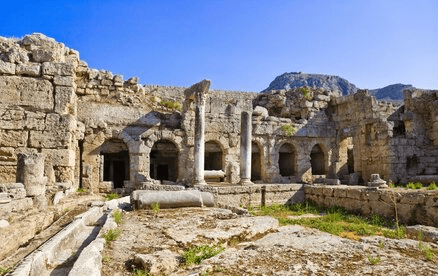
A modern archaeological site at Corinth, Greece

The Church’s first criticism toward Paul is that he is bold from a distance, but up close and personal, rather weak and unimpressive as an Apostle. I’m willing to be that every church pastor in the U.S. is more than able to know what this feels like in putting themselves in the Apostle’s shoes.

It’s an age old criticism that every preacher faces at various points, or at least with some sermons or writings. The people just don’t appreciate or like what they’re hearing or reading. It often comes out in the ubiquitous phrase, “I’m just not getting spiritually fed.” Wrapped up in that phrase is not only the criticism of oratorical skills, but also that they don’t like something about the preacher’s physical appearance, particular idiosyncrasies, or interaction with other people.

The second criticism of Paul by the Corinthians is that he acts too much according to human standards. In other words, the Apostle is just too worldly for them. If you happen to know anything about the ancient Corinthian Church, you’re either doing a major eye roll right now, or you’re just plain busting a gut in laughter.

There’s no more worldly church in the New Testament than the Corinthian Church. To have them bringing this point up to Paul is both laughable and downright sad. But again, every preacher nowadays knows the criticism all too well. For example, many pastors aren’t paid well with the convoluted reasoning that they shouldn’t be tempted toward worldliness – even though the parishioners themselves have no problem owning large homes, multiple cars, and high paying jobs.

The Corinthians were likely also concerned about Paul’s egoism – that he’s too much into worldly power and philosophies. Again, laughable stuff, considering the source. Yet again, these sorts of criticisms are rife within many churches. And the critics themselves tend to be ones who are enamored with wanting power and control for themselves, wanting to ensure that no one, including an upstart pastor, never treads upon their mastering of a very small world.

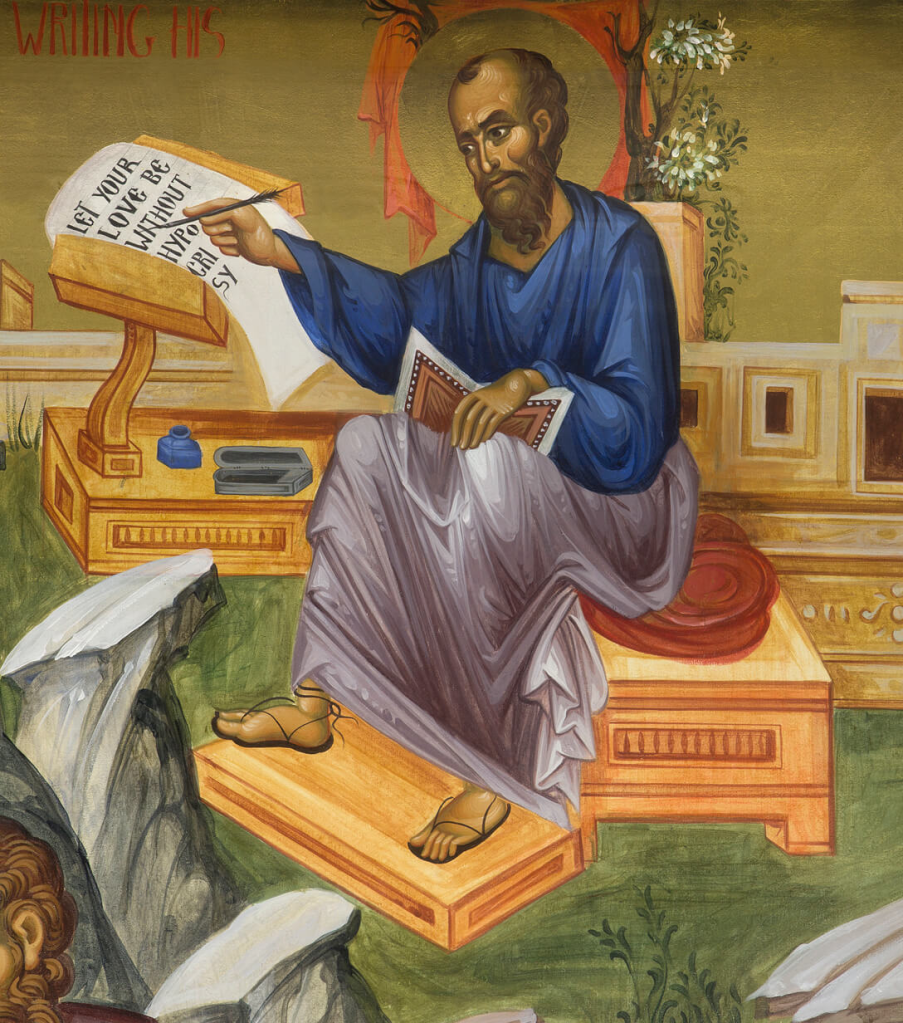
Orthodox icon of St. Paul writing to the churches

Paul responds to this by stating that he is, of course, a human being. However, he wields a different kind of power. Employing military metaphors, the Apostle describes the weapons that he uses as capable of destroying spiritual strongholds of arguments, and obstacles of pride against the knowledge of God – the very sorts of strongholds that were present among the Corinthians.

What’s more, Paul takes captive every thought and makes it obedient to Christ, and not to a self-serving agenda of worldly control and power. And he will use those weapons, if necessary, if the Corinthians keep up their petty criticisms and worldly behavior.

The bottom line of it all is that Christ made Paul an Apostle; and nobody in the Corinthian Church was made one. Paul’s authority was given, not taken, and he will use it to build up and not tear down. In other words, the Apostle Paul was committed to fulfilling his apostolic commission by establishing churches, building up those churches in the strength of faith, and protecting them from misguided and wrongheaded ways of operating.

All I have to say to this is that I am very glad that the Church belongs to Christ. Because that’s the only way we can still be talking about the Church still existing all these centuries later. God works, despite all the human foibles and nonsense.

Even though I talk like this (as does Paul!) there are still good Christian believers and good Christian churches in this world. Not every parishioner lacks self-awareness, is short-sighted, and has a plank in their eye. Nor are all pastors just in it for attention and some sort of worldly gain.

I’m still living and breathing, ministering and mentoring, after decades of Christian labor because of many good people who treated me well, spent good time with me, as well as those who received my teaching and my love, put it into practice, and have produced a harvest of righteousness beyond what I could imagine.

It would be good for all of us to experience supportive community, spiritual maturity, and wise ministry to others. If we can go through any process – no matter what it is – with the humility and meekness of Christ, then no matter what the end is, we have brought some peace and goodness into this old fallen world of ours.

And there is no shame in that!

Almighty and eternal God: Every good and perfect gift comes from you. Send down upon our pastors and parishioners alike a healthy spirit of grace and goodness, so that we all together may truly please you in all we say and do; and continually pour out your divine blessing upon us all. We ask this for the honor of your Son, our Advocate and Friend, Jesus Christ our Lord. Amen.