How It’s Built Matters (1 Kings 6:1-4, 21-22)

Artist depiction of Solomon’s Temple

Four hundred and eighty years after the people of Israel left Egypt, during the fourth year of Solomon’s reign over Israel, in the second month, the month of Ziv, Solomon began work on the Temple. Inside it was 90 feet long, 30 feet wide, and 45 feet high. The entrance room was 15 feet deep and 30 feet wide, as wide as the sanctuary itself. The walls of the Temple had openings in them, narrower on the outside than on the inside….

The inside of the Temple was covered with gold, and gold chains were placed across the entrance of the inner room, which was also covered with gold. The whole interior of the Temple was covered with gold, as well as the altar in the Most Holy Place. (Good News Translation)

The first major accomplishment – and the crowning achievement – of King Solomon’s reign was building the Temple in Jerusalem. His father, King David, had it in his heart to erect a great Temple for God as both a place of worship, and a permanent place for the Ark of the Covenant to rest. However, the Lord clearly instructed David not to build the Temple, but stated that his son would do so. (1 Chronicles 28:1-21)

Solomon spared no expense for building the Temple. He ordered vast quantities of cedar wood from King Hiram of Tyre, and had huge blocks of stone quarried for the building’s foundation. In order to complete the massive project, Solomon imposed forced labor on all his subjects, drafting people for work shifts that sometimes lasted a month at a time. (1 Kings 5:1-18)

And there was the gold – lots of it! The inside of the Temple was completely covered with gold. Gold is physically and metaphorically one of the most malleable metals on the planet: one gram of gold can be beaten into a 1-square meter sheet, and gold has been used as a symbol for everything from religious devotion to great wealth and immense power.

As glorious and elaborate as the Temple was, the most important room was perhaps the greatest theological statement of all; it contained almost no furniture. Known as the Holy of Holies, it housed the two tablets of the Ten Commandments inside of the Ark of the Covenant. The unseen and almighty God of the universe doesn’t really need a house, and most certainly cannot be contained within one.

Only once a year, on the Day of Atonement (Yom Kippur) the High Priest entered the most sacred Holy of Holies and pray to God on behalf of the Israelite nation. God’s world and God’s word are holy. It was understood that the Ten Commandments are very holy words, with the name of God being the holiest word of all. The Temple – by its sheer architecture – communicated what was most important about God.
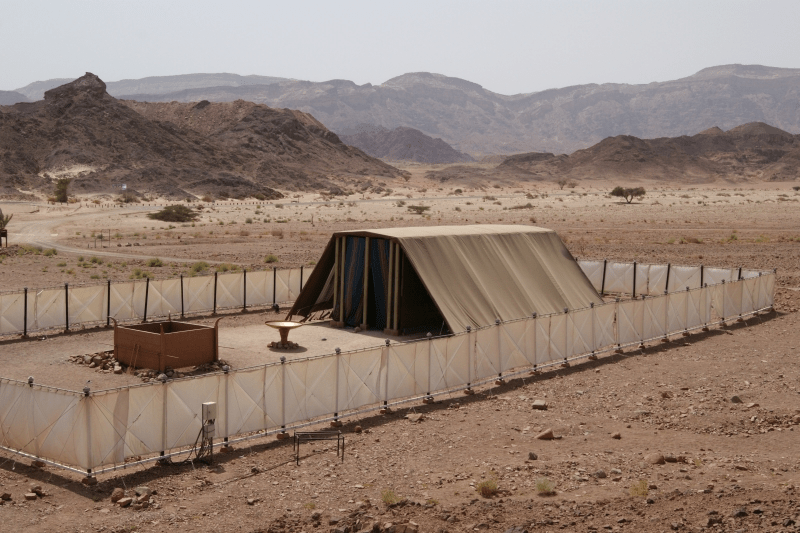
Model of the Tabernacle in Timna Valley Park, Israel

Yet, the way in which the Temple was constructed was very different from how the earlier Tabernacle was built. The Tabernacle was a sort of mobile temple for the wilderness journey. The entire community worked together in giving their possessions and services in order to make the Tabernacle a reality.

Without the contributions of the people, the project probably would not have happened at all. But the chance to help out in all the myriad ways of making things for the sanctuary, pulled everyone together in a high degree of compliance. (Exodus 36:1-6)

Indeed, the building of the Tabernacle was a consensual enterprise; the people’s faith was the wellspring of their philanthropy. Yet, in contrast, the mode by which Solomon carried out the construction of the permanent Temple was by sheer wealth, forced labor, and strong administrative business deals.

There was no community participation in the form of voluntarism in Solomon’s financing of the Temple build. To pay for the cedar and cypress wood provided by the King of Tyre and to quarry and transport the building materials, Solomon issued a massive levy. In other words, there wasn’t any free labor and no robust public spirit animating the construction.

The Tabernacle for which the people volunteered wholeheartedly never fell victim to evil. The Temple, however, eventually and certainly did – in large part due to the evil of the kings who presided over the theocracy.  

The fate of any institution is determined by how it is created in the first place. No matter what the polity and organizational structure is, it cannot long survive without popular support. Solomon’s Temple, despite all of its grandeur and gold, rested on a shaky foundation and sandy soil.

After the Temple was constructed, the sacrificial system was authorized only in Jerusalem and at the Temple. Everything was centralized under the behemoth of Solomon’s system. What’s more, practices like volunteerism and community participation were largely replaced with systems of heavy taxation and a large debt. That’s one reason the kingdom immediately split apart after Solomon’s death.

Perhaps if the selfless ethos that went into building the Tabernacle was utilized by Solomon in the building of the Temple, maybe the fate of king after king in Israel would have been quite different. For it is in the spirit of volunteerism and a concern for the public welfare that governments attentive to the common good of all persons are built. How something is built matters.

Almighty and gracious God of all, we humbly offer our gratitude for the blessing of selfless volunteers and those who participate freely in ministries of justice and service. Thank you for their tireless dedication and benevolence.

May your Spirit bless them with continual guidance as they faithfully serve others. Give them resilience, daring, and fortitude. Let joy, peace, and satisfaction be upon the good work that they do. Inspire and motivate them to persist through trying circumstances, steadfast in their dedication to aiding those around them.

Help us all to reflect the profound beauty and compassion of your divine love. Amen.

Keeping Sacred Space Sacred (John 2:13-22)

Christ Casting Out the Money Changers, by Peter Gorban

The Passover of the Jews was near, and Jesus went up to Jerusalem. In the temple he found people selling cattle, sheep, and doves and the money changers seated at their tables. Making a whip of cords, he drove all of them out of the temple, with the sheep and the cattle. He also poured out the coins of the money changers and overturned their tables. He told those who were selling the doves, “Take these things out of here! Stop making my Father’s house a marketplace!” His disciples remembered that it was written, “Zeal for your house will consume me.” 

The Jews then said to him, “What sign can you show us for doing this?” Jesus answered them, “Destroy this temple, and in three days I will raise it up.” The Jews then said, “This temple has been under construction for forty-six years, and will you raise it up in three days?” But he was speaking of the temple of his body. After he was raised from the dead, his disciples remembered that he had said this, and they believed the scripture and the word that Jesus had spoken. (New Revised Standard Version)

It doesn’t take a Bible scholar to figure out that Jesus was upset. He quite literally came to the Jerusalem temple, whipped everyone into shape, and cleaned house. 

Cleaning house is what the season of Lent is really all about. This is the time of year for Christians to take a good hard look at the state of their hearts; it’s about shining light on the shadowy dark places, so that we can turn from all that hinders our relationship to Christ, and allow the presence of God to fill us and give us new life.

In the other Gospel accounts we discern why Jesus was upset. Matthew, Mark, and Luke each mention Jesus saying that the temple is to be a house of prayer, but the ones buying and selling in the temple courts were making it a den of robbers. (Matthew 21:12-16; Mark 11:15-18; Luke 19:45-47)

Two things were happening which angered Jesus: 

  1. Business was taking place in the Court of the Gentiles, thus pushing non-Jews out of being able to worship God.
  2. Those providing the service of sacrificial animals were charging exorbitant prices and gouging those who were just trying to offer a sacrifice during Passover. 

Disrespect of Gentiles, along with plain old greed, hindered prayer and worship for everyone seeking God. John, however, did not mention those reasons. He simply communicated that Jesus was downright mad over his Father’s house being turned into a market.

Orthodox depiction of Christ driving out the money changers

Jesus quoted from Psalm 69 saying, “Zeal for your house will consume me.” That particular psalm is a lament. The psalmist was grieving over the state of religion; it had degenerated into mindless empty ritual.

For Jesus, although worship was happening, he lamented and grieved over the state of people’s hearts, because they were far from God. The evidence was that people cared more about the presence of other people and animals than they cared about the presence of God.

Jesus stood in the Old Testament prophetic tradition of getting down to the heart of the matter (e.g. Amos 4:4-5; Hosea 5:6, 6:6). From a New Testament perspective, it is impossible for the blood of bulls and goats to take away guilt and shame.

Therefore, there is no longer any temple because Jesus has come. The temple represented God’s presence on earth. But now the temple is Jesus, who is God with us, and God’s presence on earth. With the sending of the Holy Spirit, the presence of Jesus continues to be alongside the Church. Believers are God’s temple, the continuing presence of Jesus on this planet.

This creates a problem for many people. It’s the age old predicament of caring more about the presence of other things rather than the presence of God. Jesus was not speaking to pagan kings or Gentile sinners; he spoke to people in the temple courts who professed and worshiped the name of God – but they did not seek the presence of God with all their hearts. The Lord was not their primary allegiance.

Jesus wants people to desire the presence of God more than anything else in the whole world – and to not hinder others from doing so, as well. In every aspect of life, the heart must be in it. And the heart needs to be in the right place, at home, at work, at church, in the neighborhood, and in everyplace we go and everything we do and say.

The Cleansing of the Temple, by Ippolito Scarzella (1550-1620)

Many of the religious folk of Christ’s day lost their true sense of purpose as God’s people. They neither perceived nor focused on God’s presence, but cared more about animals and sacrifices and making money and keeping their social positions secure. 

Christ not only extends grace and mercy through healing the needy of society; he also turns his burning love for the Father on those who would treat the sacred with sacrilege. There is a time for gentleness and meekness, and there is a time for zeal and action, done with flavor!

Jesus had a zero-tolerance policy toward using the representation of God, the temple, as the means to make money. As people from all over the Middle East poured into Jerusalem for the Passover, savvy marketers set up their wares. 

Knowing that not everyone could bring animals for sacrifice, the money-changers were more than ready to take advantage of the situation by providing sheep and cattle at inflated prices. The temple looked more like a marketplace than a worship space, and Jesus would have none of it.

Christ the Lord was consumed with zeal for his Father’s house. Jesus single-handedly took on the businessmen and drove them out of the temple courts with a homemade whip. Whereas the people seemed to settle for the status quo of secular Passover protocol, Jesus restored worship to its rightful place in the life of God’s people.

Jesus still has zeal for proper worship. As he did in the temple all those centuries ago, Christ rearranges the furniture and upsets how things have become. Like an extreme makeover, the Lord overturns tables designed for selfish gain and re-establishes a connection between us and God. He upholds holiness and righteousness so that you and I will have a clean and clear path of relationship with the sovereign God of the universe.

Sacred space is important, both as a physical room or building as well as in our own spiritual hearts. That space becomes the meeting place between us and God. The Lord wants a meaningful dialogue with us, and he will guard that place of connection with great zeal.

Christ Jesus, the one who zealously loves, you have gone before me and cleared the way for me to enter God’s presence. Thank you for your movement toward me, and your careful guarding of our relationship. May my time on this earth be an offering of praise and thanksgiving to you. Amen.

Shining the Light On Our Fears (Mark 9:2-8)

Six days later Jesus took Peter, James, and John, and brought them to the top of a very high mountain where they were alone. He was transformed in front of them, and his clothes were amazingly bright, brighter than if they had been bleached white. Elijah and Moses appeared and were talking with Jesus. 

Peter reacted to all of this by saying to Jesus, “Rabbi, it’s good that we’re here. Let’s make three shrines—one for you, one for Moses, and one for Elijah.” He said this because he didn’t know how to respond, for the three of them were terrified.

Then a cloud overshadowed them, and a voice spoke from the cloud, “This is my Son, whom I dearly love. Listen to him!” Suddenly, looking around, they no longer saw anyone with them except Jesus. (Common English Bible)

The transfiguration of Christ was a glorious experience on the mountain for those closest to Jesus. Yet, we are told that Peter, James, and John – the inner circle of Christ’s disciples – were terribly frightened.

Peter, always the extrovert of the group, and forever their mouthpiece, nervously babbled-on without making any sense because he was so nervous and afraid.

Have you ever wondered why Jesus would take three of his disciples with him to experience such an incredible vision? Why did Jesus show these men something so otherworldly that they nearly soiled themselves? 

I will tell you why I think Jesus put his close disciples in such a glorious, yet frightening, position as this:

Because the only way to see Jesus as our only hope, we must face our fears, insecurities, and anxieties, squarely, without hiding from them.

Jesus did not relieve their anxiety. He let his disciples feel the full impact of their fear. The glory of Christ shone show brightly that Peter, James, and John could not hide from what was happening to them, and could not avoid what was in their minds and hearts. 

Only through shining the light on the shadowy place of our fears and insecurities will we ever be able to accept that we need a savior. And that savior is Jesus, the light of the world, the Lord over fear, anxiety, and discouragement.

The invitation which Christ extends to us is to move further into our fears, face those fears, and sit awhile with our fears, so that we can see how desperately we need the Savior Jesus. 

No one seeks a savior when they don’t even believe they need deliverance from anything. “I’m just fine, thank you very much!” says the independently self-sufficient person among us. To seek salvation, for such a person, is an intensely personal affair; they will look within, not without. It will take quite the desperate situation for them to consult someone who knows the ways of the soul.

But the one who sees what is truly inside of them, and is aware of their fear of connection; the scary prospect of confrontation; the anxiety of what will happen; or, the discouragement of failure; this is the one who is then able to hear the voice of God, and listen to Jesus give the answer to our most pressing life issues, worries, and concerns.

Jesus Christ wants to change us from the inside-out. He helps us by showing us not to avoid the fears which cause us to be beside ourselves, but instead, to face those fears and confront the anxieties within. 

The bright light of God’s presence enables us to see very clearly all that is within us. And Christ’s intimate relationship with us assures us that change is possible. Then, the Holy Spirit comes and empowers us for transformation, so that we may shine, along with Jesus, and let the light help others, as well.

You and I are never alone; we always have the glorious presence of Christ with us as we walk through dark valleys and ascend high mountains. 

It is the wonderful existence and omnipresence of God, in Christ, through the Spirit, which makes all the difference. We were created for connection with the divine, not for separation and loneliness in our fears.

Glorious Christ, you love me with a grace and mercy which always has my best interests in mind. Help me through my most pressing fears and failures so that I might see your glory, hear your voice, and know your constant presence. Amen.

Accept Your Shadow Side (Acts 7:30-40)

“Forty years later, in the desert near Mount Sinai, an angel appeared to Moses in the flame of a burning bush. When Moses saw it, he was amazed at the sight. As he went to take a closer look, the voice of the Lord called out to him, ‘I am the God of your ancestors—the God of Abraham, Isaac, and Jacob.’ Moses shook with terror and did not dare to look.

“Then the Lord said to him, ‘Take off your sandals, for you are standing on holy ground. I have certainly seen the oppression of my people in Egypt. I have heard their groans and have come down to rescue them. Now go, for I am sending you back to Egypt.’

“So God sent back the same man his people had previously rejected when they demanded, ‘Who made you a ruler and judge over us?’ Through the angel who appeared to him in the burning bush, God sent Moses to be their ruler and savior. And by means of many wonders and miraculous signs, he led them out of Egypt, through the Red Sea, and through the wilderness for forty years.

“Moses himself told the people of Israel, ‘God will raise up for you a Prophet like me from among your own people.’Moses was with our ancestors, the assembly of God’s people in the wilderness, when the angel spoke to him at Mount Sinai. And there Moses received life-giving words to pass on to us.

“But our ancestors refused to listen to Moses. They rejected him and wanted to return to Egypt. They told Aaron, ‘Make us some gods who can lead us, for we don’t know what has become of this Moses, who brought us out of Egypt.’ (New Living Translation)

We humans are a confusing paradox of sinner and saint. We are majestic people, created in the image and likeness of a good God. We are also profoundly fallen, touched by sin in every area of our lives. Our hearts exist with both light and darkness, having the capacity for both incredible altruism as well as inexplicable evil.

So then, it will do no good to retreat into binary definitions of people as being either good or bad. No, we shine and shadow at the same time. What really gets us into a terrible mess is when we ignore or deny our shadow selves. We then demonize the other while claiming purity for ourselves.

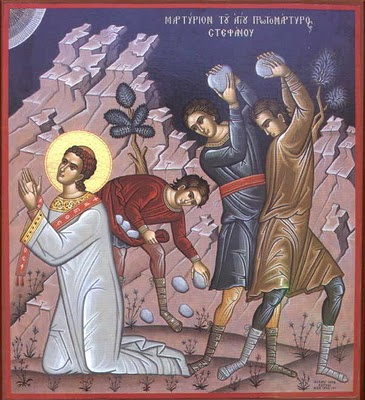
This is precisely what occurred when Stephen stood and spoke to a group of his fellow Jews. They stubbornly refused to acknowledge their shadow side. And it resulted in Stephen’s stoning and death. Whereas Stephen lifted and brought to light the unseemly aspects of their collective heritage, the people wanted nothing to do with it.

The Martyrdom of Stephen

In our present day, responses that do not want to acknowledge the shadow side include statements such as, “Quit being so negative. We focus on the positive. Expel this recalcitrant troublemaker once and for all!”

Oy. Acceptance cuts two ways. We must accept both our blessings and our curses. The acceptance of reality will not occur apart from a solid self-acceptance of who we are and how we are feeling in any given situation. On the practical level, it works something like the following story…

Several years ago, I went on a leadership retreat in the Canadian wilderness. We were so far out in the sticks that we needed special first aid training before leaving because if someone got severely injured it would be hours before any medical attention could be received. There was no cell phone service, no towns, no anything except mile after square mile of wilderness. 

One day, I was canoeing with a group of leaders, far out into the Canadian wilderness where there were no towns or people anywhere near us. It was very windy on this day in late May – which meant the water was still ice cold in Canada. One of the canoes capsized. We had to act quickly and deliberately – which was no small feat in a stiff wind. More than fifteen minutes would result in hypothermia for the two people in the water.

I did not like being in that situation. In fact, I didn’t much like the Canadian wilderness. Too many black flies and giant mosquitoes for me. My shadow side was coming out. But here I was, and I had to accept the reality I was in. One of the lessons I learned in that moment was that acceptance can sit alongside other reactions and emotions.

For example, a person can be outraged by an injustice, as Stephen was, and accept that it is a reality. Acceptance does not mean complacency or giving up. We can accept something while at the same time trying to make it better.

I also needed to accept what was happening inside of me. I was cold and worried. Trying to push those feelings away would have only added to the stress of the situation. If I failed to accept what was true about myself, I would be less able to deal with the situation, and so, would compromise my ability to help two people at risk.

I needed to accept the entire circumstance, including myself. Accepting what is inside gave me more influence over the situation, not less. Self-acceptance became the key to acceptance of unwanted conditions, and more importantly, acceptance of one another as human beings.

In that moment of rescuing two people (which ultimately proved successful) I became aware of a part of myself – the part that gets afraid and irritated – and chose not to stuff it or deny its existence.

I became the guy who talked to the panicked people in the water and kept them as calm as possible so that the others could get them out. I was able to do my part to help fearful people because I acknowledged and accepted my own fear.

Unlike my situation, however, Stephen’s experience ended in martyrdom. Just because we respond rightly, is no guarantee that everything will work out for our benefit. Rather, we say and do the things we must say and do, while leaving the results to a sovereign Lord.

It is our responsibility to work on ourselves, not others. And acceptance is the path to get there, all of it – including the shadow side – and not just part of it.

Jesus, let your mighty calmness lift me above my fears and frustrations. By your deep patience, give me tranquility and stillness of soul in you. Make me in this, and in all things, more and more like you. Amen.