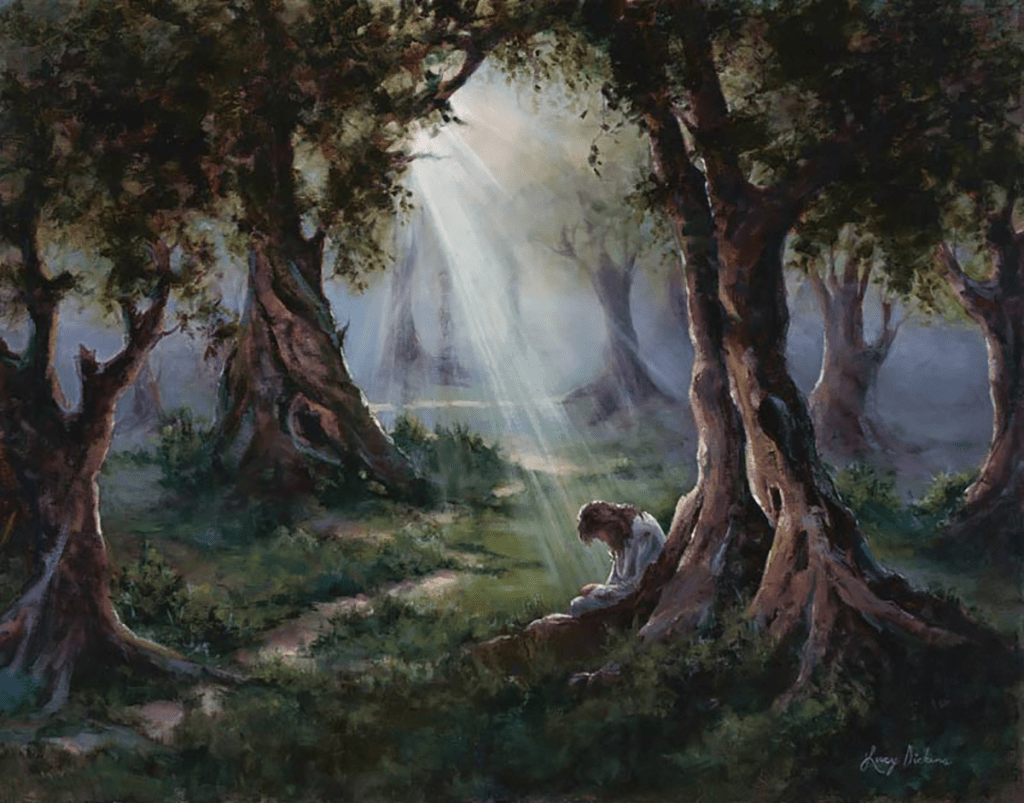
Consider Carefully How You Listen (Luke 8:16-21)

“No one lights a lamp and hides it in a clay jar or puts it under a bed. Instead, they put it on a stand, so that those who come in can see the light. For there is nothing hidden that will not be disclosed, and nothing concealed that will not be known or brought out into the open. Therefore consider carefully how you listen. Whoever has will be given more; whoever does not have, even what they think they have will be taken from them.”

Now Jesus’ mother and brothers came to see him, but they were not able to get near him because of the crowd. Someone told him, “Your mother and brothers are standing outside, wanting to see you.”

He replied, “My mother and brothers are those who hear God’s word and put it into practice.” (New International Version)

In this chapter of Luke’s Gospel, Jesus had just finished offering his parable of the sower. Central to that parable is the message of true hearing. To really hear the word of God is to believe it, and put it into practice.

The verses for today are arranged by the Evangelist Luke to emphasize this very important need for listening well, and integrating the Word of God into every facet of our daily lives.

Listening and the Light

Christ communicated to his disciples that persons with a noble and good heart are the ones who truly hear the Word of God, retain it, and persevere in following through and doing what they have heard. This is how one produces a spiritual harvest of righteousness and peace.

The good listeners who receive the Word are the ones who have the Light of the World in their daily life. They allow their own little light within them to be seen. The Light is meant to bring illumination for others.

Jesus exhorts his disciples to share the light of revelation given to them – because the world needs to continually hear and see that God’s benevolent and gracious kingdom is breaking into their communities and neighborhoods, into their institutions and their families.

For the sake of the church’s life, individual believers, and even the life of the world, it is imperative that we continually hear that God’s victorious reign of justice, goodness, and righteousness is truly and presently entering this realm we inhabit.

Therefore, it is quite needful that we learn to listen well. To hear the Word of God, respond obediently to it, and then openly proclaim what we have heard and seen, is how the mighty works of God are spread across the world.

Throughout the history of Christianity, whenever the church devoted themselves to hearing the Word, it resulted in doing things which bring light to the world. Here are just a few examples of how believers have let their light shine into the darkest times of history:

  • Taking-in and adopting unwanted children who would otherwise be victims of infanticide, even though the believers own resources were limited
  • Moving toward the sick and dying and ministering to them during periods of plague and disease, while the rest moved away in order to avoid becoming sick themselves
  • Caring for prisoners who had no family to provide them with necessary food and clothing, as if those persons were their own kin
  • Giving benevolence and kindness to the poor – especially to immigrants, widows, and orphans

Listening and the Family

Jesus states that those who hear and do the Word of God are his family – a new family oriented around the spiritual, and not just biological bloodlines.

Many people today are uprooted from one’s family of origin. And there are a great many older persons who either live alone as widows or widowers, or are not geographically (nor relationally) close to their own biological children and/or grandchildren.

For a host of reasons, millions of persons around the world are estranged from family members.

Sometimes, religious beliefs and spiritual commitments lie at the heart of family estrangement. This is one significant reason why the church is important; it serves as the community of the redeemed, a group of people with like-minded values who support one another, much like a family is supposed to do.

One of the many metaphors of the church in the New Testament is of “the family of God.”

Now about your love for one another we do not need to write to you, for you yourselves have been taught by God to love each other. And in fact, you do love all of God’s family…. Yet we urge you, brothers and sisters, to do so more and more…

1 Thessalonians 4:9-10, NIV

The church is made up of a conglomeration of families who are meant to strengthen one another in faith, and are present with each other in times of change and loss.

We must continually keep in mind (and heart) that the church is not designed to be a mere collection of individuals or families; but rather to be a new family, brought together by the providence of God; to be a community of redeemed persons, living and loving Jesus together through supporting each other’s faith, and practicing love one to another.

The church is indeed the family of God.

And within any family – whether spiritual or biological – listening must be at the heart of relational dynamics with each other as members. Without truly hearing what each person is saying, as well as what the Word of God is saying to us collectively, it is difficult to experience unity, harmony, and love.

We listen, and then we act on what we hear – for the benefit of the family – both biological and spiritual. So, consider carefully how you listen and hear.

Generous and loving God, I come to you in thanksgiving, knowing that all I am and all that I have is a gift from you.

In faith and love, help me to do your good and benevolent will. Speak Lord, for I am listening. Let me hear your words in the depth of my soul, and let me hear them clearly.

I offer to you today every aspect of my life – no matter what is, or where I am. I seek to be patient, merciful, generous, and holy in all I say and do. Give me wisdom and insight to understand your will, and the energy to carry out my good intentions.

I offer to you my time, abilities, possessions – and even the lack thereof of them – to you as a true act of faith, to reflect my love for you and for my neighbor. Help me to reach out to others as you have reached out to me; through Jesus Christ my Lord, in the strength of the Holy Spirit.

Amen.

God (Psalm 147:12-20)

Extol the Lord, O Jerusalem!
    Praise your God, O Zion!
For he strengthens the bars of your gates;
    he blesses your children within you.
He grants peace within your borders;
    he fills you with the finest of wheat.
He sends out his command to the earth;
    his word runs swiftly.
He gives snow like wool;
    he scatters frost like ashes.
He hurls down hail like crumbs—
    who can stand before his cold?
He sends out his word and melts them;
    he makes his wind blow, and the waters flow.
He declares his word to Jacob,
    his statutes and ordinances to Israel.
He has not dealt thus with any other nation;
    they do not know his ordinances.
Praise the Lord! (New Revised Standard Version)

The psalmist portrays a God who is clearly in control of all things. This is the Lord God almighty, who is the Creator, and is sovereign over the entire world.

God has no need for bluster, or to leverage knowledge in order to get things done. With only a word, the weather changes completely, and people are invited to participate in the divine will for this earth.

There is no creature, and no human on this earth, who has such power and authority, sovereignty and control, over everything and everyone as God.

Because of God’s great power, the Lord is able to extend gracious and providential care for those who put their hope in God’s steadfast love. Such grace and love of divine blessing is the means for Israel’s praise of Yahweh in the psalm.

The grandest blessing of them all is the gift of the “word.” God’s word of command is what sets in motion all of the natural processes of this earth. It is the divine word that gives and sustains life on this planet.

The same divine word which has been gifted in order for the waters to abundantly flow and the wind to continually blow, is the word given to Israel in the laws and commands for the people.

This gift of word is a wonderful privilege, given to the nation of Israel in the Old Testament. It is what makes them a peculiar people, recipients of the divine will. It is a word of guidance for the covenant people of God.

And that divine word is the primary reason for the human word to respond in praise by extoling the awesome might and mercy of God.

Please understand that today’s psalm is profoundly theological. In other words, it is all about God. We humans and the creation are mentioned and talked about within the psalm, yet all of it is in the context of God’s activity in the world, of God’s actions in history.

The things which God does among us and in this world is a theological reflection, in and of itself. Let me say it another way: God does what God is.

God didn’t simply do some wondrous act in the past. The Lord didn’t merely console and heal someone at some time. Rather, God is constantly binding up the brokenhearted; continually casting down the wicked; and consistently demonstrating steadfast love through right, good, and just actions, all the time.

There is a never a time when God is not God, being holy, loving, and good; and therefore, God’s eternal actions are a non-stop working of justice and righteousness in this old fallen world.

Evil, of course, is continually at work, as well. But we are not talking about opposing powers which are equal to each other. Justice and love will eventually swallow up wickedness and evil.

This is the hope that undergirds the psalmist, and it is the reason that the faithful keep persevering and offering their praise, adoration, and thanksgiving to the God who never slumbers nor sleeps, but is always watching over the righteous.

God’s wisdom and power is matchless. It is impossible for any one of us, or even all of us collectively, to count and number all the stars in the universe. But God can. And God even has them all named, because they all belong to God.

Neither you nor I could ever number the raindrops that fall on our roof in just a few minutes. Yet, God can. And the Lord can count the grains of sand on a beach and the hairs on every head (or in some cases, every hair on a guy’s back).

We humans number in the billions on this earth. Yet, God knows us all by name. And God’s perfection is near and intimate, not distant and remote.

I don’t know about you, my friend, but my encounters with God are nothing like a virtual Zoom meeting. My interactions with the God of the universe are close, intimate, and caring, just as a mother with her newborn baby.

Therefore, matters of renewal, restoration, and even resurrection are not problems for the God of the psalmist. Widows are comforted and rejoice. The poor are lifted up, and not ruined by their poverty.

The confused, the disordered and disoriented, the discouraged and discombobulated, are all held in the hands of the God who knows their confusion and will take care of them.

I might not understand; and, in fact, the older I become, I’ve discovered that the less I actually know. But I believe. I trust God. I do this, daily, because the Lord has demonstrated to me over and over again that God is trustworthy and has the ability to bend everything in this world for redemptive purposes.

That is the sort of God I serve – that the psalmist serves. And this faith, hope, and love is what I want for you, as well, my friend.

Life is too short and precious to squander it, and to flounder in disbelief. So, just listen; and take as much time as you need to hear the word, and experience the presence of life that is around you, and right in front of your face.

Dearest and most gracious Lord:

I thank you for the gift of life, the rising sun, and the promise of the seasons.

I give you thanks for my family and friends and the gifts they share; for my home and all its comforts within; for the abundance you give me and my willingness to share it with others.

I offer my gratitude to you for granting me wisdom, and the ability to listen; for acceptance of the challenges that I face every day; for strength and courage to act for justice and peace.

Most of all, I thank you for the knowledge that, without you, I have nothing; and with you, I possess all things, and have everything I need. Amen.

The Holy Name of Jesus (Luke 2:15-21)

Orthodox depiction of the circumcision and naming of Jesus

When the angels had left them and gone into heaven, the shepherds said to one another, “Let us go now to Bethlehem and see this thing that has taken place, which the Lord has made known to us.” So they went with haste and found Mary and Joseph and the child lying in the manger. When they saw this, they made known what had been told them about this child, and all who heard it were amazed at what the shepherds told them, and Mary treasured all these words and pondered them in her heart. The shepherds returned, glorifying and praising God for all they had heard and seen, just as it had been told them.

When the eighth day came, it was time to circumcise the child, and he was called Jesus, the name given by the angel before he was conceived in the womb. (New Revised Standard Version)

“The Holy Name of Jesus” is a celebration, observed by some Christian traditions, each year on January 1 – which is the eighth day after the birth of Jesus, when he was named and circumcised at the temple in Jerusalem.

An angel of the Lord appeared to him in a dream and said, “Joseph, son of David, do not be afraid to take Mary as your wife, for the child conceived in her is from the Holy Spirit. She will bear a son, and you are to name him Jesus, for he will save his people from their sins.” (Matthew 1:20-21, NRSV)

In the Law of Moses, all male infants are to be circumcised on the eighth day after their birth (Leviticus 12:3). Throughout most of the history of the Christian Church, January 1 has been celebrated as a feast day devoted to the naming of Jesus.

The name “Jesus” comes from the Hebrew Yeshuah (Joshua) which means “Yahweh will save.” It is a name fitting for the person and work of Christ.

Therefore God exalted him even more highly
    and gave him the name
    that is above every other name,
so that at the name given to Jesus
    every knee should bend,
    in heaven and on earth and under the earth,
and every tongue should confess
    that Jesus Christ is Lord,
    to the glory of God the Father. (Philippians 2:9-11, NRSV)

Faith is always followed by obedience. So, the faith of Joseph and Mary in believing the words of the angel Gabriel, translated into the obedient naming of their son as “Jesus.” (Luke 1:31-32)

Jesus, bearing the name of savior, is holy in every way. Not only does the name of Jesus point to his divinity – because of his miraculous conception by the Holy Spirit – but it also directs us toward the special mission for which he entered this world.

Jesus Christ, the Son of God, and Son of Humanity, is God’s agent of deliverance for both Israel and the whole world.

“Do not be afraid, for see, I am bringing you good news of great joy for all the people: to you is born this day in the city of David a Savior, who is the Messiah, the Lord….” (Luke 2:10-11, NRSV)

The Gospel writer Luke provides us with a birth narrative “pregnant” with theological information and importance:

  • Jesus has divine sonship, and possesses the status of king (Luke 1:31-35)
  • Jesus comes from the city of David, which is Bethlehem, not Jerusalem (Luke 2:4, 11)
  • Jesus is described by the angel Gabriel as Son of the Most High, Son of God, Savior, Messiah, and Lord; each of these titles direct us to his identity and mission (Luke 1:32, 35; 2:11)

I like the collective response of the shepherds, after they received heavenly good news from a group of angels.

They could have dismissed the entire thing as having drunk too much brandy on a brisk winter night. They could have kept the whole affair to themselves, reasoning that nobody would believe a bunch of stinky shepherds.

Instead, much like Mary who hurried off to Elizabeth after receiving the angelic message, the shepherds dropped everything to go and see the feeding trough with a newborn baby wrapped in swaddling cloth.

In other words, the shepherds belief in what they heard and experienced, quickly translated into action. It was only appropriate that it was shepherds who discovered the newborn king, the Son of David, himself a shepherd who was anointed by God.

The shepherds went and followed the signs given to them by the angel. And they believed. A motley group of shepherds returned to their fields, kicking up their heels, praising and glorifying God. They knew that things would never be the same again.

The name of Jesus is holy, simply because the Lord Jesus Christ is the Holy One. Christians recognize Jesus as Savior, the fulfillment of all God’s promises. His singular birth, life, death, resurrection, and ascension is exactly, I believe, what this old fallen world is most in need of.

It is never too late to resolve knowing Jesus. At the beginning of this year, there is perhaps no better resolution to make, again and again, of knowing Jesus Christ and honoring his holy name.

Eternal Father, you gave to your incarnate Son the holy name of Jesus to be the sign of our salvation. Plant in our hearts the love of Jesus, truly God and truly human, and grant that we may praise and bless your Holy Name with our whole mind, heart, body, and spirit, that we may know your boundless compassion and mercy. In Christ’s name, we pray. Amen.

The Light of the World (John 8:12-19)

The Light of the World, by the Jyoti Art Ashram

Again Jesus spoke to them, saying, “I am the light of the world. Whoever follows me will never walk in darkness but will have the light of life.” 

Then the Pharisees said to him, “You are testifying on your own behalf; your testimony is not valid.” 

Jesus answered, “Even if I testify on my own behalf, my testimony is valid because I know where I have come from and where I am going, but you do not know where I come from or where I am going. You judge by human standards; I judge no one. Yet even if I do judge, my judgment is valid, for it is not I alone who judge but I and the Father who sent me. In your law it is written that the testimony of two witnesses is valid. I testify on my own behalf, and the Father who sent me testifies on my behalf.” 

Then they said to him, “Where is your Father?”

Jesus answered, “You know neither me nor my Father. If you knew me, you would know my Father also.” (New Revised Standard Version)

In this season of Christmastide, I am reminded that my own joy over the birth of Jesus as the incarnation of God upon this earth, is not shared by everyone. Where I see good news, there are others who feel threatened. As I bask in glorious light, some prefer to remain in the shadows.

Not everyone, of course, buys into this distinctively Christian way of seeing things – which is why it’s important for all Christians and Churches everywhere to be characterized by the Light and not by the darkness.

Humanity is a strange alchemy of both light and dark, hopefulness and hopelessness, awareness and ignorance, love and hate. We must acknowledge the light, bring it out, and let it shine.

Hiding the light only gives the dark forces of this world an opportunity to hold a sinister and shadowy grip of guilt and shame on the people of this world.

I find that most people want truth and authenticity. They want to discover, know, and be told the truth from a genuine place of care and attention.

There are, however, those few persons who only want what they want, and don’t care much about truth and authenticity, that is, unless they can use it as leverage for their personal agenda.

Jesus Christ, Light of the World, by William Holman Hunt (1827-1910)

One of the reasons I like Jesus so much, is that he lived and spoke truth from a good place, and actually worked to better the human condition in its most awful situation.

It doesn’t take a biblical scholar to see that most of the religious leaders, especially the Pharisees, rejected the words of Jesus. They brought up a legitimate legal issue (after all, they were the experts in the Mosaic law) of Jesus bearing witness to himself. How could Jesus possibly be Messiah without the proper testimony of two or three witnesses to his messiahship?

Put another way, why should anyone believe anything Jesus was saying? What stamp of authenticity is upon his ministry? The Pharisees wanted legal evidence, so they confronted Jesus. Most of all, they wanted to expose him as an illegal.

Christ’s response to the religious leaders was consistent with most all of his responses, whenever he was queried about his authenticity. And those responses rarely made sense to most of the people hearing it – largely because they were jerks to begin with.

What I’m getting at is that whenever our hearts are oriented toward humility, gentleness, empathy, good relations, mercy, and peacemaking, then Jesus makes a whole lot of sense.

But whenever the heart is full of shadows and darkness, the person is then driven by unconscious forces which never consciously understand what in the world Jesus is saying to them.

A well-oriented heart is a gift obtained from God. A disoriented heart and a fragmented mind are the result of arrogant pride and selfish agendas.

Therefore, what Jesus said makes perfect sense when he stated that, because of his divine connection, anything and everything he says and does is true, no matter what the issue is.

The problem with the Pharisees speaking with Jesus is that they were not familiar with the two witnesses which he provided for them. Since they didn’t know the Father, the Father’s witness meant nothing to the religious leaders.

Notice that in the banter between Jesus and the Pharisees, Christ seemed to understand that he was not going to convince the unconvinced.

That’s one of the reasons Christ spoke in parables and answered questions other than what people asked of him. Jesus was not going to waste his time with folks who already had their minds made up.

“Do not give what is holy to dogs, and do not throw your pearls before swine, or they will trample them under foot and turn and maul you.”

Jesus (Matthew 7:6, NRSV)

Jesus wants people to make right judgments, instead of ignoring all of the epistemic knowledge which is available to them. If you desire the real deal, and want the truth, then open yourself to the means of authenticating it.

Why do you see the speck in your neighbor’s eye but do not notice the log in your own eye? Or how can you say to your neighbor, ‘Let me take the speck out of your eye,’ while the log is in your own eye? You hypocrite, first take the log out of your own eye, and then you will see clearly to take the speck out of your neighbor’s eye. (Matthew 7:3-5, NRSV)

It’s hard to see the light whenever there is a problem with your eyesight. Jesus claims to be the Light of the World. In order to test that claim, you’d better first have your eyes examined.

For those with the eyes to see, the Light illumines the way. Trust the Light. Take it where it leads you.

Almighty God, whose Son our Savior Jesus Christ is the light of the world: Grant that your people, illumined by Word and Sacrament, may shine with the radiance of Christ’s glory. May you bless us with the brightness of Christ’s glory! And, may you enable us to keep seeking the light of Christ. Amen.