Human Plans vs. Divine Plans (Micah 2:1-13)

The Prophet Micah Preaching, by Peter Gorban, 1990

Woe to those who plan iniquity,
    to those who plot evil on their beds!
At morning’s light they carry it out
    because it is in their power to do it.
They covet fields and seize them,
    and houses, and take them.
They defraud people of their homes,
    they rob them of their inheritance.

Therefore, the Lord says:

“I am planning disaster against this people,
    from which you cannot save yourselves.
You will no longer walk proudly,
    for it will be a time of calamity.
In that day people will ridicule you;
    they will taunt you with this mournful song:
‘We are utterly ruined;
    my people’s possession is divided up.
He takes it from me!
    He assigns our fields to traitors.’”

Therefore you will have no one in the assembly of the Lord
    to divide the land by lot.

“Do not prophesy,” their prophets say.
    “Do not prophesy about these things;
    disgrace will not overtake us.”
You descendants of Jacob, should it be said,
    “Does the Lord become impatient?
    Does he do such things?”

“Do not my words do good
    to the one whose ways are upright?
Lately my people have risen up
    like an enemy.
You strip off the rich robe
    from those who pass by without a care,
    like men returning from battle.
You drive the women of my people
    from their pleasant homes.
You take away my blessing
    from their children forever.
Get up, go away!
    For this is not your resting place,
because it is defiled,
    it is ruined, beyond all remedy.
If a liar and deceiver comes and says,
    ‘I will prophesy for you plenty of wine and beer,’
    that would be just the prophet for this people!

“I will surely gather all of you, Jacob;
    I will surely bring together the remnant of Israel.
I will bring them together like sheep in a pen,
    like a flock in its pasture;
    the place will throng with people.
The One who breaks open the way will go up before them;
    they will break through the gate and go out.
Their King will pass through before them,
    the Lord at their head.” (New International Version)

One of the reasons the Daily Lectionary has been giving us a generous portion of prophetic and divine judgment, is that Advent is upon us. In other words, Jesus didn’t just show up in a vacuum. Christ came in his incarnation because the world needs him. The time was ripe for the Lord to come.

Sin is like a humungous rat’s nest that’s been intertwined with the human heart. You cannot simply destroy the nest without also destroying the heart. It takes painstaking attention and patience to undo the connection. And it requires such consummate skill that only God has the combination of motivation, endurance, and ability to do the job.

Perhaps you, like me, are weary of sin’s presence in this world – not to mention having to deal with it daily within the shadows of our own hearts. To keep going, we need God. Secularism cannot help us here, because secular answers cannot offer us good and permanent directives for life.

What’s more, even our religious institutions and faith communities have become, for many, a source of grief instead of hope. Churches can be wracked with sin as much, or more, than any secular system. Though religion ought to help connect us with our true selves, it too often causes us to stray from our authentic self.

Religious bodies too often wed themselves with secular bodies, and encourage us toward extreme independence. Thus, we forget that our real destiny is to live in community within a larger human context – to contribute to the whole of humanity, and in turn, be enriched by others.

This situation is one of the reasons God sent the prophets to warn the people and call them back to a healthy and holistic way of life, connected to the divine and to one another in vital and joyous community.

The prophet Micah, along with his fellow prophets, warned and lamented that the people are abandoning the soul of Holy Scripture – keeping up appearances of holiness, while actually planning to take advantage of others for self-centered purposes.

Religious faith in the prophet’s day, as well as our own, is continuing to wane because its biblical foundation is being undermined – not by liberal or progressive theologians, as much as conservative and fundamental adherents who lose sight of Scripture’s spirit and gospel, in favor of hardline law.

We need light – not the dark negations of those who insist on remaining religious masters of extremely small worlds. We must pay attention to, and cultivate, the vineyard of the Lord. Let the faithful concern themselves with clarifying the important elements of religion, such as the nature of prophecy, the Holy Spirit, redemption, and the sanctification of individuals and the community.

As long as we only absorb ourselves with one’s personal piety and one’s small group of cronies, and ignores the common good of all persons, and justice in the world, refusing to look beyond the end of one’s nose, then we will continue to turn away from the prophetic utterance we already have within Scripture. And we will have no ability to discern nor hear the modern day prophet when they speak.

Micah the prophet made a specific charge against his fellow citizens who were powerful businessmen. They spent their time devising schemes to get possession of land from small farmers. Much like the big corporation today, the ancient business people carried out their schemes because they had the financial backing, political influence, and judicial power to do it.

In response, God devises his own plans to thwart the evil machinations of greedy and powerful persons. Micah was supremely confident that the wrongs in this world would eventually be made right; he firmly believed that a sovereign and just God would handle it.

Also, much like today, the greedy business persons and corporations simply dismiss all this God-talk as irrelevant; calamity will not overtake them. But keeping God out of sight and out of mind doesn’t mean that God isn’t there. They will have to give an account for their unethical business practices.

It seems, as in the day of Micah, that our contemporary situation is not so different. Much of the world’s institutions, corporations, and governments are so out of touch with religion and religious ethics, that if a charismatic person comes along proclaiming a gospel of injustice, the business leaders would hire that person on the spot.

Lord, have mercy.

The Day of the Lord (Zechariah 14:1-9)

Art by Larissa Lando

A day of the Lord is coming, Jerusalem, when your possessions will be plundered and divided up within your very walls.

I will gather all the nations to Jerusalem to fight against it; the city will be captured, the houses ransacked, and the women raped. Half of the city will go into exile, but the rest of the people will not be taken from the city. Then the Lord will go out and fight against those nations, as he fights on a day of battle. On that day his feet will stand on the Mount of Olives, east of Jerusalem, and the Mount of Olives will be split in two from east to west, forming a great valley, with half of the mountain moving north and half moving south.You will flee by my mountain valley, for it will extend to Azel. You will flee as you fled from the earthquake in the days of Uzziah king of Judah. Then the Lord my God will come, and all the holy ones with him.

On that day there will be neither sunlight nor cold, frosty darkness. It will be a unique day—a day known only to the Lord—with no distinction between day and night. When evening comes, there will be light.

On that day living water will flow out from Jerusalem, half of it east to the Dead Sea and half of it west to the Mediterranean Sea, in summer and in winter.

The Lord will be king over the whole earth. On that day there will be one Lord, and his name the only name. (New International Version)

Even though people are polarized politically, not on the same page spiritually, and with as many diverse opinions as the grains of sand on a beach, we all seem to agree on one thing: The world is a messed up place.

Indeed, our world in fundamentally broken. There is injustice everywhere. You don’t have to go very far to find corruption. Selfishness abounds. Wars and violence and death proliferate in every corner of the globe. Just watching the evening news can give a person secondary trauma.

The Bible is not aloof to the injustice and human suffering of this old fallen world. Ancient peoples saw their share of hard circumstances and horror. We have difficult passages in Holy Scripture, like today’s Old Testament lesson, because we live in a difficult world.

There is, however, an end to it all. The prophet Zechariah communicated that God shall intervene and personally hold to account the world’s systems, institutions, organizations, communities, nations, and individuals. Because God is Love, the Lord will not put up with systemic evil and wicked hearts forever.

We people are both victims and perpetrators. By God’s grace, whenever we perpetrate injustice, we will become aware of it and seek to make it right through spiritual repentance and personal restitution. And if we don’t, may the Lord have mercy on us.

The Day of the Lord is a phrase referring to God’s divine judgment on this world. The Lord will personally come, according to the prophet Zechariah, to judge the world and establish a gracious and benevolent rule forever. On that day, events shall unfold which have never happened before.

Zechariah, of course, is not the only prophet to foresee the great Day of the Lord coming in power and glory. Notice what a few of the other prophets say:

Wail, for the day of the Lord is near;
    it will come like destruction from the Almighty.
Because of this, all hands will go limp,
    every heart will melt with fear.
Terror will seize them,
    pain and anguish will grip them;
    they will writhe like a woman in labor.
They will look aghast at each other,
    their faces aflame.

See, the day of the Lord is coming
    —a cruel day, with wrath and fierce anger—
to make the land desolate
    and destroy the sinners within it.
The stars of heaven and their constellations
    will not show their light.
The rising sun will be darkened
    and the moon will not give its light.
I will punish the world for its evil,
    the wicked for their sins.
I will put an end to the arrogance of the haughty
    and will humble the pride of the ruthless.
I will make people scarcer than pure gold,
    more rare than the gold of Ophir.
Therefore I will make the heavens tremble;
    and the earth will shake from its place
at the wrath of the Lord Almighty,
    in the day of his burning anger. (Isaiah 13:6-13, NIV)

Alas for that day!
    For the day of the Lord is near;
    it will come like destruction from the Almighty…

The Lord thunders
    at the head of his army;
his forces are beyond number,
    and mighty is the army that obeys his command.
The day of the Lord is great;
    it is dreadful.
    Who can endure it? (Joel 1:15; 2:11, NIV)

“The day of the Lord is near
    for all nations.
As you have done, it will be done to you;
    your deeds will return upon your own head.” (Obadiah 15, NIV)

The great day of the Lord is near—
    near and coming quickly.
The cry on the day of the Lord is bitter;
    the Mighty Warrior shouts his battle cry.
That day will be a day of wrath—
    a day of distress and anguish,
        a day of trouble and ruin,
    a day of darkness and gloom,
        a day of clouds and blackness—
    a day of trumpet and battle cry
against the fortified cities
    and against the corner towers. (Zephaniah 1:14-16, NIV)

The Day of the Lord is the final day of reckoning for those who have stubbornly held to their unjust ways and failed to acknowledge there are better and righteous ways to live and operate in the world. God shall purge the earth of evil.

Just because suffering and wickedness have endured for several millennia, does not mean that God is absent, uncaring, or will do nothing. And just because people (supposedly) get away with being self-centered and calloused toward their fellow humanity, does not mean they won’t have to face the Judge someday.

If you have suffered from a harsh leader, or endured an unjust situation, or seen others you care about crushed by an oppressive system, please understand that God does see it all – and God will vindicate the godly, while holding the ungodly accountable for their wickedness.

It is frustrating, even maddening, to have to put up with injustice day after day. Take heart to neither give up nor give in, because the Lord your God has your back. There is support for today, and justice for tomorrow.

Almighty God, who created humanity in your own image: Grant us grace to fearlessly contend against evil, and to make no peace with oppression. Help us to use our freedom, and employ it in the maintenance of justice among individuals and nations, to the glory of your holy Name, through Jesus Christ our Lord. Amen.

Advent Is Coming (Zechariah 13:1-9)

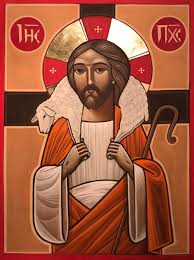
Coptic Church icon of Jesus the Good Shepherd

“On that day a fountain will be opened to the house of David and the inhabitants of Jerusalem, to cleanse them from sin and impurity.

“On that day, I will banish the names of the idols from the land, and they will be remembered no more,” declares the Lord Almighty. “I will remove both the prophets and the spirit of impurity from the land. And if anyone still prophesies, their father and mother, to whom they were born, will say to them, ‘You must die, because you have told lies in the Lord’s name.’ Then their own parents will stab the one who prophesies.

“On that day every prophet will be ashamed of their prophetic vision. They will not put on a prophet’s garment of hair in order to deceive. Each will say, ‘I am not a prophet. I am a farmer; the land has been my livelihood since my youth.’ If someone asks, ‘What are these wounds on your body?’ they will answer, ‘The wounds I was given at the house of my friends.’

“Awake, sword, against my shepherd,
    against the man who is close to me!”
    declares the Lord Almighty.
“Strike the shepherd,
    and the sheep will be scattered,
    and I will turn my hand against the little ones.
In the whole land,” declares the Lord,
    “two-thirds will be struck down and perish;
    yet one-third will be left in it.
This third I will put into the fire;
    I will refine them like silver
    and test them like gold.
They will call on my name
    and I will answer them;
I will say, ‘They are my people,’
    and they will say, ‘The Lord is our God.’” (New International Version)

There’s likely a reason why so many Bible-readers have barely considered, or just never read, the minor prophets of the Old Testament: It’s difficult reading, on several levels.

Yet, the twelve books of the minor prophets, along with the four books of the major prophets, account for a lot of material within Holy Scripture. If we are to understand the whole of the Bible, as well as know God better, we need to contend with what the prophets have to say.

Impurity and cleansing, grace and judgment, idolatry and stabbing, prophets and visions, sheep and shepherds, faith and apostasy, are all part of what seems, on the surface, to be a confusing hodge-podge of verbiage from the prophet Zechariah. Yet, we can still observe the things God cares about.

The Lord promised to rid the land of idols (false gods), (false) prophets, and the spirit of impurity (false righteousness). If God takes out the false prophets, then the people can say good riddance to a false message of leading others toward idolatry and impurity.

The spirit and the message behind false prophets, unholy leaders, and unrighteous teachers, has to do with propagating lies and suppressing truth, so that they can deceive people and manipulate others for their own benefit – leading groups of people away from reality, and into commitments that go nowhere.

This insidious stuff is meant to be taken quite seriously – because it leads to a breakdown in community, a proliferation of injustice, and oppressive spiritual bondage. That’s why we have a rather dramatic picture of parents stabbing a child – not because God likes violence – but to demonstrate that false prophets and their message will damage and destroy a nation, if indulged.

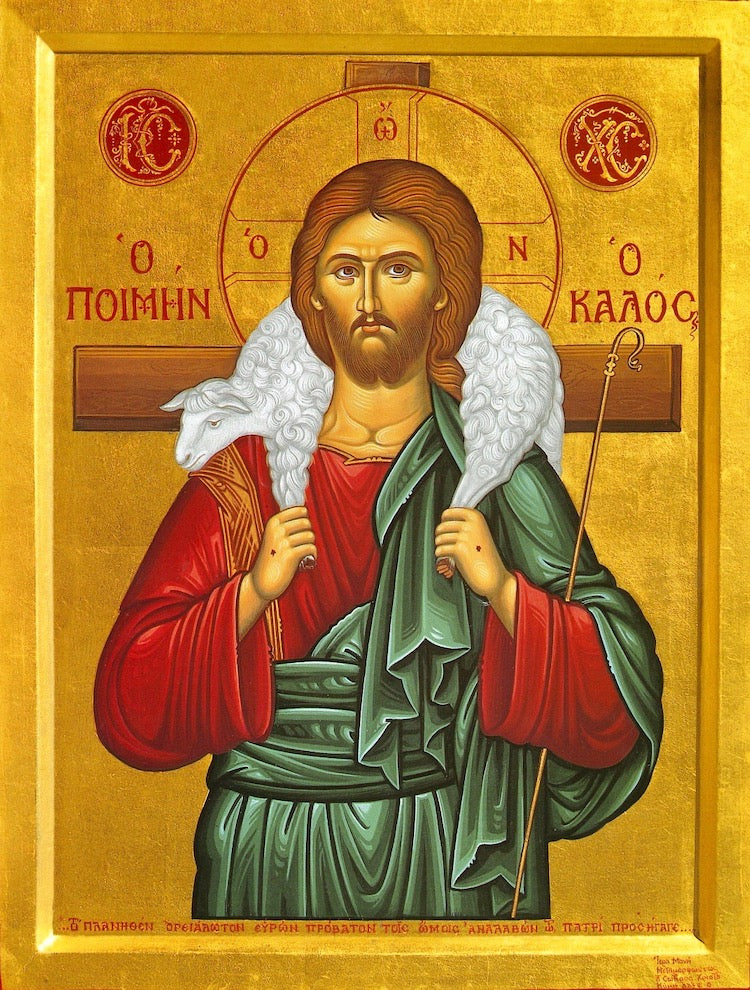
Orthodox icon of Jesus the Good Shepherd

We must always keep in mind and remember that injustice and unrighteousness must always be nipped in the bud (Deuteronomy 13:6-11). Sin, that is, those things which deceive and make false promises that result in a downward spiral toward death, is to be confronted. In the New Testament, Jesus put the matter this way:

If your right eye causes you to stumble, gouge it out and throw it away. It is better for you to lose one part of your body than for your whole body to be thrown into hell. And if your right hand causes you to stumble, cut it off and throw it away. It is better for you to lose one part of your body than for your whole body to go into hell. (Matthew 5:29-30, NIV)

Christ was not advocating a physical maiming of oneself, but rather for us to separate ourself from sin by whatever means necessary. In other words, Jesus was saying that sin isn’t something to be managed, but instead something to eradicate altogether.

Truth matters. Truth brings reality and beauty to light. Falsehood is terrible. To promote that which is false, and perhaps even worse, tolerate it, gives hate and injustice a platform from which to crawl out of the darkness and make the world blind. It would take an awful lot to undo error’s presence.

This is why the shepherd, or maybe, from the Christian perspective, the Christ, is stricken. The Good Shepherd, the one who is truth incarnate, would have to suffer. The injustice and unrighteousness is so foul and degrading that only the pure can undo the impure. And it is all set in motion, not by the forces of darkness, but by God.

God strikes the shepherd, and the sheep scatter. He is not struck because he deserves it – far from it – but because he assumes responsibility for the wrongdoing of others. Father God is the parent who stabs a spear in the side of God the Son.

The ultimate good shepherd of the sheep will die as a heinous offender; and God is the executioner.

In Christ, God put the wrong on him who never did anything wrong, so we could be put right with God.

2 Corinthians 5:21, MSG

This same great shepherd of the sheep, who became the Lamb of God that takes away the sin of the world, is coming again. And he will bring the refining and purifying fire of divine judgment upon the earth.

In this upcoming Advent season, we remember not only that Jesus has come to save the world. We also are reminded that there is yet a second Advent, in which Jesus will come to judge the living and the dead.

Behold, He is coming with clouds, and every eye will see Him, even they who pierced Him. And all the tribes of the earth will mourn because of Him. Even so, Amen.

“I am the Alpha and the Omega, the Beginning and the End,” says the Lord, “who is and who was and who is to come, the Almighty.” (Revelation 1:7-8, NKJV)

Blessed God and Father of our Lord Jesus Christ, preserve us from our own madness. Direct us away from dealing destruction to others; help us to steer clear of paths which lead to the ruin of ourselves and our world.

Protect us. Enable us to hear you. Beloved Jesus, show us your precious face in all others – you in us, and we in each other, from all places. Amen.

John 16:25-33 – I Have Overcome the World

“Though I have been speaking figuratively, a time is coming when I will no longer use this kind of language but will tell you plainly about my Father. In that day you will ask in my name. I am not saying that I will ask the Father on your behalf. No, the Father himself loves you because you have loved me and have believed that I came from God. I came from the Father and entered the world; now I am leaving the world and going back to the Father.”

Then Jesus’ disciples said, “Now you are speaking clearly and without figures of speech. Now we can see that you know all things and that you do not even need to have anyone ask you questions. This makes us believe that you came from God.”

“Do you now believe?” Jesus replied. “A time is coming and in fact has come when you will be scattered, each to your own home. You will leave me all alone. Yet I am not alone, for my Father is with me.

“I have told you these things, so that in me you may have peace. In this world you will have trouble. But take heart! I have overcome the world.” (New International Version)

Imagine you are with Jesus in the Upper Room celebrating Passover. And your Lord tells you he is leaving – going back to the Father. After three years of hard and incredible ministry, there is palpable grief in the room. It’s as if you got sucker-punched. You want this time with Jesus to never end….

Jesus Christ, Son of God, Son of Man, Savior of the world, does not forget you. The Lord is concerned and careful to provide wonderful words of assurance: Father God loves you. I give you my peace. I have overcome the world.

Whenever we encounter trouble; in those times when grief seems to be swallowing us whole; and when all is dark and we cannot see our hand in front of our face – it is in these moments the Lord comes alongside us and communicates a loving divine presence which grants us the peace of settled rest, even if and especially when our troubling situations do not change.

If you have had a life largely free of struggle, the privilege of knowing where your next meal is coming from, and the assurance of having your most basic needs met, then understand many people throughout the world know nothing of this experience.

However, this doesn’t necessarily mean those needy persons are unhappy, discontent, or bitter. Love and peace are neither bound nor limited by adverse circumstances. In fact, we know love and peace in a much deeper way whenever we have been hated and in conflict. That’s because love thrives and flourishes in an environment of hate; and peace takes root more surely where there is disharmony and misunderstanding.

If everything always goes our way, how then would we know the Lord’s great grace to us? How would we ever know God as Provider unless we were in want? How would we know Christ as the Healer unless we were broken? How could we ever know resurrection unless there was a crucifixion?

Jesus specializes in the improbable and the impossible, in landing on the Island of Misfit Toys and airlifting the discarded to be a gift to the world. You see, this is precisely how we overcome the world: We love and serve, just as our Lord did. Since he overcame, we walk in his footsteps.

The acquisition and presence of peace is anything but passive. Peace has been achieved through a bloody cross and settles within the spirit through an active pursuit of harmony, wholeness, integrity, and love.

Now that we have been put right with God through faith, we have peace with God through our Lord Jesus Christ. He has brought us by faith into this experience of God’s grace, in which we now live. And so, we boast of the hope we have of sharing God’s glory! We also boast of our troubles, because we know that trouble produces endurance, endurance brings God’s approval, and his approval creates hope. (Romans 5:1-4, GNT)

For the kingdom of God is not food and drink but righteousness and peace and joy in the Holy Spirit. The one who thus serves Christ is acceptable to God and has human approval. Let us then pursue what makes for peace and for mutual upbuilding. (Romans 14:17-19, NRSV)

God’s peace and love is free, but it is not cheap. It is obtained smack in the middle of worldly troubles.

May the peace of God be with you, my friends.

Almighty and everlasting God, you are the fountain of all peace, spiritual and temporal. We humbly pray, in your great goodness grant us that peace which the world cannot give, that we may ever live in your fear, obedient to your commandments, to the end that you may deliver us from all our enemies, through your dear Son, Jesus Christ, our Lord. Amen.