Be Careful (Luke 21:34-38)

“Be careful, or your hearts will be weighed down with carousing, drunkenness and the anxieties of life, and that day will close on you suddenly like a trap. For it will come on all those who live on the face of the whole earth. Be always on the watch, and pray that you may be able to escape all that is about to happen, and that you may be able to stand before the Son of Man.”

Each day Jesus was teaching at the temple, and each evening he went out to spend the night on the hill called the Mount of Olives, and all the people came early in the morning to hear him at the temple. (New International Version)

Nobody wakes up in the morning, sits up at the end of the bed, and says to themselves, “Well, today, I think I’ll be anxious, go to the bar, drink, and feel awful.” No, of course, we don’t do that. Instead, we are more likely to sit up and, at least, long for a good day and maybe even pledge to change some things; and at most, we make some good solid plans about how to have a fulfilling day.

Yet, for all of us, there are times when we find ourselves in a place in life we neither expected nor wanted. For sure, we cannot control the world and the circumstances and people within it. However, we can take charge of our own hearts and ensure that they do not become weighed down. In such a position, it becomes difficult to pray and have an accurate awareness of what’s happening around us.

This is precisely why even the Lord Jesus himself took the initiative to have regular times of withdrawal in order to connect with the Father in prayer. He could only give from the largess of his heart and soul. If Christ needed to pay attention to the Father, the world, and himself, then how much more must we regularly reorient ourselves so that grace and wisdom rule our lives, instead of anxious dissipation?

We are now in the first season of the Church Year on the Christian Calendar – the time of Advent. Advent literally means “anticipation” because Christians everywhere anticipate Christmas, the coming of Jesus the Messiah. 

While we wait, we pray. Jesus himself tells us to watch ourselves, stay awake at all times, and keep on praying. There is no patience apart from prayer. Show me an impatient person, and I will show you a person who has little discipline for prayer. But show me a patient person, and I will show you a person given to prayer in all circumstances for all kinds of matters.

This season of the year, despite all of its secular busyness and rush, is one of the most ideal times in the Christian Calendar to reconnect with a disciplined prayer life. Many Christians throughout the world desire more of God than a once-a-day “quiet time.” They want their entire lives to be a continual offering of prayer and connection with Jesus the Messiah. 

If one is not in the habit of punctuating each day with short, designated times of prayer, then perhaps begin taking the time in both the morning and evening to intentionally read Scripture, sing, and pray; this may be the best place to start. More outgoing persons may want to recruit others to participate with them. Yet, however its done, allow this Advent season to be an intentional time of reconnecting in prayer.

Let your longings translate into realizations. As we devote ourselves to basic spiritual disciplines, it helps us connect with others in basic human kindness – which is a basic foundational human need that keeps us away from a frivolous life of worrying, and leads us to a fruitful life of love and community.

People become trapped when they spend too much time alone with themselves, or in too much time with others who are only trying to deaden their physical and/or emotional pain. In both cases, they become trapped in their heads, thinking irrational thoughts and believing concocted conspiracy theories (or complicated end times scenarios). This is, at best, a dead end, and at worst, a one way road to destruction.

There is no substitute for prayer, spiritual reading, and wholesome community. Without these, we shall inevitably amble down a path of temptation and get lost in our heads. Christianity, for me, is unintelligible without the hope and the promise of a new and coming order of love, peace, and justice.

A great reversal of moving from anxious worry to ebullient hope is rooted in being able to understand that the words and ways of Jesus will not pass away. And that will only happen if we can locate ourselves as those who are spiritual beggars, in need of continually begging (praying) and searching (reading) for the words of God to become a reality in everyday life.

Our present contemporary life, daily experiences, and world situation is being called toward a future of God’s promises becoming fulfilled. And, at the same time, the future state of justice and peace is being called to our present circumstances, so that we can have a glimpse and glimmer of the hope which awaits us. In other words, the coming of Christ is the future which gives shape to our life today.

Today is the day of encountering the gracious God because tomorrow is the day of judgment, the time of the second Advent… sounds like it’s time to pray!

Eternal God, in whose perfect kingdom no sword is drawn but the sword of righteousness, no strength known but the strength of love: So mightily spread abroad your Spirit, that all sorts of people everywhere may be gathered under the banner of the Prince of Peace, as children of one Father; to whom be dominion and glory, now and forever. Amen.

Confronting Spiritual and Emotional Pain (Psalm 79)

The Scream, by Edvard Munch, (1863-1944)

God! Barbarians have broken into your home,
    violated your holy temple,
    left Jerusalem a pile of rubble!
They’ve served up the corpses of your servants
    as carrion food for birds of prey,
Threw the bones of your holy people
    out to the wild animals to gnaw on.
They dumped out their blood
    like buckets of water.
All around Jerusalem, their bodies
    were left to rot, unburied.
We’re nothing but a joke to our neighbors,
    graffiti scrawled on the city walls.

How long do we have to put up with this, God?
    Do you have it in for us for good?
    Will your smoldering rage never cool down?
If you’re going to be angry, be angry
    with the pagans who care nothing about you,
    or your rival kingdoms who ignore you.
They’re the ones who ruined Jacob,
    who wrecked and looted the place where he lived.

Don’t blame us for the sins of our parents.
    Hurry up and help us; we’re at the end of our rope.
You’re famous for helping; God, give us a break.
    Your reputation is on the line.
Pull us out of this mess, forgive us our sins—
    do what you’re famous for doing!
Don’t let the heathen get by with their sneers:
    “Where’s your God? Is he out to lunch?”
Go public and show the godless world
    that they can’t kill your servants and get by with it.

Give groaning prisoners a hearing;
    pardon those on death row from their doom—you can do it!
Give our jeering neighbors what they’ve got coming to them;
    let their God-taunts boomerang and knock them flat.
Then we, your people, the ones you love and care for,
    will thank you over and over and over.
We’ll tell everyone we meet
    how wonderful you are, how praiseworthy you are! (The Message)

The temple was destroyed. The conquering army gloats over their victory. That’s the context of today’s psalm. It’s a prayer, an angry cry for God to step in and act on behalf of the humiliated people. The prayer is more than a simple plea for help; it’s a deeply passionate appeal, that says in 1960’s terms, “God, stick it to the man!”

In the face of evil, when there is destruction all around and violence everywhere, prayer does not become some sort of polite knock at the side door of God’s house. Instead, prayer is a pounding on the front door with a demand for God to do something about this terrible trouble.

For the psalmist, the incongruence between who God is and what has happened to God’s people is inconceivable and unacceptable. To profane God’s temple is to profane God; and to kill and maim God’s people is to flip the middle finger at God. The psalmist is beside himself and overwhelmed with emotion.

There is something very instructive here that we ought not miss. When we have been brutalized, victimized, and/or demoralized, we just want someone, especially the Lord we serve, to take notice and feel what we are feeling. Never underestimate the power of empathy and solidarity. To feel alone and bereft of help is an awful feeling.

Perhaps the psalmist’s prayer offends some sensibilities. I wonder, for those who find the language difficult, have ever had a daughter raped, or a house destroyed by fire, or seen a person killed without mercy in front of their own eyes. Methinks they have not. The feelings of helpless despair and sheer anger defy human words. These are not casual affronts; they are malicious destructions of property and people.

We need someone to affirm the raw ruthlessness of it all, to have some understanding of the impossible place we are in, with having to deal with such wanton cruelty. When our very support is ripped from our lives, the madness within is too much to bear. Who will rescue us from this body of death?

God is big enough to handle our rage and our hurt. The Lord is available and hears our desperate voice of prayer. Yet, God is not always going to directly and immediately answer on the terms we stipulate. God acts out of God’s own providence and justice, and not from our expectations. And that is a good thing, not a bad thing.

God sees. The Lord knows. And the Sovereign of the universe feels it all with us. The realization of this divine empathy enables us to recenter and reorient ourselves around faith, hope, and love. New life is never a gift in a vacuum; it comes out of agonizing struggle in having to reckon with the existence of evil.

So, when someone goes through a hellish experience, let us exercise our capacity to listen and witness the horrible spiritual pain of the person. Healing hurts: it is not a pleasant affair. So, hang in there and walk alongside another in their hour of need, even when their vitriol seems over the top to us. For only in telling our story to another will any of us find relief and renewed hope.

The biblical psalms permit us to use language appropriate to what has happened. They also allow us to move beyond the venom to the God who restores broken lives.

Lord Jesus Christ, by your patience in suffering you hallowed earthly pain and gave us the example of obedience to your Father’ will: Be near me in my time of weakness and pain; sustain me by your grace, that my strength and courage may not fail; heal me according to you will; and help me always to believe that what happens to me here is of little account if you hold me in eternal life.

My Lord and my God, as Jesus cried out on the cross, I cry out to you in pain, O God my Creator and Sustainer. Do not forsake me. Grant me relief from this suffering and preserve me in peace, through Jesus Christ my Savior, in the power of the Holy Spirit. Amen.

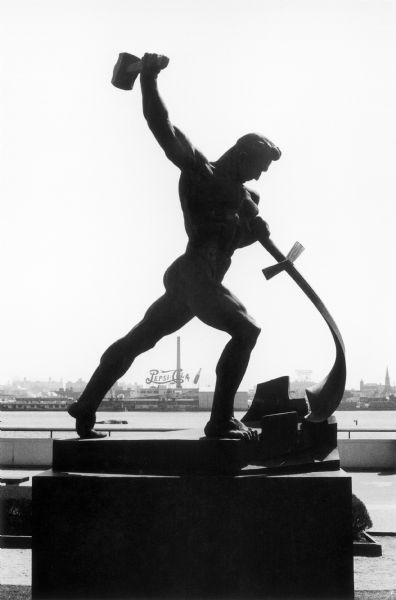
Beat the Swords into Plowshares (Micah 4:1-5)

Let Us Beat Swords into Plowshares, by Yevgeniy Vuchetich (1908-1974)

In days to come
    the mountain of the Lord’s temple
shall be established as the highest of the mountains
    and shall be raised up above the hills.
Peoples shall stream to it,
    and many nations shall come and say:
“Come, let us go up to the mountain of the Lord,
    to the house of the God of Jacob,
that he may teach us his ways
    and that we may walk in his paths.”
For out of Zion shall go forth instruction,
    and the word of the Lord from Jerusalem.
He shall judge between many peoples
    and shall arbitrate between strong nations far away;
they shall beat their swords into plowshares
    and their spears into pruning hooks;
nation shall not lift up sword against nation;
    neither shall they learn war anymore;
but they shall all sit under their own vines and under their own fig trees,
    and no one shall make them afraid,
    for the mouth of the Lord of hosts has spoken.

For all the peoples walk,
    each in the name of its god,
but we will walk in the name of the Lord our God
    forever and ever. (New Revised Standard Version)

Yes, we are presently in the muck of the world. But no, it will not always be this way. There is a time coming, when all is said and done, when justice shall prevail. People will seek after God, and they will stop thinking about how to kill each other.

Weapons will be a thing of the past. They’ll just be repurposed for fostering life instead of death. Peace and security will take hold so that each person will be able to work and rest without worrying about poverty or protection.

If this sounds like an idyllic world and a utopian society, that’s because it is. I believe there is a longing within each of us to realize this hope. And someday, in God’s good time, it will happen.

It seems almost impossible, in this contemporary world of ours, that we could live without constant fear and anxiety, that people could actually live together in unity, harmony, and wholeness of being. We were meant for peace, which is why we yearn for it more than an Iowa boy yearning for bacon at breakfast.

Just because this is a prophetic utterance that the faithful believe will happen, doesn’t mean that we need not work toward this ideal now. For it is very possible, and likely real, that we have a large part to play in God’s drama of making a new world.

The day of the Lord will come like a thief. The heavens will disappear with a roar; the elements will be destroyed by fire, and the earth and everything done in it will be laid bare. Since everything will be destroyed in this way, what kind of people ought you to be? You ought to live holy and godly lives as you look forward to the day of God and speed its coming. (emphasis mine, 2 Peter 3:10-12, NIV)

If we are impatient to see an end to wars and rumors of wars, of oppression and hate, then let’s roll up our sleeves and do everything humanly possible (and trusting in divine power!) to bring justice everywhere we can. The future idyllic hope we have is not yet a present reality. We have a bit of say whether it’s going to be sooner or later.

It’s easy to destroy. It takes little imagination and effort to criticize and tear down someone with our words. It’s nothing to send missiles and rockets of destruction in order to raze a community. Bombs can be dropped with but a switch. A neighborhood can disappear in days with just a few bulldozers.

But to bring life and security and peace to a people requires our best efforts and everything we’ve got to make it happen. It’s hard, and takes a lot of committed sweaty work. Building something that will last always takes a great deal of time, resolve, and struggle.

We need the hard work of healers, not the easy path of harmers; we need peacemakers, not warmongers; public servants, not public strangers; faithful leaders, not fat louses; arbitrators, not disputers; religious penitents, not pious know-it-alls; and lovers, not haters.

In short, we need a whole cadre of caring citizens for a new society that prizes egalitarian relations, social and economic justice, personal and public righteousness, and compassionate service.

Injustice must be dismantled; and we need to become content with having enough. That’s what it means to walk in the name of the Lord our God.

If all things belong to God (which they do) and believers hold all things loosely as stewards (which they should) then there is no need to dig in and defend something which is not ours to begin with. Fear is taken away. Injustice becomes irrelevant.

Although we may not be able to make everything right in this present evil age, we can still make a difference and continue to pray:

Maranatha. Come, Lord Jesus, come. Amen.

Wait for the Lord (Isaiah 64:1-9)

O that you would tear open the heavens and come down,
    so that the mountains would quake at your presence—

as when fire kindles brushwood
    and the fire causes water to boil—
to make your name known to your adversaries,
    so that the nations might tremble at your presence!
When you did awesome deeds that we did not expect,
    you came down; the mountains quaked at your presence.
From ages past no one has heard,
    no ear has perceived,
no eye has seen any God besides you,
    who works for those who wait for him.
You meet those who gladly do right,
    those who remember you in your ways.
But you were angry, and we sinned;
    because you hid yourself we transgressed.
We have all become like one who is unclean,
    and all our righteous deeds are like a filthy cloth.
We all fade like a leaf,
    and our iniquities, like the wind, take us away.
There is no one who calls on your name
    or attempts to take hold of you,
for you have hidden your face from us
    and have delivered us into the hand of our iniquity.
Yet, O Lord, you are our Father;
    we are the clay, and you are our potter;
    we are all the work of your hand.
Do not be exceedingly angry, O Lord,
    and do not remember iniquity forever.
    Now consider, we are all your people. (New Revised Standard Version)

Sometimes it feels like the whole world is messed up, with no resolution in sight. Everything is sideways.

In those moments, when I wonder if there will ever be glory after all the hardship and suffering, I come back to what I firmly believe and bank my life upon: God sees. God cares. God is still actively working behind the scenes in ways I don’t presently see. Truly, the invisible hand of God is looking after my life.

The ancient Israelites, in Isaiah 64, cried out for help because, although they could not see God, they trusted that somehow, someway, they were being seen. The prophet wanted God’s presence manifested in such a way that it would be recognized by both God’s people and God’s enemies.

The people cried out for mountains to quake, brushwood to burn, and water to boil. In other words, the people wanted the Lord to show up in a dramatic way. That’s neither a weird desire nor an offbeat prayer from God’s people. After all, the Lord has showed up and showed off with wondrous and awesome deeds for a long time in their history:

  • Divine plagues on Egypt forced Pharaoh to release Israel from bondage and go their own way
  • Divine deliverance brought them miraculously through the Red Sea
  • Divine judgment caused the waters to overwhelm the Egyptian army
  • Divine provision gave manna out in the desert
  • Divine presence was with the people as they entered the Promised Land
  • The Divine Warrior flattened the walls of Jericho and went before the people in fighting their battles

Indeed, God intervened with consistency. In today’s Old Testament lesson, there’s a qualification, a sort of prerequisite, which is given in order to realize God’s involvement: If the people want to see God move on their behalf, they will have to be patient and wait on the Lord.

Waiting. It seems to be the bane of many a person’s existence. Many people would rather do just about anything but wait. And yet, throughout the Bible’s Old Testament, people are exhorted to do just that: wait…

Wait for the Lord;
    be strong, and let your heart take courage;
    wait for the Lord!

Psalm 27:14, NRSV

Commit your way to the Lord;
    trust in him, and he will act.
He will make your vindication shine like the light
    and the justice of your cause like the noonday.

Be still before the Lord, and wait patiently for him;
    do not fret over those who prosper in their way,
    over those who carry out evil devices.

Refrain from anger and forsake wrath.
    Do not fret—it leads only to evil.
For the wicked shall be cut off,
    but those who wait for the Lord shall inherit the land. (Psalm 37:5-9, NRSV)

I waited patiently for the Lord to help me,
    and he turned to me and heard my cry.
He lifted me out of the pit of despair,
    out of the mud and the mire.
He set my feet on solid ground
    and steadied me as I walked along. (Psalm 40:1-2, NLT)

The psalmist, along with the faithful throughout the ages, can testify that patience with God is worth the wait. There is no answer to our dilemmas quite like that of God’s. And it’s really no use trying to cajole or manipulate God into acting sooner or quicker.

Although we are subject to time, God is above time, and is not subject to anyone’s clock. God will act when God will act, even if it seems painstakingly slow to us. Let’s not try to figure out God’s timetable. If Jesus wasn’t privy to the entire divine schedule, then what makes us think we’ll get a look at it?

“One of the greatest strains in life is the strain of waiting for God.” Oswald Chambers

Perhaps we ought to look more at ourselves and consider our own thoughts and actions. Are we really ready to receive what God wants to give us? Why do we want what we want? Is it for God’s glory, and the common good of all persons, or simply for our own narrow purposes?

It would be better if we consider that God’s word and promises are more powerful than any struggle we go through along the way. If we know the promise is truly coming, and it’s based in divine words, we can wait for it patiently.

For the ancient people, God promised to be the God of Israel; the people needed to be reminded that God’s apparent “slowness” doesn’t translate to a “no” in prayer. God created the elephant who never forgets, as well as the goldfish who never remembers. Take a guess which one is God and which one is us.

Even though God can be disappointed with our sinful behavior, and may allow us to die like a withered leaf in autumn, the Lord’s purpose isn’t for our destruction nor our destitution. God’s anger only lasts a moment, but the Lord’s favor endures for a lifetime.

Almighty and gracious God, help me to become patient, as Christ was patient. Through your guidance, may I become more accepting of my circumstances, and others around me. Assist me to welcome difficult times with a patient heart, through Jesus my Lord, in the strength of the Holy Spirit. Amen.