From Good to Bad (1 Kings 11:26-40)

Also, Jeroboam son of Nebat rebelled against the king. He was one of Solomon’s officials, an Ephraimite from Zeredah, and his mother was a widow named Zeruah.

Here is the account of how he rebelled against the king: Solomon had built the terraces and had filled in the gap in the wall of the city of David his father. Now Jeroboam was a man of standing, and when Solomon saw how well the young man did his work, he put him in charge of the whole labor force of the tribes of Joseph.

About that time Jeroboam was going out of Jerusalem, and Ahijah the prophet of Shiloh met him on the way, wearing a new cloak. The two of them were alone out in the country, and Ahijah took hold of the new cloak he was wearing and tore it into twelve pieces. Then he said to Jeroboam, “Take ten pieces for yourself, for this is what the Lord, the God of Israel, says:

“‘See, I am going to tear the kingdom out of Solomon’s hand and give you ten tribes. But for the sake of my servant David and the city of Jerusalem, which I have chosen out of all the tribes of Israel, he will have one tribe. I will do this because they have forsaken me and worshiped Ashtoreth the goddess of the Sidonians, Chemosh the god of the Moabites, and Molek the god of the Ammonites, and have not walked in obedience to me, nor done what is right in my eyes, nor kept my decrees and laws as David, Solomon’s father, did.

“‘But I will not take the whole kingdom out of Solomon’s hand; I have made him ruler all the days of his life for the sake of David my servant, whom I chose and who obeyed my commands and decrees. I will take the kingdom from his son’s hands and give you ten tribes. I will give one tribe to his son so that David my servant may always have a lamp before me in Jerusalem, the city where I chose to put my Name. 

“However, as for you, I will take you, and you will rule over all that your heart desires; you will be king over Israel. If you do whatever I command you and walk in obedience to me and do what is right in my eyes by obeying my decrees and commands, as David my servant did, I will be with you. I will build you a dynasty as enduring as the one I built for David and will give Israel to you. I will humble David’s descendants because of this, but not forever.’”

Solomon tried to kill Jeroboam, but Jeroboam fled to Egypt, to Shishak the king, and stayed there until Solomon’s death. (New International Version)

The prophet Ahijah speaking to the future king, Jeroboam, by Gerard Hoet, 1728

The Good and the Bad

People were originally created by a good God for the purpose of goodness. After forming the first people, Adam and Eve, God looked at humanity and said that it was “very good.” (Genesis 1:26-28, 31)

Yet, even though we all have been created good, that which is bad entered the world by means of the devil. And ever since that time, people in every era have struggled between their inherent design and their innate desires for something different. (Genesis 3:1-20)

Even King Solomon, with all of his great and God-given wisdom, eventually drifted into the bad. He succumbed to allowing other gods to come alongside the worship of the One true God. And there were consequences to those choices.

Recovering the Word “Sin”

“Sin” is a word that isn’t much used anymore. On the one hand, this is okay since the term has been much abused by many a misguided preacher. Yet, on the other hand, it’s a word which needs to be recovered, so that we will learn to avoid the bad and live into our good as image-bearers of God.

As the head of all Israel and Judah, Solomon had a grand kingdom. His father, David, was a man after God’s own heart. So, God established a covenant with David that there would always be one of his descendants on the throne. Solomon followed in his father’s footsteps and expanded the borders of Israel, bringing a level of prosperity and wealth never seen before or since.

And yet, either despite or because of Solomon’s wild success, bits of disobedience began to occur. Perhaps Solomon simply rested on his own laurels; or maybe he could not envision anything other than ongoing abundance. But for whatever reason, King Solomon started gravitating toward having more than he needed and ignored the instructions given to the people by God:

The king, moreover, must not acquire great numbers of horses for himself or make the people return to Egypt to get more of them, for the Lord has told you, “You are not to go back that way again.” He must not take many wives, or his heart will be led astray. He must not accumulate large amounts of silver and gold. (Deuteronomy 17:16-17, NIV)

And that is precisely what happened. Solomon had 700 wives (women of royal birth) and 300 concubines (women of common origin). And all those women served a variety of gods in a cornucopia of religious practices – some of which were downright inhumane and unjust. (1 Kings 11:1-13)

None of us are immune from falling into the guilt and shame of disobedient sin. For Solomon, this had the consequence of having the kingship almost completely ripped from his descendants to another man’s, Jeroboam.

Individuals, institutions, and nations have the potential for both great good, as well as heinous evil. When anyone begins to be concerned only for themselves and rests on their success, instead of the Lord, they have set up themselves for a collapse through the displeasure of God.

Stories of people who topple into sin are all close to the same – having some power, they use it to assert control over another person or group to obtain whatever they want. King Solomon violated God’s law. Not only that, but when he saw his control threatened, he sought to kill Jeroboam. Perhaps Solomon thought he was above all this, and believed he could do whatever he wanted. But he couldn’t.

Sin causes us to sell-out our principles 

Sin only begets more sin until we deal with it. Sin will always distort the truth so that we minimize the impact of our words, choices, and actions. Truth celebrates openness and honesty; sin seeks the shadows and prizes secrecy. 

The first step to dealing with sin is not to minimize it, ignore it, or pretend it isn’t a big deal. If we do not go down this path of truth, then we will be forever encrusting our lives with ways of ensuring that no one ever knows the sinful secrets. 

In fact, much of religious legalism is nothing more than a person piling on the rules in order for others to not see the sin that hides deep within. In Christianity, turning from the sin and receiving the grace of forgiveness in Jesus Christ is the true and real path to spiritual wholeness, happiness, and success in life.

Results that satisfy us do not necessarily satisfy God

Solomon accomplished what he wanted – some of it very good, and some of it very bad. The good was celebrated, and the bad was covered up. Yet, God sees all of it, celebrating with us the good, but not going with us down the path of self-indulgent sin.

We cannot simply assume that because we do something, and there was no immediate lightning strike, that it was okay. It does not matter if it happened yesterday, last month, or twenty years ago. If we did not deal with the sin, God is not satisfied because he wants to dispense grace; love and a flourishing soul cannot happen if we keep putting things out-of-sight out-of-mind. To only satisfy ourselves is being a spiritual cannibal who eats other people alive.

Outward success and abundance means little to God if the inward state leadership is a vacuous soul, bereft of authentic spiritual connection, with no determination toward God’s intentions for a particular course of action. 

Sin is not something to simply be managed; it is to be put to death through the cross of Christ, and applied to life through intentional spiritual practices meant to genuinely connect with God. 

For the Christian, to do less is to wander into a morass of consequences that damage others, not to mention harming ourselves. So, let us do the work of soul care so that the common good of all will thrive in the grace of God in Christ.

God, you have given all peoples one common origin.
It is your will that they be gathered together
as one family in yourself.
Fill the hearts of mankind with the fire of your love
and with the desire to ensure justice for all.
By sharing the good things you give us,
may we secure an equality for all
our brothers and sisters throughout the world.
May there be an end to division, strife and war.
May there be a dawning of a truly human society
built on love and peace.
We ask this in the name of Jesus, our Lord. Amen.

Are You Looking for Healing? (Mark 3:7-12)

Jesus departed with his disciples to the sea, and a great multitude from Galilee followed him; hearing all that he was doing, they came to him in great numbers from Judea, Jerusalem, Idumea, beyond the Jordan, and the region around Tyre and Sidon. He told his disciples to have a boat ready for him because of the crowd, so that they would not crush him, for he had cured many, so that all who had diseases pressed upon him to touch him. Whenever the unclean spirits saw him, they fell down before him and shouted, “You are the Son of God!” But he sternly ordered them not to make him known. (New Revised Standard Version)

A man’s shriveled hand was restored in full view of all the public. From then on, throngs of people came to check out what was happening. Jesus was well into his earthly ministry and created quite a buzz amongst everyone in Palestine. The ancient paparazzi even started following him around.

There were more fans rushing to see Jesus than Swiftys at a sighting of Taylor Swift. Like having the limousine ready after a concert to get away from the huge crowds, so Jesus instructed his disciples to have a boat ready for him in order to avoid the great crush of people.

Christ’s reputation of curing the sick and infirmed had reached such a critical mass that thousands were determined to at least touch him and experience long-awaited healing. And, really, you can’t really blame them, can you?

Maybe you’ve never experienced debilitating chronic pain – day after day not being able to get away from it’s awful effects in both body and soul. Or perhaps you have no idea what it’s like to live with depression constantly dogging you, just waiting to take a bite out of your life and devour you like some piece of meat.

A lot of people know what it’s like to live with infirmities that they don’t want and didn’t ask for. And they’ve tried everything to either get rid of it, or cope with it, somehow.

In fact, there are so many such persons living on planet earth, that when they had a snowball’s chance at getting to Jesus, they dropped everything and took it – going after him and not caring one bit if they themselves got crushed from all the other people trying to get help.

That, my friend, is how many people there are with great physical, mental, emotional, and spiritual needs on this planet.

We could go the route of playing arm chair observer and criticize the great crowd of people for being nothing but a bunch of fans who wanted to see the latest fad in Jesus. But, if you get up close with boots-on-the-ground, you will see a different picture: thousands of people looking for hope, health, and wholeness, wanting to be “normal” like everyone else.

The problem? Normal is nothing more than a social construct. For the infirmed, it’s likely not going to happen. For those believing they’re normal, in truth, they have a profound lack of awareness to their own great need.

No, we’re all abnormal; all of us are disordered, or diseased, or distressed in some sort of way. It turns out that we all need Jesus; some of us just know it much more profoundly than others.

Jesus was not only about to be crushed from physical bodies pressing in on him; he was going to be crushed by the sheer weight of the world’s tremendous need for healing.

But he was pierced for our transgressions,
    he was crushed for our iniquities;
the punishment that brought us peace was on him,
    and by his wounds we are healed.
We all, like sheep, have gone astray,
    each of us has turned to our own way;
and the Lord has laid on him
    the iniquity of us all. (Isaiah 53:5-6, NIV)

At this point in Christ’s ministry, a significant shift began. Rather than entering a synagogue and speaking only to Jews, Jesus started addressing Gentiles, as well. In fact, the crowds wanting to see him came not only from exclusively Jewish locations, but also from other places.

This ministry of Christ raised the attention of the demonic realm. It was a major threat to the demons’ influence on people. Identifying him as the Son of God and calling Jesus out by that name was a way for the demons to reassert their power and try to get some leverage. Names are actually a big deal. Which is why, for example, Jesus once asked a demoniac in the cemetery what his name is.

That’s one way a name is powerful. Yet, when it comes to you and me, the fact that Jesus knows your name, and my name, is a mighty thing in a very different way. Rather than having demons making the Son of God known, Christ grants us the authority to make the name of Jesus known throughout the world.

Even though the redemptive events of Jesus happened two thousand years ago, great crowds of people still come to Jesus, clamoring for but a touch of his grace. And the forces of darkness are still hanging around, knowing that their time is short.

Yes, there is still healing and wholeness to be found in Jesus, even today. And even though there remain some forces of darkness in opposition to it, the victory has already been achieved.

O God the Father, whose will for us and for all your people is health and salvation,

Have mercy on us.

O God the Son, who came that we might have life and have it in abundance,

Have mercy on us.

O God the Holy Spirit, whose indwelling makes our bodies the temples of your presence,

Have mercy on us.

O Triune God, we pray you to hear us, and that you will grant your grace to all who stand in need of healing both of body and spirit, and lead them to look with confidence in you;

We beseech you to hear us, O Lord.

That you will grant patience and perseverance to all who are disabled by injury or illness, and increase their courage,

We beseech you to hear us, O Lord.

That you will grant peace to all who are troubled by confusion or pain, and set their minds at rest,

We beseech you to hear us, O Lord.

That you will grant relief from suffering to all sick children, and give them a sure sense of your tender love and care,

We beseech you to hear us, O Lord.

That you will grant rest to all whose increasing years bring weariness, distress, or loneliness, and give them the abiding comfort of your presence,

We beseech you to hear us, O Lord.

That you will grant confidence to all about to undergo surgery or difficult procedures, and keep them free from fear,

We beseech you to hear us, O Lord.

That you will grant purpose to the church as it seeks to carry on Christ’s ministry of healing to suffering humanity, and keep it always true to the gospel of Christ,

We beseech you to hear us, O Lord.

That you will grant skill and compassion to doctors, nurses, technicians, aides, and all who are called to  practice medical arts, and make strong their dedication to help others,

We beseech you to hear us, O Lord.

That you will grant to all people the refreshment of quiet sleep and joy of resting in your everlasting arms, that we may rejoice in your care while we are on earth, and in the world to come, have eternal life.

We beseech you to hear us, O Lord.

O God, who in Jesus Christ called us out of darkness into your marvelous light; enable us always to declare your wonderful deeds, thank you for your steadfast love, and praise your with heart, soul, mind, and strength, now and forever.

Amen, and amen.

A Divine Appointment (2 Kings 8:1-6)

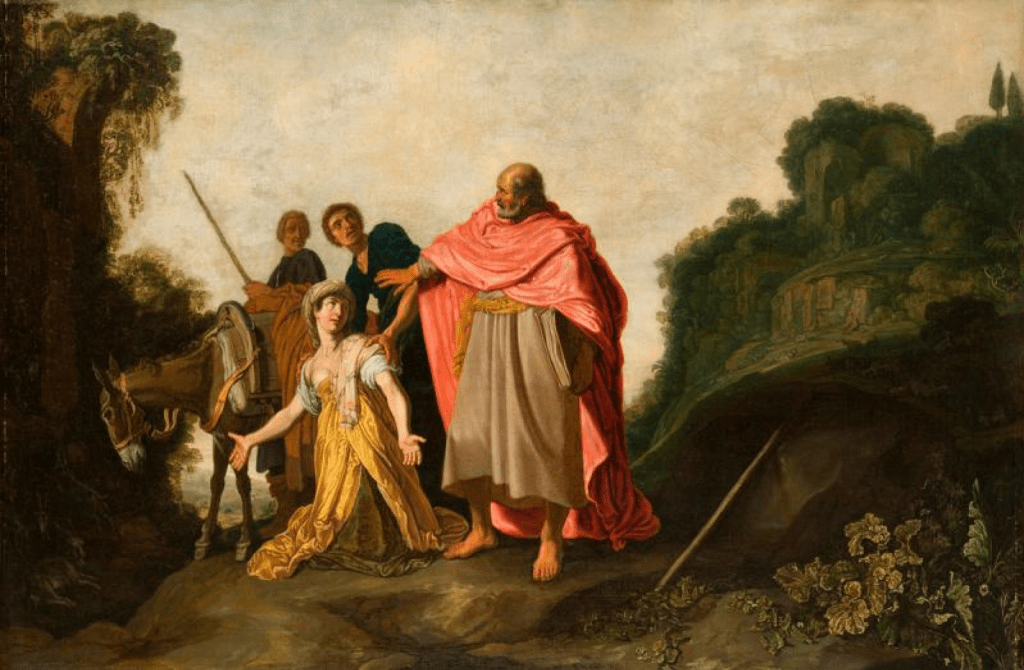
The prophet Elisha and the Shunammite woman, by Pieter Lastman, 1620

Elisha spoke to the woman whose son he had brought back to life: “You and your household must go away and live wherever you can, because the Lord has called for a famine. It is coming to the land and will last seven years.”

So the woman went and did what the man of God asked. She and her household moved away, living in Philistia seven years. When seven years had passed, the woman returned from Philistia. She went to appeal to the king for her house and her farmland. The king was speaking to Gehazi, the man of God’s servant, asking him, “Tell me about all the great things Elisha has done.” So Gehazi was telling the king how Elisha had brought the dead to life. At that very moment, the woman whose son he had brought back to life began to appeal to the king for her house and her farmland.

Gehazi said, “Your Majesty, this is the woman herself! And this is her son, the one Elisha brought to life!”

The king questioned the woman, and she told him her story. Then the king appointed an official to help her, saying, “Return everything that belongs to her, as well as everything that the farmland has produced, starting from the day she left the country until right now.” (Common English Bible)

People of faith typically don’t see divine appointments coming at all; they often show up in the middle of hard mundane days.

The prophecies and actions of the prophet Elisha are covered in the book of 2 Kings with a series of ten incredible narratives (chapters 2-9). Each of them are designed to demonstrate the power of God over (and sometimes against) the power of the king.

This was important because the royal decisions and actions of most of the Israelite kings were quite disconnected from God’s law and justice. Most kings did whatever they wanted, sometimes to the point of completely leading the people away from the worship of Yahweh and toward the worship of other gods.

Today’s Old Testament lesson concerns the ninth story in this series of narratives. A widow, whose son Elisha had restored to life in the second narrative (2 Kings 4:8-37) left for the land of the Philistines when there was a severe famine. Although the woman was simply listening to the prophet and doing what he said, squatters took advantage of the situation and took over her house and property while she was away.

In a clear demonstration of what a “divine appointment” looks like in Holy Scripture, Elisha’s servant and the king were talking together about this very woman and the miracle that took place with her son. The prophet had essentially raised her dead child to life. Then, lo and behold, the woman walked into the conversation to appeal the injustice that had happened to her and her family.

Even the worst of kings would discern the right thing to do in such a situation. After questioning the woman, the king ensured that she would get everything restored to her. Through it all, we are meant to see the power and sovereignty of God over the human authority of political kings.

I hope that you, at some point in your life, have experienced a meeting with another person that you can see was unmistakably arranged by God. And a great need you had was met because of this encounter. The Lord blessed you through it in a way that you didn’t see coming at all.

The fact of the matter is that God is sovereign, all-knowing, and all-powerful, along with being infinitely gracious, good, just, right, and loving. Therefore, God sets about to bless both us and other people. And when God determines to do something, nothing and no one in heaven or on earth can stop it.

Wherever you presently are, and whatever it is you are doing now in your life, is really no accident. And if your life situation is awful and far from any sort of idyllic scene of blessing, then please know that this is a circumstance that is ripe for a divine appointment.

For how could we ever know God as the Great Deliverer unless we were between a rock and a hard place with nowhere to turn? How could we ever experience God as the Divine Healer unless we were broken and/or brokenhearted?

How could we ever realize God as Provider unless we were out of resources and down to our last penny? Or God as Helper unless we were desperate and unable to move? Or God as the One who restores unless we had lost everything?

Just as there cannot be resurrection and new life without a crucifixion and an old life, so our lives will inevitably take a trajectory of suffering and hardship before glory and blessing. In order to allow the good to completely fill us, we must be totally emptied of everything else.

Maybe you will never experience something quite as dramatic as the woman did with gaining her son back to life, and her property restored after a terrible famine, but know this: The great Lord and God of all, the Sovereign of the universe, has your back through all that you’re going through on this earth.

I often get asked by patients and parishioners alike, “Where is God?” It feels to them that God is absent, silent, and far from understanding what they’re going through in the midst of their very challenging adversity.

Really, however, it’s actually an easy question for me to answer: Jesus is our Immanuel, God with us. The Spirit of God is right beside you, walking with you, even holding you up at times, through all the crud and crap of this old fallen sinful world of ours. Seeing only one set of footsteps in the sand, it turns out God is the One that carries the weak and weary in their trouble. The Lord is anything but absent.

If God has authority over earthly rulers, then the Lord most certainly has power to handle your life.

O God, why have you abandoned me? Though you have hidden your face from me, still from this dread and empty place, I cry to you, who have promised me that underneath are your everlasting arms. God, you are my help and comfort; you shelter and surround me in love so tender that I may know your presence with me, now and always. Amen.

Believing Hearts vs. Poisoned Minds (Acts 14:1-7)

A Roman bridge between Iconium and Pisidian Antioch

The same thing occurred in Iconium, where Paul and Barnabas went into the Jewish synagogue and spoke in such a way that a great number of both Jews and Greeks became believers. But the unbelieving Jews stirred up the gentiles and poisoned their minds against the brothers. So they remained for a long time speaking boldly for the Lord, who testified to the word of his grace by granting signs and wonders to be done through them. 

But the residents of the city were divided: some sided with the Jews, and some with the apostles. And when an attempt was made by both gentiles and Jews, with their rulers, to mistreat them and to stone them, the apostles learned of it and fled to Lystra and Derbe, cities of Lycaonia, and to the surrounding region, and there they continued proclaiming the good news. (New Revised Standard Version)

The typical approach of the Apostles Paul and Barnabas was to enter a city and find the local Jewish synagogue. But their missionary efforts went well beyond attempting to reach fellow Jews; they also had the mind and heart to include non-Jewish persons, Gentiles, in the fledgling Church.

As a result of this apostolic ministry, a number of both Jews and Gentiles believed the message of God’s grace and became followers of Jesus. Thus, two ancient enemies came together to form one new society. Old animosities and prejudices came down. Jew and Gentile began worshiping together and embracing the words and ways of Jesus.

Yet, at the same time, there were also many Jews who refused to believe. Just as the new believers united together in faith, so the unbelievers banded together for a different purpose: to stir up the Gentiles by infecting their minds against this new union of people, centered around a common confession of Christ.

The unbelievers started a slander campaign against Paul and Barnabas, sowing mistrust and suspicion amongst the people in the street. But the sinful propaganda didn’t deter the apostles from spending considerable time in the city of Iconium and speaking confidently about the good news of Jesus.

What’s more, the message was confirmed by a demonstration of spiritual power. Paul and Barnabas were enabled by God to do many miraculous wonders in the city. This helped the gospel and the authority of the apostles to be established with the people.

The dynamic of belief and unbelief, cut right down the middle of the city. The people became divided and polarized. Some sided with the Apostles Paul and Barnabas, persuaded by their arguments and convinced by their actions; and others sided with the unbelieving Jews, having listened to their slanderous accusations and looking at the apostles as a threat to their existing society.

The climate in the city of Iconium became ripe for violence. Relations between believers and unbelievers deteriorated into planning harm against the new Christians. Even the city officials were becoming sympathizers with the planners to rid the city of the apostles once and for all. In other words, for Paul and Barnabas to remain in the city meant that they would likely get stoned and left for dead.

So, the apostles got out of Dodge and went to the cities of Lystra and Derbe. At least they could keep proclaiming the good news of grace to other people and avoid getting killed.

This story gets at a practical reality for many people of faith: How do people maintain their religious convictions and commitments in an environment that views them as harmful to society?

To be sure, not every person of faith faces this. But others around the world face it every day. And then there are perhaps the majority of the faithful, who sometimes find themselves in places and positions in which slander is rife and verbal violence abounds. What is a person of faith to do?

Not every situation is the same, so each circumstance will take some wisdom in handling it. Nevertheless, the following are some aspects to consider in dealing with the unbelief of others and the harmful effects it can bring:

  1. Persevere in your spiritual confidence. Paul and Barnabas did not cower in fear, but kept up their missionary efforts. The words of gossip and attitudes of hostility around them didn’t slow them down one bit. In fact, in other situations, the apostles who actually experienced harm, chose to view it as a privilege to suffer in the same sort of way Jesus did.
  2. Know when to walk away. Boldness doesn’t necessarily mean that one throws caution to the wind and simply keeps going, no matter the consequences. Paul and Barnabas knew when to leave the city and go somewhere else. They realized the shelf life of their ministry in Iconium was at an end. Neither one of them bemoaned the situation, but instead, looked ahead to the opportunity of gospel proclamation in other cities.
  3. Trust God in all things. Whenever we are slandered, or others actually make plans of harm against us, our initial desire may be to get them before they get us; or to fight back using the same tools of violence that were done against us. Paul and Barnabas did no such thing. Believers have spiritual tools of use that unbelievers don’t possess. So, use them. Pray for those who mistreat you. And let God handle the judgment end of things.

If Christians keep focusing on the words and ways of Jesus, they will consistently practice humility, not pride; confession of faith, not calling out in anger; meekness, not aggressiveness; righteousness, not wrongdoing; mercy, not judgment; purity, not dirty politics; and peacemaking, not war-mongering.

May it be so, to the glory of God. Amen.