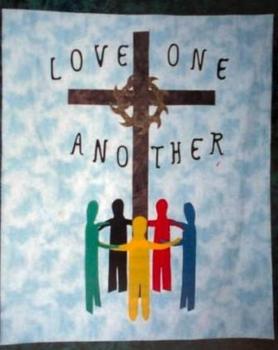
Showing Brotherly Love


We are to show brotherly love toward each other in the church and honor one another above ourselves (Romans 12:16).  That means that we do not play favorites.  We are to affirm everyone’s inherent worth and dignity in the church.  We do this because God does not show favoritism, but loves each and every believer.  God demonstrated it by the sending of the Son, Jesus, to handle once for all through the cross the divisions and pride of people who exalt themselves above others.  The early church father, Origen, the bishop of Alexandria, said:  “It happens that we hate things we ought not to, just as we love things we ought not to.  We are ordered to love our brothers, not to hate them.  If you think that someone is ungodly, remember that Christ died for the ungodly.  And if you think that because your brother is a sinner you do not have to love him, remember that Christ Jesus came into this world to save sinners.  And if he is righteous, then he is to be loved because God loves the righteous.”
 
            Showing familial love toward each other and honoring one another means that we treat each other as if we had been born of the same mother.  To keep a devoted affectionate spirit means that we would neither purposely insult another nor be deeply hurt if someone insulted us.  Sometimes we are too sensitive, and need not take things said and done so personally.  When offended we are not to return insult and offense (Romans 12:17).  Nor are we to hold it inside and nurse a grudge, only to withdraw then run away when things don’t go our way.  We are, instead, to honor the other person by going out of our way to work out an issue. 
 
In our society today, like no other society before us, we rely on paid professionals to take care of problems and issues that arise between us.  In our country right now we have 77,000 clinical psychologists, 192,000 clinical social workers, 105,000 mental health counselors, 50,000 marriage and family therapists, 17,000 nurse psychotherapists, 30,000 life coaches—and hundreds of thousands of nonclinical social workers and substance abuse counselors as well. Ross Douthat, in his book Bad Religion points out that “Most of these professionals spend their days helping people cope with everyday life problems, not true mental illness.” He concludes that “under our very noses a revolution has occurred in the personal dimension of life, such that millions of Americans must now pay professionals to listen to their everyday life problems.”
 
            This does not mean we should avoid therapists and counselors (I myself have been greatly benefited by such professionals and I think we ought to avail ourselves of their services).  However, there are many situations and problems and issues that can be resolved by a healthy church dynamic of loving one another with a family love that listens to and cares for each other.  We are to be real and honest enough with each other in the church to allow others to care for us.  There is nothing to be ashamed about in sharing what is going on in our lives with each other.
 
            Pastor Eugene Peterson has said that “being a church member is a vocation, a way of life. It means participation in an intricate web of hospitality, living at the intersection of human need and God’s grace, inhabiting a community where men and women who don’t fit are welcomed, where neglected children are noticed, where the stories of Jesus are told, and people who have no stories find that they do have stories, stories that are part of the Jesus story. Being a church member places us at a heavily trafficked intersection between heaven and earth.”  In other words, we are to practice our given privilege and responsibility as the priesthood of believers, occupying a place between heaven and earth where others can come and find life.
 
            Having affection for one another in brotherly love and honoring one another above ourselves means that we will be persistent in our service and patient in our efforts.  It means we will share our lives and practice hospitality.  One pastor had this story to tell about a couple in his church (not their real names):  John and Julie were happily anticipating the birth of their first child, a son. They had already decided to name him Paul. But when Paul was born, there was a big problem: Paul was born without eyes. John and Julie would later discover that their son had other serious issues, including severe autism and a growth hormone deficiency.  Two months after Paul’s birth, as John was looking at his son hooked up to tubes and sensors and surrounded by medical professionals, he quietly told God, “God, you are strong, that’s true, and you are wicked. You are mean. Do it to me—not to this boy. What did he ever do to you?” Shortly after that prayer, John and Julie quit going to church.  But one couple from the church refused to give up on them. Karl and Kathy never pressured John and Julie about spiritual issues. Instead, they would often stop by and leave simple gifts, like a loaf of fresh bread or a basket of soap and shampoo for Julie. John said that it was like Karl and Kathy were saying, “I notice you. I see you. I know you’re hurting and I love you.”  Eventually John and Julie accepted a dinner invitation from Karl and Kathy. During dinner John told Karl, “You can believe whatever you want. I don’t care. I have evidence that God is cruel.” Karl softly and simply replied, “I love you, John. I have regard for you, and I love your boy.”  Karl and Kathy’s four children also displayed unconditional love for their son. John described it this way:
 
‘They’d throw [my son] up in the air and make him laugh and do funny bird sounds and—and that was confounding, because most people, most adults couldn’t do that. And so I would have this extraordinary expression of love and affection at the dinner table here, and I would turn to my left—and there would be at least one of these children playing with my boy like he was a real boy. I wasn’t even sure he was a real boy at times.’
 
Based on this family’s quiet, persistent love, John and Julie finally returned to the Lord and to their local church. And when they returned Karl and Kathy stayed by their side, making sure their son made it into the nursery. John would later say, “They persisted. That was a big deal that they persisted with us.”
 
            A Christian congregation is a compassionate congregation, devoted and committed to one another.  That means when someone shares something with you that is difficult and personal, you are to respond.  No response (no affect) is just as damaging as saying the wrong thing.  If we work at keeping our spiritual fervor and being joyful in hope, then we will have a compassionate response to people.  You can never go wrong with these three caregiving basics:  1) listen well (don’t give unsolicited advice); 2) show respect by allowing others to share their grief and tell their story (rather than tell them how they should or shouldn’t feel); and, 3) pray for the person right then and there.
 
            In addition to those three caregiving basics, you can add the following practical ways to show you are devoted to another in brotherly love:  thoughtful gifts (i.e. grocery or restaurant coupons); words that help (i.e. “I truly care”, “I appreciate you”, “Count on me”, “It must hurt”); special services (i.e. offer to babysit or do some chores); and, outings together (i.e. go to a baseball game together).


            So, may you express your devotion and commitment to Christ’s church through words and acts of compassion, kindness, and love that reflect the love of God.


The Politics of Fear


            We all have personal fears.  They may be different, all the way from snakes and creepy clowns to public speaking and talking on the phone.  Whatever the fear, being afraid can multiply exponentially when a group of people collectively fear something.  When that happens, the politics of fear takes over and faith is replaced by what a church thinks might happen.  Most church problems and conflicts do not arise out of doctrinal differences, but out of a clash of fears. 
 
Consider just a few scenarios.  One group of people think women should serve in leadership capacities the same as men, and another group believes that women can only serve in limited leadership roles.  The former group fears that if women are not allowed leadership status that the church will wither for lack of fully utilizing the giftedness of half or more of the congregation; they fear the church will not grow.  The latter group is afraid that if women attain leadership roles that the men of the church will become lazy and not serve; it is only, they fear, a slippery slope to an all-female run congregation with no men leading.
 
A more obvious scenario is the so-called “worship wars.”  One group holds to a more traditional and liturgical form of worship with hymns and responsive readings.  They fear that if this form changes it will dilute the true worship of God and degenerate into an unfamiliar form that they will not like; they are afraid of change.  Another group believes that “contemporary” worship (usually understood as praise songs and choruses with a simple sing and speak liturgical model) is the way to go because they fear people will leave the church for another if things do not change.  One group fears change, the other fears not changing.
 
Fear is a reality that all pastors and church leaders must navigate.  And God himself knows it.  This is why the command to not be afraid is common throughout Holy Scripture. We find, as well, that the command to not be afraid is given often to leaders.  The patriarch Isaac was told to not be afraid because God was with him (Genesis 26:24).  The prophet Jeremiah was told to not be afraid because God was with (Jeremiah 1:8).  Jesus was pointed with the synagogue ruler concerning his dead daughter:  “Don’t be afraid; just believe” (Mark 5:36).
 
Non-anxious leaders help congregations deal with fear because their calm presence in the face of competing anxieties creates the environment that everything is going to be okay, that engaging in faith will work out, and that God’s promises and presence trumps all realities.  Before facing the conquest of the Promised Land, the Lord commanded Joshua to be strong and courageous and boldly engage the enemy, with the result that the people acted in faith and took Jericho.  David courageously and confidently faced down Goliath, and later led the people of Israel and Judah as king because he understood that the Lord was his strength, and, so, fear could melt away.  David’s best friend, Jonathan, acted in faith while all his fellow Israelites were hiding in fear from their Philistine enemies.  His courageous stepping out emboldened everyone else to win the battle.
 
Jesus Christ has promised that he will build his church, and the gates of Hades will not prevail against it.  We have the promised presence of the Holy Spirit as we engage in Christ’s mission to be witnesses.  God’s steadfast love is with us.  Therefore, we choose to live above the fray of naked fear and trust the kingdom values of humility, meekness, mercy, purity, and peace-making in facing down whatever issues are gripping the church.  God, in his sovereignty, has ordained certain persons to take the lead in recognizing the presence of the Spirit and moving forward in faith, not fear.  Faith and fear cannot co-exist.  “Everything that does not come from faith is sin” (Romans 14:23) is the Apostle Paul’s way of saying not to give in to the politics of fear within the church.
 
So, how will you live?  How will you lead?  In what ways can you bring a non-anxious presence to the people for whom you minister?  How does knowing that God is with us change how you face difficult problems and people?  Can you think the thought that courage is a spiritual discipline?  How will you stretch your faith muscle so that the weakness of fear can take a back seat to your decision making?


May the power and presence of God’s Spirit fill us all now and always with faith to accomplish God’s will.

Loving One Another


The Church was formed to represent Christ on earth.  The Church is a new community of believers in Jesus, called and empowered by the Holy Spirit for mission.  Christianity was never intended to be just a personal faith; it was designed by God to be a community.  Community is not optional equipment for Christians, but is absolutely vital to every individual’s faith.  John Calvin said with conviction that “No one can have God for his Father who does not have the Church for his Mother.”  In other words, to have a loyalty and commitment to God is to have a dedicated and devoted spirit to one another in the church. 
 
Since the Church is not a random collection of individuals but a community of redeemed persons with a common confession of Christ, it is love that is to be the rule of this new community (John 13:34-35).  Church ministry is to be governed by loving one another.  Jesus is the model of love that we are to emulate.  The love that the Lord Jesus demonstrated was a service-oriented love which is the compassionate meeting of a need for another, regardless of who that person is.  When Jesus told his disciples that they should copy what he had done for them, the washing of their feet, it included washing the stinky feet of Judas. We are to love everyone in the community of saints, and not just our friends or the ones we like. 
 
Loving one another means we will be realistic about community.  Idyllic views of church and community as perfect unity and harmony always working together and moving forward in mission while singing Kum-ba-ya isn’t very realistic.  Community is often as messy as a pile of manure.  But God is expert at turning the mess into something useful and productive.  He uses the conflicts, idiosyncrasies, and even sin to grow his people in a more vibrant faith and ability to follow in Christ’s steps.  Jesus has loved us with a love that took care of our brokenness once for all through the cross.  Because of that love, we have motivation to love each other (1 John 4:9-11). 
 
            This is the kind of love that we cannot simply will ourselves to do because it only comes as a grateful response for the grace shown us in Christ.  We need help with this love which is demonstrated in both action and attitude.  And, thankfully, God in his grace has given us the help we need to engage in godly love by providing his Holy Spirit to help us.  The Spirit energizes and enables us to love each other.  There are times when we may lack the ability or spiritual energy needed for the work of loving each other.  It is in those times that we need to check our spiritual electrical box to make sure we haven’t tripped a breaker by trying to live the Christian life our own strength. 
 
We need the Spirit.  People who are full of God’s Holy Spirit don’t walk around like Droopy poodle with no affection on their faces.  The Spirit gives us the zeal we need to love one another.  It’s just a reality that we don’t do anything in life unless we have the motivation for it.  The Spirit is like the Christian’s personal and corporate trainer, encouraging, exhorting, getting in our face, comforting, and spurring us on toward Christ’s way of love. 


When believers in Jesus are energized by the Spirit and loving one another because of their collective love for God, then the mission of world evangelization begins to take shape.  All people will know you are Christ’s disciples if you love one another.  The way we treat each other in the church is foundational and fundamental to the mission of loving our neighbors.
 
            The medieval mystic, St. John of the Cross, said:  “Mission is putting love where love is not.”  When the church has a healthy and even supernatural dynamic of loving one another, they joyfully proclaim the good news to every person that Jesus is the one and only answer to the terrible brokenness of this world.
 
            Community for us as believers in Jesus is not optional, but absolutely necessary to mission.  Lesslie Newbigin was a British missionary to India for forty years.  After retiring and returning to Britain, he found his homeland was very different than when he left.  He was astounded to find the British people were more like the Indians – the society had become very less Christian and was now predominantly un-Christian.  It was clearly a post-Christian society.  What to do about it?  Here is Newbigin’s answer:
 
            “I have come to feel that the primary reality of which we have to take account in seeking for a Christian impact on public life is the Christian congregation.  How is it possible that the gospel should be credible, that people should come to believe that the power which has the last word in human affairs is represented by a man hanging on a cross?  I am suggesting that the only answer, the only hermeneutic of the gospel (that is, the only way society can discern or interpret who Jesus is) is a congregation of men and women who believe it and live by it.  I am, of course, not denying the importance of the many activities by which we seek to challenge public life with the gospel – evangelistic campaigns, distribution of Bibles and Christian literature, conferences, and even books such as this one.  But I am saying that these are all secondary, and that they have power to accomplish their purpose only as they are rooted in and lead back to a believing community.”
 
            This Christian congregation is the means by which a watching world will know about Jesus, if you have love for one another. The implications of community for our faith are significant.  If we keep other Christians at a distance and give them the stiff arm, we are really giving God the stiff arm.  Jesus identifies so closely in love to his people, that to love them is to love him.  It is fallen sinful humanity that keeps secrets and hides, making for themselves fig leaves to cover their nakedness.  It is not the way of love. 
 
            Will we take Christ’s way of love, and model ourselves after his life and teaching?  Will we give ourselves not only to Christ, but to each other because of love?  Will we allow love to characterize our life together to such a degree that a watching world desires to be a part of the community that we are a part of?
 
            The late African-American preacher E. V. Hill told the following story about an experience with a white Christian leader in the 1950s. Hill writes:  “As a freshman at Prairie View College (Texas) I was actively involved and was one of two students selected to go to our denomination’s annual meeting in Memphis.  The trip through the South was by car—three whites and two blacks traveling together. I had no idea how we’d eat or how we’d sleep. So great was my anxiety and hatred over how the trip might turn out that I almost backed out entirely …. In all my experience I had never seen a white man stand up for a black man and never felt I would.  But then Dr. Howard, the director of our trip and a white man spoke up. ‘We’ll be traveling together,’ he said. ‘If there isn’t a place where all of us can eat—none of us will eat. If there’s not a place all of us can sleep—none of us will sleep.’  That was all he said, but it was enough! For the first time in my life I had met a white man who was Christian enough to take a stand with a Christian black man.” 


May the Spirit give us the courage for community.

Healing at the Table

            We live in a broken world.  Broken families, broken relationships, and broken human systems all create fundamentally broken people.  Broken people bring all of their brokenness into the church.  Instead of wishing that people wouldn’t do that, I insist that it is a good thing.  It is a good thing because the church ought to be the one place where broken people can begin to make sense of their lives within the grace of Christian community.  That means that community is not always pretty and shiny but, well, messy.  And it isn’t just the “outsiders” who bring in their problems.  There are plenty of problems to go around in the folks who are “lifers” at your church.  Chronically neurotic parents raise kids full of false guilt; people who are never pleased seem to make everyone around them unhappy; unpredictable neighbors, bosses, and co-workers foster environments where others constantly walk on eggshells not quite knowing if they will get hugged or slugged.  In short, we all have some degree of damaged lives and emotions as both victims and perpetrators.


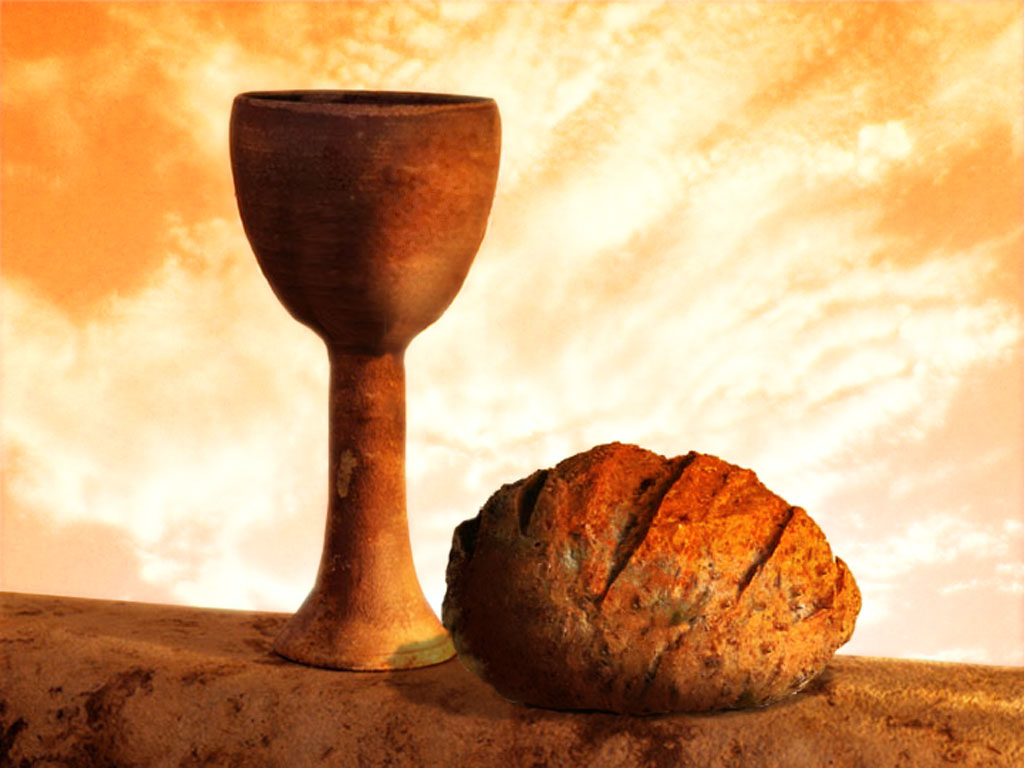
            The best place of healing for every person is at the Lord’s Table.  That’s right.  Communion is a sacrament, a sacred event, in which the worshiper can find more than just a reminder of Christ’s death – he or she can find the grace of healing from all the damage.  The Table brings one face to face with the cross of Jesus.  The past act of Christ’s crucifixion has settled the sin issue once for all.  To put it another way:  there is healing in Jesus Christ.
 
            In the cross God demonstrated his total identification with us in our own suffering.  Our healing is found in the spiritual reality that just as we may have been victims of another, so Christ was the ultimate victim who did not deserve the punishment he got from all the people with all their broken ways.  It was unjust.  But the good news is that God has justified the believer by sheer grace.  Jesus is our Wounded Healer.  On the cross God in Christ has absorbed the world’s brokenness and our painful feelings into his love.
 
            Therefore, we ought to come to the Table with joy and find both hope and healing.  The Lord’s Supper is not just some ritual to go about doing every so often in order to be obedient – Communion is a powerful means of grace that God uses to heal and nurture.  As we take and eat of the bread, and drink of the cup, from Christ’s broken body and shed blood we receive healing and wholeness for our own brokenness.  By faith we eat and drink to receive God’s forgiveness and love into both body and soul.
 
            If this chance at spiritual and emotional healing sounds too good to be true, you have grasped the meaning of grace.  If Communion can play such an important and significant place in the lives of people, maybe we all need to re-think the practice of only doing it occasionally or once a month.  I don’t know of any church board that would be okay with a pastor only preaching and praying once a month in a worship service, so why are we okay with Communion once a month?  We are okay with it because we don’t typically think of the Table as the place of healing and spiritual health.


            It is, I believe, high time we allow the sharing of the Table to not only inform us, but form us into the people that God wants us to be.  The Lord’s Supper brings us back to the centrality of God’s redemption through Jesus Christ, and to the means to which true healing comes:  the cross.  So, may the Table of Christ not only remind you of the cross, but change you, transform you, and reform you as you participate with God’s people in a ritual that brings life.