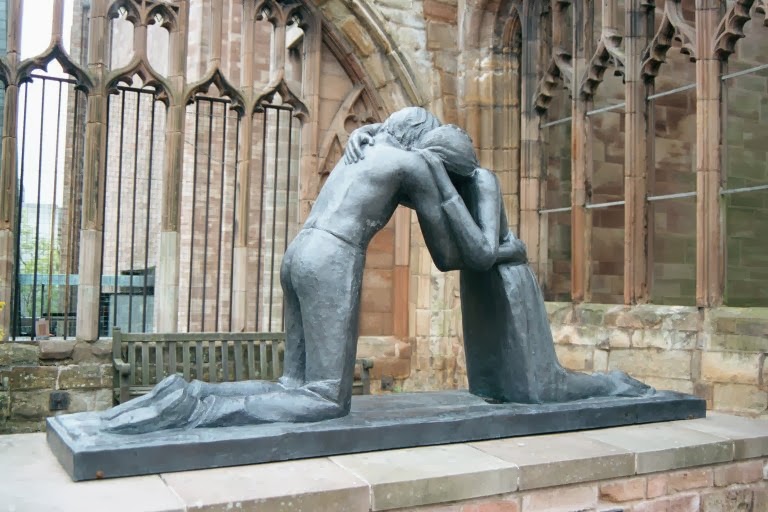
Prayer of Confession


Nothing of eternal significance happens apart from God.  Jesus said it clearly in John 15:5 – “Apart from me you can do nothing.”  There is simply no substitute for a close relationship with God.  The will of God can only be accomplished through the spiritual practice of prayer.  Prayer is by no means a passive activity, but an active engagement with the God of the universe.  If done well, prayer takes time, a great deal of effort, and a keen sense of priority.  It is quite possible that biblical praying can be the most challenging, exhausting, laborious, and rewarding thing we do.
 
            Through prayer we can become filled with the Holy Spirit, gain wisdom to make godly decisions, and access spiritual power that can melt the hardest of hearts and change the minds of the most stubborn of people.  In prayer we have the privilege of expressing our concerns and needs, as well as having God’s agenda revealed to us for what to do.  What is more, our personal and corporate holiness is in direct proportion to the great task of prayer.
 
            When faced with the reality that Jerusalem was in trouble, Nehemiah prayed (Nehemiah 1).  In prayer he owned the problems that Jerusalem faced of having its walls broken down and its people unprotected.  Nehemiah, along with Ezra the priest and scribe, sought the spiritual health as well as the physical well-being of the Israelites left in the land after being conquered by the Babylonians.  Nehemiah owned Israel’s problems through a prayer that emphasized and reminded God of his covenant with his people; he confessed the sins by which Israel violated that covenant; and held onto the promise that God would lift the curse on the city if the people would repent.
 
            Nehemiah had a compassionate heart that did not ignore what was going on in his native land, but wept, mourned, and fasted and prayed.  He had a deep concern for and was profoundly disturbed by the news that Jerusalem was in trouble.  Rather than being preoccupied with himself, or turning his back on what was going on and focusing on his own new life in Babylon, he sought to do something about the security and spiritual health of his people.
 
            In his prayer to God, Nehemiah was genuine, persistent, confident, humble, and submissive to God.  He did not distance himself from the sins of the people, but clearly identified with them through a prayer of confession.  That confession was intense, honest, real, and urgent.  Sin always needs to be identified, acknowledged, and pardoned.  If it isn’t, there is no hope for things to be different.  It only makes sense for the contemporary church to recover and practice having a prayer of confession in each and every worship service.  Sin is not just personal and individual; sin resides in the community, and so requires a corporate confession and repentance.
 
            There is a season for everything.  Deer season may come and go, but it is always open season for prayer.  And Nehemiah’s prayer is a solid biblical model for us to emulate.  The church will always have her challenges and problems to face.   Like Nehemiah, let’s own those challenges through prayer that is biblically focused, compassionately offered, and spiritually curious to know and do God’s agenda for our lives and our churches.


            Throughout this Advent season, let’s have a spirit of prayer to God in everything we say and do – prayerful spirits that above all seeks God’s will, and doing that will through God’s love as we anticipate the coming of our Savior.

Christ the King


Each year on the Christian calendar, the Sunday before the Advent season is celebrated as The Reign of Christ or Christ the King Sunday.  It is a day that focuses our worship on the fact that Jesus reigns over the entire world.  It is a proclamation to everyone that everything in all creation must submit to King Jesus.  And it is an invitation to actively and joyfully submit to his rule.  Jesus’ rule and kingship is not like any other kind of leadership because Jesus rules all creation through being a servant and using his power to move toward people in relationship.
 
            God is not a distant and detached ruler.  Jesus came to this earth in order to bring intimacy and closeness to God and humanity.  We all most likely have relationships in which we want to be closer to someone.  There are parents who are not satisfied and are sad that one of their kids is estranged from them, and they want intimacy.  A spouse may want to be closer to his/her wife or husband, having been distant for too many years.  Teenagers or twenty-somethings might want to get closer to that special someone.  There may be a friend that keeps their distance.  And although you have conversations with them, they only let you in so far.  We want to go deeper, and it just isn’t happening because the other party is not willing.
 
            In this we reflect the image of God within us because God feels that same longing and desire to move deeper and closer to us.  He desires intimacy, but we might keep treating him like he is some untouchable monarch like Queen Elizabeth – as if there is no chance of really getting close, and we wonder if there is any real power there to make a difference.  But God is not some figurehead, and he does not want a casual superficial relationship with us.  Christ’s kingship is based on moving closer to people, not further away.  Everything Jesus did on this earth was to bring people closer to God, because God wants a personal and familiar relationship with us.  God does not want us estranged from him, and he has gone to the greatest lengths possible to make that close relationship possible and real through the cross, resurrection, ascension, and a kingly reign that is near to us.  The kingdom of God, with Jesus as King, is a kingdom of intimacy and fellowship with the divine.
 
            Christ as King appropriately challenges us to think: What does it mean for us to say that Jesus Christ is the Lord of our lives?  It means much more than God calling the shots and issuing commands; it means he uses his lordship to satisfy his longing to be with us.
 
When Jesus of Nazareth was brought to Pilate the morning of his crucifixion, he must have looked a mess – clothes stained with dirt and blood, his face bruised, and haggard from having not slept all night. Pilate has heard of Jesus, and so he is curious to make a personal evaluation of him.  Jesus looks nothing like a king to Pilate. Pilate, in contrast, looks the image of a leader with his power suit on and all the strength of Rome behind him.  He hardly has time for this pathetic presentation of leadership in front of him.  Jesus looks like nothing more than a kingly wan-a-be.  There is nothing from Christ’s outward appearance that seems he is qualified to be any kind of leader.  We can almost picture Pilate rolling his eyes, saying “so you are the King of the Jews?” (John 18:33-37).
 
Jesus made it clear that his kingdom is not of this world. Two thousand years have passed since that dialogue between Jesus and Pilate, but the same issue remains.  The issue is simply this: Jesus is calling all of us to follow him and to put his Kingdom first in our lives.
 
            Earthly power, like Pilate’s, seeks its own ends in order to hold onto control and call the shots; but Christ’s kingly power is used to serve, to wash feet and meet needs, to move closer to people.  Earthly kingdoms use violence to conquer and maintain order and control its subjects; Christ’s kingdom uses love to transform and unify people around Jesus so that the subjects are with the king and enjoy his rule and reign.
 
            Jesus’ kingdom is not of this world.  It is counter-cultural, and counter-intuitive to how every other leadership structure works.  It is an upside-down kingdom that seems like it won’t work or make sense.  The way up is down; to be great is not to work for a high position and kiss up to the boss and climb the ladder of wealth and success, but to embrace humility and be a servant.  The way to pursue truth is not in forming original ideas and expressing opinions, but truth is found in a person.  Truth-seeking disciples will listen to this one voice of Jesus, and filter-out all others.  It is a voice calling for us to submit to his lordship, and to do so because it brings us into an intimate relationship with God.
 
            Black Friday is almost here. This time of year demonstrates for us a contrast between two kingdoms.  The Kingdom of this world calls on us to demonstrate our worth and gain meaningful relationship through getting what we want and deserve. We put pressure on ourselves, because of earthly power structures, to seek that perfect gift at the perfect price in the hope that if we can have the perfect family Christmas with everyone acting perfectly that we will get what we want.  But does that ever really happen, even when we pursue it and cajole and manipulate for it?
 
In contrast, the kingdom that Jesus describes assures us that we do not have to prove our worth through endless accomplishments and generous gifts.  We don’t have to have the perfect Christmas experience in order to gain our deepest relational needs.  As followers of Jesus, we are sons and daughters of the living God and we do not need to achieve greatness because King Jesus has already gained it for us.
 
When we say that Jesus Christ is our King, we acknowledge that we are his subjects and that we march to the beat of a different drum. The heart of this relationship is our dependence Jesus who came that we might have life and have it in abundance. We can boldly state our confidence in this season that at the end of time Jesus will come again as King and Ruler of all.


Blessed are those who can say ‘Jesus is King, Lord of Life’ without their fingers crossed behind their backs, but with a sincere conviction that they are in touch with Jesus and want to be ever closer to him who is the Way, the Truth, and the Life.

Remembering Prayer


The early believers in Jesus turned to God in a time of persecution, found comfort in how God had worked in the past, and claimed the strength to carry on with speaking about Christ in their everyday lives.  When the church heard about the threats against the apostles, they did not get angry about how awful the government is, or upset about how terrible things were, but decided to concentrate on corporate prayer together (Acts 4:23-31).
 
            God is going to do what God is going to do.  No government, no nation, no group of people, and no one person can ever thwart God’s agenda for his world and his church.  Since it is true that God is sovereign over everything, our place is to decide whether we will participate in that agenda through the ministry of prayer and speaking the word of God or whether we will let God use other people’s prayers and other people’s speech.  There is nothing on earth or in heaven that is quite like letting God use usto accomplish his purposes.
 
            Just as God has acted in the past, so God is still in the business of transforming lives for his glory and forming faithful disciples of Jesus.  If it can happen in ancient Jerusalem; if it can happen throughout the history of the church; if it can happen in other places around the word, it can happen today with me and you.
 
            Prayer is to be like the oxygen we breathe – more of God, less of me.  Prayer in Scripture often takes the form of first remembering what God has done in the past.  Then, it moves on to praying specifically for current situations that connect to the larger purposes of what God is doing.  All the while we are to be anticipating that God will hear and act, just like he has done throughout history.
 
            Remembrance is an important dimension to biblical prayer.  Remembering is necessary because we have a tendency toward forgetfulness.  The older we get the more we tend to forget, probably because we have so much to remember!  So, continually rehearsing what God has done keeps us grounded in Scripture and tethered to what God can do now and in the future.  Remembering God’s saving actions and finding our own personal stories and circumstances in his grand story helps us to pray rightly and pray in ways that are according to God’s will.
 
            God will work out his plans and his purposes, even using people whom have no acknowledgment of God.  Since God is sovereign and rules over everything and everyone, he is never surprised by our troubles and our tough situations.  And God is never frustrated by people acting badly, because his divine providence and guiding hand is in control, even if we cannot always perceive it or cannot see it in the moment.
 
            It is interesting that believers of Jesus in the New Testament did not pray for relief from oppression or for God to judge their persecutors.  Instead, they prayed for boldness to speak the word of God in the middle of their trouble.  They rightly discerned from remembering about who God is and what he is about that they needed to pray for courage to speak about Jesus.  They prayed for God to act in power, not to deliver them from harm, but for God’s Word to go forth, and Christ’s Name to be glorified.
 
            Do our prayers sound like that?  When, in the face of trouble and problems, do we ask for boldness so that God’s saving plan would continue unabated?  We need to have prayers that all believers, including me, would have Spirit-filled speech that will impact and persuade others with Jesus.  First century believers prayed to see God stretch out his hand and perform miracles, and that those acts of healing in Jesus’ name would confirm the message that Jesus is real, that through his death on a cross and his rising from death would transform sinfulness and misuse of power into the same mercy and grace that were displayed by our Lord himself. 
 
            If you are at all normal, you will yearn for the same kind of boldness that was displayed by the early church, and, at the very same time, totally fear getting that kind of prayer answered!  It is scary because this is more than just trying to overcome some feeling of awkwardness or shyness.  There was, for ancient believers praying a prayer for boldness, a very real and immediate danger to speaking up about Jesus.  I’m sure it did not feel good for Peter and John to be silenced by the authorities and told that they had better not talk about this matter of Jesus again (Acts 4:16-18).
 
            What we need more of today are people who know how to ask good questions and have the patience and attention to listen well and respond thoughtfully, rather than just giving out answers to questions that people aren’t asking.  Speaking about Jesus does not mean that we have to go and knock on doors and make spiritual cold calls.  Instead, it mostly means speaking casually, one-on-one, with a friend, co-worker, neighbor, or family member that you already know.  Too often we might try to fly under the radar and avoid people because we think that speaking of Jesus is going to be too difficult, too hard, or just out of our league.
 
            Speaking with confidence and courage about Jesus is not so much telling people what they ought to believe; it is rather like sharing a precious gift with someone.  It begins in relationships with people we care about, and extends to a relationship with God.  It is more about discovering God together, and helping lead another to a life transforming relationship with Jesus, instead of only trying to bring them to church.  If we are Christians, we all have a personal story about what God means to us, and what he has done for us that we can share with another.


            When we link our prayers to what God has done in the past with what he is doing in the present, this is worship.  When we pray for boldness and courageously make ourselves available to God then we are offering our lives to God as living sacrifices which is our spiritual act of worship.  Who knows?  After praying we might find our meeting place shaken, lives transformed, and everyone filled with God’s Holy Spirit.  May it be so.

Being a Blessing

Words are powerful.  They have the power of life and of death, of blessing and cursing.  And taking the route of not talking is a communication of no blessing and no commitment.  It is essential and vital to speak words of blessing, and to back those words up with an active commitment.


            God spoke to Abraham.  He said he would bless him, and God backed up his words (Genesis 12:1-9; 15:1-21).  The real question for Abraham, which is also the question for us, is not how we will respond to God’s commands, but how will we respond to his promise of blessing, and to be a blessing?  Abraham left the city of Ur because he believed in the promise that God was holding out to him of blessing.  It is the promises of God, not the commands, which change our lives.  It is the promise, not the command, which requires a decision and a change.  The world revolves around promise.  And promise is powered by blessing.
 
            The term “blessing” in Scripture is a powerful communication of God’s presence and approval.  God said that he would show Abraham the Promised Land; in other words, he would be with Abraham.  Abraham was not alone; he was not on his own.  God provided for Abraham a picture of a special future; he would make Abraham into a great nation.  And even more than that, he would bless everyone else through Abraham.  God’s approval was with Abraham – “I will bless you.”  God’s active commitment to Abraham was this:  he would bless those who bless him and curse those who curse him. 
 
            This blessing was passed from generation to generation, from Abraham to Isaac, Isaac to Jacob, Jacob to his twelve sons; a blessing of God’s presence and approval; a blessing of a special future, and an active commitment.  The promise of the blessing found its ultimate fulfillment in the person of Jesus, who extended the original promise to the nations.  We, as Gentiles, have come to faith because of the blessing.
 
            When we come to the New Testament, the Father blessed the Son (Matthew 3:16-17):  As soon as Jesus was baptized, he went up out of the water.  At that moment heaven was opened, and he saw the Spirit of God descending like a dove and lighting on him.  And a voice from heaven said, “This is my Son, whom I love; with him I am well pleased.”  God communicated his constant presence and an active commitment through the Spirit; God spoke words of approval and affirmation; God the Father had a special future for Jesus the Son, which helped Jesus to reject the words of Satan.  If Jesus needed a blessing from his Father, how much more do we?  Earthly fathers stand in a very special position as those who have the power of bestowing a blessing on their children – a blessing of being with them, approving of them, affirming their gifts and abilities, picturing for them a special future of how God can use them.  Those words of blessing have the power to help children navigate the tons of decisions that they must make.  With a blessing they can filter-out the choices in front of them, and walk in the way of God.


            Jesus, in turn, blessed his disciples (Matthew 28:18-20).  We typically view these verses through the lenses of command.  But we need to see Christ’s Great Commission through the eyes of promise and blessing:  “All authority in heaven and on earth has been given to me.  Therefore go and make disciples of all nations, baptizing them in the name of the Father and of the Son and of the Holy Spirit, and teaching them to obey everything I have commanded you.   And surely I am with you always, to the very end of the age.”  Jesus let his disciples know that his presence would be with them; he communicated an active commitment to give them the authority that he possessed to do the job of disciple-making; he pictured for them a special future of reaching the nations; he affirmed them and approved them.  This Great Commission is really a re-statement of God’s original blessing to Abraham.
 
God is with you.  He has given us his very great and precious promises in Christ.  He has demonstrated his active commitment to us by giving us the Holy Spirit.  The Holy Spirit has gifted each believer for service so that every individual may be a blessing to the Body of Christ, and make disciples of all nations of the world.
 
            You have God’s blessing.  There is no need to try and earn it; you already have it.  Let that blessing help you to reject the organization of wicked spirits who seek to have you for their own.  And you have been blessed so that you can be a blessing in the world.  You have the privilege and ability to reverse the Fall of humanity by turning the world’s curse into a blessing.  If you have been blessed with money, be a blessing by giving it away.  If you have been blessed by growing up in a loving family, give that love to others who are unloved and need that special blessing.  If you have been given wisdom, give it away to those who need wisdom.  If you have been blessed with the mercy of God, be merciful to others.  If you have been blessed with a wonderful relationship with God, make it your ministry to pray people into the kingdom of God.


            It is never too late to receive blessing, and never too late to bless others.  The church ought to be the one place on planet earth that is full of a culture of blessing.  May the Lord bless you and keep you.  May the Lord make his face to shine upon you and give you peace.