Holy Week


            In the middle of the most important and significant week in the Church Calendar, my initial thought was to post some glowing account of an uplifting story; maybe something witty and inspiring; certainly something prescient and encouragingly insightful.  But it only took me a short time of thought to realize that the real message of Holy Week is sad, messy, and tragic.  In other words, this week is filled with reminders and remembrances of great suffering, pain, and agony.
 
            Ah, suffering.  It is a topic we Westerners like to avoid like the plague.  After all, it hurts!  Don’t remind us of the stubbornness and ignorance of others which causes discomfort (see, we like to use words that don’t seem so, well, painful).  Suffering is one of those things that we think we can circumvent.  It goes something like this:  if I do everything well, without screwing up, and don’t make anyone upset or angry, and do an excellent job at all I do, then I won’t suffer.  The problem, however, is that this kind of thinking not only doesn’t work; it isn’t even biblical.
 
            The bald fact of Holy Week is that Jesus Christ lived a completely holy life; he did everything perfectly well and right; he handled each situation and every person exactly the way it should be done; and, it got him violently tortured and killed.  It is the great irony of Christianity that through suffering and death there is life and victory.
 
            It wasn’t just Jesus.  God’s people from Old Testament times through the New Testament and into the present day have always experienced suffering as a central part of their piety and devotion.  Much as we may like, we cannot wriggle out of the very straightforward talk of the relationship between believers and suffering.  “Now if we are God’s children, then we are heirs – heirs of God and co-heirs with Christ, if indeed we share in his sufferings in order that we may share in his glory” (Romans 8:17).  The glorious life of bliss cannot and will not come apart from first suffering; there must be suffering before glory.  Then, there is that pesky verse tucked away in the book of Philippians that many would like to forget:  “For it has been granted to you on behalf of Christ not only to believe on him, but also to suffer for him” (Philippians 1:29).  So much for thinking that forgiveness of sins means a pass on trials and tribulations.  If that weren’t enough, we get a Dragnet-just-the-facts-ma’am kind of statement from Paul to Timothy: “Everyone who wants to live a godly life in Christ Jesus will be persecuted” (2 Timothy 3:12).
 
            Maybe our culture is just so stinking hedonistic that we have trouble to no end trying to make sense of why these kinds of verses are in the Bible, let alone embrace them as the norm for Christians.  The medieval mystics of the Church understood well the connection between suffering and faith.  For them, just the opposite was true: they could not imagine a Christian life without hardship, difficulty, and persecution.  Thomas a Kempis, a sort of pastor to pastors, wrote in the 15th century these words:
 
“Sometimes it is to our advantage to endure misfortunes and adversities, for they make us enter into our inner selves and acknowledge that we are in a place of exile and that we ought not to rely on anything in this world.  And sometimes it is good for us to suffer contradictions and know that there are those who think ill and badly of us, even though we do our best and act with every good intention….  When men ridicule and belittle us, we should turn to God, who sees our innermost thoughts, and seek His judgment….  It is when a man of good will is distressed, or tempted, or afflicted with evil that he best understands the overwhelming need he has for God, without whom he can do nothing….  It is in such times of trial that he realizes that perfect security and full peace are not to be found in this world.”
 
            Spending time and energy praying, crying out to God, searching the Scriptures, and forsaking the perquisites of this world are much more worthy endeavors than running from every conflict and hardship that looks like it is coming our way in order to avoid the suffering that might result.


            Holy Week’s message is certainly one of deliverance.  But that salvation has a price, and Jesus went to the greatest lengths possible to pay it.  We, as his people, do not get a pass on suffering; it is part and parcel of knowing Jesus Christ and him crucified.  Let us not run away from the cross, but run headlong to it, humbling ourselves before a God who is acquainted with grief and sorrow.


The Message of Palm Sunday


The story of Christ’s entrance into Jerusalem at the beginning of Passover week leads to a couple of penetrating questions:  Is Jesus really enough for me, just the way he is?  Or, do I think he ought to be different than he is?
 
The majority of the people who gathered to give Jesus praise at the beginning of the week, shouted to the Roman authorities to have him crucified at the end of the week.  Why the big turn around?  The change in attitude came because Jesus did not fit the crowd’s expectations of what the Messiah should be and do.  They did not accept him for who he was.  We need to be aware of our own expectations for God, and for what we believe Jesus ought to be and to do.
 
Missed expectations create either hurt, anger, or both.  How we view Jesus determines how we will view the Christian life and the Christian Church.  If we see Jesus as being like an earthly politician and emphasize his war chest while downplaying his meekness, we will then have a triumphalist view of Christianity and be disappointed when there is no practical victory taking place.  The crowd wanted assurances that in Jesus’ first 40 days in office that he would put the big hurt on the Roman authorities.  They had expectations of strong leadership, making things happen, and accomplishing big hairy audacious goals. 
 
On the other extreme, if we view Jesus as only a Suffering Servant and pay little attention to his lordship over everything, then we will remain in spiritual contemplation without effectively engaging the world with the victory of the cross and resurrection.  But if we view Jesus as the Gentle King, the Humble Sovereign; if we see him as lowly royalty, giving due emphasis to both his divinity and his humanity, his authority and his humility; then, we will begin to worship Jesus as he truly is and not as we want him to be. 
 
            Most of the crowd checking out Jesus already had their minds made up about who they thought he should be.  They had no room for a suffering servant and a humble savior because they could only see the sins of others, and not their own sins.  They believed Jesus was the King of Israel, and, for them, that meant a political liberator from the Gentile Romans.  They were aware of the royal psalms that spoke of divine rule over the nations.  The crowd was understandably weary of being dominated by non-Jews, and wanted some serious payback and a new establishment with the Messiah in charge.
 
            To put this ancient scene in perspective, it would be like in our day getting completely jazzed-up about a particular presidential candidate who did some incredible things on the campaign trail and is now entering Washington D.C. to a ticker-tape parade and lots of flag-waving.  Palm branches were the national symbol for Israel, like our flag displays.  There was no question about what the crowd of people wanted:  a strong leader-king who was going to change the establishment and inaugurate a new administration of peace and prosperity that put the Romans in their place and give prominence to the Jews, like King David of old.
 
            But Jesus deliberately chose a donkey to ride on in Jerusalem (John 12:12-16).  He was serving notice to all the people that he was not going to capitulate to the crowd’s agenda for him.  He was not going to become the political savior they were looking for.  He was not coming to overturn the establishment.  He was not there to make everyone feel good about being a good patriotic Jew. 
 
Here is the point that this story emphasizes, and it is a timeless, necessary conclusion:  We are to adjust to Jesus, and not the other way around.  Jesus did not fit into the triumphalist and nationalist scene of the Jews because he is the not just the King of the Jews, but the King of All Nations.  He did take on the establishment – just not the Roman one.  Jesus came to overturn the ruling establishment of Satan and his wicked spirits; he came to upend the principalities and powers of this dark world.  Jesus came to take back the people of this earth for God, and he would not do it through a political revolution, but by a spiritual one.  Jesus would seize power by sacrificing himself for the sins of everyone, and making it possible for people to live a new life without the world, the flesh, and the devil dogging them at every turn.


The church has a wonderful message of deliverance to communicate.  Let us remember the basis for it in this Holy Week.

Spiritual Growth


“I tell you the truth, unless a kernel of wheat falls to the ground and dies, it remains only a single seed.  But if it dies, it produces many seeds.  The man who loves his life will lose it, while the man who hates his life in this world will keep it for eternal life.  Whoever serves me must follow me; and where I am, my servant also will be” (Jesus in John 12:24-26).
 
This was the message of Jesus.  There is no wiggle room or fudge factor to it.  Jesus unequivocally said what people really need to do:  die to self.  To make his message clear and understandable, Jesus used the illustration of a seed that must die before it bears fruit.  Seeds wait to germinate until three needs are met: water; correct temperature (warmth); and a good location (such as in soil). During its early stages of growth, the seedling relies upon the food supplies stored with it in the seed until it is large enough for its own leaves to begin making food through photosynthesis. The seedling’s roots push down into the soil to anchor the new plant and to absorb water and minerals from the soil. And its stem with new leaves pushes up toward the light.
 
            This is exactly the kind of process that Jesus said needs to happen with people in the kingdom of God.  People must never settle for being seedy because that is not what we are designed for.  Jesus wants us to be transformed, to experience new life, and to bear righteous fruit.  To follow Jesus means to die to being a seed and growing into a fruit bearing plant with more seeds to have the whole process occur again (reproduction).  We are to push down and anchor ourselves firmly into the soil of God’s Word and pull vital nutrients from it.  At the same time, we are to push upward toward the light of Jesus Christ so that his warmth and grace can cause us to be spiritually formed into the disciples that he intends us to become.  The process is only complete when we reproduce ourselves in others as followers of Jesus.
 
            Jesus said that the person who “hates” his/her life will gain eternal life.  That is, the person who is willing to give up everything to follow Jesus will find true life in Christ.  The one who serves Jesus will follow him.  Hate is simply a biblical term that means we make the choice to avoid one path in favor of another.  My girls were all born in West Michigan.  When we lived there, my wife and I would take our three girls to the beautiful sandy beaches of Lake Michigan.  We loved being there on hot summer days.  The beaches are actual sand, not with any gravel or dirt, so it was difficult to walk on them.  I would tell Sarah, Charissa, and Mikaela to follow me and walk in my footprints.  I told them to follow me not only because it would be easier for them to walk, but so they would not stray from me. 
 
            We are to forsake all other paths that stray from Jesus, and are to follow him by walking in his footprints.  We are not to turn to the right or to the left.  We are to hate all other avenues that are not behind our Lord Jesus.  We are to love his path and his ways.
 
            Church ministry that focuses on anything else other than true Christian discipleship must be, without compromise, jettisoned.  We are to be about the business of spiritual growth, helping others to take root in God’s Word and bring them the light of Christ.  Evaluation of programs, procedures, and ministries are to center in the path of Jesus and nothing else.  Determining the effectiveness of ministry based on how many butts are in the pews, how much money gets put in the offering plates, and how pleased people are with the pastor are not biblical criteria for church ministry.


            Lent is a season that is designed for us to remember Jesus, to recognize that we belong to him, and to repent of anything that keeps us away from him.  This is to happen on the corporate church level, as well as the personal individual plane.  There cannot be the new life of Easter without the crucifixion of self.  There will not be spiritual growth without dying to ourselves.  Ministry can only be truly Christian when it follows in the way of Jesus.    

Dying to Our Plans


Most people are not much into personal change.  Change means adjusting to a different reality, and we would much rather prefer others adjusting to how we do things so that we don’t have to change.  We like how we do things. Routine, consistency, predictable outcomes are things we rely on for a sense of safety and stability in our lives. Even good change, like becoming debt-free or getting in shape is difficult, if for no other reason the effort and energy it takes to see our goals accomplished. In order to change something about ourselves, we have to be willing to admit we might have been doing it wrong and try to do something different.
 
            God’s love in Jesus Christ changes everything.  But the kind of change that Jesus talked about and died for is not just making a few alterations to our lives or re-arranging some of our schedule around.  It is not about exerting more effort or adding more to the to-do list.  Jesus, instead, loved us so that we would be completely transformed from the inside-out.  For that to happen, in order to have a new life, the old life must die.  What is more, Jesus does not want us half dead because then we are zombies who are not really living the life God intended for us to live.  No, if there is to be a resurrection and new life, there must be a death.  
 
            We must die to our plans.  Jesus had a crowd of people following him wherever he went.  He was interesting and compelling, even magnetic.  He taught like no other person before him, and healed all kinds of people.  In the first century, Jesus became the latest fad.  With his fame, there were people who looked to Jesus to further their own agenda and their plans about how things should go.
 
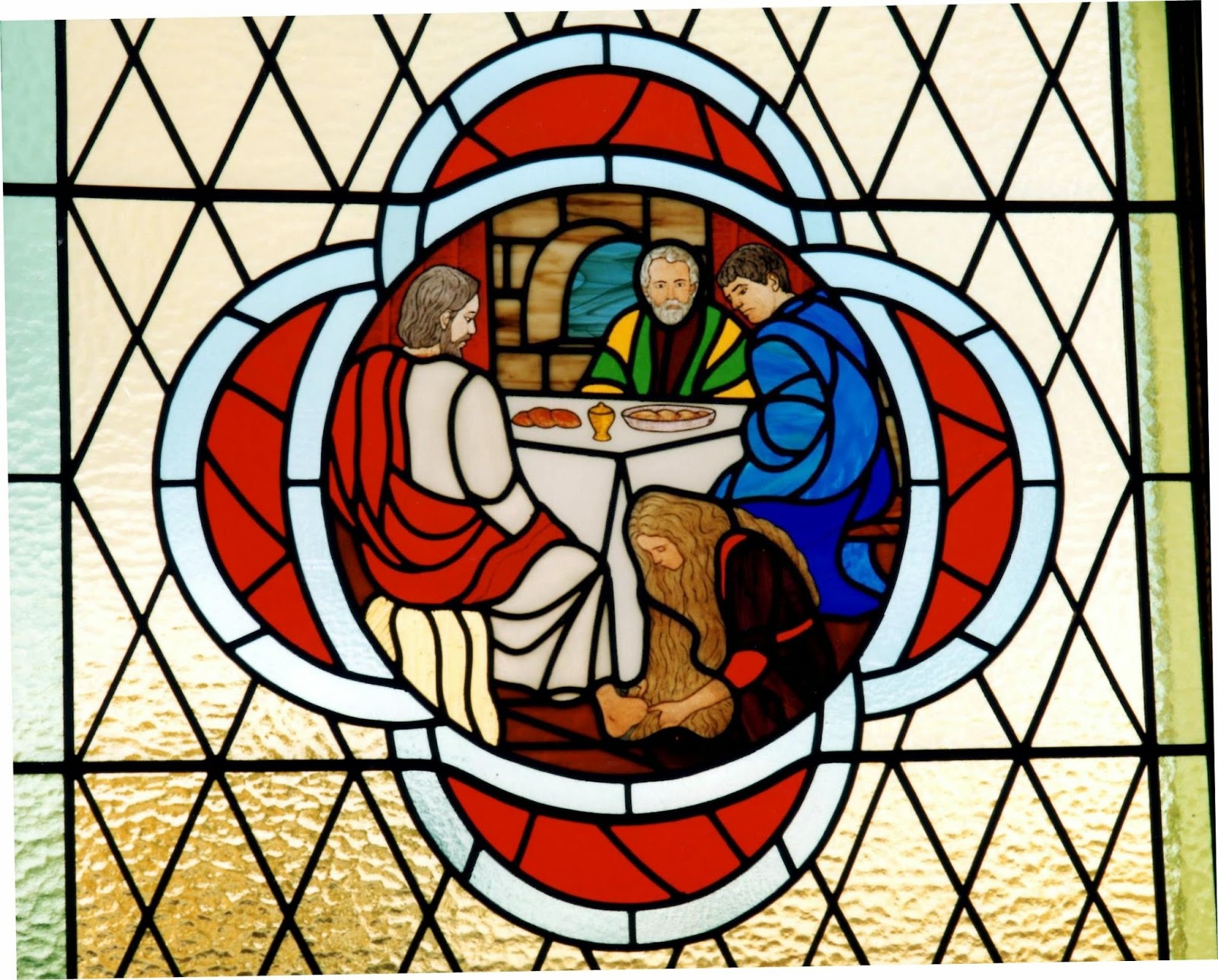
            The Apostle John recorded a contrast between two people, Mary and Judas (John 12:1-8).  Mary is a picture of dying to her own plans of how things should go.  Mary took some very expensive perfume, the kind that could have set her up for some needed financial security, and poured it all on Jesus’ feet.  In addition, she humbly wiped it on him with her hair.  It is a picture of giving herself completely and wholly to Jesus, no matter the cost, no concern with how it would look to others, with no strings attached and no other agenda other than total devotion.
 
            Judas, on the other hand, piously objected to Mary’s act of worship.  We might hear him rationally pushback on what Mary was doing:  “My friends, this is a lot of money – money that could be used for the poor instead of needlessly wasting it.  A little perfume is just fine, but to use the whole bottle is just too over the top – it isn’t fiscally responsible!”  Judas had a secret agenda.  He was not thinking of giving himself completely to Jesus, but of how he could use the cash for himself and his own purposes.  Judas is the picture of a zombie – half dead, walking around saying all kinds of spiritual things, but only devoted to Jesus and God’s kingdom when it agreed with him.  Judas had his own ideas of how the kingdom operation ought to go; and, when he became convinced that Jesus was not going to operate according to his agenda and plans, Judas betrayed him.
 
            When it comes to church ministry, every single member must be willing to die to self – to die to our own agendas of how we think things ought to go.  Conflict and contention exist because there are persons who tenaciously hold on to their pet programs or their ideas on how to proceed.  But what needs to occur is that each Christian must serve Jesus with the same attitude and action as did Mary.
 
            A church cannot be revitalized, revived, renewed, or resurrected apart from death.  Something or someone must die for new life to happen.  We must die to our plans so that God’s kingdom agenda can take over.  Believers in Jesus need to express the same devotion and dedication as did Mary.


            We all become frustrated and discouraged at times with the petty sinfulness of the church.  The answer is not to distance or detach, but to devote ourselves to dying to our plans and personal agendas.  When an entire group of believers does this, there is an abundance of grace and a mass transformation of heart.  May it be so, to the glory of Jesus Christ.