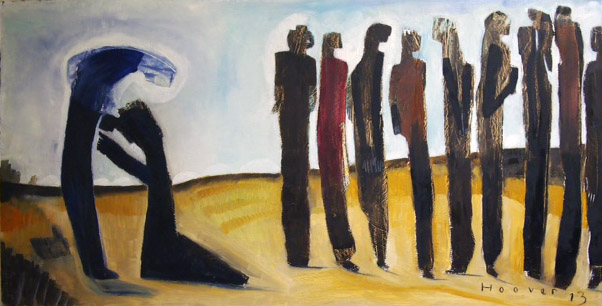
How Has Jesus Touched You?


Touch is one of those things that we likely take for granted.  Yet, touch is very important to everyday life.  Several years ago, Philip Yancey and Dr. Paul Brand wrote a book entitled “Pain: The Gift Nobody Wants.”  It is largely a biography of Dr. Brand who pioneered both the diagnosis and prognosis of leprosy.  He discovered that leprosy occurs because of a lack of feeling – an inability to sense touch.  The delicate nerve endings we all have in our fingers and toes are numb to the leper.  The lack of sensing pain in the extremities leads to small cuts or injuries, which would be immediately treated by someone who feels pain, becoming gangrene with the losing of fingers and toes.
 
            When it comes to the spiritual and the emotional, the ability to feel is vitally important.  A calloused unfeeling heart and soul does not realize the damage that is being done to it.  One of the greatest gifts we have as people is the ability to feel guilt, sorrow, disappointment, and pain – it is actually a gift.  It brings about attention to prayer and addressing the situation.  In Luke’s Gospel account, Elizabeth was a godly woman who was sensitive to God.  She was the wife of Zechariah the priest, and came from a family of priests.  Elizabeth was also old and childless.  She believed her opportunity to be a mother was gone forever, and it pained her (Luke 1:5-25, 39-45).
 
            But God specializes in the impossible, and Elizabeth became pregnant with John the Baptist.  My wife and I are definitely past the child bearing years.  If my wife became pregnant right now it would really be a miracle.  But, when I think about it, the real miracle might not be a conception but in having the strength and energy to raise a newborn, a toddler, and make it through the tweener and teen-age years!
 
            Mary, the mother of Jesus, was the niece of Elizabeth.  As soon as Mary approached Elizabeth, the baby within Elizabeth did not just move but leaped in her womb (Luke 1:41).  Elizabeth was filled with the Holy Spirit – she felt the touch of Jesus.  Jesus touched Elizabeth’s life in ways she could never have dreamed.  Jesus changed her life.  Elizabeth was never the same after encountering this miraculous touch.  She knew great joy because she first knew great pain and sorrow.
 
            How has the touch of Jesus impacted your life?  As great as Elizabeth’s story is, and your story and my story, it really only points to a much larger and even more significant story:  the birth of Jesus and its significance.  All of our stories have meaning because of Jesus Christ.  Jesus is what made Elizabeth’s story such a great one.  Elizabeth’s response to being touched by Jesus was joy, thanksgiving, and blessing.  She blessed the whole thing.  To be “blessed” is to have God’s stamp of approval on your life.  There is an emotional component to the word.  It is to be happy.  In other words, to recognize God’s grace and goodness through his merciful approval results in the response of being happy and joyous.


            How has Jesus touched you?  What is your story?  How has that touch changed your life?  How, in response, have you touched Jesus and blessed his heart?  All of our stories are still being written.  Our lives aren’t over yet.  We still have the opportunity of using our lives in a way that will bless the heart of Jesus.  Having the courage and boldness to share our story with another, even in a church setting, has the possibility of not only affirming your own faith, but impacting someone else’s faith, as well.  May we believe that what the Lord has said will be accomplished in us.

Thanksgiving


            Food, football, and family have become the annual trifecta of the American Thanksgiving Day.  I liberally indulge in all three, and look forward to doing so.  I’m not here to bash on the fact that Thanksgiving has become almost a day of secular worship around an unholy trinity.  And that’s because I really believe that underneath all the gravy, naps at halftime, and obnoxious relatives that we actually know why we are celebrating the day:  to give thanks for our abundant blessings.  And I think even those who do not readily acknowledge a God in the world intuitively know that there is a power and source of blessing well beyond themselves that makes all good things occur.
 
            Celebrations are a spiritual activity.  Parties were not invented by secularists.  God created them.  When Israel was preparing for a new national life in the Promised Land, God told them to celebrate the Feast of Harvest with the first-fruits of the crops (Exodus 23:16).  The Levitical law prescribed how to go about giving thanksgiving offerings; they were commanded and expected.  Gratitude was an important dimension of Old Testament worship.  Even before America as we know it was in existence, the people of God were used to setting aside certain days as events of special thanksgiving to God.  The church has always acknowledged that God as our Creator is also the Provider of all the bounty we receive.
 
            Consider some biblical verses that encourage us toward giving thanks.  “Come to worship the LORD with thankful hearts and songs of praise” (Psalm 95:2).  “Be thankful and praise the LORD as you enter his temple.  The LORD is good!  His love and faithfulness will last forever” (Psalm 100:4-5).  Our mouths need to speak our thanks out loud to God.  “Tell the LORD how thankful you are, because he is kind and always merciful” (Psalm 118:1). 
 
            In the New Testament, Luke tells the story of ten men with leprosy who were miraculously healed by Jesus.  A Samaritan, the lowliest of the low, was the lone person who came and fell at Christ’s feet with intense gratitude.  While the other nine went about their lives free from disease and glad for it, only one guy took the time to thank Jesus (Luke 17:11-19).  Indeed, sometimes we must be reminded to give thanks and to show gratitude for the ways in which God has provided for us.  And it is often the homeless, the sick, the lowly, the marginal of society that are the ones who lead the way and teach us what genuine thanksgiving looks like.


            The people of God are to never forget what they possess in Christ.  Paul told the Colossian church, “You have accepted Christ Jesus as your Lord.  Now keep on following him.  Plant your roots in Christ and let him be the foundation for your life.  Be strong in your faith, just as you were taught.  And be grateful” (Colossians 2:6-7).  Prayer and thanksgiving are to go together like mashed potatoes and gravy:  “Never give up praying.  And when you pray, keep alert and be thankful”(Colossians 4:2).  Since God created everything –  each bite of juicy turkey, every homemade roll, and that piece of pumpkin pie – it is all good (maybe not good for you – but good!).  Every meal is to be eaten with the cognizance that God is really behind it all (1 Timothy 4:4).
 
            If church ministry is not perpetually punctuated with times of celebration, praise, giving thanks, and even blowout parties, then that particular local church will become dull, boring, lifeless, and will not have the lifeblood of Jesus coursing through their corporate veins.  But a joyous church which takes advantage of giving thanks to God at every excuse to do so will be attractive, winsome, and peculiar (in the good way, and not in the weird way of your strange uncle).  Christians really ought to be at the forefront of having maximum fun because they have been forgiven; know the presence of God; are provided for; are confident in the fact they are protected; and, know the power of the Spirit and the shepherding ministry of Jesus.


            Yes, eat to your heart’s content and have a belly full of cornbread stuffing.  But remember to give thanks – out loud and with others – for the God who stands behind every good gift of creation.  Let thanksgiving and not constant complaint shape you and your church.  Be that one person who comes back to Jesus and offers praise, worship, and gratitude – and see how God can change your life and your church.

Grace to the Poor


“My dear friends, pay attention.  God has given a lot of faith to the poor people in this world.  He has also promised them a share in his kingdom that he will give to everyone who loves him” (James 2:5).
 
God’s grace is what makes the world go round.  Grace trumps everything.  An absence of grace in God’s people is offensive to him.  When I was growing up, our family dog was named “Sam.”  Sam loved being on the farm.  One time he tussled with a skunk.  I could barely get close enough to him to clean him up because he stunk so badly.  Favoritism toward those with means over those who don’t, stinks, and God has a hard time getting close to us when we show partiality to others.  And he is going to clean us up when he smells the stench of discrimination on us.  Showing favoritism to some over others is evidence that the dog is running away from the bath of grace.  In order to develop relationships and interact with people the way God wants us to, we must be free from prejudice.
 
            God cares about persons trapped in poverty.  The poor are important to him.  When Jesus began his ministry he pointed people to Isaiah 61:1 – The Spirit of the Lord is on me, because he has anointed me to preach good news to the poor (Luke 4:18).  In the Old Testament, there are seven different words for the “poor” because poverty was such a pervasive reality (and still is across the world!).  The range of meanings includes those who are poor because of laziness, those born into poverty, being poor because of inhuman oppression or slavery, simple beggars, and the pious humble poor.  These spiritual poor persons are the Hebrew anawim.  The anawim are humble persons who are caught in grinding poverty, having no choice but to put their trust in God.
 
            God has a lot to say about such persons because they are dear to his heart.  The law was quite clear about how to treat the poor.  There will always be poor people in the land.  Therefore I command you to be openhanded toward the poor and needy in your land (Deuteronomy 15:11).  Do not take advantage of a hired man who is poor and needy, whether he is a brother Israelite or an alien living in one of your towns.  Pay him his wages each day before sunset, because he is poor and is counting on it.  Otherwise he may cry to the LORD against you, and you will be guilty of sin (Deuteronomy 24:14-15).
 
            The mistreatment, exploitation, and just plain inattention to such persons were a chief reason God sent the prophets to Israel.  God had something to say concerning them:  Hear this, you who trample the needy and do away with the poor of the land, saying “When will the New Moon be over that we may sell grain, and the Sabbath be ended that we may market wheat?” – skimping the measure, boosting the price and cheating with dishonest scales, buying the poor with silver and the needy for a pair of sandals, selling even the sweepings with the wheat.  The LORD has sworn by the pride of Jacob:  “I will never forget anything they have done” (Amos 8:4-7).  Instead of being generous to the poor and allowing them to forage for grain at harvest behind the harvesters, they kept “those people” away from the fields so that they could turn a profit at every little bit they could.  And God thought it all stunk to high heaven.
 
            We must be reminded that it is only the poor in spirit who will enter the kingdom of heaven.  Only those who trust in God alone, and not in their stuff, will he accept.  The real issue here is the humility that demonstrates grace to people who cannot offer you something in return.  It is easy to be merciful to people who will turn around later and scratch our backs.  But it is altogether a different thing to be gracious from a place of humility and service to God.  God cares about the condition of our souls and not the balance of our bank accounts.  Inattention to the needy only betrays a heart far from him.  If God were to audit you, would he find your finances reflecting a spirit of humility and concern for the anawim?  God does not judge people on face value and the state of their finances, and neither should we.
 
            We are to speak and act with mercy to all persons, without prejudice.  The only way to rid ourselves of the stench of showing favoritism is to receive the cleansing bath of God’s mercy in Jesus Christ.  The shampoo of grace is available, if we will let God apply it.  God is the expert in:
 
Ø  Turning people from only associating with those they are comfortable with, to lovingly reaching out to people very different from themselves;
Ø  Changing people from the stinking thinking about what they can continually obtain and consume, to people who are loving and generous with their words and their physical resources;
Ø  Putting to death a proud spirit that looks to get ahead and accomplish an agenda by any means possible, to giving new life through humble repentance.


Ministry to the poor is a non-negotiable for the Christian church.  Beyond only dispensing benevolent funds, the poor need relationships, connections, resources, and a chance to give back in ways they can contribute.  It’s just part of being attentive to them, and extending them grace.  How does your church show their concern for the poor in your city and/or region?

Don’t Show Favoritism


“My friends, if you have faith in our glorious Lord Jesus Christ, you won’t treat some people better than others.” –James 2:1
 
            Have you ever felt like an outsider?  It is an awkward feeling, isn’t it?  As a young pastor I once went to make a hospital call on one of my parishioners.  He was having a procedure done at a large downtown hospital in the city near where my church was located.  I had never been there before.  I parked my car and walked into the hospital like I had done at several hospitals before.  But there was something very different about it.  You see, I became very much aware that in the time it took me to go into the hospital and find my way to the unit where my person was located, on this particular day, I saw no other Caucasian persons – I was the only one.  Every person I encountered was African-American.  Now, mind you, I had African-American friends and had spent considerable time around many of them.  But I had never been in this situation before in my life, where I was the minority – and it was awkward.  Everyone else seemed to be okay with me being there and showed me respect, but it was still weird.  I distinctly remember thinking to myself in the midst of that experience:  “So that’s what it feels like for my African-American friends!”
 
            Now imagine being a visitor to a church worship service.  Picture with me that you are a just a normal person trying to make ends meet, without much money or resources, and only a few clothes with none of them being very dressy.  You have never been to this church before.  You pull up in a fifteen year old car that has a few rattles to it and park.  What are you thinking?  What do you see?  “Wow, that building is really big!  I don’t know anybody here.”  Yet, the visitor works-up the courage to get out of the car and walk into the big building.  The inner dialogue is going on:  “Where do I go?  Will anybody notice me?  How am I supposed to act?  Are my kids going to be okay?  Where do I sit?”  All the things we never think about and take for granted are at the forefront of this visitor’s mind.  You see, not everyone thinks like we do – and that is the point.  If we are only attentive and aware and care about people who look just like us, think just like us, and act just like us, then we are playing favorites and have become judgmental persons who cannot be trusted with the things of God.
 
            Discrimination of people based on our limited understanding of them is soundly condemned in Scripture.  “To show partiality is not good,” says Proverbs 28:21.  The Apostle Peter had to get the insider-outsider mentality out of his head and heart concerning Gentiles.  It took a series of visions from God himself for Peter to get this testimony into his life:  “I now realize how true it is that God does not show favoritism but accepts men from every nation who fear him and do what is right” (Acts 10:34).  Even people who are socially and economically in an inferior position are to be treated well.  Paul told masters not to play favorites and look down on their slaves.  “Do not threaten them, since you know that he who is both their Master and yours is in heaven, and there is no favoritism with him” (Ephesians 6:9).  And if that were not clear enough, Paul flatly stated to his young protégé, Timothy:  “I charge you, in the sight of God and Christ Jesus and the elect angels… to do nothing out of favoritism” (1 Timothy 5:21).
 
            Favoritism is a big deal to God and he soundly condemns it because with him there ought never to be star-bellied Sneetches in the church who look down on those without stars on thars!  A poor woman once wanted to join a church.  She went to the pastor, and he told her to pray about becoming a member.  The pastor did not see the woman for months and then one day met her on the street.  He asked her if she had been praying and what she had decided about joining the church.  She said, “I did what you asked me to do, and one day while I was praying, the Lord said to me, ‘Don’t worry about getting into that church – I’ve been trying to get into it myself for the last twenty years!’”


The ground is level at the foot of the cross.  Jesus was not an upwardly mobile and tech-savvy Jew; he was a king who chose to serve and get into the lives of the poor, the pitiful, the wretched and the marginal folks of society just as he did with the rich and influential.  They were all just people who needed God in their lives.  The church is the consummate expression of God when it follows Jesus to the least and the lost, as well as the movers and shakers, and invites them all into its total life.