Romans 15:1-6 – The Responsibility of the Powerful

We who are powerful need to be patient with the weakness of those who don’t have power, and not please ourselves. Each of us should please our neighbors for their good in order to build them up. Christ didn’t please himself, but, as it is written, The insults of those who insulted you fell on me. Whatever was written in the past was written for our instruction so that we could have hope through endurance and through the encouragement of the scriptures. May the God of endurance and encouragement give you the same attitude toward each other, similar to Christ Jesus’ attitude. That way you can glorify the God and Father of our Lord Jesus Christ together with one voice. (Common English Bible)

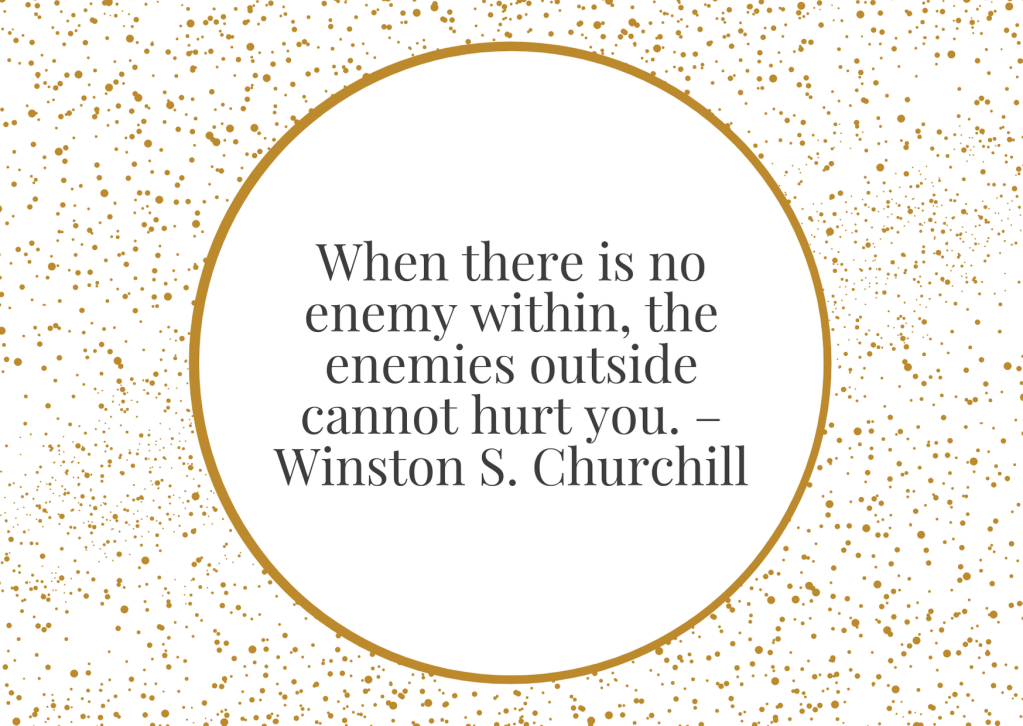
“With great power comes great responsibility.”

Stan Lee

Within the ancient church in Rome there existed people of Jewish descent as well as non-Jews (Gentiles) who had come to embrace Christ. These two groups had vastly different backgrounds and experiences. Now they found themselves within one church, with only their shared commitment to Jesus.

Getting along was downright hard. It took a great deal of work for them to understand one another. Throughout the Apostle Paul’s letter to the believers in Rome, he consistently went back and forth, addressing both groups.

Frankly, Paul was most difficult on his fellow Jews. He took them to task. In his view, the Jewish believers had a responsibility to set a tone of Christian equality and fairness. Since the Jewish people have such a rich spiritual history as God’s people, it was Paul’s admonition they use their power on behalf of the non-Jewish Gentiles.

There were some Jewish believers who believed it best that the non-Jewish believers become religiously Jewish. They thought that Gentiles, with no background whatsoever in Old Testament belief and practice, would need to be like them in order to become good Christians.

Paul passionately believed otherwise. The Jewish position of privilege was to be used to encourage and help, not criticize and make things more difficult for non-Jewish persons. Jesus, a Jew himself, did this during his life and ministry on earth.

It came down to a belief of whether Jews ought to hold positions of power within the church, or that power should be shared. As it still is today, it was then with the Jewish people: They have carried an inordinate burden of the world’s sin upon their shoulders. Paul wanted them to continue this special calling – not taking advantage of an opportunity to be on top – but embracing their call for the sake of Christ’s gospel.

Whether Jew or Gentile, all together were to make every effort to do what leads to peace and the encouragement of one another. Those with power were to make room at the table (and Table!) for those without power.

The ideal which Paul so adamantly struggled for was unity – to have both Jew and Gentile together as sisters and brothers in the faith. There was never to be two churches – one Jewish and one Gentile. Christ’s death had abolished all barriers to unity. Now, everyone must come together and re-orient their lives around the good news of new life in Christ. (Ephesians 2:11-22)

Since Jesus closely identified with others, now we, his followers, are to demonstrate a genuine spirit of care and welfare for all people. This is a new family relationship which did not exist before Christ. God, however, has adopted all kinds of non-Jewish people into the family. So, we have responsibilities to get along with each other.

It must always begin with those who possess the power and privilege. They have the first responsibility to initiate an egalitarian society. The onus is on the powerful to ensure that a fully inclusive Christian ethic is established and maintained. We are to welcome others just as Christ welcomed us.

The Christian ethic of welcoming, encouraging, and including is helped by being mindful of the following:

  • Listen more. Talk less. A particular temptation for those with power is to make decisions without consulting or collaborating. Basic human respect comes from listening – neither interrupting nor overtalking. The less powerful folks need to be heard. Give them a seat at the table and honor them with your ears.

People who listen when they are corrected will live, but those who will not admit that they are wrong are in danger. (Proverbs 10:17, GNT)

  • Be curious. Respect another’s contribution. Be welcoming and open, whether or not you agree. Seek understanding rather than always trying to be understood. “Tell me more.” “Help me understand.” And “I’d like some clarification…” are all simple phrases of healthy curiosity which invites others to talk.

The people in Berea were more open-minded than those in Thessalonica. They were so glad to hear the message Paul told them. They studied the Scriptures every day to make sure that what they heard was really true. (Acts 17:11, ERV)

  • Don’t assume. Not everyone has had the same experiences. We don’t all know the same things. Take the posture of a learner. Be something of an anthropologist, seeking to discover rather than superimpose what you already believe on a different group of people.

Don’t fool yourselves! If any of you think you are wise in the things of this world, you will have to become foolish before you can be truly wise. (1 Corinthians 3:18, CEV)

  • Be aware of your own biases. We all have them. It takes some work to uncover our prejudices as well as our privileges.

I solemnly command you in the presence of God and Christ Jesus and the highest angels to obey these instructions without taking sides or showing favoritism to anyone. (1 Timothy 5:21, NLT)

  • Embrace empathy. We all know how it feels to be excluded, left out, and even shamed about something. Let’s use our own experiences to realize what others might be going through. Looking down on another, or dismissing them in some way, is not the way of our Lord.

Laugh with your happy friends when they’re happy; share tears when they’re down. Get along with each other; don’t be stuck-up. Make friends with nobodies; don’t be the great somebody. (Romans 12:15-16, MSG)

  • Focus on connection, not fear. In many groups and in many places, the “other,” the one who is different, is looked upon with suspicion as someone who might upset existing societal norms or steal something we have. Seeking to establish connection with others mitigates fear and anxious feelings.

As many of you as were baptized into Christ have clothed yourselves with Christ. There is no longer Jew or Greek, there is no longer slave or free, there is no longer male and female; for all of you are one in Christ Jesus. (Galatians 3:27-28, NRSV)

  • Be patient with others. People need our gentleness and our humble help, not our judgment and exasperation. Treat others the way you’d like to be treated.

Be humble and gentle in every way. Be patient with each other and lovingly accept each other. (Ephesians 4:2, GW)

“So in everything, do to others what you would have them do to you, for this sums up the Law and the Prophets.”

Jesus (Matthew 7:12, NIV)

That about sums up exactly what Paul intended to say. Now go and do likewise.

O God, in accepting one another wholeheartedly, fully, and completely, we accept you. Fill us then with love and let us be bound together with love as we live our lives, united in this one spirit which makes you present in the world, and which makes you witness to the ultimate reality that is love. Love has overcome. Love is victorious. You are Love. Amen.

1 Corinthians 12:27-31 – Diversity and Unity

All of you together are Christ’s body, and each of you is a part of it. Here are some of the parts God has appointed for the church:

first are apostles,
second are prophets,
third are teachers,
then those who do miracles,
those who have the gift of healing,
those who can help others,
those who have the gift of leadership,
those who speak in unknown languages.

Are we all apostles? Are we all prophets? Are we all teachers? Do we all have the power to do miracles? Do we all have the gift of healing? Do we all have the ability to speak in unknown languages? Do we all have the ability to interpret unknown languages? Of course not! So, you should earnestly desire the most helpful gifts.

But now let me show you a way of life that is best of all. (New Living Translation)

“Ubuntu” is an African Zulu word for humanity. It roughly translates into English as, “I am because we are.”

In whatever way it is to be translated, the idea behind ubuntu is a belief of being connected in a universal bond of humanity. So, an authentic individual human is part of a larger and more significant relational, communal, societal, environmental, and spiritual world.

That is precisely what today’s New Testament lesson is all about. Believers in Jesus are connected to one another, as well as having a human bond with all people, since everyone is created in the image and likeness of God.

“We are made for goodness. We are made for love. We are made for friendliness. We are made for togetherness. We are made for all of the beautiful things that you and I know. We are made to tell the world that there are no outsiders. All are welcome: black, white, red, yellow, rich, poor, educated, not educated, male, female, gay, straight, all, all, all. We all belong to this family, this human family, God’s family.”

Desmond Tutu

So, then, we are all to use whatever spiritual gifts and divinely given abilities for the common good of everyone. Just like the triune G-d who is both unity and diversity, and just as an individual human body has many parts yet one person, so also believers are diverse in every way yet thoroughly unified as one Body of Christ.

The Church at Corinth had divided into special interest groups who followed a particular person. Each was continually lobbying for what they wanted, rather than seeking to work together as one temple of G-d. And each group believed their gifts were superior.

Paul identified some spiritual gifts – neither to give an exhaustive list, nor to rank them in importance – but to clarify that all these diverse people and their G-d-given skills are to be used for the building up of the congregation. Ideally, the people’s gifts are to flow together in common worship, fellowship, encouragement, and mission:

  • Apostles. There are two kinds. Capital “A” Apostles are the original ones. They are set apart as those who saw the Lord and were his disciples. Little “a” apostles are “sent ones” or missionaries, proclaiming the gospel in word and deed to those who need to hear.
  • Prophets. These are folks possessing a function and gift of encouragement, building up the church through picturing a special future for the ministry of the community.
  • Teachers. Explaining sound doctrine through careful application of Scripture to daily life and ministry is the function of a biblical teacher.
  • Miracle workers and healers. Yes, miracles and healing happened and still occur. These are believers with an unusual gift of faith who are able to discern with spiritual eyes what others tend not to see.
  • Helpers. A necessary element of any Christian fellowship are people who serve in all kinds of capacities: giving to others’ needs; doing acts of mercy and benevolence; and attending to whatever physical needs Christians are faced with.
  • Leaders. Men and women who provide guidance and steer the church in directions they ought to go. They are skilled administrators, able to give wise counsel.
  • Speakers in tongues (languages). It must be borne in mind that this gift is not an end in itself. It is a Spirit-given ability to help include people. Christianity was never intended to be an exclusive club of Jews or devoted solely to a particular class or race. The gospel is meant for every type of person.

Reflecting on all these gifts and abilities within the Church, Paul rattled off a flurry of staccato-like rhetorical questions. The point is to lift up all the gifts as equally needed and appreciated. The ghettoized Corinthian Church needed an understanding of this. Their individual identities were too wrapped up in their abilities, rather than in Christ.

Keep in mind that today’s New Testament lesson immediately precedes the great ode to love of chapter 13. It is the primacy and permanency of love which holds everyone together. Love is the supreme end of all the speaking and serving gifts.

The most excellent way of engaging our giftedness is expressing it with the love of G-d in Christ Jesus. Anything less than this is a mere shadow of the gospel and severely truncates Christian mission and worship.

What’s more, not only does every local church need to function in unity through diverse exercise of gifts with the individual members, so every local church must cooperate and live in harmony with all other churches. Yes, if you are reading ecumenism in this, you are correct. An ecumenical spirit is a generous spirit which pays attention to other believers in our communities, countries, and throughout the world.

“Unity, not uniformity, must be our aim. We attain unity only through variety. Differences must be integrated, not annihilated, not absorbed.”

Mary Parker Follett

If leaders, teachers, helpers, healers, church planters and encouragers are all doing their jobs, according to the grace given them, then working together with believers everywhere simply happens. And it never seems weird to extend basic Christian mercy and care to believers everywhere – no matter whether they are in full agreement with our doctrinal statements, or not.

When Jesus prayed for all potential believers to be one as G-d is one, he wasn’t thinking of special interest groups, separated Christianized ghettos, nor some believers as being more right or special than other believers.

Diversity, unity, equity, inclusion, and most of all, love, are what characterizes the Lord. It should characterize us, too.

Methinks the Zulu were on to something with the concept of ubuntu. A person is most fully a person through other people. It seems to me it is high time to affirm the basic humanity in others through appreciating their unique difference.  

You and I are more than independent individuals. Our shared humanity is a quality we owe to each other.

I am because we are.

Lord G-d almighty, Creator of the universe, who made us different from one another in myriad ways we can see and in more ways we shall never know yet made us all in your image; fill our hearts with your love and our minds with your wisdom, that we may truly become brothers and sisters of your only Son, our Savior Jesus Christ our Lord; who lives and reigns with you in the unity of the Holy Spirit, one God, now and forever. Amen.

Ephesians 4:1-16 – Unity through Spiritual Gifts

Celtic unity knot by Kristen Fox

As a prisoner for the Lord, then, I urge you to live a life worthy of the calling you have received. Be completely humble and gentle; be patient, bearing with one another in love. Make every effort to keep the unity of the Spirit through the bond of peace. There is one body and one Spirit, just as you were called to one hope when you were called; one Lord, one faith, one baptism; one God and Father of all, who is over all and through all and in all.

But to each one of us grace has been given as Christ apportioned it. This is why it says:

“When he ascended on high,
    he took many captives
    and gave gifts to his people.”

(What does “he ascended” mean except that he also descended to the lower, earthly regions? He who descended is the very one who ascended higher than all the heavens, in order to fill the whole universe.) So, Christ himself gave the apostles, the prophets, the evangelists, the pastors and teachers, to equip his people for works of service, so that the body of Christ may be built up until we all reach unity in the faith and in the knowledge of the Son of God and become mature, attaining to the whole measure of the fullness of Christ.

Then we will no longer be infants, tossed back and forth by the waves, and blown here and there by every wind of teaching and by the cunning and craftiness of people in their deceitful scheming. Instead, speaking the truth in love, we will grow to become in every respect the mature body of him who is the head, that is, Christ. From him the whole body, joined and held together by every supporting ligament, grows and builds itself up in love, as each part does its work. (New International Version)

Unity is more than a good idea or something nice to aspire to. It’s absolutely necessary.

The whole unity thing is quite important to God. It isn’t just an ancillary or side issue to the real work of the church and the Christian life; it is very much at the center of Christianity. 

Christians have been fashioned through the Holy Spirit into a single harmonious religious community of redeemed people, called to exemplify a counter-cultural presence in the world. 

There is a solid theological reason for this: God is one. Just as the triune God exists as one deity in three persons, so the church is to reflect God’s image through its unified oneness.

Although unity has been accomplished through the finished work of Jesus on the cross, the practical implications must be daily worked out. This is why we are to strive, or to put significant effort, into realizing and maintaining the unity we possess. 

Simply getting along but harboring animosity toward another is not unity. Just because two people are not at each other’s throats doesn’t mean there is peaceful unity. Unity occurs when the Body of Christ works together in its diverse gifts toward a common goal of knowing Christ and making him known.  

When Jesus ascended to heaven, ten days later the Day of Pentecost happened. The Holy Spirit came upon the small band of believers and the church became a full-fledged phenomenon, growing and expanding. 

The gracious gifts of the Spirit are given to each and every Christian so that we all may grow and be strengthened in love. Each gifting might be different from person to person, but every one of them is meant to be used in love for the benefit of the entire church.

The Body of Christ, the Church, will experience disunity, weakness, and ineffectiveness if they don’t have any bones or skeleton. It might look like a church – yet will not be able to do any good in the world. 

It is quite necessary that every individual Christian learn what their spiritual gift(s) are, then use them in love to build up the Body. This is the God ordained means of realizing a mature, unified, and functionally healthy group. 

Toward that end, it is good for us all to ask ourselves the following questions and discover the answers:

  • What is my passion and desire for Christ’s Church? 
  • What issues stir up my emotions? 
  • What group of people do I feel most attracted or compelled to reach with the love of Christ? 
  • What area of my faith community or volunteer organization do I most want to influence? 
  • Are there people I see and “get” but others seem to ignore or misunderstand? 
  • How will I step out in faith? 
  • How will I speak and serve as a faithful believer?

 May your journey be blessed, and your pilgrimage of faith be rewarded.

Blessed Holy Trinity, the God whom I serve, may your visible church on this earth be unified and one as you are One. I pray our unity of love and purpose will transform individuals, churches, organizations, systems, and the entire world to the glory of Father, Son, and Spirit.

Loving God, you have graced me with spiritual gifts for the sake of Jesus Christ. Use me for the gracious strengthening of the Church, and for positive influence in the world. Amen.

1 Corinthians 11:27-34 – The Body

But if you eat the bread and drink the wine in a way that isn’t worthy of the Lord, you sin against his body and blood. That’s why you must examine the way you eat and drink. If you fail to understand that you are the body of the Lord, you will condemn yourselves by the way you eat and drink. That’s why many of you are sick and weak and why a lot of others have died. If we carefully judge ourselves, we won’t be punished. But when the Lord judges and punishes us, he does it to keep us from being condemned with the rest of the world.

My dear friends, you should wait until everyone gets there before you start eating. If you really are hungry, you can eat at home. Then you won’t condemn yourselves when you meet together.

After I arrive, I will instruct you about the other matters. (Contemporary English Version)

The body. The body and blood of Christ. The Body of Christ. Throughout the Apostle Paul’s first letter to the Church at Corinth he employs the full literal and metaphorical understanding of the word “body.”

“Body” is an important word for Paul. He consistently and insistently uses it to convey a message of solidarity, unity, community, and responsibility.

Christ identifies with his people closely. This relationship is so intimate that it is like a head connected to a body. Jesus is committed to the Church.

God put everything under Christ’s feet and made him head of everything in the church, which is his body. His body, the church, is the fullness of Christ, who fills everything in every way. (Ephesians 1:22-23, CEB)

Believers in Jesus are connected to one another closely. They are vitally linked, like the parts of a body all unified together, acting in concert.

God handed out gifts of apostle, prophet, evangelist, and pastor-teacher to train Christ’s followers in skilled servant work, working within Christ’s body, the church, until we’re all moving rhythmically and easily with each other, efficient and graceful in response to God’s Son, fully mature adults, fully developed within and without, fully alive like Christ. (Ephesians 4:11-13, MSG)

The Church, believers in God and followers of Christ, are the community of the redeemed. They serve and share together as if they were one body, not many bodies.

Christ is like a single body, which has many parts; it is still one body, even though it is made up of different parts. In the same way, all of us, whether Jews or Gentiles, whether slaves or free, have been baptized into the one body by the same Spirit, and we have all been given the one Spirit to drink.For the body itself is not made up of only one part, but of many parts…. As it is, there are many parts but one body. (1 Corinthians 12:12-14, 20, GNT)

And so, Christians have a responsibility to one another, They must work together as one Body of Christ, paying attention to each other and caring for all the members. There are not to be divisions of special interest groups or a separation of class, ethnicity, race, or gender.

Unfortunately, when the Corinthian Church gathered around the Lord’s Table, their eating and drinking didn’t eliminate barriers but instead maintained and created obstacles between each other.

Paul would have none of that kind of thinking or behavior. He cited it as a reason why many of the individual physical bodies of persons were sick, weak, and even dead. We are holistic people, so whenever there is a spiritual illness in the Body of Christ, it effects the physical bodies of members with sickness.

So, what to do about this malady of both body and soul? Wait for each other. Be patient with one another. Show deep concern for the Body because we are all truly one in Jesus Christ.

Be devoted to one another in love. Honor one another above yourselves…. Live in harmony with one another. Do not be proud but be willing to associate with people of low position. Do not be conceited. (Romans 12:10, 16, NIV)

And all of this is rooted in grounded in the body and blood of Jesus. Whenever believers come to the Table, their eating and drinking is meant to be an outward display of the inward reality of our collective redemption.

Christ gave his literal body so that we might be redeemed from old empty ways of living selfishly and independently from other people. He gathered believers together as the Body. The Church is to reflect Christ’s concern for humanity. The Spirit is given, so that together as one people of God, we will be the continuing presence of Jesus to a fragmented world in need of kindness, justice, and deliverance.

As the Lord’s Body, we are to understand our special purpose on this earth – to bless the world by demonstrating a different and better way to live. Proclaiming this good news in both word and deed is what we are about.

If we look, speak, and act no different than everyone else, we will all be lumped together at the end of the age when Christ returns. And it won’t go so well for us.

Yet, I am confident of better things with you and me.

Our coming together at the Lord’s Table needs to be a genuine celebration of redemption. Examining ourselves does not mean unnecessary navel gazing. Because whenever we go trying to find sin inside us, we will never be disappointed. Instead, the examination is to be communal – ensuring there is room at the Table for everyone, and that each person is connected and participating.

In short, we are to love one another, just as Christ loved us and gave himself for us.

Help carry each other’s burdens. In this way you will follow Christ’s teachings. (Galatians 6:2, GW)

May it be so, to the glory of God.

Lord Jesus, who prayed that we might all be one, we pray to you for the unity of Christians, according to your will, according to your means. May your Spirit enable us to experience the suffering caused by division, to see our sin, and to hope beyond all hope. Amen.