“Oh, how my soul praises the Lord. How my spirit rejoices in God my Savior! For he took notice of his lowly servant girl, and from now on all generations will call me blessed. For the Mighty One is holy, and he has done great things for me. He shows mercy from generation to generation to all who fear him. His mighty arm has done tremendous things! He has scattered the proud and haughty ones. He has brought down princes from their thrones and exalted the humble. He has filled the hungry with good things and sent the rich away with empty hands. He has helped his servant Israel and remembered to be merciful. For he made this promise to our ancestors, to Abraham and his children forever.” (NLT)
Mary’s great song of praise, having grasped the reality of being pregnant with the Messiah, affirmed that the all-powerful God “has done great things for me.” Indeed, the Lord shows mercy to everyone who worships and adores such mighty acts. It strikes me that Mary, instead of being full of worry and afraid of the future, and as an unmarried teen with child, is full of the Spirit and faith. Mary neither complained nor fretted for the nine months of her pregnancy; she praised God and was clear-headed about the grace shown to her.
Mary’s canticle gives us insight into the mystery of the incarnation: God chooses the weak, those of low esteem, and the powerless. Mary was quite ordinary for her day. She had no wealth and nothing which would cause anyone to pick her out of a crowd. Yet, she is the one chosen by God. And her wonderful response to grace demonstrated that there is so much more to any person than what we can see with our eyes and perceive through our earthly glasses of high positions and strength of personalities.
What is more, Mary had the wisdom to discern that her situation typified the Lord’s egalitarian work of leveling the field so that all persons have what they need. Her son, the Messiah, would carry this into his own life and ministry – declaring good news to the poor, comforting the brokenhearted, proclaiming freedom for captives, telling those who mourn that the time of the Lord’s favor has come.
God is full of grace, mercy, and power to those who are powerless and in need of help. The Lord has our backs. Perhaps if we all, both individually and corporately, continually used our words to identify and declare the great things God has done we would realize the consistent blessing of the Lord.
I encourage you to take some time today and journal the ways in which God has been good to you in this Advent season, and like Mary, offer praise for each act of mercy. Mary exhibited no helplessness but had her heart calibrated to detect the grace of God when it was present.
Great and mighty God, I will praise you with all my heart. You care for me and always show mercy to those who worship you. Fulfill all your good promises in me, and in all your people, for the sake of your Son, the Lord Jesus. Amen.
Welcome, friends! In a move of incredible mercy, God leaped down and came to live with us, giving us the peace of divine presence. The Word is present and lives among us. Click the videos below and let us worship the Lord for the indescribable gift of peace…
Luke 1:68-79
Zechariah’s Song | Official Music Video (WCC Worship)
May the Peace of God – Kristyn Getty, Margaret Becker, Joanne Hogg
“I leave you peace. It is my own peace I give you. I give you peace in a different way than the world does. So don’t be troubled. Don’t be afraid.” -Jesus (John 14:27, ERV)
Our Lord, I will sing of your love forever. Everyone yet to be born will hear me praise your faithfulness. I will tell them, “God’s love can always be trusted, and his faithfulness lasts as long as the heavens.”
You said, “David, my servant, is my chosen one, and this is the agreement I made with him: David, one of your descendants will always be king….”
In a vision, you once said to your faithful followers: “I have helped a mighty hero. I chose him from my people and made him famous. David, my servant, is the one I chose to be king, and I will always be there to help and strengthen him.
No enemy will outsmart David, and he won’t be defeated by any hateful people. I will strike down and crush his troublesome enemies. He will always be able to depend on my love, and I will make him strong with my own power. I will let him rule the lands across the rivers and seas. He will say to me, ‘You are my Father and my God, as well as the mighty rock where I am safe.’” (CEV)
I wonder where the world places its confidence. I also sometimes wonder where the church places her confidence. Poverty, injustice, starvation, human rights violations, and war have existed throughout time. We all recognize these and the awful problems they are for so many people. It is, however, quite another thing when it comes to our confidence in addressing them and how they will ever be eradicated.
If we view these great humanitarian issues as a matter of ignorance, we will pursue education as the means of tackling them. If we discern them as political issues, we will seek to elect officials who will take them on, and we will lobby to make things different. If we understand them as moral issues, we will agitate for change and speak prophetically into what we believe to be the sources of the problems. In truth, each of these approaches have merit and are necessary components to a full orbed attention of their multifaceted and complicated nature.
For the pious and devout, the ultimate confidence comes in basic faith and trust of the Divine. God’s faithfulness and steadfast love are the solid foundation from which the believer constructs her hope and confidence.
The psalmist is not one bit bashful in reminding God of divine promises. God swore to King David that his descendants would rule forever. At the time the psalmist crafted these words, it was not looking much like those promises were having any attention from the Lord.
The David spoken of in the psalm is interpreted in the Christian tradition as Jesus. King David of old was certainly no perfect man, and the psalmist presents an idealized version, looking ahead to messianic qualities of a coming Ruler. Those qualities include a concern for the common good of all persons without striving for personal power or being aloof; and an ability to be victorious over foes.
Advent, much like today’s Psalm, calls on people to rely upon and have confidence in divine promises – even when those promises seem far from being realized. It is the trust and hope of the faithful which perseveres in prayer for a coming redemption and a day when wars shall cease, the rights of people are thoroughly met, starvation eradicated, injustice turned to justice, and poverty done away with once for all. In other words, a sinless world free from the machinations of evil.
It is no small thing holding on to our confidence as believers when circumstances all around us are askew and askance. The author of the New Testament book of Hebrews had this to say to a struggling church who had a hard time seeing future promises fulfilled:
Remember those earlier days after you had received the light, when you endured in a great conflict full of suffering. Sometimes you were publicly exposed to insult and persecution; at other times you stood side by side with those who were so treated. You suffered along with those in prison and joyfully accepted the confiscation of your property, because you knew that you yourselves had better and lasting possessions. So do not throw away your confidence; it will be richly rewarded.
You need to persevere so that when you have done the will of God, you will receive what he has promised. For,
“In just a little while, he who is coming will come and will not delay.”
And,
“But my righteous one will live by faith. And I take no pleasure in the one who shrinks back.”
But we do not belong to those who shrink back and are destroyed, but to those who have faith and are saved. (Hebrews 10:32-39, NIV)
We keep going by remembering God’s faithfulness and steadfast love, and our past joy of committed faith. Then, like psalmist, we allow a song to bubble up and be sung about divine goodness. Never underestimate the power of memory and music to keep us on track toward living each day in faith and confidence.
May you be able to sing of God’s love forever.
May you give voice to God’s faithfulness.
May you express daily affirmations of faith in God.
May you bank on the promises of God.
May your faith be strengthened for the rigors of this life.
May your hope overflow.
May the love of God work in and through you to the glory of Jesus Christ. Amen.
I Could Sing of Your Love Forever by Encounter Worship Band.
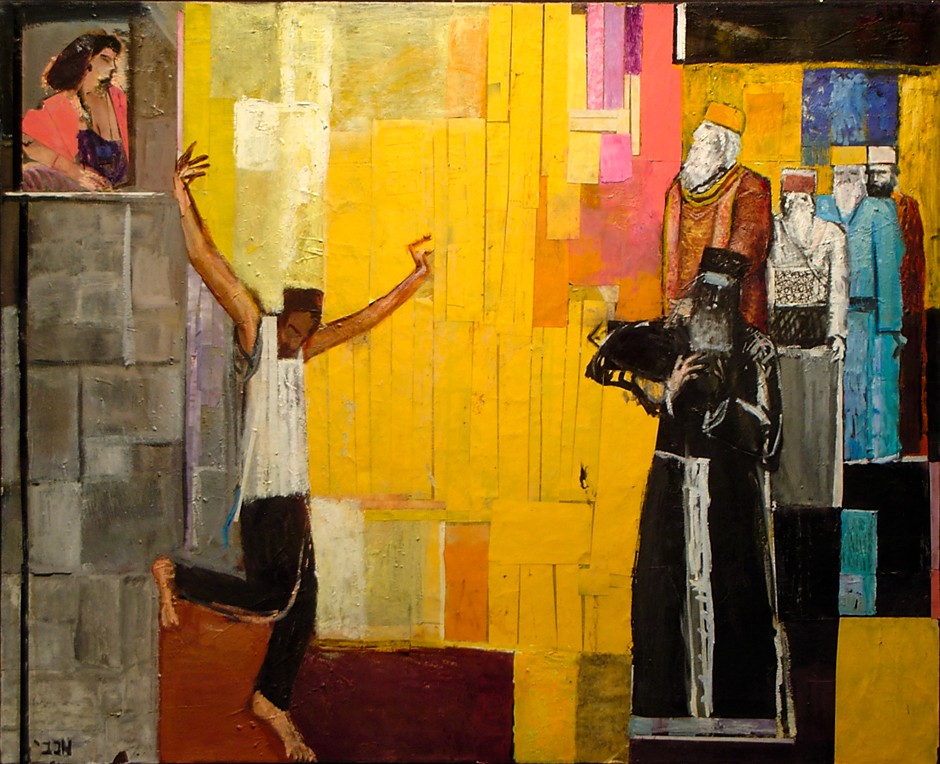
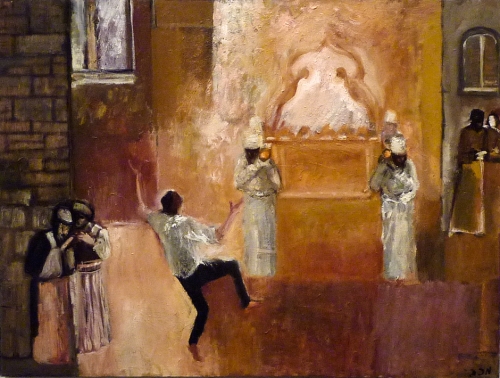
Now King David was told, “The Lord has blessed the household of Obed-Edom and everything he has, because of the ark of God.” So, David went to bring up the ark of God from the house of Obed-Edom to the City of David with rejoicing. When those who were carrying the ark of the Lord had taken six steps, he sacrificed a bull and a fattened calf. Wearing a linen ephod, David was dancing before the Lord with all his might, while he and all Israel were bringing up the ark of the Lord with shouts and the sound of trumpets.
As the ark of the Lord was entering the City of David, Michal daughter of Saul watched from a window. And when she saw King David leaping and dancing before the Lord, she despised him in her heart.
They brought the ark of the Lord and set it in its place inside the tent that David had pitched for it, and David sacrificed burnt offerings and fellowship offerings before the Lord. After he had finished sacrificing the burnt offerings and fellowship offerings, he blessed the people in the name of the Lord Almighty. Then he gave a loaf of bread, a cake of dates and a cake of raisins to each person in the whole crowd of Israelites, both men and women. And all the people went to their homes. (NIV)
After the worship debacle earlier in which two of the Levites attending the ark of the Lord were struck down by God, King David took time to refocus and go about bringing the ark back to Jerusalem in a proper way. A true celebration was underway that enjoyed the blessing of God upon it. The sacrifices before God were sweet smelling because they were done in a spirit of obedience and humility.
However, David’s wife, Michal, the daughter of Saul, did not worship. She critically observed David and the others and evaluated the worship service by how it appeared to her. Michal was not with everyone else giving herself to the true worship of God. She did not like how David went about worship. The acceptable worship of God was unacceptable to her and she let David know it. Yet, David was undaunted and had his focus where it needed to be. We get a cryptic last note on Michal, describing that she was barren to the day of her death – a note meant to convey both a physical reality of her body, and a spiritual reality of her soul.
So, how are we to worship God? Jesus commented about worship:
“The hour is coming, and is now here, when the true worshipers will worship the Father in spirit and truth, for the Father seeks such as these to worship him. God is spirit, and those who worship him must worship in spirit and truth.” (John 4:23-24, NRSV)
Neither good intentions alone (in spirit) nor appropriate actions alone (in truth) constitute acceptable worship. Both are necessary. The worship Jesus mentioned is literally “to prostrate oneself before God.” In other words, it is to have a disposition and attitude of submission and humility toward God, seeking to obey him as king rather than superimpose our desires on him.
Furthermore, God is near to us and far away from us, at the same time. God is close to us through the person and work of Jesus Christ, and now in the person of the Holy Spirit. God is also sovereign and far above us, orchestrating the universe. In worship, we appreciate both God’s transcendence and immanence.
The presence of God is both comforting and dangerous. Divine holiness is like a fire, giving us light and warmth; but get too close to the flame and you will get burned, even destroyed. We have collective promises and blessings given to us as God’s people; and at the same time, we have individual responsibilities to know the will of God and do it in the way prescribed for us.
David Dancing by Richard McBee, 1986
The book of 1 Chronicles gives an additional account of David’s worship service in bringing the ark to Jerusalem, which includes a psalm of thanksgiving to God that he wrote himself to be sung by Asaph and his associates, the worship leaders. Here is part of that psalm:
Sing to the Lord, all the earth! Share the news of his saving work every single day! Declare God’s glory among the nations; declare his wondrous works among all people because the Lord is great and so worthy of praise. He is awesome beyond all other gods because all the gods of the nations are just idols, but it is the Lord who created heaven! Greatness and grandeur are in front of him; strength and joy are in his place. Give to the Lord, all families of the nations— give to the Lord glory and power! Give to the Lord the glory due his name! Bring gifts! Enter his presence! Bow down to the Lord in his holy splendor! (1 Chronicles 16:23-29, CEB)
After the worship service, after the psalm had been sung by Asaph and the singers, the text goes on to say:
Then David placed Asaph and his relatives, together with Obed-edom and sixty-eight of his relatives, to minister there continually before the chest containing the Lord’s covenant, following the routines required on each day…. With them were Heman and Jeduthun and the rest of those chosen by name to give thanks to the Lord, because his faithful love lasts forever. With them were also the trumpets and the cymbals for the musicians and the instruments for God’s songs. (1 Chronicles 16:37, 41-42, CEB)
In Israel, King David instituted that the worship of God was to take place every day – not just one day a week. What is more, David hired hundreds of musicians, singers, and worship leaders to minister before the Lord every single day, twice a day. Every conceivable instrument and voice were used to praise God in worship. New songs were written continually by David, and arranged by Asaph, the lead worship person.
God longs for our worship each day: to remember who we are and who God is; to sing; to confess sin; to claim forgiveness; to read the Holy Scriptures; and to pray. If we all devoted ourselves to worship in such a way, then we can begin to imagine God opening to us blessing upon blessing.
Blessed Lord, who caused all Holy Scripture to be written for our learning: Grant that we may hear it, read it, mark it, learn it, and inwardly digest it, so that we may embrace worship in body, mind, and spirit through our Savior Jesus Christ in the strength of the Holy Spirit. Amen.