
Some Relational Wisdom (Proverbs 25:1-28)

Here are some more
    of Solomon’s proverbs.
They were copied by the officials
    of King Hezekiah of Judah.
God is praised
    for being mysterious;
rulers are praised
    for explaining mysteries.
Who can fully understand
    the thoughts of a ruler?
They reach beyond the sky
    and go deep in the earth.

Silver must be purified
before it can be used
    to make something of value.
Evil people must be removed
before anyone can rule
    with justice.

Don’t try to seem important
    in the court of a ruler.
It’s better for the ruler
    to give you a high position
than for you to be embarrassed
    in front of royal officials.
Be sure you are right
    before you sue someone,
or you might lose your case
    and be embarrassed.

When you and someone else
can’t get along,
    don’t gossip about it.
Others will find out,
and your reputation
    will then be ruined.

The right word
    at the right time
is like precious gold
    set in silver.
Listening to good advice
is worth much more
    than jewelry made of gold.
A messenger you can trust
is just as refreshing
    as cool water in summer.
Broken promises
are worse than rain clouds
    that don’t bring rain.
Patience and gentle talk
can convince a ruler
    and overcome any problem.

Eating too much honey
    can make you sick.
Don’t visit friends too often,
or they will get tired of it
    and start hating you.
Telling lies about friends
    is like attacking them
with clubs and swords
    and sharp arrows.
A friend you can’t trust
    in times of trouble
is like having a toothache
    or a sore foot.
Singing to someone
    in deep sorrow
is like pouring vinegar
    in an open cut.

If your enemies are hungry,
    give them something to eat.
And if they are thirsty,
give them something
    to drink.
This will be the same
as piling burning coals
    on their heads.
And the Lord
    will reward you.
As surely as rain blows in
    from the north,
anger is caused
    by cruel words.
It’s better to stay outside
    on the roof of your house
than to live inside
    with a nagging wife.

Good news from far away
refreshes like cold water
    when you are thirsty.
When a good person gives in
    to the wicked,
it’s like dumping garbage
    in a stream of clear water.
Don’t eat too much honey
    or always want praise.
Losing self-control
leaves you as helpless
    as a city without a wall. (Contemporary English Version)
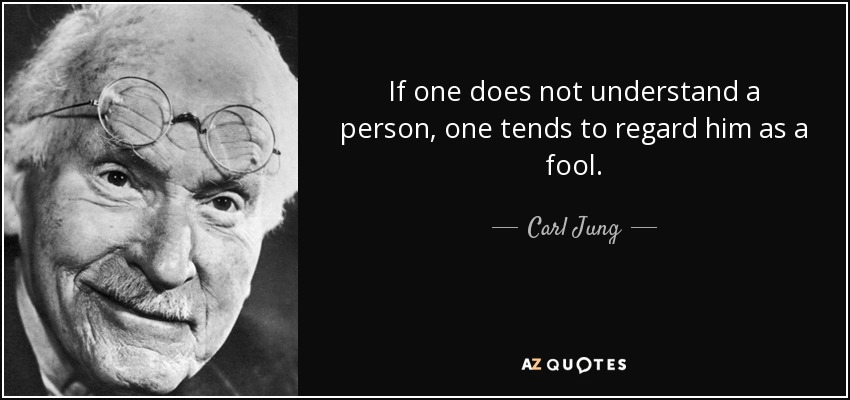
The wise sayings in this chapter of the Book of Proverbs have to do with relational topics such as: relating to a leader; relating to others; and relating to oneself (self-control).

Relating To a Leader

When it comes to relating to any sort of leader above us, it is best to avoid arrogance and embrace humility.

Whether we realize it, or not, or like it, or not, leaders have a perspective that others don’t. They see the big picture of what is happening, and ideally, make wise decisions based upon all the factors and people involved.

This means that we are not always, maybe not even usually, going to understand what a leader or ruler is doing. This is why it is so important for leaders themselves to consult and collaborate with others, and choose wisely.

Humility isn’t only for followers, it is just as much, perhaps even more, necessary for the leader. Making decisions in a vacuum, or just trusting in one’s own counsel, usually doesn’t work out well. Everyone has character flaws, yet a leader’s flaws, weaknesses, and sins can stick out rather easily to others.

That doesn’t mean, however, that anyone has a right to believe they themselves can do a better job, or know more about how to lead, or have all the information. Because they don’t.

The ways of God are mysterious because it is a very big picture that only the Lord sees. And there are a lot of moving parts and people to all of God’s choices and movements in this world.

The important part, for us, is to recognize the goodness and wisdom of God, and to trust that the Lord – as the God of Love – always does what is right, just, and good, even though it may not always seem that way.

Relating To Others

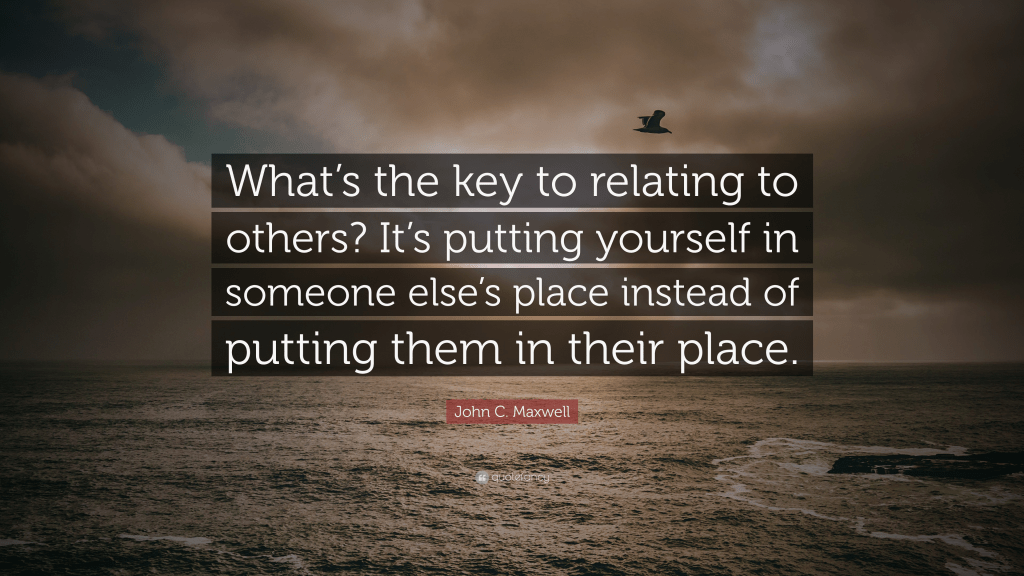
When it comes to how we generally relate to our fellow humanity, we are to show some empathy and deference. The ability to put yourself in another’s shoes is quite important and necessary, in order to relate well to others.

In failing to do this, and only thinking of oneself, we end up overstaying a welcome from someone who was thinking of us; or not paying attention that my morning blessing feels more like a curse to the night owl; or sharing some juicy tidbit of information that isn’t ours to share, so that others listen and pay attention to me.

Today, in this day and age, many persons fail to think of others when they are driving. Far too many people drive as if they own the road, and as if the traffic laws don’t apply to them. If they think of another driver at all, it’s only to curse them for hindering their ability to get to where they want to go.

Relating to Self

In contrast to all of that, we ourselves are to practice self-control and choose to live differently. Instead of cursing, we bless; and rather than selfishness, we practice selflessness.

If we would but all learn to exercise kindness over revenge, our world would be a very different place than it is today. And if we would but choose to speak the truth in love, rather than tell lies in hate or indifference, then there would be a lot less harm and hurt in this old fallen world.

By practicing self-control, we stop the cycle of hate, injustice, and unkindness. But if we choose the path of escalating verbal and/or physical violence, then this only leaves us vulnerable to harm. And it may open a way of having those you care about be harmed, as well.

I myself am the only person I’m in control of. And so I choose to:

  • be honest, trustworthy, and let God provide the judgment and justice needed for others
  • consider others, and think before talking
  • listen to wise counsel, and not entertain the manipulative words of the foolish
  • walk the patient path of wisdom

O God, grant me the wisdom I need in all my relationships. Help me recognize when things may be unsafe. I pray your protection over me and my family when we feel vulnerable. Thank you for having the power to heal broken relationships. Amen.

We Are All In the Same Boat (Romans 3:9-20)

What shall we conclude then? Do we have any advantage? Not at all! For we have already made the charge that Jews and Gentiles alike are all under the power of sin. As it is written:

“There is no one righteous, not even one;
    there is no one who understands;
    there is no one who seeks God.
All have turned away,
    they have together become worthless;
there is no one who does good,
    not even one.”
“Their throats are open graves;
    their tongues practice deceit.”
“The poison of vipers is on their lips.”
    “Their mouths are full of cursing and bitterness.”
“Their feet are swift to shed blood;
    ruin and misery mark their ways,
and the way of peace they do not know.”
    “There is no fear of God before their eyes.”

Now we know that whatever the law says, it says to those who are under the law, so that every mouth may be silenced and the whole world held accountable to God. Therefore no one will be declared righteous in God’s sight by the works of the law; rather, through the law we become conscious of our sin. (New International Version)

Whenever there is division, separation, and polarization between two groups of people, it’s important that someone has the ability to come back to what is true and common to all of us.

And that is what the Apostle Paul did in addressing the two differing groups of people in the ancient Roman Church of both Jewish and Gentile believers in Jesus.

The Jewish Christians, Paul argued, did not have a leg up on the Gentiles, just because of their long history with God. They tended to see themselves as better than their Gentile brothers and sisters in Christ. After all, the Jewish believers reasoned, we don’t have such a background of sinful pagan practices and estrangement from God.

Well, actually they do, however the Apostle did not rehearse his own people’s long history of stubborn rebellion and waywardness from God. Instead, he went back to the scriptures, and reminded the Jewish Christians of something they seemed to have lost sight of:

To be a human being is to be intimately familiar with sin and godlessness, guilt and shame, no matter the group nor the individual. We are all in the same boat.

In saying this, the Apostle Paul was not implying there is not anything good in anyone. Quite the contrary. For what is also true of humanity is that every individual person is a good creature, created from a good Creator, with the divine stamp of God’s image and likeness. There are no exceptions to this.

With all the mudslinging within the church, Paul simply pointed out that there is more than enough blame to go around. All the things that one group accuses another of is also true about they themselves.

And when it comes to sin – all those actions, words, and attitudes we have done and failed to do in loving our fellow humanity, and God – every one of us is in the same boat of guilt before God. There are no exceptions to this.

The power and ubiquity of sin is everywhere. Sin is like a nasty weight which continually burdens the world, and like an acrid fog that is always hanging in the air. We all feel the heaviness; we all breathe the same air.

All of our puny attempts at dividing one another into star-bellied Sneetches, and Sneetches without stars upon thars, is only proof positive of our sinful predilections to acquiesce to sin’s power on this earth.

This means that none of us can claim to take the moral and spiritual high ground. Nobody has an advantage on another. Therefore, it is ridiculous to ever try and implement policies of favoritism, cronyism, or prejudice. Such thinking itself is sinful, and ought to be jettisoned at the first awareness of it.

Whether we know what is right, or not; and whether we have the law and a covenant code, or not, isn’t really the issue. Obeying the law and doing what is right and just, with a good heart, is the real issue for all of us.

But it’s rather difficult to truly embrace justice and righteousness if the heart is no good. In truth, all of us have some rather dark places in our hearts. And until these are addressed, we will keep having all of our humanly contrived divisions and separations based upon a supposed superiority of the other.

The very fact that it is so easy to point out the sin in another, and label them as sinner, ought to tell us that “It takes one to know one.”

All Jews and Gentiles are under the accusation of God’s law, without exception. Everyone is accountable to God and the law. Proper observance of the law is to love God and neighbor – and thus, condemnation under the law is to ignore and disobey God, and to ignore and hate one’s fellow humanity.

What’s more, neither Jew nor Gentile can be justified by the law. Not a one of us can undo our guilt by ourselves.

No amount of work can satisfy the breadth and depth of that guilt. Pledges of perfectionism cannot help us, namely because we don’t even have the ability to follow through on them. Sheer hard work will not do the trick, because it would be like trying to empty the ocean with a kid’s sand toy bucket.

Only grace can reverse things. We need a pardon, and a new heart, which can sync and beat with the holy rhythms of divine love and justice. We need Jesus.

The Apostle Paul eventually got to that point later in his letter. Yet, here, he needed to establish everyone’s commonality of sin, so that they would embrace Jesus together as the one people of God who are in desperate need of his saving work, and the Spirit’s sanctifying work.

Therefore, the proper place to begin in being at peace with God and the world is to confess our own complicity in sin. Let us, then, offer this prayer of confession:

Lord Jesus, we have sinned times without number, and been guilty of pride and unbelief, and of neglect to seek you in our daily lives. Our sins and shortcomings present us with a list of accusations, but we thank you that they will not stand against us, for all have been laid on Christ. Deliver us from every evil habit, every interest of former sins, everything that dims the brightness of your grace in us, everything that prevents us taking delight in you. Amen.

Self-Denial (Mark 8:27-38)

“Let him take up his cross and follow me.”

Jesus went on with his disciples to the villages of Caesarea Philippi, and on the way he asked his disciples, “Who do people say that I am?” And they answered him, “John the Baptist; and others, Elijah; and still others, one of the prophets.” He asked them, “But who do you say that I am?” Peter answered him, “You are the Messiah.” And he sternly ordered them not to tell anyone about him.

Then he began to teach them that the Son of Man must undergo great suffering and be rejected by the elders, the chief priests, and the scribes and be killed and after three days rise again. He said all this quite openly. And Peter took him aside and began to rebuke him. But turning and looking at his disciples, he rebuked Peter and said, “Get behind me, Satan! For you are setting your mind not on divine things but on human things.”

He called the crowd with his disciples and said to them, “If any wish to come after me, let them deny themselves and take up their cross and follow me. For those who want to save their life will lose it, and those who lose their life for my sake, and for the sake of the gospel, will save it. For what will it profit them to gain the whole world and forfeit their life? Indeed, what can they give in return for their life? Those who are ashamed of me and of my words in this adulterous and sinful generation, of them the Son of Man will also be ashamed when he comes in the glory of his Father with the holy angels.” (New Revised Standard Version)

It is quite common for English translations of Holy Scripture to smooth over some of the rough edges of the biblical text. In today’s Gospel lesson, there are three instances of a Greek word (ἐπιτιμάω, pronounced ep-ee-ti-MA-o) getting a somewhat tepid translation into English:

  1. Jesus “sternly ordered” them not to tell anyone about him (8:30)
  2. Peter took Jesus aside and began to “rebuke” him (8:32)
  3. Jesus “rebuked” Peter (8:33)

These are accurate translations; it’s just that the Greek word’s punch isn’t quite there for us as English readers. “Sternly ordered” and “rebuke” are strong English words, yet they must go further. For a more vernacular reading, I would frame the verses this way:

  1. Jesus made it very clear to the disciples to “shut up” about him. In my family growing up, “shut up” was the one word we were never to say without severe consequences. Swear words typically were fine; “shut up” was not. 
  2. Peter took Jesus aside and told him to “shut up.” Now you can see how much more forceful the word is. Imagine saying that to Jesus! 
  3. Jesus told Peter to “shut up.” Christ took up his authority and let Peter know who was really in charge, and perhaps more importantly, let Satan know that he is to “shut up” and keep his sinister mouth quiet.

The strong language is necessary because Jesus was quite strongly upsetting the apple cart and being the sort of Messiah that nobody expected, and frankly, did not want to see.

Messianic hope in the first century did not include things like being crucified, and no less, by religious leaders. Folks believed the opposite would be true. Messiah would come, affirm the religious status quo, and crucify the wretched Romans, thereby setting up Jewish rule with no more Gentile interference and persecution.

But Jesus was insistent about the way of the cross, and was not about to sidestep his ultimate mission of suffering and death. This was not just being killed; it was terrible torture and human degradation.

What’s more, to follow Jesus is to follow the way of the cross. Self-denial, ironically and paradoxically, is the true way of finding oneself and becoming awake and aware of how the universe works.

Yet another less than stellar English translation is “life.” For those who want to save their life will lose it, and those who lose their life for my sake, and for the sake of the gospel, will save it (8:35).

The typical Greek word for life was not used by the Gospel writer Mark; instead he used a word which denoted the substance of a person’s life, the essence of one’s innermost personhood: “soul” (Greek ψυχή, transliterated psyche)

It was necessary for Jesus to give himself for us. His self-denial and horrible martyrdom was the way to save our souls. Humanity is in such a dark predicament that they cannot save themselves; we need someone to deliver us, to save our innermost selves.

But, of course, that doesn’t stop so many of us humans from trying to save ourselves anyway. Knowledge and education, perfectionism and achievement, hard work and effort, money and resources, political power and control, are all the typical ways of trying to psychologically (or psyche-logically) make our souls, our inner person, feel as if there is freedom and happiness.

Yet, it doesn’t take long for those on the committed path of self-improvement to realize that they have only imposed a greater burden on themselves which keeps them in their immaterial shackles.

Instead, we must accept Christ’s authority over our lives, and over our souls. The stark reality is that we need a Savior, and that savior is not you nor me. And neither health nor wealth will get us anywhere with our soul.

It is imperative that we walk in the way of Jesus. It is the way of suffering. Yet, the suffering leads to glory; the crucifixion results in resurrection.

In giving your soul, you find it. In giving yourself to Jesus, you will discover the key to the soul’s freedom and happiness. Furthermore, in losing yourself for the sake of others, you find the soul’s real mission on this earth.

The only path to overcoming shame is by reframing it and embracing it, just as the Lord Jesus did:

Fix your eyes on Jesus, the pioneer and perfecter of faith. For the joy set before him he endured the cross, scorning its shame, and sat down at the right hand of the throne of God. (Hebrews 12:2, NIV)

Perhaps many of us need to “shut up” long enough to listen well to Jesus, and discover in him what our inner self has been searching for so long to find.

Blessed Lord, give us grace to deny ourselves, to take up our cross daily, and to follow Christ; to discipline our bodies and keep them under control. Keep us from being lovers of ourselves, and from being wise in our own eyes and leaning to our own understanding. Help us to seek, not our own good only, but also the good of our neighbor. And grant that we may not live to ourselves or die to ourselves, but whether we live or die, we may be the Lord’s, and may live and die to him. Amen.

Sing a New Song (Psalm 98:1-5)

Oh, sing to the Lord a new song!
For He has done marvelous things;
His right hand and His holy arm have gained Him the victory.
The Lord has made known His salvation;
His righteousness He has revealed in the sight of the nations.
He has remembered His mercy and His faithfulness to the house of Israel;
All the ends of the earth have seen the salvation of our God.

Shout joyfully to the Lord, all the earth;
Break forth in song, rejoice, and sing praises.
Sing to the Lord with the harp,
With the harp and the sound of a psalm, (New King James Version)

I still remember, years ago when I was in college, a guy with a pony tail and wearing flip-flops, walking up with a guitar on his back in front of a gathering of fellow students who were Christians.

Yet, most evident, was his broad smile which seemed to engulf his entire face. He talked about his life before Christ – which was all of his life up until the week before – and what Jesus had done for him.

Then, he took his guitar and announced that he wrote a song to this very text, the first few verses of Psalm 98. I wish I had a recording of it, especially because of how he sang it with such volume and exuberance, as if the words had just been crafted yesterday.

Even though the psalm is ancient, the psalmist himself was inviting people to sing a song infused with a new perception of life on this earth.

There is always plenty of room to reflect on what God has done, and is doing, in this very big world. Not only can we consider the immensity and intricacy of the created order, but we can also declare all the things we cannot detect with our five senses.

And perhaps those are the things which impact us the most, when we sense and feel the reality of God’s work in the world, and in our lives. At least that’s what my pony-tailed smiling friend was so excited about.

The things which exist beyond our normal human experience are no less real than our daily mundane activities. This is the realm where the Lord makes the greatest impact of all. God hasn’t only done great things, but has done great things for me.

We have to use metaphors and personifications in order to even begin understanding the wonder and awe of God’s saving power in our very real here-and-now lives. God’s mighty right hand and holy arm of power speak to the incredible strength and authority which can reach into the thickest and nastiest of garbage dumpsters to pull out the pearl of great price, that is, you and me.

Consider God, the One who puts all things right, and is just and good in all things – paying attention to the least of us, and lifting up with divine deliverance from the most dire and awful of circumstances.

Indeed, the Lord has made God’s salvation known, and revealed God’s righteousness to the nations.

Sometimes it takes someone with a fresh new song to wake us up to the reality that we can discern the activity of God every day, in all the ordinary and myriad ways of our lives. Along with all of creation, and pony-tail guy, we join the chorus of those who are already singing with the unique voice God provided for us.

And those many songs all include, at their center, the reality that before I chose God, God chose me; that when I forget, God remembers; that with my waxing and waning of love, God is consistently steadfast and faithful with love; and that God provides salvation, and judges the people with equity, even when I show favoritism.

With each new testimony of God’s saving work, it becomes harder and harder for others to insist that God is absent, hidden, or negligent. God is there. God is here. God is everywhere.

We can get so wrapped up in our own small worlds, and our own little safe places, where everyone looks like me, acts like me, and thinks like me. But the world is much bigger than our contrived spaces in which we can set ourselves up as master and commander.

The Lord mercifully breaks through all of our puny posturing and petulance, and saves us from ourselves. God pushes and cajoles us to see beyond the end of our noses. We are moved to see a new perspective we haven’t noticed before.

And once we make out what God is doing, and does for me, then bursting into song with shouting and volume is the organic response to our experience. If you think about it, there is really no other way to respond, once you have gotten a glimpse of God’s activity, and discerned something that was previously undiscernible.

Even the rocks will cry out in the face of such love and grace.

It’s okay to open your mouth, once your eyes have been opened, and let a new song come tumbling out. Because joy is the response of being delivered from what once bound us.

Gracious and Loving God, you have filled the world with beauty: Open our eyes to behold your gracious hand in all these works; that, rejoicing in your whole creation, we may learn to serve you with gladness; for the sake of him through whom all things were made, your Son Jesus Christ our Lord.