
Psalm 119:113-128 – How to Change Our Spiritual Taste Buds

I hate anyone
whose loyalty is divided,
    but I love your Law.
You are my place of safety
and my shield.
    Your word is my only hope.

All of you worthless people,
    get away from me!
    I am determined to obey
    the commands of my God.

Be true to your word, Lord.
    Keep me alive and strong;
    don’t let me be ashamed
    because of my hope.
Keep me safe and secure,
    so that I will always
    respect your laws.
You reject all deceitful liars
    because they refuse
    your teachings.
As far as you are concerned,
all evil people are garbage,
    and so I follow your rules.
I tremble all over
when I think of you

    and the way you judge.

I did what was fair and right!
    Don’t hand me over to those
    who want to mistreat me.
Take good care of me,
    your servant,
    and don’t let me be harmed
    by those conceited people.
My eyes are weary from waiting
    to see you keep your promise
    to come and save me.
Show your love for me,
your servant,
    and teach me your laws.
I serve you,
so let me understand
    your teachings.
    Do something, Lord!
    They have broken your Law.
Your laws mean more to me
    than the finest gold.
I follow all of your commands,
    but I hate anyone
    who leads me astray.
(Contemporary English Version)

Some people try to avoid doing wrong and always try to do right. Others either bulldoze or sleepwalk through life, doing what they will, with impunity. Yet others try to steer clear of egregious sin, while indulging in so-called minor sins. 

Sin is messy business. No matter the form or the attempt at dealing with or without sin, the bottom line is that we all sin because we like it. We might not like the consequences of sin, but it tastes good while doing it.

That’s why we need a complete re-orienting of our hearts to hate every way contrary to God’s good commands. The psalmist proclaims and affirms that all God’s precepts are right, hating every false path which deviates from the true and good. 

If we sin because we like it, the way to avoid sin is learning to hate it – to loathe it so badly that it’s like a nasty stench in our nostrils. Hating sin comes from the acquired taste of loving God’s commandments. When we come around to cherish and desire God’s Word, then sin gradually becomes so odious that we want nothing to do with it.
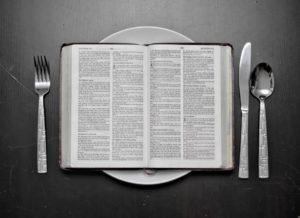
The reason the psalmist could proclaim such an extended love song to the commands of God, is that he tasted how good they were. And it caused him to forsake every dubious way to human enjoyment. 

The reason I constantly encourage myself and others to read Scripture every single day, with a solid plan of spiritual rhythms, is that it really does have the power to change our taste buds. Sustained, consistent, daily eating of the psalms will teach us to want God and God’s ways – while forsaking the dark path of insolence and oppression.

The psalmist committed himself to avoiding worthless situations, as well as steering clear of harmful people with the propensity to doing wrong. These are fickle, double-minded people, divided in their loyalties. On one side of their mouth, they talk a good line about faith; and then talk out the other side of their mouth, spewing a bunch of worthless gobbledygook which, at the least, adds no value to anything, and, at worst, wrecks good plans and harms others.

If there are people in authority over us who don’t give a wit about our most cherished values, we will likely find ourselves tasked with doing things which rub against our understanding of God’s Word. In this state of moral distress, we are pushed, pulled, and tested in our single-minded devotion by the double-minded person to do what we are uncomfortable with.

In the stress and crucible of trouble, we need the courage to speak up, despite the fear of repercussions. And that strength will only be possible if we have a resilient spirit with the capacity to sustain our personal integrity in the face of our distress. That is, we need God and God’s Holy Word.

Scripture and fellow believers provide support because we need to care for one another as a community of redeemed persons who seek to live into the words of ways of almighty God.

It can be tricky business, wisely trying to discern between what we must accept and what we need to pushback against. Yet, with God, God’s Word, and God’s people, we possess all the resources required in living the spiritual life and navigating the sinful world we inhabit.

God Almighty, I pray that you will deal with me according to your steadfast love and teach me your statutes.  I am your servant; give me understanding so that I might know and live by your commands and forsake the evil of the world, through Jesus Christ my Lord, in the power of your Holy Spirit. Amen.

1 Samuel 18:6-30 – Saul’s Deep Anxiety

When the men were returning home after David had killed the Philistine, the women came out from all the towns of Israel to meet King Saul with singing and dancing, with joyful songs and with timbrels and lyres. As they danced, they sang:

“Saul has slain his thousands,
    and David his tens of thousands.”

Saul was incredibly angry; this refrain displeased him greatly. “They have credited David with tens of thousands,” he thought, “but me with only thousands. What more can he get but the kingdom?” And from that time on Saul kept a close eye on David.

The next day an evil spirit from God came forcefully on Saul. He was prophesying in his house, while David was playing the lyre, as he usually did. Saul had a spear in his hand, and he hurled it, saying to himself, “I’ll pin David to the wall.” But David eluded him twice.

Saul was afraid of David because the Lord was with David but had departed from Saul. So, he sent David away from him and gave him command over a thousand men, and David led the troops in their campaigns. In everything he did he had great success, because the Lord was with him. When Saul saw how successful he was, he was afraid of him. But all Israel and Judah loved David because he led them in their campaigns.

Saul said to David, “Here is my older daughter Merab. I will give her to you in marriage; only serve me bravely and fight the battles of the Lord.” For Saul said to himself, “I will not raise a hand against him. Let the Philistines do that!”

But David said to Saul, “Who am I, and what is my family or my clan in Israel, that I should become the king’s son-in-law?” So, when the time came for Merab, Saul’s daughter, to be given to David, she was given in marriage to Adriel of Meholah.

Now Saul’s daughter Michal was in love with David, and when they told Saul about it, he was pleased. “I will give her to him,” he thought, “so that she may be a snare to him and so that the hand of the Philistines may be against him.” So, Saul said to David, “Now you have a second opportunity to become my son-in-law.”

Then Saul ordered his attendants: “Speak to David privately and say, ‘Look, the king likes you, and his attendants all love you; now become his son-in-law.’”

They repeated these words to David. But David said, “Do you think it is a small matter to become the king’s son-in-law? I’m only a poor man and little known.”

When Saul’s servants told him what David had said, Saul replied, “Say to David, ‘The king wants no other price for the bride than a hundred Philistine foreskins, to take revenge on his enemies.’” Saul’s plan was to have David fall by the hands of the Philistines.

When the attendants told David these things, he was pleased to become the king’s son-in-law. So, before the allotted time elapsed, David took his men with him and went out and killed two hundred Philistines and brought back their foreskins. They counted out the full number to the king so that David might become the king’s son-in-law. Then Saul gave him his daughter Michal in marriage.

When Saul realized that the Lord was with David and that his daughter Michal loved David, Saul became still more afraid of him, and he remained his enemy the rest of his days.

The Philistine commanders continued to go out to battle, and as often as they did, David met with more success than the rest of Saul’s officers, and his name became well known. (New International Version)

Anxiety can warp our thinking, cause pain in our gut, and darken our heart. Maybe that statement seems a bit harsh. After all, everyone becomes anxious, at some time or another. Anxiety is endemic to the human experience; it is something we all have in common. Whenever anxiety takes root in the life of a person, it bears the fruit of irrational fear and deep insecurity. 

King Saul was jealous of David’s success in battle. Behind Saul’s personal anxiety was the concern that David was stealing the limelight. It made Saul angry, David getting all the attention. Since Saul was the leader in charge, he continually put David in overwhelming situations where it seemed likely he would fail. But instead of failure, David was wildly successful in everything he did. 

Today’s Old Testament lesson makes it clear David’s achievements were because the Lord was with him. This made Saul even more anxious and afraid, possessing malevolent motives behind everything he did toward David. Even though it might not have looked evil on the outside, in reality, the interior life of Saul was a mess. And it made him plain stupid.

When Saul observed God was with David, it only reinforced his fear and led him down a dark path. In contrast to Saul, David had godly character, developed in the lonely place of the pasture. It led him on a lighted trail toward the will of God.

Genuine integrity is always forged in the secret place where no one is looking. If we are merely concerned for outward performance and/or perfectionism, all sorts of anxieties can develop and twist our sense of reality. Yet, if we pay attention to the inner person, and allow God to create a deep faith within, then we can stand strong, even when there are those who have ill will against us.

Search me, O God, and know my heart.  Test me and know my anxious thoughts.  See if there is any offensive way in me and lead me in the way everlasting.  Amen.

*Above painting by Chinese artist He Qi

**Above statue of King Saul at the University of North Carolina Art Museum

1 Samuel 17:1-49 – Faith in Action

The story of David and Goliath is one of the best known stories in the entire Bible. It’s a classic example of what can be accomplished through one person who chooses to exercise faith. Puny David taking on giant Goliath has served as one of the greatest inspirations for believers through the centuries – seeing God give victory to people against dramatically overwhelming odds.

Whereas the New Testament exhorts us to live by faith, this Old Testament narrative demonstrates what can happen when a person of faith decides to put that faith into action.

Old Testament stories are framed in a way to help the reader or listener discern the differences between the characters of the story – to understand the contrasts between good and bad. So, then, the account of David and Goliath revolves around four character contrasts so that we will learn the lessons of faith God wants to teach us.

First Contrast: David and Saul

David is brave. Saul is fearful. In the ancient world, a typical tactic of warfare, when the battle lines were drawn, was to choose a champion from each side. They would fight together, just the two of them, on behalf of the entire army. It was a fight to the death, and the losing side would submit to the winning side. 

This was a way of preventing the terrible carnage of war. It also created some incredible individual champions.  A champion would be selected not only for his ability to fight, but also for his impressive stature so that there was an intimidation factor to it all.

Saul was the King of Israel. He was the logical choice for the combat since he was a head taller than all the other Israelites and a rather impressive looking soldier. But compared to Goliath, Saul looked like a midget.  The intimidation factor worked. Saul was downright afraid and not about to put himself out there to face a giant.

David is brave because he has faith in God. Saul is fearful because he is not a man of faith in God. The opposite of faith is not unbelief, but fear. As the muscle of faith grows through trusting God in the daily stresses of life, fear is better confronted and managed. The development of faith is a process, and it takes time.

Considering this story in light of Father’s Day, Dads have the daily opportunity of being a hero to their kids through faith in God. That means dealing with two great fears: being found inadequate; and, being controlled by another person or circumstance.

Those two fears were evident in Saul. He felt inadequate because he compared himself to Goliath. He felt controlled by the situation because the Philistines were picking a fight. So, he froze. There are many men who would rather do nothing than be labelled as inadequate or controlled.

David, in contrast, had plenty of practice facing down foes as a shepherd – the bear and the lion – who threatened the sheep. David was often out in the countryside all by himself, guarding the sheep, and his skills were improved in a place where no one was looking.

The way to progress our faith is to be assertive in owning our relationship with God through prayer and Bible reading (or listening on a Bible app) on a daily basis. It’s something everyone can do.

Second Contrast:  David and the Israelites

It was not only Saul who was intimidated by Goliath; the entire army of Israel was hiding behind the battle lines cringing in fear. David, however, discerned no reason to avoid this bullying blowhard. It appears he is the only person able to see Goliath as a small person in comparison to a big God. By faith, David understands Goliath is no match for God.

So, we see that one person full of faith can accomplish the impossible – whereas an army full of fear cannot accomplish a thing. 

We might tend to believe everything has to be large with a big splash to it – that only then can we accomplish big things for God. But really, if we want to achieve something for God, we need to step out in faith and do it – instead of recruiting an army of people or hiding in the group, nursing our fears and anxieties.

No one can do your personal faith work for you; you must do it. The Beaver Cleaver philosophy of life says, “Gee, Wally, if I get in trouble or in a pickle, I’ll just ignore it and hope it goes away….” But Goliath is not going anywhere. He will still be there tomorrow.

Third Contrast: David and Goliath

Goliath represents the other extreme to the fear of Saul and the Israelites. He had absolutely no fear, including any fear of God. Goliath trusted in himself, his abilities, and his stature. David, however, trusted in God alone.

The story gives a detailed description of Goliath’s weapons and physical appearance because Goliath trusted in his aptitude and the ancient technology of his day to face down the Israelites. Conversely, David was small and too young to even be considered for military service. He was too small to wear anybody’s armor. But David did not need any of that – he just needed his faith.

Humanly speaking, David appears insignificant; there is nothing about him that caused anyone to think there was something special or different about him. Goliath, however, was the Arnold Schwarzenegger of his day, ready to terminate anybody who got in his way.

It can be easy to trust in ourselves, another person, or our technology to accomplish something in the face of insurmountable odds, instead of looking to God. The battle is not ours; it is the Lord’s.

Most things in life take a great deal of bravery – especially parenthood! It takes more than copious Dad speeches (and I had a lot of speeches for my kids). Fatherly courage requires modeling for boys what they are expected to become and modeling for girls what they should expect from males.

Children need to observe men who have courage to do the right thing, even when it has personal cost. They need to see them bravely shouldering responsibilities – even when they don’t feel like it. Kids need to see men who demonstrate the courage to be vulnerable, as well as strong and self-disciplined. They need to experience fathers and men with courage to pay attention to them – even, and especially, when those men are angry or disappointed with their own choices.

Fourth Contrast:  David and Eliab

Eliab was David’s big brother. Eliab was a soldier in the army. David was just a kid. It did not matter he was a kid; David was concerned for God’s name and glory. In contrast, Eliab was concerned about his little brother being an embarrassment and superseding him.

When we choose to step out in faith and act, there will likely be opposition, even among family and fellow believers. But David did not let a little criticism stop him. Criticism and opposition will inevitably happen. David was determined to please God, not his brother. He did not wilt and was not deterred from his concern to face down Goliath.

Conclusion

If we want to be brave in the Christian life; if we desire to live a life full of faith in Christ that deals with problems; then, the story of David and Goliath will serve as an inspiration in those times we feel less than mighty for God. 

Goliath was defeated and fell because David trusted God. The issue is not how much faith we have, but in whom our faith is placed. David trusted God. Saul did not even acknowledge God. Goliath trusted in himself. Eliab was too busy quibbling about things that didn’t matter. 

What is your response?

Psalm 9:9-20 – Assertive Anger and Confident Trust

The poor can run to you
    because you are a fortress
    in times of trouble.
Everyone who honors your name
    can trust you,
    because you are faithful
    to all who depend on you.

You rule from Zion, Lord,
    and we sing about you
    to let the nations know
    everything you have done.
You did not forget
    to punish the guilty
    or listen to the cries
    of those in need.

Please have mercy, Lord!
    My enemies mistreat me.
Keep me from the gates
    that lead to death,
    and I will sing about you
    at the gate to Zion.
I will be happy there
    because you rescued me.

Our Lord, the nations fell
    into their own pits,
    and their feet were caught
    in their own traps.
You showed what you are like,
and you made certain
    that justice is done,
    but evil people are trapped
    by their own evil deeds.
The wicked will go down
    to the world of the dead
    to be with those nations
    that forgot about you.

The poor and the homeless
won’t always be forgotten
    and without hope.

Do something, Lord!
    Don’t let the nations win.
    Make them stand trial
    in your court of law.
Make the nations afraid
and let them all discover
    just how weak they are.
(Contemporary English Version)

Everyone gets angry. Every single person on planet earth knows what anger feels like. And, to me, it makes sense that people get angry. After all, God gets angry. As people created in God’s image, we share God’s sense of justice and injustice.

That’s really what anger is: an emotional response to injustice. Whenever we are wronged or treated unfairly – or observe another person or group of people experiencing injustice – it stirs up our anger.

So, anger, in and of itself, is neither good nor bad. It just is. It’s what we do with our anger that gets dicey. A lot of human anger gets expressed in unhealthy ways by either passively stuffing it down into the soul and ignoring it; aggressively lashing out with verbal or physical violence; or passive-aggressively doing indirect jabs at the object of our anger.

The psalmist, however, takes another way of expressing anger. He is assertive, straightforward, and addressed God with his observations and feelings, as well as affirming that the Lord is the One who administers justice with fairness and equity.

When the poor are overlooked or oppressed by the rich, it is unjust. It creates anger, both human and divine. In their misery and hardship, they can flee to God, who is faithful to care for them and treat them with respect and dignity, as people carrying the divine image, like everyone else.

The nations of the earth are not all attentive to the needy. They don’t all serve their citizens and try to do right by them. Unfortunately, many people throughout the world groan under national leadership which is enamored with power and privilege – and forget those who are powerless, unable to lift themselves by their bootstraps.

Because of this reality, the psalmist petitions God. He asks, even insists, that God step in and act as judge and jury. It is an assertive use of anger that goes to the source of true help, to the Lord, who possesses both the will and the ability to overturn injustice and establish a right use of power.

Holy Scripture is consistent in its insistence on paying attention to those outside the halls of power. The prophets directed their message to issues of justice:

Learn to live right. See that justice is done. Defend widows and orphans and help those in need. (Isaiah 1:17, CEV)

Just look at those lawmakers who write evil laws and make life hard for the people. They are not fair to the poor. They take away the rights of the poor and allow people to steal from widows and orphans. (Isaiah 10:1-2, ERV)

He has told you, human one, what is good and what the Lord requires from you: to do justice, embrace faithful love, and walk humbly with your God. (Micah 6:8, CEB)

Do you know what I want? I want justice—oceans of it. I want fairness—rivers of it. That’s what I want. That’s all I want. (Amos 5:24, MSG)

Doing justice is taking up the cause of the powerless, the oppressed, and the needy among us in society. Because God cares, we care. To ignore the poor is to ignore God. To treat them unfairly is to flip the middle finger at God.

The Lord, thankfully, is a strong fortress for the oppressed and a protective force in times of trouble.

God remembers the prayers of the down-and-out.

Sooner, or later, those who are wicked in their dealings through exploitation of the powerless, will know firsthand, they are puny humans, and that God is immensely big.

Today’s psalm is both an angry petition, as well as an affirmation of faith. May it serve as a model for using our anger assertively, ordering our love rightly, and trusting our God confidently.

God almighty, you have given all peoples one common origin. It is your will they be gathered together as one family in yourself. Fill the hearts of humanity with the fire of your love and with the desire to ensure justice for all. By sharing the good you give us, may we ensure equity for all our brothers and sisters throughout the world. May there be an end to division, strife and war. May there be a dawning of a truly human society built on love and peace, through Jesus Christ, our Lord. Amen.

**Above image: The Kveshi Fortress in the nation of Georgia.