Colossians 2:6-15 – Our Identity in Christ

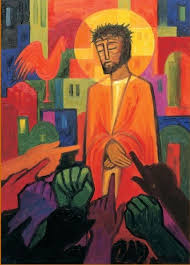
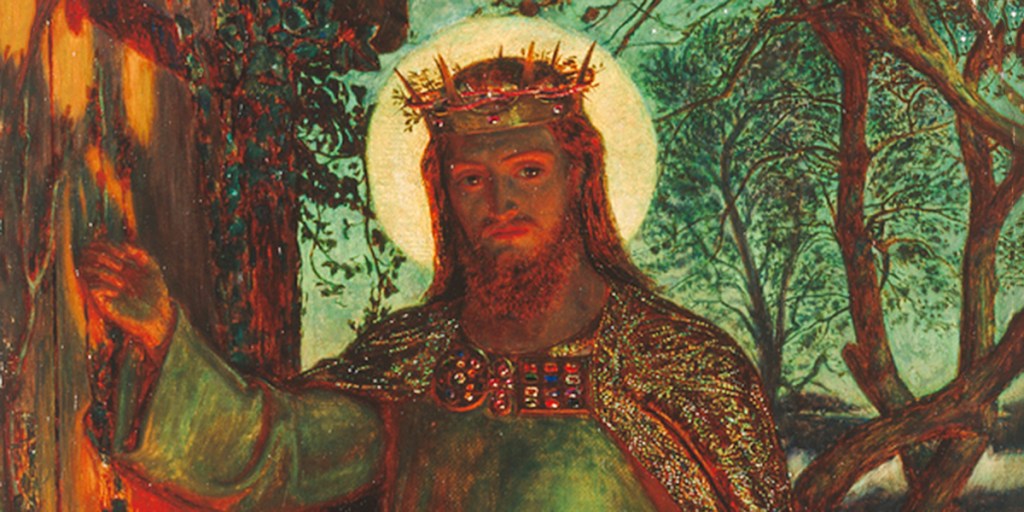
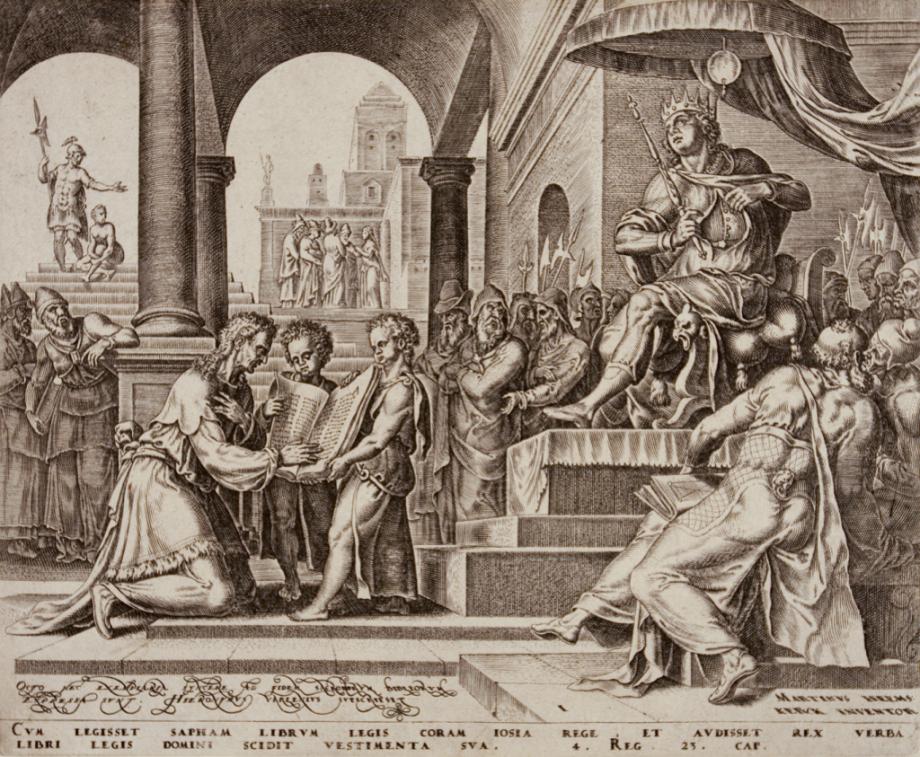
Death, Burial, and Resurrection of Christ by Guy Roddon (1919-2006)

So then, just as you received Christ Jesus as Lord, continue to live your lives in him, rooted and built up in him, strengthened in the faith as you were taught, and overflowing with thankfulness.

See to it that no one takes you captive through hollow and deceptive philosophy, which depends on human tradition and the elemental spiritual forces of this world rather than on Christ.

For in Christ all the fullness of the Deity lives in bodily form, and in Christ you have been brought to fullness. He is the head over every power and authority. In him you were also circumcised with a circumcision not performed by human hands. Your whole self, ruled by the flesh, was put off when you were circumcised by Christ, having been buried with him in baptism, in which you were also raised with him through your faith in the working of God, who raised him from the dead.

When you were dead in your sins and in the uncircumcision of your flesh, God made you alive with Christ. He forgave us all our sins, having canceled the charge of our legal indebtedness, which stood against us and condemned us; he has taken it away, nailing it to the cross. And having disarmed the powers and authorities, he made a public spectacle of them, triumphing over them by the cross. (New International Version)

I like kids. Since I believe them to be closer to God’s kingdom than most adults, I respect them by bending down to talk with them on their level. I take an interest in what they have to say and what’s going on with them. And I pay attention in ways that helps solidify their sense of worth, identity, and belonging. Indeed, how we treat children within the family, the church, and in public can make a significant difference in the trajectory of how they grow up and think of themselves.

One of the most fundamental of all Christian truths is that we belong to Christ. We are God’s children. God has given us everything we need for a solid awareness of our true identity. 

The follower of Jesus is a person who has moved from the realm of being in the world to the sphere of being in Christ. The Christian’s knowledge, understanding, and sense of identity are vitally important because we tend to live up to how we view ourselves.  

Today’s New Testament lesson is dense with the teaching of who we are in Christ. We are to live our lives in Christ. We are rooted and built up in Christ. We have been filled in Christ. We have a spiritual circumcision in Christ. We have been raised in Christ to new life. We are triumphant in Christ.  All this is meant to saturate us with the richness and security of being in the realm of Jesus Christ.

In Jesus Christ:

I am God’s child (John 1:12)

I have been justified (Romans 5:1)

I am Christ’s friend (John 15:15)

I belong to God (1 Corinthians 6:20)

I am a member of Christ’s Body (1 Corinthians 12:27)

I am assured all things work together for good (Romans 8:28)

I am confident that God will perfect the work begun in me (Philippians 1:6)

I am a citizen of heaven (Philippians 3:20)

I am hidden with Christ in God (Colossians 3:3)

I am brave, strong, and self-disciplined (2 Timothy 1:7)

I am born of God and the evil one cannot touch me (1 John 5:18)

I am blessed in the heavenly realms with every spiritual blessing (Ephesians 1:3)

I am chosen before the creation of the world (Ephesians 1:4, 11)

I am holy and blameless (Ephesians 1:4)

I am adopted as God’s child (Ephesians 1:5)

I am lavishly given God’s glorious grace (Ephesians 1:5,8)

I am redeemed (Ephesians 1:8)

I am forgiven (Ephesians 1:8; Colossians 1:14)

I am hopeful (Ephesians 1:12)

I am included (Ephesians 1:13)

I am sealed with the promised Holy Spirit (Ephesians 1:13)

I am a saint (Ephesians 1:18)

I am the salt and light of the earth (Matthew 5:13-14)

I am God’s coworker (2 Corinthians 6:1)

I am a minister of reconciliation (2 Corinthians 5:17-20)

I am alive with Christ (Ephesians 2:5)

I am raised up with Christ (Ephesians 2:6; Colossians 2:12)

I am seated with Christ in the heavenly realms (Ephesians 2:6)

I am rich with God’s grace (Ephesians 2:7)

I am a recipient of God’s kindness (Ephesians 2:7)

I am God’s workmanship (Ephesians 2:10)

I am close to God (Ephesians 2:13)

I am peaceful (Ephesians 2:14)

I am a member of God’s household (Ephesians 2:19)

I am secure (Ephesians 2:20)

I am a holy temple (Ephesians 2:21; 1 Corinthians 6:19)

I am a dwelling for the Holy Spirit (Ephesians 2:22)

I am a friend of God (Ephesians 3:6)

I am free and confident (Ephesians 3:12)

I am joyful in my sufferings (Ephesians 3:13)

I am loved and can love others (Ephesians 3:18)

I am called (Ephesians 4:1; 2 Timothy 1:9)

I am humble, gentle, patient, and tolerant of others (Ephesians 4:2)

I am truthful (Ephesians 4:17)

I am living a new life (Ephesians 4:21-32)

I am kind and compassionate to others (Ephesians 4:32)

I am forgiving of others (Ephesians 4:32)

I am good (Ephesians 5:8-9)

I am grateful (Ephesians 5:20)

I am secure (Ephesians 6:13)

I am dead to sin (Romans 1:12)

I am not alone (Hebrews 13:5)

I am growing (Colossians 2:7)

I am united with other believers (John 17:20-23)

I am victorious (I John 5:4)

I am chosen and dearly loved (Colossians 3:12)

I am blameless (I Corinthians 1:8)

I am more than a conqueror (Romans 8:37)

I am safe (I John 5:18)

I am healed (I Peter 2:24)

I am no longer condemned (Romans 8:1, 2)

I am not helpless (Philippians 4:13)

I am overcoming (I John 4:4)

I am persevering (Philippians 3:14)

I am protected (John 10:28)

I am born again (I Peter 1:23)

I am a new creation (2 Corinthians 5:17)

I am delivered (Colossians 1:13)

I am redeemed from the curse of the Law (Galatians 3:13)

I am qualified to share in Christ’s inheritance (Colossians 1:12)

I am victorious (1 Corinthians 15:57)

Take ten minutes today and focus on one of the phrases or words from these verses. Think about its meaning. Ponder how it makes a difference in your Christian life. Then decide what you will do with the insight God gives you. Finally, share it with a friend. In all these ways we can press the truth of our identity firmly into our souls and live into the reality that we belong to Christ.

Gracious God, you have brought me from death to life, from being of the world to being in Christ. Solidify my sense of identity with Jesus and release that self-knowledge into loving practice toward others. Amen.

1 Samuel 2:1-10 – A Hope Fulfilled

Then Hannah prayed:

“My heart rejoices in the Lord!
    The Lord has made me strong.
Now I have an answer for my enemies;
    I rejoice because you rescued me.
No one is holy like the Lord!
    There is no one besides you;
    there is no Rock like our God.

“Stop acting so proud and haughty!
    Don’t speak with such arrogance!
For the Lord is a God who knows what you have done;
    he will judge your actions.
The bow of the mighty is now broken,
    and those who stumbled are now strong.
Those who were well fed are now starving,
    and those who were starving are now full.
The childless woman now has seven children,
    and the woman with many children wastes away.
The Lord gives both death and life;
    he brings some down to the grave but raises others up.
The Lord makes some poor and others rich;
    he brings some down and lifts others up.
He lifts the poor from the dust
    and the needy from the garbage dump.
He sets them among princes,
    placing them in seats of honor.
For all the earth is the Lord’s,
    and he has set the world in order.

“He will protect his faithful ones,
    but the wicked will disappear in darkness.
No one will succeed by strength alone.
    Those who fight against the Lord will be shattered.
He thunders against them from heaven;
    the Lord judges throughout the earth.
He gives power to his king;
    he increases the strength of his anointed one.” (New Living Translation)

This is the song of Hannah, a woman unable to conceive children. She offered a heartfelt petition to God for a child. Hannah’s prayer was answered. A thousand years later, Mary, the mother of Jesus, took this same song, reworked it, and personalized it, to voice and sing her own praise to God. (Luke 1:46-55)

Hannah dared to hope. It might seem from the perspective of one who has never struggled with being childless that offering a prayer for children is easy. However, when hope has been dashed and all seems impossible, putting oneself out there to ask, even to beg, is downright hard. In the fear of having what little hope remains be crushed, it is far easier to stay away from God and keep the prayers to oneself.

Hannah actively sought divine help and risked praying and emoting. The Lord heard. Hannah’s weeping turned to singing. And, like Mary’s Magnificat, Hannah quickly moved from her own experience to the experiences of people everywhere. Hannah focused on the God of the impossible and the divine accessibility which exists when we become vulnerable and put ourselves out there in risky hope.

“Hope is to our spirits what oxygen is to our lungs. Lose hope and you die. They may not bury you for awhile, but without hope you are dead inside. The only way to face the future is to fly straight into it on the wings of hope….hope is the energy of the soul. Hope is the power of tomorrow.”

Lewis Smedes (1921-2002)

The great reversal of Hannah’s condition from barren to fertile gives hope for the weak to become strong, the hungry to be filled, and the lost person to be found. In a world where God is the Sovereign, nothing needs to stay the same – nothing is carved in stone. Since no part of our existence as humans is outside the purview of God, there is always the possibility of change, of a reversal of fortunes.

The underdog has a champion with God. The misfits, the exploited, and the downtrodden – those who cannot lift themselves or pull themselves up by their bootstraps – are precisely the persons whom the Lord raises up. God’s providential care shall oversee them, and justice will be dispensed with perfect equity.

It is one thing to hope; it is another thing altogether in daring to hope against all odds and while others poo-poo your dreams. Godly hope is not wishful thinking; it is a confident expectation that God will show up and be gracious, merciful, and kind.

The place of crying and weeping is important because it is our tears which find a better way.

Anyone can offer cheap praise. Yet, the person who sits with their sadness and feels the heart-wrenching agony of a hope unfulfilled is the one who is able to give genuine praise and to sing with authenticity. Since their hope was planted and watered with tears, their joy in the harvest is abundant and plenteous.

As Christians anticipate the season of Advent, allow the daring hope of Mary and Hannah to conceive a fresh hope in your own life so that you will give birth to new life.

God of hope, in these times of change, helplessness, and uncertainty give us courage to overcome our fears, and help us to build a future in which all may prosper and share together, through Jesus Christ our Lord. Amen.

Luke 4:16-30 – Good News for “Those” People

Jesus went back to Nazareth, where he had been brought up, and as usual he went to the meeting place on the Sabbath. When he stood up to read from the Scriptures, he was given the book of Isaiah the prophet. He opened it and read,

“The Lord’s Spirit
    has come to me,
because he has chosen me
to tell the good news
    to the poor.
The Lord has sent me
to announce freedom
    for prisoners,
to give sight to the blind,
to free everyone
    who suffers,
and to say, ‘This is the year
    the Lord has chosen.’”

Jesus closed the book, then handed it back to the man in charge and sat down. Everyone in the meeting place looked straight at Jesus.

Then Jesus said to them, “What you have just heard me read has come true today.”

All the people started talking about Jesus and were amazed at the wonderful things he said. They kept on asking, “Isn’t he Joseph’s son?”

Jesus answered:

You will certainly want to tell me this saying, “Doctor, first make yourself well.” You will tell me to do the same things here in my own hometown that you heard I did in Capernaum. But you can be sure that no prophets are liked by the people of their own hometown.

Once during the time of Elijah there was no rain for three and a half years, and people everywhere were starving. There were many widows in Israel, but Elijah was sent only to a widow in the town of Zarephath near the city of Sidon. During the time of the prophet Elisha, many men in Israel had leprosy. But no one was healed, except Naaman who lived in Syria.

When the people in the meeting place heard Jesus say this, they became so angry that they got up and threw him out of town. They dragged him to the edge of the cliff on which the town was built, because they wanted to throw him down from there. But Jesus slipped through the crowd and got away. (Contemporary English Version)

Jesus was the hometown boy of Nazareth, the rising star who was putting the small village on the map. He walked into the synagogue on the Sabbath with the people all watching with pride, their chests puffed with delight over one of their own making it to the big time. 

It just so happened that on that day the Old Testament reading was from the prophet Isaiah – a prophecy of grace and healing that fit the budding ministry of Jesus. Here was the hope of Israel. It was all bunnies and butterflies, until Jesus decided to say a few words to them all….

Jesus took the prophecy of Isaiah about proclaiming liberty to captives and the oppressed and then applied it, not to his fellow Jews who were present, but to, of all people, Gentiles! 

Jesus just had to open his mouth and point out that in the days of Elijah, the prophet was sent to a Gentile woman. In addition, Jesus let everyone know the prophet Elisha cleansed a Gentile. The gathered synagogue worshipers understood exactly what Jesus was doing – claiming to be the ultimate prophet, sent for “those” people. 

Are you ready to throw Jesus off a cliff?

It was too much for the people gathered for worship. All hell broke loose as the “worshipers” became so angry and insolent that they drove Jesus out of town and tried to kill him. Jesus had that kind of effect throughout his earthly ministry by saying and doing the unexpected. 

The people of Nazareth seemed to have always interpreted the message of Isaiah and the prophets as being for themselves, not others. This is a probing story for today’s Christian Church. Whenever we lose sight of a biblical message and re-interpret it as being for only us, then we end up like the Nazarenes of old who did not recognize Jesus for who he really is and what he really came to do. 

The burning question for individual Christians and all churches is this: Are you ready to throw Jesus off a cliff?

Take some time alone with God today and think about whether you have made Jesus into the image of what you want him to be, or whether you accept him as he is. 

One clue to this is if you believe some person or people group should not have Jesus – he belongs to people like us. Perhaps today some soul-searching repentance is in order so that Christians will be true worshipers of Jesus, and not just a fan of him.

O God, you made us in your own image and redeemed us through Jesus your Son: Look with compassion on the whole human family; take away the arrogance and hatred which infect our hearts; break down the walls that separate us; unite us in bonds of love; and work through our struggle and confusion to accomplish your purposes on earth; that, in your good time, all nations and races may serve you in harmony around your heavenly throne; through Jesus Christ our Lord. Amen.

1 Timothy 5:9-16 – A Ministry of Giving and Receiving

No widow may be put on the list of widows unless she is over sixty, has been faithful to her husband, and is well known for her good deeds, such as bringing up children, showing hospitality, washing the feet of the Lord’s people, helping those in trouble and devoting herself to all kinds of good deeds.

As for younger widows, do not put them on such a list. For when their sensual desires overcome their dedication to Christ, they want to marry. Thus, they bring judgment on themselves because they have broken their first pledge. Besides, they get into the habit of being idle and going about from house to house. And not only do they become idlers, but also busybodies who talk nonsense, saying things they ought not to. So, I counsel younger widows to marry, to have children, to manage their homes and to give the enemy no opportunity for slander. Some have in fact already turned away to follow Satan.

If any woman who is a believer has widows in her care, she should continue to help them and not let the church be burdened with them, so that the church can help those widows who are really in need. (New International Version)

The subject of widows is throughout all of Holy Scripture. Since well over half of all women in the ancient world above age 60 were widows, there were continual and ongoing needs to be addressed.

Women were mostly dependent upon men in the biblical world. So, whenever a husband died, this put the widow immediately at risk. The children and other extended family needed to step up and care for her. And, if this didn’t happen for whatever reasons, then the church would fill the void of caring for them.

Because of their vulnerable situation, God especially cares about widows. This is made evident by the many instructions and exhortations of the Lord to Israel:

The Lord your God is the God of all gods and Lord of all lords, the great, mighty, and awesome God who doesn’t play favorites and doesn’t take bribes. He enacts justice for orphans and widows, and he loves immigrants, giving them food and clothing. (Deuteronomy 10:17-18, CEB)

A father to the fatherless, a defender of widows,
    is God in his holy dwelling.
God sets the lonely in families. (Psalm 68:5-6b, NIV)

Jesus maintained the stance of care and concern for widows in the Gospels:

 Soon afterward, Jesus went to a city called Nain. His disciples and a large crowd went with him. As he came near the entrance to the city, he met a funeral procession. The dead man was a widow’s only child. A large crowd from the city was with her.

When the Lord saw her, he felt sorry for her. He said to her, “Don’t cry.”

 He went up to the open coffin, took hold of it, and the men who were carrying it stopped. He said, “Young man, I’m telling you to come back to life!” The dead man sat up and began to talk, and Jesus gave him back to his mother. (Luke 7:11-15, GW)

So, it is no wonder that the Apostle Paul gave his young protégé Timothy some detailed instructions on how to handle ministry to widows in his church at Ephesus. The gist of that instruction is to encourage younger widows to remarry so that they would be properly cared for and enrolling older widows on a church list for support.

These widows within the church were expected to have a ministry of prayer and good works. This is truly wise counsel from Paul. Good relations and lifestyles require a healthy rhythm of giving and receiving. Widows are honored by having their needs met, as well as providing opportunities for them to give in ways they are able.

Religion that God accepts as pure and without fault is this: caring for orphans or widows who need help, and keeping yourself free from the world’s evil influence.

James 1:27, NCV

Whenever widows are only on the receiving end, they tend to become busybodies and gossips. And whenever they only give, then widows can be overlooked, and their daily needs neglected. All this is to say that there really needs to be thoughtful and intentional ministry to the widows among us.

Although in today’s modern society the status and station of many widows is different from the ancient world, there are still widows who need a life-giving ministry of both giving and receiving.

For this important dynamic to be successful, it’s necessary that adult children care for their elderly parents. I can testify firsthand as a hospital chaplain that there are many sons and daughters who fall woefully short of providing basic help to their aging mothers through a failure of consistent relational interactions, following through on needed paperwork, and answering calls in a timely manner.

Also, far too many aging widows are lonely with little to no resources and support in the form of both relationships and basic necessities. A truly Christian community is aware of the widows in their parish and seeks to honor them through establishing a ministry of giving and receiving.

Learn to do good.
 Seek justice.
Help the oppressed.
    Defend the cause of orphans.
    Fight for the rights of widows.

Isaiah 1:17, NLT

Families and churches have a responsibility to the elderly in giving sufficient financial help, practical assistance with driving to appointments, and consistent companionship. They also have a responsibility to arrange opportunities for widows to give their time in prayer and helping out others through good works and good wisdom.

If we ourselves who are not widows have healthy rhythms of giving and receiving in our own lives, then we are in a position to help the elderly establish healthy rhythms, as well. Perhaps it is telling that any lack of attention to widows reflects our own personal neglect of spiritual and emotional health.

May God be in my head and in my understanding. May God be in my eyes and in my looking. May God be in my mouth and in my speaking. May God be in my heart and in my thinking. May God be at my end and at my departing. May God be with us, in all things and in every way. Amen.