Spiritual Confidence (2 Corinthians 3:4-11)

Such confidence we have through Christ before God. Not that we are competent in ourselves to claim anything for ourselves, but our competence comes from God. He has made us competent as ministers of a new covenant—not of the letter but of the Spirit; for the letter kills, but the Spirit gives life.

Now if the ministry that brought death, which was engraved in letters on stone, came with glory, so that the Israelites could not look steadily at the face of Moses because of its glory, transitory though it was, will not the ministry of the Spirit be even more glorious? If the ministry that brought condemnation was glorious, how much more glorious is the ministry that brings righteousness! For what was glorious has no glory now in comparison with the surpassing glory. And if what was transitory came with glory, how much greater is the glory of that which lasts! (New International Version)

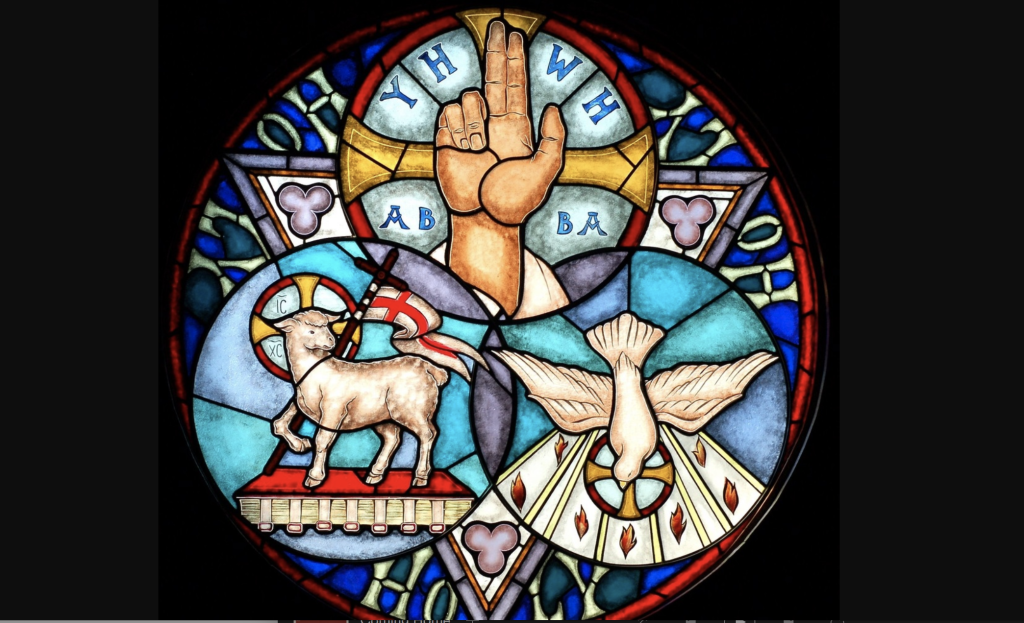
The Christian religious tradition holds to the great Three-in-One of God – God is indivisibly One, and at the same time, a Trinity of Father, Son, and Spirit. Christians typically have no problem expressing their prayers and devotion to the Persons of the Father and the Son, as well as connecting their ministry efforts to them. 

However, when it comes to the Spirit, this Person of the Holy Trinity is often referred to as an “it” or a “force.” Yet, the Holy Spirit is as much God and a Person as the heavenly Father and the Savior, Jesus Christ. The Spirit is the One who provides the guidance and energy for Christian ministry – and not the Law.

We very much need the Holy Spirit of God. Without the Spirit’s help, Jesus is merely looked at as one person out of thousands of individuals crucified in history; and only an example of one who was martyred for his faith. But Jesus is infinitely more than that. 

Christ is the Son of God, the Savior of the world. Through Jesus Christ’s life, death, resurrection and ascension, people can be redeemed from empty lives, saved from destructive life-patterns, and given the kind of security and purpose in life that God intended from the beginning for people to possess. 

And the Spirit of God is the One that takes these redemptive events of Jesus and applies them to our lives. Apart from the Holy Spirit, we are lost, because we are unable to see the genuine spiritual truth about the cross of Jesus Christ unless God the Holy Spirit breaks into our lives and does an intervention – showing us our denial about how we are really doing and our delusions about who we really are (1 Corinthians 2:1-16).
This, then, is the basis for spiritual confidence. And this sort of confidence does not and cannot come from obedience to the Law.

Admitting that we absolutely need the Holy Spirit of God means that the power of Christianity does not reside with me or you; power for the Christian life rests upon Jesus Christ and him crucified, with the Spirit witnessing to us of this truth. 

In other words, we are largely powerless. 

Now, I realize this is not a popular message, especially in Western society. That sounds ridiculous to a particularly can-do kind of people, like most Americans. We believe we’ve done fairly well on our own, thank you very much. A couple of cars, a house, a job, and a family. I work hard. I’ve earned my stuff and my accomplishments. 

But the thing is, any worldly success may lead us to the delusion that we have the power to do what we want – as if I am the sole captain of my soul. I did it. And I did it my way.

“Oh, sure,” many a person may reason, “we have problems just like everybody else. After all, I can’t control everything!” Yet, we are not powerless just because we have difficult circumstances and a few problem people in our lives. “God will step in a take-over where I leave off, right?” Wrong. 

It’s all wrong, because it’s based in one’s effort to obey a personal creed, the rules of the game, or even the Law and the Ten Commandments. But if we could really do it on our own, there’s no need for any of this spiritual stuff.

In truth, apart from the Holy Spirit of God, we are unable to be Christians and live the Christian life. If we think we manage our lives just fine, with a bit of help from God, then we are likely in denial. We are probably placing ourselves at the center of the world; and believe we should be able to deal with whatever comes in life. 

Whenever the consistent response to adverse situations, or the realization that we are not handling something well, is to try and fix ourselves, then we are surely living in the delusion that we hold the power to change – independently without anyone or anything helping us.

If our first reaction to adversity or problems is:

  • Searching Google for more knowledge
  • Dealing privately with personal issues
  • Expecting that willpower should be enough

Then, we are feeding the delusion that we do not really need the Holy Spirit of God; we are actually believing that we need more effort, or information, in order to find the power to overcome whatever is in my life that needs overcoming.   

Unfortunately, it typically takes a tragedy or crisis to break our delusions of power. Let me ask: How bad must we hurt before we admit that we are not managing our lives well at all, and that the real power to change resides with the Holy Spirit?

Our spiritual power and confidence resides in the cross of Jesus Christ, with the Holy Spirit testifying to us of God’s great grace. 

The Apostle Paul believed this with all his heart. Although he was a very intelligent and learned person, he did not rely on his abilities, but on God’s. 

The cross of Jesus is not just an historical event, but an ongoing reality for us to experience victory over all the brokenness of this world, and all the mess we have made of things by putting ourselves at the center of the universe. 

We need the Holy Spirit of God to intervene and apply Christ’s finished work to us. 

None of this means that the Law, or that you, are bad. Both you and the Law are good. It’s just that we, by ourselves, and the Law by itself, are inadequate to save, deliver, and overcome. For that, we need God’s Spirit, and to tap into the spiritual reality that exists.

If the Ten Commandments were introduced with glory, and we ourselves were created with glory, then how much more glory and life is there through an intimate relation with the Spirit?

O God of peace, who has taught us that in returning and rest we shall be saved, in quietness and confidence shall be our strength: By the might of your Spirit lift us, we pray, to your presence, where we may be still and know that you are God; through Jesus Christ our Lord. Amen.


Life Through Death (John 12:20-33)

Now among those who went up to worship at the festival were some Greeks. They came to Philip, who was from Bethsaida in Galilee, and said to him, “Sir, we wish to see Jesus.” Philip went and told Andrew, then Andrew and Philip went and told Jesus. Jesus answered them, “The hour has come for the Son of Man to be glorified. Very truly, I tell you, unless a grain of wheat falls into the earth and dies, it remains just a single grain, but if it dies it bears much fruit. Those who love their life lose it, and those who hate their life in this world will keep it for eternal life. Whoever serves me must follow me, and where I am, there will my servant be also. Whoever serves me, the Father will honor.

“Now my soul is troubled. And what should I say: ‘Father, save me from this hour’? No, it is for this reason that I have come to this hour. Father, glorify your name.” Then a voice came from heaven, “I have glorified it, and I will glorify it again.” The crowd standing there heard it and said that it was thunder. Others said, “An angel has spoken to him.” Jesus answered, “This voice has come for your sake, not for mine. Now is the judgment of this world; now the ruler of this world will be driven out. And I, when I am lifted up from the earth, will draw all people to myself.” He said this to indicate the kind of death he was to die. (New Revised Standard Version)

The fifth Sunday in Lent is now here. We are quickly approaching Jerusalem. Holy Week will be here before you know it. 

Why is this all significant? Because Jesus is important. By taking advantage of Lent with its focus on spiritual discipline, prayer, and repentance, we come face-to-face with the shadowy parts of our selves. We discover that within us there is the pull to hold-on to unhealthy rhythms and habits of life, as well as a push to arrange our lives with the fragmentation of disordered love.

Perhaps our reflexive response to things we do not like about ourselves is to either use sheer willpower to change or try to somehow manage our brokenness, as if we could boss our way out of darkness. The problem and the solution are much more radical than we often would like to admit.

We must die. 

Yes, you heard that right. This is the teaching of Jesus – to die to ourselves. Sin cannot be managed or willed away – it must be eradicated and completely cut out, like the cancer it is. Transformation can only occur through death. 

Jesus used the familiar example of a seed to communicate his point. A tiny little seed can grow, break the ground, and develop into something which provides sustenance for others. It does no good to remain a seed in the ground.

Christ was only telling others to do, what he himself was willing to do. Jesus is the ultimate example of the one who died to himself, and literally died for us. Through suffering and death, he secured deliverance for us from guilt and shame. 

By his wounds we are healed. Through his tortuous death a resurrection became possible – and we must always remember that there must be a death if there is to be a resurrection. Death always precedes life. There is suffering before glory.

Through dying to self, and following Jesus, there is the hope of transformative change which the world so desperately needs. If we persist in making puny attempts at trying to straddle the fence in dual/rival kingdoms, we will be spiritually schizophrenic and left with a divided soul. 

Following Jesus – leaving all to walk with him – is true repentance and authentic discipleship. The act of journeying with Christ is the means to a new life. Change is possible by letting Jesus Christ be the center from which all of life springs.

Maybe you think I’m being too forceful, too insistent about this Jesus stuff. 

Yes, you have perceived well. I am being quite single-minded about the need for dying to self and living for Christ. 

Somehow, within many corners of Christianity, this wrongheaded notion that suffering is not God’s will has made it into the life of the church. But I’m here to say, on the authority of God’s Holy Word (not to mention your own internal gut and conscience) that dying to ourselves is necessary. And it hurts. The epistle reading for today bears this out:

In the days of his flesh, Jesus offered up prayers and supplications, with loud cries and tears, to the one who was able to save him from death, and he was heard because of his reverent submission.  Although he was a Son, he learned obedience through what he suffered; and having been made perfect, he became the source of eternal salvation for all who obey him. (Hebrews 5:7-9, NRSV)

Christians are not above their Master. Even Christ’s life on this earth, before his death and resurrection, was marked with suffering. Even Jesus learned obedience through struggle and adversity. Jesus Christ did what he now asks of us. 

The Son gave up himself to do the Father’s will. So, we must give up ourselves in submission to King Jesus.  Jesus offered loud cries and tears, and submitted to what the Father wanted. His followers must do no less. 

We don’t get to choose which parts of Christ’s life and teaching we will adhere to, and which ones we won’t, as if Jesus were some spiritual buffet line. All who live for Jesus, follow him into the path of suffering, of death to self, and of new life through the power of his resurrection.

Those who love their life lose it, and those who hate their life in this world will keep it for eternal life.

How do we follow Jesus through dying to self? What does that mean for you and me on a practical daily basis?

Surrender

Every moment of every day is an opportunity for giving ourselves to Jesus. We have hundreds, maybe thousands, of small daily decisions with the use of our time, money, energy, and relationships. 

If we have tried to fix what is broken inside of us, we will likely just try to hastily fix the problems and the people in our lives – and then move on with getting things done on our to do list. 

Instead, there is a need to surrender ourselves – to create the sacred space for solitude and silence, prayer and repentance. 

Take the time to sit with a person in pain and listen. Reflect on how to use your money in a way which mirrors kingdom values. Begin to see your life as a holy rhythm of hearing God and responding to what he says. It takes intentional surrender to do that.

Sacrifice

Holding-on to our precious stuff and time is the opposite of sacrifice. 

Are we truly willing to give-up everything to follow Jesus? 

It is more than true that we are not Jesus. Our sacrifice and suffering are not efficacious, that is, it doesn’t deliver other people from sin. Only Christ’s death does that. Yet, we are still called to sacrifice. The Apostle Paul understood this, with a statement that I’ll let you wrestle with and mull over without comment on my part:

I am now rejoicing in my sufferings for your sake, and in my flesh I am completing what is lacking in Christ’s afflictions for the sake of his body, that is, the church. (Colossians 1:24, NRSV)

Happiness is important; but it isn’t the summum bonum of life. There is more to life than living for self. Jesus calls us to see our communities, neighborhoods, and families as a mission field of grace to a world who needs him. That takes sacrificial love on our part.

Christianity is not really a religion that’s for people who have put neat theological answers and tidy packaged certainties to all of life’s questions. 

Rather, Christianity is a dynamic religion of learning to follow Jesus, discovering how to die to self, and struggling to put Christ’s teaching and example into practice. 

Those who don’t struggle are in big trouble. But those who go through the pain of dying to themselves for the sake of their Lord, find that the fruit they harvest leads to eternal life.

May you struggle well, my friend.

A Prayer of Confession (Psalm 51:1-12)

Have mercy on me, God, according to your faithful love!
    Wipe away my wrongdoings according to your great compassion!
Wash me completely clean of my guilt;
    purify me from my sin!
Because I know my wrongdoings,
    my sin is always right in front of me.
I’ve sinned against you—you alone.
    I’ve committed evil in your sight.
That’s why you are justified when you render your verdict,
    completely correct when you issue your judgment.
Yes, I was born in guilt, in sin,
    from the moment my mother conceived me.
And yes, you want truth in the most hidden places;
    you teach me wisdom in the most secret space.

Purify me with hyssop and I will be clean;
    wash me and I will be whiter than snow.
Let me hear joy and celebration again;
    let the bones you crushed rejoice once more.
Hide your face from my sins;
    wipe away all my guilty deeds!
Create a clean heart for me, God;
    put a new, faithful spirit deep inside me!
Please don’t throw me out of your presence;
    please don’t take your holy spirit away from me.
Return the joy of your salvation to me
    and sustain me with a willing spirit. (Common English Bible)

Sin. The word is rarely used anymore in places outside of churches. And when it is used within the church, sometimes it is grossly misrepresented, as if humanity’s identity is sin.

Although everyone has sinned and fallen short of God’s glory, our inherent personhood is not sinful. Every human is made in the image and likeness of God. Sin is like a permanent putrid abscess which never seems to go away.

Sin is everywhere – in our hearts, in our world, in our institutions, and in our families. It is on television, the internet, social media, and moves in and out of smartphones. Sin, apparently, is even in our desserts (oh, the decadence of chocolate!). If it takes one to know one, we are all experts on being sinners.

From a biblical vantage point, sin is serious business. Sin involves both the things we do (1 John 3:4), as well as the things we leave undone (James 4:17). Sin is both the breaking of God’s commands, and the lack of conforming to the teachings of Jesus.

Christians throughout the ages have generally understood that the Ten Commandments (Exodus 20:1-17) and Christ’s law of love (Luke 10:27) constitute a brief summary of God’s holy and moral instruction for humanity.  This is all based in the character of God as both holy and loving. 

All sin, whether in actions or inactions, has at its root an attitude and activity of self-centeredness. It is a selfish bent of thinking, feeling, and acting. And, oh my, the consequences!

Sinful attitudes bring about an obsession with lust (1 John 8:34; Galatians 5:16); a broken relationship with God (Romans 3:23; Galatians 5:17); bondage to Satan (1 Timothy 3:6-7; 2 Timothy 2:26); death (Romans 6:23; 8:6); hardening of the heart (Hebrews 3:13); and deception (1 Corinthians 3:18; James 1:22, 26) just to a name a few.

Sin lurks in the shadows of the heart, drips from the tongue of the wicked, and lingers in the actions of the selfish and proud. Sin is not something to trifle with, dabble in, or even manage. No, sin, at its core, is a rebellion against God, a stiff-arm to the Lord that claims we know better than God about how to run our lives. 

People are guilty of transgressing basic morality, as well as failing to be ethically virtuous people on any on-going consistent basis. 

Well, that sounds like a total Debbie-Downer. Actually, it’s total depravity. Being depraved people does not mean we are never capable of doing good; it just means that sin has profoundly touched everything in our lives, without exception.

When we come to the realization that we are in dire straits, then it is high time we blurt out a prayer of confession along with David. The book of Psalms is the Christian’s prayer book, and there is no better prayer to pray when we come to the end of ourselves than the psalmist’s plea for mercy, based in the steadfast love and faithfulness of God.

The ironic paradox of all this is that experiencing true joy and comfort comes through knowing how great our sin is. 

We can live above sin by being set free from it by the grace of God in Jesus Christ. If a person is to be redeemed from sin, then a provision must be made. Sin has been dealt with once for all through the person and work of Jesus. Christ is our representative, taking our place with the punishment we deserved (Galatians 4:4-5; Ephesians 2:5-6; Colossians 2:9-15; Hebrews 2:17-18; 1 John 2:1).

Jesus Christ is our ultimate substitute (Romans 5:8) which resulted in: our redemption (Galatians 5:13); satisfying all justice (Romans 3:25); and reconciliation to God (Romans 5:10). Therefore, the person who believes in Jesus is forgiven of sin because Christ’s sacrifice is sufficient to deal with all the effects of sin. The Christian is complete in Christ (Colossians 2:10).

When it comes to offering a confession in prayer, neither the eloquence of the speech nor the sheer word structure itself is the proper basis for a prayer of confession; utterances of a broken and contrite heart, submitted to God, trusting solely in his grace to transform, are the only words appropriate for approaching God with our sin. 

Such prayers are not to be few and far between; they are to be a regular regimen, engaged on a daily basis. Just as we take pills each day for all that ails us, so we need to take in the mercy of God through prayers of confession that link us to the true healing power which brings spiritual health and life.

Create a clean heart for me, God; put a new, faithful spirit deep inside me! Please don’t throw me out of your presence; please don’t take your holy spirit away from me. Return the joy of your salvation to me and sustain me with a willing spirit. Amen.

The Pleasing Aroma of Worship (Exodus 30:1-10)

The Altar of Incense, by Erhard Altdorfer (1480-1561)

“Make an altar of acacia wood for burning incense. It is to be square, a cubit long and a cubit wide, and two cubits high—its horns of one piece with it. Overlay the top and all the sides and the horns with pure gold, and make a gold molding around it. Make two gold rings for the altar below the molding—two on each of the opposite sides—to hold the poles used to carry it. Make the poles of acacia wood and overlay them with gold. Put the altar in front of the curtain that shields the ark of the covenant law—before the atonement cover that is over the tablets of the covenant law—where I will meet with you.

“Aaron must burn fragrant incense on the altar every morning when he tends the lamps. He must burn incense again when he lights the lamps at twilight so incense will burn regularly before the Lord for the generations to come. Do not offer on this altar any other incense or any burnt offering or grain offering, and do not pour a drink offering on it. Once a year Aaron shall make atonement on its horns. This annual atonement must be made with the blood of the atoning sin offering for the generations to come. It is most holy to the Lord.” (New International Version)

Worship is intended to engage the whole person, including our five senses. That’s why God instructed Moses to oversee construction of an altar for burning incense. Smells and aroma matter. We associate certain smells with particular times, places, or people. Inhaling the incense signifies and reminds people that God is with us.

Included in the instructions about the altar of incense is about when and where to burn it. The incense was to be utilized just outside the great curtain that veiled the Holy of Holies – which was the place where God met with Aaron the high priest.

The people not only smelled the incense, but could also see the smoke rise – and so be reminded of the great pillar of cloud that went before the Israelites in the exodus from Egypt. The cloud was a visible manifestation and reminder of God’s presence with the people.

Experiencing the smell of the incense and the visual smoke were comforting. It was a spiritual encounter that reinforced and strengthened the faith needed to keep on living for the Lord.

At the same time, the incense smoke highlighted the Holy of Holies curtain in front of the worshiper. Although God is close and near to the people, God is also distant and unreachable.

The Lord is both immanent and transcendent – able to meet us where we are and know our intimate needs. Yet, God is also so far above us – the high and holy God – so as to see the big picture of the world. The Lord knows us and our troubles, and has the perspective and power to do something about it.

The altar of incense with its billowing smoke and sweet smelling aroma was not only pleasing to the people, but also to God. Whenever worshipers present their offerings with joy and gladness on the altar of sacrifice, then the Lord is pleased with their faithfulness.

For example, Noah built an altar to the Lord and provided burnt offerings on it. God smelled the pleasing aroma and was stirred to say:

“Never again will I curse the ground because of humans, even though every inclination of the human heart is evil from childhood. And never again will I destroy all living creatures, as I have done.”

“As long as the earth endures,
seedtime and harvest,
cold and heat,
summer and winter,
day and night
will never cease.” (Genesis 8:21-22, NIV)

Incense and pleasing aromas are not so much the point, but what the smell represents. If we miss this, then worship becomes mechanical, and a primitive way of trying to appease an angry deity. But if we see and smell with spiritual eyes and nose, then we discern and know that our senses are a doorway to connection with God.

Our offerings are acceptable and pleasing when they are offered with sincerity of heart, integrity of spirit, and faithfulness to the God who cares not only about what we do, but why we do it.

A heart inclined toward disobedience, a mind with a bad attitude, and feet that would rather be elsewhere than at the altar, are a noxious smell to God; it is odious to the Lord. But the greatest and sweetest incense is the life offered in faith and devotion to God. In the New Testament, the Apostle Paul commented on the offerings of God’s people:

I now have plenty and it is more than enough. I am full to overflowing because I received the gifts that you sent from Epaphroditus. Those gifts give off a fragrant aroma, an acceptable sacrifice that pleases God. (Philippians 4:18, CEB)

The altar of incense giving off its smell also clued-in the worshiper to the ultimate offering to come. The Apostle Paul pictured the cross of Christ as the greatest and sweetest fragrance of all:

You are God’s dear children, so try to be like him. Live a life of love. Love others just as Christ loved us. He gave himself for us—a sweet-smelling offering and sacrifice to God. (Ephesians 5:1-2, ERV)

All of the offerings in the sacrificial system were designed to be temporary, preparatory, and anticipatory – foreshadowing the day when a final sacrifice and the sweetest fragrance of all would come; a sacrifice to end all sacrifices.

Jesus Christ was the aroma so sweet, so compelling, that we can now offer our incense of faith, hope, and love to the Son of God by taking up our cross and following him.

O Lord, listen to me as I pray. Please hurry and help me! Accept my prayer like a gift of burning incense, the words I lift up like an evening sacrifice. Help me control what I say. And don’t let me say anything bad. Take away any desire to do evil. Keep me from joining the wicked in doing wrong. My Lord God, I look to you for help. I look to you for protection. Amen. (Psalm 141:1-4, 8)