Cornelia Parker’s “Edge of England” in the Milwaukee Art Museum
Art, as I would define it, is the creation of something beautiful and/or meaningful through imagination and skill. This definition is broad enough to encompass everyone as an artist. Each person mirrors the Divine Artist in some unique or special way through the ways in which they imaginatively and skillfully live their lives. Where there is no art, there is no hope. Where art exists, there are possibility and life. None of us could have made it this far in the process of our jobs, our families, let alone in life, without making great art. Art is how we make sense of things and form our views of the world. Art is both subject and object – being both formed and forming us. Life cannot exist without art because we as people are both created and creative in all we think, feel, and do.
I say all this mostly because recently being at my local art museum helped me to remember how vital it is to be an artist, and that there is no other artist like me (or you). The museum enabled me to reconnect with the vast imagination within, as I was reminded how large the world of Tim is and how much that inner world has always sought to make beautiful and meaningful connections with others – to make a difference.
I was also reminded of the ways in which art impacts us. What is beauty to one is disgust in another; and, what is repulsive to one is awe in the other – and everything in between. Yet, in every work of art we are likely to find both charm and ugliness. That reminder helps me to reflect on a recent patient visit I had in the hospital. His story was not too pleasant to me. I was repulsed by many of the patient’s decisions throughout his life. Yet, in the moment, I chose to embrace the whole painting in front of me – which included the beauty and awe of his desire for connection, forgiveness, and reconciliation. At the time, I wasn’t sure I was doing much of anything – my own art seemed rather imperfect and unseemly. When the visit came to an ending, the patient remarked, “Thank you for reminding me of my God and bringing me closer to him.” Into the mix all along was the Divine Artist, creating something gracious between us. If this was to be depicted in an actual art object, that object would include both strange beauty and repugnant representation. The question is: Will the eye of the beholder see only one, or see both? The answer to that question is the answer to whether we are willing and able to see the full scope of any person in front of us. And, like an art object, we could likely sit for hours staring and observing, finding new awareness and insights, and, thus, new meaning – in both of us.
A teaching I appreciate from my Orthodox Christian friends is that every person is a “living icon,” that is, everyone is a hand-crafted image of Christ. Even more than that, everyone is still being formed by God into a unique and special icon. In this view of Christianity, a person’s highest calling is to simply cooperate with the Divine Artist – God is the Potter and I am the clay. I would describe our part as being “actively passive.” We neither act as we see fit and just trust God will direct us, nor do we sit and simply wait for God to do something. Rather we are actively passive. An artist waits for inspiration – and in the meantime he/she intentionally pokes around for ways to be inspired. And when the inspiration comes, the work ensues – with a rhythm of action coupled with taking time to step back and see the big picture before engaging again.
What I am suggesting is that God has divine actions and divine reflections in a rhythm of formation and transformation of all human creatures. God has both given us everything we need for life and godliness in this present age and is continuously weaving life-giving grace into the fabric of our everyday lives. We are icons, and we are being crafted into icons. To put it another way, we are human beings and are continuously being made into humans. The care we receive is the care we give.
There was a time in my life (a long time ago!) when I played at least 9 holes of golf every day. While married and raising kids, I did a lot less of it. Yet, some of my best “visits” with parishioners were on the golf course. In 2005, that all changed when I was in a car accident. My back has never been the same. I’ve never been able to twist and torque my body to swing a golf club. It’s possible that I could try and reinvent my swing. However, it hasn’t been a priority for me with all of life’s responsibilities.
So, I have mostly taken to the occasional weekend watching golf on TV. I enjoy both the competition and skill of the professionals, and the stunning beauty of the courses they play. This weekend was the Masters, which is probably the greatest and the best of the four major golf tournaments played each year. Yesterday was an amazing final day of the tournament. Tiger Woods, who hadn’t won a major tournament in over ten years, and had not won the Masters since 2005, came out of the pack to win.
I found myself unusually glued to the TV watching him. As the holes progressed, I became more and more vested into Tiger’s performance. By the time the final three holes were played, I was hanging on every stroke. And when he putted on the 18th green, I went nuts. Seeing him hug his kids and everyone congratulating him brought a well of tears to my eyes. So, I am now asking, why did I have such an emotional reaction?
Because I know the story of Tiger Woods. He was a golf prodigy at a young age. He won his first of his five Masters tournaments at age 21. It looked as though he was going to completely shatter every golf record in the books. Then, his life began to unravel. He was arrested for drunken driving; multiple affairs were discovered as many women came forward; divorce from his wife; years of competitive golf ravaged his body with several knee and back surgeries. Tiger didn’t even play one round of golf in a nearly two-year stretch. Indeed, it appeared he was done with golf.
Yesterday’s victory was more than winning a golf tournament. Tiger’s victory was an incredible comeback story. That, however, was not really what brought me to tears. It was what I observed from him as he walked and played the course yesterday. This was clearly a different Tiger Woods. The younger Tiger approached golf with a must-win attitude. I heard him, quite often, swear at himself before the censors could catch it on televised tournaments. He moved about with a steeled compulsion as if he must win; must be better; must be on top; must be the best. It resulted in more victories; more prestige; more money; more women; more everything. It was an almost demoniacal obsession to play flawless and victorious golf. Even when he was the golf’s world number one, Tiger set about reinventing his swing in the attempt to be an even better golfer.
Then, Tiger experienced a hard fall from grace; which was inevitable when the compulsive and neurotic self is in the driver’s seat. However, yesterday I saw a much more relaxed Tiger. He was incredibly composed and extremely patient in how he approached his round of golf. He had a very different look in his eye. Yes, he wanted to win. Yet, he didn’t seem to be obsessed; as if just being on the course and in the mix of competition again was enough for him. Tiger’s creativity around the course seemed spontaneous and free, as opposed to his earlier years where his imagination could only seem to picture conquering the golf course.
This was a story of redemption played-out in front of us all while we watched the Masters. So, when Tiger Woods won, without the neurotic need to do so, the tears came. Truth be told, I relate to the neurotic self. I resonate with the younger years of driving to be the best preacher in the world and the compulsion to read, study, and learn everything I could to be on the very top of my game as a minister of the gospel. I never experienced a fall to the degree of Tiger, yet I know the feeling of being toppled through years of ministry wear and tear; of wondering if my body and soul would be able to do pastoral work again.
I am curious as to how Tiger Woods changed. I suspect through all his inner crap and outer conflict that he eventually discovered the real Tiger underneath all the compulsion and drive. Yesterday was his greatest triumph, in more ways than winning a golf tournament. He was unusually calm. He had determination, yet it did not seem to dominate his actions. I saw a person enjoying the experience. In the post-victory interviews, Tiger indeed acknowledged his profound gratitude for the ability to play and to play at a high level.
I don’t know if Tiger will win again. I don’t know how much golf he has in him. At 43-years-old with his body ramshackled together through so many surgical interventions, it is quite possible that retirement is near. Yet, whatever happens, I feel privileged to have watched not only a phenomenal golfer; I have observed a real transformation of a person.
I suppose I see a lot of myself in Tiger Woods. There are, certainly, many ways we are dissimilar. There are also ways we are similar. I relate to being on a journey of self-transformation. I can look back in hindsight and see myself driven to perform, as if some other person were at the wheel of my life; obsessed with being a successful and competent pastor (whatever the heck that really looks like); and, living with a compulsion for more knowledge, more insight, more skill. Conversely, I now find myself moving about the hospitals I serve with a bit of what I saw in Tiger yesterday – a patient and calm demeanor of being present to patients, and, with greater challenge, present to my own emotions and self.
So, today, and every day, I hope to be present. I don’t want to force myself to do ministry in that old compulsive sort of way, as if sheer willpower and dogged determination could bring about accomplishment of goals. No, I want to feel the freedom of spontaneous compassion and allow the Spirit to send me to patient rooms; to be relaxed and fully attentive to the person in front of me without thinking about lunch, the next visit, or anything else. I want to go home and be fully present to my wife, even to the ridiculous pester pup dog in front of me. I want to be present to my girls and my grandsons without them seeing that look on my face that tells them I’m still at work, or off somewhere deep in my brain conniving ideas and forming thoughts for some future project or deadline. I want to be present to the God who is ever-present with me; who is always and fully attentive to the entire scope of my life – who joins me on the two-steps-backward-three-steps-forward herky-jerky personal walk – always exhibiting grace, patience, and demonstrating a calming presence with me.
I saw a glimpse of the divine in Tiger yesterday, which is perhaps why so many people later in the day commented that they responded with tears welling-up in their eyes, too. For we together saw connection, not compulsion; and, relationship, not self-retribution. Maybe that’s why I see so many patient tears. Maybe they see with me some of that divine presence. If so, I thank God for it.
There is a reason that a redemption story compels us and brings us to tears. We have a Redeemer who has displayed for us the ultimate drama of redemption. In this Christian Holy Week, believers in Jesus across the world remember that the King of all creation, the One to whom all things hold together, was humiliated, berated, tortured, and killed. He was laid in a tomb. His followers were beside themselves with grief, loneliness, and wondering what was going on and what was going to happen. Yet, death did not have the last word. Love conquered the grave. Suffering led to glory. The care of the One led to the care of the many.
As we journey together through this Holy Week, may we pay attention to the story of Jesus. May we be present in how our own individual stories fit into God’s grand narrative in the world. May we know the grace of redemption and of the Redeemer who makes it possible.
A tractor is an engineering vehicle specifically designed to deliver at a high tractive effort (torque) at slow speeds for the purposes of hauling mechanized implements used in agriculture. The word “tractor” comes from a Latin word, trahere, which means “to pull.” Tractors, like people, come in all sizes, shapes, and colors – exuding both resilience and strength in their existence.
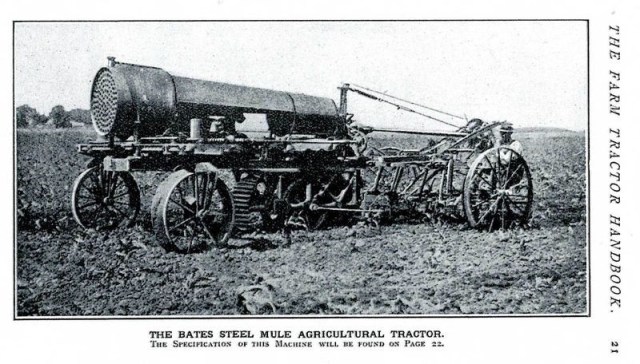
The Bates Steel Mule tractor was one of the most unique and oddest-looking farm machines ever built. First built in 1913, it was like a cross between a steam boiler, a garden tractor and a Harley-Davidson motorcycle. Bates Machine Company had the following advertisement for their Steel Mule tractor: “The only machine in the world which you can hitch up to any horse-drawn implement you now have and operate it from the same position you would your horses.” In other words, you could operate the tractor by sitting in the implement seat, not the tractor seat. The Steel Mule survived until they became one of the many victims of the Great Depression in 1937.
My grandfather (whom I never knew – he died when I was a year old) owned and operated a Steel Mule tractor (not the particular model shown above). There was once a picture of him in the local paper using his tractor (I have it packed away somewhere and am still looking for it). Grandpa was known for being the guy who would try new things and buy unique machinery – all in the quest for better farming methods.
The Steel Mule seems to represent my current state of ministry. Like Grandpa, I have a drive and a desire for improving my pastoral craft. I am open to trying new things and entering into a new way of being with the hospital patients I serve as a chaplain, as well as my peers, other staff, and really everyone I encounter throughout a day. Yet, at the same time, I stubbornly hold to the past – sitting on the implement and not quite ready to fully embrace the new era of machinery instead of horses. Which brings me to the whole point of this circuitous rambling of Tim’s Tractor Time: What holds me back? And, in so asking this question of myself, I also as it of you: What holds you back?
Yes, what does hold you and I back from taking the initiative to be vulnerable and open with our lives, instead of fearful, anxious, and hesitant? What holds us back from collaborating with others? Consulting before acting? Consulting after acting? Divulging our emotions and not just our thoughts? Speaking without always measuring and analyzing each word before we say it (or write it)? As a seasoned minister, I can plow deep furrows with my Steel Mule into others’ lives – so, why not let others do the same in my field? What is it I’m really pulling in that field?
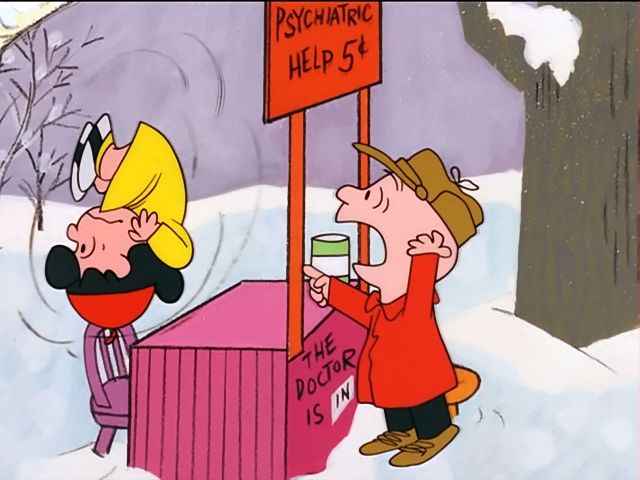
Perhaps it is fear. When Charlie Brown came to Lucy for a bit of practical psychosocial help, Lucy spouted a litany of various fears which she wondered Charlie Brown might possess. Finally, she expressed that maybe he has “pantophobia.” “What is ‘pantophobia’?” Charlie Brown asks. Lucy responds, “The fear of everything.” To which Charlie Brown demonstratively pronounces, “That’s it!”
Could be. Could also be anger. After all, anger often lurks in the shadows our hearts with a combination of it getting expressed in an unhealthy way or becoming twisted into depression. There’s plenty of anger under the surface of the topsoil ready to get turned over and exposed. Too much of it turned inward. Certainly, it needs some plowing and cultivating, that is, processing outwardly with others… maybe… if we’re brave enough.
Then there’s this thing called liminal space – the space in-between where we can’t go back to the way things were ever again, yet, we aren’t quite where we want/need to be. It’s awkward being caught in the nexus between the past and the future. Does this hold us back? Or maybe it’s the fear of imperfection, of not doing something with utmost excellence? Are we apprehensive about opening up because we don’t understand ourselves fully, so, therefore, I won’t (like a stubborn old Steel Mule) utter half-baked ideas or fragments of thoughts or, God forbid, emotional musings? Like the Steel Mule, perhaps we are crossing over into a new era with the past very much there with it.
So, perhaps the greater question is: What are you and I really feeling, in this moment? Figures it would take me all this thinking type verbiage to get to the emotional universe of feelings. If we’re honest, we all are a diverse jumble of emotions – presently feeling overwhelmed; sad; happy; angry; hopeful; confident; scared; hungry; tired…. Oh, well, let’s just say we’re feeling everything.
Like the interlocutor in the book of Ecclesiastes, the conclusion of the matter is this: “Fear God and keep his commandments; for that is whole duty of everyone.” (Ecclesiastes 12:13). I hold back because of me. You are hesitant because of you. Nobody is twisting my arm. That old enemy of our souls, the Adversary, would like nothing more than to keep us feeling weak and insecure so that he can keep us under his evil thumb.
No one is forcing you to use the Steel Mule tractor. Quite the opposite. In truth, there is nothing holding us back. Nothing is stopping us from pulling our emotions out and discovering new ways to express them with confidence in healthy redemptive ways. Nothing outside of our power to act is preventing us from the courage to do what we already know deep in our hearts we need to do…. Nothing. So, then, I’ll look for you in the next tractor advertisement doing your unique, wonderful, and amazing work which comes from the depths of your love for God and others.
“The king must not acquire great numbers of horses for himself or make the people return to Egypt to get more of them, for the Lord has told you, ‘You are not to go back that way again.’ He must not take many wives, or his heart will be led astray. He must not accumulate large amounts of silver and gold. When he takes the throne of his kingdom, he is to write for himself on a scroll a copy of this law, taken from that of the Levitical priests. It is to be with him, and he is to read it all the days of his life so that he may learn to revere the Lord his God and follow carefully all the words of this law and these decrees and not consider himself better than his fellow Israelites and turn from the law to the right or to the left. Then he and his descendants will reign a long time over his kingdom in Israel.” (Deuteronomy 17:14-20, NIV)
King Solomon was wildly successful. He expanded the kingdom of Israel in every way: more land; more gold; more buildings; more wealth; more wisdom; big temple; big family; more and big of everything. We do not have an account that anyone called out Solomon on his big expansive government and lifestyle.
Methinks the reason for letting King Solomon go unchecked was that he was surrounded by people who enjoyed and participated in his success. Even though he was often operating well outside of the Deuteronomic law which was right there in black and white, Solomon’s subjects only saw that he established peace, security, and a high standard of living for the nation. Solomon acquired a massive amount of horses, wives, gold, and everything the law warned against.
Solomon was very humble and wise at the beginning of his reign. He did everything his father David asked of him, and more. But his wild success as king gradually brought Solomon to acquire more stuff, more wives, and to fudge on the responsibilities and requirements of the king. Solomon established an Empire and denied himself nothing when it came to the perks of power.
There is always a dark underbelly to the outward display of power, success, and wealth. As time goes on, the Empire becomes a god and people begin supporting the system instead of the Deity who makes it all possible to begin with. Pride replaces humility. Foolish ignoring of evidence becomes the norm. Optics arises as supreme. Solomon basically enslaved a large swath of Israel’s population to get things done in the Empire. His success was on the backs of a lower class of people. But, hey, who cares, as-long-as there is no war, the borders are secure, and the nation’s coffers are getting filled beyond anybody’s wildest expectations?
When the Empire becomes supreme and brings in the money, no one questions the leader. Yes, I understand all of this happened thousands of years ago. However, even though times change, people don’t.
It doesn’t matter the context of the Empire’s power; if it exists, it operates eerily the same. Whether it’s Bill Hybels as the leader of a wildly successful megachurch; Urban Meyer as the leader of a crazy successful football program at Ohio State; or, any government leader overseeing immense wealth; the same ignoring of evidence among constituents, congregants, citizens, and fans exists. In other words, people tend to look the other way when things are going well. Whereas the leader may have once started out as wise and humble, the eventual wild success changes them.
Willow Creek Church founding Pastor, Bill Hybels
But things are never really going that well. The dark underbelly hides realities of sexual abuse, domestic abuse, and all kinds of other abuses all in the name of maintaining the success, that is, the Empire.
Show me a wildly successful leader of an Empire, no matter what that Empire is, and I’ll show you an entire coterie of sycophants who continually look to cash-in on that success through recognition, power, and money. In the case of Hybel’s context, Willowcreek Community Church, the elder board (eventually) did the right thing in resigning – once they got clear-headed enough to see that they were complicit. Ohio State still seems to have their collective heads in the sand – not seeing the situation for what it is. Meanwhile, abuse is not squarely dealt with because the system of Empire churns along with impunity. Unquestioning support of a human leader, whether it is in sports, in church, in government, or in a business corporation because the Empire has such incredible success is a recipe for disaster. People will get hurt and abused; and, the victims will have no one to believe them on the inside. Too many other folks are benefiting from the Empire. They don’t want to see the dark underbelly.
Personally, I always come back to Jesus. He is the ultimate example. The Lord Jesus was humble, meek, gentle, loving, and always used his emotions and abilities toward the ends of healing others, not hurting them. Jesus did not build an Empire. Yes, I understand an argument could be made that the Church is an Empire (and it did exist as one in Medieval Europe). Yet, Jesus Christ purposely and deliberately eschewed Empire. He often told people to keep quiet about his good deeds of healing so that the seeds of Empire could not even germinate.
What’s more, Jesus did not surround himself with sycophants. He chose the most motley crew of people one could imagine. Christ’s original twelve disciples were such an unknown and diverse bunch of rag-tag Jewish men that nobody could mistake them as Empire building guys. They were about a movement, not an Empire. They were concerned for the kingdom of God, not the kingdom of their own making.
The people we surround ourselves with, no matter whether we’re high mucky-muck leaders or lower-class invisible persons, or anyone in-between, is vitally important. We all need loving persons around us who will tell us what we need to hear in a spirit of love and grace. Speaking the truth in love is not optional equipment for any of us. None of us do well with success unless we have humble and wise persons close to us who have the gumption and the grace to speak into our lives to help us, not hurt us. When we don’t have that, things go sideways in a hurry.
If a guy like King Solomon, who was the wisest person who ever lived, can ignore his own nation’s God and Holy Scripture to get whatever he wanted, then how much more do we, who have less wisdom, need the grace of loving people speaking truth to our hearts?
Exposing the dark underbelly of Empire will always be fraught with the risk of people not believing and, worse, not caring. That’s why the Christian New Testament liberally uses the word “light” to describe what kind of people we are to be. Just as Jesus is the Light of the World, shining himself into all the dark and shadowy places of our lives and the systems of this world, so his followers are to be his flashlights, shining in such a way that is righteously persistent and gracious.
It isn’t our job to build a great Christian Empire to ensure prayer in public schools, the Ten Commandments in every courthouse, and manger scenes everywhere at Christmas. Rather, it is our responsibility and privilege to fully embrace the status of poverty of spirit; grief, lament, and mournfulness over the sin of the world’s Empires; meekness toward others; hunger for right relationships; mercy for all; pure relations with everyone; and, peacemakers who shepherd people to the green pastures of forgiveness and harmony with God and humanity.
Today we all have the opportunity to build something greater than ourselves – a legacy which invites accountability, openness, and vulnerability which blesses the world and doesn’t seek its accolades. It’s not always how you start; its often what motivates you and how you end that matters most. Just ask Citizen Kane.
So, may you know the grace of caring relationships; the mercy of hearing hard things; the joy of being above board in everything you say and do; and, the humility to admit when you’ve gone off the rails.