Matthew 5:13-20 – Live as Salt and Light

“You are the salt of the earth. But if the salt loses its saltiness, how can it be made salty again? It is no longer good for anything, except to be thrown out and trampled underfoot.

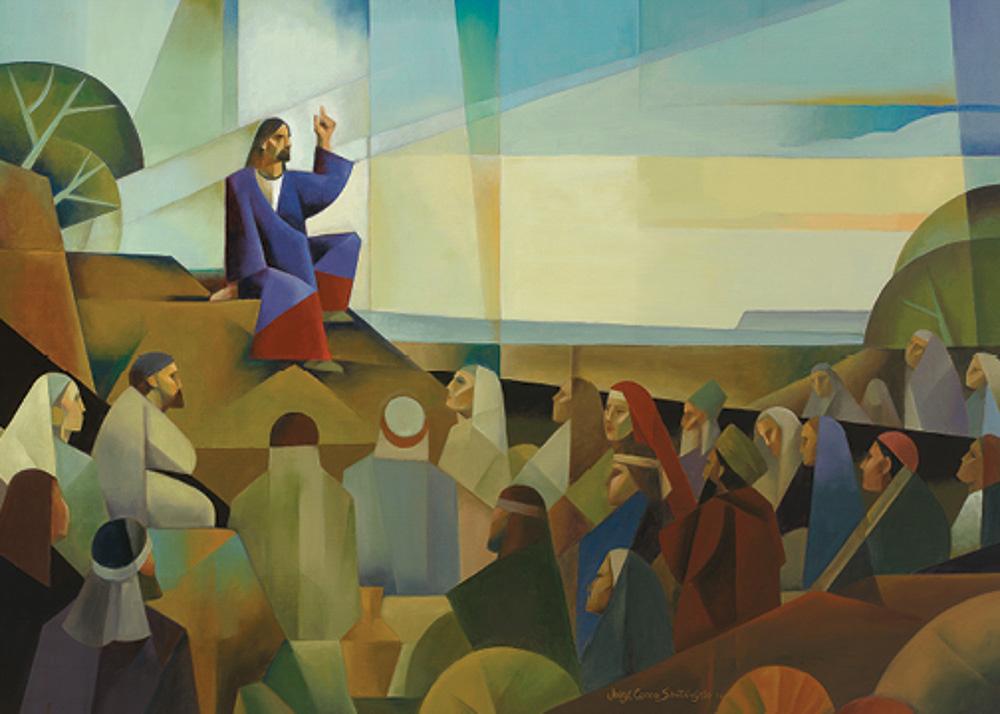
“You are the light of the world. A town built on a hill cannot be hidden. Neither do people light a lamp and put it under a bowl. Instead, they put it on its stand, and it gives light to everyone in the house. In the same way, let your light shine before others, that they may see your good deeds and glorify your Father in heaven.

“Do not think that I have come to abolish the Law or the Prophets; I have not come to abolish them but to fulfill them. For truly I tell you, until heaven and earth disappear, not the smallest letter, not the least stroke of a pen, will by any means disappear from the Law until everything is accomplished. Therefore, anyone who sets aside one of the least of these commands and teaches others accordingly will be called least in the kingdom of heaven, but whoever practices and teaches these commands will be called great in the kingdom of heaven. For I tell you that unless your righteousness surpasses that of the Pharisees and the teachers of the law, you will certainly not enter the kingdom of heaven. (New International Version)

There is a world of people in our sphere of influence, who need to see that Christianity is real and that it works.

Jesus used a few metaphors to help his followers understand their role in society and their effect on the world.

Salt

Obviously, in the ancient world, there was no refrigeration. So, salt was used to preserve food, with the added result that it brought some flavor when the food was eaten. Christians are meant to be a preservative in the culture, helping to stave off worldly decay and rot.

Sometimes, believers in Jesus feel a compulsion to complain about eroding cultural mores, the sad state of public affairs, or the declining value of religion. However, Christians can play a positive role, rather than a negative stance, by being salt in the world.

Christianity is meant to be therapeutic and helpful, adding value to culture and society – and not an added burden to an already bad situation.

Jesus said if Christians lose their saltiness, and are no longer impacting society, they are useless to the culture. Nobody would miss them if they were thrown out into the garbage dump of the street to be trampled on and forgotten.

Christians were never meant to simply exist for themselves. They are on this earth to be the continuing presence of Christ in the world by means of God’s Spirit.

This is not an exhortation from Jesus to be salt, because he says we are salt. It is rather a matter of allowing the world to taste Christianity and find it compelling and flavorful. 

For example, instead of being worried or upset that a low income housing project is being built next to church property, leading to discussions of erecting a fence, a salty Christian response would be to imagine creating a sidewalk so that the neighborhood kids will wander over to the church’s grounds.

Saltiness is a fundamental way of thinking and acting which orients itself around the common good of everyone and the community needs surrounding where Christians live, work, and play.

To drive his point home even deeper, Jesus used a second metaphor to describe what Christianity’s relation to the world is to be like….

Light

In the ancient world, there were no artificial lights. At night, it was pitch black. In the dark, any light, even a small candle, makes a real difference.

An individual person may mistakenly believe their life does not make much of a difference. Yet, it does! One person exhibiting the characteristics of humility, gentleness, grace, and peacemaking is able to have significant penetration into the darkness.

Here are some ways the church has always brought light into the darkest times of history:

  • Taking-in and adopting unwanted children who would otherwise be victims of infanticide.
  • Ministering to the sick and dying during periods of plague and disease, while others fled.
  • Caring for prisoners who had no family to provide them with necessary food and clothing.
  • Giving benevolence and kindness to the poor – especially to immigrants, widows, and orphans.

Christianity is designed to take a proactive approach – and not just a passive policy of waiting for needy people to show up – by searching, identifying, and meeting the needs of people.

The reason religious people wondered about Jesus and his teaching is because Christ offered a different perspective than what they typically heard. 

Jesus was concerned to uphold basic Old Testament ethics by offering a distinct interpretation that the Law is fulfilled in himself. For example, the entire book of Leviticus (which reads something like a B-grade slasher film) is a detailed account of regulations concerning the sacrificial system – with the actual intent of all these laws to expose sinfulness, and the need for a once-for-all sacrifice that would take care of the sin issue altogether. The ceremonial law was not intended to be permanent, but to be fulfilled by the Messiah, Jesus.

Christ made it clear that all of Scripture is important; not the slightest detail is unimportant. True righteousness shows itself when Christians do the right things for the right reasons.

Christians are people of the Word. They are to learn Scripture, know it, and live it. One opportunity of doing this is based on an ancient way of reading the Bible called Lectio Divina (Latin for “spiritual reading”):

  1. Lectio (reading with a listening spirit)
  2. Meditatio (reflecting or meditating on what are hearing from God)
  3. Oratio (praying in response to what I hear from God)
  4. Contemplatio (contemplating what I will do to live out the text)

Through listening, reflecting, praying, and obeying, Christians allow Holy Scripture to spiritually shape and form them into the people of God – thus becoming salt and light in the world.

May you discover the light of God’s grace through being a person of the Word.

May you be salty, flavorful and preserving the world in which you live.

May you know and connect with Jesus.

May Christianity be seen, felt, and known as the contribution to this old world it was always meant to be. Amen.

Acts 12:20-25 – Don’t Be Worm Food

Herod had been furious with the people of Tyre and Sidon for some time. They made a pact to approach him together, since their region depended on the king’s realm for its food supply. They persuaded Blastus, the king’s personal attendant, to join their cause, then appealed for an end to hostilities. On the scheduled day Herod dressed himself in royal attire, seated himself on the throne, and gave a speech to the people. Those assembled kept shouting, over and over, “This is a god’s voice, not the voice of a mere human!” Immediately an angel from the Lord struck Herod down, because he didn’t give the honor to God. He was eaten by worms and died.

God’s word continued to grow and increase. Barnabas and Saul returned to Antioch from Jerusalem after completing their mission, bringing with them John, who was also known as Mark. (Common English Bible)

Accountability is important. People need to be held to a clear, right, and just standard of attitude and behavior – especially when they mess with the food supply.

Herod Agrippa Is Worm Food

The King Herod in our New Testament story today, known as Herod Agrippa, was a grandson to Herod the Great. Simply put, King Herod Agrippa was a self-absorbed jerk. Although he only reigned four years, he was something like a modern day evangelical huckster. Herod knew how to turn a phrase and play on the emotions of people to get what he wanted while keeping up appearances with both the Empire and the Jewish people.

Yet, despite or because of his eloquence and power, Herod was vain and ruled for self – and neither for God nor country. So, he was stricken by God and died an unpleasant death. The connection is clear: Herod used the food people depended upon as a means of controlling the politics of the region, so God hit him directly in his intestines with a complete lack of control over his own body.

Just as Herod was an unwanted agent manipulating the food supply for his own ends, so the king received some unwanted guests in the form of worms. In the ancient world, when any ruler used food to control the people, there were individuals and families who ended up starving to death. For Herod, the worm turned, it was he who died.

Jesus Is Gospel Food

The swift judgment from God was both a rebuke to Herod’s personal kingdom building, as well as a means of protecting the fledgling church from severe persecution. With Herod Agrippa off the scene, the Apostles could freely move with regularity (pun intended) and proclaim the good news of Jesus Christ.

Paul, Barnabas, and Mark were able to go on a missionary journey. Nothing can thwart God’s good news and sovereign intentions for humanity – especially not an upstart demigod king who, as a Jew, knew better than to go rogue and mess with people’s food.

The church is to give literal and spiritual food – following the footsteps of their Lord Jesus who said:

“The bread of God is the one who comes down from heaven and gives life to the world…. I am the bread of life. Whoever comes to me will never go hungry, and whoever believes in me will never be thirsty…. I am the bread of life. Your ancestors ate manna in the wilderness, and they died. This is the bread that comes down from heaven so that whoever eats from it will never die. I am the living bread that came down from heaven. Whoever eats this bread will live forever, and the bread that I will give for the life of the world is my flesh…. I assure you, unless you eat the flesh of the Human One and drink his blood, you have no life in you. Whoever eats my flesh and drinks my blood has eternal life, and I will raise them up at the last day. My flesh is true food, and my blood is true drink. Whoever eats my flesh and drinks my blood remains in me and I in them. As the living Father sent me, and I live because of the Father, so whoever eats me lives because of me. This is the bread that came down from heaven. It isn’t like the bread your ancestors ate, and then they died. Whoever eats this bread will live forever.” (John 6:33-58, CEB)

God’s purpose and intent is to provide sustenance. Divine retribution is likely to happen when puny humans try and play their power games, putting entire people groups at risk for starvation. Jesus came to this earth for the provision of food that will nourish to eternal life.

The Lord will provide. God shall ultimately topple all systems of repression which deny people basic life needs. Almighty God seeks to eat away, like an intestinal worm, at contemporary political regimes and oppressive governments which put people in impossible situations of trying to fend for themselves.

Jesus is both Bread and Judge. Christ came in his first advent bringing food for the hungry. There is a time coming when he shall return in his second advent to bring the worm – good news to the suffering, and bad news for the ones who create the suffering.

Be encouraged with the spiritual reality that Christ brings spiritual sustenance and eternal life. And be assured that he knows the condition of all people and will extend grace or judgment with sage wisdom.

Grant, O God, that your holy and life-giving Spirit may so move every human heart, especially the hearts of political authorities, that barriers which divide us may crumble, suspicions disappear, and hatreds cease; that our divisions being healed, we may live in justice and peace so that everyone’s need for food is met, through Jesus Christ our Lord. Amen.

Psalm 124 – Our Help

Maker of Heaven and Earth by C Diane Alvarez

What if the Lord had not been on our side?
    Answer, O Israel!

“If the Lord had not been on our side
    when our enemies attacked us,
then they would have swallowed us alive
    in their furious anger against us;
then the flood would have carried us away,
    the water would have covered us,
    the raging torrent would have drowned us.”

Let us thank the Lord,
    who has not let our enemies destroy us.
We have escaped like a bird from a hunter’s trap;
    the trap is broken, and we are free!
Our help comes from the Lord,
    who made heaven and earth. (Good News Translation)

There are many Sundays I begin the worship service with the ancient confession of faith that our help is in the name of the Lord, who made heaven and earth. It is a call to worship the G-d who is above all and sees all – and can do something about the adversity and trouble we face in the world. 

When confronted with a new day, our attention needs some direction in the positive way of acknowledging that the eternal and ever-present G-d is ready and vigilant to guide us through our waking hours. 

Our ultimate help is in the Lord. Our fears about the future, our insecurities of what will happen, and our anxieties about all the upcoming stuff we must face can be transformed with the biblical perspective of acknowledging our need for G-d. 

The Lord is our most prescient support. The virtual meeting you have been dreading; that conversation you have been avoiding; a deadline that has been looming over your head; or ongoing health issues which seem to never end; these and all situations can only find their proper perspective in light of the God who helps.

I am a believer in making daily affirmations of faith in G-d. Early in the morning, I deliberately profess truth about G-d, even if I don’t feel like it, each and every day so that some solid robust theology is at the forefront of my mind, and the attributes of G-d sink firmly into my heart. 

For faith does not simply come through checking-off a list of orthodox beliefs, then moving on as if those beliefs have no connection to daily life. Rather, faith arises as a response to the recognition that G-d is good – all the time – and that the Lord helps those who intentionally and constantly seek divine help and enablement.

There are a lot of things we do not know: what will happen tomorrow; how a situation will shake out in the end; whether a relationship will flower or wither; and a million other things which can weigh down our hearts with anxiety. However, there is one sure truth we can count on right now and for every minute into the future: G-d is with us. G-d’s ever-present help remains the constant ballast in a sea of changing circumstances.

“If God is on our side, can anyone be against us?… I am sure that nothing can separate us from God’s love—not life or death, not angels or spirits, not the present or the future, and not powers above or powers below. Nothing in all creation can separate us from God’s love for us in Christ Jesus our Lord!” (Romans 8:31, 38-39, CEV)

Not even the grave can limit G-d. With the Lord, death is defeated. The enemy is flat on his face. His power is abolished. We are only in danger if we let ourselves go near our old toothless foe. And even then, we have the shield of faith, the sword of the Spirit, and the shoes of peace.

The dangers of water and fire, traps and snares, enemy armies and spiritual foes are all undone by almighty G-d. The maker of heaven and earth personally advocates and helps us. Indeed, the Lord is on our side.

Creator God, you are the ever-present One who provides everything I need for life and godliness.  I need your help today and everyday so that I can confidently do your will.  I stand with full assurance of faith because I serve the Lord Jesus, who is benevolent and always does what is right and just.  Amen.

Psalm 128 – Obey and Enjoy Happiness

Around Your Table by Melani Pyke

Happy are those who respect the Lord and obey him.
You will enjoy what you work for,
    and you will be blessed with good things.
Your wife will give you many children,
    like a vine that produces much fruit.
Your children will bring you much good,
    like olive branches that produce many olives.
This is how the one who respects the Lord
    will be blessed.
May the Lord bless you from Mount Zion;
    may you enjoy the good things of Jerusalem all your life.
May you see your grandchildren.

Let there be peace in Israel. (New Century Version)

Obedience and blessing go together like a hand in a glove. Holy Scripture consistently connects the call to obey the Lord with blessing from G-d. Indeed, in carefully observing wise and biblical instruction, one will typically enjoy divine favor and approval.

Keep in mind, however, this is not a math equation. Like 2+2=4 there are folks who expect a neat linear connection between their obedience and their blessing. In math theology, when a woman is unable to have children, or a child goes astray from their heritage, the parent concludes that they themselves must have been unfaithful to G-d’s law or are being punished. Conversely, with children who grow to be good citizens and respectful persons, the parents might conclude it was because of their superior observance to the spiritual life.

In both cases, parents take too much credit, either for a child’s wandering or success. As for kids going astray, even G-d had prodigal children, so cut ourselves some slack. As for children who maintain faithfulness, a lot of factors went into who they are. I suppose it is only natural to quickly assume we have far more control of than we really do.

This all cuts to the heart of biblical interpretation. If all Scripture is read literally, then we will likely see the Bible as a math equation where doing and saying the right things gets a predictable result of blessing. Yet, this mistakenly views promise and proverb as the same thing, and divine work with one person or group will be precisely the same for another. The wisdom literature of Scripture, which includes the psalms, were never designed as prescriptive decree but rather as the sage approach for work, worship, and family.

“Faith is only real when there is obedience, never without it, and faith only becomes faith in the act of obedience.”

Dietrich Bonhoeffer

Today’s psalm communicates the path of happiness coming through love and respect for G-d. It neither promises lots of kids, ensures money, nor guarantees smooth sailing. Rather, when one lives each day being cognizant and observant to center everything around the divine, then blessing and happiness will tend to follow.

Blessings and benedictions are given to sustain us in hope and confidence. The best things in life usually come through faith and family. So, when we choose to walk with G-d and travel down the ethical road, then life becomes full of peace and prosperity – perhaps not always in the manner we expect, yet blessing, nonetheless.

Humanity is hard-wired for blessing, for a steady diet of encouragement, acceptance, and approval from G-d and others. When this is withheld from us, unhappiness, even despair begins to settle. Giving and receiving blessing is at the heart of being fully human and alive. Our work and family life will likely be miserable if blessing is absent. Yet, with blessing, we have a sustainable form of happiness and enjoyment.

Most every good thing in life is obtained through a great deal of blood, sweat, and tears. Obedience is no easy task. It typically requires courage and is complicated in its application to life situations. Here are a few ways to maintain an obedient life to G-d:

  • Devote yourself to the daily reading of Scripture. One cannot obey that which is neither known nor remembered. A steady regimen of good old fashioned Bible reading is the best way to refresh the mind and incline the heart toward biblical commands. (Psalm 119:57-64)
  • Pray to listen and pay attention. There is more to prayer than petitions and praise. We must also practice silence and solitude so that we can give focused attention to hearing G-d, thus, obeying the Spirit. (Jeremiah 7:21-26)
  • Practice repentance. Being aware of our guilt and shame, acknowledging it, and naming it before G-d is the path of change – keeping us on the narrow road of obedience. (1 John 1:5-10)
  • Take the long view. Not all obedience is rewarded in this life but in the life to come. Perseverance and patience is needed to sustain obedience over the long haul of life. And, in the end, there are heavenly blessings awaiting us. (Hebrews 11:36-12:3)

Eternal God, by whose power we are created and by whose love we are redeemed, guide, strengthen, and bless us through your Spirit so that we may give ourselves to your service and live today in love to one another and to you, through Jesus Christ our Lord. Amen.