Hebrews 1:1-4, 2:5-12 – World Communion Sunday

In the past God spoke to our ancestors through the prophets at many times and in various ways, but in these last days he has spoken to us by his Son, whom he appointed heir of all things, and through whom also he made the universe. The Son is the radiance of God’s glory and the exact representation of his being, sustaining all things by his powerful word. After he had provided purification for sins, he sat down at the right hand of the Majesty in heaven. So, he became as much superior to the angels as the name he has inherited is superior to theirs….

It is not to angels that he has subjected the world to come, about which we are speaking. But there is a place where someone has testified:

“What is mankind that you are mindful of them,
    a son of man that you care for him?
You made them a little lower than the angels;
    you crowned them with glory and honor
    and put everything under their feet.” [Psalm 8:4-6]

In putting everything under them, God left nothing that is not subject to them. Yet at present we do not see everything subject to them. But we do see Jesus, who was made lower than the angels for a little while, now crowned with glory and honor because he suffered death, so that by the grace of God he might taste death for everyone.

 In bringing many sons and daughters to glory, it was fitting that God, for whom and through whom everything exists, should make the pioneer of their salvation perfect through what he suffered. Both the one who makes people holy and those who are made holy are of the same family. So, Jesus is not ashamed to call them brothers and sisters.He says,

“I will declare your name to my brothers and sisters;
    in the assembly I will sing your praises.” [Psalm 22:22] (New International Version)

Today is World Communion Sunday. We come to the Lord’s Table with awareness of Christian sisters and brothers throughout the world, in all nations, and in all the various traditions of Christianity. We may not all agree about a lot of things in the church and the Christian life. Yet, every Christian tradition – past and present – has and does observe communion around the Lord’s Table. It is a practice which binds us and reminds us of our unity with another.

And that unity is focused and centered in Jesus Christ our Savior and Lord. Jesus is the person who holds us together. Jesus is the one in whom all the good promises of God are fulfilled. Today we remember Jesus, commune with Jesus, and express our hope in Jesus.

We remember that Jesus was made perfect through suffering – and that we, too, experience spiritual formation through suffering.

We commune with Jesus and one another because the cross of Christ achieved deliverance from spiritual estrangement and relational loneliness and gathered us into the one people of God.

We hope with confident expectation, as we celebrate Jesus at the Table along with all the saints everywhere, that Christ will return and take us to be with him forever in glory. There will be no more suffering, no more pain, no more poverty, no more oppression, no more injustice. There will be complete faith, realized hope, and absolute love for all time and forever. Amen!

Our past, present, and future all belong to Jesus. And we are not alone, for all Christians in everyplace from every race, ethnicity, class, and gender – whether they are Pentecostals in Puerto Rico, Anglicans in Africa, Catholics in Poland, Coptic Egyptians, or Orthodox Russians – the beautiful diversity of Christ’s Body comes together in harmonious unity at the Lord’s Table. It is this sacrament which raises our awareness of both solidarity with Christ and with all believers everywhere.

The purpose of the Lord’s Table is to participate in the blessings of Christ by visually re-creating the story of Jesus. There are three different terms for the Table in the New Testament, and each term is meant to convey a different aspect of the Table’s significance. 

The Lord’s Supper is a focus on remembrance, a memorial of Christ’s death that is deeply reflective and contemplative. 

What you must solemnly realize is that every time you eat this bread and every time you drink this cup, you reenact in your words and actions the death of the Master. You will be drawn back to this meal again and again until the Master returns. You must never let familiarity breed contempt.

Anyone who eats the bread or drinks the cup of the Master irreverently is like part of the crowd that jeered and spit on him at his death. Is that the kind of “remembrance” you want to be part of? Examine your motives, test your heart, come to this meal in holy awe. (1 Corinthians 11:26-28, MSG) 

The Eucharist literally means “thanksgiving.” The Lord’s Table as Eucharist means we celebrate Christ’s victory over sin, death, and hell on our behalf. 

While they were eating, Jesus took a piece of bread, gave a prayer of thanks (Eucharist), broke it, and gave it to his disciples. “Take it,” he said, “this is my body.” Then he took a cup, gave thanks to God (Eucharist), and handed it to them; and they all drank from it. (Mark 14:22-23, GNT) 

Communion means to participate in Christ and with other Christians. This emphasizes that when we partake of the Lord’s Table, we ought to do so with unity and fellowship. We are more than individual Christians. We share in the Lord together as the community of the redeemed.

When we drink from the cup that we ask God to bless, isn’t that sharing in the blood of Christ? When we eat the bread that we break, isn’t that sharing in the body of Christ? By sharing in the same loaf of bread, we become one body, even though there are many of us. (1 Corinthians 10:16-17, CEV) 

As we allow the Table to be a remembrance, celebration, and participation with each other, we engage in a ritual that helps us to know Christ better. And we are better able to realize God’s grace to us.

Participating and sharing in communion is important because we can easily be fragmented and not fellowship with one another in a local church, as well as the world-wide church. The cross of Jesus Christ has ended division. The cross has brought us peace and reconciliation between God and others. 

The suffering of Jesus on the cross has restored a broken relationship between us and God, and also between one another. Therefore, there is to be no more ignoring one another, or brothers and sisters elsewhere, because we are one unified people around the good news of Jesus – enjoying solidarity with each other in both our joys and our sufferings.

One awareness needed as we share in communion together is to be mindful of others. Not everyone is the same. We must avoid coming to the Table expecting people to be the way we want them to be. Instead, we are to come because we have staked our souls on the fact that Christ is the Way, the Truth, and the Life, and the Church is the best place to be while we all struggle to figure out what that means. We come because we’d be hard pressed to say which is the bigger of the two scandals of God: that he loves me—or that he loves everyone else. 

The Lord’s Table is the great leveler, where we all have equal footing and accept one another according to a common confession of Christ. Communion emphasizes participation in the body and blood of Christ, as well as participation with all Christians everywhere. 

Therefore, we are not alone. Communion means God is with us, and that Christ has so closely identified with us that he took our place on the cross. As a result, every believer in Jesus is linked to all the others so that, when one suffers or rejoices, all suffer or rejoice, whether it is a Pastor down the street rejoicing over a newly saved soul, or a suffering Syrian Christian trying to survive in a refugee camp.

Let us live up to what, and whom, we profess. Since we are God’s forgiven people, we are to work at living the Christian life together. This unity is symbolized by partaking together of the same loaf of bread and drinking from a common cup.

One Sunday, a group of missionaries and believers in Papua New Guinea were gathered to observe communion together.  After one young man sat down, one of the missionaries recognized that he seemed to be quite upset. Then, after a while, the young man seemed to be fine. 

The missionary leaned over and whispered to him, “What was it that troubled you?”  The young man replied, “The man who just came in happens to be the man who killed and ate the body of my father.  And now he has come in to observe communion with us. At first I didn’t think I could do that. But it is all right now.  He is washed in the same precious blood as I am.”  And so together they participated in Christian communion.

We have peace because of Jesus. Christ’s suffering and death has brought reconciliation not only between us and God, but between each other. As we approach the Lord’s Table, let us be aware not only of our personal relationship with God, but our relationships with one another in the local church, and our unity with the world-wide church. 

May our lives be shaped and formed around the cross of Jesus Christ, as we remember, celebrate, and participate together.

Almighty and everlasting God, may this time we partake of the body and blood of Jesus unite us in the community of saints who know your love and proclaim your Son with fervor and grace to a broken and hurting world. May your healing hands be the salve for ending hurt and violence in this world, even as we prepare for the next. In the holy Name of Jesus. Amen.

Job 7:1-21 – Why God?

Why is life so hard?
    Why do we suffer?
We are slaves in search of shade;
we are laborers longing
    for our wages.
God has made my days drag on
    and my nights miserable.
I pray for night to end,
but it stretches out
    while I toss and turn.
My parched skin is covered
    with worms, dirt, and sores,
and my days are running out
quicker than the thread
    of a fast-moving needle.

I beg you, God, don’t forget!
My life is just a breath,
    and trouble lies ahead.
I will vanish from sight,
and no one, including you,
    will ever see me again.
I will disappear in the grave
or vanish from sight
    like a passing cloud.
Never will I return home;
    soon I will be forgotten.

And so, I cry out to you
    in agony and distress.
Am I the sea or a sea monster?
    Is that why you imprison me?
I go to bed, hoping for rest,
but you torture me
    with terrible dreams.
I’d rather choke to death
    than live in this body.
Leave me alone and let me die;
    my life has no meaning.
What makes you so concerned
    about us humans?
Why do you test us
    from sunrise to sunset?
Won’t you look away
just long enough
    for me to swallow?
Why do you watch us so closely?
    What’s it to you, if I sin?
Why am I your target
    and such a heavy burden?
Why do you refuse to forgive?
Soon you won’t find me,
    because I’ll be dead. (Contemporary English Version)

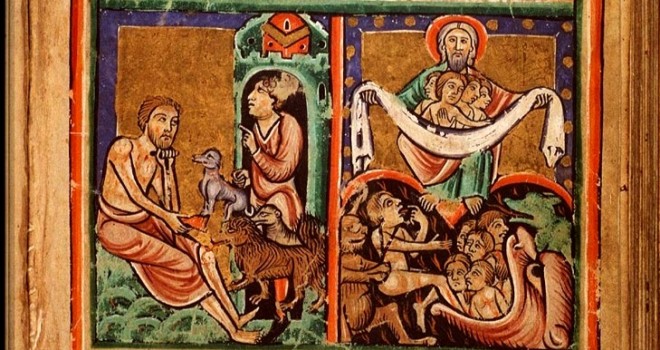
Few people have ever suffered such agonizing loss as the Old Testament character of Job. He literally lost everything but his life. All his children were killed in one horrific event. He was so racked with physical pain and ill health that even his closest friends barely recognized him. 

Yet the most severe suffering of all came from the grinding silence of God about the whole affair. Job acutely experienced the spiritual pain of a seemingly distant God. He felt like God’s target, being pierced with sharp arrows, one after the other. It seemed to Job as if God was burdened with his very presence on the earth.

Indeed, when one is in the throes of grief, and there is no response from God, the suffering seems pathetically senseless. 

We are currently living in a world of pandemic. There is social and political unrest everywhere. Hurricanes and natural disasters wreak havoc. Religious persecution is on the rise. It may cause one to wonder where God is, in all this human suffering.

As families grieve the loss of home and property, as mothers lament the loss of sons and daughters, and as communities reel in shock over neighborhood violence, how can the loss of life and safety square with a God who is supposed to be sovereign over all creation?

And then there is the very real psychological suffering of mental illness, brain disorders, and unfeeling friends and family who fail to understand the biology and pathology around it – not to mention the extreme trauma of complicated grief.

“Does God understand? Is God even seeing any of this? Why doesn’t God seem to give a @#$!? Am I so odious to God that he’s left the room?” we might say, either out loud or in the deep hurt of our hearts.

It’s the silence that can hurt so badly. Groans, laments, and anguish seem to fly up and away with no easy answers and no immediate relief. 

Yet, God hears. God sees. And God knows. 

We, as readers, have a big picture perspective of Job’s life. We know the end of the story. We even know why Job suffered, even when he himself never knew. However, even with the understanding we have, there is still a large mystery to the ways and the silence of God.

It is a great temptation for many people to give neatly wrapped answers to life’s most difficult realities. But the book of Job does not allow for it. What we have is a man who never understood all that happened in his life yet held onto his integrity and his faith in the God he never fully understood. 

After all, if we understood all there is to understand about God, God would not be God at all.

Invisible God, you are not only unseen physically, but many times spiritually and emotionally unseen, as well.  Open the eyes of my heart so that I might catch but a glimpse of your working. Even though I am but a child and know so little, yet I trust in your steadfast love even in the most difficult experiences of life. Amen.

Job 4:1-21 – Where Is God?

Eliphaz and the other friends of Job, speaking down to him in his suffering, from a fresco in the Cathedral of the Annunciation in Moscow

Job, will you be annoyed if I speak?
    I can’t keep quiet any longer.
You have taught many people
    and given strength to feeble hands.
When someone stumbled, weak and tired,
    your words encouraged him to stand.
Now it’s your turn to be in trouble,
    and you are too stunned to face it.
You worshiped God, and your life was blameless;
    and so you should have confidence and hope.
Think back now. Name a single case
    where someone righteous met with disaster.
I have seen people plow fields of evil
    and plant wickedness like seed;
    now they harvest wickedness and evil.
Like a storm, God destroys them in his anger.
The wicked roar and growl like lions,
    but God silences them and breaks their teeth.
Like lions with nothing to kill and eat,
    they die, and all their children are scattered.

Once a message came quietly,
    so quietly I could hardly hear it.
Like a nightmare it disturbed my sleep.
    I trembled and shuddered;
    my whole body shook with fear.
A light breeze touched my face,
    and my skin crawled with fright.
I could see something standing there;
    I stared, but couldn’t tell what it was.
Then I heard a voice out of the silence:
“Can anyone be righteous in the sight of God
    or be pure before his Creator?
God does not trust his heavenly servants;
    he finds fault even with his angels.
Do you think he will trust a creature of clay,
    a thing of dust that can be crushed like a moth?
We may be alive in the morning,
    but die unnoticed before evening comes.
All that we have is taken away;
    we die, still lacking wisdom.” (Good News Translation)

The Christian spiritual classic, The Dark Night of the Soul, was written nearly five hundred years ago by St. John of the Cross. The gist of John’s observation is that God sometimes takes the Christian through dry times of hiding himself from the believer. 

The pain of wondering where God is and if he will even show up; experiencing unanswered prayer; enduring uncaring and misdirected comments from well-meaning people; all these and more are inevitably part of the Christian spiritual experience. 

The dark night of the soul is not to be confused with personal sinfulness. Its origin is not in self, but God. 

“Silence is God’s first language.”

St. John of the Cross

Whenever one knows with a settled confidence that personal integrity is intact, but trouble abounds, we need not immediately rush to the conclusion that something is wrong with us. It may be the Spirit of God thrusting us into a desert experience to test and approve our faith.

Job’s “friend” Eliphaz offered one of those tired age-old arguments that bad things only happen to bad people. He comes at Job with the inexperience and absurdity of making misguided assumptions. He rhetorically asks: Who that was innocent ever perished?  Where were the upright cut off? 

The conclusion of Eliphaz, therefore, was bound to be off the mark – believing secret sin must surely be the culprit behind Job’s awful misfortune. Certainly, Eliphaz thinks, Job cannot possibly go through such terrible suffering without having done something to anger God.

Times change; the basic nature of people, not so much. In today’s church and world, the same notions still endure. If I had a quarter for every time I heard crazy comments, like the following, I would be a rich man: 

“He’s poor because he is lazy and doesn’t want to work.”

“She keeps having chronic health issues. God is punishing her.”

“The pandemic is God’s judgment on us for not having the Ten Commandments in our courthouses.”

“If you just confess your sin and have faith, you’ll be healed.”

“They’re in big trouble. They obviously did something evil.”

On and on the wrong-headed statements continue, ad nauseum.

The Apostle Peter understood how to view trouble in a healthy way. He said we all suffer – both the good person and the wicked. It’s just a matter of whether we will suffer for doing good and the right thing, or suffer because of saying shallow, illogical, and stupid comments that offend God and hurt others. (1 Peter 3:17-18)

Even Christ suffered. And it wasn’t because of his own sin. It was because of ours. Jesus suffered once for sins, the righteous for the unrighteous, that he might bring us to God. 

Jesus suffered; so, the follower of Jesus will suffer. There is a big picture only God sees. Whenever we suffer, there is something going on behind the spiritual scene. We must allow God to do divine work, and then, trust that the Lord bends all human suffering for good and redemptive purposes.

“Where there is no love, pour love in, and you will draw love out.”

St. John of the Cross

So, let’s change the rhetoric. Instead of jumping to judgment, reflexively hop to grace with comments like these:

  • “He has poverty of spirit. He’s blessed and will inherit the kingdom of God.”
  • “She’s in chronic pain. God has allowed her the privilege of suffering in solidarity with her Lord.”
  • “We’re in a pandemic. Here’s a chance for us to live out of the Ten Commandments.”
  • “If we confess the world’s sins of pride, hate, and injustice, perhaps God’s mercy will deliver us.”
  • “We’re in a big pickle. No better time than now to grow in grace.”

Where is God? Beside you, quietly and confidently holding you up in your suffering.

Lord God, I entrust myself to you because you know what you are doing. Thank you for the trials of life which humbles my heart to pray. Do your work in me so that my faith is fortified for a lifetime of service in the church and the world, through Jesus Christ, my Lord. Amen.

Galatians 3:23-29 – A Ministry of Equals

Until the time when we were mature enough to respond freely in faith to the living God, we were carefully surrounded and protected by the Mosaic law. The law was like those Greek tutors, with which you are familiar, who escort children to school and protect them from danger or distraction, making sure the children will really get to the place they set out for.

But now you have arrived at your destination: By faith in Christ, you are in direct relationship with God. Your baptism in Christ was not just washing you up for a fresh start. It also involved dressing you in an adult faith wardrobe—Christ’s life, the fulfillment of God’s original promise.

In Christ’s family there can be no division into Jew and non-Jew, slave and free, male and female. Among us you are all equal. That is, we are all in a common relationship with Jesus Christ. Also, since you are Christ’s family, then you are Abraham’s famous “descendant,” heirs according to the covenant promises. (The Message)

Ever since the fall of humanity, people have had the predilection to organize themselves in groups that keep them distinct from other groups. Whether it is high school peer groups or office politics; whether class warfare or church cliques; there has always existed a tendency to think better about the groups we identify with, and to look down and believe the worst about those we don’t understand or just don’t plain like.

Jesus is the person who changes it all. Faith in Christ Jesus is what makes each of us equal with each other, whether Jew or a Greek, in bondage or in freedom, a man or a woman. The cross of Christ not only brought deliverance from sin, death, and hell; the work of Jesus Christ ushered-in a new egalitarian society.

I’m not sure the English translations of the Apostle Paul’s phrasing to the Galatian Church can truly capture his emphatic pathos about this issue. For Paul, Christ’s cross has done so much more than bring personal salvation; it has completely eradicated prejudice, discrimination, and division. 

Therefore, the Church is to be the one place on earth where divisions no longer exist. It is to be a foretaste of heaven. The Church is to be a new society, a community of the redeemed, based in equity, diversity, and inclusion, from every people group, race, ethnicity, and gender. Together as one, just as God is One, the Church lives the kingdom values of Christ’s words and ways in a fragmented world.

Since the ground is level at the cross, we are to live into Christian unity with a humble attitude and loving actions. To do otherwise is to be immature. We (hopefully) expect kids to be kids and not be like adults. They need teaching, training, and tutoring to learn. When kids grow up and get into adulthood, we then expect them to be like an adult. If they continue in childish behavior, they are immature.

Many adult Christians are still stuck in spiritual childhood. The evidence of this is seen in trying to stratify church society into insiders and outsiders, those who have always been in the church and newcomers who haven’t, the committed servants and the lax pew sitters.

Rather than all of that dividing of people, energy is to be placed with living into the egalitarian society inaugurated by Jesus (and Paul). Not taking women’s leadership seriously, avoiding relationships with the poor, and being xenophobic all come from a place of immaturity. It is childish behavior. Jesus expects better.

Embracing an egalitarian society neither means we are all the same nor should act alike. The diverse backgrounds and experiences of people help make a rich mosaic of support for one another in the Body of Christ.

Being egalitarian means all people are created in the image and likeness of God – no exceptions. All persons, therefore, deserve morally equal treatment, respect, and justice. A just and good Christian ethic ensures all believers are handled with love, given sound instruction, and are free to explore their gifts and abilities within the church.

Church, at its heart, is a community of equals. Thus, the church, as an egalitarian community, must actively reject racism, sexism, and all forms of discrimination while purposefully seeking ways to create and maintain a unified community without divisions.

Jesus reached out to the misfits and marginalized in society who were suffering from political, cultural, gender, and religious oppression and discrimination. The community of persons Christ formed included people of all ages and backgrounds. Children were welcome. Women sat down with men to learn and became active participants alongside one another.

Christ’s conversation with the Samaritan woman at the well, the parable of the good Samaritan, and the healing of the daughter of the Canaanite woman, all illustrate that ministry is to reach beyond our own familiar group. In short, Jesus practiced a radical hospitality.

Christians would do well to emulate their Lord, as well as take their cues on ministry from Paul, who grounded both his theory and practice in a Trinitarian theology of equals.

Gracious God, you have abolished barriers through the redemption of Christ.  Prevent me from erecting walls that would divide and use me to be a bridge so that others may experience equality in Jesus.  Amen.