Psalm 119:9-16

            Pornography is a $12 billion a year industry in the United States.  XXX Church, an internet site dedicated to helping people to kick the habit of porn, reports that 9 out of every 10 boys have viewed some type of pornography by age 17.  In fact, teen-aged boys are the largest consumers of pornographic internet sites.  64% of all American men have visited a porn site in the past month.  1 in 6 women in this country have an addiction to pornography.  In the time it takes for you to read this sentence 84,774 people in this country will visit a porn site.  And this does not even mention the new wave of “sexting” that happens among people who have ready access to cell phones to take and upload pornographic pictures any time of day or night. 
 
            Into this terrible muck, enter the psalmist with his ancient, yet very relevant question for us today:  “How can a young man keep his way pure?”  The answer: by guarding his heart according to God’s Word.  “I have stored up your word in my heart so that I might not sin against you.”  The best thing parents can do for themselves and for their kids in this area of purity is for the entire family to do some old school bible memorization.  Yes, I mean getting down to rote memory work.  This is to be neither a legalistic practice nor some fetish that will keep evil away.  Instead, memorizing verses and large sections of the Bible provides a solid foundation from which to construct of base of operations for the work of meditation.  When temptation occurs there will be something to stand upon in the heat of the moment.
 
            These verses from Psalm 119 are a great place to begin.  Expand to memorize the entire psalm, all 176 verses of it.  When faced with the decision of viewing pornography or not, it would be wise to dedicate the time to memorizing Scripture so that there will be a delight in God’s statues rather than a depressed guilt over another fall into impure thoughts and actions.
            Merciful God, thank you for providing your Word to me so that I might read it, use it, memorize it, meditate upon it, and engraft it into my soul.  Fortify my spirit against the demons of pornography by the power of your Holy Spirit, to the glory of Jesus Christ.  Amen.

Dying to Our Plans


Most people are not much into personal change.  Change means adjusting to a different reality, and we would much rather prefer others adjusting to how we do things so that we don’t have to change.  We like how we do things. Routine, consistency, predictable outcomes are things we rely on for a sense of safety and stability in our lives. Even good change, like becoming debt-free or getting in shape is difficult, if for no other reason the effort and energy it takes to see our goals accomplished. In order to change something about ourselves, we have to be willing to admit we might have been doing it wrong and try to do something different.
 
            God’s love in Jesus Christ changes everything.  But the kind of change that Jesus talked about and died for is not just making a few alterations to our lives or re-arranging some of our schedule around.  It is not about exerting more effort or adding more to the to-do list.  Jesus, instead, loved us so that we would be completely transformed from the inside-out.  For that to happen, in order to have a new life, the old life must die.  What is more, Jesus does not want us half dead because then we are zombies who are not really living the life God intended for us to live.  No, if there is to be a resurrection and new life, there must be a death.  
 
            We must die to our plans.  Jesus had a crowd of people following him wherever he went.  He was interesting and compelling, even magnetic.  He taught like no other person before him, and healed all kinds of people.  In the first century, Jesus became the latest fad.  With his fame, there were people who looked to Jesus to further their own agenda and their plans about how things should go.
 
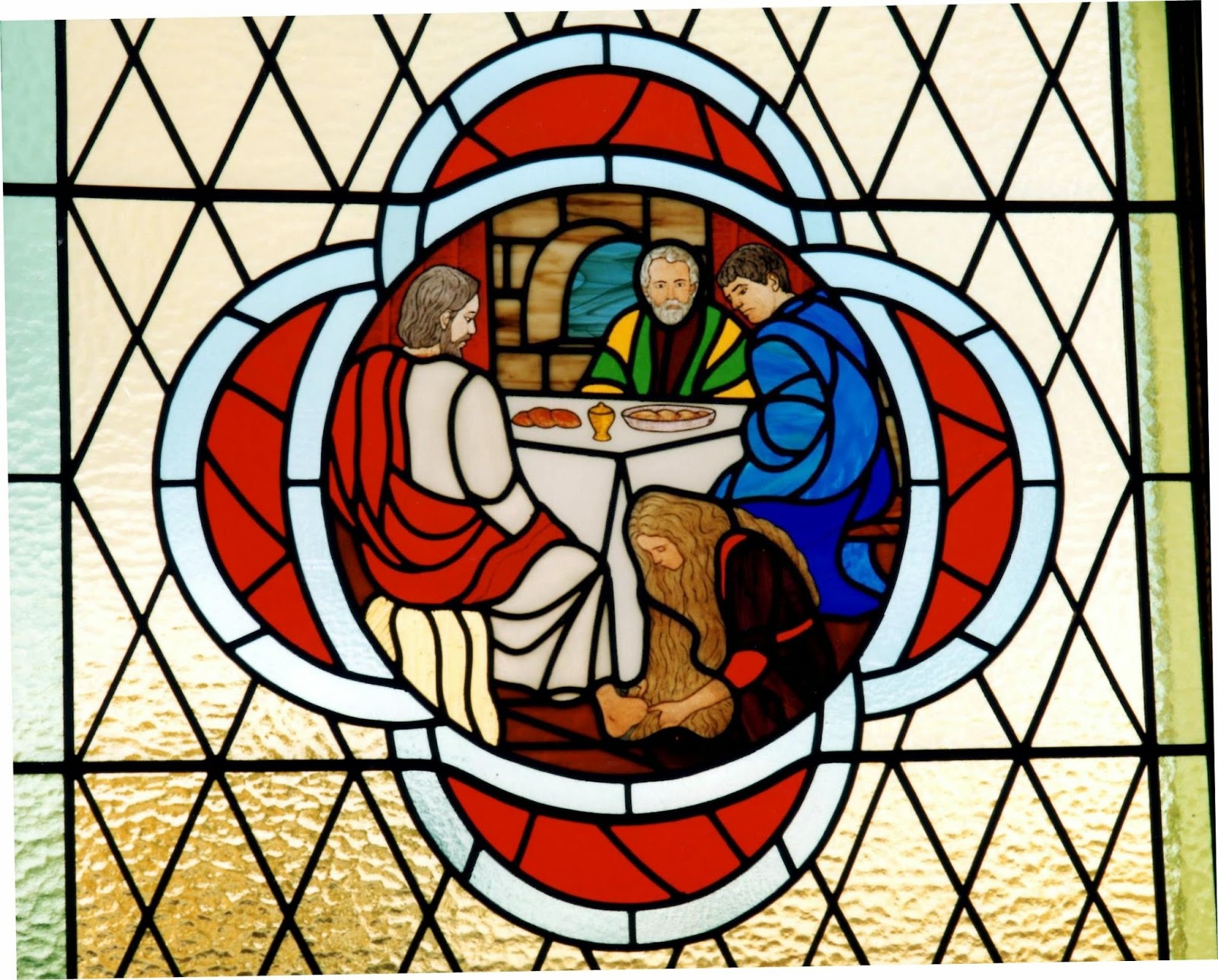
            The Apostle John recorded a contrast between two people, Mary and Judas (John 12:1-8).  Mary is a picture of dying to her own plans of how things should go.  Mary took some very expensive perfume, the kind that could have set her up for some needed financial security, and poured it all on Jesus’ feet.  In addition, she humbly wiped it on him with her hair.  It is a picture of giving herself completely and wholly to Jesus, no matter the cost, no concern with how it would look to others, with no strings attached and no other agenda other than total devotion.
 
            Judas, on the other hand, piously objected to Mary’s act of worship.  We might hear him rationally pushback on what Mary was doing:  “My friends, this is a lot of money – money that could be used for the poor instead of needlessly wasting it.  A little perfume is just fine, but to use the whole bottle is just too over the top – it isn’t fiscally responsible!”  Judas had a secret agenda.  He was not thinking of giving himself completely to Jesus, but of how he could use the cash for himself and his own purposes.  Judas is the picture of a zombie – half dead, walking around saying all kinds of spiritual things, but only devoted to Jesus and God’s kingdom when it agreed with him.  Judas had his own ideas of how the kingdom operation ought to go; and, when he became convinced that Jesus was not going to operate according to his agenda and plans, Judas betrayed him.
 
            When it comes to church ministry, every single member must be willing to die to self – to die to our own agendas of how we think things ought to go.  Conflict and contention exist because there are persons who tenaciously hold on to their pet programs or their ideas on how to proceed.  But what needs to occur is that each Christian must serve Jesus with the same attitude and action as did Mary.
 
            A church cannot be revitalized, revived, renewed, or resurrected apart from death.  Something or someone must die for new life to happen.  We must die to our plans so that God’s kingdom agenda can take over.  Believers in Jesus need to express the same devotion and dedication as did Mary.


            We all become frustrated and discouraged at times with the petty sinfulness of the church.  The answer is not to distance or detach, but to devote ourselves to dying to our plans and personal agendas.  When an entire group of believers does this, there is an abundance of grace and a mass transformation of heart.  May it be so, to the glory of Jesus Christ.

Hebrews 4

            “I’ll rest when I die” was a phrase one of my congregants used whenever he was encouraged to stop moving for a while and rest.  He is now gone, having died at a relatively young age.  It is common in American culture to define rest as an almost optional act.  Indeed, we do not look on it as an act at all.  Many people feel guilt when they sit still, living with the belief that if they are not constantly busy and doing something that they are lazy.
 
            The kind of rest that the author of Hebrews was talking about was not just a future time of finally sitting in some kind of celestial recliner after a life of constant work.  “So then, there remains a Sabbath rest for the people of God, for whoever has entered God’s rest has also rested from his works as God did from his.  Let us therefore strive to enter that rest, so that no one may fall by the same sort of disobedience.”  It is not just contemporary people who have a problem with Sabbath; the ancient Jews did not always practice it with strict observance.
 
            I think we need to ask ourselves why we have this tendency to interpret “rest” as only occurring after a lot of hard work has happened.  If Sabbath rest has relevance to us now, perhaps our cultural model of work>rest is really to be reversed as rest>work.  God created humans on the sixth day.  God rested on the seventh day.  So did Adam and Eve.  That means the first people rested before they even had a chance to begin working the garden that God created.
 
            Maybe instead of inventing new ways to overfill our schedules and erase any margin from our day to day existence, we ought to create ways of ruthlessly eliminating hurry from our lives.  It just could be that our society’s epidemic of obesity, disease, and disorders come more from our inability to rest than anything else.  God does not only call us to an active Christian life; he calls us to rest, as well.
            God of Sabbath, just as you rested on the seventh day, help me to alter my life in such a way as to engraft new avenues of rest into my busy schedule.  In doing so, may I connect with you more deeply and find greater health and fulfillment in myself and my relationships.  To the glory of Jesus Christ I pray.  Amen.

The Effects of Humanity’s Fall


            The entire world is profoundly broken.  Everywhere people are ‘messed-up’.  Anywhere one goes, whether it is school, work, home and even church, there is institutional brokenness expressed in systems or organizing structures that contain elements of bondage instead of freedom.  It does not take a Christian to observe and know that things just do not seem right.
 
            The Bible’s description of this reality goes back to the fall of humanity.  Satan, the devil, led the original persons, Adam and Eve, into disobedience of God.  Satan tempted Eve to doubt whether God really had her best interests at mind; to question the truthfulness of God’s Word; and, to wonder about the wisdom of listening to God (Genesis 3:1-5).  Adam just flat out chose to disobey God, and, so, the entire world changed (Genesis 3:16-17). 
 
            Immediately, everything was different in the world and with people.  The choice to disobey God brought feelings of fear and shame; a loss of fellowship with God; hiding from God; a bent to pervert the truth; the propensity for the genders to try and dominate each other; expulsion from the garden; and, physical death (Genesis 3:7-24).  That is quite a list of downright icky stuff.  No wonder the world is messed up.
 
            The fall of humanity still affects us all.  It has brought not only physical death, but spiritual death.  That means we are alienated from God, in rebellion against him, and enslaved to our own passions and desires (Isaiah 1:2-6; Romans 2:14-15; Ephesians 2:1-3).  We are alienated from one another as persons by having continual bents toward discord, suspicion, and jealousy instead of love and trust (Romans 1:29-31; James 3:14-16).  We are even alienated and totally out of touch with ourselves by either loving ourselves as gods or hating ourselves with inordinate emotional masochism (Philippians 2:21; 2 Timothy 3:2-4).  In short, we are selfish people who experience separation from God, others, and self.
 
            If this is the true reality of humanity, then it is depressing, discouraging, and damaging.  Who, then, will rescue us from this death?  Thanks to God who has given us victory through the Lord Jesus Christ (Romans 7:24-25; 1 Corinthians 15:57).  The good news is that through the death and resurrection of Jesus the curse has been reversed.  He has brought us restoration to our original place of fellowship with God.  Jesus is the way, the truth, and the life.  Only through him is there hope for humanity (John 14:6).  Freedom, therefore, involves knowledge, honesty, and sincere decisions of faith and love whereby truth is applied to life.
 
            Jesus offered himself for us so that we might live and no longer be separated from God, others, and self.  He has brought us reconciliation.  In him we have been blessed with every spiritual blessing (2 Corinthians 5:16-19; Ephesians 1:3; 2 Peter 1:3).  Jesus is the rightful ruler of the universe, and is able to make all things work together for good in the life of his people (Philippians 2:9-11; Romans 8:28-29).
 
            The essence, spirit, and purpose of church ministry, therefore, is to come alongside people trapped in their cycles of  brokenness and tell them of the good news of Jesus to deliver from all the crud.  Anything short of this is not really Christian ministry; it is just doing stuff.  The church is, then, to call out sin where it resides in sinful structures and not only within individuals.  But we are to do this with all the graciousness that behooves children of God, and always with the remedy of the cross of Christ.


            Yes, the world is terribly askew.  But God demonstrated his love for us in that, while we were still sinners, Christ died for us (Romans 5:8).  We need a Savior.  God provided One.  Jesus is the answer.  Are you in touch with the ways you are separated from God, others, and self?  Are you aware of the ways in which your church has an unhealthy separation from the world?  In what ways can you and your church apply the love of God to broken people and systems in your community?  What will it take to reach the un-churched and de-churched in your families and neighborhoods?  
 
            Having the church ask the right questions is the first step toward bringing true Christian ministry to bear upon the great need of the world.  Don’t express your fallen nature by wasting your time debating personal preferences in the church; spend your energies and prayers in reaching people for Jesus.  The fall does not have to define us; we can get back up again because of Jesus Christ.