Before We Chose God, God Chose Us

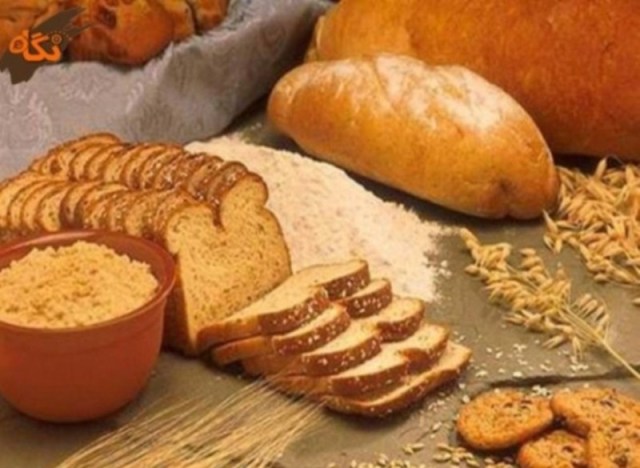
living bread

“Just as the living Father sent me, and I live because of the Father, so whoever eats me will live because of me.  This is the bread that came down from heaven, not like that which your ancestors ate, and they died.  But the one who eats this bread will live forever….  For this reason, I have told you that no one can come to me unless it is granted by the Father.” –Jesus (John 6:57-59, 65, NRSV)

It would be weird if someone insisted that they chose to be born.  I think most of us would respond something like, “Um, wait here just a moment,” then go and call the local psych ward.  That’s because we have no problem understanding that well before any of us were born, the love of two people conceived us.  Our choices within our family of origin are ours to own.  Yet, the initial choice to be a person on this planet was not ours to make.  We, rather obviously, are delusional to think otherwise.

The same is true on the spiritual plane.  Just as life is a gift given to us, so to be born again and have eternal life is a gracious grant given to us by God.  Yes, if we are Christians somewhere along life’s journey we chose Jesus.  Yet, long before our own individual choices were made, before the foundation of the world, God himself conceived of us and decided to give us the gift of faith to believe.

Before we get in a huff about the perceived lack of control on our part, stop and consider what a crazy hot mess of an apocalypse there would be if you or I were in charge.  Whatever issues people might have with God, having someone else in the driver’s seat is a bit like putting Homer Simpson as the sentinel guarding the donuts.  Probably not the best of ideas.

I would rather stick with Jesus, even when his words seem edgy and scandalous.  After all, telling folks they need to “eat me” could really go sideways in a hurry.  It’s no wonder that the early church often got accused of practicing cannibalism at the Lord’s Table.

God in Christ chose us so that we could enjoy an incredible restored relationship with our Creator.  Jesus, the Jew that he was, often spoke with deep layers of meaning.  What on the surface might seem super-strange is meant to convey things in a much richer and fuller way.  If it confuses some people, then maybe we need to sit with Christ’s words for a bit before simplifying them into some mish-mash of blither that ends up having no real meaning at all.

Beyond the sheer literal description of eating the body of Christ and drinking his blood, and merely flattening it out to mean Christian communion with wine and wafers, it could just be that Jesus wanted us to grab hold the grace of discovering the following five realities of his merciful passion up close and personal.

  1. Participation

To ingest Jesus is to participate in him.  It is to have a close, intimate connection and union with him.  Jesus identifies with his people so closely that it is as if we have absorbed him into our very being as much as any food nutrients.

I once lived near an old fence line.  The fence was long gone but one lone fence post remained.  A tree had grown up alongside and then around the post.  The post remained because the tree assimilated and engulfed it.  The only way to remove the fence post would be to cut down the tree – they were that much a part of each other.

We are in union with the Lord Jesus.  No one is snatching us out of his clutches.  We participate in his life.  We live because he lives.  We make choices because he first chose us.

  1. Provision

When we eat, what we eat, how we eat, and whom we eat with are anything but ancillary issues to the ancient Near Eastern mind and practice.  Food is a gift, a gracious gift given to us by a merciful Father who has our best interests at mind.  At the very heart of God is a hospitable bent that invites the misfit person, the misunderstood, the misanthrope, the miscellaneous, and any other “mis-sed” person into his wonderful provision of food.

Eating meals for most people around the world isn’t just about food; it’s about offering the acceptance of hospitality and communicating encouragement and recognition through lively conversation with the dignity of listening to another.  We severely truncate the power of meals when food is just gobbled quickly down alone by ourselves to satiate our growling stomachs.

Christ’s words about himself being the living bread that comes from heaven is chocked full of meaning.  On the heels of just having fed the five-thousand with bread, Jesus not only connects himself with the manna God gave the Israelites in the desert, but also lets his followers know that he is the only provision that will truly satisfy the most intense hunger.  “Blessed are those that hunger and thirst for righteousness,” he explained in his greatest Sermon, “for they shall be filled” (Matthew 5:6, NIV).

Through the provision of food, God invites us into his life.  What’s more, we are ushered into the realm of those who are recognized, seen, and accepted – regardless of our glaring warts, quirky idiosyncratic ways, and shadowy sins.  That’s because when God creates, he provides.  And when he provides, he graciously gives his blessing.

  1. Protection

Maybe it goes without saying that, by now, God will protect those whom he engrafts into his very life.  Yet, it still needs to be said with deliberate unction: God protects his own.

Getting back to the food thing, God’s meal-deal includes a generous portion of protection.  To come under a person’s roof to enjoy a meal together is to come under the owner of that home’s protection.  God never intended to save us, feed us, and provide for us without giving us everything we need for life and godliness in this present evil age (2 Peter 1:3).

All the implements we need to both defend ourselves and move forward with offense are graciously given to us.  The helmet of salvation, the breastplate of righteousness, the belt of truth, the shield of faith, the shoes of peace, and the sword wielding Word of God are all for our protection.  We only need to put them on, pick them up, and use them (Ephesians 6:10-20).

  1. Profession

The nub and the rub of Christ’s discussion about being living bread is that people need to eat him, that is, him only.  In other words, you only get to God through Jesus.  Period.  No exceptions.  Understandably, this was a hard teaching.  It was so hard that, when his followers grasped what in the heck he was saying, a big chunk of them left.  They didn’t sign up for this kind of exclusive rhetoric and crap about only being one real bread.

It has always been the scandal of Christians throughout the ages to insist that Jesus is the way, the truth, and the life, and that no one can come to the Father except through him (John 14:6).  But there it is.  And no amount of watering it down makes it go away.

I love and adore a variety of people.  I have many friends from different faith traditions and belief structures.  I would die for every one of them.  I would come to their side at any time they call me.  And I believe they need Jesus.  I believe everyone needs Jesus.  I understand that not everyone wants Jesus, or acknowledges him, or believes he is who he claims to be.  Nevertheless, to try and mitigate or diffuse or minimize Christ’s very hard words is doing a disservice and an injustice to what Jesus was truly saying and claiming.

To profess Jesus as Lord and Savior is a gift that is being received from a gracious and merciful gift-giver, who is God.

  1. Perpetual

The simple observation about eating is that you don’t just eat once, never to eat again.  Nope, we continually eat every single day, most of us doing it multiple times in the day.  We in the West have refrigerators full of food, some of which ends up getting moldy and no good.  Maybe we stockpile food because we don’t connect it with Jesus.  If God is the One who truly gives the grace of a decent meal, perhaps we would feel less prone to buy food and eat it like it’s going out of style.

We are to eat Jesus.  Not once.  Not twice.  But continually.  Every day.  Christ is the perpetual feast.  We are to come to him day after day, receiving his gift of sustenance for us in every sense of the concept.

We can choose to come to Jesus because he has first given himself to us.  Before we chose God, God chose us by giving us deliverance from our misguided ways through the merciful work of Jesus.

You Are What You Eat

O fear the Lord, you his holy ones,
    for those who fear him have no want.
The young lions suffer want and hunger,
    but those who seek the Lord lack no good thing.

Come, O children, listen to me;
    I will teach you the fear of the Lord.
Which of you desires life,
    and covets many days to enjoy good?
Keep your tongue from evil,
    and your lips from speaking deceit.
Depart from evil, and do good;
    seek peace, and pursue it.

(Psalm 34:9-14, New Revised Standard Version)

you are what you eat 2 

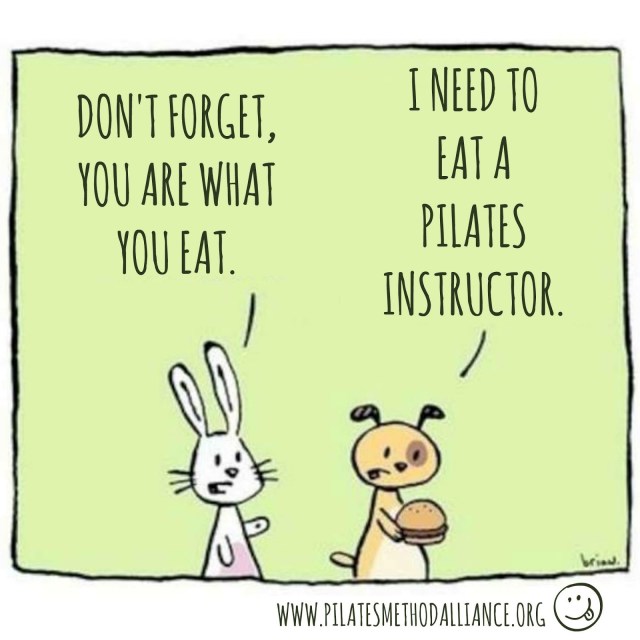
You’ve likely heard the phrase “you are what you eat.”  Of course, this doesn’t mean that when you look at me you see a delicious strip of bacon.  Rather, it’s meant to convey that the kind of food we ingest, whether it is physical groceries or spiritual sustenance, is of great importance and significance.  Eating unhealthy stuff makes you unhealthy.  Conversely, ingesting healthy things helps one to maintain proper health and vitality for functioning and thriving in life.

The psalmist encourages us to seek the LORD because in going after God we will be filled with goodness.  Using our tongues for good and not evil; our words for encouragement and not for forming lies; our constant verbiage for uplift and support and not with the poison phrases of evil; and, our voices for pursuing peaceful relations and not for disharmony; are all beautiful buffet foods of health and goodness to fortify our souls.

Back when I was in seminary (in a galaxy far, far away) it was difficult to keep up with the bills.  Finances were tight in our young family.  Despite working sometimes up to three jobs at a time, our budget had no budge to it.  In one unusually and particularly hard month, we were down to our last groceries.  In fact, on one summer evening we all had a bowl of Wheaties for supper.  The refrigerator was empty.  In our bedtime prayers with our girls, my wife and I voiced and expressed our need to God.

As Mary and I readied ourselves for bed, it was raining cats and dogs outside.  At 10pm, we heard a knock on our back patio door.  We looked at each other as if the other would know that we’re expecting someone.  We weren’t.  As I pulled back the curtain, there stood a sweet little Puerto Rican neighbor holding two large bags.  I quickly ushered her into our little apartment.  Her next words to us I will never forget:

“I went to bed at 9:00 and quickly fell fast asleep.  At 9:30 the Holy Spirit woke me up and told me to fill two bags with as many groceries as I could get in them; then, go and give them to the Ehrhardt’s.  So, here I am.”

All my wife and I could do was look at her and each other slack-jawed and simply say, “Thank you.”  No one knew our need.  We told no one about it; only God.

My family learned an invaluable lesson that stormy night, one you can’t learn any other way but being in a place of desperation.  The spiritual food that we eat is so important that Jesus put it this way:

“One does not live by bread alone, but by every word that comes from the mouth of God” (Matthew 4:4).

Many years later after that rich spiritual feast, I told this same story in a congregation on a Sunday morning.  Afterwards, a middle-aged man came up to me and said something that initially took me aback: “So, how do you justify being in such a state of deprivation and not taking care of your family?”  After gathering my thoughts, I gave him this retort:

“You have asked me an honest question.  I will ask you one before I answer yours: Have your teenage kids, you, and your wife ever been in a situation where you needed God and cried out to him for something?”  Long pause…. “Well, no, not really.”  “Then, sir,” I replied, “I like the lessons my encounter with want and privation taught my kids better than the lessons your kids have never learned.”

You see, my friends, you are what you eat.  This obsession we have with being independent, self-sufficient, and our compulsions about money has spawned an entire generation of folks who just don’t know they need God.  Then, parents wonder why their kids abandon God.  God is simply irrelevant to them.  After all, why serve a God who has never touched my life in any significant way?  If we eat from a table of our own making, then the Table of the Lord becomes only a dusty piece of furniture in an empty church.

When we come and eat the bread which the Lord offers us we find satisfaction and fulfillment.  When we allow God to serve up a delicious spiritual meal we discover hospitality and joy.  When we accept the invitation to seek the Lord we find that little is much when God is in it.  In God’s upside-down kingdom, the poor are rich, and the rich are poor.

Good days of plenty don’t come because we ingeniously orchestrate it all.  Yes, of course, planning is both necessary and important.  Yet, all of our best laid plans are just that.  The outcomes belong to God, not us.  We have because God gives, and not because we figured out how to work harder, or smarter, or better.

you are what you eat

The one who truly fears the Lord has learned to first receive from Him.  Open-handed reception can only result from a heart posture of humility and need.  Close-fisted folks only know how to figure things out on their own and are not in the position to receive anything.

Whichever way you slice the Old Testament bread of poverty and the New Testament teaching on being poor in spirit, the rich are typically not in the best place – the poor are.  Being a spiritual beggar who recognizes his/her need for God, and who is desperate for Jesus is the one who has found the narrow entrance to where the Lord dwells.  And, upon entering, finds a lavish spread that is worthy of the marriage supper of the Lamb.

Poverty of Spirit

A beggar in BelÈm, Lisbon. He sat there for hours without moving.

I like having conversations with people… most of the time.  Yet, I don’t like being in a discussion where I’m wondering if the person has an agenda.  That causes me to have my antenna up concerning his/her motives or attitude.  Maybe, like me, you’ve had that moment either within a conversation or afterward where you realize, “Gosh, that dude was a real schmuck.  He was just preening and posturing to get something.”  Most of us aren’t schmucks.  You are probably reading this because you want to do what is right, just, and good.  When it comes to Christian spirituality and discipleship, we would like God’s stamp of approval on our lives.  We want to walk in the words and ways of Jesus, and not be “that guy” who is obnoxious or contemptible.

The Beatitudes of Jesus (Matthew 5:1-12) tell us what being “blessed” by God looks like.  The Beatitudes were countercultural to the prevailing religious milieu of Christ’s day, and, even today, are often not the kinds of characteristics which a lot of people embody.  In other words, the Beatitudes are not really on a lot of folks’ radar.

God cares not only for what we do, but why we do it.  Our attitudes are just as important to him as our actions.  Obeying God, honoring your parents, submitting to a boss, or listening to a teacher might be actions we do, but if we do them with a begrudging spirit which believes that we could do everything better than all these other persons, then pride has reared its sinister head.  In such times, we are more in league with the ancient Pharisees than with Jesus.

But I am confident of better things in your case.  Pursuing true righteousness – a right relationship with God and with others – is what brings real and lasting joy.  Whereas the Pharisees based their righteousness on outward appearances and pious behaviors, the true follower of Jesus adopts inner attitudes of humility which result in outward gestures of genuine love.  Being a conformist to a prevailing form of outward Christianity is useless, because our standard of righteousness as Christians is not what everybody else is doing, but what Christ has done.

The bedrock attitude of a Christian is humility, and this is what the first Beatitude establishes.  “Blessed are the poor in spirit,” Jesus said, “for theirs is the kingdom of heaven” (Matthew 5:3).  Christians are spiritual beggars, the ones who acknowledge their great need, and are desperate for Jesus.  A beggar begs because he/she cannot simply meet their own need, and they have no means to reciprocate and give anything in return.

John Chrysostom quote

In saying that the poor in spirit are blessed, Jesus is saying that his followers have an awareness that they are spiritually bankrupt before God and stand in stark need of him.  An urgency of longing for God is at the heart of a spiritual beggar.

It isn’t hard to notice a person who is poor in spirit because true humility stands out in a culture of pride.  A spiritual beggar:

  • Doesn’t try and make slick deals with God, because they have nothing to bargain with; instead, they are content with unconditional surrender to a God of grace and mercy.
  • Doesn’t complain, because they realize they don’t deserve anything; instead, they incessantly praise God for his incredible grace to them.
  • Prays a lot, because a beggar is always begging; they pray, not because it is an effective strategy to get what they want, but because they are destitute without God.
  • Takes Christ on his terms, without acting like a peacock to get noticed, because a beggar has no position or pedigree to rely upon.
  • Realizes that the more they learn, the more they don’t know; therefore, they rely completely on God without being stubbornly independent – they listen to Scripture rather than talk all the time.
  • Knows no enemies because having lots of stuff and superior status only engenders defending turf and maintaining position.

The late Henri Nouwen once said: “Poverty is the inner disposition that allows us to take away our defenses and convert our enemies into friends.  We can only perceive the stranger as an enemy as long as we have something to defend.”  Those who are poor in spirit are not anxiously clinging to their stuff, their money, their good name, or their supposed right to be in control.

Only the poor in spirit will enter the kingdom of heaven.  The way is narrow, and only a few are willing to truly humble themselves before God and take the posture of a beggar.  To think we do not need to bow to such a lowly activity of begging belies that we believe we are above such things – which is the broad open way of destruction that many will find.

The only way to enter God’s kingdom is through humility.  The Lord’s realm is populated with those who are lowly.  Many times we might think that the most spiritual among us are those that give.  Yet, it could very well be that much of the giving is meant to maintain personal independence, an inordinate position over another person, and the status of not being in need.  Receiving with open hands can be a much harder thing to do, because it communicates to another that we are in need – and our pride doesn’t like that.

So, it is my hope for you today that you will know the blessing of being a spiritual beggar.  May you realize that your poverty of spirit is a blessed narrow way toward the wealth of imputed righteousness.  May you enjoy the kingdom of God, bask in the grace given by God, and receive all God’s good gifts with gratitude.

Let It Out

20180803_151815

Courageous, brave, bold, and strong – it seems most people do not characterize themselves this way.  I suppose it makes some kind of sense in our minds as to why this is: Every one of us can readily recall a time or several events in which we wilted with fear; did not speak up; or, were not assertive.  The many conversations we will never have that take place in our heads are testament to our supposed withdrawal in the face of adversity.  In other words, we have far too many discussions with ourselves of how something should have gone and way too many brave retorts for someone whom we really have no intention of saying those words toward.

If this all sounds like the convoluted musings of a wimpy kid, that’s not far off the mark.  When we get bullied, even as adults, it can be easy to wilt, or to take it, or to simply find a way to avoid the bully.  With some folks, we even create elaborate internal reasons why it’s our fault someone is upset with us.  In such times, bravery and courage seem a long way from our true selves.

Faced with a daunting task at work, at home, or at school, we may wonder if we really have the internal stuff to pull it off.  We feel that maybe someone else would be better suited to do it.  What’s more, given a set diagnosis with some disease looks a whole lot like a circumstance that is way above our emotional pay grade.  It isn’t only the added hard situations of life that make us look fearful; it is the crippling losses that can leave us feeling anything but strong and brave.

Yet, what if I told you that you are, indeed, brave, strong, and confident?  What if I insisted that courage resides within you, even if you yourself cannot see it right now?  And, what if I told you that bravery isn’t something you must go on a quest to find, but that it’s been in you all along?  If so, you only need to let it out.

You intuitively know I’m on to something here.  After all, the most common exhortation and assurance in the entirety of Holy Scripture is to not be afraid because God is with us….

“Be strong and courageous. Do not be afraid; do not be discouraged, for the Lord your God will be with you wherever you go.” (Joshua 1:9, NIV)

“Be strong and courageous. Do not be afraid or terrified because of them, for the Lord your God goes with you; he will never leave you nor forsake you.” (Deuteronomy 31:6, NIV)

“So do not fear, for I am with you;
    do not be dismayed, for I am your God.
I will strengthen you and help you;
    I will uphold you with my righteous right hand.” (Isaiah 41:10, NIV)

“God has said, ‘Never will I leave you;
    never will I forsake you.” So we say with confidence, ‘The Lord is my helper; I will not be afraid.
    What can mere mortals do to me?’” (Hebrews 13:5-6, NIV)

Believe it, or not, the Bible tells us 365 times to not be afraid.  Maybe that’s not a coincidence that we can quote a verse every day of the year about our own fearfulness in the face of so much of life’s cruel junk.

Yet, the tack I want you to take in the great litany of fear we daily face is that bravery is not something that is so much commanded as it is a calling forth of something which is already within you.

Parker Palmer

Now, before you go thinking I’m some New Age huckster, hear me out.  Right from the beginning of the world, in God’s creative activity, the LORD did it all by calling forth from within himself.  What I mean is this: God did not simply command everything into being; instead, he said, “Let there be…”  God let out what was already there in his very Being.  It was almost as if God belched-out from the great depth of his Being and let out all this wondrous creation.

I also find it interesting that when it comes to fear and bravery God does not so much command us to be courageous, as he wants us to draw from the great reservoir within.  That is, he has already created us strong, as creatures in his image.  We just need to get in touch with what is already there.  “Do not let your hearts be troubled,” said Jesus to his disciples because he knew his followers had it in them to walk in his way without fear (John 14:6, NRSV).  “Let not your heart faint, and be not fearful,” said God to the prophet Jeremiah in the face of a terrible destruction that was about to unfold against Jerusalem because the LORD knew that his servant could face what was going to happen (Jeremiah 51:46, ESV).

When it comes to genuine Christian spirituality, we can act with boldness because Jesus is the pioneer of our salvation.  He is the One which enables us to draw from the deep well of courage….

“So then, since we have a great High Priest who has entered heaven, Jesus the Son of God, let us hold firmly to what we believe. This High Priest of ours understands our weaknesses, for he faced all of the same testings we do, yet he did not sin. So let us come boldly to the throne of our gracious God. There we will receive his mercy, and we will find grace to help us when we need it most.” (Hebrews 4:14-16, NLT).

When I say that you are brave, you are strong, you are good – those are not words meant to make you believe something which may or may not be true, as if I were trying to convince you to take some panacea to feel better.  No, I say it because it is true.  You really can face the immense mountain in front of you and climb it.  You can actually surmount the adversity you are in the middle of – not because of some words I say, but because you were created for courage.

So, how do you let out the bravery and let the boldness shine?  That seems to be the million dollar question.  I’m going to go out on a limb here and say that you already know the answer to this.  Yes, you possess the answers to your own questions.  You have all the knowledge you need to face your problems.  So, the real question is this:

Will you let your bravery come out to play, or will you keep it hidden beneath layers of insecurity?

It’s a whole lot easier to let me tell you what to do than to draw from what you already know deep down how to handle that troublesome something.  So, I’m not going to give you a simple three-step process out of fear and into courage because you already have been endowed with the process.  This certainly isn’t a sexy way to end a blog post, but it just might be the most effective and lasting.