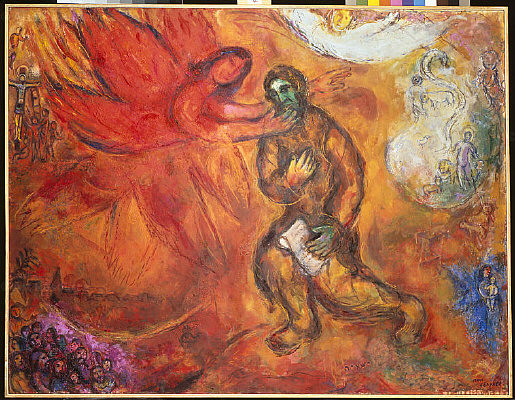
Psalm 33:12-22 – God Is Watching Over Us with Steadfast Love

Happy is the nation whose God is the Lord,
    the people whom he has chosen as his heritage.

The Lord looks down from heaven;
    he sees all humankind.
From where he sits enthroned, he watches
    all the inhabitants of the earth—
he who fashions the hearts of them all,
    and observes all their deeds.
A king is not saved by his great army;
    a warrior is not delivered by his great strength.
The war horse is a vain hope for victory,
    and by its great might, it cannot save.

Truly the eye of the Lord is on those who fear him,
    on those who hope in his steadfast love,
to deliver their soul from death,
    and to keep them alive in famine.

Our soul waits for the Lord;
    he is our help and shield.
Our heart is glad in him,
    because we trust in his holy name.
Let your steadfast love, O Lord, be upon us,
    even as we hope in you.
(New Revised Standard Version)

“The light of God surrounds us. The love of God enfolds us. The power of God protects us. And the presence of God watches over us. Wherever we are, God is, and all is well.”

Dwan Abrams

God is in control of the world. I am not. Neither are you. Although the myth of self-sufficiency and self-reliance completely permeates individualist societies, this in no way lessens the immense transcendence and sovereignty of a hugely big God.

In today’s psalm, the scene of God looking down from heaven portrays the Lord as above all, firmly in control, clearly seeing the big picture of the entire world. And yet, attentive to all that is happening on the earth. Individual human creatures subscribing to a narrative of personal independence will inevitably run into the Creator God with a story as big as history itself.

Success may give us the illusion that our own strength, intelligence, and/or ingenuity has brought us the good things we possess – not God. “I worked hard for my money and I will do whatever I want with it!” and the even more crass, “It wasn’t God who put food on my table!” are just a few of the power delusions I have heard from others, as if personal accomplishments are unconnected to any other force in the universe.

What’s more, looking at individualism from the converse angle, our lack of success may cause us to pause and wonder if God is really observing all our deeds, or not. Perhaps the Lord is reclining in his La-z-God chair and watching old baseball game replays of the Angels. More likely, we have become so expectant of satisfactory service and immediate results as consumers in a capitalist culture that we fail to discern the virtue of patience – that God is not slow in keeping his promises as some would understand it.

The sheer fact of the matter is that we need God. And God feels no compulsion from us to be hurried along with divine purposes for humanity. Since God is the ever-present gravity in this world, the way of realizing the good life on this earth is to conform ourselves to the Lord’s purposes, and not the other way around.

When we learn to exercise the inherent gifts of hope and patience which a gracious God has fashioned in our hearts, then we begin to discover persevering trust, enduring happiness, a settled sense of gladness, and steadfast love. We awaken to the true passion of God for us. Rather than a capricious or indifferent deity, the Lord God looks upon us with endearing faithfulness.

God’s heart is forever drawn to us. Therefore, we need not attempt to take all matters into our own hands, as if we are alone in the world. If we can see a vision of God high and lifted-up, observing us with a gaze of delight, then our spirits open to mercy and we find grace to help us in our time of need. The prophet Zephaniah allows us a glimpse into God’s feelings for us:

The Lord your God is in your midst—a warrior bringing victory. He will create calm with his love; he will rejoice over you with singing.

Zephaniah 3:17

God labors on our behalf. God has our back. God establishes a safe environment for us. And we must never forget: God delights in you so much that – this very minute – the Lord is singing songs of joy over you. For trust and hope cannot be coerced by another or willed into being by the mind; it can only be generated through the deep conviction of God’s broad love for you and me.

The best self-help program I know of is not self-help at all – it is the self-care of opening to a loving God and allowing God’s joy and delight to fill us. God is watching us, and it is the gaze of adoration, not condemnation.

Dear God, the One who watches all, love comes from you. Anyone who loves is your child and knows you. And anyone who does not love does not know you, for God is love. Thank you for showing me love by sending your one and only Son into the world so that I might have eternal life through him. Dear God, since you loved me that much, I surely ought to love others. May you live in me and may the love of Jesus be brought to full expression in me through the power of the Spirit. Amen.

1 Corinthians 15:42b-49 – Attention to the Body is Spiritual

It’s the same with the resurrection of the dead: a rotting body is put into the ground, but what is raised won’t ever decay. It’s degraded when it’s put into the ground, but it’s raised in glory. It’s weak when it’s put into the ground, but it’s raised in power. It’s a physical body when it’s put into the ground, but it’s raised as a spiritual body.

If there’s a physical body, there’s also a spiritual body. So, it is also written, the first human, Adam, became a living person, and the last Adam became a spirit that gives life. But the physical body comes first, not the spiritual one—the spiritual body comes afterward. The first human was from the earth made from dust; the second human is from heaven. The nature of the person made of dust is shared by people who are made of dust, and the nature of the heavenly person is shared by heavenly people. We will look like the heavenly person in the same way as we have looked like the person made from dust. (Common English Bible)

Laying around on clouds. Strumming harps. Perhaps chanting. Maybe an angel choir. Ethereal. Yes, quite disembodied. That’s the stereotypical idea when it comes to the afterlife for many people. Although many believers in Jesus realize heaven won’t be quite like that, they still might think of it as non-corporeal.

The stereotypical view really comes from Plato, not Scripture. The ancient Greek philosopher Plato (423-347, B.C.E.) believed the soul to be immortal and the body mortal. Hence, after death, an ethereal existence with no physical attributes. Plato saw death itself as an emancipation from the body.

A New Testament understanding of the body is that it’s perishable and will die. However, the body will be resurrected and become permanently imperishable. Just as Christ died and rose again, so shall we. Since Jesus was raised to new life with an actual spiritual body, complete with the scars of crucifixion, so humanity is raised to new life – not without a body but with a renewed one – and will be fit to exist with God forever.

“All the fullness of deity lives in Christ’s body.” (Colossians 2:9, CEB)

This all might seem like theological trivia or quibbling over philosophical musings. But when we mosey through the Bible, the body is important, lifted-up as equal to the spirit or soul. The material and the immaterial are not to be ranked in order of importance; they are to be held together as equal partners of personhood.

The Lord God formed a man from the dust of the ground and breathed into his nostrils the breath of life, and the man became a living being. (Genesis 2:7, NIV)

Body and soul belong together like a hand in a glove; like biscuits and gravy; or like copy and paste; Calvin and Hobbes; cupcakes and frosting; the moon and the stars; gin and tonic; bacon and anything; and, well, like Adam and Eve. Care of both the material and immaterial dimensions of personhood are vital and necessary.

Our bodies are the vehicles in which we do the will of God in the world. And the same shall be true after this life is over. The next life requires some full lungs to sing to the Lord; tongues to praise God; hands to lift high in worship; and feet to dance with the Trinity – not metaphorically but with actual plain speech and real live action.

We were made from dust, and to dust we shall return. But that isn’t the end of the story. Resurrection has the final say. Mortality will give way to immortality. The perishable will become imperishable. Temporal existence will cease and a permanent life, eternal life, shall endure without degeneration or entropy, with no disease, disorder, or death.

We, therefore, have hope – a confident expectation that it will not always be this way – a planet filled with pain, heartache, and grief. The tent of our present existence will be left behind for a grand mansion with God at the center – all things revolving around divine grace and love with the light of glory dispelling the night forever.

Our faith is embodied; and will be for all time. Embodied spirituality discerns all human dimensions—body, soul, heart, mind, emotions, and consciousness—as equal partners in bringing oneself into fuller personal alignment and engagement with the world.

Spiritual transformation is incomplete unless it encompasses the body. We need to be aware of and connected to our physical selves. Else, we lack wholeness and integrity. The body is not a platonic prison of the soul but a spiritual temple of the Holy Spirit. It is our home and the place where we meet with God.

A complete human being with a full-orbed spirituality is firmly grounded in the body, fully open to the spirit, and in community with others experiencing transformation from the inside-out.

One way of honoring our bodies is to incorporate them into our prayers. Here are some physical postures we can take when praying:

  • Sit with hands open, palms up, ready to receive grace and love from God.
  • Stand with hands open and raised overhead, and face toward ceiling/sky.
  • Kneel with head bowed (I personally use a kneeler. My knees aren’t what they used to be).
  • Kneel with hands/head in one of the positions described above.
  • Walk a prayer labyrinth.
  • Lie on your back (on your bed, the floor, the grass).
  • Lie face down with hands outstretched (prostrate).
  • Genuflect (bow) and make the sign of the cross.
  • Cupped hands facing up to receive blessing from God.
  • Deep breath in (saying “more of you”) and a full exhale out (saying “less of me”).

Our worship on this earth is training us for worship in the new heavens and the new earth. Paying attention to our bodies is good spiritual sense, not to mention being thoroughly biblical.

Almighty God, Creator of heaven and earth, we await your divine presence in our lives – not as we expect or imagine – but just as it is. We allow and invite all the ministry of your Spirit into our lives. We accept whatever you give to us or withhold from us as a gift. And we will attend to our bodies and care for them as faithful stewards of this flesh and blood existence, through Jesus Christ our Lord. Amen.

John 16:16-24 – There Must Be Suffering Before Glory

Jesus went on to say, “In a little while you will see me no more, and then after a little while you will see me.”

At this, some of his disciples said to one another, “What does he mean by saying, ‘In a little while you will see me no more, and then after a little while you will see me,’ and ‘Because I am going to the Father’?” They kept asking, “What does he mean by ‘a little while’? We don’t understand what he is saying.”

Jesus saw that they wanted to ask him about this, so he said to them, “Are you asking one another what I meant when I said, ‘In a little while you will see me no more, and then after a little while you will see me’? Very truly I tell you, you will weep and mourn while the world rejoices. You will grieve, but your grief will turn to joy. A woman giving birth to a child has pain because her time has come; but when her baby is born, she forgets the anguish because of her joy that a child is born into the world. So, with you: Now is your time of grief, but I will see you again and you will rejoice, and no one will take away your joy. In that day you will no longer ask me anything. Very truly I tell you, my Father will give you whatever you ask in my name. Until now you have not asked for anything in my name. Ask and you will receive, and your joy will be complete. (New International Version)

“Even a happy life cannot be without a measure of darkness, and the word happy would lose its meaning if it were not balanced by sadness. It is far better to take things as they come with patience and equanimity.”

Carl Jung

An Unpopular Message

Jesus often said things that were neither expected nor wanted. Jesus consistently told his disciples there must be suffering before glory. The disciples either could not or would not hear of it. They didn’t sign up to follow Jesus into suffering! Trying to get people to pay attention to suffering is like trying to get a bunch of Baptists to put their names down on a sign-up sheet at church.

Christ was speaking to his disciples in the Upper Room, the last meal he had with them before his death. When they were called by Jesus three years earlier, the disciples were not expecting all the gibberish about leaving and grieving. To put this in contemporary terms, the disciples’ response was akin to saying, “I only think positive. I don’t listen to things that are negative.”

Suffering, death, and grief were far from the disciples’ expectations of how things would and should shake-out. They had such a hard time understanding what the heck Jesus was saying because his words were out of alignment with their assumptions. Yes, there would be glory and joy. First, however, there must be suffering and grief.

A Real Message

Just as a woman experiences terrible pain in childbirth, then ecstatic joy over seeing her child for the first time, so the Christian’s excruciating pain in this life points to the inevitable joy at the end of that suffering. In the scope of eternity, adversity and pain last only a moment. Glorious joy, however, will be forever.

In talking with his disciples about their disappointment, even depression, about Christ’s words of leaving and grieving, Jesus graciously gave them the gift of joy. Yes, there can be and is joy even in the mourning. Not every story has a happy ending.

I can say, however, that the grandest story of all – Jesus Christ’s suffering and death – has resulted in resurrection and ascension. It will all be complete when Christ returns to judge the living and the dead. Then, the grand narrative of redemption will realize its conclusion of no more crying, tears, or pain. There will be only unending joy.

For now, however, we still experience heartache along with the great joy of resurrection and new life. It can be confusing, living in the awkward state of simultaneous grief and joy. Yet, keep in mind, the grief is temporary. The despair will not last. Joy, on the other hand, has staying power and will be the permanent state of the believer. It is only the smaller stories which may or may not end well. The big story of redemption already has the ending written – joy without grief.

A Good Message

Christians serve a risen and ascended Lord. Therefore, we need not wait to be happy, and we need not expect everything must go our way. The good news is that there are always fresh opportunities to be happy through asking and receiving. Imagine a Partridge Family sort of bus coming around to all the bus stops of life. Happy times and music arrive around the clock. Chances are the opportunity to be happy has already arrived. Often, it is right in front of us; we just missed the bus because we were daydreaming about a future state of joy.

We are living days of constant change followed by ever new normal. Just as there was no going back to a three-year hiatus of walking with Jesus for the disciples, so we need to embrace new and different ways of life together here on planet earth. We have the gift of joy. Its just a matter of unpacking it.

Now to him who can do immeasurably more than all we ask or imagine, according to his power that is at work within us, to him be glory in the church and in Christ Jesus throughout all generations, for ever and ever! Amen.

Titus 1:1-9 – Effective Spiritual Leaders

From Paul, a slave of God and an apostle of Jesus Christ. I’m sent to bring about the faith of God’s chosen people and a knowledge of the truth that agrees with godliness.

Their faith and this knowledge are based on the hope of eternal life that God, who doesn’t lie, promised before time began. God revealed his message at the appropriate time through preaching, and I was trusted with preaching this message by the command of God our savior.

To Titus, my true child in a common faith.

Grace and peace from God the Father and Christ Jesus our savior.

The reason I left you behind in Crete was to organize whatever needs to be done and to appoint elders in each city, as I told you. Elders should be without fault. They should be faithful to their spouse and have faithful children who can’t be accused of self-indulgence or rebelliousness. This is because supervisors should be without fault as God’s managers: they shouldn’t be stubborn, irritable, addicted to alcohol, a bully, or greedy. Instead, they should show hospitality, love what is good, and be reasonable, ethical, godly, and self-controlled. They must pay attention to the reliable message as it has been taught to them so that they can encourage people with healthy instruction and refute those who speak against it. (Common English Bible)

Paul wrote his letter to Titus so that spiritually solid competent virtuous leaders might be appointed to guide the church on the island of Crete (located in the Mediterranean Sea, south of Greece). 

There was no ambiguity with Paul about the importance of leadership. The Apostle clearly laid out his expectations that church officials must have a good reputation – not bossy, quick-tempered, heavy drinkers, bullies, or dishonest in business. Instead, they must be friendly to strangers and enjoy doing good things. They must also be sensible, fair, pure, and self-controlled.  They must stick to the true message they were taught, so that their good teaching can help others and correct everyone who opposes it.

I find it interesting that very few biblical scholars view this teaching as an ideal to aspire – while many churches and believers think this is the case. There is neither any indication nor reason within the biblical text to think that Paul presented his expectations for the ideal leader, as if no one could really be this way. 

Furthermore, Paul did not provide his instruction as a strategy for getting apathetic people off their butts and into some form of service. No, it’s best to understand that Paul meant what he said. He knew that compromising on the character of leadership would erode and destroy the church.

“True leadership is found in giving yourself in service to others, not in coaxing or inducing others to serve you.”

J. Oswald Sanders

The selection of church leaders is important because just one bad belly-aching non-virtuous apple can upset the entire apple cart. Good people provide good teaching and good wisdom. Selfish people with a self-centered agenda find ways to subvert or manipulate sound instruction to get what they want. 

Everyone in the Body of Christ is to grow in the wisdom and knowledge of God. They are to be wise to all the shenanigans of myopic persons through understanding the commands and instruction of Holy Scripture. This is yet another reason to immerse ourselves in the Bible so that we will lead with confidence.

If a church or faith community feels the need to overlook character defects to fill empty leadership seats, then Houston, we have a problem. Any short order cook worth his salt would never crack open a rotten egg and mix it in with the rest to make an omelet. And any group of people who throw a bad egg into their leadership team had better be ready to get sick and vomit when meetings are called to order.

It is imperative that spiritual leaders possess the following:

  • A good reputation
  • Faithfulness and fidelity to their families.
  • A clear-mind and consistent good behavior.
  • Self-control
  • The moral courage to speak truth with grace.
  • A spirit and practice of hospitality.
  • An ability to communicate well so that people are built up in their faith.
  • Sobriety
  • Humility
  • Respectability
  • Gentleness
  • Patience
  • Generosity
  • Compassion
  • Maturity
  • Sincerity
  • Honesty
  • Empathy
  • Purity

All these traits are needed for effective and godly spiritual leadership. Compromising on virtue will never end well. Upholding moral character brings blessing.

“The authority by which the Christian leader leads is not power but love, not force but example, not coercion but reasoned persuasion. Leaders have power, but power is safe only in the hands of those who humble themselves to serve.” 

John R.W. Stott

God calls and sets apart individuals for service. The Lord desires to reveal and manifest the divine presence among people through leaders who reflect God’s good attributes. Jesus Christ wants his church to be built up through faithful service. The Spirit seeks to sanctify and empower for effective ministry.

Nowhere do we find in Scripture that a leader’s main job is listening to complaints. That’s because God has a zero tolerance policy toward murmuring, grumbling, and ingratitude. In fact, the New Testament clearly says to do everything without complaining or arguing. (Philippians 2:14)

Neither will you find the church is supposed to operate just like an American form of democracy. Spiritual leaders are not representatives of the people to do their will. Instead, they are representatives of God to the people so that God’s will is done in all things. 

That all means prayer to God and outreach to the world is the major work for spiritual leaders. And it takes virtuous and ethical persons leading to realize love to all kinds of people. So, feel free to exercise leadership. Just make sure that leadership is grounded in the God of integrity and the Word of grace and truth.

Almighty God, the One who gives good gifts to people, may every grace of ministry rest on divinely appointed leaders. Keep them strong and faithful so that your church may prosper in peace. Grant leaders wisdom, courage, discretion, and benevolence so that they may fulfill their charge to the glory of Jesus Christ and in the power of your Holy Spirit. Amen.