Matthew 5:3 – Blessed are the Poor in Spirit

The Beatitudes of Christ (Matthew 5:1-12) are not a knee-jerk, random collection of pithy phrases from Jesus on what constitutes approval from God.  They intentionally build upon each other.  If the Sermon is the cornerstone of Christ’s teaching, and the Beatitudes are the cornerstone of the Sermon, then poverty of spirit is the cornerstone of the Beatitudes.  This Beatitude is foundational to the Christian life. So, what does it mean to be “poor in spirit”? 

“Poor” comes from the word “beggar.” And why does any beggar beg? Because they are in need. Beggars are desperate and destitute, knowing they need help just to survive another day. A beggar begs because he cannot rely on reciprocity; he has absolutely nothing to give in return.

Jesus was saying to the crowd following him, that true followers have a realization of their spiritual bankruptcy and have no shame in begging God to act on their behalf. The truth is that we are all spiritually destitute before God and stand in stark need of divine resources to help us. 

In reality, we have nothing of worth to give or offer to God. And we can gain nothing apart from God. Therefore, we must realize who we are and take the position of humility, not pride, and look to God.

To understand our poverty of spirit is to see that we are stripped of all self-righteousness, and absolutely need God. Knowing and understanding our spiritual bankruptcy is to see sin for what it really is. So, how do you know when you are poor in spirit?

  • The spiritual beggar makes no deals with God because they have nothing to bargain with. There is no ground from which to leverage anything.
  • The spiritual beggar doesn’t complain because they realize they don’t deserve anything. Instead, there is praise to God for such incredible grace in providing their needs.
  • Spiritual beggars are always begging, that is, praying all the time. Beggars don’t pray because it is an effective strategy to further their agenda. They pray because, if they don’t, they won’t make it!
  • Spiritual beggars take Christ on his terms, not theirs. The beggar will do anything Jesus says because he knows his situation is desperate. He has an inner attitude of total dependence upon God. Without humility before God, the spiritual beggar discerns he is hopeless. There is no room for the pride that tries to posture and position to get what I want, because the spiritual beggar knows he has none of this.
  • Spiritual beggars realize the more you learn, the more you don’t know – that you are dependent on a holy God and Holy Scripture, and not your own ideas, thoughts, convictions, and opinions. So, you willingly take the posture of listening instead of always talking.
  • The spiritual beggar knows no enemies. The late Henri Nouwen said, “Poverty is the inner disposition that allows us to take away our defenses and convert our enemies into friends. We can only perceive the stranger as an enemy as long as we have something to defend.” Those who are poor in spirit are not anxiously clinging to their stuff, their money, or their good name. They have nothing of their own; it all belongs to God for divine purposes.

Only the poor in spirit will enter the kingdom of heaven. The way is narrow and only a few are willing to truly humble themselves before God and take the posture of a beggar. If we think we are above this, then we have gone the broad way of destruction that many will find.

Humility knows that God is God, and I am not. Therefore, we orient our lives around this reality. Just as we need to respect the law of gravity and submit to its presence and reality, so it is most necessary and important to accept God’s rule and reign in this world and submit to its constant force. This is simply the way of wisdom.

We do not presume to come to you, O merciful Lord, trusting in our own righteousness, but in your abundant and great mercies. We are not worthy so much as to gather up the crumbs under your table; but you are the same Lord whose character is always to have mercy. Grant us, therefore, gracious Lord, to be intimately close to your dear Son Jesus Christ, and to identify with him in his death so that our sinful bodies may be made clean by his body, and our souls washed through his most precious blood. May we forever dwell in Christ, and he in us.  Amen.

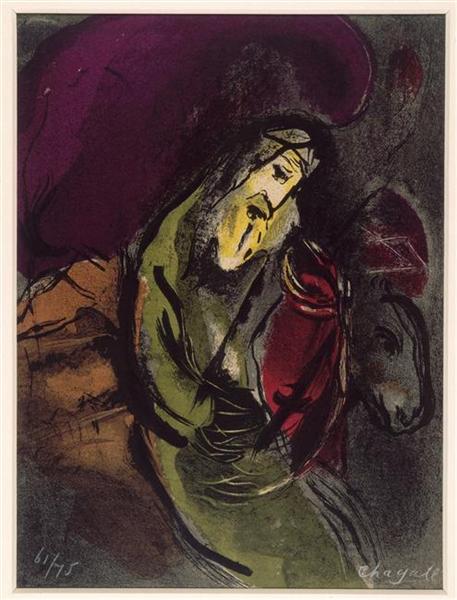
*Above painting by Hyatt Moore

1 Samuel 17:1-49 – Faith in Action

The story of David and Goliath is one of the best known stories in the entire Bible. It’s a classic example of what can be accomplished through one person who chooses to exercise faith. Puny David taking on giant Goliath has served as one of the greatest inspirations for believers through the centuries – seeing God give victory to people against dramatically overwhelming odds.

Whereas the New Testament exhorts us to live by faith, this Old Testament narrative demonstrates what can happen when a person of faith decides to put that faith into action.

Old Testament stories are framed in a way to help the reader or listener discern the differences between the characters of the story – to understand the contrasts between good and bad. So, then, the account of David and Goliath revolves around four character contrasts so that we will learn the lessons of faith God wants to teach us.

First Contrast: David and Saul

David is brave. Saul is fearful. In the ancient world, a typical tactic of warfare, when the battle lines were drawn, was to choose a champion from each side. They would fight together, just the two of them, on behalf of the entire army. It was a fight to the death, and the losing side would submit to the winning side. 

This was a way of preventing the terrible carnage of war. It also created some incredible individual champions.  A champion would be selected not only for his ability to fight, but also for his impressive stature so that there was an intimidation factor to it all.

Saul was the King of Israel. He was the logical choice for the combat since he was a head taller than all the other Israelites and a rather impressive looking soldier. But compared to Goliath, Saul looked like a midget.  The intimidation factor worked. Saul was downright afraid and not about to put himself out there to face a giant.

David is brave because he has faith in God. Saul is fearful because he is not a man of faith in God. The opposite of faith is not unbelief, but fear. As the muscle of faith grows through trusting God in the daily stresses of life, fear is better confronted and managed. The development of faith is a process, and it takes time.

Considering this story in light of Father’s Day, Dads have the daily opportunity of being a hero to their kids through faith in God. That means dealing with two great fears: being found inadequate; and, being controlled by another person or circumstance.

Those two fears were evident in Saul. He felt inadequate because he compared himself to Goliath. He felt controlled by the situation because the Philistines were picking a fight. So, he froze. There are many men who would rather do nothing than be labelled as inadequate or controlled.

David, in contrast, had plenty of practice facing down foes as a shepherd – the bear and the lion – who threatened the sheep. David was often out in the countryside all by himself, guarding the sheep, and his skills were improved in a place where no one was looking.

The way to progress our faith is to be assertive in owning our relationship with God through prayer and Bible reading (or listening on a Bible app) on a daily basis. It’s something everyone can do.

Second Contrast:  David and the Israelites

It was not only Saul who was intimidated by Goliath; the entire army of Israel was hiding behind the battle lines cringing in fear. David, however, discerned no reason to avoid this bullying blowhard. It appears he is the only person able to see Goliath as a small person in comparison to a big God. By faith, David understands Goliath is no match for God.

So, we see that one person full of faith can accomplish the impossible – whereas an army full of fear cannot accomplish a thing. 

We might tend to believe everything has to be large with a big splash to it – that only then can we accomplish big things for God. But really, if we want to achieve something for God, we need to step out in faith and do it – instead of recruiting an army of people or hiding in the group, nursing our fears and anxieties.

No one can do your personal faith work for you; you must do it. The Beaver Cleaver philosophy of life says, “Gee, Wally, if I get in trouble or in a pickle, I’ll just ignore it and hope it goes away….” But Goliath is not going anywhere. He will still be there tomorrow.

Third Contrast: David and Goliath

Goliath represents the other extreme to the fear of Saul and the Israelites. He had absolutely no fear, including any fear of God. Goliath trusted in himself, his abilities, and his stature. David, however, trusted in God alone.

The story gives a detailed description of Goliath’s weapons and physical appearance because Goliath trusted in his aptitude and the ancient technology of his day to face down the Israelites. Conversely, David was small and too young to even be considered for military service. He was too small to wear anybody’s armor. But David did not need any of that – he just needed his faith.

Humanly speaking, David appears insignificant; there is nothing about him that caused anyone to think there was something special or different about him. Goliath, however, was the Arnold Schwarzenegger of his day, ready to terminate anybody who got in his way.

It can be easy to trust in ourselves, another person, or our technology to accomplish something in the face of insurmountable odds, instead of looking to God. The battle is not ours; it is the Lord’s.

Most things in life take a great deal of bravery – especially parenthood! It takes more than copious Dad speeches (and I had a lot of speeches for my kids). Fatherly courage requires modeling for boys what they are expected to become and modeling for girls what they should expect from males.

Children need to observe men who have courage to do the right thing, even when it has personal cost. They need to see them bravely shouldering responsibilities – even when they don’t feel like it. Kids need to see men who demonstrate the courage to be vulnerable, as well as strong and self-disciplined. They need to experience fathers and men with courage to pay attention to them – even, and especially, when those men are angry or disappointed with their own choices.

Fourth Contrast:  David and Eliab

Eliab was David’s big brother. Eliab was a soldier in the army. David was just a kid. It did not matter he was a kid; David was concerned for God’s name and glory. In contrast, Eliab was concerned about his little brother being an embarrassment and superseding him.

When we choose to step out in faith and act, there will likely be opposition, even among family and fellow believers. But David did not let a little criticism stop him. Criticism and opposition will inevitably happen. David was determined to please God, not his brother. He did not wilt and was not deterred from his concern to face down Goliath.

Conclusion

If we want to be brave in the Christian life; if we desire to live a life full of faith in Christ that deals with problems; then, the story of David and Goliath will serve as an inspiration in those times we feel less than mighty for God. 

Goliath was defeated and fell because David trusted God. The issue is not how much faith we have, but in whom our faith is placed. David trusted God. Saul did not even acknowledge God. Goliath trusted in himself. Eliab was too busy quibbling about things that didn’t matter. 

What is your response?

Psalm 9:9-20 – Assertive Anger and Confident Trust

The poor can run to you
    because you are a fortress
    in times of trouble.
Everyone who honors your name
    can trust you,
    because you are faithful
    to all who depend on you.

You rule from Zion, Lord,
    and we sing about you
    to let the nations know
    everything you have done.
You did not forget
    to punish the guilty
    or listen to the cries
    of those in need.

Please have mercy, Lord!
    My enemies mistreat me.
Keep me from the gates
    that lead to death,
    and I will sing about you
    at the gate to Zion.
I will be happy there
    because you rescued me.

Our Lord, the nations fell
    into their own pits,
    and their feet were caught
    in their own traps.
You showed what you are like,
and you made certain
    that justice is done,
    but evil people are trapped
    by their own evil deeds.
The wicked will go down
    to the world of the dead
    to be with those nations
    that forgot about you.

The poor and the homeless
won’t always be forgotten
    and without hope.

Do something, Lord!
    Don’t let the nations win.
    Make them stand trial
    in your court of law.
Make the nations afraid
and let them all discover
    just how weak they are.
(Contemporary English Version)

Everyone gets angry. Every single person on planet earth knows what anger feels like. And, to me, it makes sense that people get angry. After all, God gets angry. As people created in God’s image, we share God’s sense of justice and injustice.

That’s really what anger is: an emotional response to injustice. Whenever we are wronged or treated unfairly – or observe another person or group of people experiencing injustice – it stirs up our anger.

So, anger, in and of itself, is neither good nor bad. It just is. It’s what we do with our anger that gets dicey. A lot of human anger gets expressed in unhealthy ways by either passively stuffing it down into the soul and ignoring it; aggressively lashing out with verbal or physical violence; or passive-aggressively doing indirect jabs at the object of our anger.

The psalmist, however, takes another way of expressing anger. He is assertive, straightforward, and addressed God with his observations and feelings, as well as affirming that the Lord is the One who administers justice with fairness and equity.

When the poor are overlooked or oppressed by the rich, it is unjust. It creates anger, both human and divine. In their misery and hardship, they can flee to God, who is faithful to care for them and treat them with respect and dignity, as people carrying the divine image, like everyone else.

The nations of the earth are not all attentive to the needy. They don’t all serve their citizens and try to do right by them. Unfortunately, many people throughout the world groan under national leadership which is enamored with power and privilege – and forget those who are powerless, unable to lift themselves by their bootstraps.

Because of this reality, the psalmist petitions God. He asks, even insists, that God step in and act as judge and jury. It is an assertive use of anger that goes to the source of true help, to the Lord, who possesses both the will and the ability to overturn injustice and establish a right use of power.

Holy Scripture is consistent in its insistence on paying attention to those outside the halls of power. The prophets directed their message to issues of justice:

Learn to live right. See that justice is done. Defend widows and orphans and help those in need. (Isaiah 1:17, CEV)

Just look at those lawmakers who write evil laws and make life hard for the people. They are not fair to the poor. They take away the rights of the poor and allow people to steal from widows and orphans. (Isaiah 10:1-2, ERV)

He has told you, human one, what is good and what the Lord requires from you: to do justice, embrace faithful love, and walk humbly with your God. (Micah 6:8, CEB)

Do you know what I want? I want justice—oceans of it. I want fairness—rivers of it. That’s what I want. That’s all I want. (Amos 5:24, MSG)

Doing justice is taking up the cause of the powerless, the oppressed, and the needy among us in society. Because God cares, we care. To ignore the poor is to ignore God. To treat them unfairly is to flip the middle finger at God.

The Lord, thankfully, is a strong fortress for the oppressed and a protective force in times of trouble.

God remembers the prayers of the down-and-out.

Sooner, or later, those who are wicked in their dealings through exploitation of the powerless, will know firsthand, they are puny humans, and that God is immensely big.

Today’s psalm is both an angry petition, as well as an affirmation of faith. May it serve as a model for using our anger assertively, ordering our love rightly, and trusting our God confidently.

God almighty, you have given all peoples one common origin. It is your will they be gathered together as one family in yourself. Fill the hearts of humanity with the fire of your love and with the desire to ensure justice for all. By sharing the good you give us, may we ensure equity for all our brothers and sisters throughout the world. May there be an end to division, strife and war. May there be a dawning of a truly human society built on love and peace, through Jesus Christ, our Lord. Amen.

**Above image: The Kveshi Fortress in the nation of Georgia.

1 Samuel 17:55-18:5 – True Friendship

As Saul watched David go out to fight the Philistine, he asked Abner, the commander of his army, “Abner, whose son is this young man?”

“I really don’t know,” Abner declared.

“Well, find out who he is!” the king told him.

As soon as David returned from killing Goliath, Abner brought him to Saul with the Philistine’s head still in his hand. “Tell me about your father, young man,” Saul said.

And David replied, “His name is Jesse, and we live in Bethlehem.”

After David had finished talking with Saul, he met Jonathan, the king’s son. There was an immediate bond between them, for Jonathan loved David. From that day on Saul kept David with him and wouldn’t let him return home. And Jonathan made a solemn pact with David because he loved him as he loved himself. Jonathan sealed the pact by taking off his robe and giving it to David, together with his tunic, sword, bow, and belt.

Whatever Saul asked David to do, David did it successfully. So, Saul made him a commander over the men of war, an appointment that was welcomed by the people and Saul’s officers alike. (New Living Translation)

“One of the most beautiful qualities of true friendship is to understand and to be understood.”

Seneca (5 B.C.E.-65 C.E)

We may have numerous acquaintances; social media friends; friends we do activities with; family friends and cousin friends; and even some good close friends. However, there are few, maybe only one or two people, who are so close as to be your best friend and a kindred spirit.

That person is the one whom you know always has your back; is the first person you call in the middle of the night in an emergency; and is the confidant you can say anything to, and they won’t freak out about it. They will always shoot straight with you and are your biggest encourager and fan. There is nothing they would not do for you.

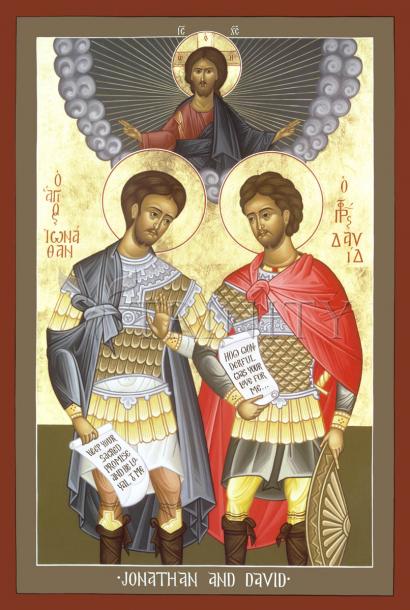
I hope you have such a friend because they are rare gems. Such relationships typically begin by hitting it off well together. Usually, some event or particular place brings two people to a point of discovering they have such commonality of thinking and a commitment to living a certain way that their hearts are immediately drawn to each other. This is exactly what happened to Jonathan and David.

Before Jonathan and David’s friendship emerged, Jonathan (King Saul’s son) took it upon himself to step up and step out in single-handedly taking on the Philistine army. Jonathan faced them with only his armor-bearer behind him, climbed a cliff to other side where the Philistines were, and attacked all by himself. One guy deliberately went against an entire army. 

While six-hundred Israelite soldiers were hiding, too afraid to face the enemy, Jonathan took it upon himself to act. It was not a rash action but a decision of faith:

Jonathan said to his young armor-bearer, “Come on, let’s go over to the fort of these uncircumcised men. Maybe the Lord will act on our behalf. After all, nothing can stop the Lord from saving, whether there are many soldiers or few.” (1 Samuel 14:6, CEB) 

Jonathan passionately believed the Lord was with him and would achieve the victory. Indeed, God sent a panic throughout the Philistine camp when Jonathan acted. The result was a complete rout.

David had his own act of faith with the Philistine giant, Goliath. While everyone in the Israelite camp was fearful of the larger than life enemy, David saw him through the eyes of faith, and stepped up to challenge someone twice his size. 

It just so happens, that on that day, Jonathan had a front row seat to the entire event. It was immediately after David killed Goliath that Jonathan knew this was a guy with remarkably similar sensibilities. David possessed Jonathan’s same passion for God; same zealous faith that takes enormous risk; same heart for God’s people and God’s name. They clicked – and became kindred spirits, as if knowing the one of them was to know the other.

It was true friendship at its absolute best. Jonathan had David’s back. There was nothing he would not do for him, and vice versa. So, he made a covenant with David. And it turned out to be a lasting commitment neither of them ever regretted. 

Jonathan did not make the covenant with David just to buddy-up with the new popular person. No, Jonathan is a timeless example of one who was humbly unselfish. He gave up his robe and his weapons to David. This was a magnanimous gesture. Jonathan believed David was the next true king, so he gave his kingly objects to him.

As the king’s son, Jonathan stood in line to be the next king. In fact, everything we know about Jonathan informs us he would likely be a darn good king. Yet, Jonathan recognized David was a more worthy candidate than himself. So, he gave up his right to the throne and handed over his symbols of potential kingship.

Jonathan delighted in David’s success. He joyfully watched David become a great warrior and successful leader. Jonathan was always the first one to give David a pat on the back and do whatever was needed in supporting him. 

Jonathan didn’t mind that David upped him on the battlefield and commanded ever larger numbers of soldiers.  Jonathan could have pulled rank on David as the king’s son – but he never did, because he honestly believed his friend was the real king.

“If Christ Jesus dwells in a person as his friend and noble leader, that person can endure all things, for Christ helps and strengthens us and never abandons us. He is a true friend.”

St. Teresa of Ávila

In the New Testament, we see a person with the same spirit and devotion as Jonathan. John the Baptist was out in the wilderness being a literal wild man. And he gained quite a following. All kinds of people went out into the desert to be baptized by John and to be his disciples. Yet, John recognized that he himself was not the true king. Concerning Jesus, John said:

“This is the one I told you would come! He is greater than I am because he was alive before I was born.” (John 1:15, CEV)

“I am not the Messiah…. I am the voice of one calling in the wilderness, ‘Make straight the way for the Lord.’” (John 1:20, 23, NIV)

“Though his ministry follows mine, I’m not even worthy to be his slave and untie the straps of his sandal.” (John 1:27, NLT)

“I have seen and testified that this one is God’s Son.” (John 1:34, CEB)

John never became jealous, envious, or concerned that his cousin Jesus was greater than himself. In fact, he celebrated it:

“I am so happy that he is here. He must become more and more important, and I must become less important.” (John 3:29-30, ERV)      

John was focused on God. He therefore was able to respond rightly and humbly to Jesus, the true king. 

Jonathan was focused on God, and so was able to respond rightly and humbly to David, the true king.

Jesus is both king and friend. Jesus can be your kindred spirit, the one who always has your back. You can call, and he will be there. And we can delightfully watch Christ increase while we decrease. His success is our success. 

Divine friendship is possible. God’s people can enjoy incredible unity because Jesus has gone before us – he has won the victory over sin, death, and hell on our behalf. By faith we step out and act with the knowledge God is with us.

Jesus said, “No longer do I call you servants, for a servant does not know what his master is doing; but I have called you friends, for all things that I heard from My Father I have made known to you.” (John 15:15, NKJV)

**Above wood sculpture of Jonathan and David by Olen Bryant (1927-2017)