John 12:36-43 – The Shadow Self

“Believe in the light while you have the light, so that you may become children of light.” When he had finished speaking, Jesus left and hid himself from them.

Even after Jesus had performed so many signs in their presence, they still would not believe in him. This was to fulfill the word of Isaiah the prophet:

“Lord, who has believed our message
    and to whom has the arm of the Lord been revealed?”

For this reason, they could not believe, because, as Isaiah says elsewhere:

“He has blinded their eyes
    and hardened their hearts,
so they can neither see with their eyes,
    nor understand with their hearts,
    nor turn—and I would heal them.”

Isaiah said this because he saw Jesus’ glory and spoke about him.

Yet at the same time many even among the leaders believed in him. But because of the Pharisees they would not openly acknowledge their faith for fear they would be put out of the synagogue; for they loved human praise more than praise from God. (NIV)

The season of Lent is a time of preparation for Easter, and of repentance from sin. It is a time to consider our ways and the state of our hearts. In doing so, we find that the grace of God in Christ can heal all wounds. 

Today’s Gospel lesson gives perhaps the most succinct and convicting statement about the shadow places of our lives. Many of the religious authorities believed in Jesus, but they did not speak of it because they were afraid of being put out of the synagogue by the Pharisees. When push came to shove, they cared more for human approval than for God’s glory.

The word “glory” has its roots in the Old Testament and has the meaning of being heavy or having weight. In other words, we might picture God descending to earth among humankind with divine gravity and heft. If we were back in the ‘70s we could say, “heavy, man, heavy!” Glory is really a reference to God’s presence among us. So, if we plug this thought into the religious authority’s attitude, we see that they preferred the presence and accolades of their peers to God. To put the matter even more succinctly, the leaders wanted the limelight and would push their weight around to get it.

Carl Jung (1875-1961) described this hidden shadow self as an unconscious aspect of the human personality. In other words, the shadow results from the conscious self being unaware or unconscious concerning areas of its own personality. Without the light of conscious awareness, the shadow self runs amok within the psyche of a person and far too often calls the shots in speaking and behavior.

“Everyone carries a shadow,” Jung wrote, “and the less it is embodied in the individual’s conscious life, the blacker and denser it is.” (Psychology and Religion, 1938). According to Jung, the shadow side of a person is prone to psychological projection, in which a perceived personal inferiority is recognized as a perceived moral deficiency in someone else. If those projections remain hidden, they eventually come out sideways by harming others because there is a dark illusion, even delusion, that others are stealing what is rightfully mine. Hence, the sinless Jesus is tortured and killed by those who think they are doing a good thing.

It is easy to be hard on the religious rulers in the New Testament, but this is Lent, and, so, we must shine the light of Scripture upon ourselves. This is the time to deliberately gain awareness of our own shadow selves. Perhaps the burning question for all believers at this time of year is: Do I seek the presence of God more than the presence of anything or anyone else?  

Over the decades, I have preached in many churches. Many of them have empty pews or seats in the first several rows during worship. I admit that has always bugged me. I don’t like it. There are times when I am more concerned about the presence of people than the presence of God in a worship service. Maybe you live in fear at work and are more concerned about the presence of people around you than the presence of God, so you keep quiet when you ought to speak up or turn a blind eye to the shadows of an organization.

Lent is not just about identifying sin; it is also about receiving grace. So, let us find that the cleansing work of the Spirit through the work of Jesus is active through our confession of sin. And let us pursue the glory and praise of God in all we do and say as grace permeates deep in our souls. Let the shadows dispel, and the light shine, for the benefit of self and others.

Glorious God lighten our darkness—be our true light. Keep us from the powers of darknessthe perils and dangers of the night. Shine as a kindly light in our spiritual darkness—in our mental turmoil and anxious confusion. We pray this for the love of your Son, our Savior, Jesus Christ who with you and the Holy Spirit lives and reigns as one God, now and forever. Amen.

Genesis 22:1-19 – The Lord Will Provide

God decided to test Abraham, so he spoke to him.

Abraham answered, “Here I am, Lord.”

The Lord said, “Go get Isaac, your only son, the one you dearly love! Take him to the land of Moriah, and I will show you a mountain where you must sacrifice him to me on the fires of an altar.” So, Abraham got up early the next morning and chopped wood for the fire. He put a saddle on his donkey and left with Isaac and two servants for the place where God had told him to go.

Three days later Abraham looked off in the distance and saw the place. He told his servants, “Stay here with the donkey, while my son and I go over there to worship. We will come back.”

Abraham put the wood on Isaac’s shoulder, but he carried the hot coals and the knife. As the two of them walked along, Isaac said, “Father, we have the coals and the wood, but where is the lamb for the sacrifice?”

“My son,” Abraham answered, “God will provide the lamb.”

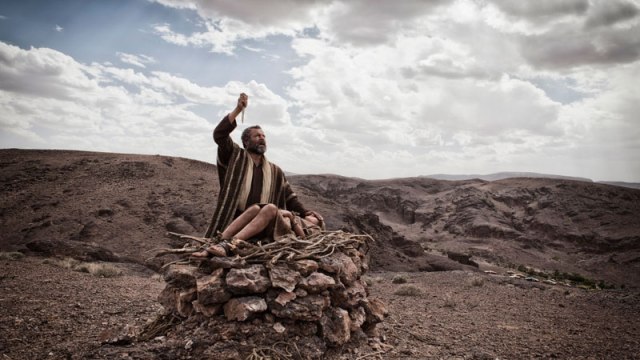
The two of them walked on, and when they reached the place that God had told him about, Abraham built an altar and placed the wood on it. Next, he tied up his son and put him on the wood. He then took the knife and got ready to kill his son. But the Lord’s angel shouted from heaven, “Abraham! Abraham!”

“Here I am!” he answered.

“Don’t hurt the boy or harm him in any way!” the angel said. “Now I know that you truly obey God, because you were willing to offer him your only son.”

Abraham looked up and saw a ram caught by its horns in the bushes. So, he took the ram and sacrificed it in place of his son.

Abraham named that place “The Lord Will Provide.” And even now people say, “On the mountain of the Lord it will be provided.”

The Lord’s angel called out from heaven a second time:

You were willing to offer the Lord your only son, and so he makes you this solemn promise, “I will bless you and give you such a large family, that someday your descendants will be more numerous than the stars in the sky or the grains of sand along the beach. They will defeat their enemies and take over the cities where their enemies live. You have obeyed me, and so you and your descendants will be a blessing to all nations on earth.”

Abraham and Isaac went back to the servants who had come with him, and they returned to Abraham’s home in Beersheba. (CEV)

The biblical character of Abraham is synonymous with faith. And for good reason. God had told Abraham he would have a son with his wife Sarah. This would not be unusual except for the fact the couple were well advanced in age, and Sarah was incapable of having children. Infertility is not just a modern problem; it has always existed. Yet, despite the overwhelming odds, Abraham believed God. Years later and with a mix of patience and impatience from the would-be parents, the promise from God was realized. Abraham and Sarah had a son, Isaac.

“Child of the promise.” That was Isaac’s moniker – which makes the command coming from God so incredibly perplexing: Take your son, the child of the promise, and go to the mountain and sacrifice him there. Huh? What the…!  But it only seems strange and super-weird to us. We get no reaction from Abraham, no questioning, no talk back. He simply went about the business of saddling up the donkey, chopping some wood for the sacrifice, and took his only son with him on the journey to the mountain.

We might wonder what was going through Abraham’s mind through all of this. While you and I might try and figure out if we really heard God or not, Abraham had a history of talking with God. He knew God’s voice as well as he knew his own. Abraham was well down the road of relationship with the God he served. We get an insight from the author of Hebrews into Abraham’s thought process, a line of thinking consistent with a person who has a regular habit of talking with God:

“Abraham had been promised that Isaac, his only son, would continue his family. But when Abraham was tested, he had faith and was willing to sacrifice Isaac, because he was sure that God could raise people to life. This was just like getting Isaac back from death.” (Hebrews 11:17-18, CEV)

Abraham did not try and figure out God’s mind. He didn’t get into a debate with God about the contradiction of ethics he was being asked to do. He just obeyed. Abraham reasoned that it didn’t matter if Isaac were killed because God could raise him from death. This, of course, is not what happened. It was all a test of faith. Abraham knew beyond a shadow of a doubt that God is the Lord who provides.

You and I rarely know why we are facing the unwanted and unasked for circumstances we are enduring. We don’t always know what in the world God is thinking. Yet, like Abraham, if we have a spiritual history of walking with God and hearing the Lord’s voice, we don’t hesitate to respond. We are convinced God will provide. Obedience for the follower of Christ is not a burden but a privilege, even when we are being tested beyond our seeming emotional ability to do it.

Sovereign Lord, your ways are sometimes strange and confusing. Yet, I know that everything you do is always right, just, and good. It is to your gracious and merciful character that I know you will provide. My allegiance is to you, in the Name of Jesus Christ, through the power of the Holy Spirit. Amen.

Psalm 105:1-11, 37-45 – Remember the Lord

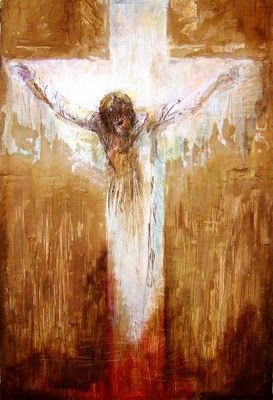
Crucifixion by Unknown artist

Give thanks to the Lord;
    call upon his name;
    make his deeds known to all people!
Sing to God;
    sing praises to the Lord;
    dwell on all his wondrous works!
Give praise to God’s holy name!
    Let the hearts rejoice of all those seeking the Lord!
Pursue the Lord and his strength;
    seek his face always!
Remember the wondrous works he has done,
    all his marvelous works, and the justice he declared—
    you who are the offspring of Abraham, his servant,
        and the children of Jacob, his chosen ones.

The Lord—he is our God.
    His justice is everywhere throughout the whole world.
God remembers his covenant forever,
    the word he commanded to a thousand generations,
        which he made with Abraham,
        the solemn pledge he swore to Isaac.
God set it up as binding law for Jacob,
    as an eternal covenant for Israel,
    promising, “I hereby give you the land of Canaan
    as your allotted inheritance….”

Then God brought Israel out, filled with silver and gold;
    not one of its tribes stumbled.
Egypt celebrated when they left,
    because the dread of Israel had come upon them.

God spread out clouds as a covering;
    gave lightning to provide light at night.
The people asked, and God brought quail;
    God filled them full with food from heaven.
God opened the rock and out gushed water—
    flowing like a river through the desert!
Because God remembered his holy promise
    to Abraham his servant,
    God brought his people out with rejoicing,
    his chosen ones with songs of joy.
God gave them the lands of other nations;
    they inherited the wealth of many peoples—
        all so that they would keep his laws
        and observe his instructions.

Praise the Lord! (CEB)

Every day I read in the psalms. There are two reasons I do this. First, the psalms are the church’s prayer book.  They are more than reading material; the psalms are designed to be owned by us as prayers. And second, I need their reminders – a lot!

Remembering is a major theme throughout the entirety of Holy Scripture. It’s just part of the human condition, fallen and forgetful as we are, to lose sight of what has taken place in the past. Today’s psalm invites us to seek the Lord through remembering all the good and wonderful works he has done.

For Israel, remembering meant continually having Passover in front of them. God redeemed the ancient Israelites out of Egyptian slavery and into a good Promised Land. They were to never forget God’s miracle through the Red Sea, God’s protection over them from other nations, and God’s provision of food and necessities in the desert.

We are to remember because we are made in God’s image and likeness. God remembers. God has an ongoing reminder in a divine day timer – Fulfill the promises I made and keep the covenant I initiated with the people, even when they’re stinkers and forget who I am.

As old as God is, there is no danger of the Lord getting some sort of divine dementia. God doesn’t forget. The Lord always keeps promises made to people. For the Christian, all God’s promises are remembered and fulfilled in the person and work of Jesus Christ. Deliverance from sin, death, and hell; the gift of the Holy Spirit; and ongoing presence and provision are given to us graciously and freely by the God who loves and cares for people. For Christians, remembering means coming to the Lord’s Table, entering the once for all loving sacrifice of Christ on our behalf.

One of the reasons I write and journal about my life and Scripture is to remember. Sometimes I forget. There are times when I’m overwhelmed with life and it feels as if God has forgotten me. In such times, I look back into my journal and see what God has done. And I peer into the psalms and see that the Creator God is active in the big, created world, always attentive to working what is just, right, and good – bending twisted circumstances and evil machinations back toward the great arc of love.

May your journey with Jesus in this season of Lent cause you to remember the Lord Jesus, to have Christ always before you.

Now We Remain by David Haas