Perspective Changes Everything

Perspective is everything. Nearly sixteen years-ago, me and my family were in a car accident. I was traveling on a highway in rural Iowa and a small car on a gravel road blew right through the stop sign without even slowing down. There was nothing I could do. I slammed into the rear quarter panel of his car, and he literally spun like a top off the highway and came to a stop. Both the driver and his girlfriend passenger were not injured. 

Two of my daughters were in the very back seat of our minivan, with my wife and dog as front seat passengers.  The girls were not harmed. However, my wife tore her shoulder’s rotator cuff trying to protect the dog and had to have surgery to repair it. My lower back was injured, but not in a way which surgery could repair. To this day I live with low-level chronic pain. Most days it’s not bad, maybe a one or two on the pain scale. But on a bad day I can barely walk across the room and need a cane to get around.

I have played the scene of the accident in my mind hundreds of times. I have thought over-and-over again about what I could have done to prevent the accident. Yet there was no way to avoid it. I thought about the fact that if we just would have left a minute earlier or a minute later from my parents’ house from where we were visiting, all would be fine. But I know that kind of thinking is a fool’s errand. I have pondered every possible scenario in my head and have gotten nowhere. 

It also took me awhile to forgive the young man who was driving the other car. He changed my life, and not in a good way. Although his insurance took care of everything and he was very repentant about the whole thing, I was understandably mad for a long time. I eventually did come to the point of forgiving him.

Over the years I have learned to live with my limitations. I have now accepted the sometimes-irritating pain as part of my life. Still, on occasion, I cannot help but think of what my life would be like today if I hadn’t been in that stupid senseless accident. 

“Everything that irritates us about others can lead us to an understanding of ourselves.”

carl jung

About six years ago I was praying alone in the church for which I was a pastor, at the time. God brought the accident to my mind. I said to God, “Lord, we’ve been through this accident hundreds of times together. I don’t want to think about it anymore. Why are you bringing this up now?”

Even though I wasn’t really looking for an answer to my question, God brought it up because the Lord knew I was finally ready to get a divine perspective on the accident. Out of the hundreds of times I went over that accident, the one perspective I never took was that of the young man – the other driver. God invited me to take the young driver’s view of what happened that day. So, I did.  I know that intersection like the back of my hand, so it wasn’t a hard exercise. 

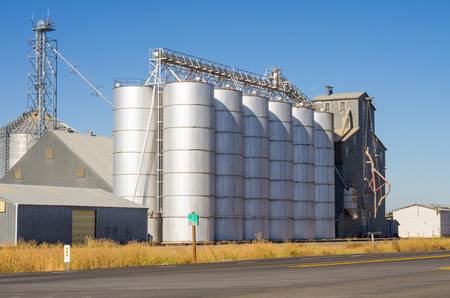
I put myself in the driver’s seat of his car. I’m driving down the gravel road not paying attention to the fact that a stop sign is coming up. I blow through the sign onto the highway and right in front of a minivan who slams on the brakes just enough to plow into the rear quarter panel. I spin out like a top and come to rest only a few feet from a huge Iowa grain elevator.

For the first time in my life, I finally understood. God had a divine appointment for me that day. You see, if I had not come along just when I did, that young man and his girlfriend would have blown through the stop sign and struck that grain elevator. It would have killed them both instantly.

“Life is 10 percent what you make it and 90 percent how you take it.”

Irving Berlin

Suddenly, my perspective changed 180 degrees. I always thought about me and my family. I always considered my hardship and my change of life. But now I saw that God sent his servant to save two lives that day. Had I not struck his car, causing him to spin and come to a rest unharmed, two people would have died. 

Now, every time my back acts up and it effects how my life is lived, I’m reminded that it is a small price to pay for the lives of two human beings. Perspective changes everything.

The Bible invites us to view our lives from a different perspective. Our hurts and our pains, our sorrows and our sufferings, our changes, and our limitations, are all part of something much bigger God is doing in the world.  We are not always privy to God’s plans and purposes. Yet God’s Word challenges us to take a perspective of the world, of humanity, and of ourselves which is counter to how we often think.

In this season of Lent, we are invited to read God’s Word and practice repentance – literally, a change of mind.  We are invited to see the Ten Words (Commandments) as the glasses through which we are to view our relationship with God and our relationships with others (Exodus 20:1-17). Jesus, summarizing those Ten Words, put it this way: All the Law hangs on loving God and loving our neighbor. (Matthew 22:36-40)

The thread of those moral words, those ethical commands, runs through the entirety of God’s Word, the Bible. The psalmist reminds us that this Word is good, sweet, and more precious than gold (Psalm 19:7-14). The Apostle Paul reminds us that this Word is our wisdom to live by (1 Corinthians 1:18-25).  And Jesus, as the Word made flesh among us, lived that loving and gracious Word with perfect moral and ethical goodness.

The temple, as the place where God’s Word was read and observed, was not to be adulterated with making a profit – which was why Jesus drove out the moneychangers.  And he did it with flavor! (John 2:13-22) Later, after Jesus died and rose from death, the disciples remembered their master’s words and affirmed them as being the Word of God. They believed. Their faith and repentance changed the world.

God is inviting us to take up the Divine Word and see our lives, the lives of others, and every event and situation through that lens. We are to see Jesus, not only as a great teacher, a moral and good person, and a loving healer – but also as Lord and Savior. In a small way, I suffered so that someone else could live. Yet Jesus suffered sin, death, and hell in our place so that you and I could live – so that we might have the eternal life of enjoyment with God forever.

Allow the Word of God to shape your lives and form your thinking today and every day. You might not always know what God is doing, but you can be assured that everything God does is just, right, and good. 

May you know God’s peace today. May you know Christ better in this season as you reflect upon our Lord’s great sacrifice on our behalf.

Exodus 19:16-25 – An Awesome God

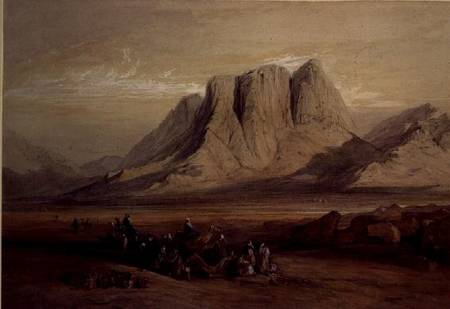
Mount Sinai by Scottish painter David Roberts (1796-1864)

On the morning of the third day, thunder roared, and lightning flashed, and a dense cloud came down on the mountain. There was a long, loud blast from a ram’s horn, and all the people trembled. Moses led them out from the camp to meet with God, and they stood at the foot of the mountain. All of Mount Sinai was covered with smoke because the Lord had descended on it in the form of fire. The smoke billowed into the sky like smoke from a brick kiln, and the whole mountain shook violently. As the blast of the ram’s horn grew louder and louder, Moses spoke, and God thundered his reply. The Lord came down on the top of Mount Sinai and called Moses to the top of the mountain. So, Moses climbed the mountain.

Then the Lord told Moses, “Go back down and warn the people not to break through the boundaries to see the Lord, or they will die. Even the priests who regularly come near to the Lord must purify themselves so that the Lord does not break out and destroy them.”

“But Lord,” Moses protested, “the people cannot come up to Mount Sinai. You already warned us. You told me, ‘Mark off a boundary all around the mountain to set it apart as holy.’”

But the Lord said, “Go down and bring Aaron back up with you. In the meantime, do not let the priests or the people break through to approach the Lord, or he will break out and destroy them.”

So, Moses went down to the people and told them what the Lord had said. (NLT)

As Christians await Easter and the resurrected Christ, the Revised Common Lectionary reminds us of another great anticipation from the Old Testament. The ancient Israelites were amazingly delivered from Egyptian slavery, miraculously walked through the Red Sea, and traveled with wondrous anticipation to Mount Sinai. Now, in today’s reading, they are about to meet with God!

The scene of this meeting is not exactly the romantic highland encounter of the Man from Snowy River (my wife’s all-time favorite movie). The landscape is much more akin to the dark and volcanic Mount Doom from The Lord of the Rings. The picture appears more foreboding than loving. The thing about mountain top experiences is that they are not all monolithic one-size-fits-all encounters with bright rainbows and happy skipping unicorns.

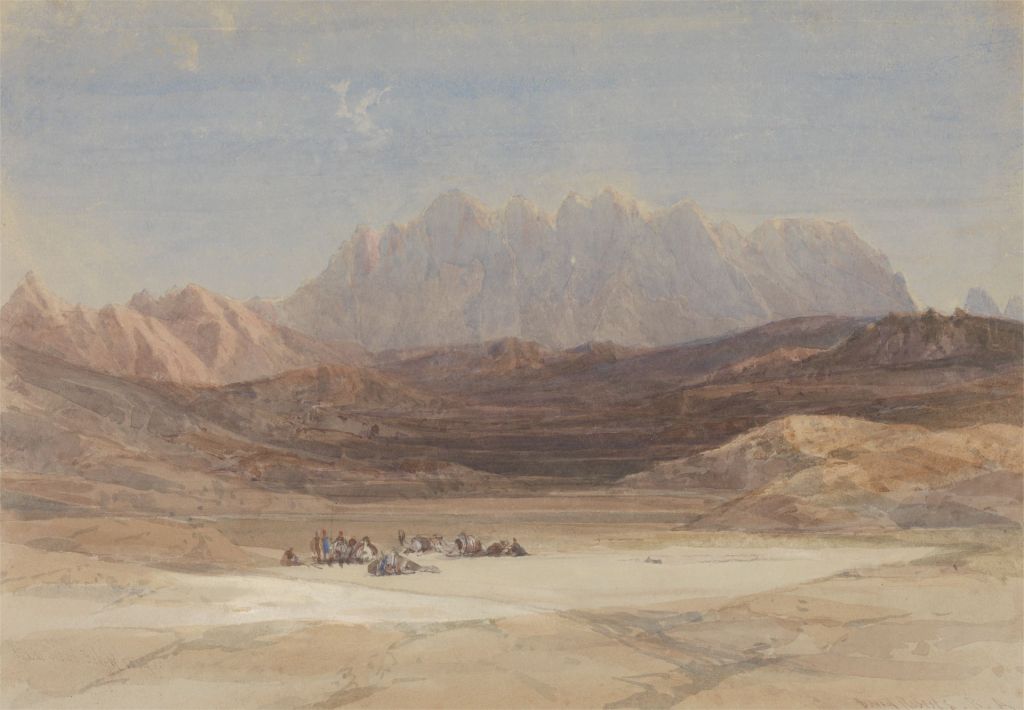
Mount Sinai by English painter Edward Lear (1812-88)

Mountain Top Experiences

Holy Scripture is replete with mountain experiences. Mountains serve as symbols for significant encounters with a mighty God. Whether it is Christ’s transfiguration on a mountain, or the giving of the law on a mountain, the awesome mountain serves as a tangible symbol of divine majesty, strength, and sovereignty. And, I might add, conversely, valleys in Scripture are symbolic of difficulty and suffering. Our God is Lord of both mountain and valley. The God of the Bible is both transcendent and immanent, ruling with power and might high above us on the holy mountain. Yet, the Lord also comes near to us in the valley of the shadow of death.

Leading up to the giving of the Ten Words (Commandments) in Exodus 20, Exodus 19 portrays an awesome scene of God in transcendent holiness and power. In fact, the experience was so otherworldly that the people were afraid to even come near the mountain. The Israelites needed limits placed on themselves because of God’s holy presence. Just like coming too near the immense power of the sun will destroy us, so getting near to God can ruin us if we do not respect divine holiness.

The Lord of the Mountain

Respecting God’s power and transcendence brings the reality of the Lord’s immanence into greater appreciation. God has gone to extreme lengths of self-revelation to people. For the Christian, it all culminates through the incarnation of Christ, the sending of the Son. In Jesus, the transcendence and immanence of God meet perfectly to bridge the chasm between humanity and the divine. Because of Jesus, the awesome sounds of thunder and trumpet do not lead to fear; they announce grace to those who approach God by faith.

You have not come to a mountain that can be touched and that is burning with fire; to darkness, gloom and storm; to a trumpet blast or to such a voice speaking words that those who heard it begged that no further word be spoken to them, because they could not bear what was commanded: “If even an animal touches the mountain, it must be stoned to death.” The sight was so terrifying that Moses said, “I am trembling with fear.” But you have come to Mount Zion, to the city of the living God, the heavenly Jerusalem. You have come to thousands upon thousands of angels in joyful assembly, to the church of the firstborn, whose names are written in heaven. You have come to God, the Judge of all, to the spirits of the righteous made perfect, to Jesus the mediator of a new covenant….

See to it that you do not refuse him who speaks. If they did not escape when they refused him who warned them on earth, how much less will we, if we turn away from him who warns us from heaven? At that time, his voice shook the earth, but now he has promised, “Once more I will shake not only the earth but also the heavens.” The words “once more” indicate the removing of what can be shaken—that is, created things—so that what cannot be shaken may remain. Therefore, since we are receiving a kingdom that cannot be shaken, let us be thankful, and so worship God acceptably with reverence and awe, for our “God is a consuming fire.” (Hebrews 12:18-29, NIV)

Our God is an awesome God. The divine dramas of God’s victory over Egypt and Christ’s victory over sin, death, and hell, have provided God’s people with spiritual power. Both the deliverance of the Israelites from Egyptian slavery by God and the deliverance secured on Mount Zion from spiritual slavery by Jesus are meant to free us to do the will of God. With God’s Word and God’s Spirit given to us, we are emancipated from an empty way of life to experience the fullness of Christ.

May the peace of God which surpasses all understanding, keep your hearts and minds in the knowledge and love of God, and of the Son, Jesus Christ, our Lord, and the blessing of God almighty. May Father, Son, and Spirit be among you and remain with you always. Amen.

Acts 7:30-40 – Full Acceptance, Not Partial

“After forty years had passed, an angel appeared to Moses in the flames of a burning bush in the desert near Mount Sinai. When he saw this, he was amazed at the sight. As he went over to get a closer look, he heard the Lord say: ‘I am the God of your fathers, the God of Abraham, Isaac and Jacob.’ Moses trembled with fear and did not dare to look.

“Then the Lord said to him, ‘Take off your sandals, for the place where you are standing is holy ground. I have indeed seen the oppression of my people in Egypt. I have heard their groaning and have come down to set them free. Now come, I will send you back to Egypt.’

“This is the same Moses they had rejected with the words, ‘Who made you ruler and judge?’ He was sent to be their ruler and deliverer by God himself, through the angel who appeared to him in the bush. He led them out of Egypt and performed wonders and signs in Egypt, at the Red Sea and for forty years in the wilderness.

“This is the Moses who told the Israelites, ‘God will raise up for you a prophet like me from your own people. ’He was in the assembly in the wilderness, with the angel who spoke to him on Mount Sinai, and with our ancestors; and he received living words to pass on to us.

“But our ancestors refused to obey him. Instead, they rejected him and, in their hearts, turned back to

Egypt. They told Aaron, ‘Make us gods who will go before us. As for this fellow Moses who led us out of Egypt—we don’t know what has happened to him!’ (NIV)

We humans are a confusing paradox of sinner and saint. We are majestic people, created in the image and likeness of a good God. We are also profoundly fallen, touched by sin in every area of our lives. Our hearts exist with both light and darkness, having the capacity for both incredible altruism as well as inexplicable evil.

So then, it will do no good to retreat into binary definitions of people as being either good or bad. No, we shine and shadow at the same time. What really gets us into a terrible mess is when we ignore or deny our shadow selves. We then demonize the other while claiming purity for ourselves.

This is precisely what occurred with Stephen and a group of his fellow Jews who refused to acknowledge their shadow side. And it resulted in Stephen’s stoning and death. Whereas Stephen lifted and brought to light the unseemly aspects of their collective heritage, the people wanted nothing to do with it. In our present day, the response might be something like, “Quit being so negative. We focus on the positive. Expel this recalcitrant troublemaker once and for all!”

Oy. Acceptance cuts two ways. We must accept both our blessings and our curses. And acceptance of reality will not occur apart from a solid self-acceptance of who we are and how we are feeling in any given situation. On the practical level, it works something like the following story…

Several years ago, I went on a leadership retreat in the Canadian wilderness. We were so far out in the sticks that we needed special first aid training before leaving because if someone got severely injured it would be hours before any medical attention could be received. There was no cell phone service, no towns, no anything except mile after square mile of wilderness. 

One day, it was very windy and several of us were on a lake canoeing to a destination. It was late May, which means the water was still ice cold in Canada. One of the canoes capsized and we had to act quickly and deliberately – which was no small feat in a stiff wind. More than fifteen minutes would result in hypothermia for the two people in the water.

I did not like being in that situation. In fact, I didn’t much like the Canadian wilderness. Too many black flies and giant mosquitoes for me. My shadow side was coming out. But here I was, and I had to accept the reality I was in. One of the lessons I learned in that moment was that acceptance can sit alongside other reactions and emotions.

For example, a person can be outraged by an injustice, as Stephen was, and accept that it is a reality. Acceptance does not mean complacency or giving up. We can accept something while at the same time trying to make it better.

I also needed to accept what was happening inside of me. I was cold and worried. Trying to push those feelings away would have only added to the stress of the situation. If I failed to accept what was true about myself, I would be less able to deal with the situation, and so, would compromise my ability to help two people at risk.

I needed to accept the whole circumstance, including myself. Accepting what is inside gave me more influence over the situation, not less. Self-acceptance became the key to acceptance of unwanted conditions, and more importantly, acceptance of one another as human beings.

In that moment of rescuing two people (which ultimately proved successful) I became aware of a part of myself – the part that gets afraid and irritated – and chose not to stuff it or deny its existence. I became the guy who talked to the panicked people in the water and kept them as calm as possible so that the others could get them out. I was able to do my part to help fearful people because I acknowledged and accepted my own fear.

Unlike my situation, however, Stephen’s experience ended in martyrdom. Just because we respond rightly is no guarantee that everything will work out for our benefit. Rather, we say and do the things we must say and do, while leaving the results to a sovereign Lord. It is our responsibility to work on ourselves, not others. And acceptance is the path to get there, all of it, not just part of it.

Jesus, let your mighty calmness lift me above my fears and frustrations. By your deep patience, give me tranquility and stillness of soul in you. Make me in this, and in all things, more and more like you. Amen.

Psalm 19 – The God We Can Know

The heavens keep telling
    the wonders of God,
    and the skies declare
    what he has done.
Each day informs
    the following day;
    each night announces
    to the next.
They don’t speak a word,
    and there is never
    the sound of a voice.
Yet their message reaches
    all the earth,
    and it travels
    around the world.

In the heavens a tent
    is set up for the sun.
It rises like a bridegroom
    and gets ready like a hero
    eager to run a race.
It travels all the way
across the sky.
    Nothing hides from its heat.

The Law of the Lord is perfect;
    it gives us new life.
His teachings last forever,
    and they give wisdom
    to ordinary people.
The Lord’s instruction is right;
    it makes our hearts glad.
His commands shine brightly,
    and they give us light.

Worshiping the Lord is sacred;
    he will always be worshiped.
All his decisions
    are correct and fair.
They are worth more
    than the finest gold
    and are sweeter than honey
    from a honeycomb.

By your teachings, Lord,
    I am warned;
    by obeying them,
    I am greatly rewarded.
None of us know our faults.
    Forgive me when I sin
    without knowing it.
Don’t let me do wrong
    on purpose, Lord,
    or let sin have control
    over my life.
Then I will be innocent,
    and not guilty
    of some terrible fault.

Let my words and my thoughts
    be pleasing to you, Lord,
    because you are my mighty rock
    and my protector. (CEV)

Today’s psalm is a celebration of God’s self-revelation. Through both nature and law, the Lord has graciously made the divine life known to humanity. What’s more, God’s moral and ethical teachings provide insight for living a good life. This is for the common good of all persons.

The vision of the psalm is of a personal God, not an abstract deity who is aloof from creation. Through both land and law, there is the Lord of life, desiring humanity to know the divinity which infuses it all and has people’s best interests continually at the forefront of providence and goodwill.

The created world witnesses to God. Creation manifests the glory of its Creator. Each creature and every created thing have the capacity to acknowledge and declare their Originator. That which has no mouth can speak. Those with no vocal cords have a voice. We can hear them, that is, if our ears are open to listen. The creation is not God. Yet the created world and order knows the Lord so intimately that it sometimes seems as if the sun, the trees, the mountains, and the meadows are divine. The divine stamp is there, testifying with mysterious words to a glorious God who desires to be known.

So, the Lord graciously gave us law. God’s righteous and good law flows seamlessly from God’s good character. Law is the divine medium for humanity, a guide for human life toward thriving and flourishing on God’s good earth. We were put on this planet with instructions on how to get along on it. It is when we throw out the rulebook and improvise that we tend to get into all kinds of trouble.

“Knowing God is more important than knowing about God.”

karl rahner

Even when we as people dig our own graves and fall into them, God is there. Grace is available for the asking, redeeming the wayward life. Deliverance is a real possibility, to set us aright again, and restore us to our full luster as people created in the image of God. Law and land converge to guide into grateful living, into the wisdom of dealing rightly in all things.

Wisdom in the Old Testament is the combination of knowledge and practice. It is the application of God’s self-revelation to concrete situations in life. We live wisely when we get to know the sovereign God of creation and use the Lord’s revealed mores and ethos as our guide in daily experiences.

We need God’s gracious revealed law. It’s not just for theology nerds or spiritual eggheads; God’s law is for everyone – the learned and the unlearned. Every one of us needs the guidance and direction of God’s Holy Word, and the careful application of it to all our circumstances. That’s wisdom.

You and I are shaped and formed as godly people as we allow God’s Word to awash us and seep into our souls.  Reading this psalm out loud slowly and contemplatively more than once is an opportunity to let our common ordinary experiences transform into divine appointments.

Clean the slate, God, so we can start the day fresh! Keep me from stupid and idiotic sins, from thinking I can take over your work. Then I can start each day sun-washed, scrubbed clean of sin’s awful grime. Let me not be found in the dominion of darkness but bask in the glorious light of your glory. Accept both my words and my life when I place them on the morning altar, O God, my Rock, my Deliverer, my Redeemer, my All. Amen.